The quick answer: bird feet basics and common terms
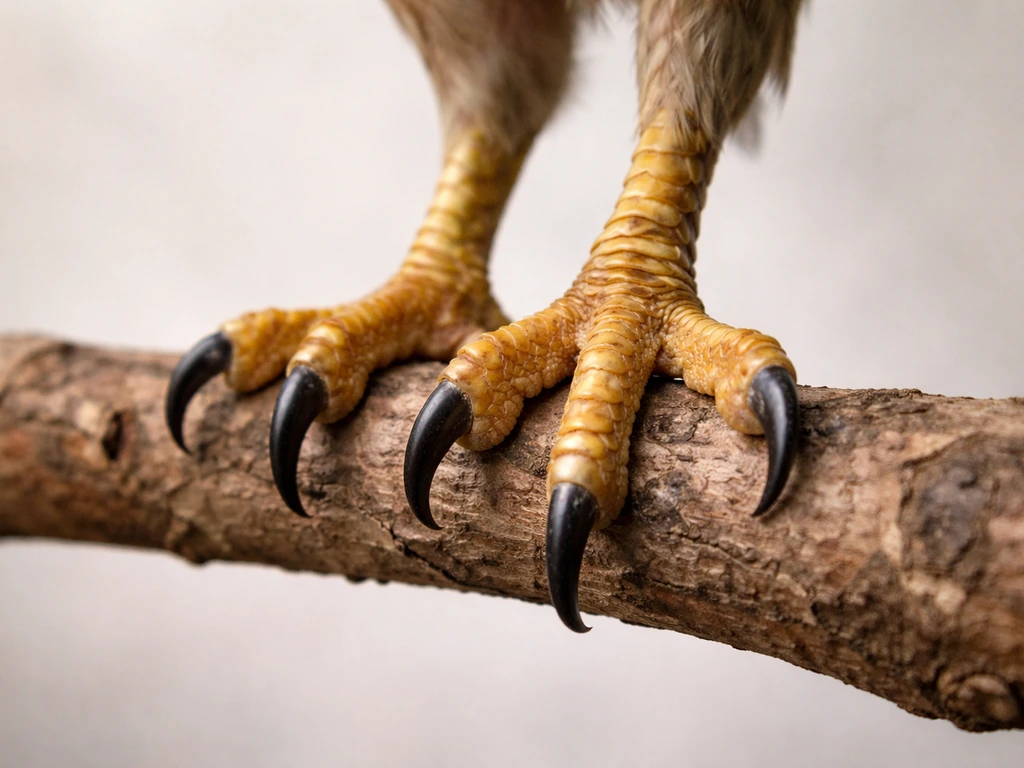
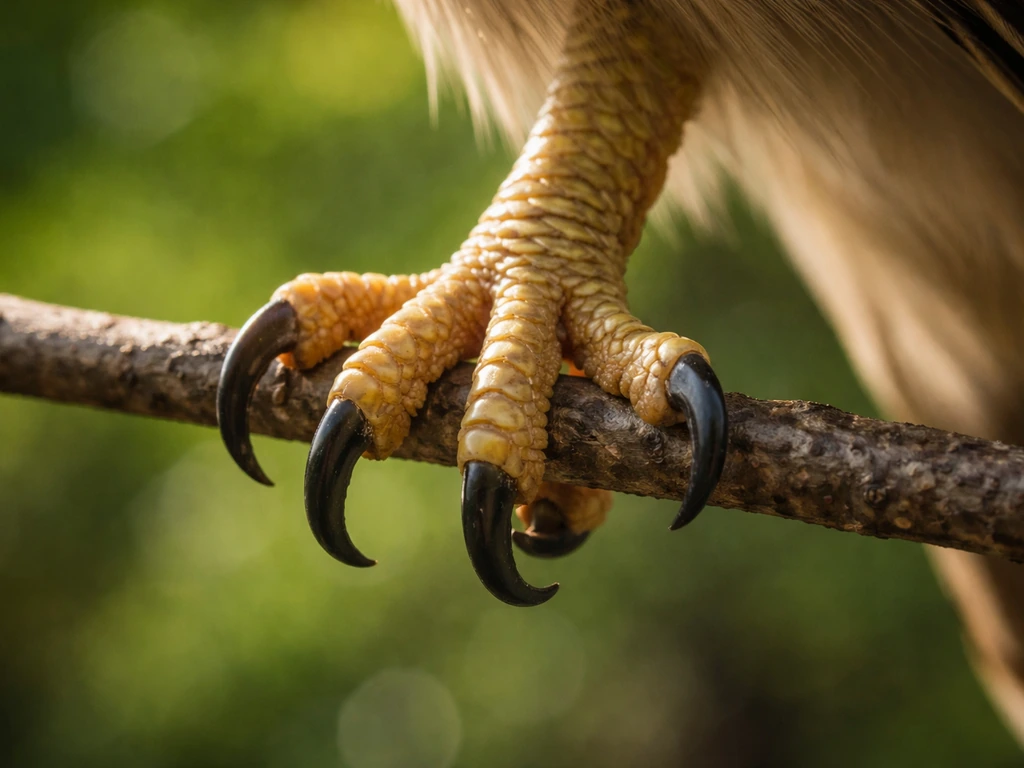
Bird feet are simply called "feet" in most contexts, but the right term depends on the bird. For raptors like eagles, hawks, and owls, the correct word is "talons" (specifically for the curved, gripping claws). For most other birds, you'd say "feet" or "claws" depending on whether you mean the whole foot structure or just the individual curved tips. If you've ever wondered why some sources say talons and others say claws, the distinction is real: a talon is a specialized raptor claw built for seizing prey, while "claw" is the broader term for any curved keratinous projection on a bird or other animal. Discover Wildlife also notes that the claws versus talons distinction is partly a matter of usage and convention, while still keeping talons tied to raptors why some sources say talons and others say claws. Getting that right matters, especially if you're interpreting what a bird's feet mean in a symbolic or identification context.
For everyday use, here's the fast breakdown of which term to reach for:
- Feet: the general term for the distal part of the limb, covering the toes and their scaly sheath (works for almost any bird)
- Talons: claws of birds of prey only (raptors like eagles, falcons, hawks, owls)
- Claws: the curved, keratinous tips on any bird's toes (broader and more general than talons)
- Scutes: the individual scale-like plates covering the unfeathered skin of the foot and lower leg
- Podotheca: the collective scientific term for the entire scaly covering of the bird's foot and lower leg region
Feet vs legs: what parts you're actually naming
This trips people up constantly, so it's worth being precise. In bird anatomy, the "leg" refers to the upper portion of the limb, while the "foot" is the lower distal part that makes contact with the ground, a branch, or prey. The foot includes the toes and their coverings. The section that looks like the lower leg on a wading bird (long and bare) is technically the tarsometatarsus, a fused bone that functions as the foot's upper structure, and it's covered in those scaly scutes mentioned above. Wikipedia’s bird anatomy overview uses the podotheca and scutes terminology to describe the scaly covering on the foot and related unfeathered areas blank" rel="noopener noreferrer">scaly scutes.
If you're curious about what bird legs mean in a wider sense, the leg and foot together form the full lower limb, but ornithologists and birders are pretty careful to separate "leg" from "foot" when describing anatomy. For casual identification purposes, most people use "feet" to mean the whole visible lower-limb package, and that's fine. But if you're describing a field marking or reading a field guide, knowing that the long bare section on a heron is the tarsus (not the leg in a human sense) helps you follow along.
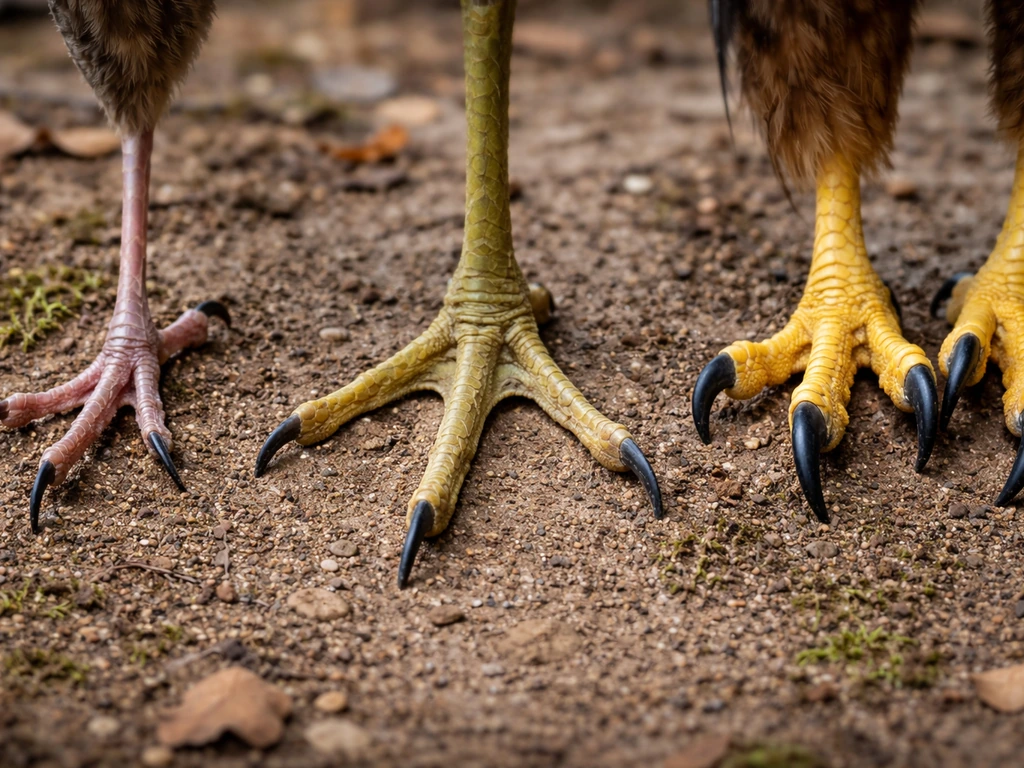
Bird feet are not one-size-fits-all. Evolution has shaped them into very distinct forms based on how a bird lives, and recognizing those forms is one of the fastest ways to narrow down a species or family. Here are the three main types you'll encounter most often:
Perching birds (passerines)
Most songbirds and small to medium birds are passerines, and they have what's called an anisodactyl foot: three toes facing forward and one (the hallux) facing back. This arrangement is perfect for gripping a branch automatically. When a perching bird lands and bends its leg, a tendon tightens and curls the toes shut around the perch without any muscular effort, which is why birds can sleep on branches without falling off. The claws on perching birds are relatively small, curved, and designed for grip rather than attack.
Wading birds
Herons, egrets, flamingos, and similar birds have long, widely spread toes that distribute their weight across soft, wet ground. Some, like jacanas, take this to an extreme with absurdly elongated toes that let them walk across lily pads. The key visual feature here is length and spread, not gripping strength. Bird leg symbolism often draws on these long, slender proportions as a metaphor for grace, patience, or stillness, and it's easy to see why when you watch a heron stand motionless in shallow water for twenty minutes.
Raptors
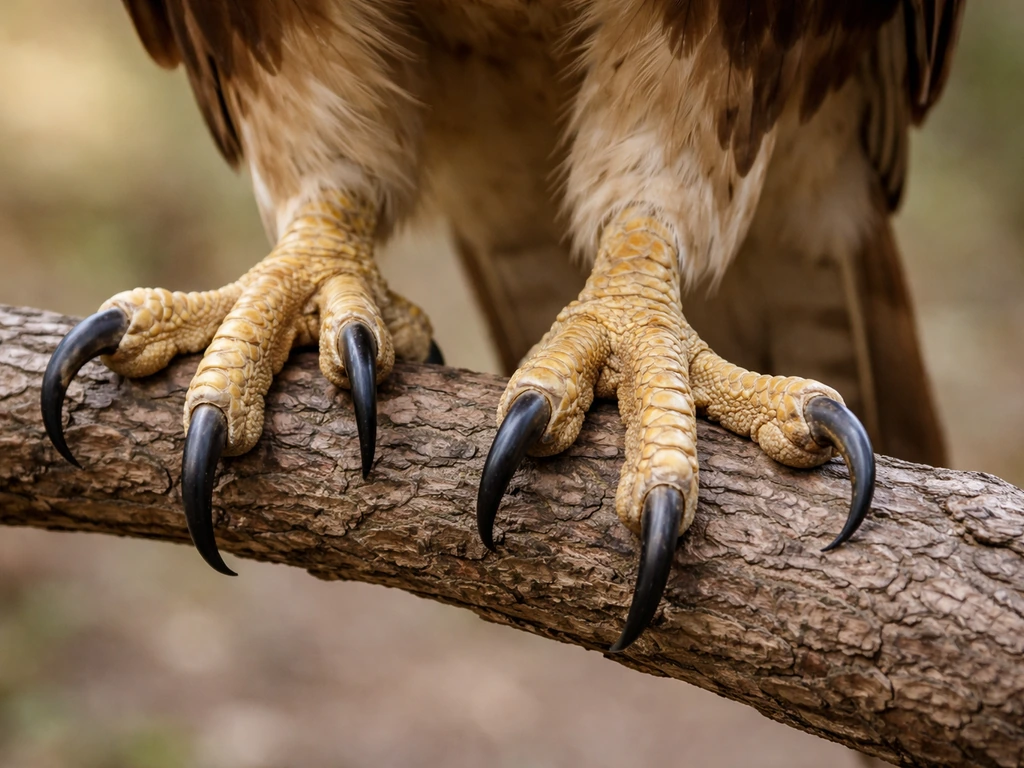
Hawks, eagles, falcons, and owls have feet built for one thing: seizing and killing prey. Their claws are the talons mentioned earlier, enlarged and deeply curved to puncture and hold struggling animals. The grip strength of a large eagle's talons is extraordinary, reaching pressures measured in hundreds of pounds per square inch. Ospreys take specialization even further with a reversible outer toe (zygodactyl arrangement) that lets them reposition a fish headfirst for aerodynamic carrying. Raptors are also commonly the subject of bird tracking studies; if you've ever noticed a small colored ring or device on a bird's leg, understanding the bird leg band meaning tells you whether that bird is part of a migration study, a captive breeding program, or a population count.
Specific named features: talons, claws, scutes, and how they differ
Let's get granular for a moment, because the vocabulary here is genuinely useful once you start reading field guides or bird identification resources.
| Term | What it refers to | Which birds |
|---|
| Talon | Curved, enlarged claw of a bird of prey; designed for gripping and killing | Raptors only (eagles, hawks, falcons, owls) |
| Claw | Any curved, keratinous projection at the tip of a toe | All birds (broad term) |
| Scute / scutellum | Individual scale-like dermal plate on the unfeathered foot or lower leg | Most birds with bare lower legs/feet |
| Podotheca | The full scaly covering (skin + scales) over the bird's foot and lower leg region | Scientific/anatomical term for all birds |
| Hallux | The hind (first) toe, equivalent to a human's big toe | Most birds; enlarged in raptors, reduced or absent in some runners |
Scutes deserve a special mention because they're genuinely useful for ID. The pattern, size, and arrangement of scutes on a bird's tarsus varies by species and can confirm identification when plumage is ambiguous. Reticulate scutes (small, irregular, pebble-like) versus scutellate scutes (overlapping rectangular plates, like fish scales) are two common patterns, and field guides often note which a species has. Bird banding researchers pay close attention to scute patterns too, because they can indicate a bird's age, since the skin texture changes as birds mature.
Bird feet have left clear marks on everyday language, and some of these phrases carry cultural weight beyond their literal meaning. "Finding your footing" and "getting a foothold" both evoke the image of a bird securing its grip on a precarious perch, a metaphor for stability and control that runs across dozens of languages. "Light-footed" often implies the effortless grace of a wading bird moving through shallow water without disturbing the surface.
In spiritual and symbolic traditions, bird feet and legs carry specific meaning depending on posture and behavior. A bird standing on one leg is interpreted in many cultures as a sign of balance, rest, or meditative awareness, an image that appears in everything from ancient Egyptian iconography (the heron as a symbol of the soul) to modern mindfulness symbolism. The act of a bird lifting one foot is also seen in some folklore as a warning or signal, a pause before flight or a moment of decision.
Talon imagery in particular carries strong connotations of power, precision, and unavoidable consequence in both literature and cultural symbolism. When a national emblem features an eagle with open talons, the message is deliberate: grip, authority, and reach. Even in common speech, saying someone "has their talons in" a situation implies a controlling, hard-to-escape grasp. These aren't random choices; they come directly from observed bird behavior, translated into human meaning over millennia.
If you're identifying a bird: how to tell by its feet and behavior
Feet are one of the most reliable identification shortcuts when you have a clear view. Here's what to look at and what each feature tells you:
- Toe count and arrangement: Four toes in an anisodactyl pattern (3 forward, 1 back) means a perching bird; two toes forward and two back (zygodactyl) points to woodpeckers, owls, or ospreys; three toes total (tridactyl) suggests a running bird like an emu or sandpiper.
- Claw size and curve: Long, deeply curved, and thick claws indicate a raptor. Short, barely curved claws suit a ground-foraging bird. Tiny, barely visible claws on slender toes are typical of waders.
- Webbing: Fully webbed feet between all four toes (or three) mean waterfowl or seabirds. Partially lobed toes point to grebes or coots. No webbing at all is typical of most land birds.
- Scute pattern: Use the scale texture on the bare tarsus. Smooth, waxy skin points to certain species; heavily scaled or reticulate patterns narrow down others.
- Color: Foot and leg color (yellow, pink, red, blue, black, gray) is a reliable field mark. Flamingos' pinkish legs, the bright yellow feet of a great blue heron in breeding season, or the vivid red legs of a red-legged partridge are all ID shortcuts that work at a distance.
- Behavior with feet: Does it scratch at the ground (terrestrial feeder)? Does it hang upside down by its feet from a branch (nuthatch, chickadee)? Does it hover and then drop feet-first onto prey (osprey, kingfisher)? Foot behavior often confirms family before you even see the face.
If you're observing a bird in the field and notice unusual equipment on its feet or legs, like a small colored band or tag, that's worth recording. Understanding the practice of bird banding helps you report sightings to the right databases, which actively contributes to conservation tracking. Some setups are more elaborate, and if you spot something that looks like a small light or transmitter attached near the leg area, the bird buddy lights meaning is worth looking into, as those devices are increasingly used by citizen science programs for nighttime or migration monitoring.
One more behavioral clue that's often overlooked: some birds, particularly wading birds and certain raptors, use a hunting technique called "lure feeding" or foot-stirring, where they agitate the water or ground with one foot to flush out prey. Watching how a bird uses its feet actively (not just passively standing) is one of the most reliable ways to confirm both species identity and the bird's behavioral role in its environment.
Put it all together and feet become one of the most information-dense parts of any bird. The right terminology, talon vs claw vs foot vs scute, is not just pedantry. It tells you what family you're dealing with, how the bird hunts or feeds, and often what ecosystem it belongs to. Start with the foot shape, check the toe arrangement, note the scute pattern and color, and you'll have a confident ID anchor before you even open a field guide.