
Bird poop color tells you two things at once: what the bird has been eating and drinking, and whether its body is processing waste normally. Most droppings you'll encounter are two-toned, a dark center (the actual feces) plus a white or off-white cap made of urates, which are uric acid salts that birds excrete instead of liquid urine. That combination is completely normal. Color shifts away from that baseline, like bright green, red, black, or vivid yellow, are where things get interesting, and sometimes where they get concerning.
Bird Poop Color Meaning: What It Tells You and How to Interpret Safely

Marcus Holloway
7 May 2026
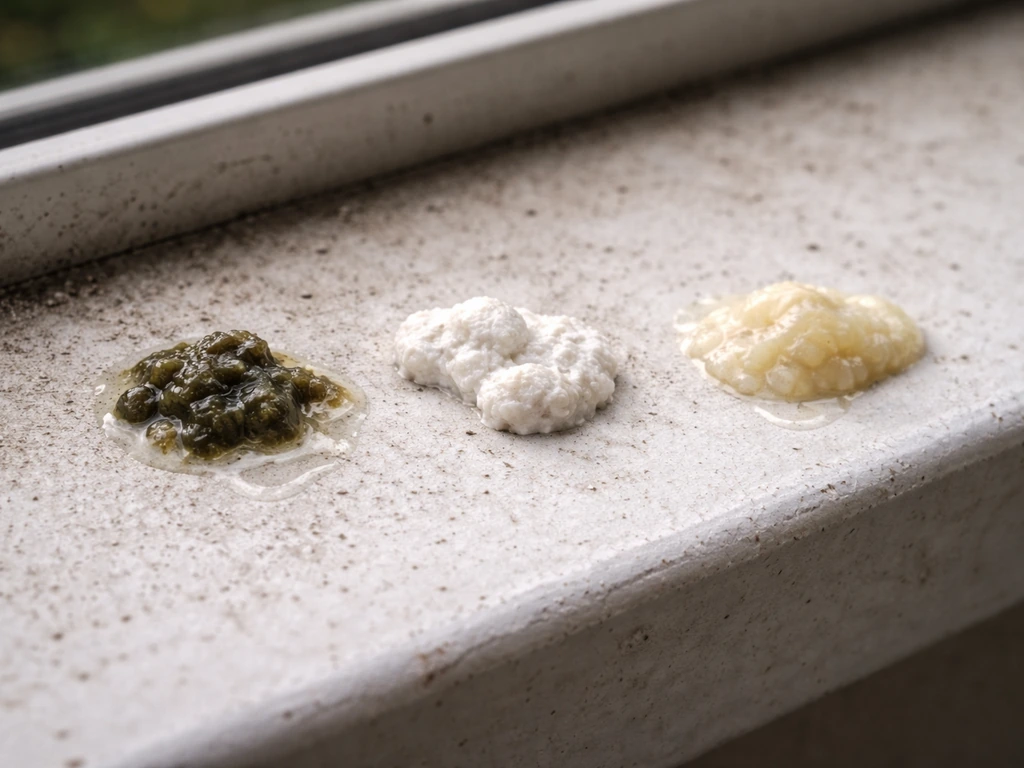
Quick read: how to interpret bird poop color in plain English
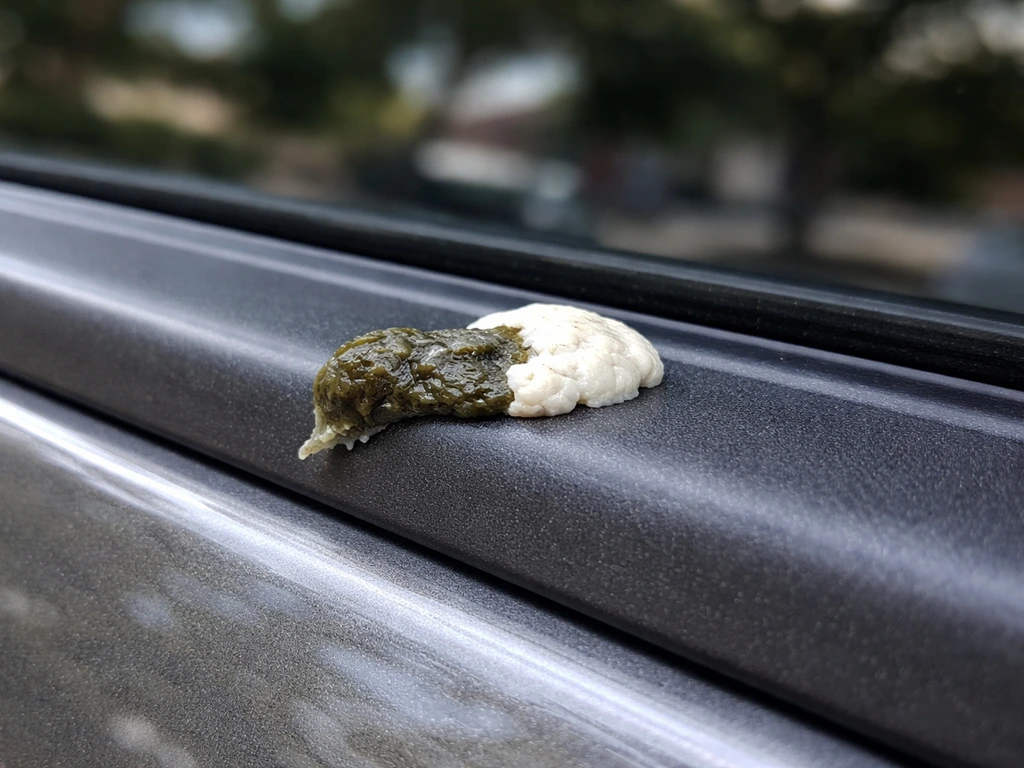
If you're outdoors and you just found a dropping on your car, windowsill, or jacket, here's the fastest way to read it. The white portion is nearly always the urate cap, not the feces. The dark portion reflects the bird's recent diet. Green or greenish-brown feces are completely normal for many common species, especially pigeons, since they eat seeds, grains, and plant matter. Reddish or purple streaks usually mean the bird has been eating berries. Black or very dark droppings may indicate fruit, dark berries, or certain seeds. When the urate cap itself changes from off-white or cream to bright yellow or vivid green, that's when you should start paying closer attention, especially if it's a pet bird, because it can signal liver or kidney stress.
For pet or caged birds, the rules are tighter. Your bird's droppings are a daily health snapshot. Changes in color, consistency, volume, or smell that persist beyond a meal or two, especially alongside behavioral changes, are worth a call to an avian vet. For wild birds, you're mostly reading context: species, location, and what's in season.
Color-to-cause guide: diet, urates, and what's actually normal
Here's a practical breakdown of what different colors typically indicate. Keep in mind that droppings have three components: the fecal portion, the urate portion (white/cream cap), and liquid urine. Most of what you see and interpret is the fecal and urate portions combined.
| Color Observed | Most Likely Cause | Normal or Concerning? |
|---|---|---|
| Dark brown or dark green feces + white urate cap | Typical seed, grain, or plant-based diet; pigeon droppings look exactly like this | Normal |
| Green feces (brighter than usual) | High leafy green intake, some fruits, or stress in pet birds | Usually normal; monitor if persistent |
| Purple or reddish feces | Berry-heavy diet (berries, grapes, cherries) | Normal, diet-related |
| Black or very dark feces | Dark berries, certain seeds, or internal bleeding (if no dietary explanation) | Diet-related is normal; unexplained black warrants attention |
| Red feces or red streaking | Beets or red berries (dietary), or blood from intestinal bleeding | Dietary red is normal; unexplained red is a red flag |
| Yellow or bright green URATES (the white cap portion) | Possible liver disease, infection, or bile pigment processing issue | Concerning, especially in pet birds |
| Chalky, very white, voluminous urates | Dehydration or high-protein diet concentrating uric acid | Monitor hydration; concerning if prolonged |
| Watery or liquid droppings | High water intake, stress, fruit-heavy diet, or diarrhea/infection | Occasional is normal; persistent is a concern |
| Completely colorless/white droppings | All-urate output with little fecal matter; sometimes seen with fasting or illness | Concerning if consistent |
The critical distinction most people miss is between the fecal color and the urate color. The white cap is supposed to be white or off-white. If that white cap turns yellow or vivid green, that's a urate abnormality, not a diet-based fecal color change, and it's associated with liver disease or systemic infection in birds. Diet changes the feces. Disease can change the urates.
How to narrow it down: location, texture, size, freshness, and likely bird type
Color alone rarely gives you the full picture. Four other details will help you identify the species and whether the situation is worth any concern.
Location and pattern
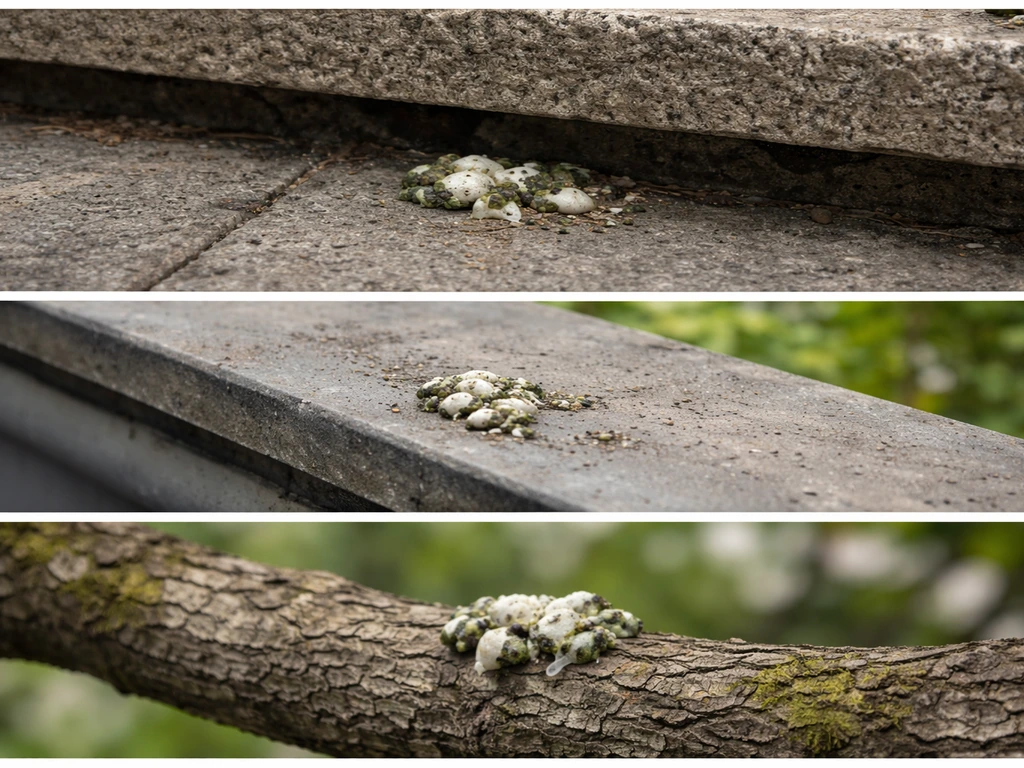
Where droppings appear tells you a lot. A cluster of droppings under a ledge, rooftop edge, or tree branch means a bird is roosting there regularly. Birds tend to use the same spots repeatedly, so a pile of droppings is almost always beneath a latrine perch, not a random event. Droppings splattered on a horizontal surface like a car hood in a parking lot point to perching birds overhead. Droppings on a windowsill or inside a building near an entry point suggest a bird has found a way in.
Size and texture
Larger, more voluminous droppings typically come from larger birds: pigeons, crows, gulls, and geese. Small neat splats with a defined urate cap suggest songbirds. Geese produce large, elongated, greenish droppings that look distinctly different from the compact white-capped pellet of a pigeon or sparrow. Owls and raptors are a special case: they produce pellets (compacted masses of undigested fur, feathers, and bone that they regurgitate) which are sometimes confused with scat. If you find a dry, gray, fibrous mass under a tree, that's likely an owl pellet, not a dropping.
Freshness
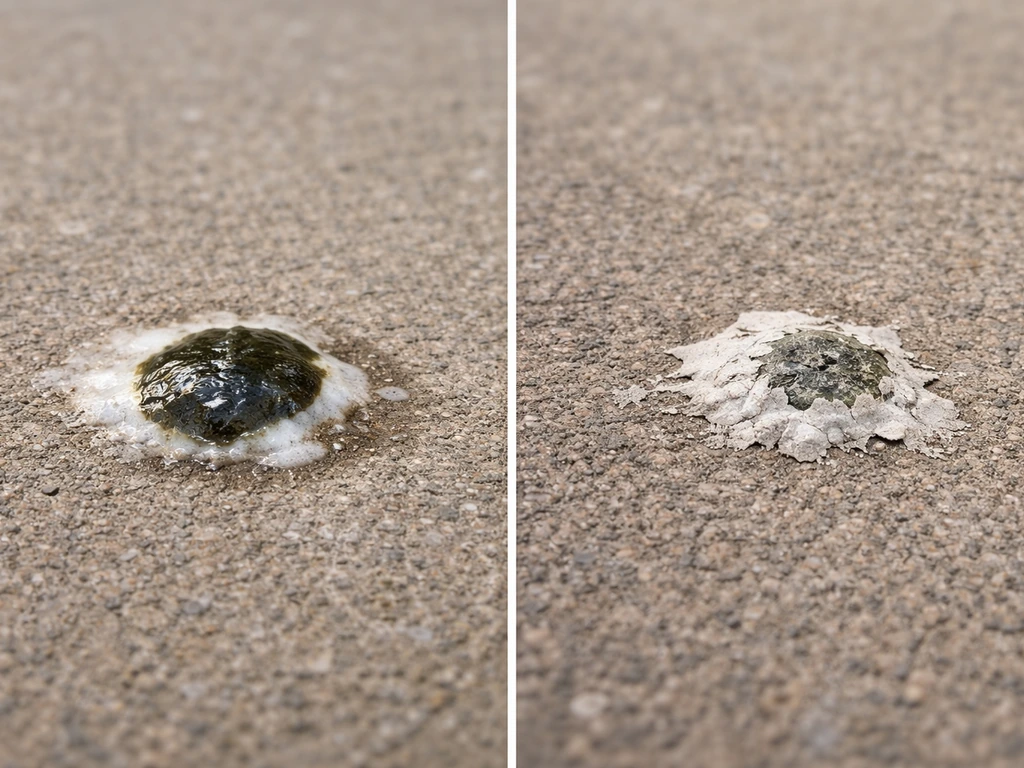
Fresh droppings are moist, glossy, and clearly two-toned. Older droppings dry out, lighten in color overall, and become harder and more powdery, which is also when they become more of a respiratory hazard if disturbed. If you're seeing fresh droppings daily, a bird or birds are actively roosting or feeding nearby. That's useful context for both identification and deciding whether cleanup is urgent.
Streaking versus plopping
Birds in flight produce elongated streaks because of their forward momentum. Perching birds produce more circular or slightly oval drops. A long vertical streak on a wall or fence post usually means a bird perches directly above and drops while sitting. Diagonal streaks indicate a bird was moving when it went.
Health and safety red flags: what's normal versus what needs action
For wild birds outdoors
Outdoor bird droppings are a normal part of any environment with birds present. The main human health risks aren't from a single dropping on your jacket but from accumulations of droppings, particularly in enclosed or poorly ventilated spaces. The fungus that causes histoplasmosis can grow in soil enriched by bird or bat droppings, and the risk comes from disturbing dried material and breathing in the dust. Psittacosis, a bacterial infection, is another disease linked to bird droppings. These risks are real but largely preventable with basic precautions during cleanup.
Red flags for outdoor situations include large accumulations of dried droppings in attics, crawl spaces, sheds, or under roosting areas with poor ventilation. If you're dealing with something like that, you're not in casual-cleanup territory. The CDC and NIOSH specifically recommend professional hazardous waste handling for large accumulations.
For pet birds indoors
With a caged bird, you have the advantage of seeing their droppings every day and noticing changes quickly. Normal droppings should have a consistent dark fecal portion and a cream or off-white urate cap. Watch for these specific warning signs:
- Bright yellow or vivid green urates (the normally white cap portion) — possible liver disease or infection
- Red or black feces without any recent dietary explanation involving berries or dark seeds
- Persistent watery or liquid droppings lasting more than a day or two
- Significant drop in dropping volume combined with lethargy or loss of appetite
- Strong or unusual odor from droppings alongside other behavioral changes
Any of those signs in a pet bird, especially combined with fluffed feathers, reduced activity, or changes in eating or drinking, warrants a call to an avian vet the same day. Birds mask illness instinctively, so by the time symptoms appear in behavior, the problem is often already advanced.
Bird flu considerations
If you keep backyard poultry or are near a reported bird flu outbreak, the CDC recommends avoiding any contact with bird droppings, waste, or feathers without PPE, and specifically cautions against stirring up dust or dried material that could disperse the virus into the air. This applies especially when cleaning coops or areas where sick or dead birds have been.
Cleaning and handling safely: what to do today
PPE before you touch anything
For a single fresh dropping on a hard surface, standard precautions apply: avoid touching it with bare hands, and wash your hands thoroughly with soap and water afterward. For any cleanup involving accumulated or dried droppings, the recommended PPE steps up considerably: disposable gloves at minimum, an N95 or equivalent respirator if you're in an enclosed or dusty space, and eye protection if material could splash or become airborne. Boot covers and disposable outerwear are recommended for larger-scale cleanups.
The wet-before-you-move-it rule
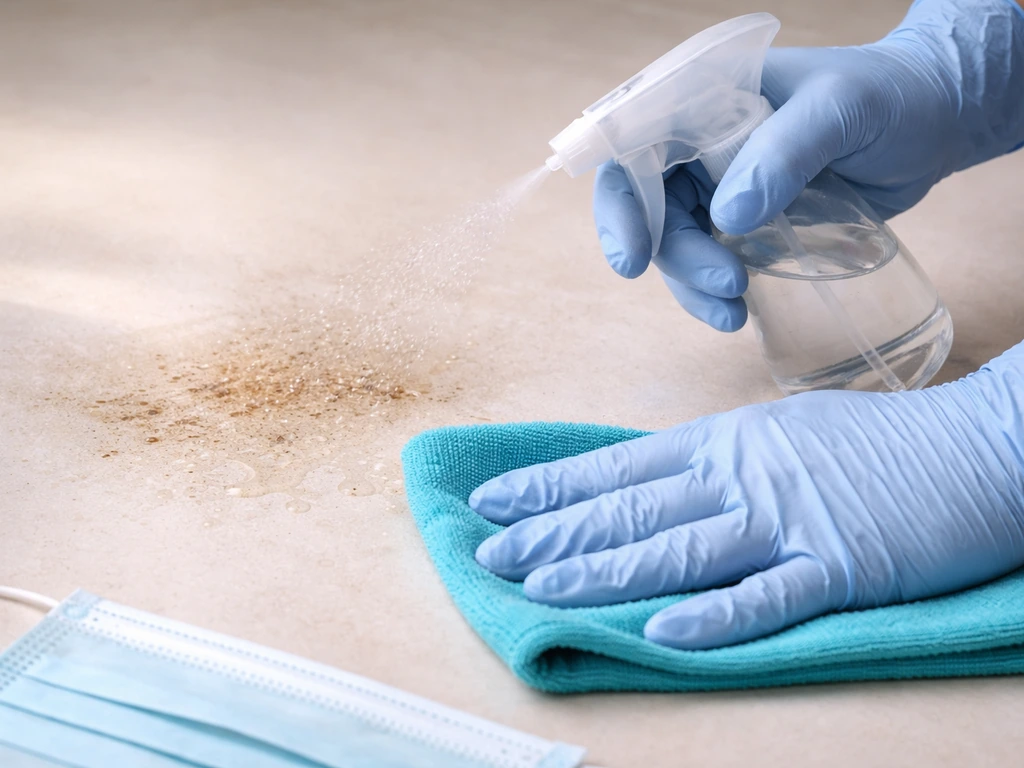
This is the single most important practical step: wet the material before you disturb it. CDC and NIOSH guidance specifically calls out the risk of aerosolized dried droppings and recommends carefully spraying or wetting material so it can be collected into a sealed container without generating dust. Never dry-sweep or vacuum dried bird droppings without a HEPA filter. Wet it first, then scoop and seal.
Cleaning and disinfecting
The standard approach is a two-step process. First, clean the surface with soap and water to remove visible dirt and organic material. Then disinfect. For most household surfaces, a solution of 1 part bleach to 10 parts water works well and is specifically recommended by Washington State University's environmental health guidelines for bird and bat waste. Alternatively, use an EPA-registered disinfectant with label claims against influenza A viruses, following the manufacturer's contact time instructions: the surface needs to stay visibly wet for the full contact time listed on the label to actually work.
Preventing re-soiling
If birds are returning to the same spot, you'll need to address the attractant or the access point. Physical deterrents like bird spikes, wire, or netting work for ledges and rooflines. Removing food sources (uncovered trash, accessible pet food, bird feeders too close to the problem area) helps reduce congregation. For indoor infestations, seal entry points after confirming all birds have left the space.
Spiritual and cultural interpretations of bird poop colors
There's a long-running piece of folklore, found across cultures from Eastern Europe to parts of Asia and carried into modern Western superstition, that being pooped on by a bird is a sign of good luck or incoming financial fortune. The reasoning, such as it is, follows a classic inversion logic: something embarrassing or unpleasant happens to you, so the universe must be balancing the scales. Some sources connect this specifically to pigeons or doves, birds with existing positive symbolism around peace and purity. Crows and ravens, with their more ambivalent folkloric reputation, get a more mixed symbolic treatment in the same tradition.
Color-specific spiritual meanings, like "white poop means financial blessing" or "green poop means growth is coming," are largely modern and inconsistently documented. If you're also trying to interpret what the droppings might mean beyond color, see the bird guano meaning explanation as a related perspective. They circulate in the kind of interpretive content that blends general bird symbolism with color symbolism and presents the combination as ancient wisdom. It isn't, at least not in any traceable historical tradition. That doesn't mean people don't find meaning in it: folk interpretation is a living practice, not a historical archive. But it's worth being clear that white poop means urates, not prophecy, and green feces means the bird ate plants.
Where cultural meaning is more consistently documented is in the encounter itself rather than the color. Being singled out by a bird, having one land near you or leave a mark on you, has been interpreted across many traditions as a moment of contact with something beyond the everyday. The specific bird matters more than the dropping's color in most folklore traditions. A crow dropping on you carries different symbolic weight in many cultures than a dove or a sparrow, regardless of color. The color of the dropping rarely appears as a symbolic variable in traditional sources; that layer is mostly a modern addition.
This site covers bird symbolism, omens, and the cultural weight of bird encounters in depth elsewhere, including in the broader discussion of bird droppings meaning and what different bird species are thought to signal when they cross your path. If you're also looking for the symbolism side, the phrase bird droppings meaning is commonly used for interpreting those cultural claims. The practical takeaway here is: interpret the biology first, and treat the symbolism as a separate layer of meaning that you can engage with or not, depending on your own relationship to folklore.
How to confirm: observation checklist and photo-based ID
If you want to identify the source bird or track whether something unusual is going on, here's what to note when you find droppings. A photo paired with these observations will get you a reliable identification from a naturalist, pest control specialist, or avian vet.
- Color of the fecal portion (dark center): brown, green, black, red, purple, or other
- Color of the urate cap (the white part): white, cream, yellow, or another color
- Size: roughly how wide and long is the dropping? Pea-sized, nickel-sized, or larger?
- Texture and consistency: firm and defined edges, paste-like, liquid, or watery
- Freshness: moist and glossy, partially dried, or fully dried and powdery
- Shape: circular (perched bird), elongated streak (bird in flight), or tubular
- Location: on what surface, and is it isolated or part of a cluster?
- What's directly above: branch, ledge, wire, or building feature?
- Time of day you found it: some species are more active in morning, others at dusk
- Any feathers, pellets, or other material nearby that might indicate a roost
When taking a photo for identification, include something for scale (a coin, pen, or your hand nearby), shoot in natural light rather than flash, and photograph both the full dropping and a close-up of the fecal and urate portions separately if possible. iNaturalist and similar platforms have communities that can help with identification if you post a well-lit photo with location and habitat details. For pet bird droppings, photograph fresh material and bring or email the photo to your avian vet; they'll often triage by photo before asking you to come in.
The bottom line is that bird poop color is genuinely readable once you know what the two parts are and what drives each one. The white cap is almost always urates, the dark center is diet. Unusual colors in either portion are meaningful signals, not noise. And whether you're dealing with a flock of pigeons on your roof, a pet parrot whose droppings look off, or a bird encounter you want to read symbolically, the same principle applies: start with what you can actually observe, then layer on interpretation from there.
FAQ
Is yellow or green poop always a sign the bird ate something unusual?
Not necessarily. In most cases, yellow or vivid green in the white cap (the urate portion) is more concerning than a change only in the dark fecal portion, because urate color shifts can reflect liver or kidney stress rather than diet.
How long does it take to know if a droppings color change is temporary or a health problem (for a pet bird)?
Treat it as a “watch closely” change for no more than a meal to a couple of cycles. If color, volume, smell, or consistency keep shifting across more than one day, or if behavior changes appear (fluffed posture, reduced activity, appetite drop), contact an avian vet promptly.
Can I tell the difference between bird poop and other stains like drool, lizard waste, or insect residue just by color?
Usually no. Color can mislead because different organisms leave different mixes of solids and fluids. The more reliable clue is structure, two-toned droppings with a dark fecal center and a white/off-white urate cap, or pellets if it is a raptor area.
What should I do if the droppings are on a porous surface like fabric, carpet, or wood?
Do not soak and then scrub dry, dusting it. First wet the area so it does not aerosolize, blot and remove solids, then clean with soap and water before disinfecting. Fabric may not tolerate strong disinfectants, so test a small hidden area or use an enzymatic cleaner for the first pass.
Is it safe to use a regular household cleaner instead of disinfecting after cleanup?
For small, fresh messes, soap-and-water cleaning helps, but disinfection matters when material is dried, in enclosed spaces, or when you suspect a higher-risk situation (large accumulations, coops, or sick birds). Also make sure the surface stays visibly wet for the disinfectant’s listed contact time.
Can I vacuum bird poop if I have a shop vac or a regular vacuum?
Avoid vacuuming dried droppings unless the vacuum is properly equipped with a HEPA filter and the setup is controlled. In general, the safest approach is to wet first, scoop into a sealed container, then clean and disinfect to avoid creating airborne dust.
What if I notice bird droppings inside my home near an entry point, but I also want to keep the birds from returning?
Clean and seal in sequence. First confirm birds have left, then remove droppings carefully, disinfect, and seal access points. Address attractants like uncovered trash or accessible pet food, and consider blocking ledges or windowsills if birds are roosting there regularly.
How should I photograph droppings for vet or pest ID if it is dry and crumbly?
Photo while it is still in place and show scale, use natural light, and capture both the overall pattern and a close-up of any remaining fecal versus urate portions. If it is dry, do not blow or brush it, instead lightly mist to prevent dust before you handle anything.
Are owl pellets the same health risk as bird droppings?
They can pose similar respiratory concerns because dried material can become dusty. The safest practice is the same as other dried droppings: do not dry-sweep, wet before handling, wear disposable gloves, and use eye protection in dusty or enclosed areas.
If bird poop got on my skin or clothing, do I need to disinfect my body or just wash?
Wash skin with soap and water. For clothing, remove it carefully, do not shake it, and launder normally after pre-wetting and blotting if needed. Disinfecting the skin is usually unnecessary, the key is thorough washing and avoiding further contact.
Could bird droppings mean bird flu or other outbreaks, and what is the safest response for backyard poultry?
If you have poultry and there is a reported outbreak risk, avoid any contact with droppings, feathers, and bedding without proper PPE, and do not stir dust. Focus on minimizing aerosolization, keep people away, and follow local public health or animal health guidance for suspected exposure.
Next Articles
Bird Sighting Meaning: How to Interpret What You Saw
Interpret bird sighting meaning with context, behavior, symbolism, and practical steps to identify the species and next
Bird Visit Meaning: Spiritual vs Real-World Reasons
Bird visit meaning explained: spiritual symbolism vs real-world causes like weather, food, nesting, dreams, and safe nex
Bird-Watching Meaning: Definition, Signs, and How to Start
Define bird-watching meaning, why people do it, key behaviors and idioms, plus beginner tips to start responsibly.