
Bird poop on your left shoulder is most commonly interpreted as a sign of good luck, incoming wealth, or protection. That is the short answer, and it is the dominant reading you will find across Western folklore today. But the meaning does shift depending on which side of your body gets hit, which body part takes the impact, and which cultural or spiritual lens you are applying. If you just had an incident and want a quick answer plus some practical cleanup advice, you are in the right place.
Bird Poop on Left Shoulder Meaning and Superstition

Marcus Holloway
22 Mar 2026

Left shoulder vs. right shoulder: the quick breakdown
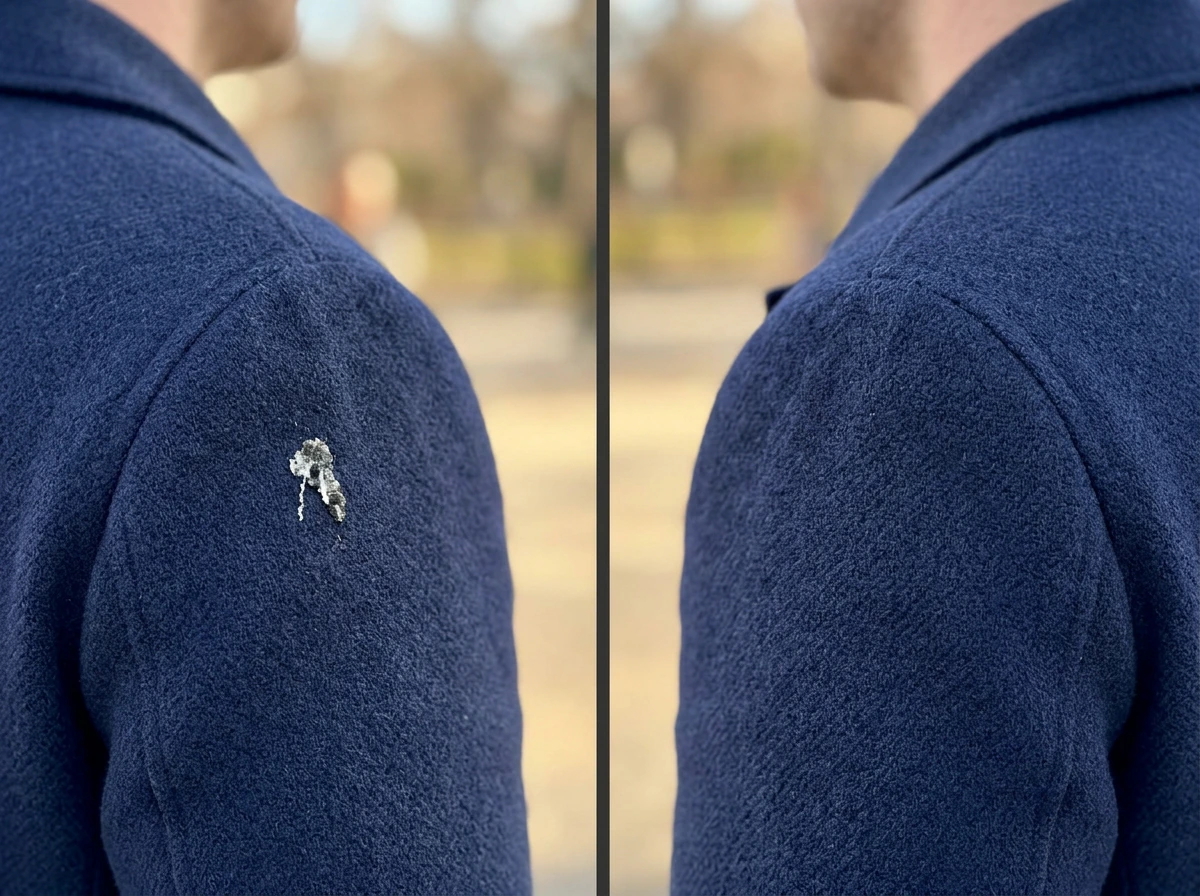
In mainstream contemporary superstition, bird poop landing on you at all is considered lucky. The USC Digital Folklore Archives records one of the most widely repeated versions: getting hit by a bird means seven years of good luck, with some variants specifically associating it with money, wealth, and prosperity. So before you get too hung up on left vs. right, know that the base interpretation is positive no matter which shoulder catches it.
That said, left vs. right does carry symbolic weight in folklore. The right side has traditionally been the "good" side in Western tradition, linked to angels, protection, and blessings. The left side has a more complicated history, tied in some traditions to caution or temptation, and in others to intuition, mystery, and hidden fortune. For bird poop specifically, most modern superstition sources describe the left shoulder as a sign of good fortune or protection arriving from an unexpected direction, rather than a warning. A smaller number of older or regionally specific traditions treat the left side as a cautionary omen, but those are the minority reading today.
| Location | Common Superstition Reading | Tone |
|---|---|---|
| Left shoulder | Good fortune, protection, unexpected blessing | Positive (majority view) |
| Right shoulder | Luck, blessings, confirmation of good path | Positive |
| Head | Major luck, spiritual message, significant change incoming | Very positive |
| Left arm/hand | Financial gain, creative opportunity, new path opening | Positive |
| Right arm/hand | Success in current work, reward for effort | Positive |
| Left leg/foot | A journey or change of direction bringing good results | Positive |
| Right leg/foot | Stable progress, luck in forward movement | Positive |
These mappings are not sourced from one unified tradition. Different writers and regional superstitions assign different specifics to each body part, so treat the table above as a general guide to how the pattern tends to run rather than a fixed rulebook.
Superstition and luck: is this actually a good sign?
By most measures, yes. The superstition that bird poop brings good luck is genuinely widespread, crossing cultures from Russia and Turkey to the UK and the United States. Birdfact notes the belief is not limited to any single culture, which is worth remembering when you see wildly specific claims about it. The "seven years of good luck" version is particularly common in North American folklore, while European variants often focus on money and prosperity arriving soon after the incident.
The caution angle is less common but real. Some traditions, especially those with a more strict left/right moral binary, interpret the left side as an omen to pay attention rather than celebrate. In Russian folklore, for example, the left shoulder was associated with the "dark" or "temptation" side in older superstitions. But even in those contexts, bird contact was rarely seen as outright bad luck. It was more of a "pay attention" signal than a curse.
The honest takeaway: if someone tells you bird poop on your left shoulder is bad luck, they are working from a minority tradition. The dominant reading across most modern folklore is that it is a lucky event, full stop.
Spiritual meanings and how to actually use them

The spiritual framing goes a layer deeper than simple luck. In a spiritual context, a bird dropping on your left shoulder is often read as a message rather than just a random event. Birds have been used as omens and messengers across cultures for thousands of years. The practice of reading bird behavior as divine communication even has a name: ornithomancy, a form of divination dating back to ancient Greece and Rome. In that tradition, the appearance of a bird, its direction of flight, and its behavior were all meaningful signals from the divine realm.
From a spiritual standpoint, the left side of the body is often associated with the receptive, intuitive, and inner-life dimension of a person. Getting a bird dropping on your left shoulder in this framework might be interpreted as a nudge to pay attention to your inner guidance, or a sign that protection is coming from an unexpected or unseen source. It is less about external luck and more about what is shifting internally for you.
How do you actually apply a spiritual interpretation like this? A few practical approaches people use:
- Treat it as a prompt to reflect on what is happening in your life right now, particularly any decisions you have been avoiding or instincts you have been ignoring.
- Notice which species of bird was involved. Pigeon, crow, robin, and hawk all carry different symbolic associations in bird folklore, and pairing the species meaning with the body-location meaning gives a more layered reading.
- If you practice any form of journaling or meditation, the day of the incident is a good time to document what was on your mind and revisit it in a few weeks to see if anything significant shifted.
- Avoid forcing a specific outcome. Spiritual interpretations of bird encounters work better as context for reflection than as predictions of specific events.
The broader world of bird symbolism (covered in related articles on what it means when a bird poops on you generally, or on your car) follows the same basic principle: the event is treated as a moment worth noticing, not a guaranteed prophecy.
The astrology angle: what people mean when they search for it
You will find a lot of content online linking bird poop on the left shoulder to astrology, but it is worth being direct about what that content actually is. There is no classical or widely recognized astrological doctrine that maps bird droppings to specific zodiac signs or planetary transits. Standard astrology texts and recognized astrological authorities do not address this scenario. What you are mostly seeing when you search for "bird poop on left shoulder astrology meaning" is modern internet folklore that borrows astrological language to add a personalized dimension to the superstition.
That does not mean the astrological framing is useless. It just means you should read it as creative cultural interpretation rather than established astrological doctrine. The way these modern guides typically work is by linking the left shoulder to receptive or lunar energy (since the left side is often associated with moon symbolism in esoteric traditions), and then connecting that to whatever themes are currently active in your life or birth chart. If you are already someone who works with astrology, you might find it interesting to consider what house your natal Moon sits in, or what current transits are active, and whether the timing of the incident feels resonant.
But if astrology is not your framework, the simpler superstition or spiritual reading will serve you just as well. The astrological angle is one lens among several, not a more authoritative one.
Why the body part and side actually matter in folklore
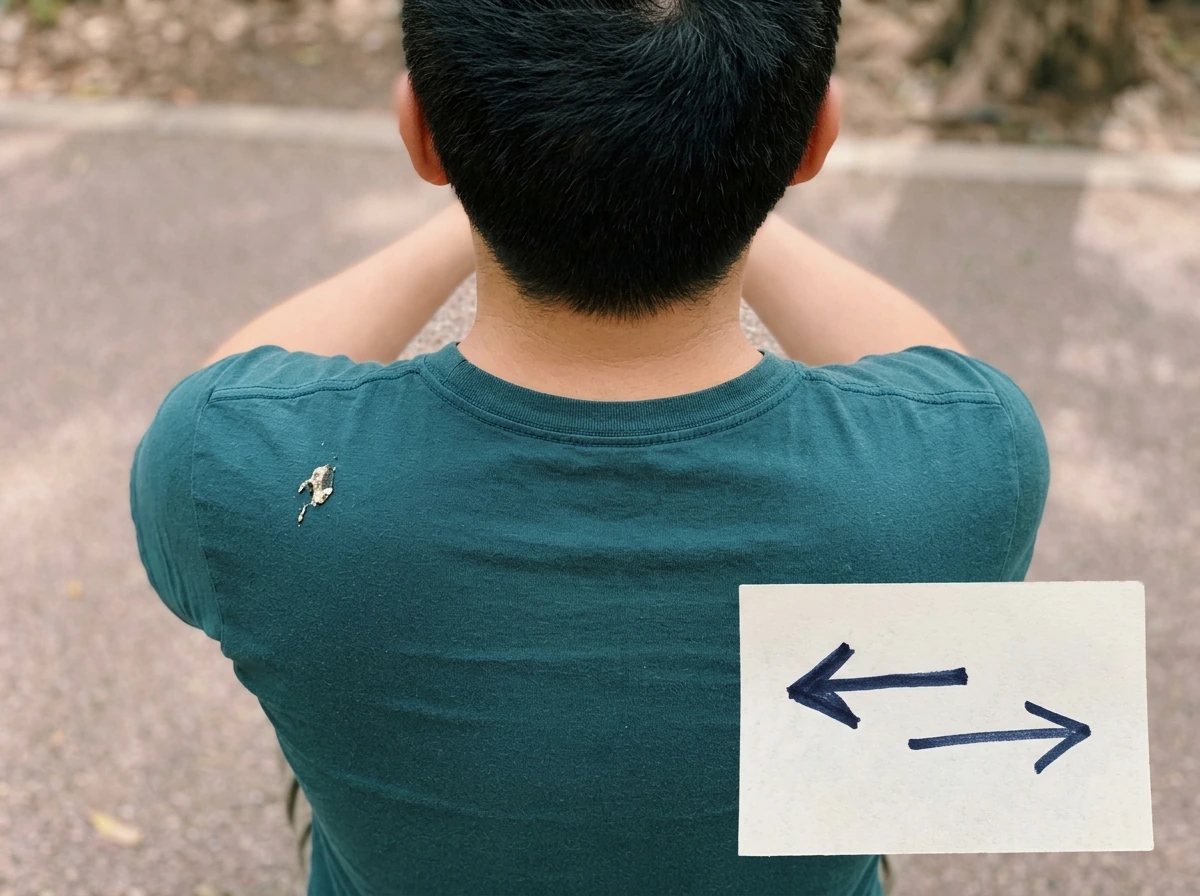
The left/right distinction in folk belief is ancient and consistent across many cultures. The most familiar Western version is the image of an angel on your right shoulder and a devil on your left, which appears in medieval Christian iconography and is still referenced in modern culture. This framing made the right side the "good" or "safe" side and the left side the side associated with temptation, caution, or the shadow self. In Russian folklore specifically, this angel/devil shoulder symbolism was formalized into everyday superstitions.
For body parts beyond the shoulder, the general folk pattern runs like this: <anchor>the head is the highest-stakes zone</anchor>, associated with messages of major change or significant luck. The torso (chest, back, shoulder) is associated with luck related to livelihood and protection. The arms and hands relate to work, creativity, and financial opportunity. The legs and feet relate to direction, journeys, and forward movement in life. Again, different sources disagree on the specifics, but these broad patterns are reasonably consistent across modern superstition writing.
Left vs. right within those zones tends to follow the receptive/active split: left for incoming energy, intuition, and what is arriving in your life; right for what you are putting out, your actions, and your external work. So left shoulder specifically suggests something is coming to you, rather than something you are creating through your own effort. That is the folk-logic behind most of the "protection arriving from an unexpected source" interpretations you will encounter.
What to actually do right after it happens
Superstitions aside, bird droppings are a genuine hygiene concern and you should clean up promptly. If you also want the practical angle on what the bird contact might mean for you beyond luck, see the bird pooping good luck cleanup guidance in the quick checklist section. Here is a practical approach that covers both the immediate cleanup and the small but real health considerations involved.
Clean it off your skin and clothing quickly
- Do not rub or smear the droppings. Lift or blot away the bulk of it first using a cloth, tissue, or paper towel.
- Wash the affected skin area thoroughly with soap and running water. The CDC recommends thorough handwashing with soap and running water after any contact with bird droppings, and the same principle applies to any skin surface.
- For clothing, rinse the soiled area with cold water before treating it. Hot water can set the stain. A pre-soak with a laundry enzyme cleaner works well on dried droppings.
- Avoid touching your face, eyes, or mouth before you have washed your hands completely.
Understand the actual health risk (it is small but worth knowing)
For a single, casual exposure like a bird dropping landing on your shoulder, the health risk is low for most healthy adults. The main concerns health agencies flag are psittacosis (a bacterial infection) and histoplasmosis (a fungal infection), both of which are primarily associated with breathing in dust from dried droppings rather than fresh contact with skin. The CDC specifically notes that psittacosis can occur after breathing in dust containing dried bird droppings or secretions, which is more relevant to people who clean bird cages or coops regularly than to someone who got hit while walking outside.
Bird flu is another pathogen the CDC flags in the context of bird droppings, with guidance to avoid stirring up dust, waste, and feathers when cleaning, and to use soap and water first before disinfecting. For a fresh outdoor incident on clothing or skin, your main job is a good wash, not a medical procedure.
If you develop any symptoms in the days following (respiratory issues, fever, unusual rash), or if you are immunocompromised, it is worth mentioning the exposure to your doctor. WorkSafe Queensland advises seeking advice from a general practitioner or public health unit if you have any concerns about possible exposure from contact with bird droppings. That is good general guidance for anyone who feels uncertain.
A quick cleanup checklist
- Blot (do not rub) the fresh dropping off skin or fabric immediately
- Wash affected skin with soap and running water for at least 20 seconds
- Change out of affected clothing if possible, or rinse the spot with cold water
- Avoid touching your face before washing thoroughly
- If cleaning a larger area of dried droppings (like a car hood or outdoor furniture), wear gloves and avoid dry-brushing, which can aerosolize particles
- For surfaces, clean with soap and water first to remove visible material, then disinfect with an EPA-approved product
- See a doctor if you develop respiratory symptoms, fever, or skin irritation that does not resolve within a few days
One note if you are cleaning up bird droppings from a larger area like a car (a situation covered separately in related articles on bird poop on car meaning islam): the same principles apply, but the scale means you should be more deliberate about gloves and avoiding dry scrubbing. If you want the adjacent take for your vehicle, the bird poop on car meaning page breaks down the common interpretations and what people believe it signals. For more on what it can mean when bird poop lands on your car, see the bird pooping on car meaning guide <a data-article-id="493F026C-E638-440E-BDCF-93AB8873270D">bird poop on car meaning</a>. The CDC and NIOSH both recommend gloves when hands will contact significant amounts of droppings, and the same caution about not aerosolizing dried material stands.
Putting it all together
Bird poop on your left shoulder most commonly means <a data-article-id="9202790B-E38B-4D12-85F0-17C479CB6D30"><a data-article-id="2DE9BF90-11AC-4179-9BC2-595989F4853A">good luck</a></a> is coming your way, at least by the standards of the dominant folk tradition. The spiritual reading adds a layer of reflection and incoming protection. The astrological framing is a modern overlay that is interesting but not grounded in classical doctrine. The left side skews toward receptive, arriving energy in most folk interpretations, so the prevailing read is that something positive is heading toward you rather than something you need to worry about.
What you should definitely do, regardless of what you make of the symbolism, is wash up properly and promptly. The meaning you assign to the moment is yours to decide. If you are specifically searching for the bird poop on me meaning, you will usually find the same left shoulder themes of luck and protection. The soap and water part is non-negotiable.
FAQ
Does it matter if the bird poop landed on the front or back of my left shoulder?
In most folklore guides, the shoulder side matters more than front versus back, but some spiritual readers treat the front as “manifesting” and the back as “unfolding.” If you want to apply the symbolism consistently, keep the main rule as left equals incoming, then use front as near-term visible changes and back as longer, less obvious protection.
What if it hit my left shoulder but also got on my neck or collar?
Folklore usually groups the collar and neck with the upper body, but it can shift the read toward “message” or “communication” rather than pure luck. Practically, treat it as a higher-coverage contact area: wash the skin and also launder or thoroughly treat the collar fabric to remove residue and avoid recontamination.
Is bird poop on the left shoulder bad luck if I have done something “wrong” that day?
Most major Western versions frame it as positive regardless of your actions, and “bad luck” readings are a minority. If you are trying to assign meaning, consider using the spiritual version as a prompt to adjust behavior rather than an omen of punishment (for example, slow down, check on responsibilities, or protect your focus).
How many drops count as “the sign,” does one spot mean the same as multiple spots?
Traditional superstition often treats any landing as a sign, but some people interpret heavier or repeated hits as a “stronger” message. For a practical approach, treat the health risk the same (clean promptly), then decide meaning based on your pattern, not on the number alone, so you do not overfit to chance.
What should I do if it got in my hair or near my face while cleaning?
Avoid rubbing your face or eyes first, then wash hands thoroughly before touching anything else. If it contacted hair, shampoo and rinse well, and if anything smeared near the eye area, use gentle eyewash or saline and monitor for irritation rather than assuming it is harmless.
Does the meaning change if the bird was in flight versus sitting nearby?
Folklore and spiritual readings sometimes use the bird’s behavior as “the message,” such as arriving quickly (direct incoming help) versus lingering nearby (something coming gradually). There is no fixed rule, so if you want a consistent framework, link “left shoulder” to incoming protection and let the bird’s behavior set the timing, not the moral outcome.
Can I mix astrology with the left-shoulder meaning, or will it conflict?
You can, as long as you treat astrology as a creative lens, not a definitive doctrine. A practical way to use it: only make a short, testable intention from it (for example, “this week, focus on intuitive decisions”), then rely on real-world actions, since astrological websites vary widely and classical texts do not map droppings to zodiac events.
What if someone tells me a left-shoulder hit is a warning, how do I decide what to believe?
Use decision hygiene: majority-read first (often good luck or protection), then check whether the “warning” interpretation is just your fear speaking. If you want to be balanced, treat it as a cue to be careful and prepared, not as proof of disaster, and let your cleanup and daily routine guide you.
Are there higher-risk situations where I should contact a doctor after bird poop?
Yes. Seek medical advice promptly if you are immunocompromised, develop fever or significant respiratory symptoms in the days after exposure, or notice an unusual rash. Also get advice if you were cleaning large amounts of dried droppings and stirred up dust, since inhalation exposure is the bigger concern than brief skin contact.
Is it safe to wipe it off quickly with a tissue and move on?
For most single, fresh incidents, wiping once is better than doing nothing, but the safer standard is soap and water as your final step. Tissue can smear residue and transfer germs to your hands or other surfaces, so wash hands right after and wash the area thoroughly.
If I get bird poop on my left shoulder repeatedly, does that change the meaning or health approach?
Meaning-wise, repeated occurrences are more likely to reflect patterns of where birds roost, paths you take, or time of day, rather than a guaranteed “escalation.” Health-wise, the approach stays prompt and thorough cleaning, but repeated hits are a good reason to adjust your route, protect with a hat or umbrella, and pay attention to frequent exposure if you are regularly outdoors.
Next Article
Bird-Watching Meaning: Definition, Signs, and How to Start
Define bird-watching meaning, why people do it, key behaviors and idioms, plus beginner tips to start responsibly.