Bird-watching (also written as birdwatching or bird watching) means observing wild birds in their natural environment, usually for enjoyment, learning, or both. Cambridge defines it simply as "the blank" rel="noopener noreferrer">hobby of studying wild birds in their natural environment," and Dictionary.com puts it as identifying wild birds and observing their actions and habits in their natural habitat as a recreation. BirdLife International discusses birdwatching, and the research behind it, as a mindful practice that supports the mental-health and reflective angle of birding blank" rel="noopener noreferrer">mindful birding. That is the plain, everyday definition. But if you landed here because you want to understand the fuller meaning of bird-watching, including what birds symbolize, what their behaviors signal, and how the language around birding works, there is quite a bit more to unpack.
Bird-Watching Meaning: Definition, Signs, and How to Start

What Bird-Watching Actually Means
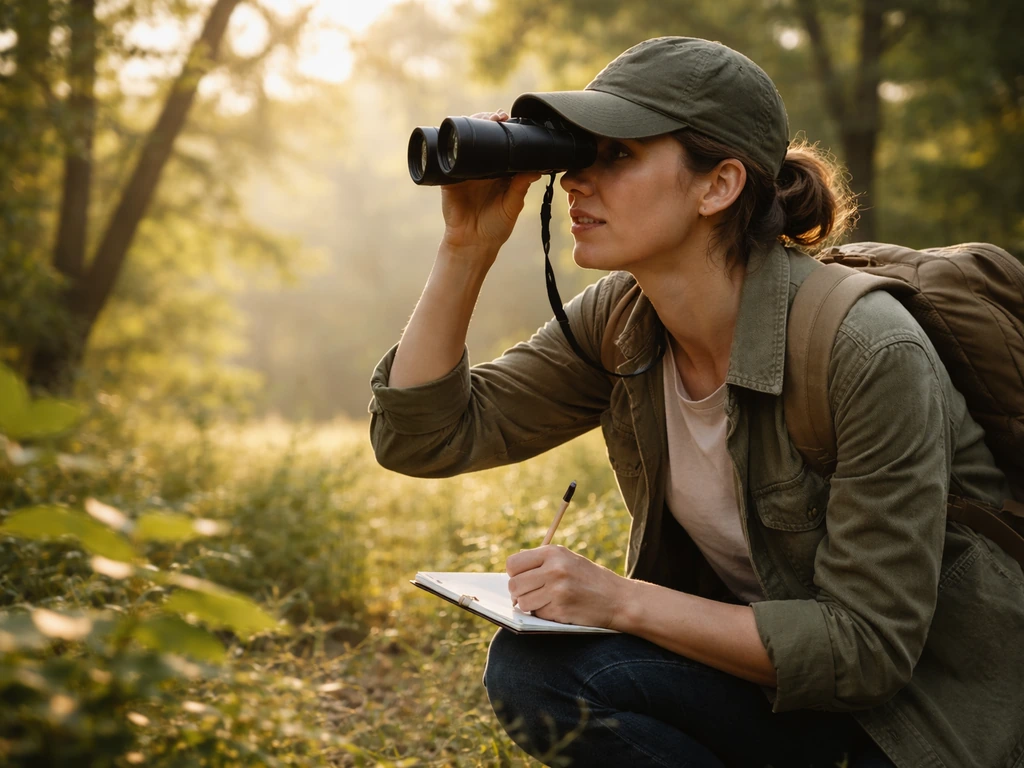
At its simplest, bird-watching is the act of going somewhere, looking at birds, and noting what you see. It requires no license, no certification, and no expensive gear to start. People do it in backyards, parks, coastlines, forests, and wetlands. The term covers everything from a retiree keeping a feeder on the porch to a researcher trekking into a rainforest to document a rarely seen species. Both count. The word "watching" is a little underselling it, though, because serious birders also listen carefully, track migration patterns, and record detailed behavioral observations. But for the purposes of a plain definition: you are outside, you are paying attention to birds, and you are doing it because you want to.
It is worth noting that some people use "birding" and "bird-watching" interchangeably, while others draw a slight distinction, with "birding" suggesting a more active, field-oriented pursuit. For most practical purposes, the terms mean the same thing.
Why People Actually Do It
The reasons people take up bird-watching are more varied than you might expect. BirdLife International lists two pulls that resonate with most birders: the thrill of the challenge of spotting as many species as possible, and the sense of calm that listening to birdsong can bring. Those two things sit at opposite ends of the spectrum, and they both bring people into the hobby.
- Recreation and curiosity: Many people start simply because a striking bird showed up in their yard and they wanted to know what it was.
- Mental health benefits: BirdLife frames birdwatching as a mindful practice, and the research backs that up. Slowing down to pay attention to birds lowers stress and encourages presence in a way that is hard to replicate with a screen.
- Science contribution: The Audubon Society relies on birdwatchers as citizen scientists to inform conservation work. Cornell Lab of Ornithology coordinates projects like NestWatch where hundreds of thousands of people contribute observations each year, building data at a global scale that no research team could manage alone.
- Conservation awareness: The U.S. National Park Service points out that people watching birds in their backyards and wild places provide snapshots of bird populations that help scientists track health and decline.
- Community: Birding clubs, local Audubon chapters, and online platforms like eBird connect people who share the habit.
If you have ever wondered whether you might enjoy it, the honest answer is that most people who try it once find themselves hooked faster than they anticipated. There is something about training your attention on a living thing that is genuinely engaging.
Bird-Watching Terms You Will Actually Encounter
When you start bird-watching, you will run into behavioral and ornithological terms that may seem unclear at first. Here are the most common ones, explained plainly.
Preening
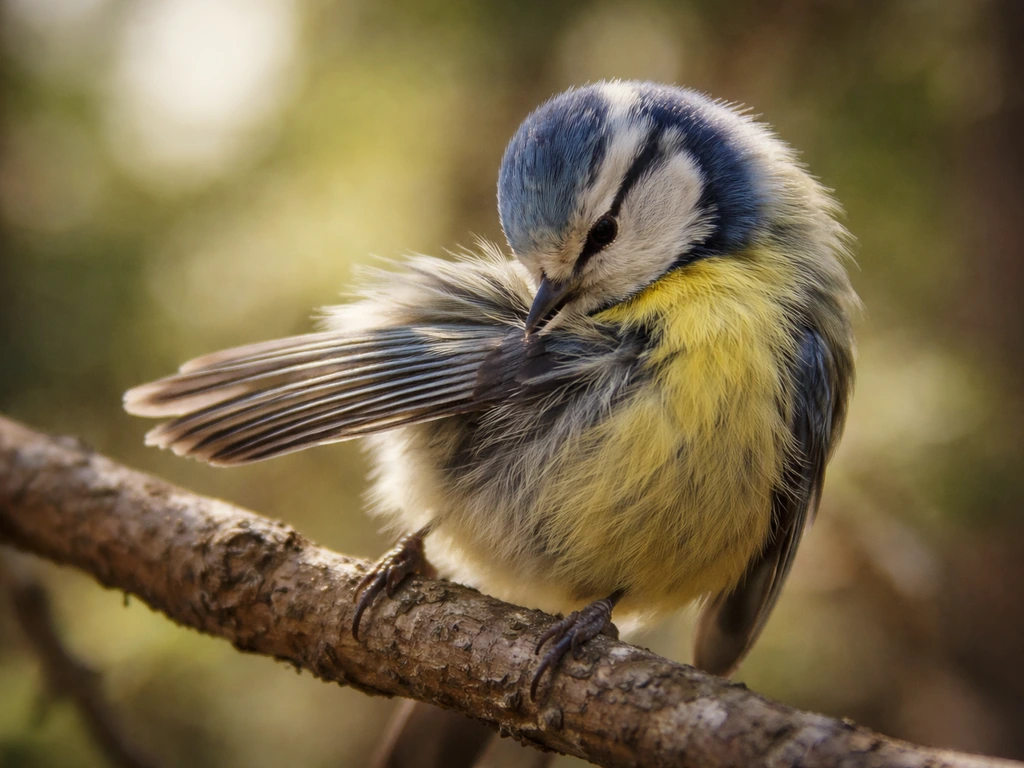
Preening is what birds do to maintain their feathers. Audubon describes it as birds running feathers through their bills to comb out dirt and debris, keep plumage in good condition, and possibly remove parasites. eBird's behavior primers confirm that preening is one of the most common behaviors you will see, used specifically to keep feathers in working shape for flight. When you see a bird sitting still and methodically working its bill through its plumage, that is preening. It is not a sign of distress; it is routine maintenance.
Molting
Molting is the process where birds shed worn feathers and grow new ones. Cornell's Wildlife Health Lab explains that feather loss during molting should reveal normal-appearing skin underneath. Audubon frames it as a normal seasonal life-history process that connects to other annual events like migration. If you see a bird looking a bit scraggly in late summer, it is likely mid-molt and not sick. Recognizing the difference between a molting bird and one that is genuinely unwell is one of the first skills new birders develop.
Nesting
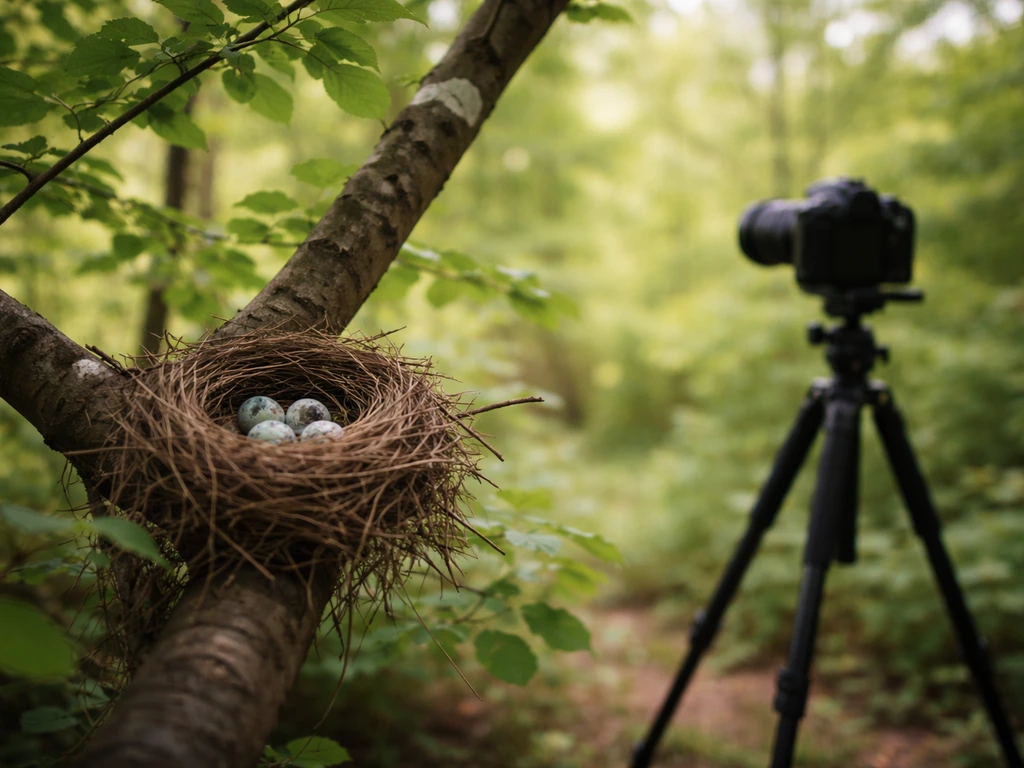
Nesting covers the full sequence of building a nest, laying eggs, incubating, and raising young. Smithsonian's nest-monitoring guidance breaks the stages down as building, laying, incubating, nestling, and fledgling. Spokane Audubon notes that incubating adults may leave nests briefly to feed or cool eggs, so an empty-looking nest is not necessarily abandoned. NestWatch stresses that nest monitoring should not jeopardize the birds or the nest contents, and recommends using binoculars or mirrors to observe from a distance rather than approaching directly.
Other Terms Worth Knowing
| Term | What It Means | When You See It |
|---|---|---|
| Fledgling | A young bird that has grown flight feathers but is still learning to fly | Spring and early summer, often on the ground near cover |
| Lifer | A species you are seeing for the first time in your life | Any time you spot a species new to your personal list |
| Hotspot | A location known for high bird diversity or frequency of sightings, often marked on eBird | When you are planning where to go |
| Tick/Tick list | Informal term for recording a species as seen; a life list of ticked species | Common in conversation among birders |
| Raptor | A bird of prey (hawks, eagles, falcons, owls) | Any time you see a large, soaring bird with talons |
The Cultural and Spiritual Meanings People Read Into Birds
Bird-watching and bird symbolism have always been intertwined. People do not just observe birds neutrally; they interpret what they see. The RSPB acknowledges that some species have carried long-held mystery in folklore, framing certain birds as icons of myth and seasonal storytelling. The Society of Ethnobiology has documented how birds function across culture, language, and ecology as meaning-making symbols, not just biological specimens. This site covers a lot of that interpretive territory, and it shows up in bird-watching in a few distinct ways.
A bird visiting your yard or landing unusually close often prompts people to look for significance beyond behavior. If you have ever felt that pull, you are not unusual. what a bird visit means is a question that comes up constantly among people who take both the observational and the interpretive sides of bird encounters seriously. Different cultures attach different meanings to the same species, and those associations run deep, from ravens as omens in Norse and Celtic traditions to cranes as symbols of longevity in East Asian cultures.
BirdLife International notes that bird flight itself often gets read as a symbol of freedom in reflective writing about birding experiences. That symbolic layer does not undermine the practical hobby; it enriches it. Most experienced birders hold both things at once: a factual curiosity about what they are seeing and an appreciation for the layers of meaning that humans have placed on these animals over centuries.
If a specific bird keeps showing up around you, the interpretive instinct kicks in quickly. The question of what it means when a bird seems to be following you is one that blends the observational with the symbolic, and it is worth understanding both the behavioral explanation (territorial behavior, food association) and the cultural readings people bring to that experience.
Bird Idioms, Slang, and Expressions Connected to the Hobby
Birds show up everywhere in English idioms and slang, and many of those expressions reflect how closely humans have observed bird behavior over centuries. Understanding them is part of understanding why birds mean so much culturally.
- Bird-dog (verb): Merriam-Webster traces this back to the early 20th century, defining it as "to closely watch someone or something" or "to doggedly seek out someone or something." It comes directly from the behavior of bird dogs (hunting dogs that track and flush birds), and it is still used today to mean persistent, focused surveillance or pursuit.
- Bird-brained: Meaning scatter-brained or forgetful, this phrase reflects an old (and scientifically inaccurate) assumption that birds were not intelligent. Modern ornithology has largely debunked that idea, but the idiom stuck.
- Bird law: A semi-ironic term used in popular culture (notably on the TV show It's Always Sunny in Philadelphia) to refer to a chaotic or made-up set of rules. It has no basis in real law.
- A little bird told me: Meaning you received information from an unnamed, private source. Its origins trace back centuries and reflect how birds were historically associated with messages and omens.
- Bird is the word: Dictionary.com notes the phrase rose to broader prominence in 2008 when featured in Family Guy, though its roots are in a 1963 Trashmen song. It reflects how bird imagery stays culturally prominent well beyond the birding world.
- Rare bird (rara avis): Latin for "rare bird," used to describe a person or thing that is remarkably unusual. Birders use it literally; everyone else uses it figuratively.
The word "bird" itself carries more meaning than most people realize. how "bird" functions as a verb in English is its own rabbit hole, covering uses from British slang to hunting contexts, and it shows how deeply woven birds are into everyday language.
How to Start Bird-Watching Today
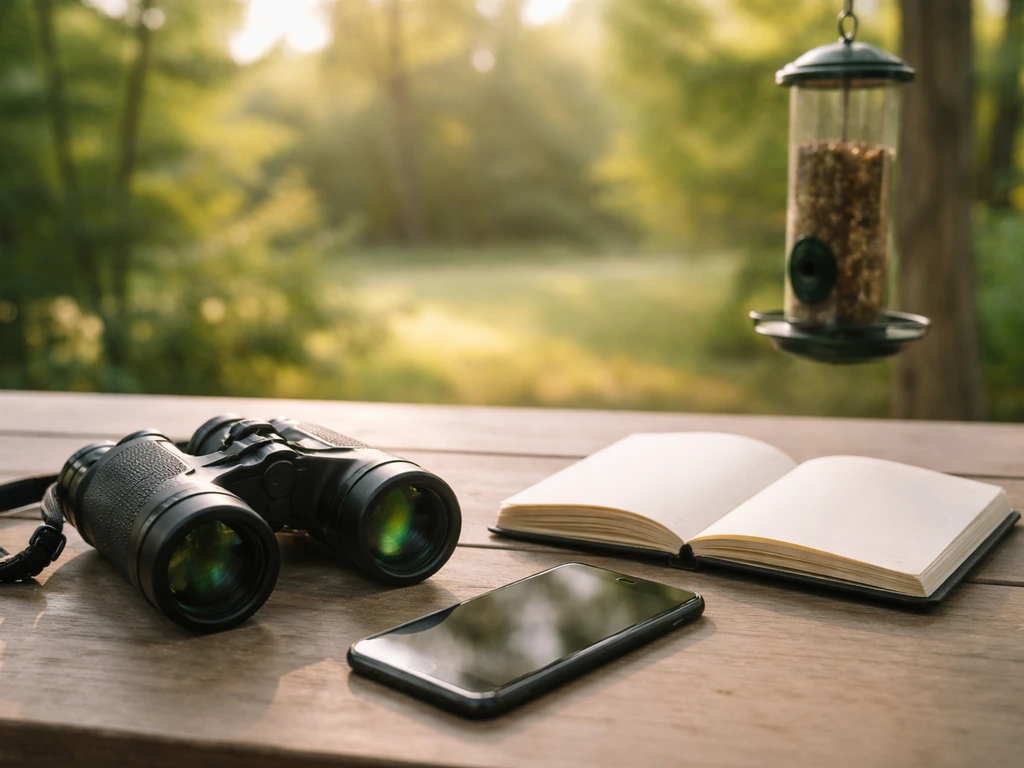
You do not need much to get started. Here is the practical version.
Basic Gear
Binoculars are the one piece of gear that makes a real difference. The U.S. Forest Service and Cornell Lab both name binoculars as the foundational tool for bringing birds closer in view. You do not need expensive optics to start; a pair in the 8x42 range is a solid, versatile choice. The second tool is an identification app. The U.S. Forest Service specifically recommends Cornell Lab's free Merlin Bird ID app, which can identify birds from photos or even from recorded song. All About Birds (also from Cornell) offers free tutorials and is an excellent reference for beginners.
Where to Go
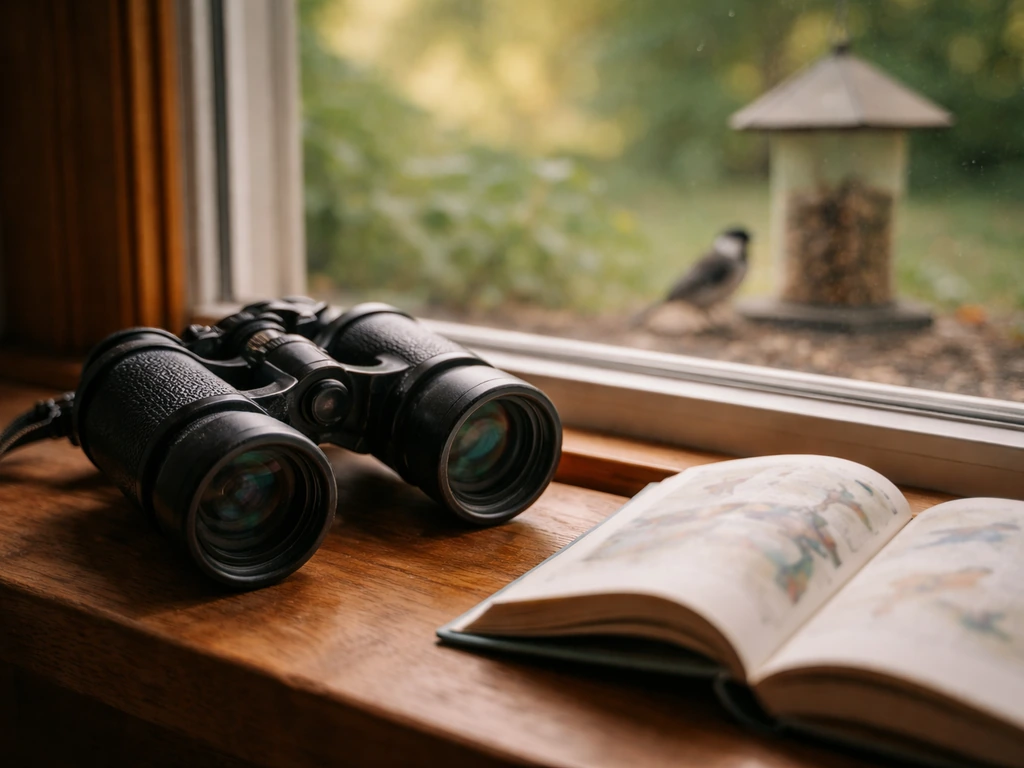
The RSPB recommends starting where you already are: a window, a garden, a local green space. The key is choosing a spot where you have permission to be and where you feel safe. All About Birds suggests bringing birds into your backyard first, through feeders or water sources, before heading farther afield. Cornell's eBird platform maps birding "hotspots" globally, so you can find productive locations near you within minutes. Parks, wetlands, forest edges, and coastal areas tend to be the most productive, but honestly, even a neighborhood walk with binoculars and Merlin open will produce results.
Field Etiquette
Audubon's ethics guide instructs birders to keep a respectful distance from nests and to manage any attempt to lure birds closer so it does not cause harm or disturbance. The rule of thumb is: if the bird changes its behavior because of you, you are too close. For nests specifically, NestWatch's code of conduct stresses extreme caution and responsibility, emphasizing that monitoring should never jeopardize the birds or nest contents. Use binoculars. Do not flush a bird off a nest. Do not share exact nest locations publicly.
Recording What You See
eBird is the standard platform for logging sightings. It is free, and your data contributes directly to science. eBird recommends documenting unusual or unexpected sightings with photos, recordings, or written descriptions of how you counted a flock. Even routine checklists matter: the NPS notes that people watching birds in backyards and wild places create population snapshots that researchers rely on.
When a Bird Is Just a Bird, and When It Might Mean More
This is the question that connects the practical hobby to the interpretive side of this site. The honest answer is: most of the time, a bird near your window is a bird near your window. It is there because there is food, shelter, a reflective surface it keeps attacking, or simply because your yard is on its daily circuit. Behavioral explanations cover the vast majority of unusual bird encounters.
That said, the instinct to look for meaning in a bird sighting that feels significant is deeply human and culturally widespread. The key is not to suppress that instinct but to hold it alongside the factual observation. A bird that lands on your windowsill may be seeking warmth or a food source. It may also be a species your culture associates with a specific message or transition. Both things can be true without contradiction.
Dreams are a separate category. When a bird appears in a dream, the behavioral explanation is off the table entirely, and the symbolic or psychological reading takes over. The interpretive tradition around dream birds is rich and cross-cultural. Similarly, if you are noticing a recurring pattern, such as a bird that seems to visit you repeatedly, it is worth distinguishing between a bird that has simply learned your yard is safe and one that carries personal or cultural significance for you.
A practical test: if the behavior has a clear ecological explanation (territory, food, migration timing, weather), start there. If it does not, or if the species has strong cultural associations in your tradition, the interpretive layer becomes more relevant. You do not have to choose one frame exclusively. Bird-watching, at its best, holds the scientific and the symbolic in the same hand.
FAQ
Is bird-watching only for people with binoculars, or can I start with a phone and no gear?
You can start with just your eyes and a phone, especially for backyard birding. However, binoculars make a big difference for identification and for seeing subtle behaviors like preening, feeding, and courtship displays. If you start with a phone, use it consistently to capture the same angle and lighting (for example, wings when they open) so you can check details later with an ID app or your notes.
How do I tell the difference between a “rare bird” and a misidentification?
Treat “rare” as a hypothesis until you can confirm multiple clues. Look for more than one trait (size, wing bars, beak shape, tail pattern, and call). If you can, record a short audio clip when the bird vocalizes and compare it to your top two candidates, because song and call often resolve look-alikes. For unusual sightings, document how you counted and include time, location, and behavior in your notes.
What should I do if I see a bird acting oddly, like sitting low or staying still for a long time?
Start with distance and observation, because many unusual behaviors are normal in context, like resting, molting, or guarding a nest area. Use the “behavior changed because of you” rule: if the bird moves away, freezes, or shows stress when you’re nearby, back off. Avoid approaching for a better look, and if you suspect injury, contact a local wildlife rehabilitator rather than trying to intervene yourself.
Does bird-watching mean the same thing everywhere, or can the terms “birding” and “bird-watching” imply different styles?
They are usually interchangeable, but in practice “birding” can lean more toward active searching, listing, and field effort, while “bird-watching” may feel more general and relaxed. If you’re joining a group, check how they use the terms, because some communities prioritize records and counts, while others emphasize observation and education.
How can I log sightings in eBird without recording mistakes?
Use a consistent counting method and write down what you actually observed. For example, if you see a flock, count individuals when possible, or estimate with a range and note “estimated” in your description. Add brief behavior notes like “feeding at seed tray” or “singing from treetop,” because behavior helps validate IDs and is useful to others reviewing your record later.
Is it okay to put up feeders if I want to attract more birds?
Yes, but feeder placement matters and safety comes first. Keep feeders clean and change seed regularly to reduce mold, and place them where birds can see and avoid hazards like windows. Also, do not lure birds into stressful situations near nests or other vulnerable areas, follow local guidance, and avoid making changes right before you plan to monitor nesting activity.
What does it mean when a bird comes back to the same yard or window repeatedly?
Repeated visits are often explained by practical factors, like reliable food, water, shelter, or a routine flight path. Sometimes it is also caused by reflective window surfaces, where a bird mistakes its reflection for another bird. If the bird persists at the same spot, consider checking for window strikes and adjusting placement, because that can be a health and safety issue, not a “message.”
How should I interpret bird symbolism without missing the real-world behavior?
Use a two-step approach: first document the behavior and context (time of day, weather, what the bird is doing, and where it appears), then consider any cultural or personal associations. Symbolism can be part of your experience, but it should not override evidence. If you cannot link the encounter to ecology, then consider that you may be focusing more on meaning than on identification cues.
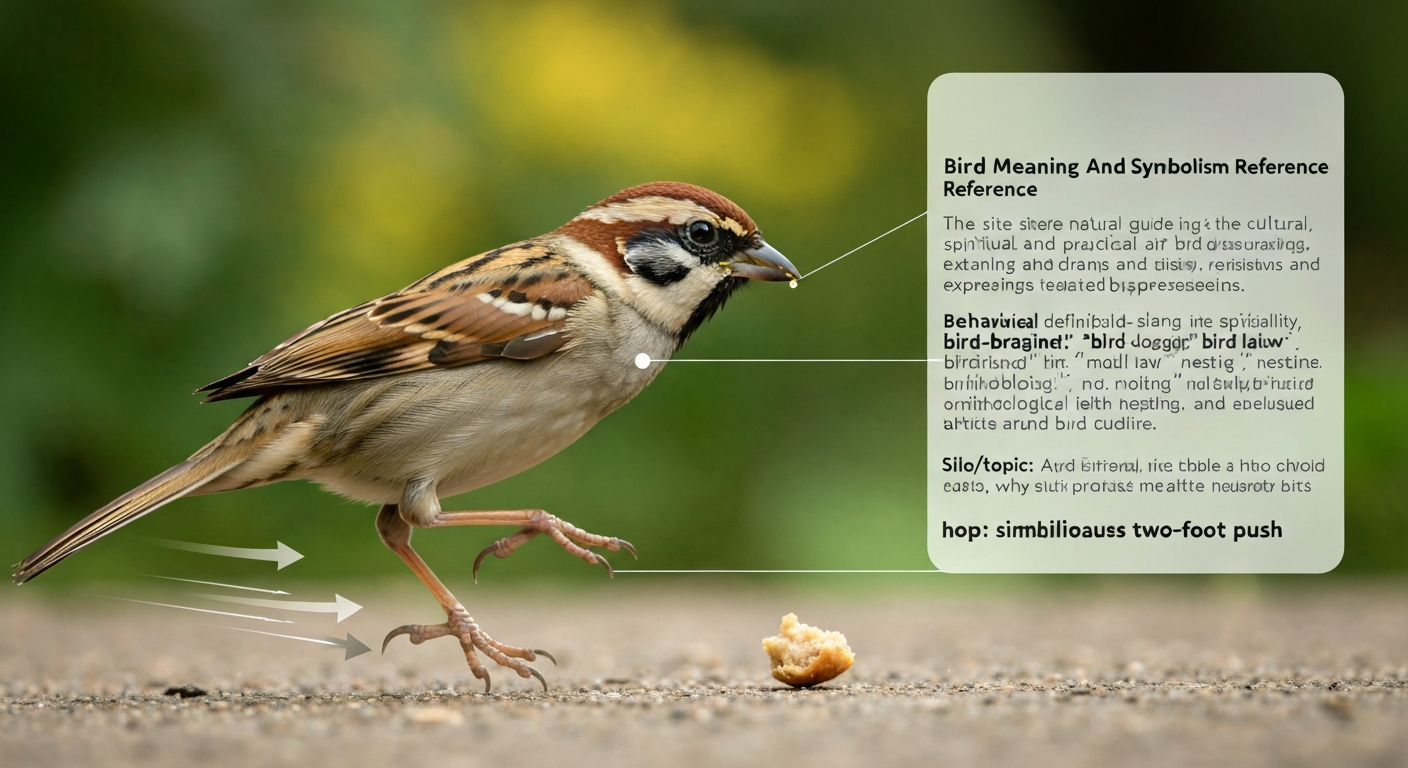
Bird hopping meaning: causes, symbolism, health signs, idioms, and what to do, guide for watchers & owners.
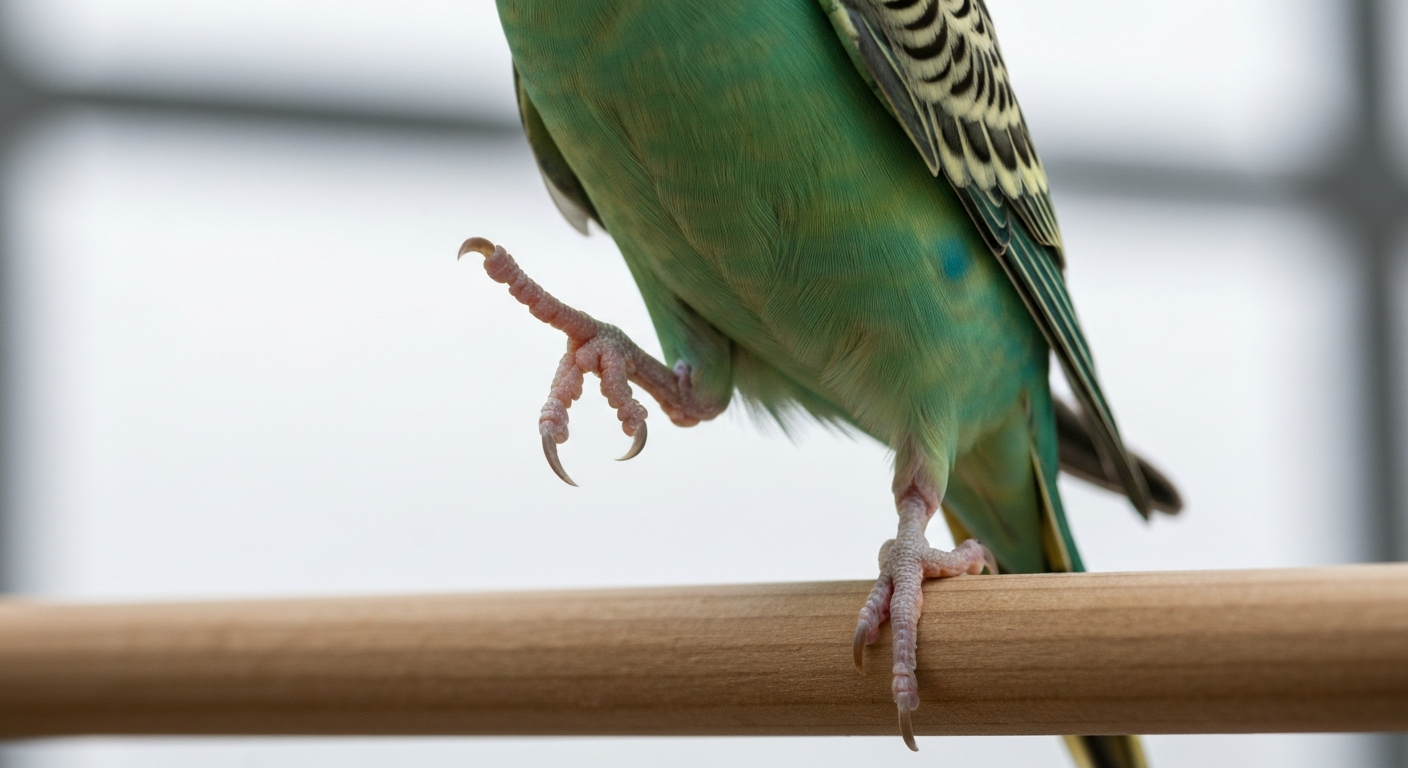
Bird shuffling meaning: clear, evidence-based distinctions between normal behaviors, health signs, and symbolism.
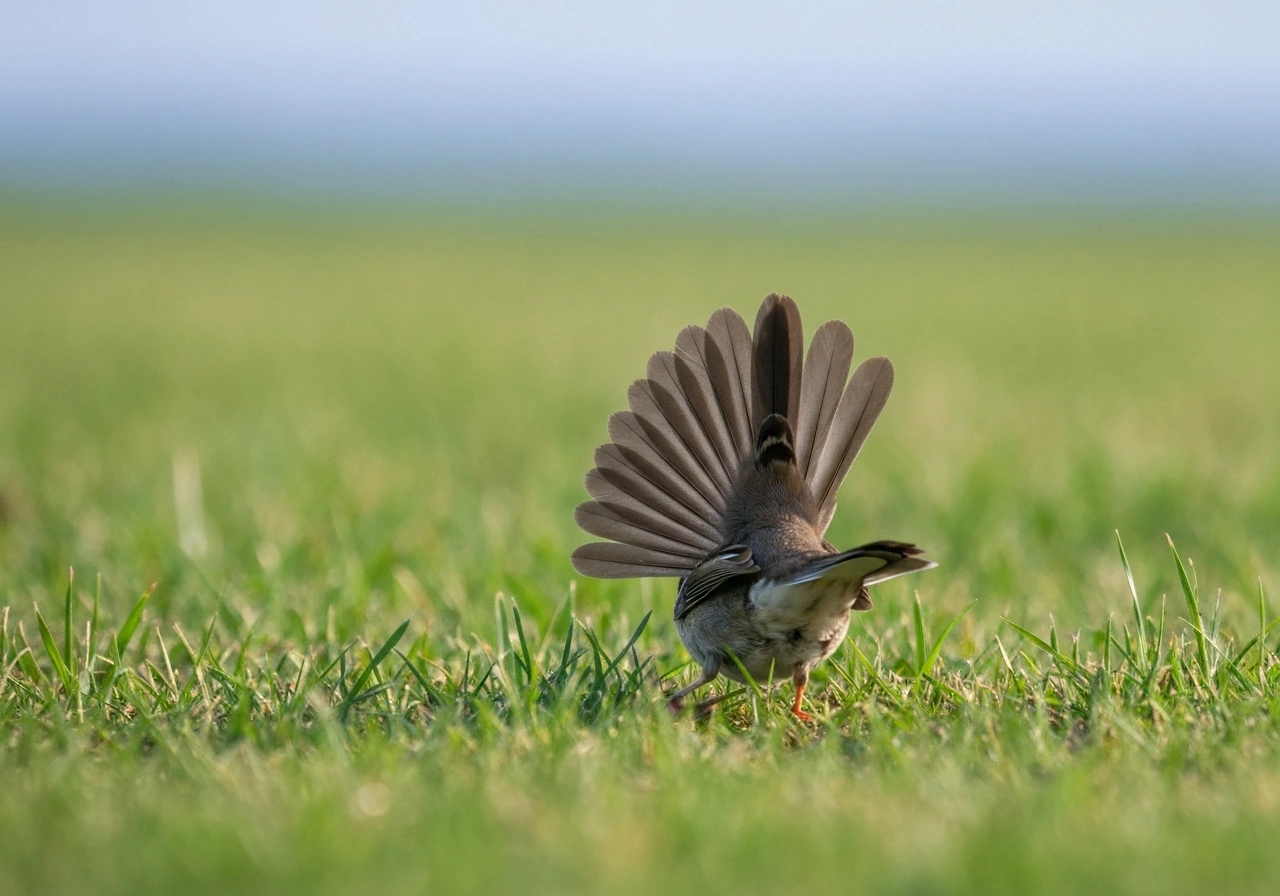
Bird tail meaning explained: flight and behavior cues plus cultural and dream symbolism, with tips to interpret tail fea