
A leg band on a bird is an identification tag, plain and simple. It tells researchers, wildlife managers, or pet registries which individual bird they're looking at, where it came from, and who to contact with information. If you've spotted a banded bird and want to know what the band means, the answer depends on two things: what type of band it is (metal federal band, colored plastic band, or something else) and who put it there. Once you know those two things, you can usually trace the bird back to its source and decide what to do next.
Bird Leg Band Meaning: How to Decode Codes and Colors

Marcus Holloway
4 May 2026
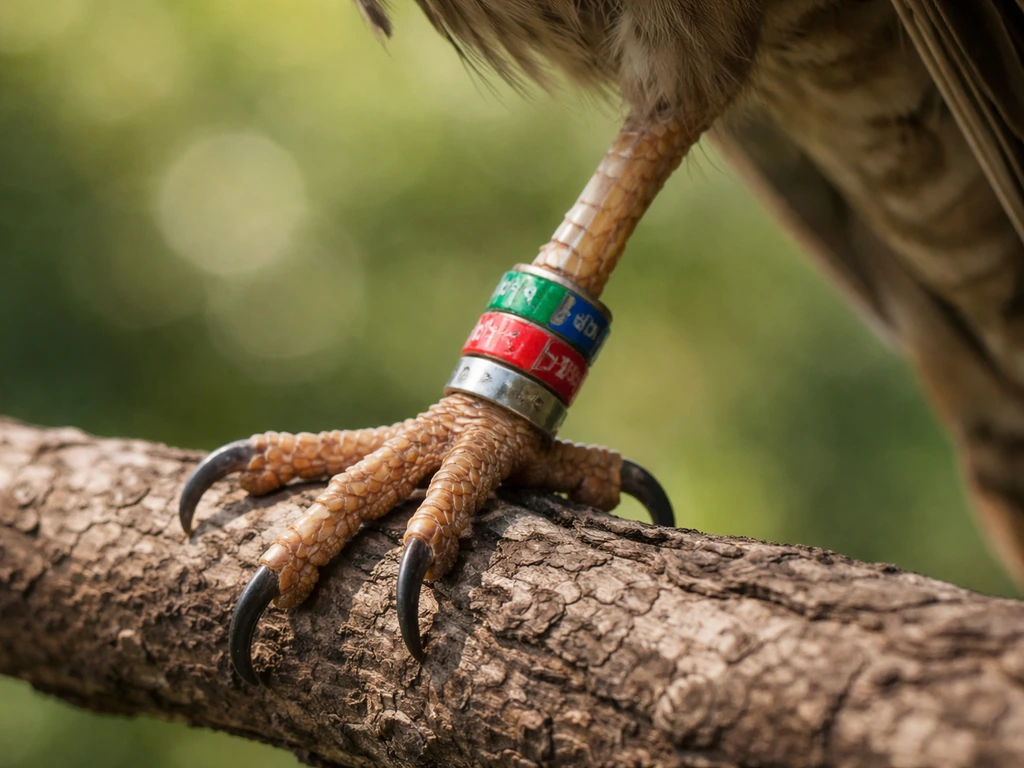
What a bird leg band is actually for
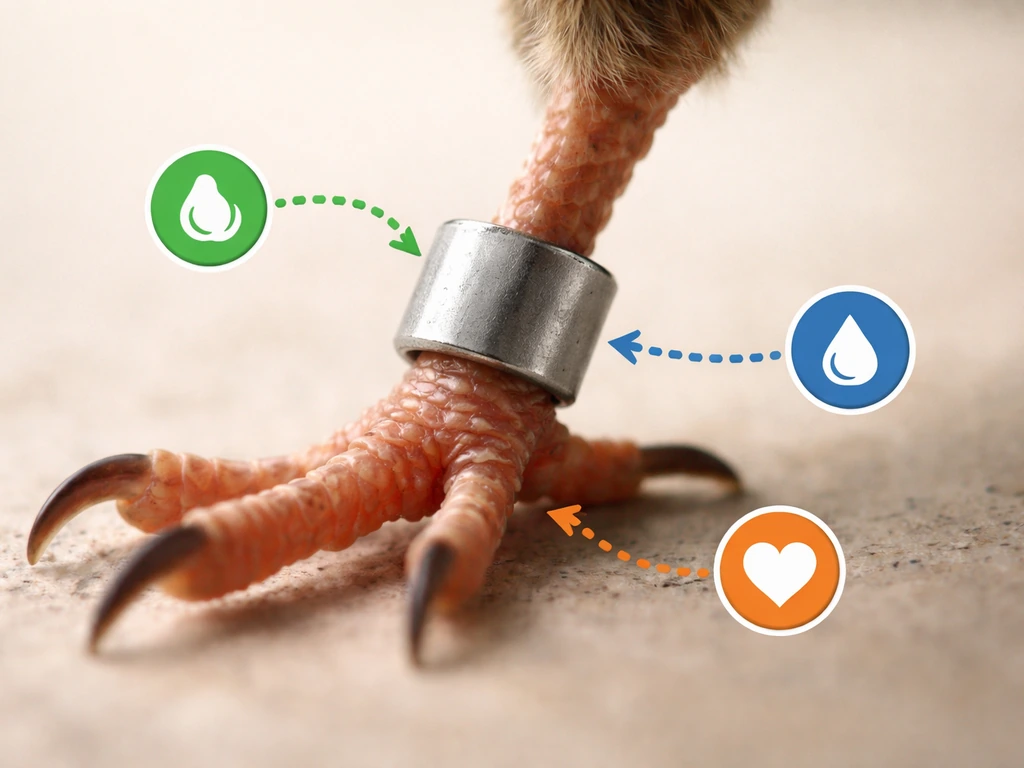
Bird leg bands serve a few distinct purposes, and the purpose shapes what the band looks like and what information it carries. The three most common reasons a bird ends up banded are scientific research, wildlife management, and captivity tracking.
Research bands are the most common in the wild. Scientists attach them so they can track individual birds across seasons, migration routes, and years. The US Geological Survey's Bird Banding Laboratory (BBL) coordinates this work across North America, and their federal bands have been accumulating data since the early 1900s. Public encounter reports now contribute around 80,000 records to their North American Bird Banding Program (NABBP) database every single year, which tells you just how much everyday sightings matter. USGS reports that public encounter records contribute about 80,000 encounter records annually to the North American Bird Banding Program database, and that reportband.gov was updated in 2010 to support reports of auxiliary-marked birds such as colored markers and bands.
Wildlife management bands are placed by rehabilitation centers, conservation programs, or government agencies monitoring specific populations, like endangered shorebirds or migratory waterfowl. These birds may have been treated, released, and are being monitored for survival and behavior.
Captivity bands show up on pet birds, aviary birds, and birds bred in captivity. These are often closed rings placed on the leg when the bird is a chick, and they typically carry breeder codes or registration numbers from avicultural organizations rather than federal wildlife programs. If you see a band on a parrot, pigeon, or canary, it's almost certainly a captivity or racing registration band rather than a wildlife research marker.
How to read what's on the band
Federal bands distributed by the USGS Bird Banding Lab are small metal bands engraved with a unique 8- or 9-digit number. Newer bands also have "www.reportband.gov" printed on them, which makes it easy to know exactly where to go. The number is what identifies the individual bird in the national database.
Colored plastic bands add another layer of information. Researchers read them using a specific convention: left to right across the bird's legs, top to bottom on each leg, right leg first, then a dash, then the left leg. So a notation like "RG-PY" means red over green on the right leg, purple over yellow on the left. Cornell Lab uses a standard color-letter key where W is white, B is blue or dark blue, Y is yellow, L is lime or light green, O is orange, P is purple, R is red, and S is silver or metal. Each research project designs a unique color combination scheme so individual birds can be identified in the field without needing to catch them again.
Some bands carry short alphanumeric codes, typically two or three characters. Groups like the American Oystercatcher Working Group note that if you can read the code and record the band color, they can often identify the exact individual bird. Orientation matters here too: some characters like K and X can look similar depending on angle, so note whether the text reads vertically or horizontally. Virginia Tech's shorebird banding program formalizes this further, describing eight possible band positions (upper and lower on each leg, left and right), always defined relative to the bird's own left and right, not the observer's perspective.
What different band types tell you
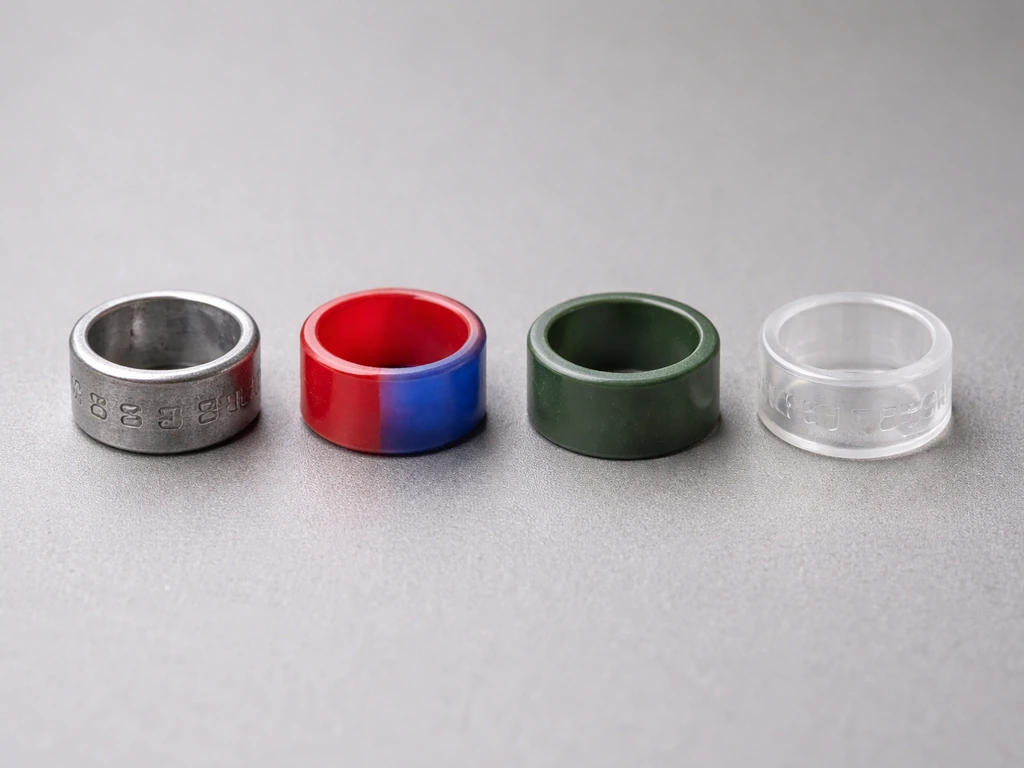
Not every band means the same thing, and the material and style give you a quick first clue about origin.
| Band Type | Material | Likely Origin | What It Signals |
|---|---|---|---|
| Federal band | Aluminum or metal | USGS Bird Banding Lab / Environment Canada | Individual ID for research or management; report to reportband.gov |
| Colored plastic band | Plastic, often multiple per bird | Research project (university, conservation org, government) | Part of a color-combo scheme; may identify the study site or population |
| Flagging band | Plastic with a flag or tab | Shorebird or waterbird research program | Visible at distance; usually combined with federal band |
| Web tag | Small metal plate | Research or banding before bird was large enough for a full band | Carries bander ID code on one side, individual number on other |
| Closed ring (smooth) | Metal or plastic | Captive breeding, aviculture, racing pigeons | Breeder registration, not a wildlife program; different reporting path |
| Radio or GPS transmitter on leg | Plastic/electronic | Active tracking study | Bird is actively being monitored; do not disturb |
A metal band with a URL or number is almost certainly a federal wildlife band. Multiple colored plastic bands together usually mean a research project with a color-combo design. A single smooth ring on a songbird or parrot most likely means captive origin. Flags or dangling tabs are shorebird study markers meant to be read with binoculars from a distance.
Figuring out which bird it is and where the band came from
Species matters enormously here because different groups of birds are banded by different programs with different reporting paths. A banded piping plover is almost certainly part of a conservation monitoring program. A banded crow on a university campus is probably part of a local behavioral study. A banded duck during hunting season is a federal waterfowl management band. Before you start researching the band, identify the bird species as specifically as you can.
Once you have the species and the band details, here's a practical sequence to narrow down the origin:
- Check whether the metal band says "reportband.gov" or has a USGS-style 8- or 9-digit number. If so, it's a federal wildlife band and goes straight to the BBL.
- Search online for the species name plus "banding program" or "color band" and your region. Many species-specific programs (shorebirds, raptors, songbirds) have public databases or contact pages.
- If you see colored bands without a metal federal band, the bird may be part of a university or conservation research project. A color-band resighting database or a direct inquiry to a relevant research group (like a shorebird working group) can help.
- For captive-looking birds (parrots, pigeons, doves), check avicultural registries or pigeon racing organizations, since their bands follow entirely different numbering schemes.
- Canada-banded birds follow the same federal scheme as the US, coordinated through Environment and Climate Change Canada's Bird Banding Office. The same reportband.gov system applies for North American migratory birds regardless of which side of the border the band came from.
What to do if you find or see a banded bird today

If the bird is alive and in the wild, your job is to observe and report, not handle. Record as much as you can from a comfortable distance: the band type, color or colors, any numbers or letters you can read, which leg and position each band is on, the species, the date, and your location (GPS coordinates are ideal). A clear photo is worth more than a detailed written description alone.
For a federal metal band on a wild bird, go to blank" rel="noopener noreferrer">reportband.gov to submit your sighting. The site is mobile-friendly and has been the official public reporting channel since 2000. You can also email [email protected] or, if you're in Canada or prefer calling, use the toll-free number 1-800-327-BAND (2263). Submitting a report contributes directly to the national database and helps researchers track the bird's movements, survival, and behavior.
If the bird is dead and carries a federal band, the USGS says you can remove and keep the band after reporting it. Report first, then remove. This is the one situation where touching the band is explicitly sanctioned.
If the band looks like a captive-origin closed ring and the bird seems lost, disoriented, or tame, it may be an escaped pet. In that case, contact a local wildlife rehabilitator or animal control rather than reporting to the BBL, since the bird likely isn't part of a federal wildlife program.
One important note from the USGS: most bands other than federal bands and their associated auxiliary markers don't need to go to the Bird Banding Laboratory. If you're looking at a color band from a local university study, reach out to that study's program directly rather than routing through the BBL.
Safety, ethics, and what not to do
The cardinal rule is simple: never remove a band from a living bird unless you are a licensed bander dealing with an entanglement emergency. Bands look small and harmless but they carry legal protection under migratory bird laws in both the US and Canada. Removing one destroys the data link connecting that individual bird to years of research.
The North American Banding Council's Code of Ethics instructs banders themselves to handle birds carefully, gently, quietly, and in minimum time to minimize stress, injury, and death risk. As an observer, your standard should be even more hands-off than that. Give the bird space. Use binoculars or a telephoto lens to read the band rather than approaching closely. If the bird is flushing, retreating, or showing distress signals, you're already too close.
A few specific things to avoid:
- Don't attempt to catch or corner a banded bird to read the band unless it's clearly injured and needs intervention from a rehabilitator
- Don't remove a band from a living bird under any circumstances
- Don't assume a banded bird is tame or safe to handle just because it has human-placed equipment on it
- Don't try to add your own marker or tag to a banded bird
- Don't feed or habituate a wild banded bird in ways that would skew its behavioral data or put it at risk
Banding ethics also cover the banders themselves: the NABC manual specifies that bands should never be placed on an injured leg, and that practices should fit the bird's physical condition. If you encounter a banded bird with a band that looks embedded, too tight, or causing injury, that's a situation to report to a wildlife rehabilitator rather than to the BBL.
What leg bands can mean symbolically (and why it's separate from the practical)
This site covers both the factual and the symbolic dimensions of bird-related meaning, and leg bands sit at an interesting intersection. If you mean the common symbolism of a bird standing on one leg, the interpretation can differ by culture, but it’s often tied to attention, balance, or “holding still” themes bird standing on one leg meaning. In practical ornithology terms, a leg band is simply a data tag. But for people who interpret bird encounters through a spiritual or folkloric lens, a banded bird carries a layered set of associations worth understanding on their own terms. If you are specifically looking for the bird luger meaning, the symbolic reading section can help you interpret what people commonly read into a banded-bird encounter. Bird feet meaning can also come up in bird-lore, but this article focuses on what leg bands mean in practical identification and reporting.
The most common symbolic reading of a banded bird centers on the tension between freedom and constraint. Birds carry deep cross-cultural associations with freedom, spirit, and transcendence. A band on the leg introduces a visible mark of human contact, observation, or authority. In dream symbolism and encounter interpretation, some traditions read this as a sign of being watched, tracked, or held accountable in some way. It can also be read as protection: the band marks a creature that someone is caring about enough to follow across thousands of miles.
In some folklore frameworks, encountering a banded bird signals connection between the wild and the human world, a reminder that what appears free and untethered may still carry the marks of prior relationship or history. That's not unlike the ornithological reality: a banded bird really has been held, measured, and returned to the wild with a record of that moment attached to its leg.
The tracking theme resonates across many spiritual traditions that treat birds as messengers or emissaries. A banded bird as a messenger would then be a specifically known messenger, one with a name (or at least a number), a history, and a destination being followed. Whether that reads as reassuring or unsettling probably depends more on the interpreter than on the bird.
It's worth being direct here: the symbolic meaning of a leg band is a human interpretive layer added on top of what the band actually is, which is a scientific identification tool. If you keep seeing references to “bird buddy lights,” the best way to understand their meaning is to connect that phrase to where the brand or lighting behavior is documented bird buddy lights meaning. If you're trying to identify or report a banded bird, stick to the practical steps above. If the encounter has stayed with you in a way that feels meaningful beyond the identification question, the symbolic framing is a legitimate area of reflection, just one that belongs in a different category from the factual decoding work.
A quick reference for next steps
To pull everything together: identify the species, describe the band (metal or plastic, colors, any text), note which leg and position, get a photo if possible, and then match the band type to the right reporting path. Federal bands go to reportband.gov. Species-specific color bands go to the relevant research program. Captive-origin rings go to avicultural registries or animal control. When in doubt, reportband.gov is always a reasonable first stop because the system will route you if the band isn't in their database.
Bird banding is one of the oldest and most effective tools in wildlife biology, and every sighting you report feeds into a system that has been tracking bird populations and movements across North America for over a century. That context makes even a five-second binocular read of a leg band worth doing right.
FAQ
If I only get part of the code or I can’t read the whole number, should I still report it?
It can, especially if you see only one colored ring or partial lettering. In that case, report what you can confidently verify (band type, exact colors, and any readable characters) and don’t guess missing characters. For federal metal bands, the full engraved number is usually required to match the bird correctly in the database.
Can I report a banded bird without getting a perfect close-up photo?
Yes for federal metal bands and for sightings with traceable identifiers, but you should avoid handling. Take a few photos from different angles to capture band orientation and placement, then report based on the band details you can read remotely. If the bird is dead, reporting comes first and then removal is only appropriate for federal bands.
How do I know whether the band is on the bird’s left leg or my left leg?
Don’t use the observer’s left/right when recording colored bands. The reading convention is defined relative to the bird’s own legs, so you need to determine which leg is the bird’s left or right based on how the bird is facing in your view, then apply the “right leg first” convention.
What should I do if the band looks embedded or the bird seems injured?
If a band looks embedded, overly tight, or tangled with skin or feathers, treat it as an welfare issue first. Keep distance, document what you see, and contact a local wildlife rehabilitator or animal control. Reporting to a banding lab is secondary when there is active injury risk.
What’s the best way to capture band placement (upper vs lower) in the field?
Mobile speed and distance matter because the database match can fail if colors or positions are wrong. Use binoculars or a telephoto lens, record the band colors and their position (including which band is upper or lower on each leg), then take a photo that clearly shows layout, not just a close crop of the band.
What if I’m not sure whether the letter is K or X (or another similar character)?
Colored plastic bands are not always legible at first glance, and some characters can be mistaken at certain angles. If you can’t confirm whether a character is, for example, K versus X, record the uncertainty in your notes and submit the observation based on the confirmed elements (colors and band position) rather than forcing a wrong character.
I found a tame-looking parrot with a closed ring, should I report it to a national band database?
If the bird is alive but you suspect it’s an escaped pet, routing it through federal reporting can waste time because the bird may not be part of the national wildlife banding system. Contact local animal control or a wildlife rehabilitator, and include a description of the ring type and any visible registration markings.
If a band isn’t federal, who should I contact to report it?
Federal reporting may be unnecessary when the band is clearly not federal, for example, a local study color scheme or an auxiliary marker that is intended for a specific project. In that case, identify the likely program from any group name, logo, or unique banding scheme on the band or in your photo, then contact that project directly.
How can I tell whether the metal band is a federal one if the URL text is worn or blurry?
Some bands include printed website text, and others only show an engraved number or alphanumeric code. If there is URL text, it helps you confirm the correct reporting channel quickly, but if it’s missing or unreadable, rely on the band material and engraving style (small engraved metal with a numeric ID is the key indicator for federal bands).
What’s the proper order of actions if I find a dead bird with a band?
If the bird is dead, follow the correct order for federal bands: report first, then removal is allowed for federal bands only. If the band is non-federal, rules differ by program, so avoid removing and instead contact the relevant reporting authority or local wildlife handler.
Does reporting change depending on whether I’m in the US or Canada?
Yes, and it can determine where your band information lands. If you are in the US, federal band reports go through the federal reporting channel, while if you’re in Canada or working with Canadian teams, use the same reporting destinations where they apply, or route to the appropriate local handler. Include your location (country, state/province) in your report because it affects program routing.