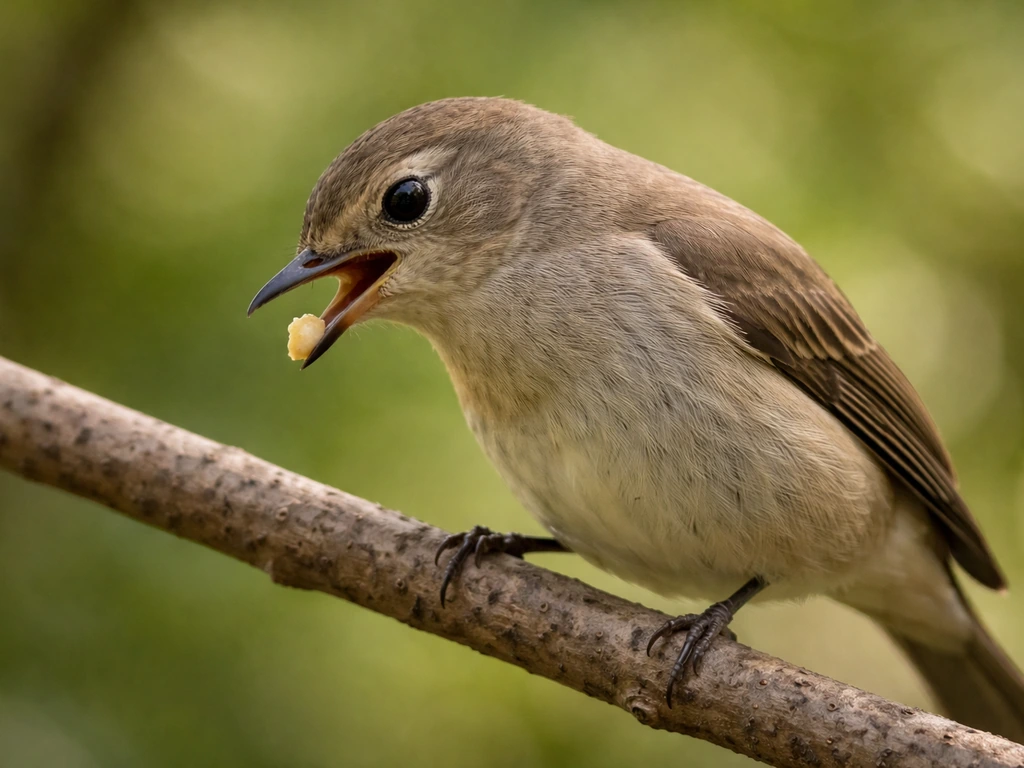
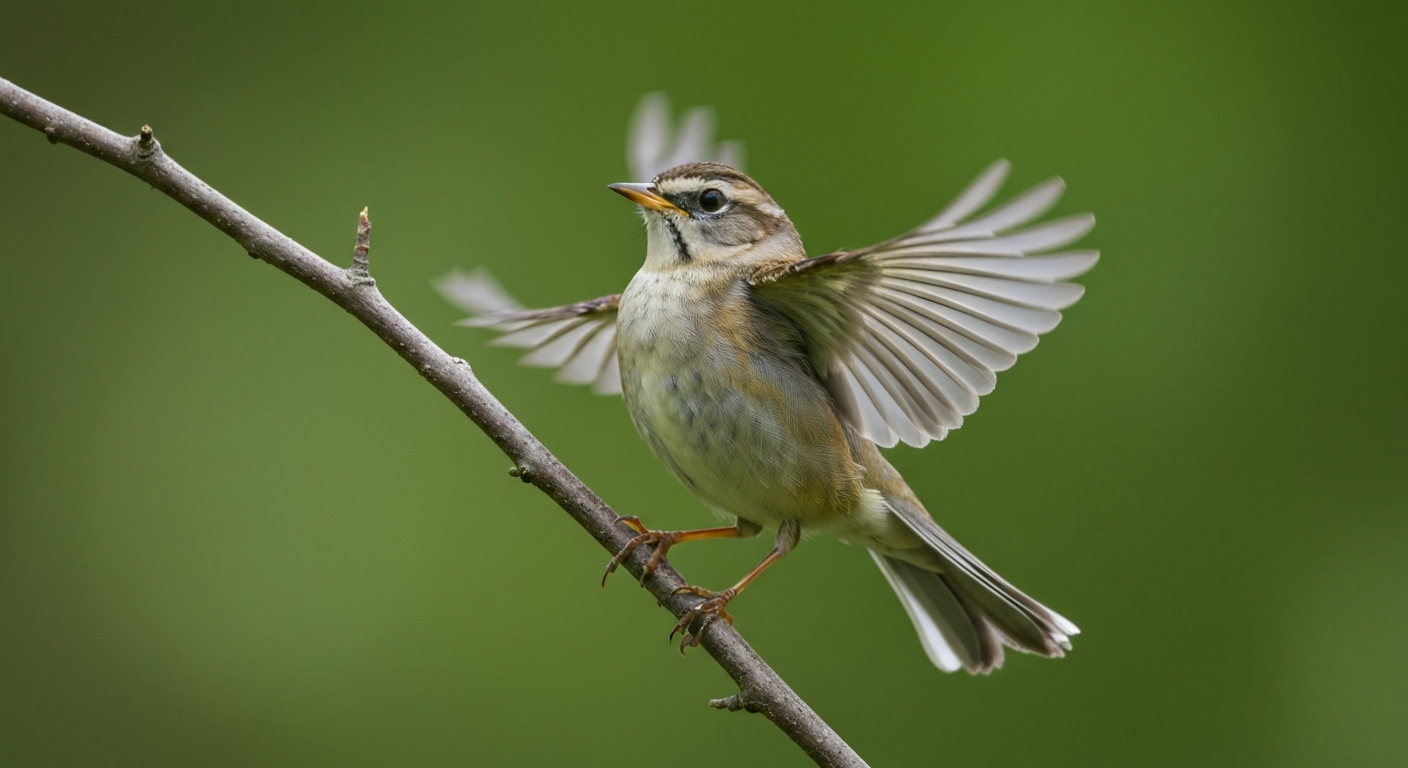
A bird flutter is a rapid, low-amplitude wing movement, shorter and lighter than a full flap, that birds use for everything from courtship displays and fledgling practice to startled escape and heat regulation. In figurative language, it shows up in phrases about excitement, hesitation, and brief emotional stirrings. Whether you spotted a bird doing something odd with its wings, had a dream about fluttering birds, or are chasing down the meaning of an idiom, the word carries specific and distinct meanings depending on context, and knowing which one applies makes all the difference.
Bird Flutter Meaning: Literal, Symbolic, and Ornithology

Marcus Holloway
29 Jul 2026
What this guide covers and who it's for
This reference is built for anyone who has encountered 'bird flutter' and needs a precise answer rather than a vague one. That includes birdwatchers trying to identify what a species is doing in the field, readers who came across the phrase in a spiritual or dream-interpretation context, students studying folklore or idioms, and writers who want technically accurate language. The article moves from the literal and ornithological definition outward toward the symbolic and idiomatic, so you can stop reading at the level of detail you actually need. Where relevant, it also untangles related terms like craw, regurgitation, cloaca, flushing, flirting, and the ambiguous term 'choch' that often come up alongside flutter in bird-meaning searches. Veterinary anatomy references describe the ingluvies (crop) as an esophageal storage organ that softens ingesta and, in some species, produces crop‑milk or regurgitate; see The Avian Crop (ingluvies), Practical Avian Medicine / Compendium chapter (crop anatomy and crop‑milk description) blank" rel="noopener noreferrer">The Avian Crop (ingluvies) — Practical Avian Medicine / Compendium chapter (crop anatomy and crop‑milk description).
The literal definition: flutter vs. flap, flight, and flush
Standard dictionaries define 'flutter' as rapid, light, or wavering wing movement, and that baseline matters before you layer any ornithological meaning on top. Merriam-Webster treats it as distinct from 'flap' specifically in terms of speed and amplitude: a flap is a single, full-stroke wing beat used in sustained powered flight, while a flutter is typically faster, shallower, and often localized to part of the wing. Collins similarly defines it as small, quick, irregular movements. These everyday senses map closely onto what ornithologists observe in the field.
In technical ornithology, 'flutter flight' describes a specific locomotor mode: high wingbeat frequency paired with low stroke amplitude, usually seen over short distances or in place. Wingbeat frequency and stroke amplitude are standard metrics used to quantify modes of wing motion; see Wingbeat Frequency and the Body Drag Anomaly: Wind‑Tunnel Observations on a Thrush Nightingale And a Teal for methods and datasets. Flight kinematics research has measured barn swallow wingbeat frequencies in the range of roughly 7 to 9 Hz during normal forward flight, and flutter modes in many species push that frequency higher while the wing arc becomes more restricted. That quantitative distinction, faster beats with less arc, is what separates flutter from the steady powered flapping used in open-air cruising.
Flush is a separate term entirely. Where flutter describes the quality of wing movement, flush describes an event: an abrupt, agitated departure triggered by a startle or perceived threat. For more on the related concept and how 'flush' is used in disturbance and behavioral studies, see bird flushing meaning. Wildlife disturbance research uses 'flush distance' to measure how close an observer can get before a bird takes off. Flutter and flush can overlap, since a flushing bird may use rapid, shallow wingbeats to accelerate, but they are not synonyms. A flush is about context and cause; a flutter is about biomechanics and appearance. Keeping these distinct is essential for both field identification and accurate writing.
Why birds actually flutter: the main behavioral causes
Courtship and territorial displays
Flutter displays are well-documented in peer-reviewed behavioral literature as named, functional behaviors. Species accounts from Cornell Lab and technical field studies describe 'flutter flight' as a courtship and territorial signal in groups ranging from woodpeckers to grouse. In Black-backed Woodpeckers, for example, flutter displays serve a courtship-advertising function distinct from territorial aggression, showing that the same visible behavior can carry different messages depending on the interaction partner. Dusky Grouse males use flutter-and-glide sequences to advertise to females. In these contexts, the flutter is not random: it is a structured signal with a specific audience. See bird flirting meaning for a focused discussion of fluttering as courtship (i.e., bird flirting).
Fledgling wing practice
Young birds flutter long before they fly. Developmental research on wing-assisted incline running (WAIR) and avian ontogeny documents that juvenile birds use partial wingbeats to exercise flight muscles and build the neuromuscular coordination needed for true flight. What looks like a frantic, inefficient flutter in a fledgling is actually a rehearsal sequence. This is why birds found on the ground fluttering their wings are often not injured: they are practicing. Distinguishing this from a distress flutter requires a close look at posture, vocalizations, and whether the bird is gaining any height.
Alarm and startle responses
An alarmed bird may burst into flutter before it fully commits to a flush, producing a brief, agitated wing-beating that can be mistaken for display behavior. Context clues here include other members of the flock also moving, alarm calls (as opposed to song), and the bird orienting away from a stimulus rather than toward a potential mate or rival. Startle flutters are typically asymmetrical or erratic in a way that courtship flutters are not.
Wind and microclimate effects
A bird perched in a gust of wind may flutter its wings passively to maintain balance or adjust its orientation, and this kind of flutter has no behavioral meaning at all. Similarly, birds sunbathing or taking dust baths often spread and vibrate their wings in ways that superficially resemble a display. Microclimate responses, a sudden thermal, a roost branch shaking, can produce wing movements that look purposeful but aren't. Field observers need to check for environmental triggers before assigning behavioral significance.
Foraging agitation and gular flutter
Some birds flutter wings while foraging: a behavior seen in species that use wing movements to flush hidden insects or spiders from foliage. This is distinct from display and from escape. Separately, physiological research describes gular flutter, a rapid vibration of the throat driven by the hyoid apparatus, which birds use for evaporative cooling in hot conditions. Gular flutter is not a wing behavior at all, but it produces a visible fluttering of the throat pouch and is easily confused with respiratory distress or display if you're not looking closely. Conservation physiology work on endangered seabirds has documented gular flutter as a key thermoregulatory response to heat stress, so it matters for welfare assessments as much as behavioral ones.
Sound production through feather flutter
In some species, flutter is not just visual: it's acoustic. Aeroelastic flutter of tail feathers or primary feathers produces audible or even ultrasonic sounds during courtship. Research on Anna's Hummingbird established that the bird 'chirps' with its tail feathers during display dives, with the sound produced by feather vibration rather than the syrinx. Similar mechanisms have been documented in other taxa. This means that if you hear an unusual clicking or buzzing sound during what looks like a flutter display, the feathers themselves may be the instrument.
How to read a flutter in the field: practical observation tips
Interpreting a flutter accurately requires collecting several data points at once. Here is a framework I use when I'm trying to figure out what a bird is actually doing.
Species and age
Not all species use flutter displays, and species that do often restrict them to specific ages or sexes. Knowing what species you're watching narrows the possibilities dramatically. A fledgling Robin fluttering on the ground is almost certainly soliciting food or practicing; an adult male Dusky Grouse doing the same thing at dawn in spring is almost certainly displaying. Field guides and species accounts from the Cornell Lab are the fastest way to check whether flutter is a documented behavior for the bird in front of you.
Number, grouping, and social context
A single bird fluttering in isolation reads differently from two birds interacting with fluttering movements between them. Pair-bonding behaviors typically involve reciprocal movements, with both birds oriented toward each other. A lone bird fluttering near a food source is probably foraging. A whole flock erupting in brief flutter likely signals an aerial predator passing through.
Location, habitat, and time of day
Display behaviors are overwhelmingly concentrated at dawn and dusk, and in territories and lek sites. If you observe a flutter at a bird feeder at noon in winter, a thermoregulatory or foraging explanation is far more likely than a courtship one. Breeding season timing matters too: most flutter courtship displays in temperate species occur between late February and early June.
Associated sounds and body language
Song accompanying flutter almost always signals a display context. Alarm calls accompanying flutter suggest threat response. Silence with the head tilted down and wings drooped is often a juvenile food-begging posture. Wing flutter combined with tail fanning and erect posture is a strong indicator of territorial or courtship display. Watch the whole bird, not just the wings.
Recording and photography
Video is significantly more useful than still photographs for capturing flutter, because the sequence and rhythm of movement carry diagnostic information that a single frame misses. If you're using a smartphone, burst mode combined with slow-motion video gives you both high-resolution stills and temporal data. Nest-monitoring and bird-survey guidelines from organizations like the BTO emphasize keeping a distance that doesn't disturb the bird, both as an ethical practice and because a bird that knows you're there will behave differently. An observer-influenced flutter is not the same as a natural one.
How to interpret what you saw: context first, always
The single most common mistake in interpreting bird behavior is assigning a symbolic or behavioral meaning before gathering contextual information. A flutter is not self-explanatory. The same physical movement, rapid shallow wingbeats, can mean courtship, alarm, practice, thermoregulation, food solicitation, or nothing more than a gust of wind. Before deciding what a flutter 'means,' run through the following checklist.
- Identify the species and confirm its age and sex if possible.
- Note the date and whether it falls within the species' breeding season.
- Record the time of day and recent weather conditions.
- Observe what else the bird is doing: vocalizing, foraging, interacting with another individual?
- Check whether there is an obvious environmental trigger such as a predator, a gust, or a food source.
- Compare what you saw against documented behaviors in a reliable species account or field guide before drawing conclusions.
The most common pitfalls are: anthropomorphizing (assuming a flutter 'means' something emotionally relevant to you rather than to the bird), over-relying on a single feature such as wing motion while ignoring posture and sound, and applying courtship explanations during non-breeding seasons. Another frequent error is confusing a fledgling's helpless-looking flutter with injury, leading to unnecessary intervention. Unless the bird is visibly wounded or has been on the ground for more than a few hours without any flight attempts, watching and waiting is almost always the right move.
Symbolic, spiritual, and dream meanings of bird flutter
Across many cultural traditions, a bird fluttering near a person or in a dream carries interpretive weight. These meanings are not universal, and they vary significantly between regions, traditions, and historical periods, so what follows is a survey rather than a prescription. The goal here is cultural literacy, not a definitive spiritual verdict.
Common themes across traditions
In European folk tradition, a bird fluttering against a window was often read as a message from the dead or an omen of change, rooted in the ancient association of birds with souls and spiritual passage. In many Indigenous American traditions, specific species of birds carry specific meanings when they appear, and the manner of their movement, including whether they flutter and hover or fly purposefully, modifies the interpretation. In East Asian symbolism, a fluttering bird in visual art often represents momentary beauty, transience, or the arrival of news. In dream interpretation across Jungian and folk frameworks, a fluttering bird frequently appears as a symbol of restlessness, potential not yet realized, or an idea on the verge of taking shape.
Scientific grounding for the symbolic link
There is at least one documented bridge between metaphor and real bird behavior worth mentioning. Research on Japanese tits published in Current Biology found that these birds use a wing-flutter gesture with a recognizable social meaning, effectively functioning as an 'after you' signal to indicate that a mate should proceed first. This is experimental evidence that wing-flutter can operate as a symbolic gesture within bird communication, which gives the human metaphorical use of 'flutter' as hesitation or invitation an interesting empirical parallel.
Important caveats
Symbolic meanings are culturally constructed and change over time. The same flutter that signals death in one European tradition is a welcome omen in another. Any single-source 'definitive' spiritual meaning for bird flutter should be treated with skepticism. What you can reliably do is understand the tradition you're drawing from, know its geographic and historical context, and recognize that the bird is doing something biologically motivated, not cosmically directed. The meaning, if there is one, lives in the observer's interpretive framework, not in the bird's intention.
Related terms: what they mean and how they connect
Several terms related to bird anatomy and behavior come up frequently alongside 'flutter' in searches, and understanding them sharpens the whole picture. Here is a concise breakdown of each. Relatedly, see bird regurgitation meaning for a concise explanation of why and how birds regurgitate and how that behavior differs from wing-related terms.
| Term | What it is | Relevance to flutter |
|---|---|---|
| Craw / Crop | An esophageal storage pouch (ingluvies) that softens food before digestion; produces crop milk in pigeons and doves | Birds feeding chicks via regurgitation from the crop may flutter wings during the feeding exchange; seeing crop-emptying behavior can be mistaken for distress flutter |
| Regurgitation | The deliberate return of food from the crop or proventriculus to feed chicks or a partner during courtship feeding | Courtship feeding is often paired with wing-flutter and begging displays; it is a normal, healthy behavior, not illness |
| Cloaca | The single posterior opening used for excretion and reproduction in birds, defined anatomically in Nomina Anatomica Avium | Cloacal contact (the 'cloacal kiss') is the mechanism of bird mating; birds may flutter wings during copulation |
| Flushing | An abrupt, agitated departure triggered by a perceived threat; defined by flush distance in disturbance research | Flush is a behavioral event; flutter describes the wing motion that may or may not be part of a flush |
| Flirting (courtship signaling) | Behavioral signals used to attract or assess a potential mate, including posture, song, display flight, and wing movements | Many flutter displays are functionally 'flirting': a visual signal directed at a potential mate |
| Choch | An ambiguous or dialectal term that appears in some bird-related searches, likely a transcription error or regional variant | See the note below on resolving this term |
A note on 'choch'
The term 'choch' in the context of bird meaning does not correspond to a standard ornithological or anatomical term in English. For a direct translation or regional sense, consult resources listed under 'bird choch meaning in English' in bilingual glossaries or dialect dictionaries for the source language. It most likely represents a phonetic transcription of a word from another language (possibly a regional dialect term for a specific bird or bird part), a mishearing of 'cloaca,' 'crop,' or 'chough' (a corvid species in the genus Pyrrhocorax), or a regional slang term. If you've encountered it in a specific cultural or linguistic context, the fastest resolution is to trace the source document and check whether it was originally written in another language. The Chough, spelled differently, is a real bird with documented symbolism in Celtic tradition, particularly in Cornish and Arthurian folklore, where it was associated with the spirit of King Arthur.
Idioms, slang, and shifting meanings of 'flutter'
Outside the field and the folklore tradition, 'flutter' carries a busy idiomatic life in everyday English. 'A flutter' in British English is informal for a small, low-stakes bet, especially on a horse race. 'Heart flutter' is used both medically (for arrhythmia) and figuratively (for the physical sensation of excitement or nervousness). 'Butterfly flutter' and 'wing flutter' appear in creative writing as shorthand for anxious anticipation. In cinema and literary criticism, 'flutter' is used to describe brief, flickering emotions that don't quite coalesce into full feeling.
In American English, the slang emphasis falls more on the fleeting quality: something described as a 'flutter' is brief, uncertain, and easily missed, which tracks with the ornithological sense of a movement that is light and non-committal. In British English, the betting sense is the dominant casual usage, so context matters enormously if you're reading 'flutter' in a text without clear subject matter.
The phrase 'birds of a feather flutter together' is occasionally used as a humorous variant of the classic idiom, reinforcing communal behavior and social affiliation with the lighter, more tentative image that 'flutter' brings instead of the decisive 'flock.' Writers who deploy 'flutter' instead of 'fly' or 'flock' are usually choosing it deliberately for its connotations of uncertainty, brevity, or delicacy. That's a useful signal when you encounter it in literary or rhetorical contexts.
Flutter in bird-related compound phrases
- Flutter display: a named courtship or territorial behavior in ornithological literature, not a metaphor
- Flutter flight: a technical locomotor mode characterized by high wingbeat frequency and low amplitude
- Gular flutter: rapid throat vibration for thermoregulation, not wing-based
- Feather flutter (sonation): aeroelastic vibration of feathers to produce sound during display
- Heart flutter: both a cardiac term for atrial flutter and a colloquial term for excitement
- A flutter (noun): British English informal for a small bet
Understanding which sense of 'flutter' is at work in any given sentence, whether it is biomechanical, behavioral, symbolic, or idiomatic, is the core interpretive challenge. The ornithological and the figurative senses are not in conflict; they enrich each other. The reason 'flutter' works as a metaphor for emotional hesitation is precisely because the physical behavior it describes is quick, tentative, and expressive, qualities birds communicate with their wings before humans ever put the word on a page.
FAQ
What lexical and usage sources should be consulted and cited to define the baseline meaning of “flutter” and to distinguish common English senses from technical ornithological senses?
Authoritative general dictionaries (Merriam‑Webster, Collins, Dictionary.com, OED if available) to establish baseline lexical definitions and senses; usage/phrase dictionaries for idioms. Cite specific entries and dates to show the common‑language meaning before comparing to bird‑behavior uses.
Which ornithological field guides and species accounts are essential to document how field practitioners use “flutter” in species descriptions and life‑history notes?
Major, reputable field guides and species accounts such as Cornell Lab’s All About Birds / Birds of the World, regional field guides (e.g., Sibley, Peterson), and peer‑reviewed species accounts. Use concrete examples (species that show named ‘flutter displays’ such as grouse, woodpeckers, certain pipits/warblers) with citations to illustrate standard field usage.
What behavioral research and ethology literature must be cited to explain the functions of fluttering (courtship, territorial signalling, alarm, fledgling practice)?
Peer‑reviewed behavioral studies and technical notes documenting flutter as a display or behavioural category (e.g., display descriptions, courtship feeding papers, experimental papers like the Japanese tit ‘after you’ study). Include review papers summarizing display behaviours and species‑specific studies demonstrating function and context.
What biomechanics and flight‑kinematics sources are required to quantify and distinguish ‘flutter’ from steady flapping, gliding or other flight modes?
Journal of Experimental Biology and similar flight‑kinematics studies that report wingbeat frequency, stroke amplitude and other metrics. Use experimental wind‑tunnel or field kinematic datasets and methods papers to justify any quantitative comparisons or illustrative species‑level numbers.
Which ontogeny and developmental studies should be referenced to explain fledgling ‘fluttering’ as wing‑practice or WAIR (wing‑assisted incline running)?
Developmental and biomechanics papers on juvenile flight ontogeny and WAIR (e.g., PLOS/experimental studies and reviews) that document partial wingbeats, muscle development and the role of flutter‑like movements during fledging.
What physiological literature is necessary to distinguish wing‑based flutter from other physiological fluttering such as gular flutter for thermoregulation?
Physiology and conservation‑physiology reviews and studies (e.g., JEB, Conservation Physiology) that define and describe gular flutter, its mechanism (hyoid‑driven throat vibration), taxonomic distribution and function, so readers are not conflating different mechanisms called ‘flutter’.
Next Article
Bird Regurgitation Meaning: What It Is and What to Do
Bird regurgitation meaning, what it signals in feeding and courtship, normal vs illness, and safe next steps.