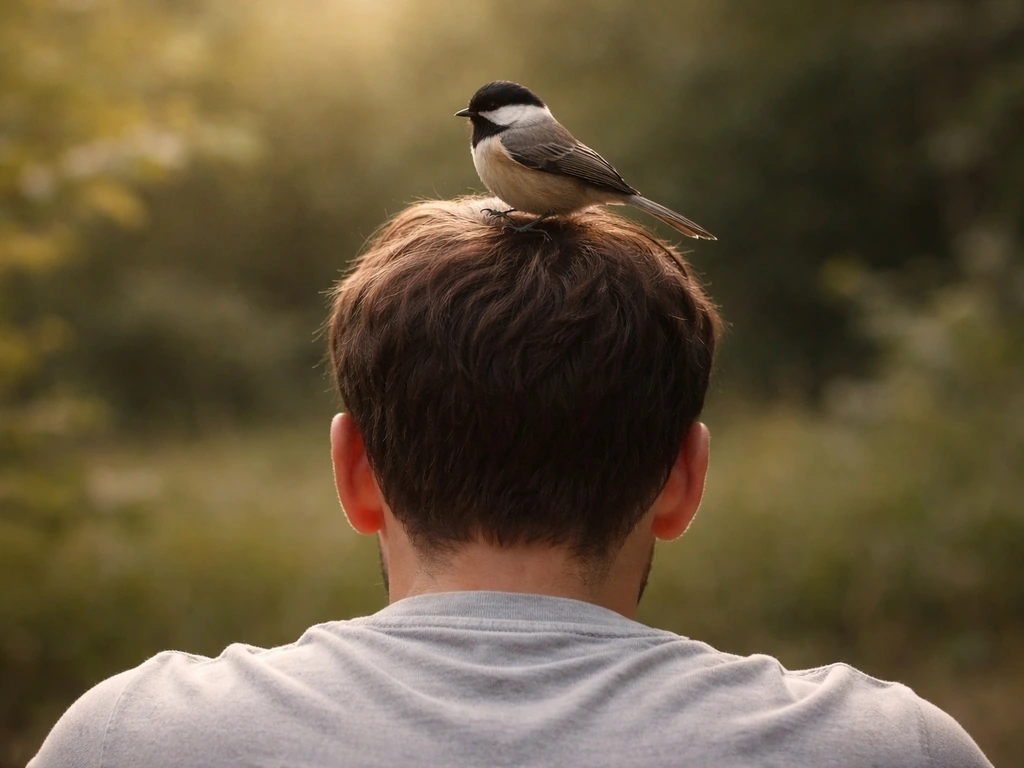
A bird sitting on your head most likely means one of two things: either you happened to be in the right place at the right time for a bold or habituated bird to use you as a perch, or you're working through some symbolic reading of the experience, whether it happened in real life or in a dream. If you’re looking up the bird sheet meaning, treat it as one starting point and then weigh it against your specific context. Neither answer cancels out the other. The folklore is rich, the practical reality is manageable, and what it means to you personally depends on context that no single superstition can cover.
Bird Sitting on Head Meaning: Spiritual and Practical Guide

Marcus Holloway
6 Jul 2026
What people usually mean when they say "bird on head"
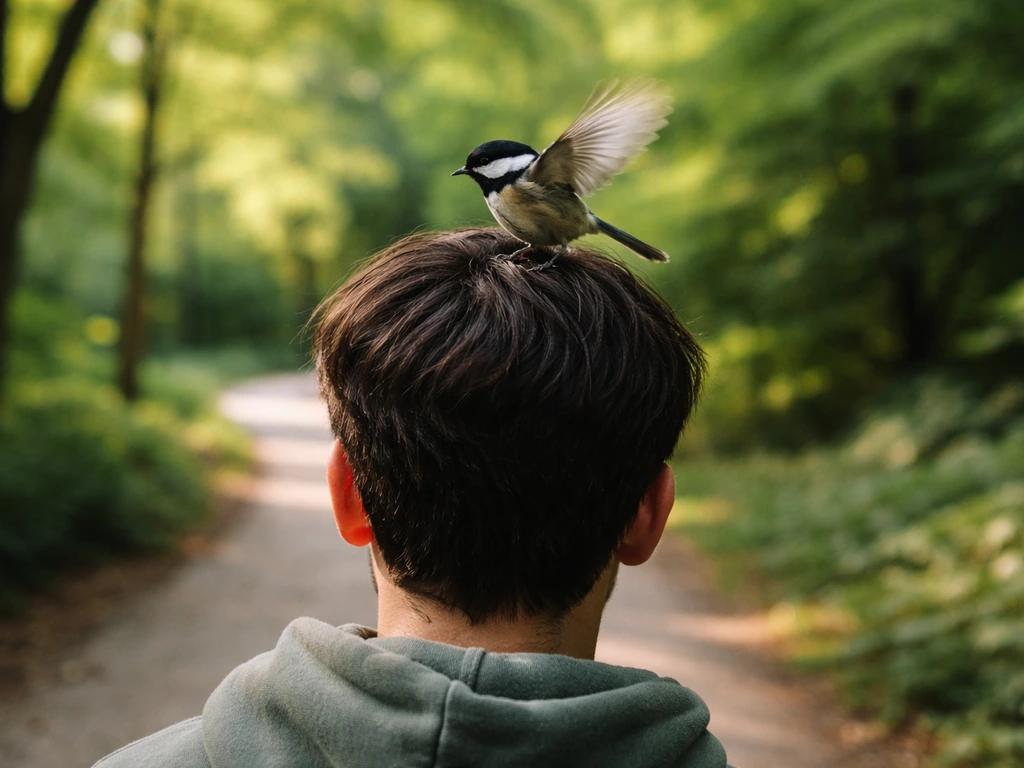
When someone searches for this, they're usually in one of three situations. They had a real bird actually land on their head and want to know whether that means something beyond the physical. They had a vivid dream where a bird perched on or near their head and woke up feeling like it mattered. Or they've heard a saying or seen the image used symbolically and want to understand what it traditionally represents. All three are worth unpacking, but they pull in slightly different directions, so it helps to know which lane you're in before reading too much into any one interpretation.
On the practical side, birds land on people's heads for entirely non-mystical reasons: your head is warm, elevated, and relatively still. Habituated urban birds like pigeons, corvids, and some sparrows lose their natural wariness around humans. Hand-fed or semi-tame birds are especially prone to this. On the symbolic side, nearly every culture on earth has assigned meaning to close bird-human contact, which is why the experience feels significant even when you know the bird just wanted a perch.
Context changes everything
The same experience carries very different weight depending on a handful of variables. Before settling on any interpretation, run through these.
Species
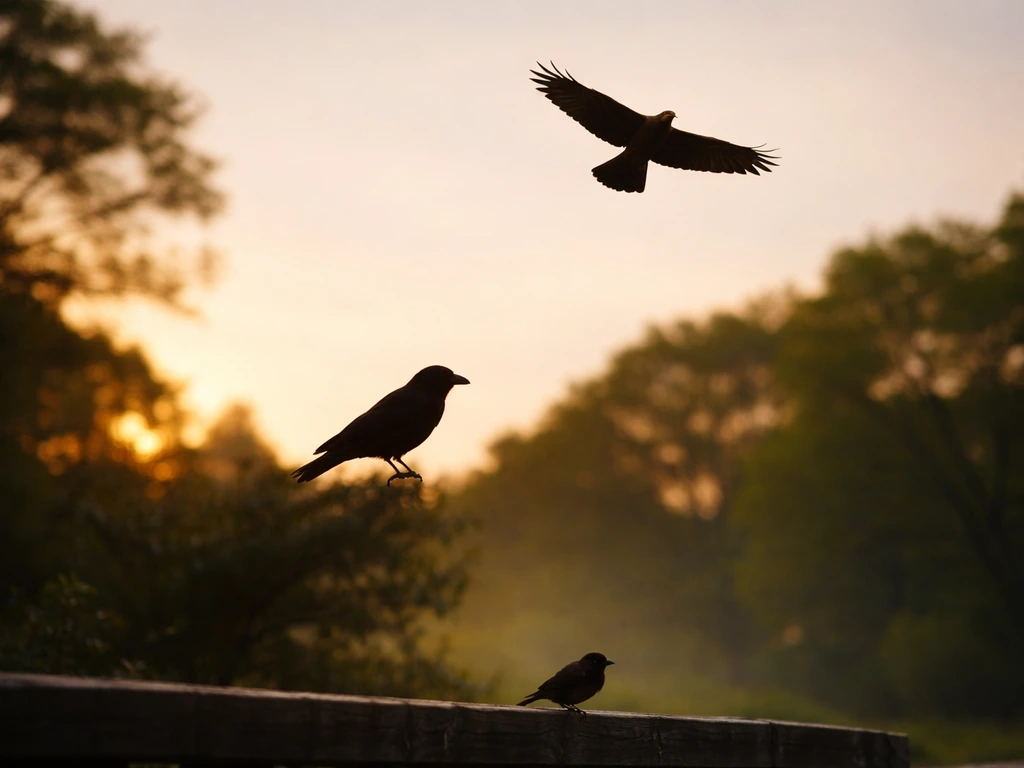
A sparrow landing on your head for a second in a park is behaviorally different from a crow staying put for several minutes, and both are different from a wild raptor making contact. Sparrows and small songbirds are often fearless around food sources. Corvids (crows, jays, ravens) are highly intelligent and may approach humans out of curiosity or because they've been fed. A pigeon landing on you in a city is almost certainly just looking for a comfortable spot. A wild hawk or owl making contact is unusual enough that it warrants a practical safety check regardless of what it symbolizes.
Behavior and duration
A fleeting graze is different from a bird that settles in and stays. A bird that is still, alert, and calm is in a different state than one that is panting, stumbling, or clinging because it can't fly. Duration and demeanor matter both practically (a lingering wild bird may be injured or ill) and symbolically (many traditions treat sustained contact as a more significant omen than a brief landing).
Location and time
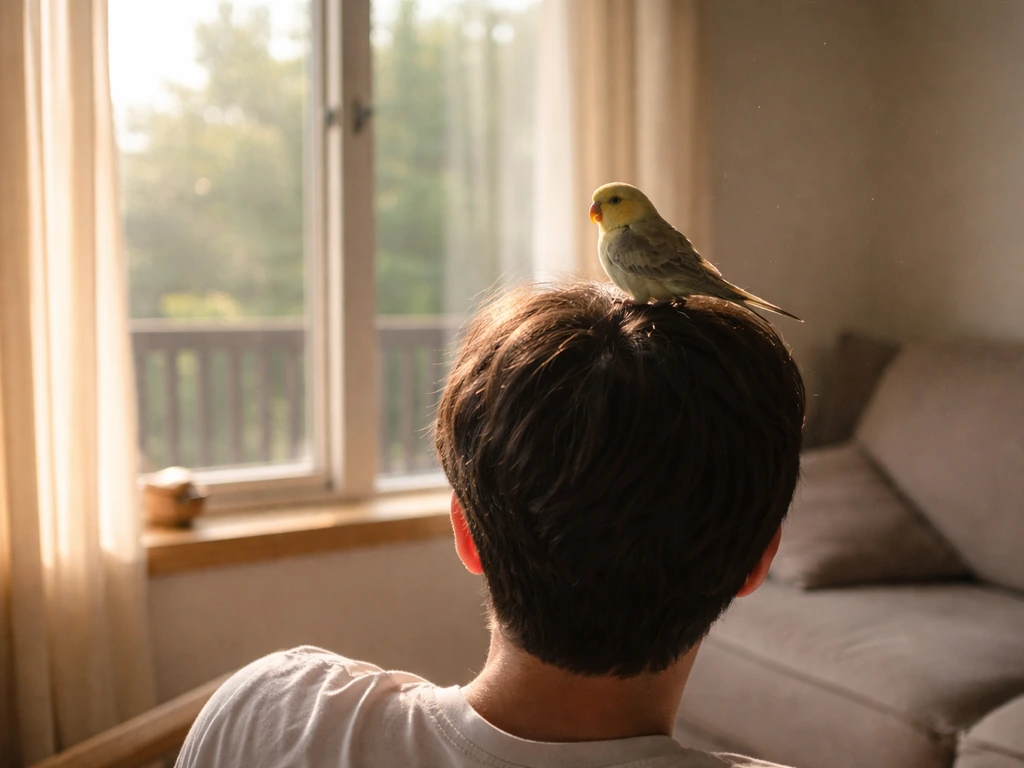
Indoors vs. outdoors shifts the read considerably. A bird that flies into your house and lands on your head is a traditional omen in many European and American folk traditions, sometimes associated with news or a coming change. Outdoors in a park or garden, it's far more likely to be a behavioral coincidence. Time of day adds another layer: some cultures treat dawn encounters with birds as auspicious, while certain night-bird encounters (especially owls) carry more ominous associations depending on the tradition.
Your own situation
This one gets overlooked but it's important. If you're going through a transition, grieving someone, or at a decision point, you're naturally primed to assign meaning to unusual events. That's not superstition, that's human pattern recognition. The question isn't whether the meaning is "real" in a supernatural sense, it's whether reflecting on it helps you process something. More on that in the personal takeaway section below.
What the folklore and cultural traditions actually say
Bird-on-head symbolism appears across a surprising number of traditions, and the interpretations range from deeply auspicious to mildly cautionary depending on where you look. In Iranian and Central Asian legend, the blank" rel="noopener noreferrer">Huma bird’s shadow landing on a person, or perching on a head or shoulder, is associated with bestowing kingship and good fortune.
- Good fortune and blessing: In Iranian and Central Asian legend, the mythical Huma bird was said to bestow kingship and lifelong good luck on any person whose head or shoulder its shadow fell upon. Perching contact was understood as an even more direct transmission of that fortune. This is one of the oldest and most specific "bird on head" symbolic traditions.
- Messages and divine attention: Across many Indigenous American traditions, birds act as messengers between the human and spirit worlds. A bird that makes deliberate, sustained contact with a person is sometimes read as delivering a message that the person needs to pay attention to something in their life.
- Luck from bird droppings: Audubon California documents the common superstition that a bird pooping on your head is a sign of good luck. This is widespread across Europe, Latin America, and parts of Asia, and likely developed as a way to reframe an unpleasant experience. The same source notes that folklore "bird meanings" shift depending on species and behavior, so there's no single universal rule.
- Protection and spiritual guardianship: Some European folk beliefs treat a bird landing on a person, especially during grief or illness, as a sign of protection from a spirit or ancestor. This is particularly common with robins and doves.
- Omens of change: Several Western folk traditions treat any close, unexpected bird contact as a signal that change is coming, without specifying whether that change is good or bad. The emphasis is on paying attention rather than fearing the event.
- Wisdom and elevated thought: Because the head is associated with intellect and consciousness, a bird sitting on the head specifically (rather than a shoulder or hand) is sometimes interpreted as a symbol of elevated thinking, inspiration, or spiritual insight arriving "from above."
It's worth noting that bird symbolism varies significantly by species across cultures. Owls, for instance, are associated with wisdom in some Western traditions but with misfortune or death in parts of West Africa and among some Native American groups. A crow on your head means something very different in Norse mythology (associated with Odin's ravens, Huginn and Muninn, representing thought and memory) than it might in a tradition where crows are seen as ill omens. So when you read a general "bird on head = good luck" claim online, treat it as one thread in a much larger tapestry.
If it happened in a dream
Dream interpretation of a bird landing on your head doesn't require you to commit to any particular spiritual framework to be useful. If you are specifically wondering about a "bird sitting on car" situation, the meaning depends on context like location, behavior, and your own associations. The practical approach is to focus on two things: how the bird felt in the dream, and what was happening in your life at the time.
Birds in dreams are widely associated with messages, freedom, and the movement of thoughts or the soul across many interpretive traditions. The head specifically is symbolic of the mind, cognition, and identity. So a bird sitting on your head in a dream can reasonably be read as something to do with thoughts that feel like they've "arrived" or ideas you're sitting with, depending on the emotional tone of the dream. If you want the deeper meaning behind a bird landing next to you, the same mind-and-context ideas can help you interpret what you felt in the moment bird sitting on your head in a dream.
One common dream-interpretation framing links a bird landing on the head to anxieties about performance or fear of failure, particularly when the dream has an unsettling quality. Some people also ask about bird sleeping positions and what those postures can suggest bird sleeping positions meaning. If the bird felt heavy, invasive, or threatening, that emotional note is usually the more useful signal than the species or color. If it felt light, calm, or even joyful, the same image leans toward inspiration or a sense of being chosen or noticed.
The best rule for dream interpretation here is to resist the temptation to over-literalize. The bird isn't necessarily a specific bird or a specific person. Ask yourself: what was I worried about or hoping for before bed? What part of my life feels like it's "in my head" right now? The dream is usually commenting on something you already know, not delivering new information from outside yourself.
What to actually do if a bird lands on your head right now
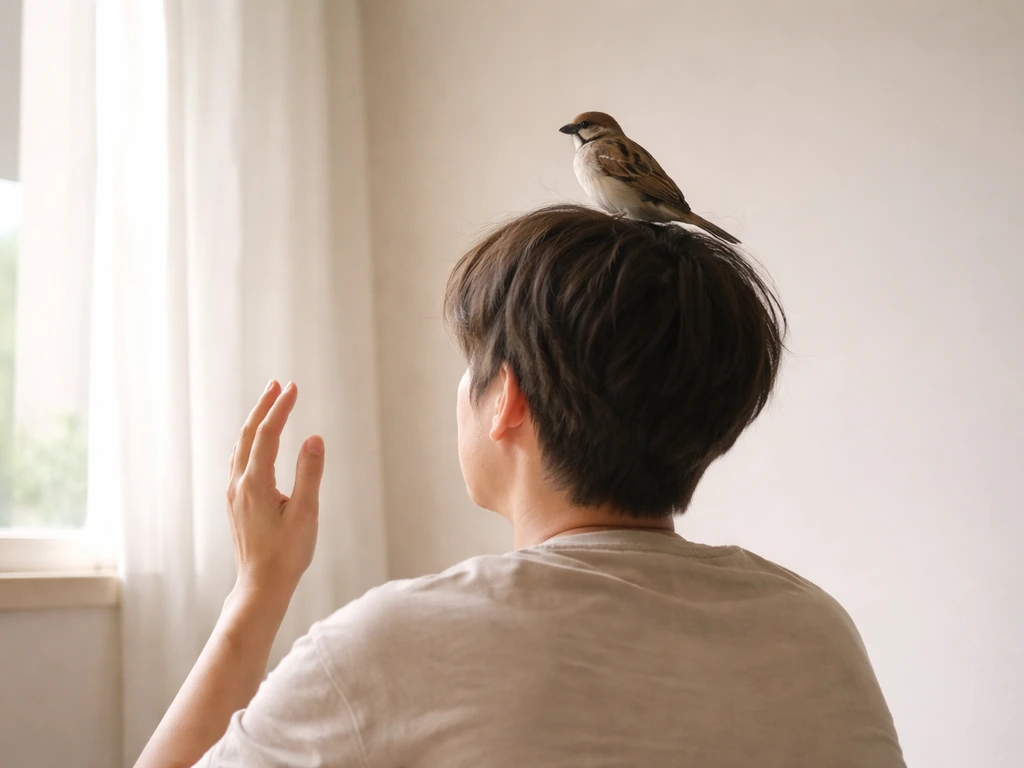
If you're dealing with this in the real world and not just symbolically, here's the practical sequence.
- Stay calm and still. Sudden movement will either startle the bird into scratching you or cause it to fly unpredictably into a wall or window. A slow, deliberate posture gives you control of the situation.
- Assess the bird's behavior before doing anything. Is it alert and looking around (healthy)? Is it panting, unsteady, or refusing to move even when you slowly tilt your head (potentially injured or ill)? This determines your next steps.
- If the bird is healthy and wild, gently tilt your head forward or raise your hand beside it as a perch it can step onto. Most wild birds will leave on their own within a few seconds once startled by a slow head tilt.
- If the bird is a pet or semi-tame bird that belongs to someone nearby, it may step up onto your finger easily. Call out to nearby people, as someone is likely looking for it.
- After any bird contact, wash your hands thoroughly with soap and water as soon as possible. If the bird was on your head, wash your hair or at least rinse the contact area. Bird droppings can carry bacteria including Salmonella and Campylobacter, and feathers can carry mites or fungal spores.
- Check for scratches or pecks. Most small bird contact causes no injury, but if skin was broken, clean the area with soap and water and monitor it. A peck from a larger bird (crow, gull, heron) that breaks skin deserves antiseptic treatment and monitoring for signs of infection.
When it becomes a health or wildlife concern
Most bird-on-head encounters are harmless and brief, but a few situations genuinely warrant follow-up action.
Signs the bird may be injured or sick
A wild bird that stays on your head or body for an extended time without any sign of wanting to leave is often injured, exhausted, or ill rather than spiritually motivated. Look for panting (a sign of heat stress or respiratory illness), drooping wings, inability to grip properly, discharge from the eyes or beak, or feathers that appear matted or dull. If you see these signs, the bird needs help rather than symbolic interpretation. Do not attempt to nurse it yourself unless you have training. Instead, contact a licensed wildlife rehabilitator or your local wildlife authority. In the US, the NWRA (National Wildlife Rehabilitators Association) maintains a directory at nwrawildlife.org. In the UK, contact the RSPCA or a local wildlife hospital.
Allergy and respiratory concerns
Bird feathers and dander are among the more common allergens, and close head contact is more intense than casual proximity. If you have known bird allergies or asthma, or you experience sneezing, itchy eyes, or breathing difficulty following close bird contact, take it seriously. Antihistamines can manage mild reactions; breathing difficulty or throat tightness warrants immediate medical attention. People with pigeon lung (hypersensitivity pneumonitis caused by repeated exposure to bird proteins) should avoid prolonged contact and consult a doctor after any intense exposure.
Bites, scratches, and disease risk
Psittacosis (also called parrot fever) is a bacterial infection carried by parrots, pigeons, and some other birds that can be transmitted to humans through contact with infected droppings or respiratory secretions. It's relatively rare but worth knowing about if you had close contact with a bird that seemed unwell. Symptoms appear within 1 to 4 weeks and include fever, headache, and respiratory symptoms. If you develop any of those after a bird encounter, mention the contact to your doctor. Wild bird scratches have a low but non-zero infection risk, particularly from larger birds. Clean the wound, use antiseptic, and watch for redness, swelling, or heat over the following days.
How to reflect and find your personal takeaway
Once the practical side is handled, you're left with the interpretive question: what, if anything, does this mean to you? Here's a grounded framework for working that out without over-committing to any single tradition. If you are comparing this with bird landing on shoulder meaning, remember the same context and behavior details still control what feels significant.
- Identify what you were thinking or feeling just before the encounter. Meaningful coincidences tend to feel meaningful precisely because they arrive during emotionally charged periods. That context is the most useful signal you have.
- Choose a symbolic tradition that resonates with your background or worldview, not the first thing you find on a generic "bird symbolism" list. Huma bird folklore, Indigenous messenger-bird traditions, European omen readings, and Jungian dream psychology all frame this differently. Pick the lens that fits your life.
- Ask what you'd want the message to be, and why. This isn't wishful thinking. Often the answer you hope for reveals what you're actually processing. If you want it to mean "things are about to get better," that's telling you something about where you are right now.
- Give it a week before deciding it was meaningful. Significance has a way of clarifying or dissolving with a little distance. If the encounter still feels important after a week, it's worth sitting with. If it fades, that's fine too.
- Use it as a prompt, not a prediction. Rather than asking "what will happen now," ask "what does this invite me to pay attention to?" That reframe keeps the symbolism useful without turning it into fortune-telling.
Whether the bird on your head felt like a small, funny surprise or something that stopped you in your tracks, both reactions are valid starting points. The folklore around birds landing near or on people is broad enough to hold almost any reading, which is actually a feature rather than a bug. Similar encounters, like a bird landing next to you, a bird landing on your shoulder, or a bird sitting near you, all carry overlapping but distinct symbolic threads across the same traditions. The head contact specifically tends to get interpreted as the most direct or intentional of these encounters, which is why it sticks with people long after the bird has flown off.
FAQ
What should I do in the moment if a wild bird is sitting on my head and won’t leave right away?
First, prioritize safety and gentle removal. Stay calm, move slowly, and avoid sudden swatting that could injure the bird. If the bird shows signs of distress (panting, drooping wings, discharge from eyes or beak, stumbling), treat it as potentially injured or ill and contact a wildlife rehabilitator rather than trying to nurse it yourself.
Does it matter what kind of bird it was for the meaning?
Yes for practical risk, less so for symbolism. Species identification helps you gauge likelihood of curiosity versus distress (for example, pigeons and many urban birds often approach for comfort or food proximity). For symbolic reading, the bird’s emotional “tone” in your experience (heavy and threatening versus light and calm) is usually more useful than color or species alone.
If it happened indoors, does that automatically mean an omen?
Not automatically. Indoors often increases the odds that the bird is confused or exhausted from flying into a building, which points to a practical explanation. If you also notice clear distress (wide-eyed, weak flight, repeated attempts to escape), focus on the animal situation first, then consider any symbolic meaning as secondary.
Is a brief landing (a second or two) interpreted differently than a bird that stays?
Typically yes. Short contact often fits a “coincidence plus attention” pattern, while extended settling can suggest either stronger habituation (common with some city birds) or potential injury or illness (more concerning with wild birds). Either way, duration and how the bird behaves are more decision-relevant than any fixed superstition.
What if I’m allergic or have asthma, but the bird landed anyway, is it still safe to interpret it spiritually?
You can still reflect on meaning, but handle health first. After close contact, watch for symptoms like itchy eyes, sneezing, wheezing, or throat tightness. If breathing difficulty occurs, seek urgent medical care. If you have hypersensitivity pneumonitis history from bird proteins, avoid prolonged contact and consult your doctor after intense exposures.
How long after an encounter should I worry about infections like psittacosis?
Symptoms usually appear within 1 to 4 weeks after exposure involving infected secretions or droppings. If you develop fever, headache, or respiratory symptoms in that window, tell your clinician about the bird contact so they can decide whether testing is appropriate.
In a dream, what’s the most helpful way to interpret a bird sitting on my head?
Use a context checklist: your emotion in the dream, what felt “in your head” (stress, decisions, performance pressure, an idea you are processing), and what you were worried about or hoping for before bed. If the bird felt invasive or threatening, the dream often mirrors anxiety, while a calm or joyful mood often points toward inspiration or feeling noticed.
Can the dream mean something specific like a person or event?
Often it means your mind is processing something related to identity, thoughts, or responsibility rather than predicting a specific person. A practical approach is to write down the real-life topic most connected to the dream’s emotion, then treat any “message” as insight into your own concerns.
What’s a common mistake when people try to interpret bird-on-head meaning?
Over-literalizing the species, color, or a single online rule (for example, “always good luck”). A more reliable decision aid is to separate three layers: (1) physical reality and bird condition, (2) your immediate emotion and context, and (3) any symbolic associations you personally resonate with.
If I had repeated encounters (same spot, same season), does that change the interpretation?
It can, mainly because repeated exposure increases the chance it’s a learned or habitual environment, not a one-off omen. Practically, check what attracts birds to that area (food sources, open windows, water, nesting). Symbolically, repeated contact can still be meaningful as a pattern your attention keeps returning to, but confirm the environmental cause first.
Next Articles
Bird Panting Meaning: What It Is and When to Worry
Understand bird panting meaning, spot heat or stress vs illness, and get urgent steps to cool, check breathing, and seek
Bird Verb Meaning: Uses, Behaviors, Idioms & Sightings
Discover what 'bird' means as a verb, definitions, behaviors, idioms, sightings, and practical next steps.
Bird Sighting Meaning: How to Interpret What You Saw
Interpret bird sighting meaning with context, behavior, symbolism, and practical steps to identify the species and next