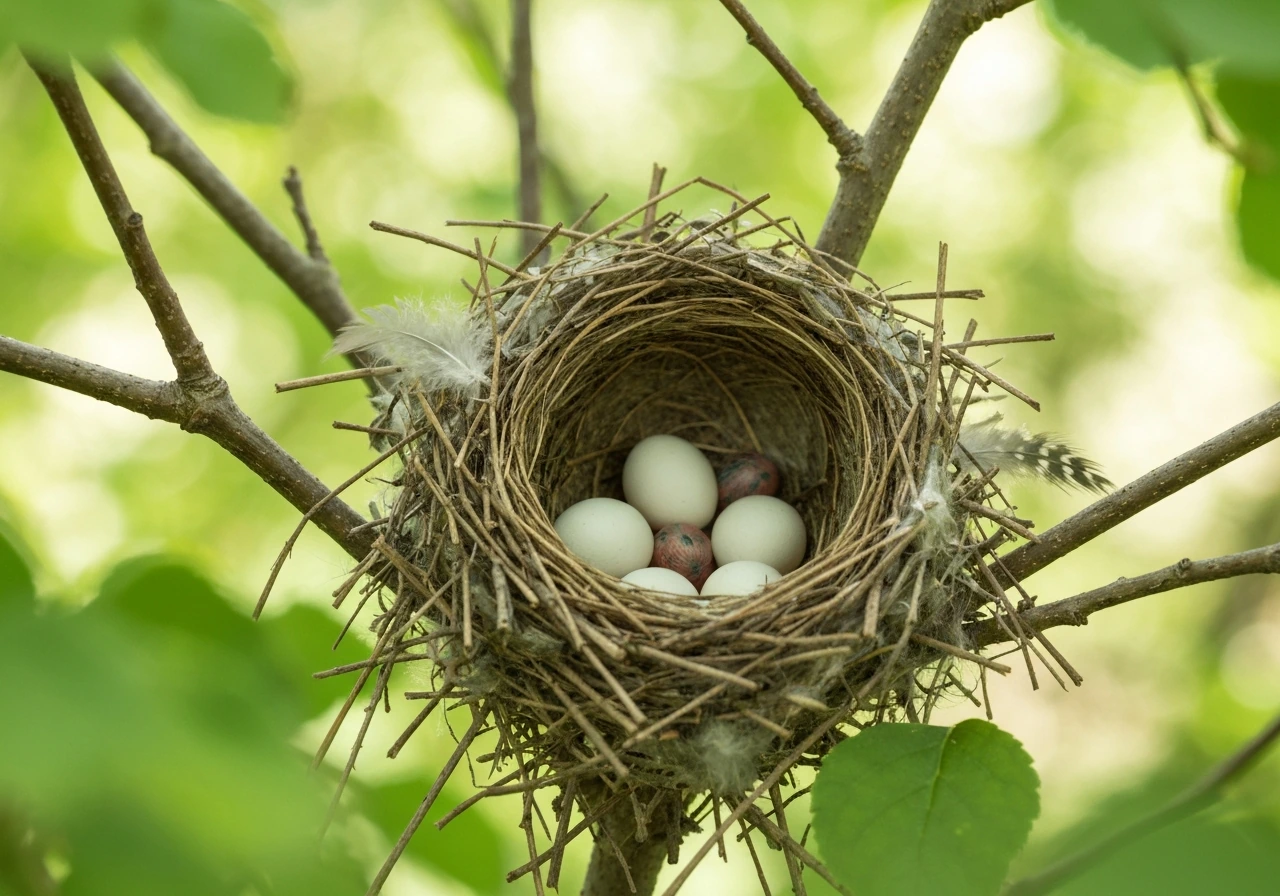
A "bird clutch" refers to the full set of eggs a bird lays in one nesting cycle, all destined to be incubated and hatched together. It's a core ornithological term, not a metaphor or idiom, though it carries rich symbolic weight when it shows up in dreams or spiritual contexts. If you found eggs in a nest, spotted a bird sitting tight and unmoving, or had a dream about eggs and birds, you're dealing with some version of a clutch, and this guide will help you figure out exactly which one.
Bird Clutch Meaning: Definition, Symbolism, and What To Do

Marcus Holloway
27 Apr 2026
What "Bird Clutch" Actually Means
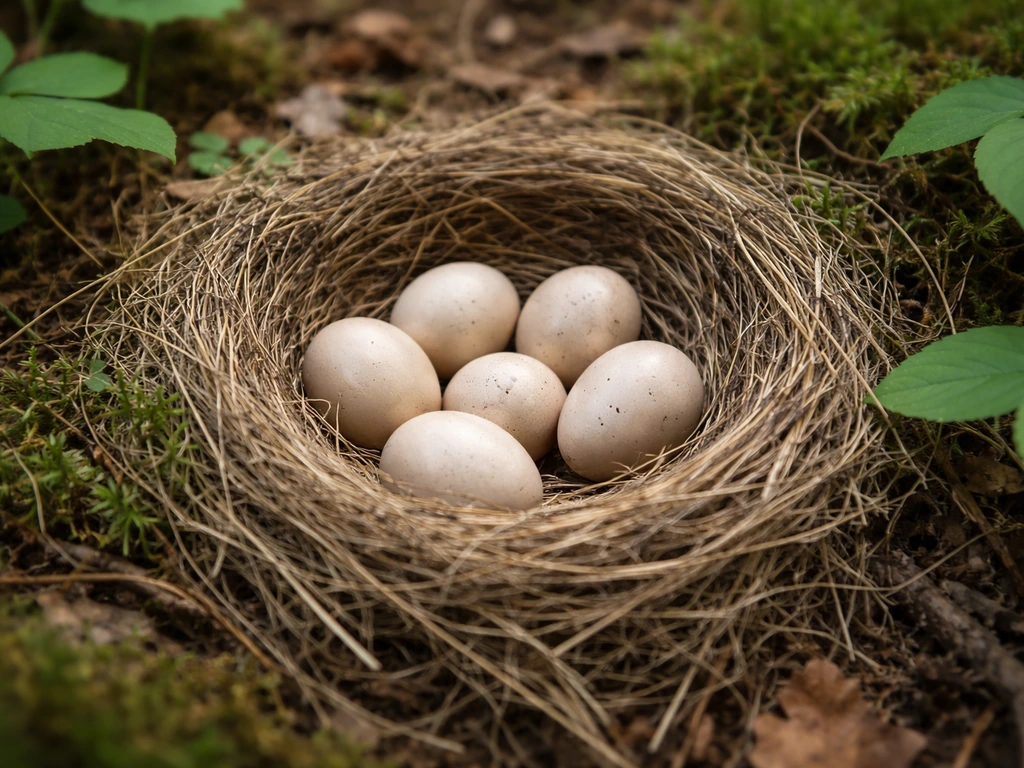
In ornithology, a clutch is the complete group of eggs a bird produces in a single reproductive attempt, typically laid in a nest over a period of days. Think of it as the bird's full "batch" for that breeding round. A robin might lay a clutch of four eggs, a seabird might lay just one, and some waterfowl can produce a dozen or more. The number is species-specific and is actually studied as a reproduction metric called clutch size.
Dictionaries back this up cleanly: "clutch of eggs" is listed as a standard English phrase meaning a group of eggs laid at one time, especially by a bird. So when someone says "bird clutch," they mean the eggs themselves, typically as a group sitting in or near a nest. It's not the act of sitting on them (that's brooding or incubation) and it's not the chicks (that comes later). The clutch is the eggs, full stop.
Clutch in the Bird Context: Incubation and Brooding
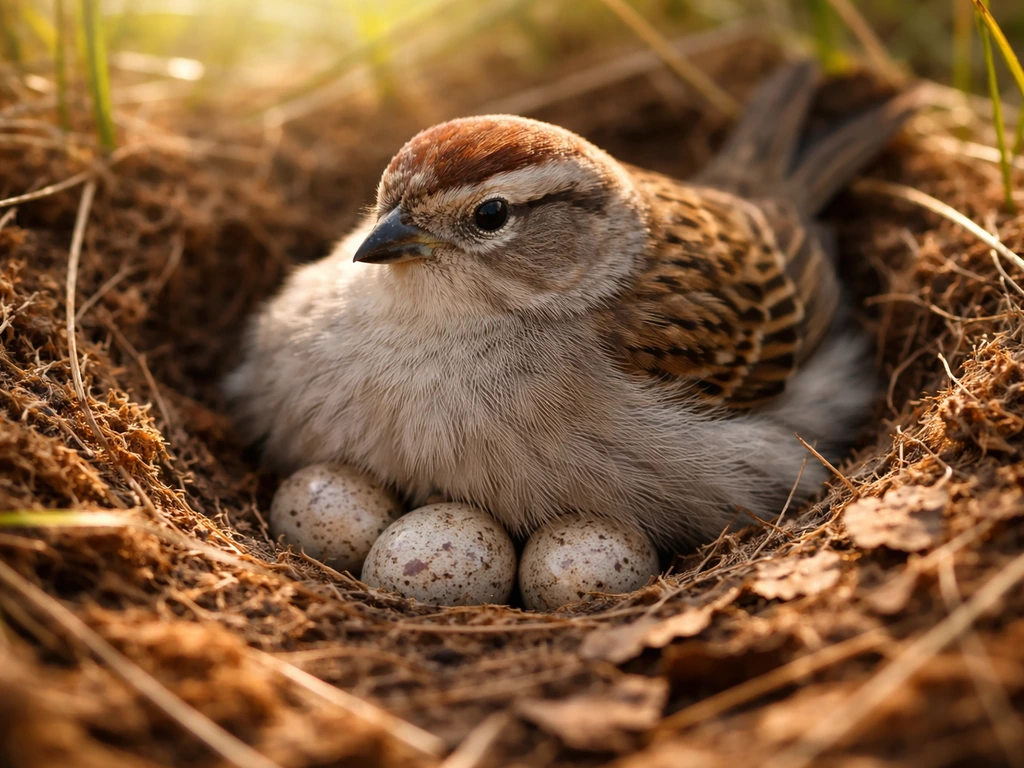
Once a bird has laid its clutch, the next phase is incubation, which is where the bird sits on the eggs to keep them warm enough for embryos to develop. The British Trust for Ornithology describes incubation precisely as "warming the clutch," which is a useful way to think about it. The two things are linked: the clutch is what's being incubated, and incubation is what happens to the clutch.
Brooding is the behavioral side of this, the actual sitting-on-the-eggs behavior. A female (or in some species, a male) brooding her clutch of eggs is doing the work of incubation. How long incubation lasts varies wildly by species, and the timing affects the hatching date and ultimately how well the chicks survive. One important note for field observers: not all birds begin incubating immediately after the first egg is laid. Some waterfowl, for example, wait until the clutch is complete before starting incubation, which is why an "unattended" nest isn't automatically a sign of abandonment.
Common Scenarios People Are Actually Thinking About
Most people searching "bird clutch meaning" have landed on one of a few real-world situations. Most people searching "bird clutch meaning" are really starting with bird nest meaning and the symbolism can overlap depending on whether you mean eggs, incubation, or spiritual context. If you meant the symbolism tied to a bird nest rather than the eggs themselves, you may also like the meaning of a bird nest in different contexts bird nest hair meaning. A bird nest at home often gets read as a sign of comfort, safety, and readiness to care for something new bird nest at home meaning. Here's what those usually look like:
- You found a nest with eggs in it, on a fence, in a bush, or in your yard, and you want to know what you're looking at.
- You spotted a bird sitting completely still on a nest and aren't sure if it's injured, sleeping, or actively incubating a clutch.
- You noticed broken eggshells near or under a nest and want to know if that means the eggs hatched or something went wrong.
- You found eggs on the ground (not in a nest) and are wondering if they belong to a nearby nest or if a bird laid them there intentionally.
- You had a dream involving eggs, birds, or nests and are curious about what it might mean.
- You came across the phrase "bird clutch" in a book, article, or nature documentary and wanted a plain-language explanation.
The first four are practical, biological situations. The last two are interpretive. Both are legitimate reasons to go looking, and the answer you need is different depending on which camp you're in.
How to Tell What You're Actually Dealing With
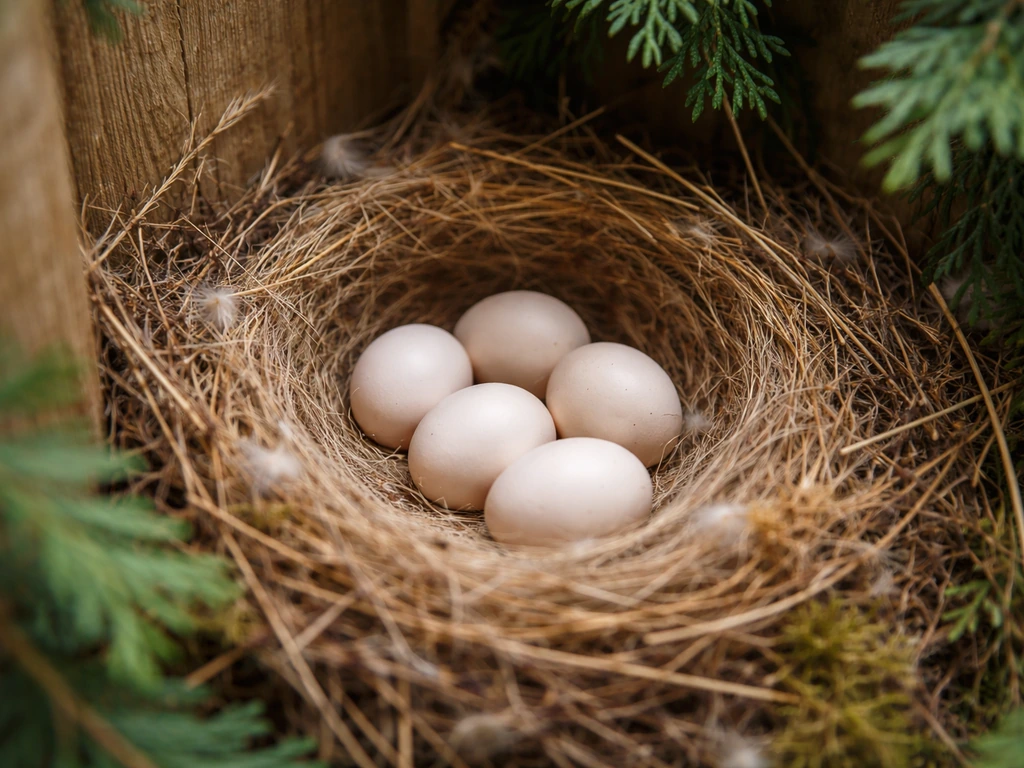
If you're in the field or your backyard trying to figure out what's going on with a nest, here are the clues that tell you which stage you're looking at.
| What You See | What Stage It Likely Is | What It Means |
|---|---|---|
| Intact, uncracked eggs in a nest | Egg-laying or early incubation | The clutch is complete or still being laid; parent may return |
| Bird sitting still on nest, not moving much | Active incubation (brooding) | Eggs are present even if you can't see them; do not disturb |
| Broken eggshells in or under nest | Hatching or predation | Chicks may have emerged, or a predator reached the clutch |
| Tiny, featherless or downy chicks visible | Post-hatch nestling stage | Clutch has hatched; brooding now means warming the chicks |
| Eggs on the ground near a tree or shrub | Fallen or displaced clutch | May have been knocked from a nest; check for nest above |
One useful detail from NestWatch: during egg-laying, birds typically lay one egg per day, so you can estimate when the first egg was laid by counting backward from the number of eggs you see. Smithsonian National Zoo’s nesting guidance notes that songbirds typically begin incubating around the day before the last egg is laid songbirds begin incubating around the day before the last egg is laid. That won't tell you the species, but it gives you a rough timeline of where the clutch is in the cycle. If the bird is altricial (meaning the chicks hatch helpless and require sustained parental care, like songbirds), the incubation period is usually longer and the chicks will look much less developed at hatch than precocial species like ducks or shorebirds, whose chicks are mobile almost immediately.
Cultural and Spiritual Meanings of "Bird Clutch"
Birds carry heavy symbolic weight across virtually every culture. They're framed as messengers between worlds, symbols of freedom, instinct, renewal, and vigilance. That symbolism doesn't disappear when you add "clutch" to the picture. If anything, it deepens it.
A clutch of eggs, in symbolic terms, is almost universally read as new life about to begin, potential held carefully, and the threshold between what is and what could be. In dream interpretation traditions, eggs often represent fertility, fresh starts, or projects that haven't yet hatched into reality. The bird in that context is the guardian, the protector of possibility. The act of incubating (sitting on and warming the clutch) tends to be interpreted as nurturing something fragile and not yet ready for the world.
"Clutch" itself, as a dream symbol, is sometimes associated with control, holding on, and transition, which makes sense given its dual meaning in English (the verb "to clutch" means to grip or seize). In the spiritual reading, a bird clutching eggs might signal a moment where you're protecting something new in your own life, a relationship, a creative project, a change you're not quite ready to let the world see yet. It's worth treating these interpretations as one lens among many rather than a fixed answer. The symbolism is evocative and personally meaningful, but it doesn't overwrite the biology.
If bird nests as a broader symbol interest you, that's a related thread worth pulling. Nest symbolism on its own carries meanings around home, safety, and preparation, all of which overlap with clutch symbolism in interesting ways. If you are wondering about a bird nest in a Christmas tree, the meaning often overlaps with traditional nest symbolism around home, safety, and preparation bird nest in christmas tree meaning.
Idioms, Phrases, and Places Where "Clutch" Gets Confusing
"Clutch" is a genuinely busy word in English, and it's worth knowing where the non-bird meanings show up so you don't mix them up.
- "Clutch" as a sports term means performing well under pressure, as in "she came through in the clutch" or "what a clutch play." This has nothing to do with eggs or birds.
- "Clutch bird" or "clutch like [athlete name]" sometimes appears in sports writing as a metaphor for reliable performance, borrowing the pressure-moment sense of the word, not the ornithological one.
- "Clutch" as a verb means to grip or seize tightly, which is where some of the dream symbolism around control and holding comes from.
- "Clutch" as a noun also means a small handbag, which occasionally shows up in fashion contexts when people search bird-related phrases near fashion terms.
- "A clutch of" can refer to groups of other things besides eggs: a clutch of reporters, a clutch of ideas. Context is everything.
The phrase "clutch bird meaning" with the word order reversed (clutch first) sometimes leads people to sports or pop culture content rather than ornithology. If you're reading something that uses "clutch bird" to mean a reliable or pressure-tested bird (as a metaphor for a player or performer), that's the sports-culture use. If the context is nature, biology, or spirituality, you're almost certainly back to eggs and incubation.
What to Do if You Actually Find a Clutch or Nest
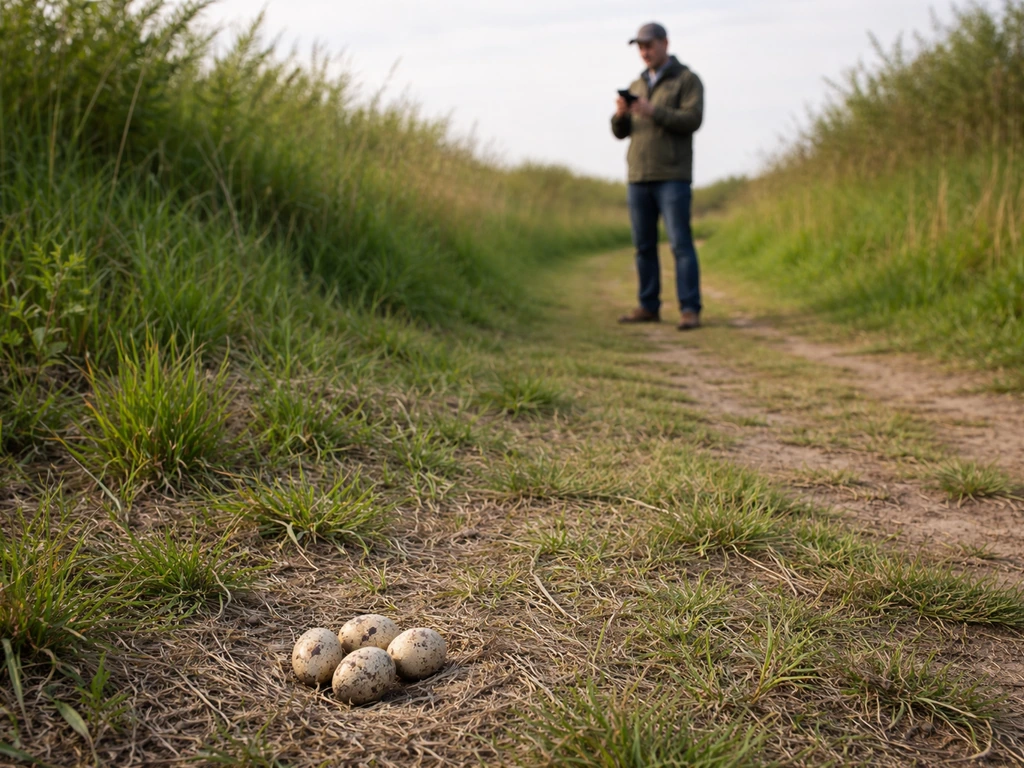
If you've landed here because you found real eggs, a nest, or chicks, here's straightforward guidance on what to actually do.
If the nest and eggs look undisturbed
Leave them alone. Seriously, this is the right move in almost every situation. If you see a bird sitting on a nest, back off and give it space. If you find a nest with eggs and no bird visible, that doesn't mean it's abandoned. Many species leave the nest temporarily to feed, and some wait to start incubation until all eggs are laid, so an unattended clutch is often perfectly normal. Watch from a distance and give the parents time to return.
If you accidentally touched the eggs
Don't panic. The old myth that parent birds will abandon a nest because a human touched it is largely untrue. Scent alone isn't enough to cause most birds to abandon their clutch. That said, unnecessary handling is still a bad idea because eggs are fragile, and repeated disturbance can stress the parents enough to cause real problems. Put the eggs back if they've been displaced, step away, and monitor from afar.
If eggs or chicks are on the ground
Check whether there's a nest directly overhead. If the eggs or chicks are on the ground, it helps to understand the bird nest on the ground meaning so you can tell whether the situation is normal or needs intervention. If there is and the egg appears undamaged, you can gently return it to the nest. If there's no visible nest or the egg is clearly broken, your options narrow quickly. Wildlife rehabilitation centers may not accept abandoned eggs for incubation because handled eggs have low viability and can be harmed by the process. In the US, it's also illegal to keep wild bird eggs without a permit under the Migratory Bird Treaty Act. In the UK, taking or destroying wild bird eggs is illegal under the Wildlife and Countryside Act, and handling eggs or chicks without a special licence is prohibited.
When to contact a professional
If the situation feels urgent, like a nest has been destroyed, chicks are injured, or a parent bird is clearly dead, contact your local wildlife rehabilitation center or state/national wildlife agency. In the US, the US Fish and Wildlife Service points people toward licensed local rehab resources. In the UK, the RSPB and BTO both have guidance. These organizations have the permits, equipment, and expertise to actually help, which a well-meaning person at home typically doesn't.
- Don't disturb the nest or eggs unless there's clear, immediate danger.
- Watch from a distance before assuming the nest is abandoned.
- If eggs or chicks are on the ground, check for a nearby nest and return them if undamaged.
- Don't try to incubate eggs at home; it's rarely successful and often illegal.
- Contact a licensed wildlife rehabilitator or your state/national wildlife agency if the situation requires intervention.
The most useful thing you can do when you find a bird clutch in the wild is resist the urge to intervene immediately. Birds have been managing their clutches without human help for a very long time. Give them the space to do it, and call in the experts when that's genuinely not enough.
FAQ
If I see an “unattended” bird clutch, does that automatically mean the parents abandoned it?
No. Many species briefly leave the nest to feed, and some delay incubation until the clutch is complete. Instead of assuming abandonment, watch from a distance for a pattern (for example, whether an adult returns within a reasonable time window) and avoid repeated visits that increase stress.
How can I tell whether what I’m seeing is eggs (the clutch) versus chicks?
Eggs look smooth and intact (often in a consistent arrangement), while chicks show signs of development such as down, skin, or movement and may need warmth or feeding. If the nest contents are already huddled bodies with visible begging behavior, you are past the clutch stage.
What should I do if I accidentally step near or disturb a nest with eggs?
Step back immediately, keep pets and people away, and avoid lingering to “check.” If eggs were displaced, replace them exactly as found only if you can do so gently without prolonged handling, then leave. Ongoing disturbance is the bigger risk than one brief, careful pass.
Is it okay to candle eggs to see if they’re viable?
For wild birds, it’s usually not recommended. Candling requires handling and can damage eggs, and many jurisdictions also restrict attempts to incubate or possess wild eggs without permits. If you suspect an emergency, contact a wildlife rehabilitator instead.
If a clutch is in a bad location (like a driveway or storm-ridden area), can I move the nest or eggs?
Generally, no. Moving nests or eggs is risky and can reduce survival, and it can be illegal without proper authorization. The best next step is to report the situation to a local wildlife agency or rehabilitator, who can advise whether relocation is possible and permitted.
How long should I wait before deciding something is actually wrong with a clutch?
There is no single safe number because species vary, but a practical rule is to observe quietly from a distance for signs of normal adult return rather than acting immediately. If adults are never seen and there are clear signs of injury, predation, or severe nest damage, contact professionals.
Does “clutch” mean the eggs are definitely incubating right now?
Not always. Some birds do not start incubation with the first egg, so eggs may be present before incubation truly begins. That timing affects hatching, so a clutch that looks “cold” briefly does not necessarily mean it is doomed.
What if I find a bird clutch at night or during bad weather?
Reduce disturbance and avoid touching the nest. Many birds will still manage temperature and protection across weather changes, and nighttime activity patterns can differ from daytime. If you suspect the nest was destroyed or the adult is injured, call a local wildlife center.
Can I keep or incubate a found wild bird clutch at home?
In most places, keeping wild bird eggs or incubating them outside a licensed setup is prohibited without permits, and even when it is permitted, handled eggs often have lower viability. Use a rehabilitator as the safest route if the situation is urgent.
For dream meanings, does a “bird clutch” always point to fertility or a new project?
Not always. Eggs in dreams often symbolize potential and readiness, but the specific message usually depends on your emotions and the dream details (for example, whether you felt protective, anxious, or in control). Use it as guidance about what you might be nurturing or guarding, not a fixed prediction.
If a dream includes the bird abandoning the clutch, what does that suggest?
Dreams that include abandonment commonly relate to fears of losing control, feeling unprepared, or worrying that something fragile is not being supported. It can also reflect real-life stress around timelines, deadlines, or whether you feel your efforts are “held” by circumstances.
What’s the difference between “clutch” and “brooding” if I’m trying to interpret a real nest?
A clutch is the eggs themselves (the set of eggs laid in one reproductive attempt). Brooding is the behavior of sitting on the eggs. If you see a bird actively warming the eggs, you are observing brooding of a clutch, not the clutch itself.
I’m seeing “clutch bird” in sports content online. How do I confirm I’m not mixing meanings?
Check the surrounding context. In sports and pop culture, “clutch” usually describes performance under pressure and may pair with “bird” as unrelated slang or phrasing. In nature, biology, or spirituality discussions about nests or eggs, “bird clutch” almost always refers to egg groups and incubation.
Next Article
Bird Nest Meaning: Definition, Symbolism, and What to Do
Get the bird nest meaning: definition of nesting and common symbolism, plus safe steps for identifying and observing nes