
If you searched "bird nest meaning," you probably want one of two things: either the plain biological definition of what a nest is and what nesting behavior actually involves, or the symbolic/spiritual interpretation people associate with finding or dreaming about a bird nest. The honest answer is that both are worth knowing, because they inform each other. A nest is, at its core, a reproductive structure a bird builds to protect eggs and raise young. But because that behavior so directly mirrors how humans think about home, family, and security, the word "nest" has taken on a rich second life in language, dreams, and symbolism. This guide covers both angles clearly, so you can take what you actually need.
Bird Nest Meaning: Definition, Symbolism, and What to Do

Marcus Holloway
10 Apr 2026
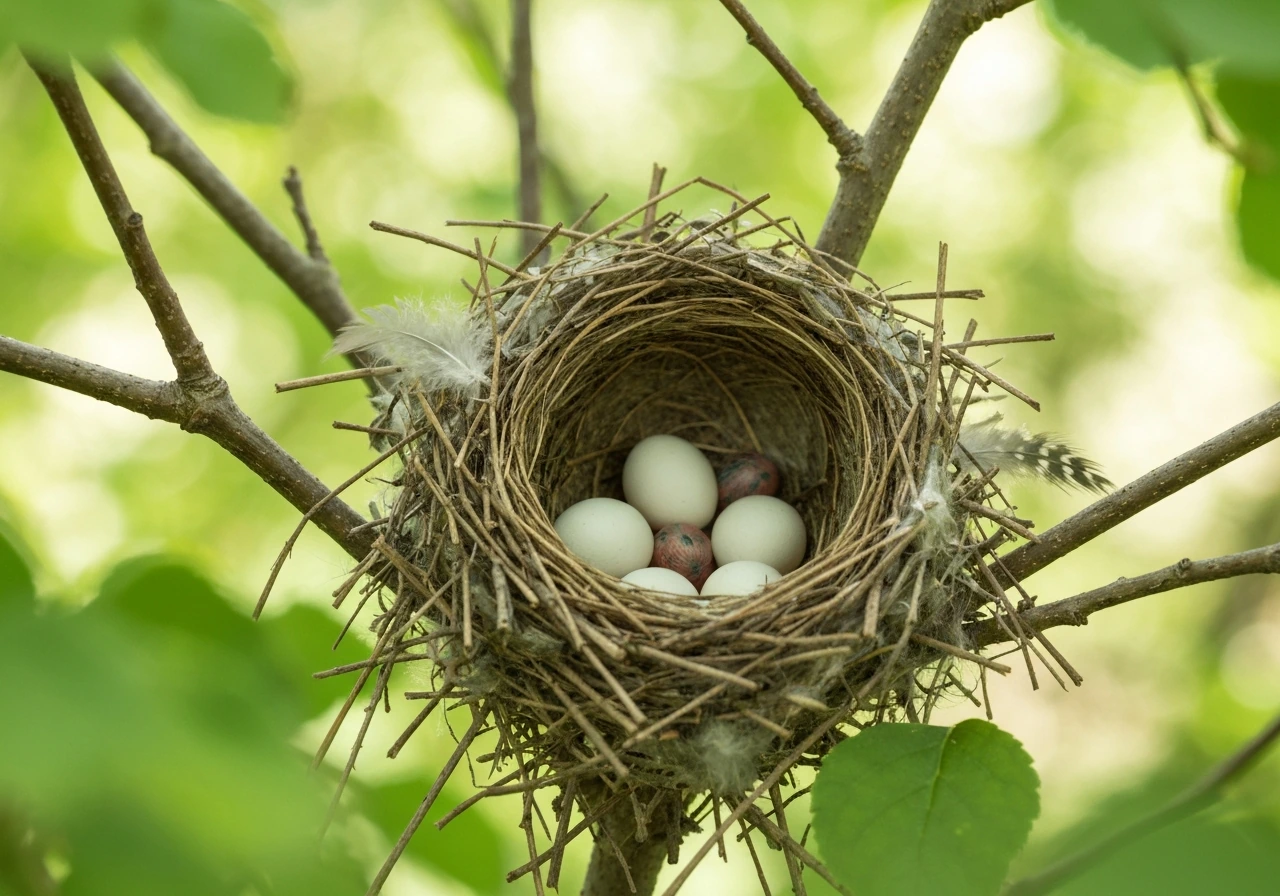
What a bird nest actually is (the literal definition)
A bird nest is a structure built by a bird to serve as a site where it can lay eggs, incubate them, and raise its young. The primary purpose is protection: the nest shields eggs and chicks from predators, weather, and physical harm. But it's also an adaptive reproductive strategy, not just a tidy container. Nests can harbor parasites and pathogens too, which is part of why birds sometimes abandon them between breeding cycles.
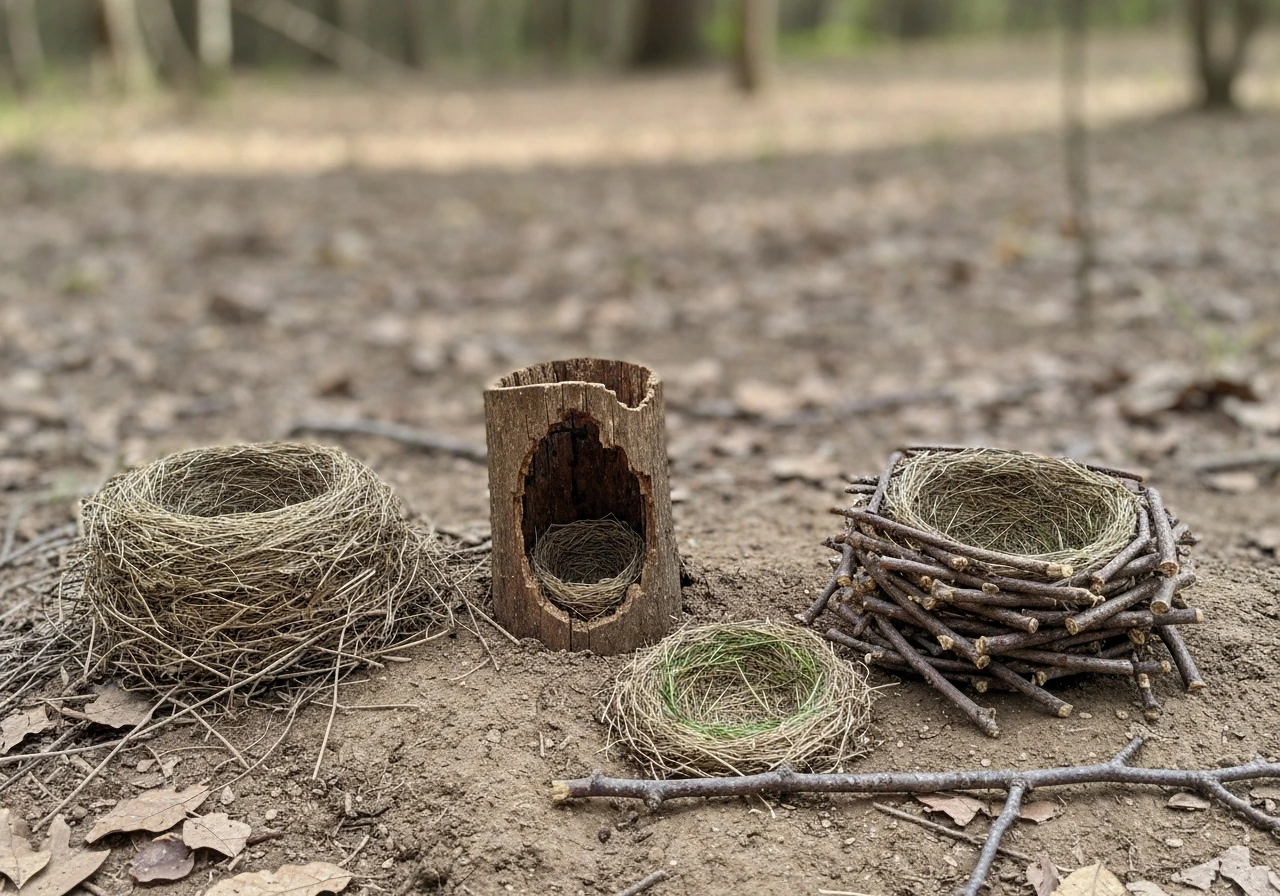
Researchers have identified at least seven structural types of bird nests: scrape, platform, cup, simple dome, dome with tunnel, primary cavity, and secondary cavity. In plain terms, a scrape is just a shallow depression scratched into the ground. A cup nest is the classic rounded nest most people picture, shaped like a bowl and often wedged in tree branches. Platform nests are relatively flat, larger structures built in trees or tall vegetation as a foundation for egg-laying. Cavity nests are built inside holes, whether in trees, rock faces, or man-made structures. Each design reflects the bird's habitat, predator pressure, and parental strategy.
Nesting behavior: it's more than building a nest
"Nesting" as a behavior spans far more than the moment a bird weaves together twigs and grass. Active nesting runs from courtship and nest-building all the way through incubation, nestling care, and fledgling departure. Scientists who monitor nests through programs like NestWatch (Cornell Lab of Ornithology) track each of these stages separately, using nest type, egg traits, location, timing, and parental behavior as identifying clues.
Behavioral signs that confirm active nesting include nest construction, eggs present in the nest, observed feeding by parents, and even copulation (which indicates a female is likely in the building or laying stage). Platform nests, for example, start as flat bases and become cozier as the bird adds softer nesting material, forming a mound with a central depression for eggs. Cup versus dome designs have real functional consequences too: a dome reduces how much the eggs and chicks are exposed to the elements and to aerial predators.
One thing that surprises many people: nest monitoring specialists note that observers sometimes wrongly assume a nest is abandoned when adult birds are still quietly attending eggs from a distance. Birds often stay away from the nest when they sense a human presence nearby, which can look like abandonment but isn't.
What "nest bird meaning" can refer to in language and symbolism
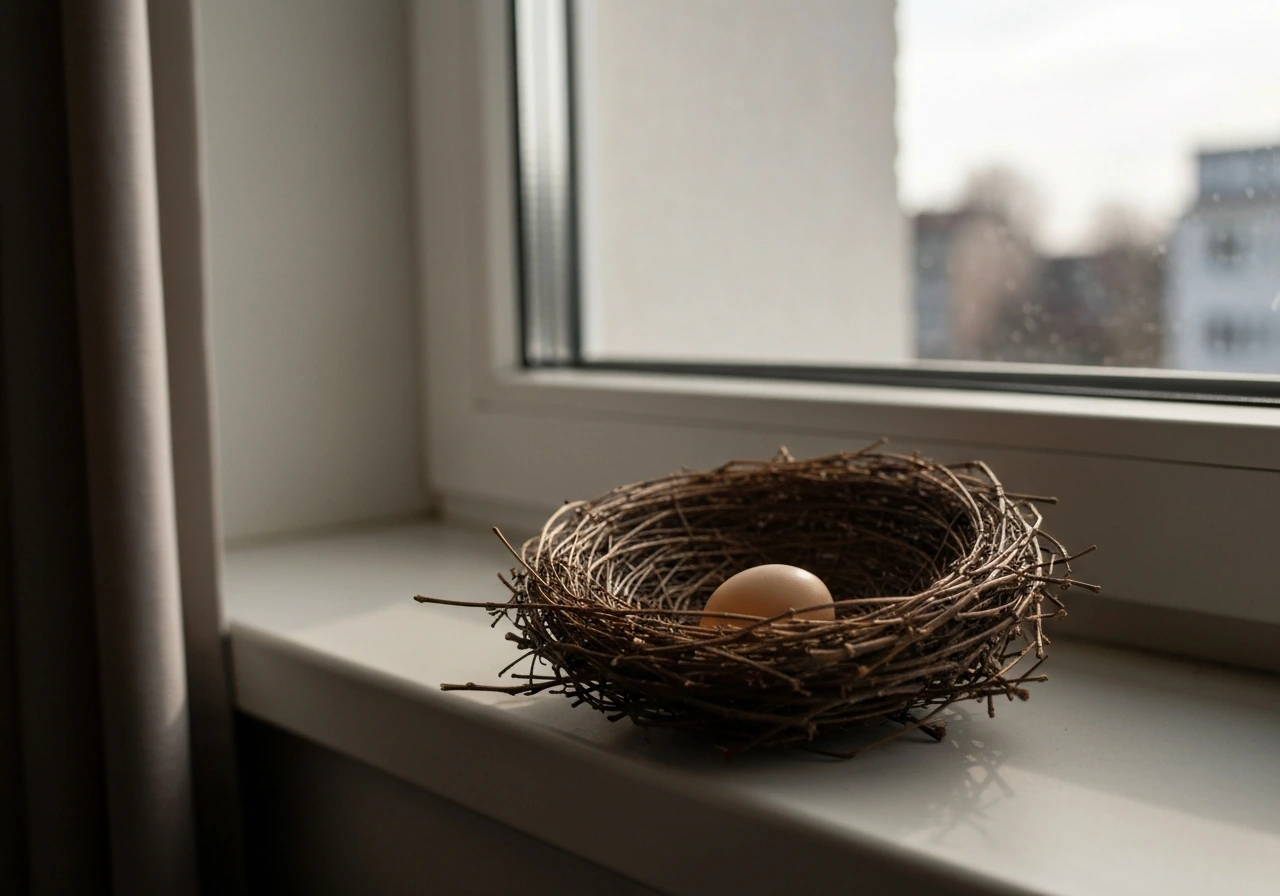
When people search "nest bird meaning" or "nesting bird meaning," they are often reaching for the symbolic or cultural sense of the phrase rather than the biology. And that makes sense, because the nest has been a durable symbol in human language for centuries. The most direct example is the phrase "nest egg," which in everyday English means a sum of money or assets saved for the future, particularly retirement. The Cambridge English Dictionary defines it straightforwardly as savings set aside for long-term financial security. Nothing to do with eggs at all.
"Empty nest" is another phrase that has moved almost entirely into metaphorical territory. Vocabulary.com similarly defines an “empty nest” as the life stage when children leave home and explains that the metaphor comes from a bird’s nest after the young have fledged “Empty nest” is another phrase that has moved almost entirely into metaphorical territory.. It describes the family stage when the last child leaves home, explicitly borrowing the bird image of young birds learning to fly and leaving the nest behind. The Collins English Dictionary also notes that "bird's nest" can be used to describe anything tangled or knotted in appearance, a purely visual comparison that has nothing to do with birds or eggs.
These idioms point to how naturally the nest fits human emotional vocabulary: home, security, the work of building something, and the bittersweet moment when it empties. When you find a bird nest at home and feel a pull to assign it meaning, that instinct is tapping into this same long tradition of nest-as-symbol.
Bird nest meaning in dreams and spirituality
Dream symbolism around bird nests consistently clusters around a few core themes: home, family, security, new beginnings, and nurturing. A nest in a dream is generally read as a sign of groundwork being laid, or of a foundation being built for future growth. The specific context matters in these interpretations. A nest placed high up in a tree is often read differently from one found on the ground, with height sometimes suggesting aspiration or stability, and ground placement suggesting humility or vulnerability.
Symbolically, nesting birds in dreams are sometimes framed as representing life-stage transitions: taking on new responsibilities, preparing for a family, or entering a phase that requires patience and care. This is a reasonable interpretive frame as long as you treat it as guidance rather than prediction. Dream symbolism is descriptive, not deterministic. A nest in a dream likely reflects something you are already feeling or building in your waking life, not a guaranteed forecast of what's coming.
The location of a nest also shifts meaning in a literal, behavioral sense that bleeds into its symbolic reading. A bird nest on the ground carries different connotations from one built in the eaves of a house or the branches of a tall tree. Ground nests are more exposed, more vulnerable, and in symbolism that vulnerability often reads as rawness or risk. Elevated nests feel more protected, more established.
Context also shapes spiritual meaning in unexpected places. For example, a bird nest in a Christmas tree is widely considered a symbol of good luck, prosperity, and family blessings in several European and North American folk traditions, precisely because the nest appears in a festive, family-centered space.
Cultural references and idioms tied to nests
Beyond "nest egg" and "empty nest," nests show up in cultural references in ways that reinforce their symbolic weight. Incubation itself, the biological process of a parent warming eggs until they hatch, has become a common metaphor in entrepreneurship (startup "incubators") and creative work (letting an idea "hatch"). The nesting instinct, which describes the biological urge in birds and other animals to prepare a safe environment for reproduction, has also been widely applied to human behavior, particularly in discussions of expectant parents preparing a home before a baby arrives.
Understanding what a bird clutch means, specifically the number of eggs laid in a single nesting attempt, adds another layer to how people interpret nest symbolism. A full clutch suggests abundance and potential; an incomplete or broken clutch carries overtones of loss or interruption. These associations flow directly from the biology into the symbolic register.
The phrase "bird's nest hair" is a more contemporary cultural use worth acknowledging. Bird nest hair refers to hair that is tangled, matted, or structurally chaotic in a way that visually resembles the woven texture of a nest. It's a good example of how the image of a bird nest, that dense, organic tangle of material, travels across domains and picks up new, unrelated meanings based purely on appearance.
What to actually do when you find a nest
Identify the bird first
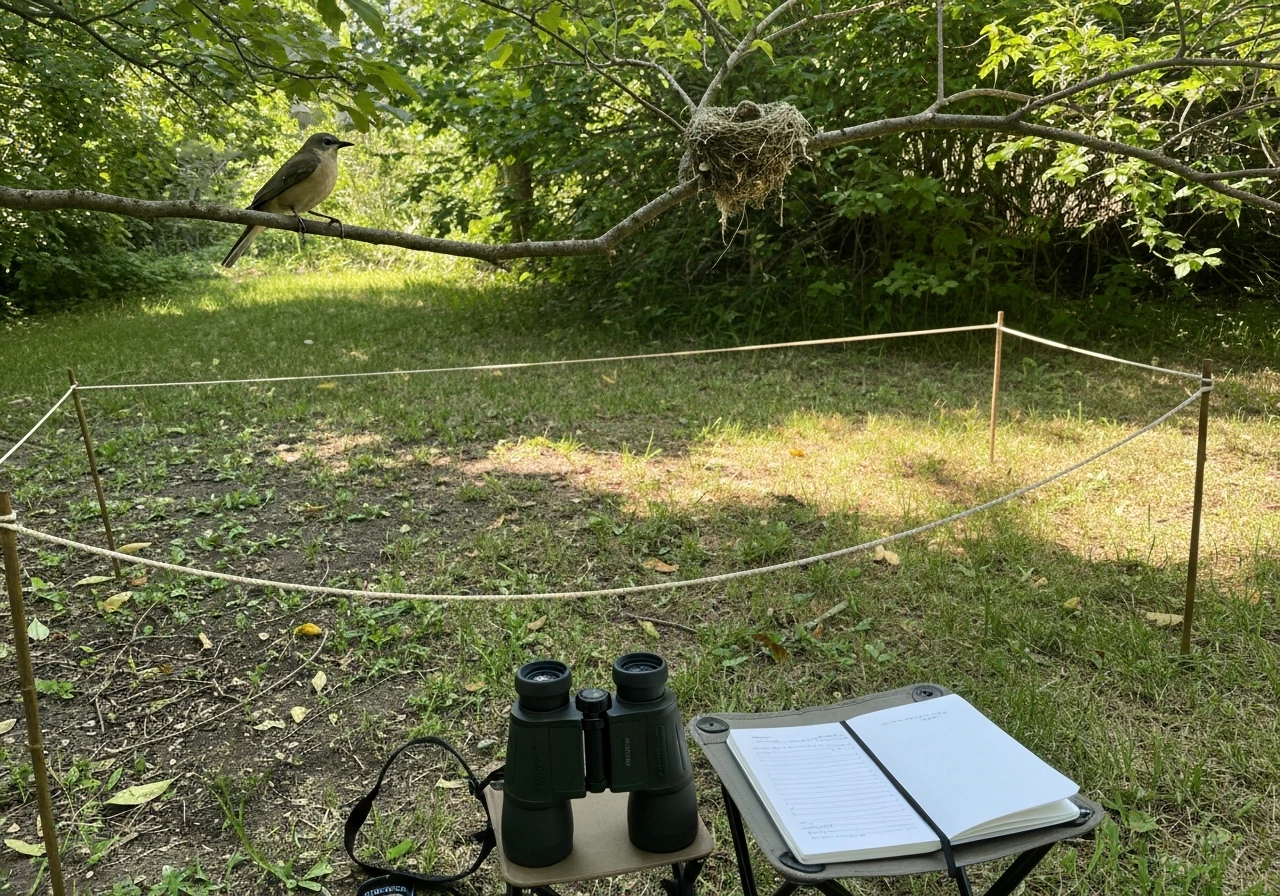
If you've found a nest and want to figure out what made it, focus on four things: your region, the nest's location and structure type (cup, cavity, platform, scrape), the timing of the year, and any birds you've seen or heard nearby. A field guide specific to your area, or a free resource like Cornell Lab's All About Birds, will narrow it down quickly. Nest type alone eliminates a large portion of candidates: a neat cup nest in a suburban shrub is a very different situation from a large flat platform nest in a tall cottonwood by water.
Observe from a distance, not up close
The single most important rule for nest observation is to stay back and use binoculars. Smithsonian's nest monitoring guidelines are direct: do not approach nests when young are close to fledging. When chicks are fully feathered and nearly ready to leave, a disturbance can cause premature fledging, which dramatically reduces their survival odds. The best approach is to watch from a comfortable distance, note whether parents are actively coming and going, and keep your visits brief.
Know the legal situation
This matters more than most people realize. Most songbirds and migratory birds in the United States are protected under the federal Migratory Bird Treaty Act (MBTA), and that protection extends to their nests and eggs. A CRS report on selected legal issues summarizes that the MBTA generally makes it unlawful, without authorization or a permit, to take migratory birds and includes nests or eggs under the prohibition [federal Migratory Bird Treaty Act (MBTA)](https://www. congress.
gov/crs-product/R44694). Intentionally disturbing, removing, or handling an active nest without a federal permit can result in serious fines. This applies regardless of whether the bird is currently migrating. If you are unsure whether a nest you've found is active or protected, the U.
S. Fish & Wildlife Service's Migratory Bird Permit office is the right contact point, and suspected violations can be reported by email to federal law enforcement with details about the location, date, and what was observed.
Treat "meaning" as a prompt, not a prediction
Whether you are interpreting a dream nest or assigning meaning to a real one you found outside your window, the most responsible approach is to treat the symbolism as a mirror rather than an oracle. Nests have carried connotations of home, safety, new beginnings, and family across dozens of cultures because those are real experiences that the biology of nesting genuinely evokes.
But a nest on your porch does not guarantee good fortune, and a nest in a dream does not predict a pregnancy. What it might do is prompt you to ask useful questions: What am I building right now? What feels fragile and needs protection? What foundation am I laying?
Those questions have real value regardless of whether you believe in dream symbolism at all.
A quick comparison: literal vs. symbolic nest meanings
| Context | What 'nest' means | Practical implication |
|---|---|---|
| Biology / ornithology | A structure built to protect eggs and raise young; an adaptive reproductive strategy | Identify nest type, observe safely, know legal protections |
| Language / idiom | Financial savings ('nest egg'), family departure ('empty nest'), tangled appearance | Recognize figurative use; literal bird biology not implied |
| Dreams / spirituality | Home, security, family, new beginnings, foundations being laid | Use as reflective guidance, not prediction |
| Cultural folklore | Good luck, abundance, blessing (especially in domestic settings) | Context-dependent; varies by culture and nest location |
| Behavioral science | Active nesting spans courtship through fledging, not just the structure itself | Full 'nesting' behavior includes building, incubating, and chick-rearing |
The thread connecting all of these interpretations is the same biological reality: birds pour significant energy into creating a protected space for new life. Whether you are reading that literally or symbolically, the core meaning holds. A nest represents preparation, care, and the vulnerable but necessary work of building something worth protecting.
FAQ
What’s the difference between “bird nest meaning” and “nesting bird meaning”?
“Bird nest meaning” usually points to the noun nest itself (biology, idioms, symbolism), while “nesting bird meaning” more often emphasizes the nesting bird’s life stage (incubating, feeding, or fledging) and what that stage commonly symbolizes in dreams or cultural readings.
If I find a nest, does it always mean the nest is active right now?
No. A nest can be reused, abandoned between breeding attempts, or be an old structure with no eggs. The fastest indicator is current adult activity (parents feeding, carrying food, or visible eggs), not whether the nest looks fresh.
What should I do if I see eggs or chicks but I am not sure the nest is active?
Don’t try to “check” by approaching. Use binoculars from a distance to look for eggs, adult attendance, and feeding trips. If anything suggests incubation or nestlings are present, treat it as active and protected.
How can I tell whether the nest is in the “building” stage versus incubation or nestling care?
Building is often visible as fresh material being added (especially in platforms and cups). Incubation is suggested by eggs and fewer adult movements. Nestling care usually shows more frequent feeding visits and less consistent adult hiding or distance.
Is a nest in a backyard or near my home always good luck or a sign of prosperity?
It can be interpreted that way symbolically, but biologically it may be nothing more than habitat choice (shelter, food availability, safe predator conditions). If you take action, prioritize bird welfare over meaning by reducing disturbances and keeping pets inside.
What’s the safest way to observe a nest without causing harm?
Stay back and keep visits brief. Avoid repeated trips, loud noises, or sudden camera flashes, and do not block entrances or change your usual route near the nest. If you have to pass by, walk slowly and give the parents time to resume normal behavior.
Can interpreting a dream nest ever be misleading?
Yes. Dream symbolism is descriptive, but it can be misread as prediction, especially when you focus only on the symbol. Look for the emotional theme in the dream (uncertainty, protection, readiness) and connect it to a real-life situation you are actively working on.
Does the meaning change if the nest is destroyed, empty, or contains a broken clutch?
Symbolically, emptiness often points to transition or loss of an expectation. Practically, a broken clutch can be caused by weather, predators, or human disturbance. If a nest has been damaged, do not attempt repairs or cleanup that brings you closer, and check local wildlife guidance if you want to report it.
What if I find a nest hair or “bird’s nest hair” situation at home? Is it related to birds?
Typically no. “Bird’s nest hair” is a visual metaphor for tangled, matted hair, and it should be treated as a grooming or styling issue, not evidence of birds nesting nearby.
Which details matter most if I want to identify what made the nest?
Focus on region, nest location (ground, eaves, shrub, tree height), and nest structure type (scrape, cup, platform, dome, cavity). Timing in the year is also key because it narrows candidates to species that breed during that window.
Can I move a nest if it’s in an inconvenient spot (porch, window, fence)?
In many places, moving an active nest or disturbing it can violate wildlife protection rules. The safest approach is to avoid touching it and contact a local wildlife agency or permit office if exclusion is needed, especially when eggs or nestlings are present.