
Finding a bird nest on the ground most likely means one of two things: a nest was knocked down by wind, a predator, or bad weather, or you're looking at a ground-nesting bird's intentional home. The meaning shifts completely depending on whether the nest is active (eggs or chicks present) or empty, and whether it fell from somewhere versus was always on the ground. Both the practical situation and the symbolic reading people attach to this discovery depend on that distinction, so the first thing to do is observe from a distance before touching anything.
Bird Nest on the Ground Meaning: Real Causes and What to Do

Marcus Holloway
1 May 2026
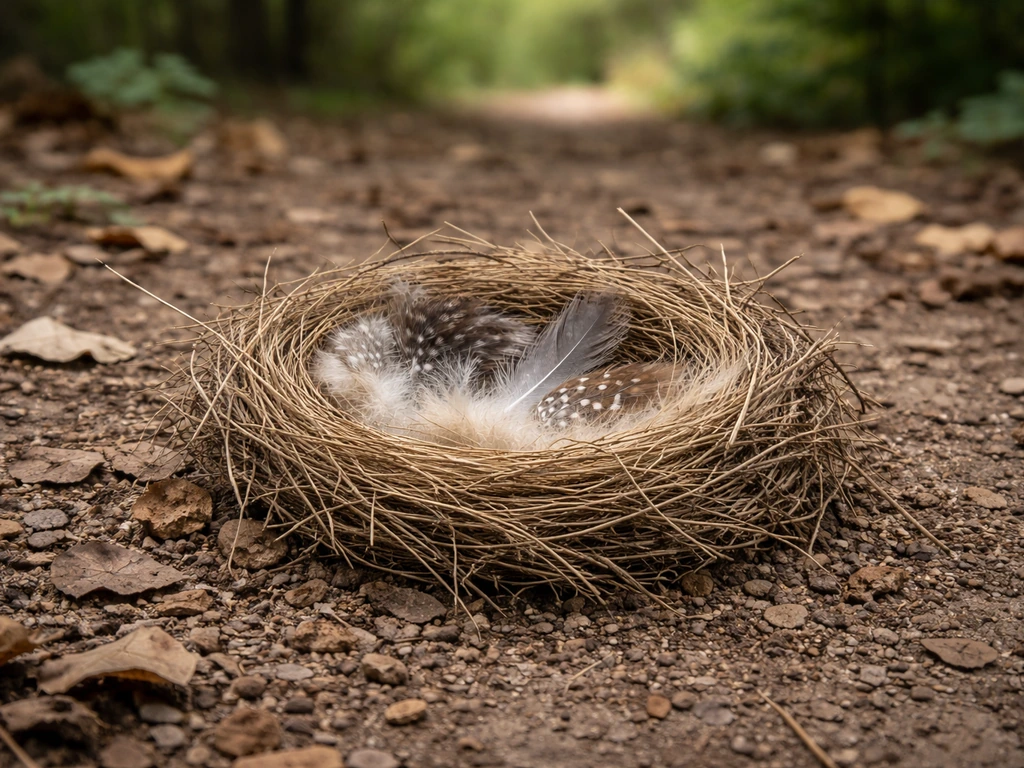
What a bird nest on the ground usually means
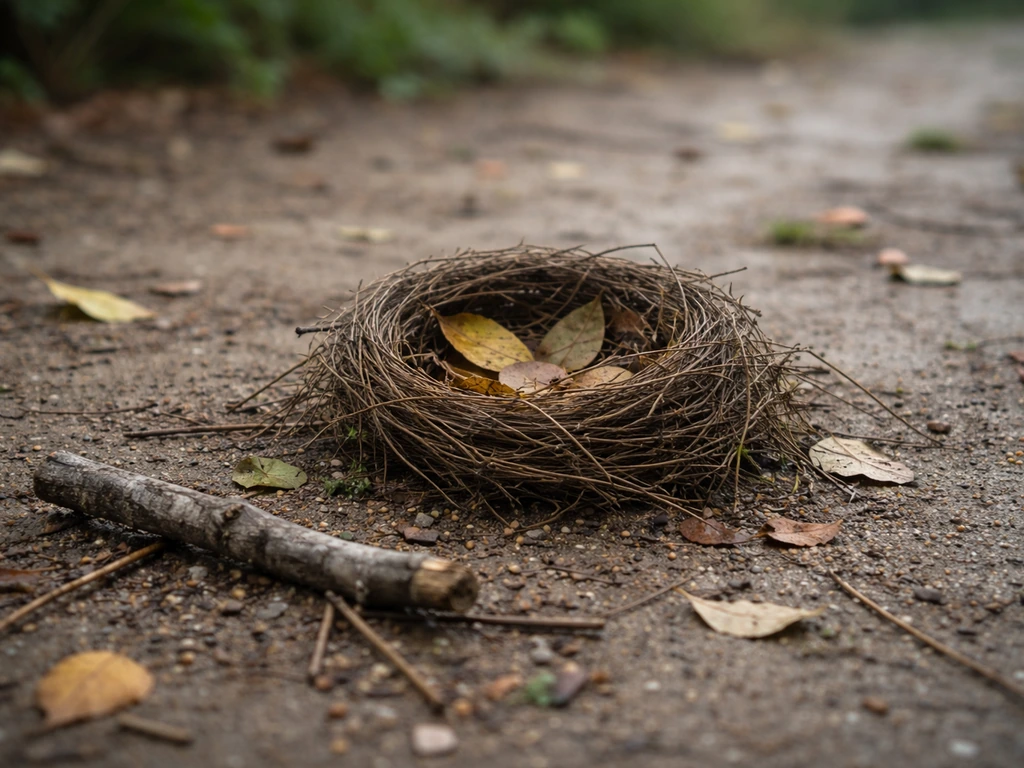
In everyday life, a nest on the ground is almost always explainable by one of a handful of natural causes. Strong storms and high winds are the most common culprits, knocking complete nests out of trees or shrubs. Predators like squirrels, raccoons, or crows will physically pull nests down while raiding eggs. Sometimes a nest is structurally weak or built in a poor spot, and it simply falls before the young birds fledge. Other times, what looks like a "nest" is just loose nesting material, dead leaves, or grass clumps that birds dropped while carrying it to a build site nearby.
Then there's the case people often overlook: the nest was always on the ground on purpose. Killdeer, nighthawks, and several shorebirds are ground-nesters by nature. Cornell Lab's All About Birds describes a Killdeer's nest as nothing more than a shallow depression scraped in gravel or dirt. If you find what looks like a minimalist "nest" with eggs directly on bare earth or pebbles, you may have stumbled onto a completely healthy, intentional nesting site, not an abandoned or fallen one.
Culturally and symbolically, a bird nest on the ground carries meanings related to vulnerability, disruption, and transition. In folklore and dream symbolism, a nest represents home, protection, and the nurturing of new beginnings. When that nest is on the ground rather than safely elevated, many traditions read it as a sign of disruption to stability, a call to rebuild, or a reminder that what we nurture needs a more secure foundation.
Some interpretations frame it as a message of humility or groundedness, literally bringing the symbol of "home" down to earth. These readings connect naturally to broader themes around bird nest meaning and what a nest near your home might signal. These ideas are closely tied to bird nest hair meaning, especially when the find involves vulnerability or disrupted comfort bird nest meaning.
Why nests end up on the ground: the natural reasons
Understanding the real-world causes helps you respond correctly and also informs how you interpret the find symbolically. Here are the most common reasons:
- Storm or wind damage: The most frequent cause. A single strong gust can dislodge even a well-built cup nest from a tree branch.
- Predator disturbance: Squirrels, raccoons, crows, jays, and cats will physically drag or knock down nests while targeting eggs or nestlings.
- Structural failure: A young or inexperienced bird may build a nest that simply isn't anchored well enough to survive rain or wind.
- Natural ground nesting: Species like Killdeer, Common Nighthawk, Eastern Meadowlark, and many sparrows nest directly on the ground by design.
- Abandoned nest from a prior season: Birds don't reuse most nests. An old nest can loosen over winter and fall the following spring.
- Dropped nesting material: Birds carry grass, leaves, and twigs to a build site and sometimes drop pieces mid-flight. A pile of material on the ground isn't always a complete nest.
Ground nest or fallen nest: how to tell what you're looking at
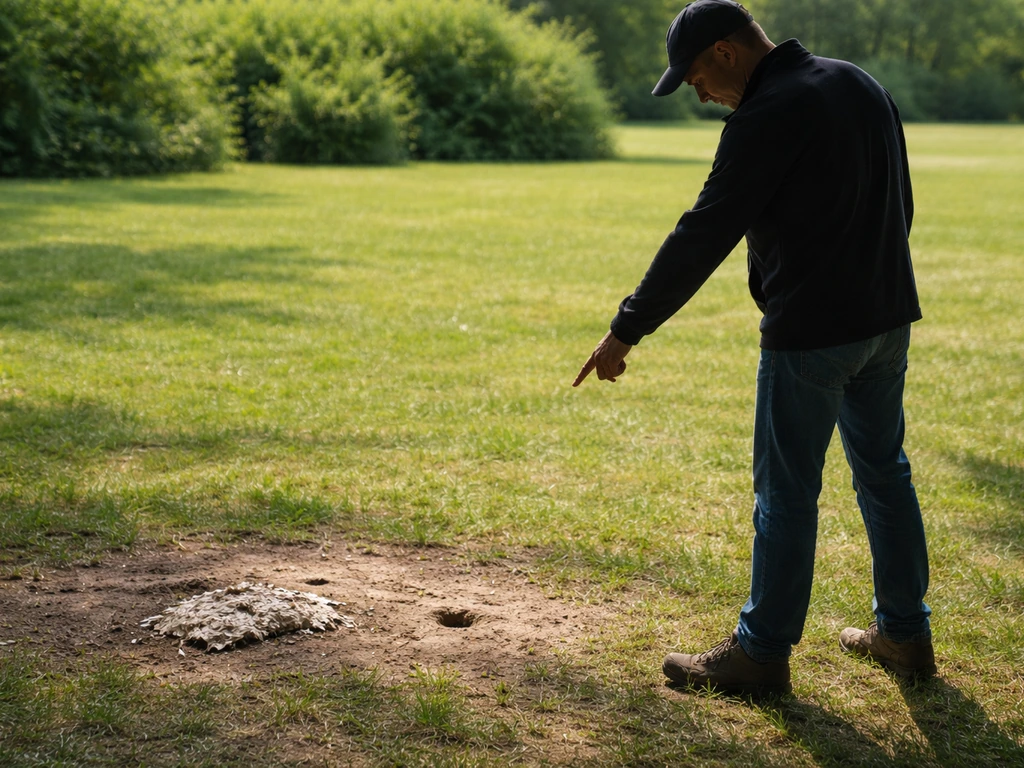
This is the most important practical question, and you can answer it mostly from a safe distance of about 10 to 15 feet without touching anything. Give yourself a few minutes to just watch.
| What you're seeing | Most likely situation | Priority action |
|---|---|---|
| Intact woven cup nest with eggs or chicks, on the ground | Fallen nest, possibly still active | Do not touch; observe for parent activity; consider replacing if safe |
| Shallow scrape in dirt or gravel with eggs, no real structure | Intentional ground nest (e.g., Killdeer) | Back away, mark the area, do not disturb |
| Empty, intact nest with no eggs or chicks | Fallen old or abandoned nest | Safe to leave; do not keep it without a permit |
| Loose pile of grass, twigs, leaves, no cup shape | Dropped nesting material or debris | Leave it; birds may retrieve it |
| Nest with eggs, no adult present for several hours | Observe longer before assuming abandonment | Wait and watch; adults often leave temporarily |
| Nest with injured or very young chicks on the ground | Emergency situation, fallen nest with live young | Contact a licensed wildlife rehabilitator immediately |
One thing people consistently get wrong is assuming a nest is abandoned because no adult bird is visible. Parent birds leave nests frequently to forage, and they often stay away longer when a human is standing nearby. Give it a solid hour of distant observation before drawing conclusions. Also check the trees and shrubs directly overhead for signs of where a nest might have fallen from: a bare branch stub, a broken fork, or obvious damage.
The symbolic and spiritual meaning: folklore, dreams, and bird symbolism
Across a wide range of folk traditions, a nest represents the concept of home at its most essential: a structure built with care, designed to protect new life. Finding one on the ground, outside its proper elevated place, layers in a secondary symbolism of disruption, exposure, or transition. If you want a quick summary, bird nest meaning can be understood by looking at whether the nest is active and why it ended up on the ground.
In European and American folklore, a nest near the home (or found on your property) is generally read as a positive omen tied to domestic stability, fertility, or incoming good fortune. A nest on the ground, by contrast, introduces a note of caution into that reading: something fragile has been displaced and may need attention.
In dream symbolism, a nest appearing on the ground often signals that something you've been building or nurturing in your life feels precarious or exposed. It can point to anxiety about home, family, or a project you care about. Some interpreters read it as an invitation to rebuild with a stronger foundation rather than a signal of permanent loss. The presence of eggs or chicks in the dream nest intensifies the reading toward new beginnings under threat, while an empty nest on the ground more often connects to themes of transition, letting go, or an ending that makes room for something new.
In some Indigenous North American traditions, birds are regarded as messengers, and finding any bird-related sign on your path is treated as an invitation to pause and pay attention. The specific bird species matters in these readings: a Killdeer's ground nest, for example, carries its own associations with feigned vulnerability and clever self-protection (reflecting the bird's famous "broken wing" distraction display).
The broader pattern across many cultures is that nests symbolize preparation, home, and care, and that symbol doesn't disappear when the nest lands on the ground. It shifts toward themes of resilience and rebuilding. This connects to related symbolism explored in discussions of what a bird nest at home means and what finding a nest near a Christmas tree or in an unexpected place signifies across different cultural contexts.
In some traditions, a bird nest in a Christmas tree carries a mix of surprise and meaning around home, protection, and new beginnings bird nest in a Christmas tree meaning.
What to do (and what not to do)
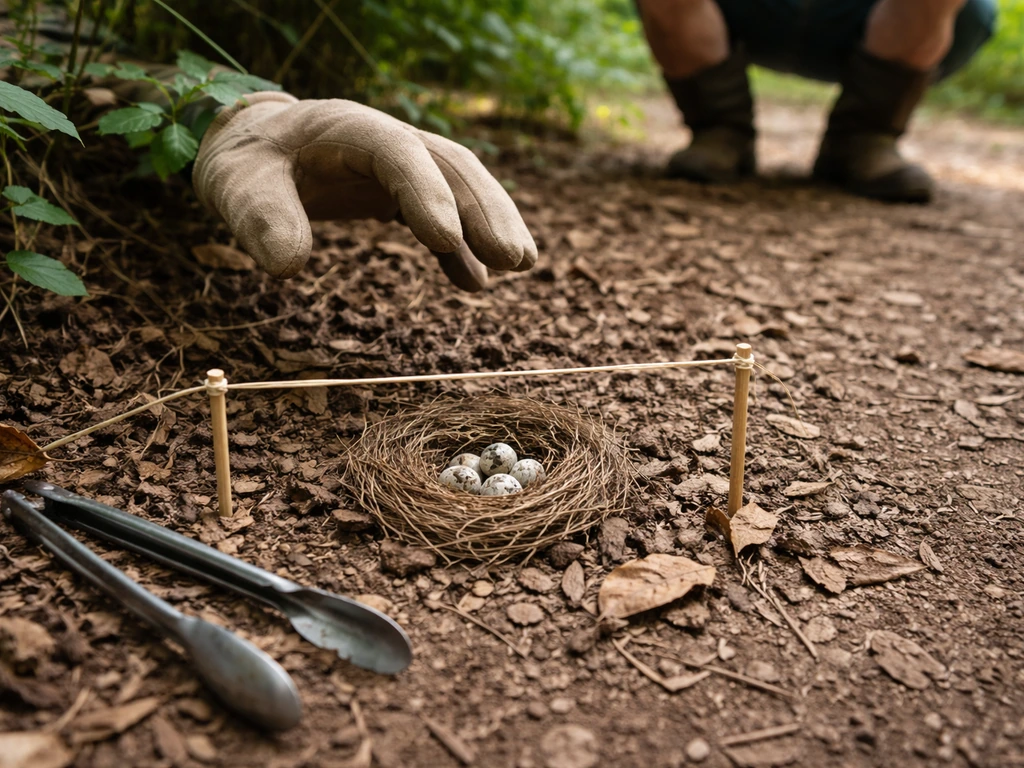
The single biggest mistake people make is handling the nest or eggs immediately. Resist that instinct. Here's how to approach this practically:
- Observe from a distance first. Give yourself at least 30 to 60 minutes of quiet watching before touching anything. Note whether adult birds are returning.
- If the nest is intact and contains eggs or chicks, and you can locate the original spot it fell from, you can gently place it back. The myth that birds abandon young because of human scent is largely false for most songbirds.
- If you can't replace it, place the intact nest in a small container (a strawberry basket works well) and attach it to the nearest tree branch as close to the original height as possible. Then back away and watch.
- Do not bring eggs or chicks inside your home. It's not only unlikely to help, it's also a legal issue (see below).
- Do not move or destroy an empty nest that might still be active. Even an empty nest is considered part of the nesting cycle if birds are still using it.
- Do not keep a nest you find on the ground, even an empty one, without a federal permit. This applies to nests of migratory birds under U.S. law.
If the nest is an intentional ground nest (like a Killdeer's), the best thing you can do is mark the area with small flags or cones and keep people, pets, and lawn equipment away. Audubon notes that young birds from most species fledge roughly a month after eggs are laid, so the disruption to your yard or path is genuinely temporary. Audubon notes that young birds from most species fledge roughly a month after eggs are laid.
The legal side: what the Migratory Bird Treaty Act covers
This is where a lot of well-meaning people accidentally get into trouble. The U.S. Migratory Bird Treaty Act (MBTA) makes it illegal to destroy, move, or possess a nest that contains eggs or chicks, or young birds that are still dependent on the nest. This covers the vast majority of common backyard songbirds. The U.S. Fish and Wildlife Service (FWS) is clear that nests and eggs are considered protected parts of migratory birds under this law. Even picking up an empty nest from the ground to keep as a decoration technically requires a permit.
The FWS does issue nest removal permits, but these are reserved for situations involving human health or safety risk, or cases where the birds themselves are in immediate danger. "I don't want a nest on my porch" doesn't qualify. If you have a nest in a truly problematic location and it's active, the safest path is to consult a wildlife professional about the specific species involved and whether a permit situation applies.
When to call a wildlife rehabilitator
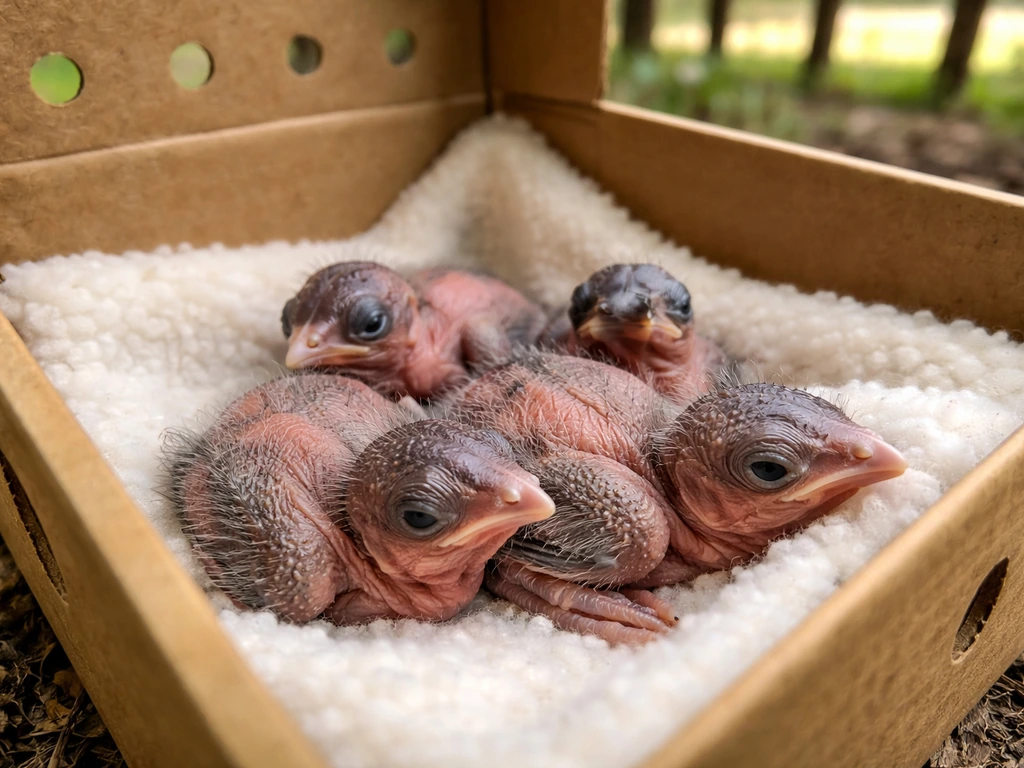
Some situations go beyond what you can or should handle yourself. Contact a licensed wildlife rehabilitator if:
- The nest contains very young chicks (pink, featherless, or barely feathered) and you cannot safely return it to a tree nearby.
- Chicks are on the ground and injured, bleeding, or not moving normally.
- A parent bird appears injured or dead near the nest.
- You suspect the nest belongs to a protected or rare species and you're not sure how to proceed.
- You've replaced the nest and watched for several hours but no adult has returned.
- The nest is in a location where it's at immediate risk (traffic, predators circling) and you can't safely protect it.
The National Wildlife Rehabilitators Association and the Wildlife Center of Virginia both maintain rehabilitator directories by state. Your local Audubon chapter is also a reliable first call for regional guidance on protected species and nest situations. Rehabilitators are licensed specifically to handle these cases, and reaching out early is far better than waiting until a situation becomes critical.
The bottom line: a bird nest on the ground is almost always a natural event with a straightforward explanation. Observe first, handle as little as possible, and match your response to what you're actually seeing, whether that's a fallen nest with live young, a deliberate ground nest, or an empty structure from a season past. The symbolic reading, home, vulnerability, rebuilding, is a meaningful lens for reflection, but the most useful thing you can do in the moment is slow down, watch, and let the birds tell you what's happening before you intervene.
FAQ
How can I tell if the ground nest is active, even if I do not see any parent birds?
Look at the nest contents and structure, not just whether an adult bird is visible. Eggs tend to be intact and clustered, while ground material nests often look like a shallow scrape with little lining. If you see continuous begging calls, frequent adult visits, or the nest area is defended, treat it as active and keep your distance.
How long should I wait and watch before deciding the nest is abandoned?
A common rule of thumb is not to disturb anything until you have observed for at least an hour from far away, then recheck after a few hours (same day) if you can do so safely. Adult birds often forage in gaps, and some species reduce activity when they notice people nearby.
What if I’m pretty sure the nest is empty, can I move it or clean the area?
Do not relocate or “tidy up” the nest, even if you think it is empty. Many nests appear empty to humans until eggs hatch or young birds are present but hidden, and legal protections can still apply if eggs or dependent young are involved.
What’s the safest way to protect the nest from people, pets, and lawn equipment?
Mark the exact boundaries instead of trying to fence the nest. Use small cones, chalk dots, or flags to create a visual buffer, and keep pets leashed and lawn work off the area. If it is in a driveway or walkway, consider temporarily rerouting foot traffic rather than touching the nest site.
The nest is in my path, what should I do if I have to walk past it daily?
If you must pass near it, keep movement slow and predictable, avoid sudden noise, and do not block the birds’ likely path in and out. If the nest is in a high-traffic zone, the best next step is contacting a local wildlife rehabilitator or your regional Audubon chapter for species-specific guidance.
I saw a bird acting injured near the nest, does that change what the nest means or what I should do?
Treat “broken wing” distraction displays as a clue the birds consider the nest very near and are actively protecting it. This is especially common with Killdeer and similar shorebirds, and it is a sign to back away, not a sign the bird is injured enough to approach.
How can I decide whether this is a current nesting site versus an old nest from a prior season?
Use the presence of eggs, chicks, or fresh droppings to guide your decision. If there are any signs of live young or recent nesting activity, assume it is protected and active. If you find a truly old, intact empty nest (no eggs, no chicks, no fresh indicators), you still should not handle it if you want to be conservative about protected species.
What situations qualify for professional help instead of managing it myself?
If the nest is in a spot that creates a real hazard, like a gutter trap, open lawn mower access, or a location where children or pets cannot realistically be kept away, do not attempt removal yourself. Call a licensed wildlife rehabilitator for an on-the-ground assessment, because the permit and safety options depend on the species and whether it is active.
Does the symbolism change if it appears to be a naturally intentional ground nest rather than a fallen one?
Yes. The underlying meaning can be mixed, but the practical approach stays the same: observe first and treat it as potentially active. Symbolically, people often read vulnerability and disruption, but you can avoid over-interpreting by anchoring your response to what is actually happening (eggs present, behavior of adults, and nest stability).