
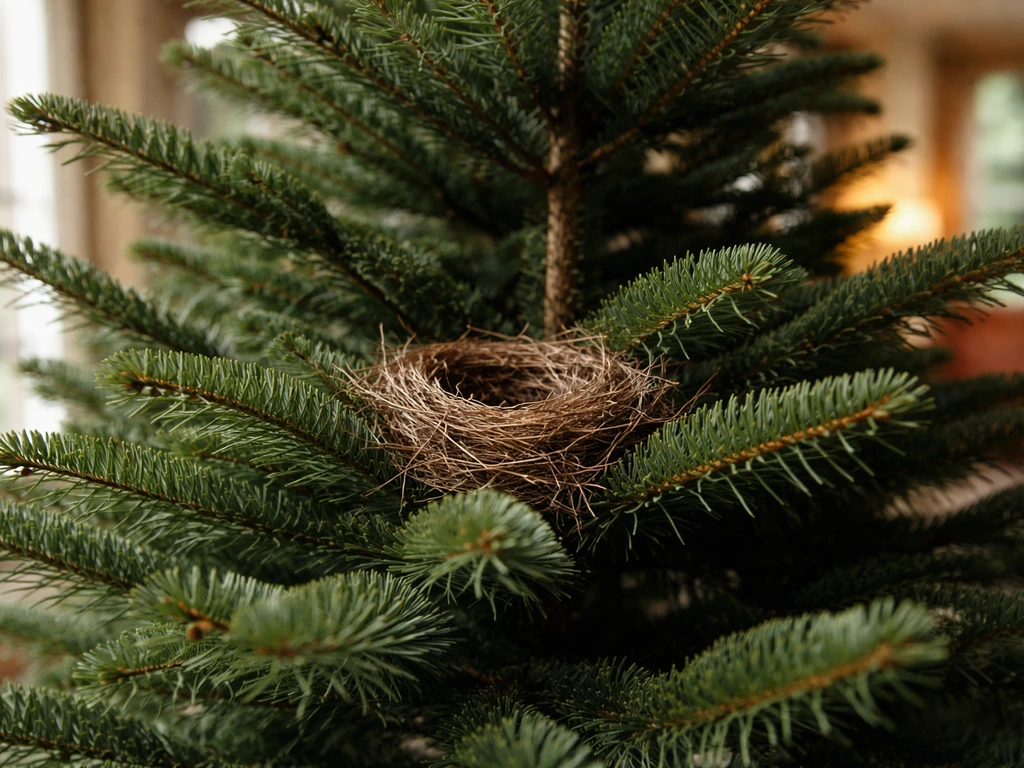
Finding a bird nest in your Christmas tree means one of two things depending on how you look at it: practically, a bird found shelter in a structure that looked like a safe place to nest, and symbolically, many cultures read it as a sign of good luck, new beginnings, or protection arriving at the threshold of a new year. Both readings are worth understanding, especially if you're staring at the nest right now and wondering what to do next.
Bird Nest in Christmas Tree Meaning and What to Do

Marcus Holloway
2 May 2026
What it actually means (practical vs. symbolic)
The phrase 'bird nest in Christmas tree meaning' tends to pull two very different types of readers. One group has literally found a nest tucked into a tree they just brought indoors or a live outdoor tree strung with lights. The other group is searching for the folklore or spiritual angle. Both are valid, and honestly the two meanings reinforce each other pretty well.
On the practical side, birds nest in Christmas trees because the dense, evergreen branches offer exactly what a bird looks for: structural support, visual cover from predators, and insulation. A bird doesn't know it's a holiday decoration. It sees a conifer with good branch geometry and moves in. This is real nesting behavior, not symbolism.
On the symbolic side, the nest-in-a-Christmas-tree image has been folded into holiday tradition for generations. In some European folk traditions, particularly German and Ukrainian ones, an artificial bird nest placed in a Christmas tree is considered a charm for luck, abundance, and protection through the coming year. The nest represents home, nurturing, and the idea that something fragile and precious is being sheltered. That cultural resonance is strong enough that decorative nest ornaments are sold specifically for this purpose every holiday season.
Why birds nest in Christmas trees in the first place
Most wild bird nesting happens in spring and early summer, so a nest in a Christmas tree typically falls into one of three scenarios: an old nest that was already in the tree when it was cut or purchased, a nest built in a live outdoor Christmas tree during an earlier season that you're only noticing now, or (less commonly) a bird that has found an unusual late-season or winter nesting opportunity in a mild climate.
Cut Christmas trees sold at farms and lots often come pre-loaded with old nests from the previous nesting season. The nest may have been there for months before you brought the tree inside. If the tree is a live planted outdoor tree you've decorated in your yard, birds may have nested in it during summer and the nest is simply still visible now that winter has thinned out surrounding vegetation.
Dense, sheltered trees like Fraser firs, Douglas firs, and blue spruces are especially attractive nesting spots. Their layered, drooping branches create enclosed micro-environments. Add string lights for warmth and proximity to a house (which means food scraps, bird feeders, and reduced wind), and you've got a genuinely appealing nesting site from a bird's perspective.
Which birds are likely involved and what their nests look like
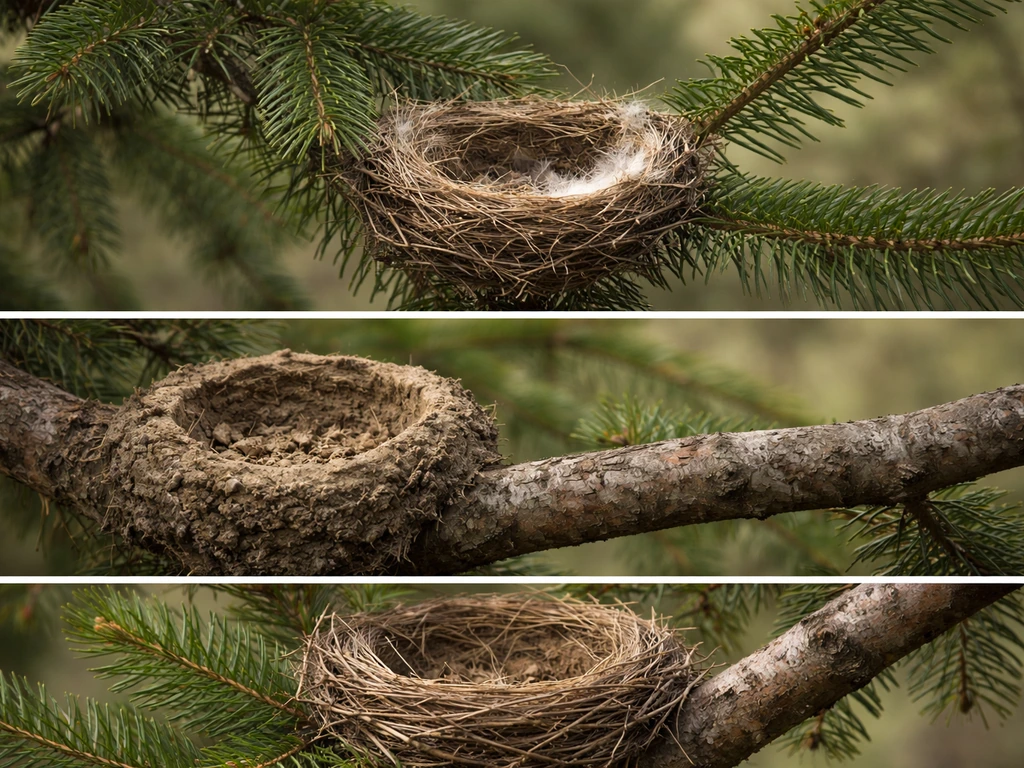
The species you'll find depends on your region, but a handful of common backyard and suburban birds are responsible for most Christmas-tree nest discoveries in North America.
| Species | Nest appearance | Typical placement |
|---|---|---|
| American Robin | Deep, mud-reinforced cup lined with grass; ~4–6 inches wide | Mid-level branch forks |
| House Finch | Loose, compact cup of plant fibers, grass, and feathers | Dense branch clusters, near trunk |
| Mourning Dove | Flat, flimsy platform of twigs; minimal structure | Flat branch junctions |
| Song Sparrow | Bulky cup of grass and bark, often with fine hair lining | Low, dense branches |
| Blue Jay | Sturdy cup of twigs, bark, and rootlets; often has mud base | Mid-to-upper branches |
| Cedar Waxwing | Loose cup of grass, plant fibers; often decorated with lichen | Outer branch forks |
If you're not sure what species built the nest, the Cornell Lab's Merlin Bird ID app has a nest identification feature that can help narrow it down. That's worth knowing because species identification affects what legal protections apply and how you should handle the situation.
How to tell if the nest is active or abandoned
This is the most important practical question you need to answer before you do anything else. An active nest changes your options significantly, both legally and ethically.
- Look for eggs or chicks first. Carefully part the branches and check the cup of the nest. If you see eggs or young birds, the nest is active by definition.
- Watch for adult birds. Set up at a distance with binoculars if you can. If adults are visiting the nest regularly, it's active. NestWatch notes that parents sometimes visit only once a day during the egg-laying phase, so brief absence doesn't mean abandonment.
- Wait before concluding it's abandoned. NestWatch recommends waiting about four weeks from the last confirmed adult visit before treating a nest as truly abandoned. If you haven't seen activity for a few days, that's not long enough.
- Check for signs of failure. A nest with cracked, empty shells (not clean hatchling shells) or a strong smell may indicate the nest failed. Cold, fully cracked shells that show no membrane are a sign eggs didn't hatch.
- Consider the season. A nest found in a cut Christmas tree brought indoors in late November or December was almost certainly built during the previous spring or summer and is very likely abandoned. That's the most common scenario.
If the tree is outdoors and decorated in place, and you're seeing bird activity around it right now in late fall or winter, there's a real possibility of an unusual late nesting event, especially in southern states or mild-climate regions. Don't dismiss that possibility.
The cultural and holiday symbolism behind finding a nest
Across many traditions, the nest is one of the most consistently positive bird symbols. It represents home, safety, continuity, and the promise of new life. In the context of Christmas specifically, finding a nest carries an added layer of meaning because the holiday already centers on themes of shelter, birth, and family. The nest appearing at that moment feels symbolically coherent rather than random.
The German and Ukrainian traditions of placing a decorative nest (or spider web) in a Christmas tree stem from folk beliefs that a nest in the tree brings luck and prosperity to the household in the coming year. Some versions of the Ukrainian legend tie back to a story of a poor family whose tree was decorated overnight by spiders, with the webs turning to silver and gold in the morning. The nest variation follows the same logic: the tree as a site of unexpected, unplanned abundance.
More broadly, bird symbolism around nests tends to cluster around the same themes regardless of cultural origin: nurturing, patience, preparation, and vigilance. A bird nest on the ground meaning often overlaps with these themes, because nests are widely read as signs of safety, preparation, and care bird symbolism around nests. If you want the full bird clutch meaning, the symbolism and timing can help you interpret what you are seeing bird nest in Christmas tree meaning.
If you're someone who finds meaning in symbolic coincidences, a nest in a Christmas tree fits naturally into that interpretive space. It's not a negative omen in any tradition I've come across. The nest is almost universally a sign of something being protected and cared for.
This symbolic reading connects to what people explore when they look into bird nest meaning more generally, or when they think about what it means to find a bird nest at home. If you want to dig deeper, the bird nest at home meaning can vary depending on whether you interpret it practically, symbolically, or spiritually. If you're trying to understand bird nest meaning, start by distinguishing the practical reality from the symbolic stories people attach to it during the holidays. The tree setting makes the symbolism feel especially seasonal and personal, but the core themes are consistent.
Spiritual and dream-connected meanings
If you're drawn to spiritual interpretations, the nest in a Christmas tree can be read through several overlapping frameworks. In broadly spiritual terms, birds are often seen as messengers moving between earthly and higher planes. A nest, as opposed to a single bird, represents something more settled and grounded: a commitment to a place, a preparation for what's coming.
Finding a nest at Christmas, a time already associated with thresholds and transitions between years, amplifies this. Some people read it as an invitation to pay attention to what they're building or protecting in their own lives. Others connect it to the idea of new cycles, since a nest is structurally a waiting space, something prepared for arrival rather than for departure.
In dream symbolism (which shares a lot of DNA with waking omen interpretation), a nest in a tree typically carries themes of security and hidden treasure, something valuable tucked away in plain sight. The Christmas tree as a setting adds the dream-logic of gifts and discovery. If you've been thinking about home, family, beginnings, or your sense of where you belong, this kind of image tends to land with particular weight. That doesn't require you to believe in omens. It just means the symbol speaks to something real.
What to do right now
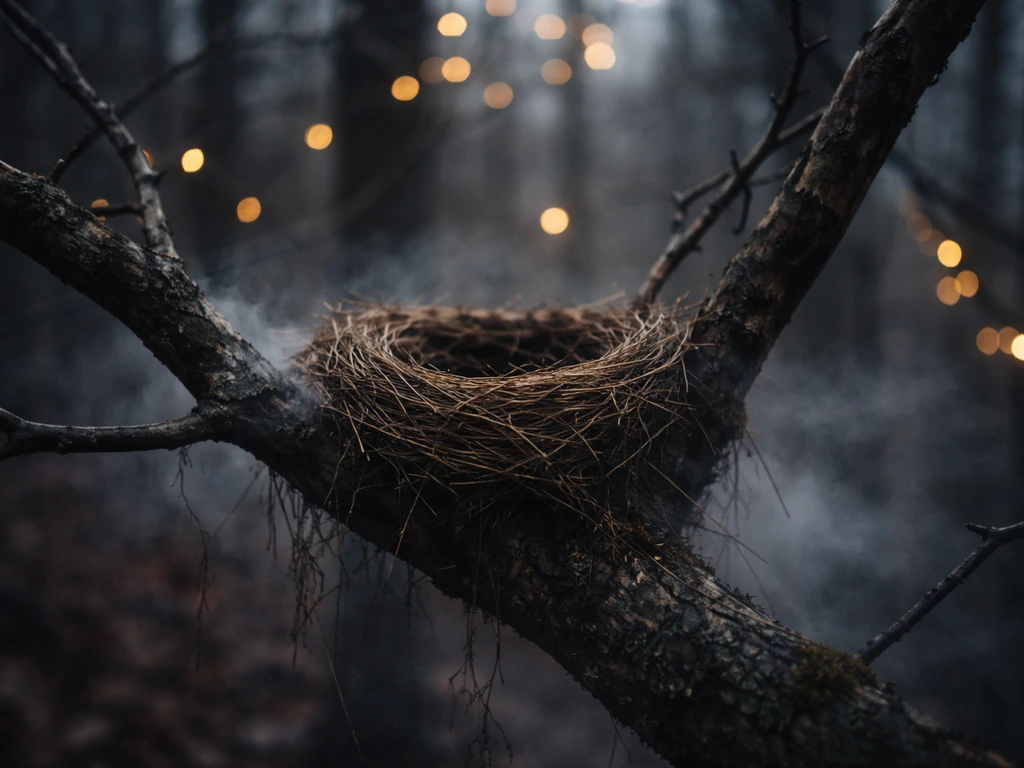
Here's the practical action plan depending on what you've found.
If the nest is in a cut tree you brought indoors
First, check the nest carefully. If it's empty with no eggs and no signs of recent use, this is almost certainly an old nest from the previous breeding season. You can safely remove it by hand (wearing gloves is good practice) or simply leave it as a natural decoration, which is honestly what a lot of people choose to do once they know what it is.
If you find eggs or chicks in an indoor tree, that's unusual but not impossible. Contact a licensed wildlife rehabilitator immediately. Moving a nest with active eggs to an outdoor location in winter puts the eggs at serious risk. A wildlife rehabilitator can advise you on the safest course of action for your specific situation. You can find licensed rehabilitators through your state wildlife agency's website or the National Wildlife Rehabilitators Association directory.
If the nest is in an outdoor tree

If the nest is active (eggs or chicks present), do not remove it. Under the U.S. Migratory Bird Treaty Act, it is illegal to destroy an active nest of a protected migratory bird species. This is not a minor technicality. Violations can carry significant fines. The USFWS is clear that removal permits are generally issued only when a nest poses a direct human health or safety risk, so 'it's in my decorative tree' typically doesn't qualify.
If you're unsure whether the nest is active, follow the four-week rule from NestWatch: wait four weeks after the last confirmed adult visit before concluding it's abandoned. In the meantime, watch from a distance with binoculars. Don't hover near the nest. Disturbing nestlings can cause them to fledge prematurely before they can fly, which often results in their death. The Smithsonian National Zoo's nest monitoring guidance makes this point directly.
If the nest is clearly abandoned (empty, cold, no activity for weeks, or you're dealing with a cut tree brought in from a lot), removal is generally fine once you've confirmed no protected eggs or chicks are present. Even then, the USFWS notes you technically cannot collect and keep protected bird nests permanently, so if you want to preserve it as a keepsake, it's worth checking your state's specific wildlife regulations.
Quick decision checklist
- Check for eggs or chicks before touching anything.
- If active: leave it alone, watch from a distance, and contact a wildlife rehabilitator if the situation is urgent (tree needs to come down, bird is injured).
- If possibly abandoned: wait four weeks from last confirmed adult activity before treating it as abandoned.
- If clearly abandoned and no eggs present: removal is safe. Wear gloves.
- If in doubt: call your state wildlife agency or a licensed wildlife rehabilitator. They won't judge you for asking.
How to prevent birds nesting in your Christmas tree next year
If you'd rather not deal with this again, there are practical steps you can take before and during the holiday season. A Reddit thread on r/Finches asked for tips to prevent finches from making a nest in a Christmas tree, and other users shared suggestions in response.
For cut trees
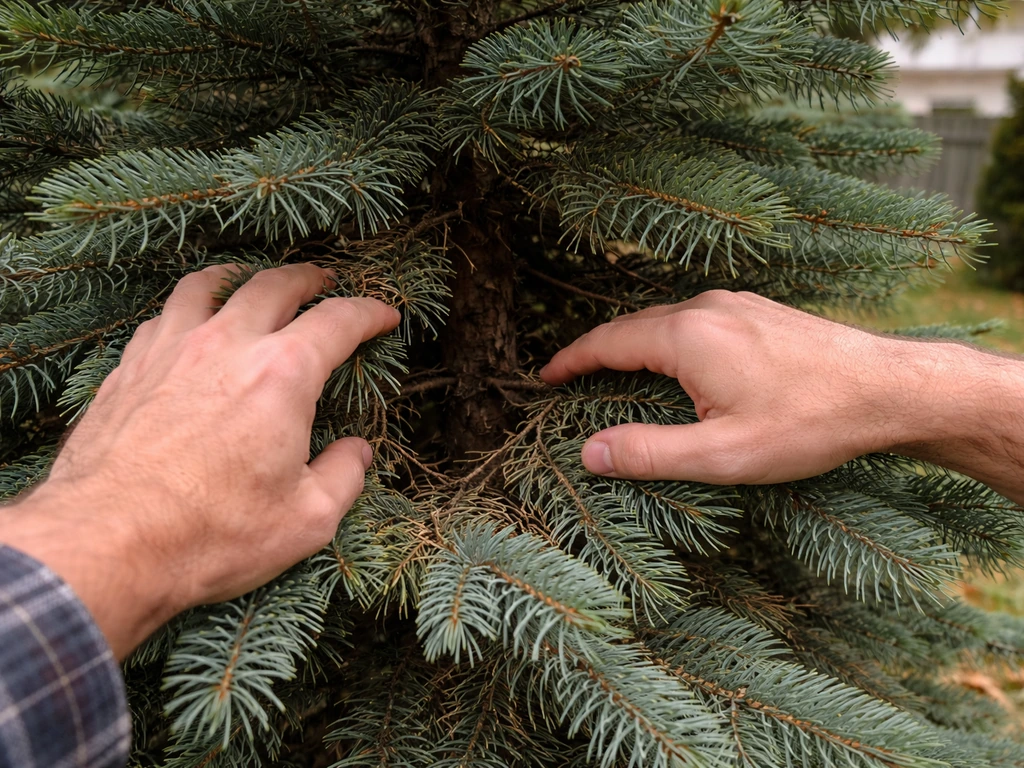
- Inspect the tree thoroughly at the lot before you buy it. Part the branches and check every layer, especially near the trunk where nests tend to sit.
- Ask the seller to shake the tree before you take it. Most lots do this anyway to knock loose needles, and it will also dislodge any nesting material or small occupants.
- Give the tree a gentle outdoor inspection when you get home before bringing it inside.
For live outdoor trees
- In late summer or early fall (after nesting season ends, typically September or October in most of North America), check your outdoor trees for existing nests before decorating.
- Physical deterrents like reflective tape, pinwheels, or bird-safe netting installed before the breeding season begins (early spring) can discourage nesting in a specific tree you want to keep clear. Just make sure any netting is bird-safe, meaning the mesh is too small for birds to enter and get trapped.
- Avoid leaving bird feeders immediately adjacent to a tree you want to keep nest-free. Feeders draw birds to the area and make that tree a more attractive nesting candidate.
- If a bird successfully nests in your outdoor Christmas tree during summer, consider it a success story for local wildlife and leave it until the nest is fully abandoned. Then remove it in fall before decorating for the season.
The honest truth is that if you have conifers on your property, birds will periodically try to nest in them. It's a feature of having good habitat, not a problem to be entirely eliminated. The goal is just to manage the timing so you're not caught off guard in December.
FAQ
How can I tell if the nest is active without going near it?
Use binoculars from a distance and look for clear signs such as adults repeatedly visiting, fresh droppings, newly carried nesting material, or visible eggs/chicks. Avoid opening branches or shining lights directly into the nest, because even brief disturbance can trigger stress or early fledging.
Is it ever okay to move or relocate the Christmas tree with an active nest?
Do not move the tree if eggs or chicks are present, and assume relocating the nest can still count as disturbing or destroying the nest. If the nest is active, contact a licensed wildlife rehabilitator or your state wildlife agency for a species-specific plan before you relocate anything.
What if the nest is in an indoor cut tree and I have cats or a dog?
Staying hands-off is still the safest default, but you can reduce risk by keeping pets and people away using a temporary barrier (like closing a room, using a pet gate, or placing the tree in a controlled area). Do not drape new items over the nest, and avoid loud activity near the branches.
Can I cover the nest with lights, ornaments, or tinsel to “protect it”?
Generally no, because adding decorations can increase disturbance, change airflow, and block access for adult birds. If the nest is active, leave the surrounding area alone and adjust your decorations around the nest rather than over it.
What should I do if the nest is abandoned but birds keep coming back?
Do not assume abandonment just because you see no eggs immediately. Recheck for adult visits over time, and use a structured approach like monitoring for consistent absence rather than a single day. If you cannot confirm it is inactive, treat it as active and get guidance from a rehabilitator.
If I remove an old nest, can I keep it as a keepsake or for crafts?
Even if it is inactive, laws vary by location, and many protected bird nests cannot be kept permanently. Check your state wildlife regulations or ask your wildlife agency before keeping or displaying the nest material.
Does the “four-week rule” apply to indoor trees too?
The principle can still help, but the key factor is whether adults are visiting and whether eggs or chicks are present. Indoor conditions can also change visibility and disturbance levels, so verify inactivity with observation from a distance and seek expert advice if you are uncertain.
Are all birds protected, and does the law differ by species?
In the U.S., many native birds are protected under federal law, and enforcement commonly focuses on the status of the nest and whether the species is covered. That is why identifying the species matters, because your obligations and legal risk can change with the species.
What if I find a nest with eggs but no adult birds are visible right then?
Eggs can be left unattended for stretches, and adults may be away foraging. Do not treat the absence of adults as proof the nest is abandoned. If eggs are present, treat it as active and contact a wildlife rehabilitator immediately.
How can I prevent nests in Christmas trees next year without harming birds?
If you have outdoor conifers, consider adjusting timing so trees are moved indoors earlier in the season, reducing the window birds have to choose nest sites. You can also trim lightly to reduce dense, enclosed pockets, and keep string lights minimal near likely nesting spots during the risk window.
Next Articles
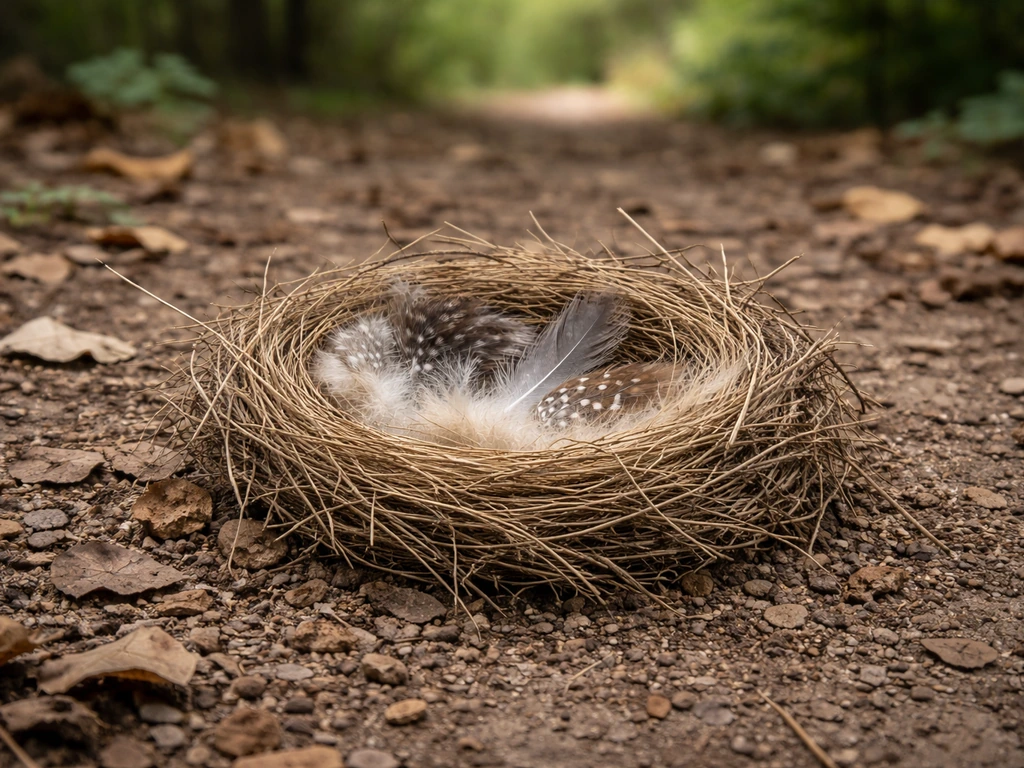
Bird Nest on the Ground Meaning: Real Causes and What to Do
Understand bird nest on the ground meaning, real causes, activity checks, and safe do’s and don’ts for nests
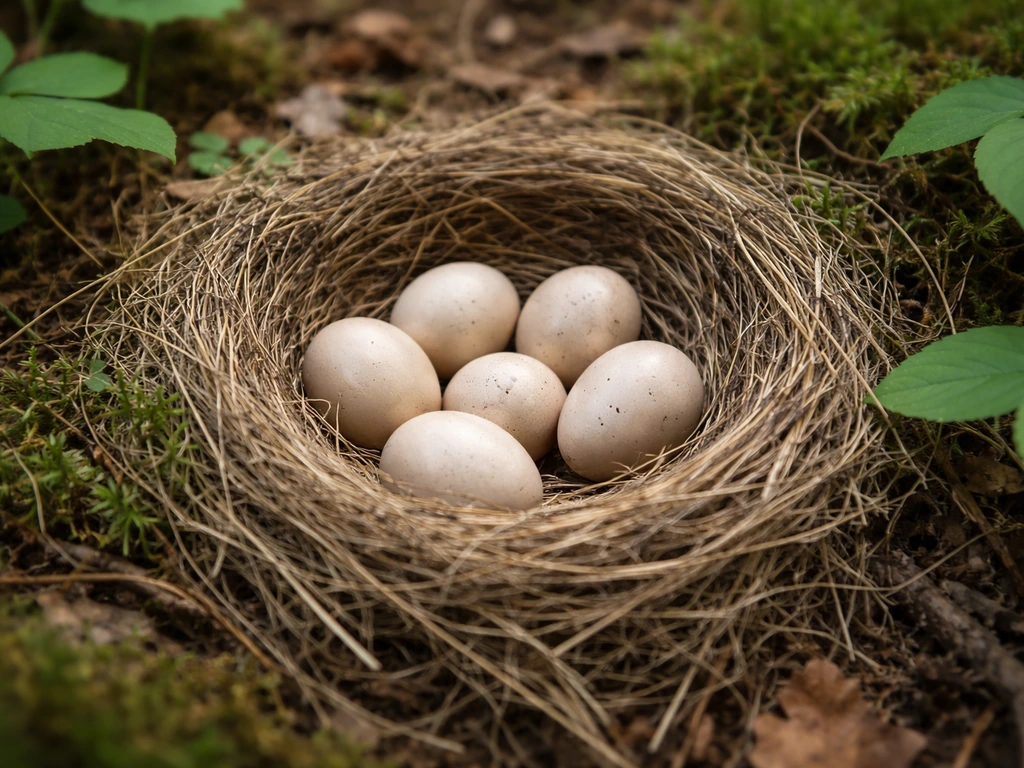
Bird Clutch Meaning: Definition, Symbolism, and What To Do
Bird clutch meaning: egg clutch definition, symbolism, dream takeaways, and what to do if you find a nest or eggs.
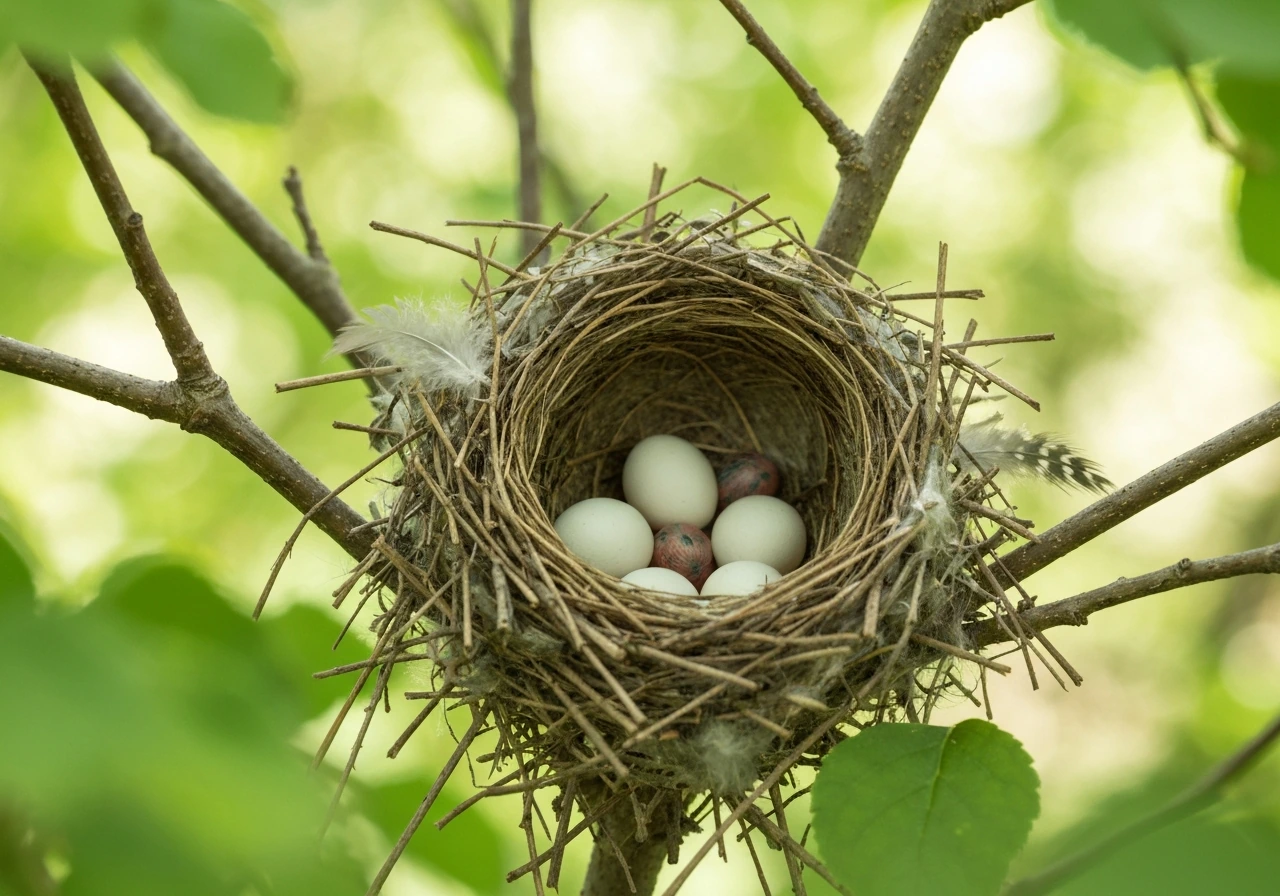
Bird Nest Meaning: Definition, Symbolism, and What to Do
Get the bird nest meaning: definition of nesting and common symbolism, plus safe steps for identifying and observing nes