
Finding a bird nest in your backyard most often means a bird has identified your yard as a safe, resource-rich place to raise young. That's it. It's a sign your space offers at least some combination of shelter, food, water, and nesting material. Whether you interpret that as good luck, a spiritual sign of new beginnings, or simply a practical wildlife event, the immediate reality is the same: there are (or soon will be) eggs or chicks depending on that spot, and how you behave over the next few weeks matters a lot for their survival.
Bird Nest in Backyard Meaning: What It Suggests and What to Do

Marcus Holloway
1 Jul 2026
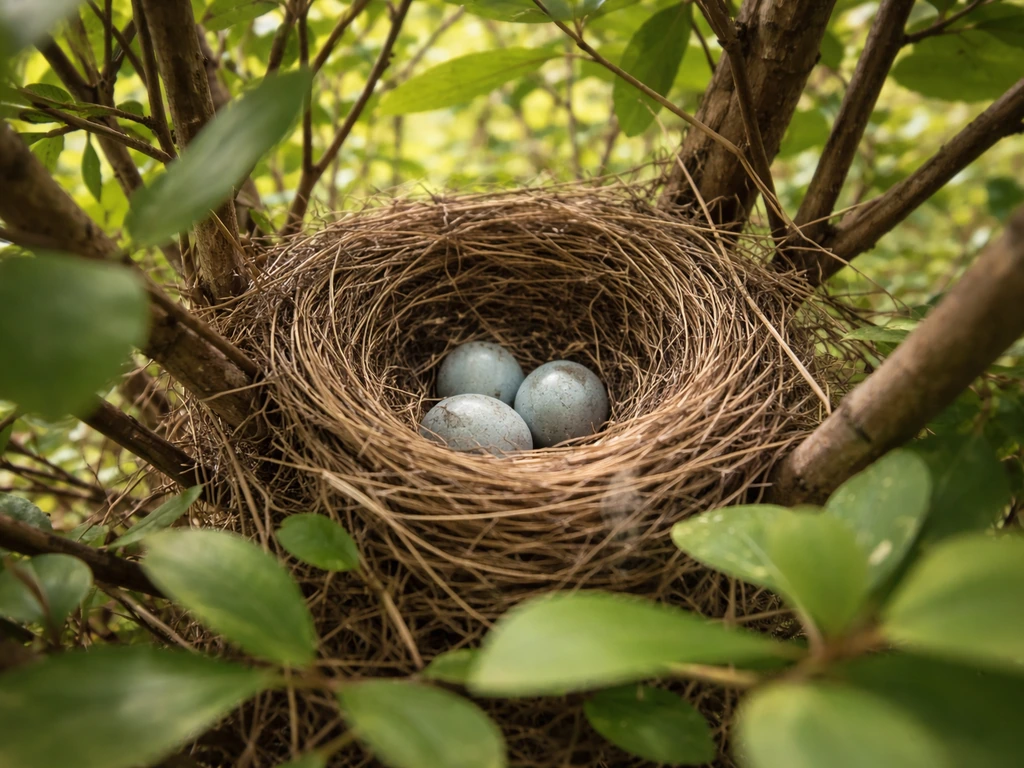
What a bird nest in your backyard actually means, practically speaking
Birds don't choose nest sites randomly. When a bird picks your yard, it's responding to very specific habitat cues. Dense shrubs, mature trees, climbing vines, a nearby water source like a birdbath or fountain, available food like seeds or insects, and loose nesting materials like dry grass, bark strips, or plant fluff all act as green lights. Bird-friendly yards support nesting by providing shelter or cover, food, and water, such as a bird bath or fountain provide shelter or cover, food, and water. Suburban yards that mimic natural habitat conditions attract far more nesting activity than bare, manicured lawns. So a nest in your backyard is essentially the bird's vote of confidence in your yard as a viable breeding habitat.
It also signals a specific time window. Most backyard songbird nests are in active use for only about a month once incubation starts. The whole nesting cycle from nest building through fledging is often 4 to 6 weeks. That's a short-term commitment on your part, which matters when you're weighing whether to modify your yard routine or just wait it out.
How to figure out what's actually going on: active, abandoned, or reused?
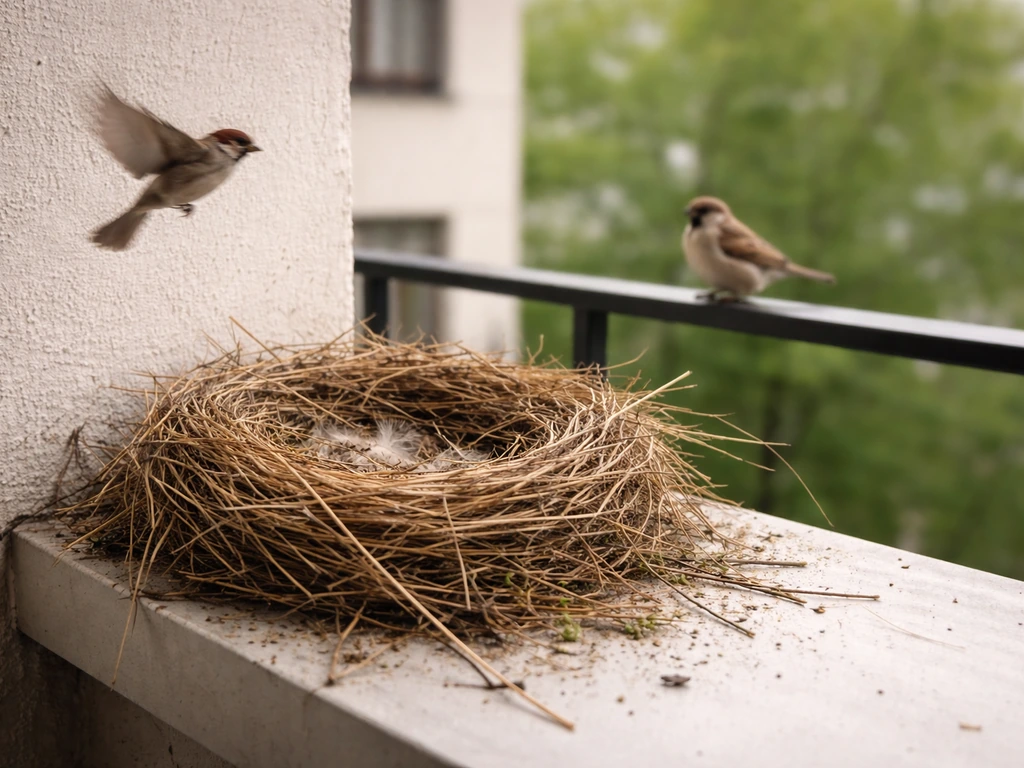
Before you do anything, spend a few minutes just watching from a distance. What you observe in the next 10 to 15 minutes tells you a lot about which situation you're dealing with.
Signs of an active nest
- Adults flying to and from the nest repeatedly, often carrying food or nesting material
- A bird sitting still in or on the nest for extended periods (incubating eggs)
- Audible chick calls, especially when a parent arrives
- Fresh droppings or broken eggshell fragments below the nest (a sign chicks have hatched)
Signs the nest may be abandoned
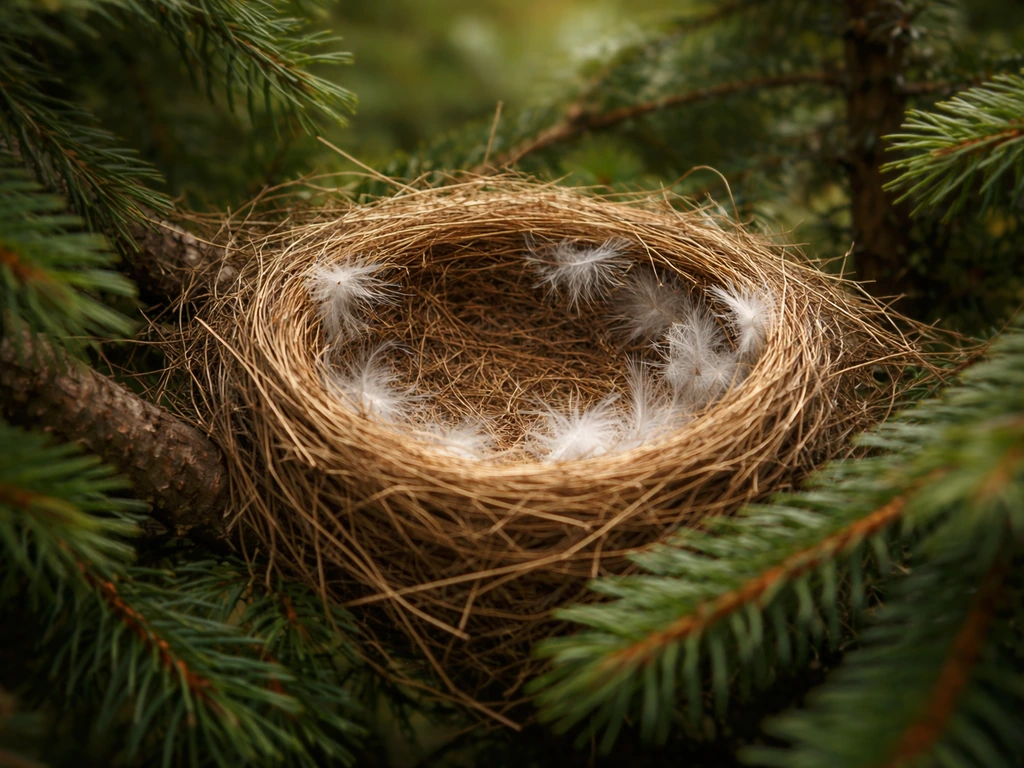
Lack of adult attendance doesn't automatically mean abandonment. Female birds leave the nest to feed, and it's normal to see periods of quiet. The real alarm signal is no progress after a significant wait. If there are unhatched eggs and you've seen zero adult activity over four or more weeks, the nest is very likely abandoned. NestWatch is explicit about this: don't assume abandonment too quickly, because incorrect assumptions lead people to interfere with nests that were never actually deserted. Take notes, photograph the nest from a distance, and track whether anything changes before drawing conclusions.
Nest reuse: old nest, new occupants?
Not all nests you find are freshly built. Some species reuse old nests, either their own or those left by other birds, while others always construct new ones. Whether a nest is being reused depends heavily on the species and the condition of the structure. If you spot a nest that looks weathered or matted with old debris but you're also seeing fresh activity around it, watch a while longer before assuming it's derelict. Reuse behavior varies widely across species rather than following a single rule.
Common backyard nest types and what they hint at
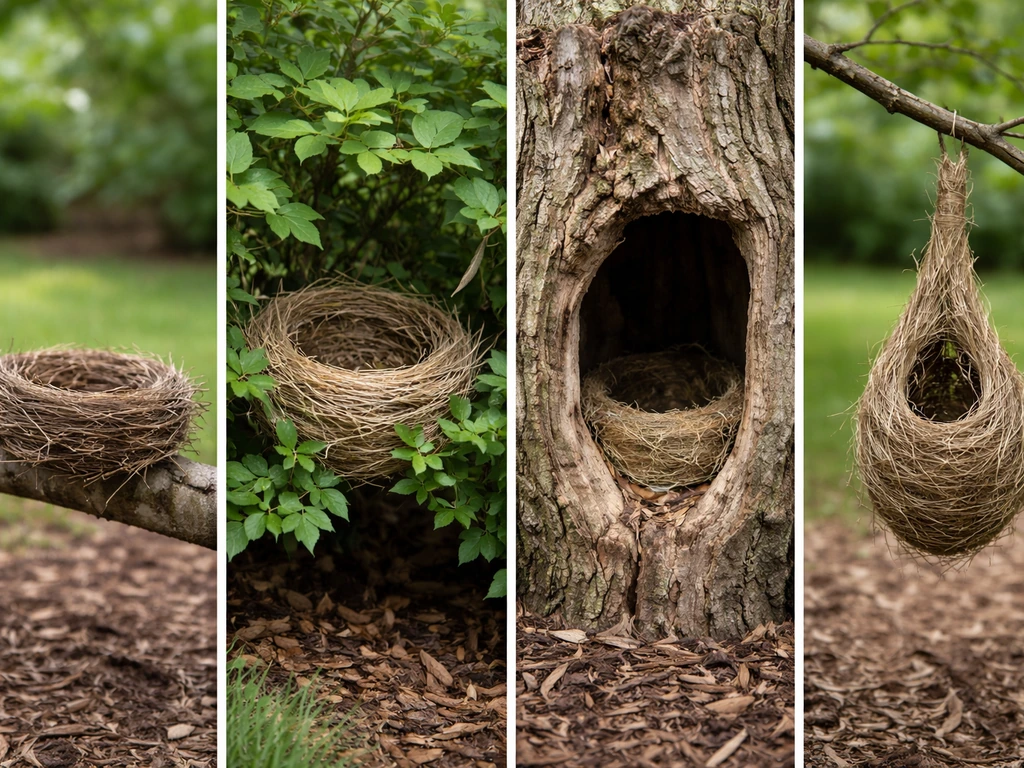
You don't need to be an ornithologist to get useful information from the nest's structure and location. Nest design is closely tied to how birds protect eggs and chicks, so the shape and placement gives you real clues about the species and what kind of disturbance might be most harmful.
| Nest Type | What It Looks Like | Where You'll Find It | What It Suggests |
|---|---|---|---|
| Scrape nest | Simple depression in soil, gravel, or leaf litter, minimal lining | Open ground, flat surfaces, sometimes a patio or graveled area | Ground-nesting bird (like killdeer); highly vulnerable to foot traffic and pets |
| Cup nest | Compact, bowl-shaped structure of grass, mud, bark, or plant fiber | Shrubs, tree forks, window boxes, hanging baskets | Most common backyard songbird type; robins, finches, sparrows; relatively stable but sensitive to branch disturbance |
| Platform nest | Large, flat pile of sticks or vegetation, loosely structured | Wide tree branches, ledges, fence posts | Larger birds like doves or raptors; generally more robust but exposed |
| Cavity nest | Nest inside a hole or enclosed space (tree hollow, nest box, pipe, drain) | Dead trees, nest boxes, building gaps | Wrens, chickadees, bluebirds, woodpeckers; often most protected from weather and predators |
| Dome/enclosed nest | Fully or partially enclosed cup with a side or top entrance | Dense shrubs, thickets | Wrens or marsh-associated species; indicates bird chose concealment as primary strategy |
The location matters as much as the structure. A nest built under roof eaves or in a door wreath is choosing human-adjacent safety, essentially using your presence as predator deterrent. A nest deep in a hedgerow is prioritizing concealment. Neither choice is an accident.
The spiritual and cultural meaning: what people believe and why
People have been reading meaning into birds and their nests for thousands of years, and backyards are no exception. This is also where people may search for the bird snare meaning behind their nest-related experiences. The symbolism tends to cluster around a few consistent themes regardless of culture: new beginnings, family and commitment, protection, and nurturing. Finding a nest during a time of personal change, a new relationship, a new home, or a new project often feels significant to people, and that's not surprising given how universally nests symbolize the careful building of something worth protecting.
In Christian tradition, biblical passages use birds and nesting imagery to illustrate themes of divine care and providence. The image of a bird sheltering young under its wings appears in both Old and New Testament texts as a metaphor for protection and faithfulness. Separately, Jewish tradition includes the concept of shiluach haken, a commandment that regulates human interaction with a nesting mother bird, reflecting a long-held view that nesting birds carry moral and spiritual weight deserving of respectful consideration.
Across many folk traditions, a bird choosing to nest near your home is considered a positive omen: a signal that the space is safe, stable, and worth investing in. In many spiritual conversations, people also look for a bird set free meaning as a comparison point for what a nest nearby might symbolize, though the practical steps still matter most. Some specific beliefs attach meaning to nest location (near a door versus high in a tree) or timing (spring nests versus late-season nests). The "good luck" interpretation is almost universal, while nest destruction or disturbance is just as universally considered bad luck or spiritually harmful.
It's worth separating these interpretive layers cleanly. The folklore is real and culturally meaningful, but it doesn't change the biological reality: those eggs or chicks need a stable, undisturbed environment regardless of what symbolic meaning you attach to them. If you're also curious about deeper religious context, the biblical symbolism of birds and nests is a rich thread worth exploring separately. And if you've found a nest with eggs specifically, the meaning shifts slightly in both cultural and practical terms. If you’ve found a bird nest with eggs, the bird’s behavior and timing can help you understand what the eggs likely indicate in both cultural and practical terms.
What to do right now: observation, distance, and adjusting your yard habits
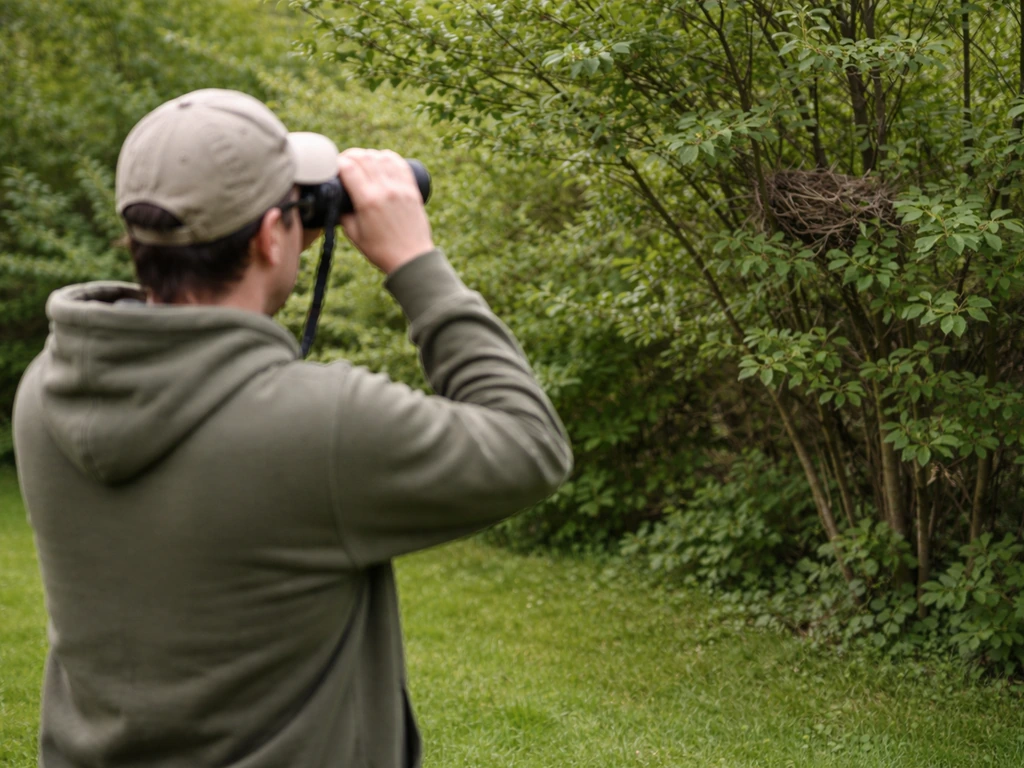
The first and most important rule is: don't rush toward the nest. Use binoculars to observe from a comfortable distance rather than approaching closely. If you walk up to the nest and an adult bird starts giving distress calls, back away. If distress calling continues for more than a few minutes without stopping, don't linger in that area. Your presence alone can cause adults to abandon a nest, particularly early in the incubation period.
For observation, try checking during times when adults are likely to be away briefly, like early morning feeding windows. Keep sessions short. Photograph the nest from a distance rather than leaning in for close shots. These habits let you monitor without stressing the birds.
Then adjust your yard routine around the nest. Songbird nesting is typically a four-to-six-week window, and making temporary accommodations is very manageable.
- Delay mowing any area within a reasonable distance of a ground nest or low shrub nest; schedule mowing around nesting season when possible, just as land managers do with grassland habitats
- Pause any pruning, trimming, or major garden work near the nest site until fledglings have left
- Keep pets (especially cats and dogs) away from the nest area; even non-attacking pets stress nesting birds and can attract predator attention
- Avoid using pesticides or chemical treatments near the nest since insectivorous birds need those insects as food for chicks
- If the nest is in a high-traffic area like a doorway, consider temporarily redirecting foot traffic using a polite sign or barrier
When and how to deter or relocate a nest: the legal reality
This is where a lot of people get tripped up. In the United States, the Migratory Bird Treaty Act makes it illegal to destroy, move, or disturb a nest that contains eggs or live chicks, or that young birds are still actively dependent on. This isn't a guideline, it carries real penalties. Permits for nest removal are typically issued only when there's a documented human health or safety concern or immediate danger to the birds themselves. Routine removal because the nest is inconvenient doesn't qualify.
In the UK, the Wildlife and Countryside Act 1981 similarly prohibits intentionally taking, damaging, or destroying the nest of any wild bird while it's in use or being built. Moving an active nest, even with good intentions, can cause parents to abandon eggs or chicks, which is both harmful and potentially illegal. Exceptions are tightly scoped, and a specific licence (like the UK's GL12 for removing abandoned eggs from nest boxes) applies only in narrow conservation contexts.
The practical path forward depends on where the nest is in its cycle.
| Situation | What You Can Do | What You Cannot Do |
|---|---|---|
| Nest under construction, no eggs yet | Gently deter by removing partially built material before it's established; cover the spot if safe to do so | You still shouldn't destroy nests of protected species; check your local regulations first |
| Active nest with eggs or chicks | Wait. Adjust your routines. Protect from predators passively (motion lights, barriers) | Move, remove, or disturb the nest; this is illegal for most species in the US and UK |
| Nest appears abandoned (no activity 4+ weeks, no hatched eggs) | Once confirmed abandoned and nesting season has passed, remove if needed | Assume abandonment prematurely; document carefully before acting |
| Nest in a dangerous structural location (blocking drainage, fire hazard) | Contact your state or local wildlife agency to discuss a permit or professional assessment | Self-remove without consulting authorities, especially if eggs/chicks are present |
For future nesting seasons, deterrence works best before birds choose a site. Physical barriers, bird netting over vulnerable areas, and removing attractive nesting spots (like open hanging baskets or uncapped pipes) before spring can redirect birds to more suitable spots without any confrontation. Netting as a deterrent has its own considerations, but the key principle is that proactive exclusion before nesting is always simpler than trying to manage an active nest.
Real risks to know about: droppings, allergies, aggressive birds, and pets
Droppings and health concerns
Bird droppings accumulate under active nests, and this is a legitimate hygiene concern, especially if the nest is over a doorway, deck, or play area. Dried droppings can carry fungal spores and bacteria. A more serious condition, bird fancier's lung (hypersensitivity pneumonitis), is linked to prolonged exposure to proteins in bird feathers and droppings. Symptoms can appear 4 to 6 hours after heavy acute exposure and can become chronic with repeated exposure. This is most relevant for people who spend significant time very close to nesting areas, but it's worth knowing about.
For cleanup after nesting season ends and the birds have left, wear gloves and a mask, wet the dried droppings to avoid inhaling dust, and dispose of material carefully. Follow the same precautions you'd use for any wildlife waste cleanup.
Aggressive birds during nesting
Some species become notably aggressive when they have a nest nearby, and this catches people off guard. Northern Mockingbirds, American Robins, Gray Catbirds, and Blue Jays are among the most commonly reported "assailants" during the nestling period. A mockingbird dive-bombing you every time you step out the back door is genuinely unpleasant, but it's temporary. The aggression peaks when chicks are most vulnerable and winds down as fledglings become mobile. Wearing a hat outdoors, taking a different route, or temporarily modifying the timing of your yard activities are all effective short-term solutions.
Pets, kids, and nest proximity
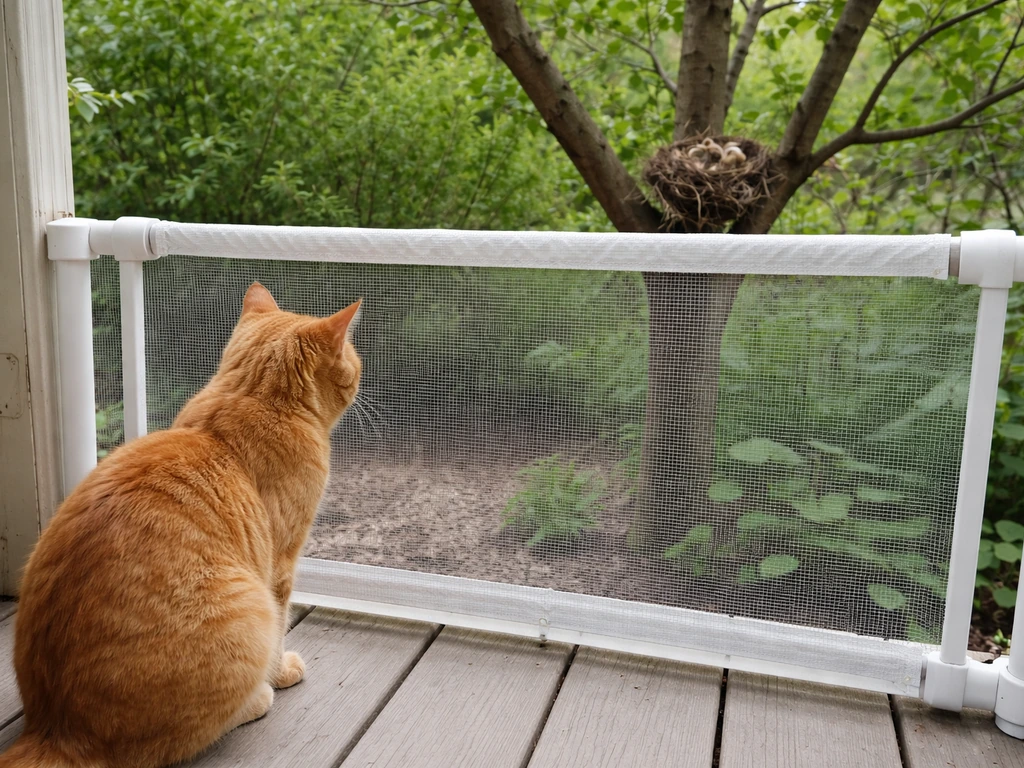
Cats are the most significant domestic threat to backyard nesting birds. Even a cat that isn't actively hunting will cause stress that leads parents to abandon nests. Keep cats indoors during nesting season, or at minimum supervise outdoor time and physically block access to the nest area. Dogs are less targeted hunters but can disturb ground nests simply by sniffing around. Teach kids in the household to observe from a distance rather than approaching or touching, both for the birds' welfare and because curious kids near an aggressive nesting mockingbird tend to have a pretty memorable afternoon.
When to call a wildlife professional
Most backyard nest situations resolve themselves without any human intervention. But there are clear scenarios where calling a licensed wildlife rehabilitator or your local wildlife agency is the right move.
- A chick has fallen from the nest and appears injured, or a cat/dog has made physical contact with it (don't attempt to rehabilitate this yourself)
- The nest is in a location that poses a genuine structural or fire safety hazard and you need official guidance on permits
- A parent bird appears injured or dead and chicks are still in the nest
- You suspect the nest belongs to a species with specific legal protections (birds of prey, waterfowl, certain migratory species) and you're unsure of your obligations
- The nest is in a HVAC unit, active chimney, or other location where allowing it to stay creates mechanical or safety risk
Don't try to renest a chick that a dog or cat has touched. The handling risks are real, and a wildlife rehabilitator is trained for exactly this situation. The USFWS recommends leaving wildlife alone in most cases and consulting licensed professionals when there's genuine concern.
Your action checklist: what to do based on what you're seeing right now
Use this as a quick-reference flow depending on what you've observed.
- Step back and observe from a distance before doing anything else. Use binoculars if you have them.
- Is there adult activity (flying to/from the nest, sitting still on it, feeding chicks)? Yes: this is an active nest. Do not approach or disturb. Move to step 3.
- No adult activity for an extended period? Wait at least 4 weeks before concluding abandonment, and document with photos in the meantime.
- Adjust your yard routine: pause mowing, trimming, and chemical treatments near the nest. Keep pets away from the area.
- If the nest is in a problematic location (structural hazard, machinery, active doorway), consult your local wildlife agency before taking any action.
- If eggs or chicks are present, do not move the nest under any circumstances unless directed by a licensed wildlife professional or agency.
- Once confirmed the nest is empty and nesting season has passed, clean up droppings using gloves and a mask. Remove the nest if you want to discourage reuse at that spot.
- For next season, consider proactive deterrents (netting, covers, barriers) before birds begin scouting locations in early spring.
The bottom line is that a bird nest in your backyard is almost always a positive signal, both practically and symbolically. It means your yard is doing something right. The main thing you need to do is give the birds space and a short window of adjusted routines. In a few weeks, the nest will be quiet again, and you'll have contributed to a successful breeding cycle without having to do much at all.
FAQ
How can I identify the bird without disturbing the nest?
If you want to look more closely, use binoculars or a camera zoom lens rather than walking toward the nest. If an adult bird starts repeated distress calls or appears to “guard” the area, that is your cue to step back immediately and shorten your next observation session.
What does it mean if the nest seems quiet for days?
A nest that was active a few days ago but looks quiet does not automatically mean trouble. Quiet periods are common when adults are away feeding, but if you see no adult visits and no chick activity for multiple weeks after hatch should be treated as more suspicious than temporary silence.
What should I change in my daily routine if the nest is near a door or walkway?
If you’re dealing with birds nesting on a porch, under eaves, or near a doorway, temporary behavior changes usually work best: use a different entry path, avoid the direct area at peak activity times (often early morning and late afternoon), and keep movement steady rather than sudden.
Can I mow, prune, or do yard work near an active nest?
If you must access the spot for a reason like a repair or mowing, wait until the birds are not actively in the immediate area and keep disruptions brief. When possible, choose a time when adults are away and avoid vibrations and repeated return trips that can increase stress and cause abandonment.
Is it safe to clean up the nest and droppings right away?
Yes, but only after the nesting period is fully over and the nest is inactive. Afterward, wear gloves and a mask, wet droppings first to reduce dust, and remove nesting debris carefully so it does not become airborne, especially if anyone in the household has respiratory sensitivities.
What is the legal risk if I remove an inconvenient nest myself?
In many places, you can get in trouble even if your intent is good. Before taking any action, treat the nest as protected: do not move it, do not “rebuild” the area, and do not remove eggs or chicks, since both biology and the law make this higher risk than most people realize.
What if the nest is on something I need to maintain, like a wreath, planter, or porch fixture?
If a nest is on a structure you need to protect, the safest approach is to keep birds undisturbed while using exclusion for future seasons only. For active nests, focus on barriers that prevent access to the nest area without trapping or blocking the birds’ escape routes, then plan a proper deterrent strategy once fledging is complete.
What should I do if the nest feels unsafe for the birds or for people?
If a bird has already built in an unsafe spot, the best next step is to contact a licensed wildlife rehabilitator or your local wildlife agency rather than attempting relocation. Professionals can advise whether it’s truly unsafe and what alternatives exist without causing abandonment.
If I found eggs, how long should I wait before taking any action?
A nest with eggs can still be in active incubation, so the “right” timing depends on what you’re seeing, not what month it is. Use observation first, watch for adult attendance patterns, and avoid any assumption that eggs will hatch soon enough to justify interference.
How do I stop kids or guests from going near the nest?
Choose the least convenient path for humans but the most predictable one for birds: keep kids away from the area, reduce sudden noise near the nest, and consider temporarily changing the time you use the yard or the route you walk through it during peak nestling periods.
How can I tell whether a nest is truly abandoned versus being reused?
Some species reuse nests, but reuse and “derelict nest” are not the same thing. If you see any signs of fresh material or ongoing adult behavior, extend observation time before concluding the nest is abandoned, since premature removal can be harmful.
What’s the most effective way to protect a nest from a pet cat?
Cats are the most common reason nests fail, even when they are not actively hunting. The most effective short-term fix is full indoor time during nesting season, or at least supervised outdoor time plus physical management like closing access to the nesting area.
Do bird droppings always cause health problems, and how should I reduce risk?
If you have to handle wildlife waste, wetting is key to prevent dried droppings dust from becoming airborne. If anyone has asthma, chronic allergies, or a history of hypersensitivity reactions, consider having cleanup handled by someone without symptoms and keep the person performing cleanup outdoors with proper protection.
Why is a bird dive-bombing me, and when will it stop?
If an adult bird is attacking you, it is usually a temporary defense during the nestling period. Short-term solutions that work best are moving your route, wearing a hat, and scheduling yard tasks during times when you are less likely to trigger the bird, instead of trying to scare the bird away.
What if I find a fallen chick or an egg outside the nest?
Avoid trying to intervene directly with a chick that appears on the ground or with a nest problem you can “fix.” A safer rule is to treat it as potentially still cared for by adults and call a licensed rehabilitator if a chick is unattended, injured, or in immediate danger.
Next Article
Bird Verb Meaning: Uses, Behaviors, Idioms & Sightings
Discover what 'bird' means as a verb, definitions, behaviors, idioms, sightings, and practical next steps.