When someone searches "bird view meaning," they almost always mean one of two things: the familiar top-down perspective called a "bird's-eye view," or a more symbolic idea about gaining broad perspective and rising above a situation. In most everyday contexts, it's the first one. But because this phrase sits at the intersection of language, symbolism, and visual thinking, it's worth sorting out both meanings clearly so you know exactly which one is in play.
Bird View Meaning: Top-Down Perspective and Common Uses

Marcus Holloway
10 Apr 2026

Literal meaning vs. the "bird's-eye view" confusion
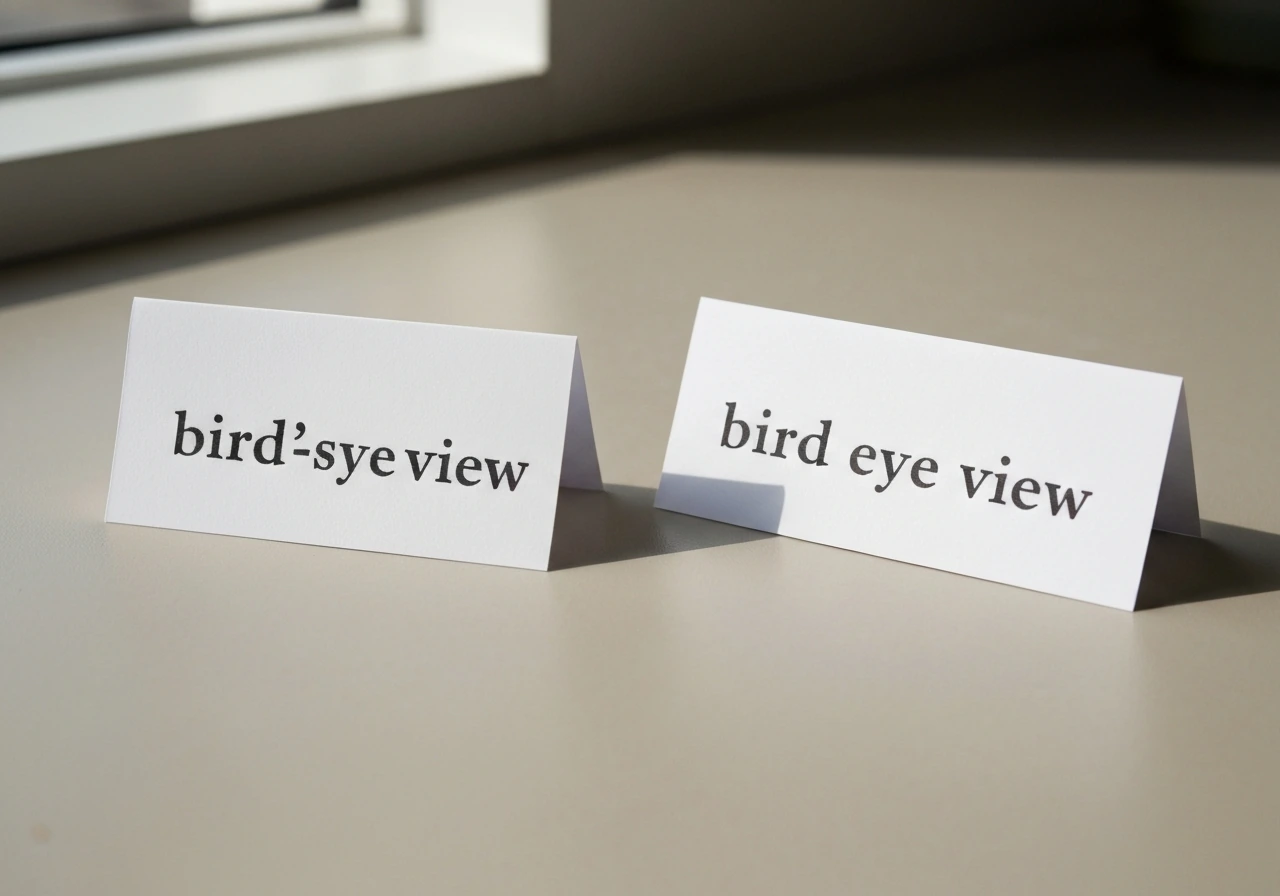
The correct dictionary form is "bird's-eye view," not "bird eye view" or "birds eye view." That apostrophe and hyphen matter in formal writing, but people drop them constantly in casual use, which is why so many readers end up searching for "bird view meaning" in the first place. Merriam-Webster gives two definitions: first, "a view from a high angle as if seen by a bird in flight," and second, "an overall or cursory look at something." Cambridge zeroes in on the physical sense: "the ability to look at something from a very high place so that you see a large area below you." Both definitions are correct, and both are in active use. The confusion isn't about the meaning itself. It's about the spelling and whether the phrase is being used literally or figuratively.
One thing worth flagging early: "bird's-eye view" is not the same as a strict orthographic top-down view in technical mapping. Wikipedia notes that a true bird's-eye view actually includes foreshortening of more distant features, which puts it closer to a perspective drawing than a flat plan. A perfectly corrected top-down aerial photo (called an orthoimage) is something slightly different, with no perspective distortion at all and a uniform scale across the entire image. So if someone says "bird's-eye view" in a mapping or GIS context, they may mean either a loose top-down perspective or a precise orthographic image, and it helps to clarify which one they need.
What "bird's-eye view" actually means in real contexts
The phrase shows up in at least four distinct real-world situations, and what it implies varies slightly each time.
Maps, aerial photography, and GIS
In mapping and remote sensing, a bird's-eye view usually refers to imagery captured from directly overhead, sometimes called an orthogonal or top-down view, taken at a 90-degree angle straight down from an aircraft, drone, or satellite. This type of imagery is the standard base layer in GIS work because it gives consistent spatial relationships. Oblique aerial photos, by contrast, are taken at an angle and show building facades and terrain relief more dramatically. If you're trying to understand what a bird side view looks like compared to the straight-down version, the oblique angle is what you'd be dealing with. Both are "aerial," but only the straight-down shot is the classic bird's-eye view in technical usage.
Architecture, design, and floor plans
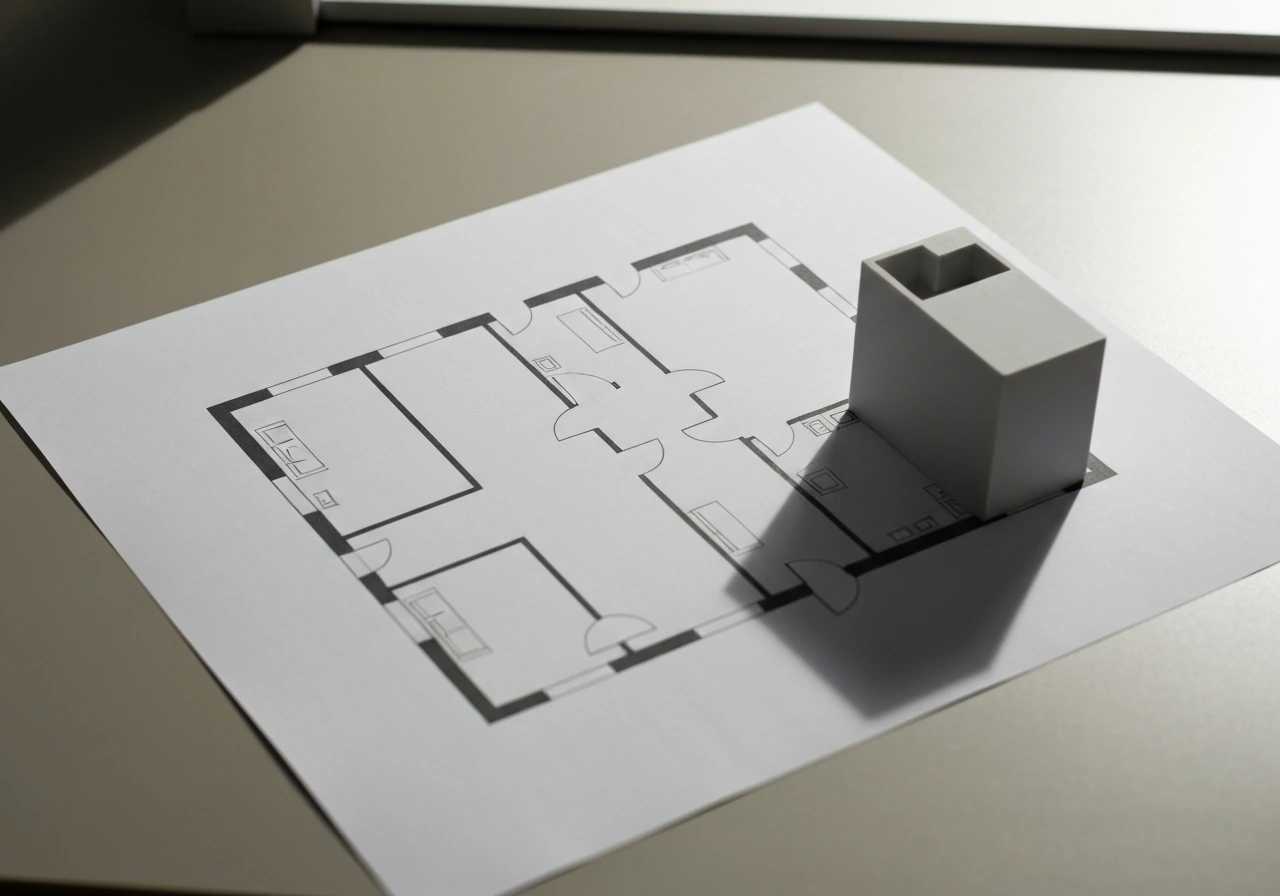
In design and architecture, a bird's-eye view typically means looking down at a floor plan, site plan, or 3D model from above. Wikipedia explicitly includes drawings, blueprints, and floor plans in its definition. This is a practical communication tool: it lets you see the full layout of a space at once, the way an actual bird flying overhead would see it. If a client asks an architect for a "bird's-eye view" of a building, they want a rendered overhead perspective, not a street-level elevation.
Everyday figurative speech
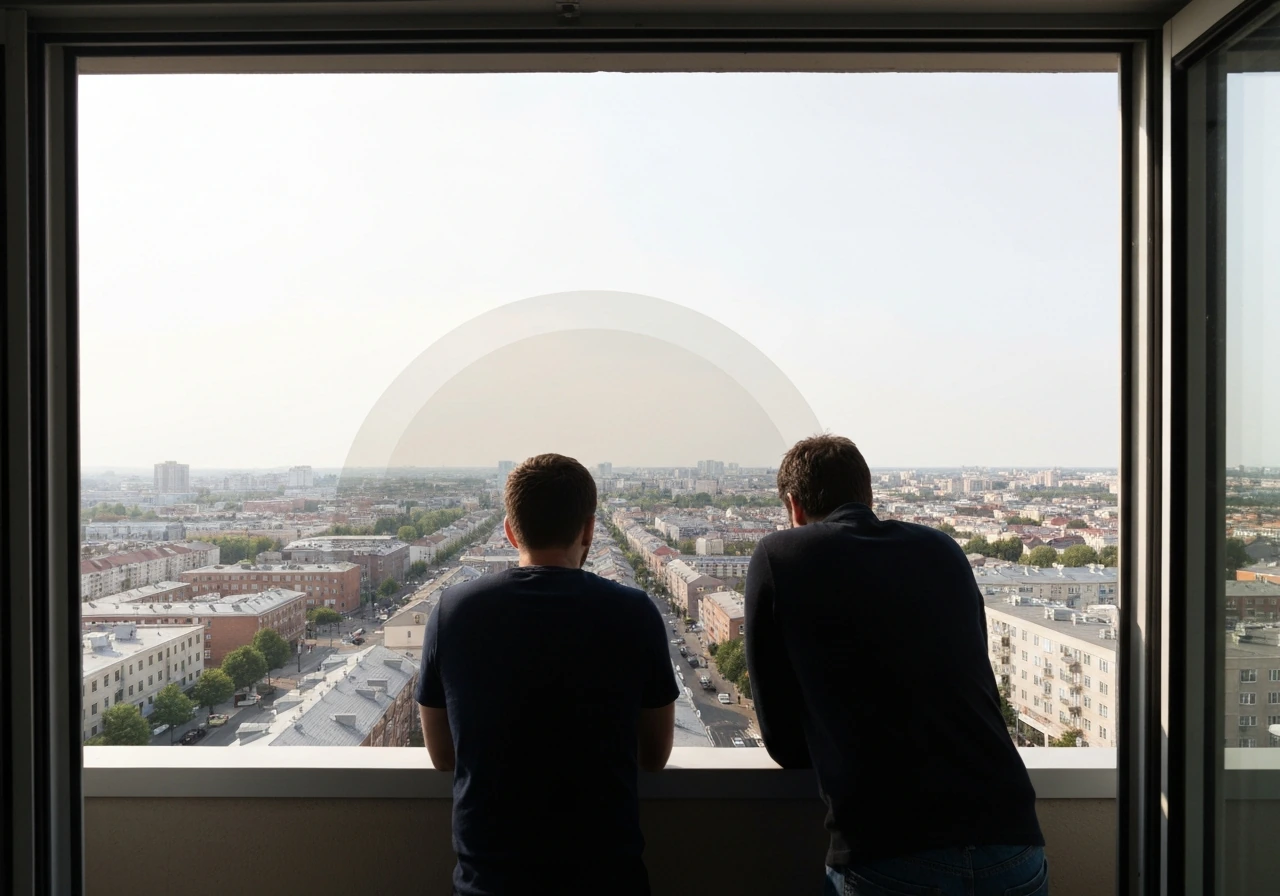
In everyday conversation, "bird's-eye view" almost always means getting an overall or broad look at something, without necessarily implying a physical height. Someone might say, "Give me a bird's-eye view of the project" when they want a quick summary of the whole thing, not details about any one part. The BBC has used this phrase in English-learning materials specifically as an idiom example, which signals that the figurative sense is well-established enough to teach explicitly. The phrase functions as a compact way to say: step back, see the whole picture, don't get lost in the weeds.
How to tell which meaning a sentence intends
Context does almost all the work here. A few reliable clues:
- If the sentence mentions maps, drones, aerial photography, satellites, or GIS, the speaker means a literal overhead visual perspective.
- If the sentence is about a project, plan, situation, or topic (not a physical space), the figurative "overall look" meaning is almost certainly intended.
- If someone says "from a bird's-eye view" alongside words like "broad," "overview," "big picture," or "high level," they're using the idiomatic sense.
- If the sentence includes phrases like "from above" or "top-down" and involves a real location or image, it's the spatial/literal meaning.
- In design or architecture contexts, "bird's-eye view" almost always means a rendered overhead image, not a metaphor.
Merriam-Webster's two-sense definition is actually the simplest guide: if the context involves physical elevation or imagery, use definition one. If it involves getting a broad or cursory look at an idea or situation, use definition two. When in doubt, ask the person whether they want something visual or just a high-level summary.
The symbolic and spiritual angle of "bird view"
On a site focused on bird symbolism, it's worth addressing the spiritual interpretation honestly without over-inflating it. The concept of seeing from a bird's height has carried metaphorical weight in many traditions: the idea of rising above the ground, seeing patterns invisible from below, gaining perspective that ordinary standing can't provide. Some wellness and reflective-practice writing uses the phrase "50,000-foot view" as a direct parallel, framing it as a mental posture of stepping back from daily noise to see life more comprehensively. That's a legitimate and useful metaphor.
In dream interpretation, imagery involving a bird's-eye view is sometimes read as a signal that the dreamer is seeking broader perspective or observational clarity, a desire to rise above a situation emotionally or intellectually. These readings draw on the same intuition behind the idiom: birds see things humans can't, and dreaming of that vantage point might reflect a wish for that kind of insight. This connects to the broader theme of bird gazing meaning, which similarly explores the human habit of watching birds as a way of accessing something reflective or meditative.
That said, these symbolic readings are interpretive, not definitional. They're a layer you can apply to your own experience if it resonates, but they don't override the literal or figurative linguistic meanings. If someone says "bird view" in a work email, they almost certainly don't mean a spiritual awakening. They want an overhead map or a project summary.
One related symbolic note: the actual anatomy of bird vision plays into why the "bird's-eye" metaphor feels so apt. Bird eye meaning goes deeper into this, but the short version is that many birds have a much wider field of vision than humans, with some species seeing nearly 360 degrees. That biological reality reinforces why "bird's-eye view" carries a sense of comprehensive, broad-field observation rather than just height.
Related phrases and wording mix-ups
Several related phrases get tangled together constantly. Here's a clear breakdown of the variants people confuse and what each one actually refers to.
| Phrase | Correct Usage | Notes |
|---|---|---|
| bird's-eye view | Standard dictionary form (Merriam-Webster, Collins, Cambridge) | Preferred in formal writing; hyphenated compound modifier |
| bird's eye view | Accepted informal variant (no hyphen) | Very common in everyday writing; Cambridge uses this form |
| birds-eye view | Informal/nonstandard | The plural apostrophe is dropped; widely understood but not standard |
| bird eye view | Informal search term, not a dictionary entry | What many people type when searching; not a standard phrase |
| bird view | Not a standard phrase on its own | Usually means the person is looking for "bird's-eye view" or a symbolic meaning |
| view from above | Descriptive paraphrase | Used in geography, photography, and plain-language writing |
| aerial view | Technical/photographic term | Specifically implies aircraft, drone, or satellite capture |
| top-down view | Technical/design term | Emphasizes the perpendicular angle; common in GIS and architecture |
The phrase bird eye view meaning is one of the most commonly searched variants, and it lands squarely in the "standard meaning, nonstandard spelling" category. The meaning is the same as "bird's-eye view"; the only thing missing is the apostrophe and hyphen.
"Bird's eye" without "view" can also refer to a type of fabric pattern (small diamond shapes resembling a bird's pupil), a type of maple wood grain, or certain plant species. If you see "bird's eye" in a botanical, textile, or woodworking context, it's a completely different term with no connection to perspective or elevation.
It's also worth distinguishing "bird's-eye view" from related visual or behavioral concepts. If you meant the animal-behavior sense of bird eye pinning meaning, that is distinct from bird's-eye view usage and relates to the iris changing rather than perspective. Bird eye pinning meaning is a separate behavioral term used in parrot and raptor keeping, referring to the rapid dilation and contraction of the iris, and has nothing to do with perspective or elevation. Similarly, bird gape definition refers to the open-mouth display birds use in feeding or threat behavior, another term that sounds visually related but belongs to a completely different category.
There's also an interesting connection to how birds are depicted in art and culture. Bird style meaning in art history refers to a decorative tradition using bird motifs, which sometimes includes top-down representations of birds in visual compositions. And the structural anatomy of flight itself ties into expressions like "bird view": bird pinion meaning refers to the outermost wing feathers that control directional flight, the very mechanism that allows birds to achieve the elevated perspective the phrase celebrates.
How to actually use this term (practical next steps)

If you're trying to describe or request a bird's-eye view in a practical setting, here's what to do depending on the context:
- In writing or formal communication: use "bird's-eye view" with the apostrophe and hyphen. It's the standard dictionary spelling and will read as correct in any professional setting.
- In a mapping or GIS request: specify whether you want an orthogonal (straight-down, 90-degree) aerial image or an oblique (angled) view. "Bird's-eye view" alone is ambiguous in technical mapping work.
- In design or architecture: asking for a "bird's-eye view" or "overhead perspective" is clear and understood. You can also say "plan view" if you want a flat, non-perspective top-down drawing.
- In a meeting or conversation: if someone asks for a "bird's-eye view" of a project, they want the overview, not the details. Respond with the big picture: scope, status, main components, not granular specifics.
- In a spiritual or reflective context: if you're using the phrase metaphorically to mean gaining perspective or stepping back emotionally, it lands clearly on its own. You don't need to explain it. Just say "get a bird's-eye view of the situation" and your meaning will be understood.
- If you're unsure which meaning someone intends: ask whether they want something visual (a map, image, or diagram) or a summary (an overview of ideas or information). That one question resolves the ambiguity every time.
On the symbolic side, if you encountered "bird view" in a dream or spiritual context and you're trying to interpret it, it's reasonable to treat it as an invitation to consider broader perspective in your own life. What are you not seeing because you're too close to it? That's the honest interpretive question the metaphor points toward. But resist the urge to assign a fixed mystical meaning to it. The symbolism is a prompt for reflection, not a prediction or prescription.
The bottom line: "bird view meaning" almost always comes back to the same core idea, whether you approach it linguistically, technically, or symbolically. Britannica Dictionary defines “bird’s-eye” as something seen from high above, which matches the idea of a bird’s-eye view or perspective bird’s-eye view meaning. It's about elevation, breadth, and the ability to see more than you can from ground level. Use the right spelling in formal contexts, clarify the technical type when precision matters, and enjoy the metaphor when the situation calls for it.
FAQ
If someone says “bird’s-eye view” in an email, what exactly should I ask them for?
In most work settings, “bird’s-eye view” means either an overhead graphic or a high-level summary. If you are asking for something deliverable (like a map, layout, dashboard, or slide), specify the format (overhead image, annotated plan, or executive summary) so you do not get narrative “summary-only” text.
What wording should I use if I want to be unambiguous in a technical document?
Use “bird’s-eye view” when you want breadth of understanding. If you want a single, specific document that shows the whole layout, request “site plan” or “floor plan (overhead view).” If you want to avoid the metaphor entirely, “top-down overview” is usually safer for technical or engineering audiences.
Is “bird’s-eye view” always an orthographic (no distortion) image?
“Bird’s-eye view” is not the same as “top-down” in all contexts. In mapping and GIS, top-down can mean a strict 90-degree orthographic capture (orthoimage), while “bird’s-eye” can be used loosely for near-overhead or even slightly foreshortened perspective. If scale accuracy matters, ask whether the source is orthorectified.
How does “bird’s-eye view” translate to design or user-experience contexts?
For real estate, product, or UX layouts, “bird’s-eye view” often corresponds to a whole-page or whole-screen overview. If you are discussing usability or navigation, also clarify whether you need spatial layout (where things are) or task flow (what users do), since both can sound like “overview” but require different visuals.
How can I tell whether “bird’s-eye view” should be visual or just a plain summary?
“Bird’s-eye view” should not be used as a synonym for “summary” when the audience expects a visual. Conversely, if the audience only needs decision context, asking for a “bird’s-eye view” can waste time producing graphics. A quick test: does your request require seeing relationships, or just understanding the situation?
Is it wrong to write “bird eye view” without the apostrophe?
Spelling choices change formality, not meaning. In polished writing, use “bird’s-eye view” with the apostrophe. In casual posts, “bird eye view” is common and usually understood, but it can look unprofessional in resumes, proposals, and academic work.
What should I say when the overhead image is a 3D render rather than a real aerial photo?
If your image is made from a 3D model, you can still call it a “bird’s-eye view,” but mention whether it is a perspective render or an orthographic projection. Orthographic projections read as technical and measurable, while perspective renders read as illustrative.
Can “bird’s-eye view” in dreams or spirituality have a literal meaning too?
Yes, but treat symbolism as optional interpretation. If you are analyzing a dream or journal entry, use the phrase to prompt questions about what feels out of focus, rather than assuming it predicts events. Keep your interpretation flexible, since identical imagery can have different personal meanings.
What common search mistake causes people to get unrelated results for “bird view meaning”?
“Bird eye” and “bird’s-eye view” can refer to different things entirely. “Bird’s eye” on its own may mean a fabric or material pattern, so if you are searching or writing, include “view” (and ideally “bird’s-eye view”) when you mean perspective, not the other definitions.
When giving directions for photos or video, what terms should I use to avoid confusion (nadir vs oblique)?
If you want a strict instruction for a camera, drone operator, or editor, ask for a “nadir shot” (straight down) versus “oblique” (angled). This reduces guesswork, because “bird’s-eye view” can be interpreted as either a technical nadir capture or a generic overhead look.
Next Article
Bird Eye Meaning: Interpretations, Contexts, and Next Steps
Disambiguate bird eye(s) meaning in speech, symbolism, and dreams, plus practical steps to interpret your context fast.