
A "bird strike" is a collision between a bird and an aircraft. That's the plain-language definition, and it's consistent across every major dictionary: Merriam-Webster calls it "a collision involving an aircraft and one or more birds in flight," and Collins defines it simply as "a collision of an aircraft with a bird." If you've heard the term in a news report, a flight delay announcement, or an aviation safety briefing, that's almost certainly what it means. No metaphor, no slang, just a bird and a plane meeting at speed.
Bird Strike Meaning: Aviation Definition and What to Do

Marcus Holloway
8 Apr 2026
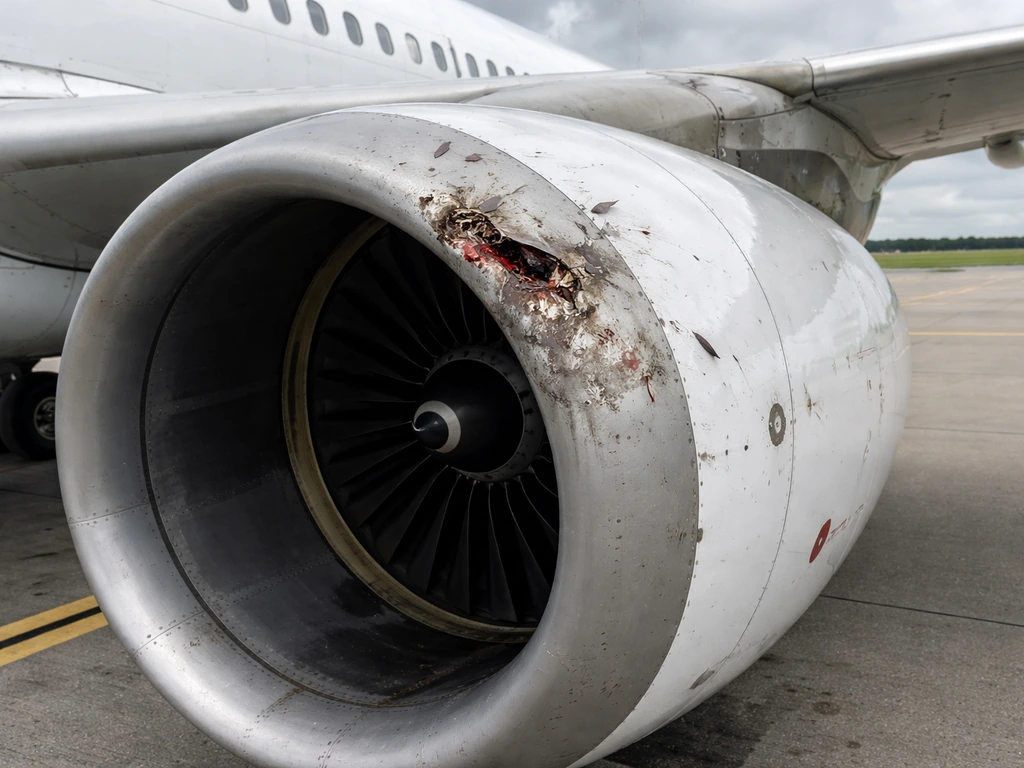
What a bird strike actually means in aviation
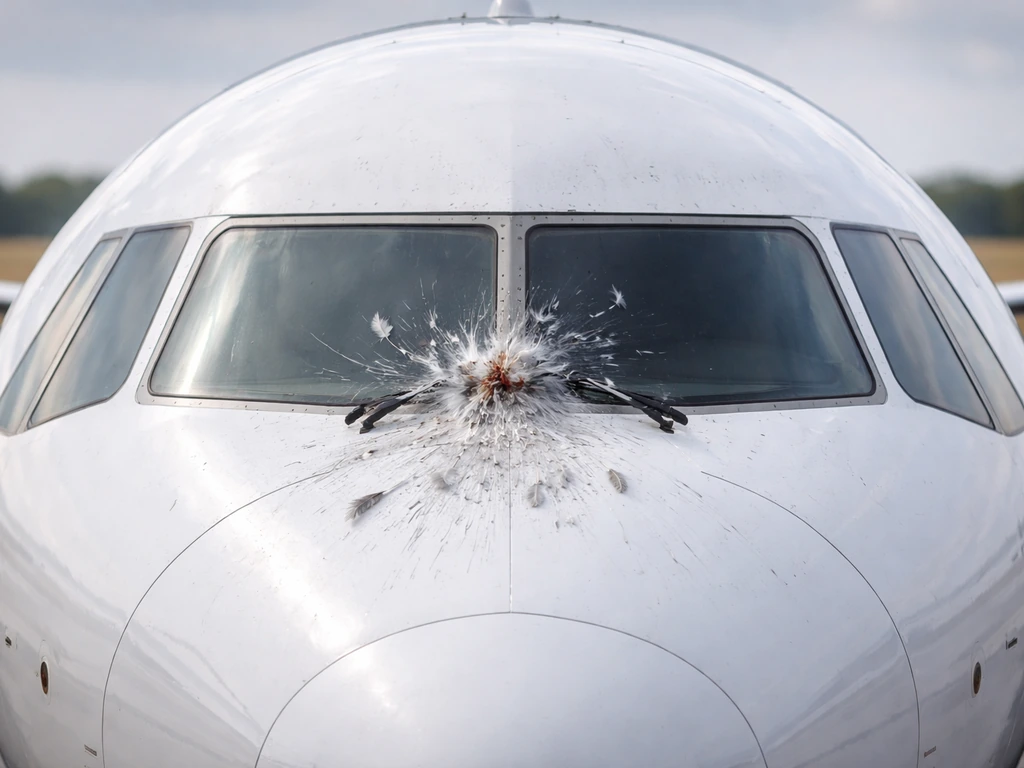
In aviation, a bird strike is a formal safety event, not just a minor inconvenience. ICAO defines it strictly as a collision between a bird and an aircraft, and the FAA has been tracking these events in a dedicated wildlife strike database since 1990. Nearly 20,000 wildlife and bird strikes were recorded in 2023 alone. Over the full dataset from 1990 through 2022, more than 5,190 bird-strike events involved engine damage or ingestion, affecting a combined total of over 5,362 engines. That number matters because engine ingestion is one of the most dangerous outcomes: a bird getting pulled into a jet engine can cause it to fail, and in worst-case scenarios, that can escalate to loss of control in flight.
The timing of strikes is not random. About 61% of bird strikes with fixed-wing civil aircraft happen during landing phases (descent, approach, and landing roll), while 36% occur during the takeoff run and initial climb. Only about 3% happen en route at cruise altitude. Seasonally, roughly 54% of strikes occur between July and October, which lines up with bird fledging seasons and fall migration patterns. So if you're a pilot or frequent flyer, the riskiest window is late summer and early fall, right around the approach and landing phase.
It's also worth knowing that "bird strike" is a legally recognized technical concept, not just informal shorthand. FAA regulations for rotorcraft certification (14 CFR § 29.631) include a formal "bird strike" test requirement: aircraft components must demonstrate survivability after impact with a specified bird mass at defined relative velocities. So when engineers, regulators, and pilots say "bird strike," they mean something with precise boundaries, not a vague collision category. Bird strike plane meaning goes even deeper into what these events look like from a flight operations standpoint if you want more on the aviation mechanics.
Recognizing a bird strike vs. other aviation terms
Aviation has a lot of jargon, and it's easy to conflate terms that sound similar but describe completely different events. Here's how "bird strike" sits relative to the terms you're most likely to encounter alongside it.
| Term | What it actually means | Involves bird/animal? |
|---|---|---|
| Bird strike | Collision between a bird (or other wildlife) and an aircraft in flight or during takeoff/landing roll | Yes |
| Wildlife strike | Broader FAA/ICAO category that includes any wild, feral, or domestic animal hazard at or near an aerodrome | Yes (broader) |
| Runway incursion | Incorrect presence of a vehicle, person, or aircraft on a protected runway or taxiway area | No |
| Hard landing | A landing of excessive severity relative to the aircraft's design limits | No |
| Engine failure | Loss of engine thrust from any cause, including but not limited to bird ingestion | Not necessarily |
If you hear "runway incursion" in a report or briefing, that points away from any bird involvement. Runway incursions are about unauthorized presence on protected runway areas, not collisions with external objects or animals. Similarly, a "hard landing" refers to landing severity, not an outside impact. "Wildlife strike" is simply the broader umbrella term used by the FAA and ICAO when the culprit might be a deer, coyote, or vulture rather than a songbird. SKYbrary defines a wildlife strike as a collision between an animal and an aircraft which is in flight or on a takeoff or landing roll, making it clear that birds are one subset of a larger wildlife hazard category.
One quick practical clue: if you're in the cockpit and hear a loud thud followed by unusual engine readings, vibration, or a burning smell, that combination strongly suggests bird ingestion rather than a routine mechanical issue. Engine anomalies are the most common post-strike symptom worth monitoring immediately.
Bird strike outside of aviation: other common uses
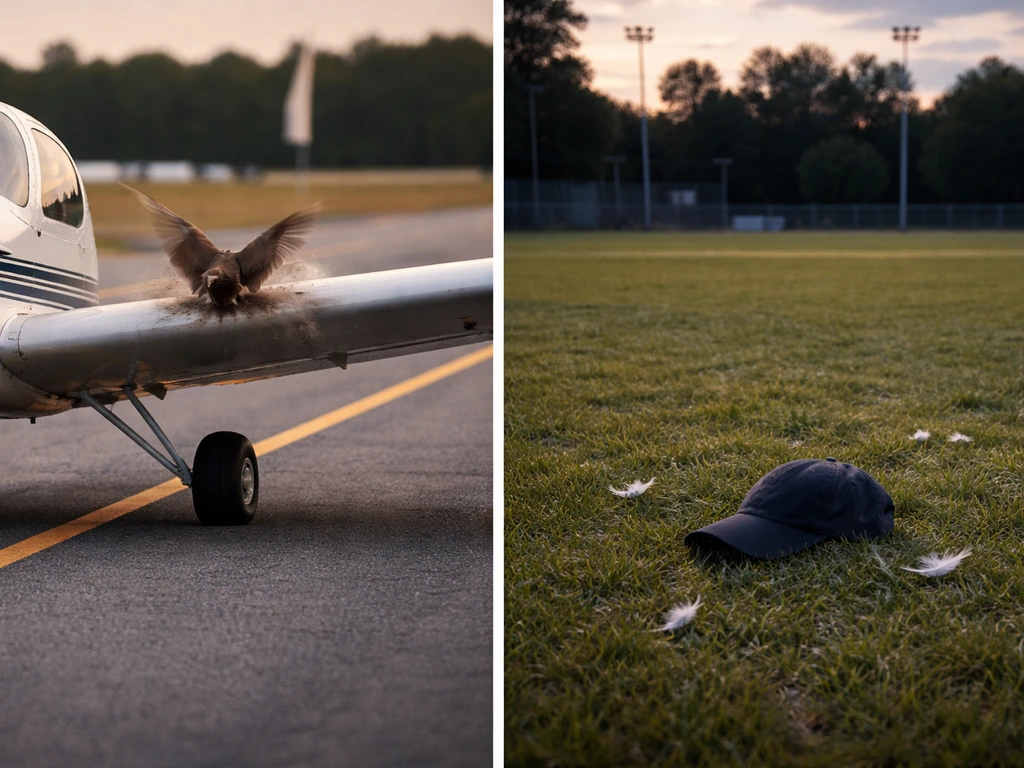
"Bird strike" does appear outside aviation, though it almost always keeps its collision-based meaning rather than picking up metaphorical weight. The most common non-aviation context is bird-window collisions. Birds regularly strike glass buildings, home windows, and communication towers, and these events are frequently called "bird strikes" by wildlife conservation organizations, architects, and environmental advocates. The U.S. Fish and Wildlife Service tracks these collisions as a documented threat to bird populations, and the language they use borrows directly from the aviation term.
You might also see the term in military or sporting contexts, though less commonly. Some competitive shooting disciplines use "bird strike" informally to describe a hit on a clay target. These uses are situational and usually clear from context: if someone is talking about a clay pigeon range, they're not discussing aviation safety.
One thing worth flagging: if you've been searching for something more symbolic or spiritual, like a bird physically flying into you or an animal striking at you in a meaningful moment, that interpretation sits in different territory. Bird attack meaning covers the cultural and personal significance of birds making aggressive or unexpected contact in non-aviation contexts.
Is "bird strike" slang or a metaphor? Not really
"Bird strike" is not slang. It's not a metaphor for something going wrong in a general sense, and it doesn't carry hidden coded meaning in everyday speech. It started as a technical aviation term and has stayed close to its literal roots. The Macquarie Dictionary even featured "birdstrike" as a word-of-the-day entry, which shows the term has achieved genuine lexical standing, but that standing is as a concrete compound noun describing a specific event, not as figurative language.
You may notice the term spelled three different ways, and that inconsistency is documented. Researchers have noted that "bird strike," "bird-strike," and "birdstrike" have all appeared in aviation literature and news coverage without a single standardized form. None of the variants implies a different meaning. They're just spelling variations of the same term.
Where birds do carry metaphorical weight is in the broader world of idioms and symbolic language. Expressions like "a little bird told me" or "birds of a feather" have nothing to do with aviation. But "bird strike" specifically is not part of that figurative tradition. If someone uses "bird strike" in conversation, they almost certainly mean the literal collision. If you've encountered the term in a dream or spiritual context, bird attack dream meaning in Islam addresses how bird attacks are interpreted symbolically in Islamic dream interpretation, which is a separate interpretive tradition entirely.
What to do if you're dealing with an actual bird strike

If you're a pilot or crew member who has just experienced a bird strike, the priority sequence is safety first, reporting second. Here's how to handle it practically.
- Assess the aircraft immediately: check engine instruments for anomalies, listen for unusual sounds, and look for control irregularities. Engine ingestion is the most common serious outcome, so any thrust loss, vibration, or burning smell should push you toward declaring an emergency without hesitation.
- Declare an emergency if needed: AOPA advises that pilots should not hesitate to declare an emergency if a bird strike results in an in-flight emergency requiring immediate action. ATC can provide priority handling, vectors, and emergency services on standby.
- Land and conduct a post-flight damage inspection: visually check the airframe, engine inlets, windscreen, and landing gear for visible damage or bird remains before the next flight.
- Collect and preserve any bird remains: if feathers, tissue, or carcass fragments are present, bag and preserve them. The FAA uses feather identification to track which species are causing strikes, and this data feeds directly into wildlife hazard management.
- File FAA Form 5200-7 (Bird/Other Wildlife Strike Report): this is the standardized FAA reporting instrument. It includes fields for which parts of the aircraft were struck or damaged, whether remains were found, species if known, and other incident details. You'll receive a Strike Report Confirmation Number you can use to update the report later if more information becomes available.
- Consider NASA ASRS: if the event was not a reportable accident but involved a safety concern or error, NASA's Aviation Safety Reporting System accepts de-identified voluntary reports under immunity and confidentiality policies. It's a separate and complementary route to the FAA form.
- If the event meets the definition of an accident: notify the NTSB as required and preserve wreckage, recorders, and documents until the NTSB takes custody.
The FAA's Advisory Circular AC 150/5200-32C lays out the full reporting process, including when reporting is triggered by evidence or damage, how to submit bird remains for identification, and how to access the FAA National Wildlife Strike Database. If you're an airport wildlife manager or operations staff, USDA-APHIS Wildlife Services is the key agency partner for minimizing bird hazards at and around the aerodrome. Bird strike warning meaning is also worth reading if you've received a pre-flight wildlife advisory or bird hazard alert and want to understand what that warning actually signals and how seriously to take it.
Why "bird" terms keep showing up in meaning, language, and culture
It's not a coincidence that bird-related language is everywhere, from aviation safety reports to dream interpretation to idioms. Birds occupy an unusual position in human culture: they move between ground and sky, they appear suddenly and unpredictably, and they've been associated with messages, omens, and transitions across nearly every human culture recorded. That persistent symbolic presence is why bird expressions show up so readily in language and why they stick.
In practical language, birds bring speed and impact to the words we use. "Bird strike" works as a term precisely because it's visceral and immediate. A strike implies force, consequence, and a boundary being crossed. Compare it to a softer term like "bird encounter," which would be accurate but would not carry the same weight in a safety briefing or an emergency call. Language borrows from experience, and the experience of a bird hitting an aircraft at 150 knots is not subtle.
The cultural staying power of bird terms also comes from their dual nature as both common and slightly unpredictable. You can plan for runway incursions with infrastructure and procedures. You can engineer hard landings out of the system. But birds are wild, migratory, and season-driven. They move through human spaces on their own timetable, and that unpredictability is part of why a "bird strike" feels like a different category of event than a mechanical failure. It's a reminder that the natural world doesn't file a flight plan. That tension between human systems and natural behavior is exactly why bird encounters, whether literal or symbolic, keep generating meaning.
FAQ
Does “bird strike” require confirmed evidence, or is a suspicion enough?
Yes, in most aviation contexts a bird strike is treated as an event only when there is evidence of a collision (visible remains, a reported hit with associated indications, or confirmed damage). A purely suspected “maybe something hit” without any corroborating signs is often handled as a wildlife hazard report rather than a confirmed strike, and your follow-up inspection is what determines which bucket it goes into.
What symptoms after a loud bang most strongly suggest a bird strike versus another issue?
If you hear impact noise and then notice abnormal vibration, engine parameter deviations, a burning or fuel-like smell, or any change in thrust response, that combination should be treated as ingestion or bird impact until proven otherwise. Even if the aircraft seems flyable, the key is to have the engines checked and to make the required reports promptly because damage can be internal or not immediately obvious.
After a suspected bird strike, should you expect a borescope or specific inspections right away?
It depends on whether the aircraft is equipped and the airline or authority’s procedures. Some operators use scheduled engine borescope checks, additional inspections of fan/compressor areas, and specific maintenance actions based on bird size and where it likely struck. Practically, the earlier you get an inspection after landing, the more likely you are to catch hidden compressor or fan damage before it worsens.
What details should crew or operators include when filing a bird strike report?
For reporting, you typically provide what you know: time, aircraft type, phase of flight, location, flight number, estimated bird size if observed, and any observed damage or engine effects. If you have bird remains, document where they were found and preserve them for identification, because the database value increases when the species or likely category is recorded rather than guessed.
Do “bird strike,” “bird-strike,” and “birdstrike” mean different things in safety databases?
Spelling does not change meaning. In aviation records you may see bird strike, bird-strike, or birdstrike, and they all refer to the same underlying concept. What matters for tracking is consistent metadata in the report, such as the correct date, airport/location, and aircraft/engine model.
Is a “wildlife strike” the same as a “bird strike,” and should I label it differently?
Yes, “wildlife strike” can include birds but also mammals and other animals, and the reporting category may differ by authority and local system. If you know it was clearly a bird, label it accordingly so the analysis can separate bird risks from other wildlife hazards, but do not override uncertainty if you cannot identify the species.
How do formal certification bird-strike tests relate to what pilots do after a real event?
Rotorcraft certification and safety testing uses formal “bird strike” criteria, but operational handling is still about real-world risk and evidence. The test requirements focus on survivability of components under defined conditions, while day-to-day decisions focus on whether the aircraft likely ingested a bird and whether inspections and continued operation are safe under the operator’s procedures.
If I get a bird strike warning, does that mean a strike is imminent or just that risk is higher?
A “bird strike warning” or wildlife advisory usually signals an increased probability of hazards due to seasonal activity or recent wildlife sightings, but it is not a confirmation that a strike will occur. The practical takeaway is to adjust operational risk controls, such as heightened vigilance on approach and takeoff, and to ensure crews and airports follow the alert’s specific instructions.
Can “bird strike” also mean window collisions, and how should I clarify which context I mean?
Bird-window collisions have a different mechanism and risk profile than aircraft impacts, but they still commonly get called “bird strikes” in conservation contexts. If you are discussing these events, clarify whether you mean building or tower impacts (ground-level glass hazards) versus aircraft collisions, so your audience does not assume aviation safety implications.
When the term shows up in a non-aviation context, how can I tell if it is literal or symbolic?
If you are searching for a non-aviation meaning, be cautious because “bird attack” discussions and dream interpretations can use different frameworks than literal aviation reporting. In general conversation, if someone says “bird strike” without aviation context, they may still mean a literal hit, but if it sounds symbolic or spiritual, that is a different topic and should be interpreted accordingly.