
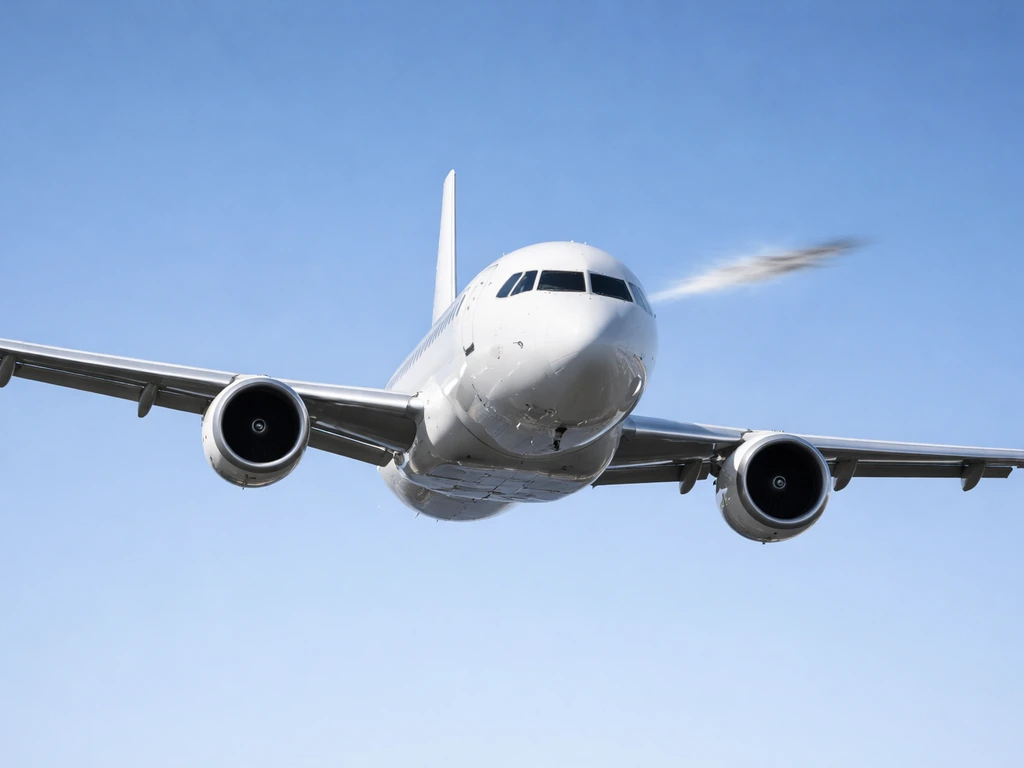
A bird strike on a plane means exactly what it sounds like: a bird collided with the aircraft. If you want the full bird strike meaning, it helps to know how the term is defined in aviation and how reports describe the event. In aviation, the term "bird strike" (sometimes written as "birdstrike") refers to any collision between a bird and an aircraft in flight or during ground operations. It is an official safety term used in incident reports, air traffic control communications, and regulatory filings worldwide. If you saw it in a news headline, a flight delay notice, or a safety briefing and wanted to know what it actually means, what happens next, and how worried you should be, this article walks through all of that.
Bird Strike Plane Meaning: What It Means in Aviation

Marcus Holloway
20 May 2026
What "bird strike" means in aviation
The International Civil Aviation Organization (ICAO) defines a strike as a collision between wildlife and an aircraft. That definition is deliberately broad. It covers everything from a small sparrow bouncing off a fuselage to a Canada goose getting pulled into a jet engine at takeoff. The term applies whether the aircraft is moving on the runway, climbing out, cruising, or on final approach.
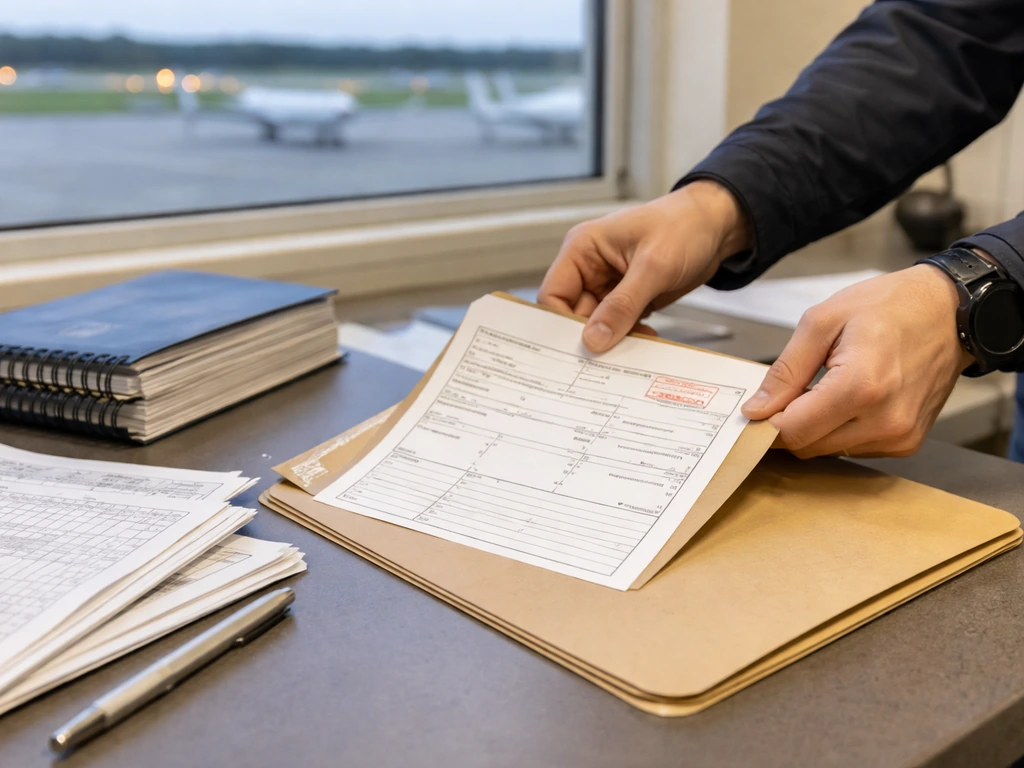
The FAA uses the same core definition and tracks every reported collision in its Wildlife Strike Database. Pilots, airlines, and airport operators are expected to file a report using FAA Form 5200-7 (Bird and Other Wildlife Strike Report) whenever a strike occurs. ICAO uses its own IBIS reporting system internationally, which captures details like whether feathers or remains were found, what part of the aircraft was hit, and what effect the strike had on the flight. So when you see "bird strike" in an aviation context, it is a formal, documented safety event, not just casual language.
It is worth noting that regulators have deliberately broadened the category to "wildlife strike" because airports deal with deer, coyotes, and other animals on runways too. But birds remain by far the most common and frequently reported collision type, which is why "bird strike" stuck as the everyday term even in official communications.
What a bird strike can actually do to a plane
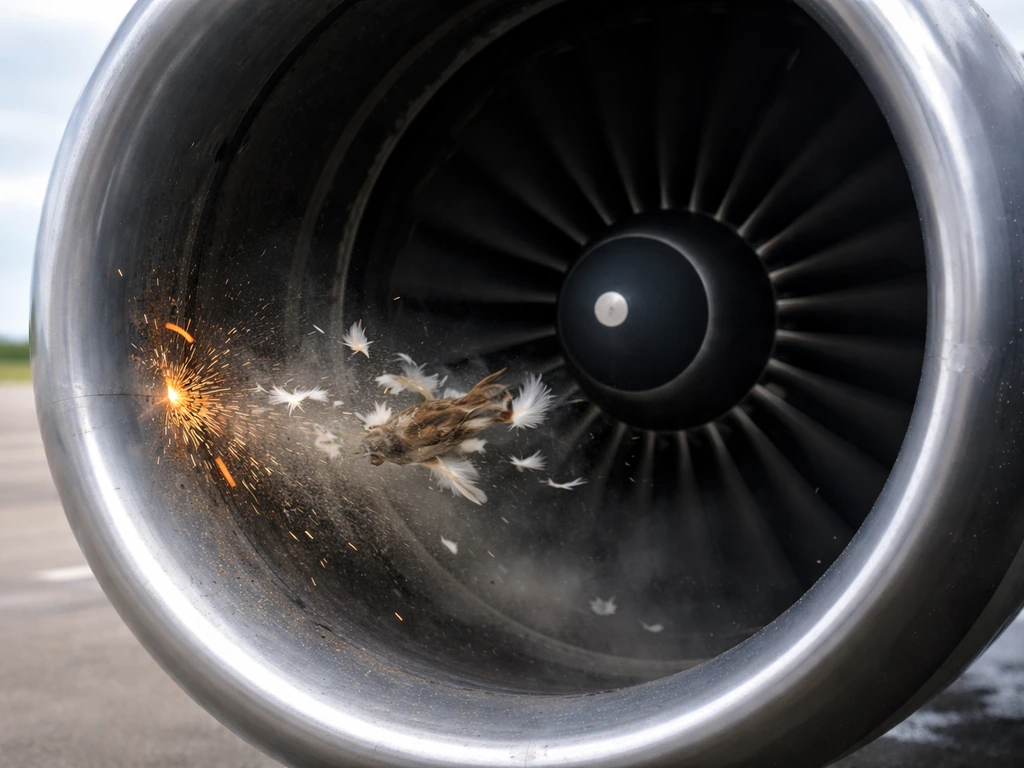
The outcome of a bird strike ranges enormously depending on the size of the bird, the number of birds, where they hit, and the speed of the aircraft. Most strikes cause little or no damage. But some cause serious, life-threatening situations. The FAA is clear that the most dangerous strikes fall into two categories: engine ingestion and windshield strikes.
Engine ingestion
When a bird gets pulled into a jet engine or turboprop, the result can range from minor compressor damage to a full engine shutdown. A bird striking turbine blades at high speed creates sudden, violent stress on precision-machined components. In the most severe cases, an engine fails outright. In others, the crew notices a power loss, abnormal vibration, or warning lights and shuts the engine down as a precaution. Modern commercial aircraft are certified to continue flying after losing one engine, so a single engine failure is serious but manageable. A simultaneous multi-engine strike, as happened famously with US Airways Flight 1549 over the Hudson River in 2009, is a different situation entirely.
Windshield and airframe strikes
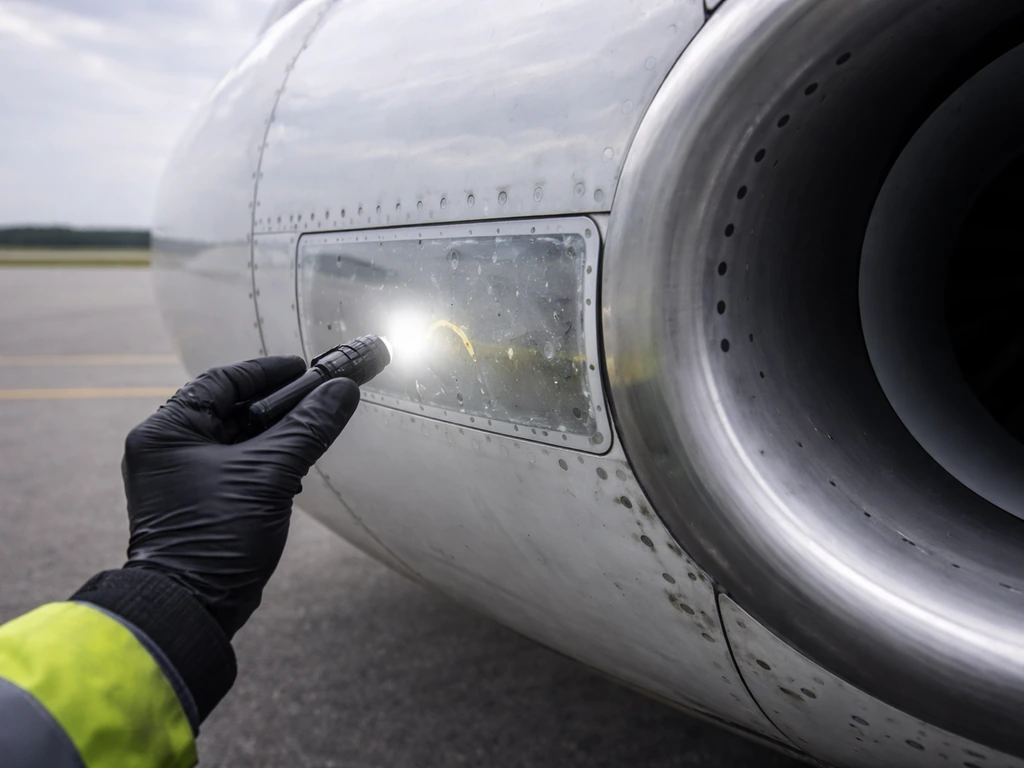
A bird hitting the cockpit windshield at cruise speed carries enormous kinetic energy. Aircraft windshields are layered and engineered to resist penetration, but a large bird at high speed can crack or shatter one, which is dangerous for the pilots and can depressurize a flight deck. Strikes to the radome (the nose cone housing radar), landing gear, or wings tend to be lower severity but still require inspection and can ground an aircraft for maintenance.
Common outcomes documented in FAA reports
- Precautionary landing: the crew diverts to the nearest suitable airport for inspection even if no immediate emergency exists
- Aborted takeoff: the crew stops the aircraft on the runway after a strike during the takeoff roll
- Emergency landing: declared when damage or system failure requires immediate action
- Engine shutdown: one or more engines shut down in flight after ingestion
- Missed approach: the crew goes around during landing after a strike occurs on approach
- No damage, flight continues: the most common outcome for small birds hitting low-risk areas
One counterintuitive data point: waterfowl (ducks and geese) account for only about 4% of all reported strikes, but they are responsible for 27% of strikes that cause actual damage. That is because large birds carry far more mass. A 10-pound Canada goose hitting an aircraft at 150 knots delivers a force that no small songbird can match.
How "bird strike" shows up in incident reports and flight notifications
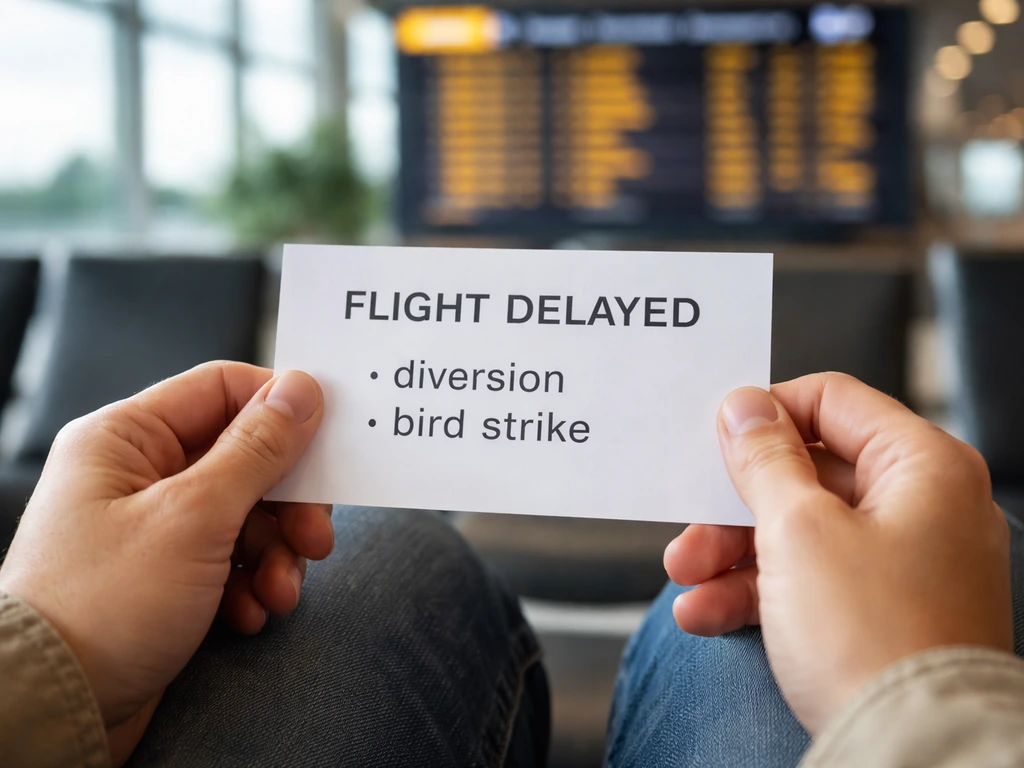
If you received a flight delay notification or saw a gate agent explaining that a plane is being swapped due to a bird strike, that phrasing comes directly from operational reporting language. Airlines and airports use it the same way the FAA does: as a neutral, technical description of what happened.
In FAA filings, a bird strike report (Form 5200-7) includes structured fields for which part of the aircraft was struck, whether any engine ingestion occurred, what damage (if any) resulted, and the effect on the flight. The "Effect on Flight" section has checkboxes for outcomes like precautionary landing, aborted takeoff, and engine shutdown. This is the same language you will see in NTSB reports when a strike rises to the level of an incident or accident. The NTSB distinguishes between an "incident" (less severe) and an "accident" (involves substantial aircraft damage, serious injury, or death), so a bird strike can appear in either category depending on severity.
In news coverage, "bird strike" almost always appears because something operationally significant happened: a diversion, an aborted takeoff, noticeable damage, or an emergency landing. Unremarkable strikes (a small bird hitting the fuselage with no effect) are reported to the FAA but rarely make headlines. So if you are reading about it in the news, there was likely at least some disruption or damage involved.
How serious is a bird strike? Reading the details
When you encounter a bird strike story or notice, a few specific details tell you a lot about how serious it actually was. Here is what to look for.
| Detail to look for | Why it matters | What it signals |
|---|---|---|
| Engine ingestion mentioned | Engines are the most critical system | Higher severity; possible diversion or emergency |
| Windshield strike mentioned | Structural risk to the cockpit | High priority inspection; possible crew danger |
| Precautionary landing | Crew acting cautiously, no immediate emergency | Moderate; aircraft likely safe but needs inspection |
| Emergency landing declared | Crew treating it as urgent | Serious; damage or system failure suspected |
| Aborted takeoff | Strike happened during ground roll | Could be minor or serious depending on speed |
| Flight continued normally | No significant damage found | Low severity; likely a small bird, non-critical area |
| Large bird species named (goose, vulture) | Mass of bird correlates with damage potential | Raises severity risk significantly |
The phase of flight also matters. FAA data shows that about 61% of bird strikes happen during landing phases (descent, approach, and landing roll) and about 36% during takeoff run and climb. Only around 3% happen en route at cruise altitude. So most strikes occur close to the ground, where birds actually live. A strike at cruise altitude is unusual and worth paying closer attention to.
Practical next steps if you get a bird-strike notice
If you are a passenger and you have just been told your flight is delayed, diverted, or swapped due to a bird strike, here is what that actually means for you and what to do.
- Ask the gate agent whether the original aircraft is being inspected or replaced. If the aircraft is being inspected, the delay could be an hour or several hours depending on what mechanics find. If a new aircraft is being sourced, expect a longer delay.
- Check whether your flight is now classified as diverted or cancelled. If it diverted to another airport, airlines are generally obligated to get you to your destination on the next available flight at no additional cost.
- If the incident made news (emergency landing, aborted takeoff), check the airline's website or app for rebooking options. Most airlines open flexible rebooking in these situations without change fees.
- Do not assume the plane is unsafe just because a bird strike occurred. Aircraft go through mandatory inspection before returning to service. You will not be put on a damaged plane.
- If you were on board during a strike and noticed something (a loud bang, a shudder, unusual smells), report it to the cabin crew immediately if you have not already. Your observations can help maintenance crews locate damage.
- For insurance or work-travel purposes, request written confirmation of the bird strike from the airline. This is legitimate documentation of an irregular operation.
The main thing to know is that bird strike procedures are well-rehearsed. Pilots train for engine failures and emergency landings. Aircraft are certified to handle single-engine scenarios. The systems are designed with exactly these kinds of events in mind.
The symbolic and spiritual angle: what some people make of bird strikes
Because this site explores what birds mean in language, culture, and symbolism, it is worth addressing a question some readers actually have: does a bird striking a plane carry any spiritual meaning? People ask this, and it deserves a thoughtful answer rather than a dismissal.
Birds have served as omens and messengers in human cultures for thousands of years. An omen, as the Encyclopaedia Britannica frames it, is an observed phenomenon interpreted as signifying good or bad fortune. In that tradition, a bird colliding forcefully with something a person is traveling in could easily be read as a warning sign or a disruption of an intended journey. Some spiritual frameworks would interpret an unexpected, disruptive encounter with a bird as a signal to slow down, reconsider a path, or pay attention to something you have been ignoring.
In dreams, a bird striking something solid often carries themes of collision between the natural and the constructed, between freedom and limitation. If you are searching for this angle because you had a dream involving a bird hitting a plane, rather than a real aviation event, that symbolic reading may be more directly relevant to you. In Islamic interpretation, bird attack dream meaning is often discussed alongside how people should respond to fear or warning signals in everyday life. The symbolism of bird attacks and strikes in dreams is explored more fully in related discussions on bird attack meaning and bird attack dream meaning in Islamic interpretation.
That said, it is worth being clear: there is no scientific or safety evidence that bird strikes carry spiritual significance. The patterns in FAA data are explained entirely by bird behavior, flight path geometry, and aircraft design, not by fate or omen. If you are reading about a real flight event and wondering whether it means something beyond the aviation facts, the grounded answer is: it means the crew handled a well-documented safety scenario, and the outcome was shaped by training and engineering, not supernatural force. The symbolic meaning is something you bring to the event, not something encoded in it. If you are looking specifically for bird attack meaning, you can explore how different cultures and dream interpretations use the idea of a bird strike bird strike meaning.
If you came here specifically looking for the spiritual meaning of a bird strike or a bird striking a car or window rather than an airplane, the broader topic of bird strike meaning and bird strike warning meaning covers those angles in more depth.
How airports and pilots work to prevent bird strikes
Bird strike prevention is a serious, multi-layered discipline. Airports do not just hope birds stay away. They actively manage habitat, use deterrents, and monitor bird activity in real time.
Habitat and land management
The FAA's Advisory Circular AC 150/5200-33C gives airports detailed guidance on avoiding wildlife-attracting land uses near runways. That means managing grass height (short grass is less attractive to many bird species), draining standing water, removing food sources, and maintaining perimeter fencing to keep large wildlife off movement areas. The idea is to make airport environments less hospitable to birds in the first place, rather than relying entirely on reactive deterrence.
Active deterrence
When birds show up anyway, airports use a range of active deterrence tools: pyrotechnic launchers (loud noise devices that startle and disperse birds), trained dogs that patrol runways and flush birds, lasers, and in some cases, falconry programs that use trained raptors to chase other birds away. These methods need to be rotated regularly because birds adapt to repeated stimuli and stop responding if the same deterrent is used too often.
Technology and monitoring
Larger airports increasingly use avian radar systems and infrared or electro-optical cameras to detect and track bird flocks in real time around the airport environment. This gives controllers and wildlife managers early warning when a large flock is moving toward active runways, allowing them to issue NOTAM-style warnings to pilots or delay operations temporarily.
Pilot reporting
Pilots are a critical part of the system. The FAA's Aeronautical Information Manual urges pilots to blank" rel="noopener noreferrer">report any bird or wildlife strike using Form 5200-7, and the FAA's AIP (Aeronautical Information Publication) section on bird migration areas gives pilots guidance on where and when bird activity is highest. The USDA's Animal and Plant Health Inspection Service (APHIS) Wildlife Services works directly with airports, providing wildlife biologists who help develop management plans tailored to each airport's specific bird population and geography.
None of these measures eliminate bird strikes entirely. Birds and aircraft will share low-altitude airspace as long as both exist. But the combination of habitat management, active deterrence, real-time monitoring, and thorough reporting has significantly improved the industry's ability to reduce risk and learn from every strike that does occur.
FAQ
If there is no visible damage, does it still count as a bird strike plane meaning event?
A bird strike usually counts as any contact between a bird and an aircraft, even if the bird does not leave visible damage. That is why reports can include “no damage observed” along with the aircraft location and whether any warnings or engine indications occurred.
Does “bird strike” only mean something that happens in the air?
Yes. The term applies during ground operations too, such as while taxiing, takeoff roll, or landing roll, not only when the aircraft is airborne. Reports can specify the phase of flight and exact impact area to clarify this.
Why do some news stories say “bird strike” even when it seems like a minor incident?
Not always. A headline may use the phrase even when the strike was minor, but the reportable consequences typically determine how disruptive it is, for example engine shutdown, precautionary landing, or an inspection that forces a gate change.
How worried should passengers be if they hear their flight is delayed due to a bird strike?
Passengers generally do not need to assume the worst, because many outcomes are precautionary and rely on standard inspection and procedures. The key practical factor is whether the aircraft was returned to service after inspection, which airlines communicate through delay, rescheduling, or aircraft swap.
What typically happens to the plane after a bird strike that affected the windshield or an engine?
If there is an engine ingestion, crews typically follow engine damage checks and may delay dispatch until maintenance clears the aircraft. Even without ingestion, impacts to areas like the windshield or radome often trigger detailed inspections, so “no emergency” can still mean the flight is grounded briefly for evaluation.
Is “bird strike” the same thing as a “wildlife strike”?
A “wildlife strike” includes birds and other animals, like deer or coyotes, and is sometimes used when the animal type is unknown or clearly not a bird. “Bird strike” is retained in everyday language mainly because birds cause the most frequent reported strikes.
Do reports require knowing the exact bird species?
A strike can be reported even if the crew is not sure of the exact bird species. Reports usually capture the location of impact, observed effects, and any physical evidence found, and that information can still be valuable for trend analysis.
What should I do if I witnessed a bird strike during my flight?
If you have an experience with a real flight, it is better to describe what you observed (time relative to takeoff or landing, where you felt an impact or saw debris, any announcements) rather than assuming cause. Your account can be useful context, but official determinations come from maintenance inspection and the crew report.
Does a bird striking a plane have any spiritual meaning, or is it purely aviation-related?
For personal or cultural interpretation questions, it helps to separate symbolic meaning from operational meaning. Aviation reports treat the event as a safety occurrence influenced by habitat, flight path, and engineering, while personal symbolism is an additional layer you assign to it.
How can I tell whether a bird strike was minor or serious from a notice or report?
If you need to identify how serious the event was in a report or notice, look for structured indicators like whether an engine ingestion occurred, the affected aircraft section, and the stated effect on the flight (for example aborted takeoff versus precautionary landing). Those fields are more informative than the headline wording.
Next Article
Bird Attack Dream Meaning in Islam and Daily Guidance
Interpret bird attack dreams in Islam, refine symbolism by details, and get calm dua and practical steps to act safely.