A "bird warning sign" can mean two completely different things depending on where you encountered it. It might be a literal posted sign near a building, airport, school, or park warning you that birds are active, aggressive, or creating a hazard in that area. Or it might be a figurative idea: you've seen birds behaving in an unusual way and you're wondering whether that behavior is trying to tell you something, either as a practical safety cue or as a spiritual omen. Both interpretations are worth taking seriously, and this guide walks you through both.
Bird Warning Sign: What It Means and How to Stay Safe

Marcus Holloway
15 May 2026
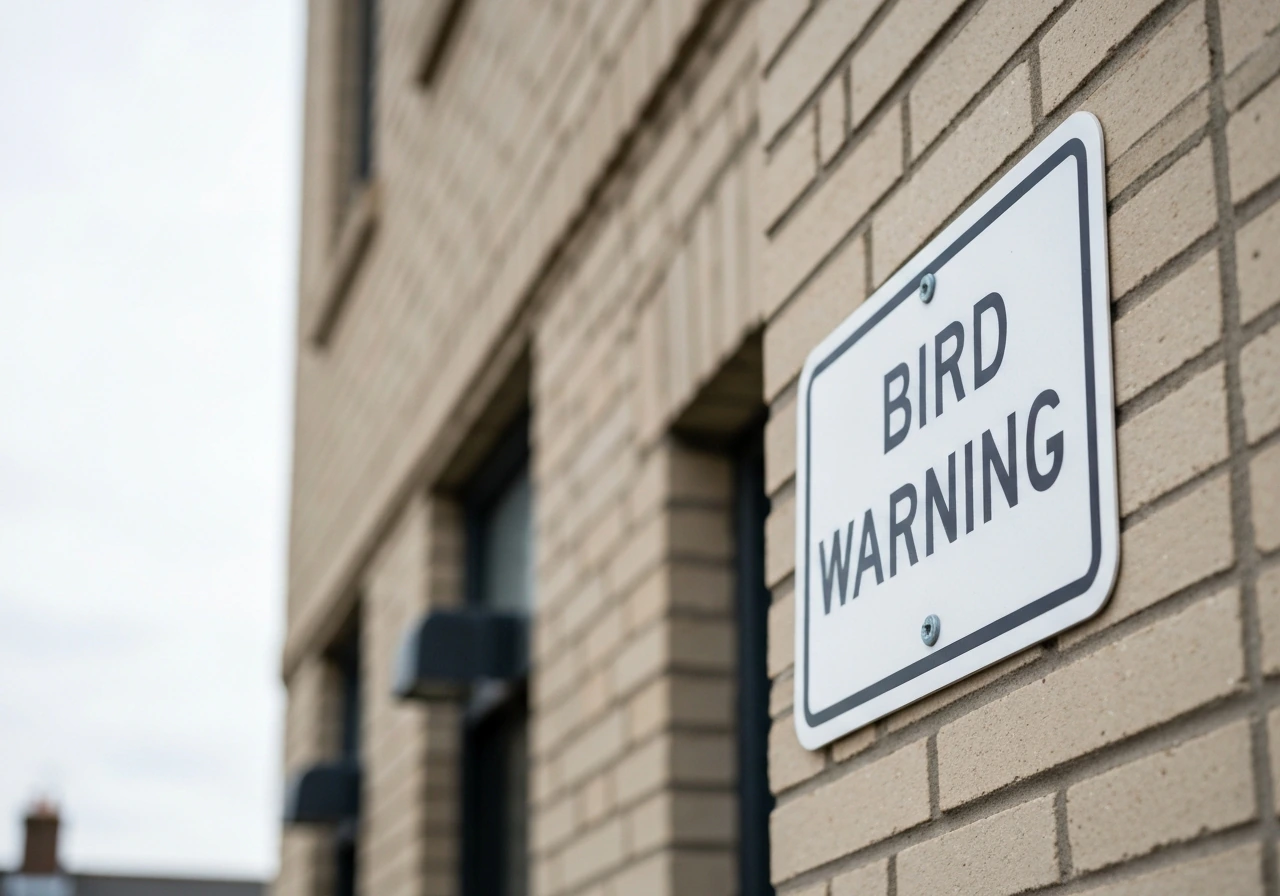
What "Bird Warning Sign" Actually Refers To
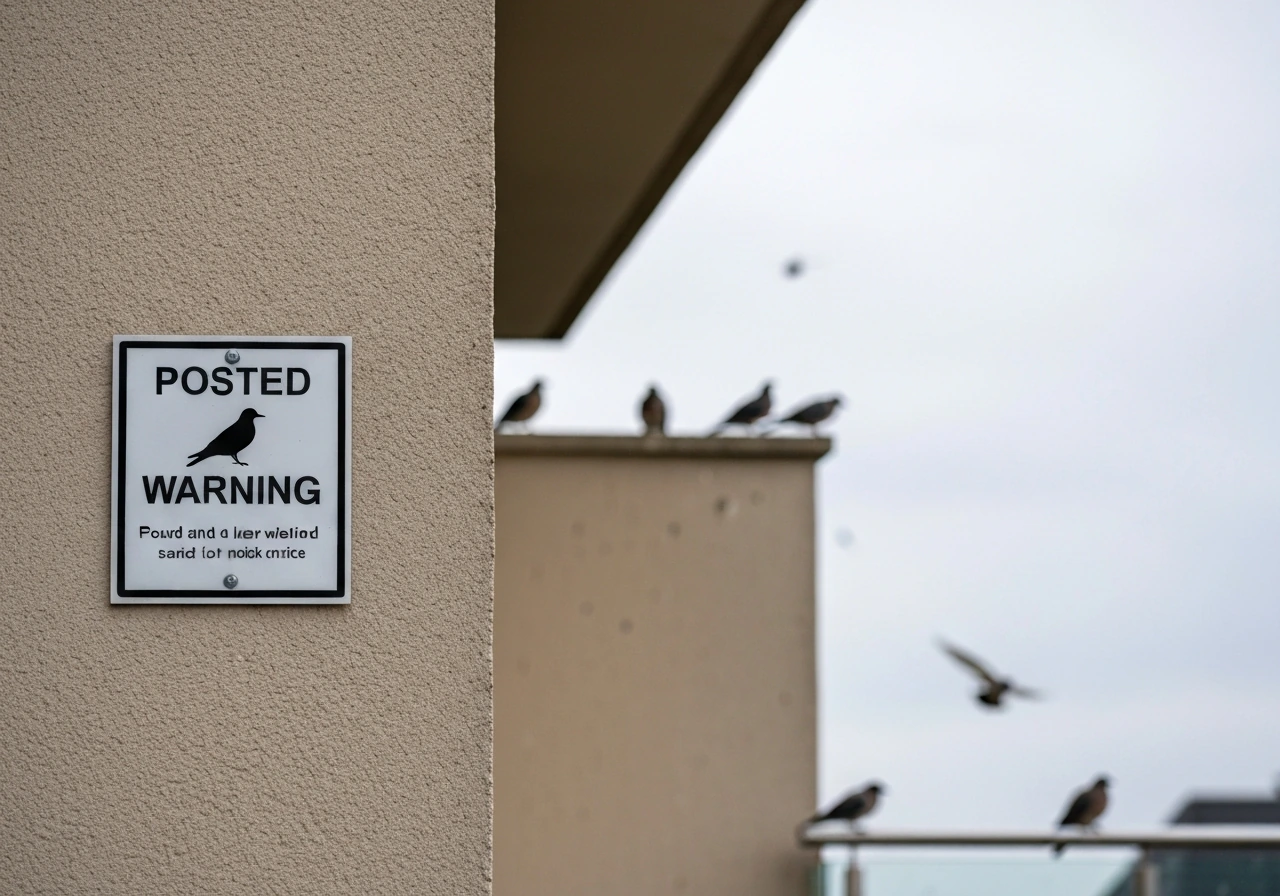
Most people searching this phrase fall into one of two camps. The first group has physically encountered a sign, flag, or posted notice near a building, balcony, airport perimeter, farm, or public space that mentions birds. Those signs are real, practical warnings usually put up by property managers, pest control companies, or regulatory bodies like the FAA. They're telling you something specific: birds are nesting here, there's a dive-bombing bird defending territory, there's a health risk from accumulated droppings, or wildlife management is actively in progress.
The second group has watched birds doing something striking and unusual, like a large flock suddenly scattering, a bird hissing or swooping aggressively, or an unusual number of birds gathering in one place, and they want to know whether that behavior is a warning signal worth acting on. This is where bird behavior intersects with both practical safety and the long tradition of treating birds as omens or messengers.
The good news: you don't have to choose one interpretation over the other. Both point toward the same practical outcome, which is paying attention and responding sensibly. The sections below cover each path.
When Birds Are Acting Like a Warning: How to Respond Right Now
If you're watching birds and something feels off, trust that instinct enough to take a few immediate steps. Sudden, dramatic bird behavior often tracks with real environmental changes. Mass departures, frantic calling, or birds flying low and erratically can precede weather events. A single bird acting disoriented, circling on the ground, or showing no fear of humans can indicate illness. Aggressive swooping in a specific area almost always means an active nest nearby.
Here's what to do immediately based on what you're seeing:
- Aggressive swooping or dive-bombing: Back away calmly. Don't wave your arms or run. The bird is defending a nest and will stop once you're out of its perceived territory. Avoid the area until nesting season ends.
- Bird on the ground acting disoriented or unusually tame: Don't touch it with bare hands. Keep children and pets away. Contact your local wildlife rehabilitator or animal control. A bird that lets you approach it is almost never healthy.
- Large flock suddenly flushing or scattering: Scan the area for predators (including raptors overhead) or sudden loud disturbances. If you're near an airport or airfield, report unusual bird activity to airport management immediately.
- A single dead bird near a window: This is almost certainly a window strike, a very common and very preventable hazard. Note the location for follow-up.
- Unusual accumulation of droppings: Do not disturb or sweep the area dry. The risk of inhaling aerosolized spores is real. Keep others away and read the health section below before doing anything.
The Most Common Bird Warning Scenarios
Nesting and Roosting Activity
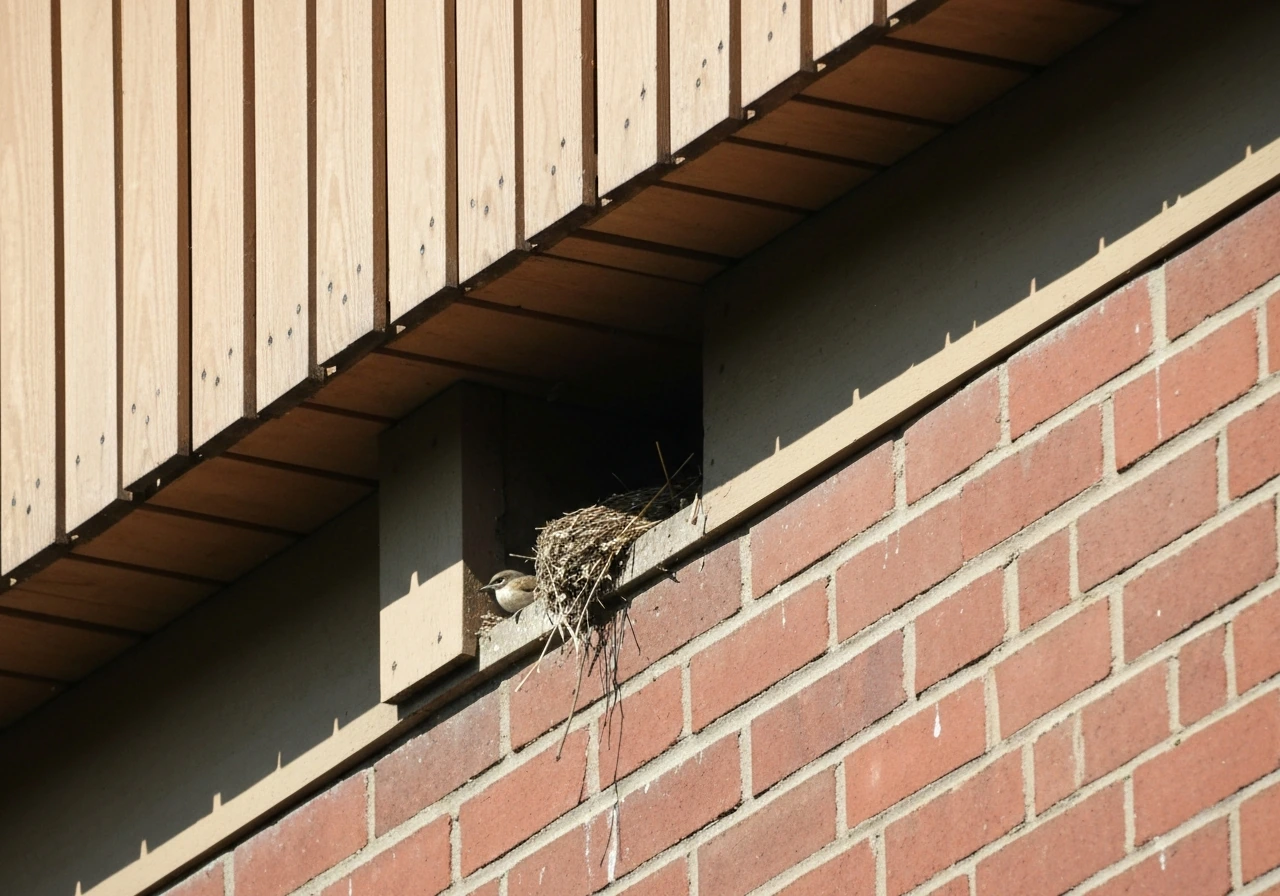
A bird that has chosen to nest on or near your property isn't being malicious, but it does create real complications. The key legal point: under the Migratory Bird Treaty Act (MBTA), it is illegal to destroy a nest that contains eggs or chicks, or where young birds are still dependent on it. You cannot move it, remove it, or even physically disturb it without a valid permit. An empty nest is a different story. The USFWS notes there's no general prohibition on removing a nest that's been vacated, provided you don't possess the nest itself during removal. Bottom line: if you see eggs or baby birds, leave the nest alone and wait.
Massachusetts Audubon points out that relocating an active nest doesn't work anyway. Birds don't go searching for a moved nest. And Cornell Lab's NestWatch notes that visiting or disturbing an active nest can cause the parents to abandon it entirely, which is the worst possible outcome for everyone. Keep your distance, minimize your time near the nest (no more than a minute or two of observation at a time), and let the nesting cycle run its course.
Aggressive Birds
Mockingbirds, red-winged blackbirds, Canada geese, and various raptor species are the most common culprits for aggressive behavior near humans. This almost always happens during breeding season when adults are protecting eggs or chicks. The bird is not dangerous in the sense of being diseased or rabid. It's doing exactly what evolution designed it to do. Wear a hat if you need to pass through the area repeatedly, change your walking route if possible, and know that the aggression will subside once the young birds leave the nest.
Droppings and Health Hazards

This is where bird warning signs on buildings and in public spaces are most often posted for good reason. Bird droppings in large accumulations carry real health risks. The CDC identifies histoplasmosis, a lung infection caused by breathing in Histoplasma fungal spores, as a significant risk associated with accumulated bird and bat droppings in parts of the U.S. Psittacosis is another concern, spread by breathing in dust from dried bird secretions or droppings, particularly around parrots and other psittacine birds but possible with other species too.
The CDC and NIOSH are very clear: the best prevention is stopping droppings from accumulating in the first place. If you're already dealing with a significant buildup, do not dry-sweep or blow the area. Wetting the surface before any cleaning dramatically reduces spore aerosolization. For large accumulations, the CDC recommends hiring a professional hazardous waste company rather than handling it yourself. Never use bare hands, and use appropriate masks and gloves.
Window Strikes
Window collisions are one of the most underappreciated bird hazards. Glass is essentially invisible to birds because they can't perceive it as a barrier. What they see is either a reflection of sky and trees or a transparent passage through the building. The result is millions of bird deaths and injuries each year. The USFWS identifies buildings and glass collisions as a major threat to bird populations, and the NPS echoes this in its guidance on bird-safe glass.
If you're seeing birds hitting your windows regularly, blank" rel="noopener noreferrer">the fix is making the glass visible. blank" rel="noopener noreferrer">Audubon recommends placing window decals or tape strips no more than 2 to 4 inches apart across the full surface of the window. Spacing them further apart doesn't work because birds attempt to fly through the gaps. Combine that with turning off interior lights at night during migration season and repositioning bird feeders to either within 3 feet of the window (so birds can't build up speed) or more than 30 feet away.
How to Read What You're Seeing
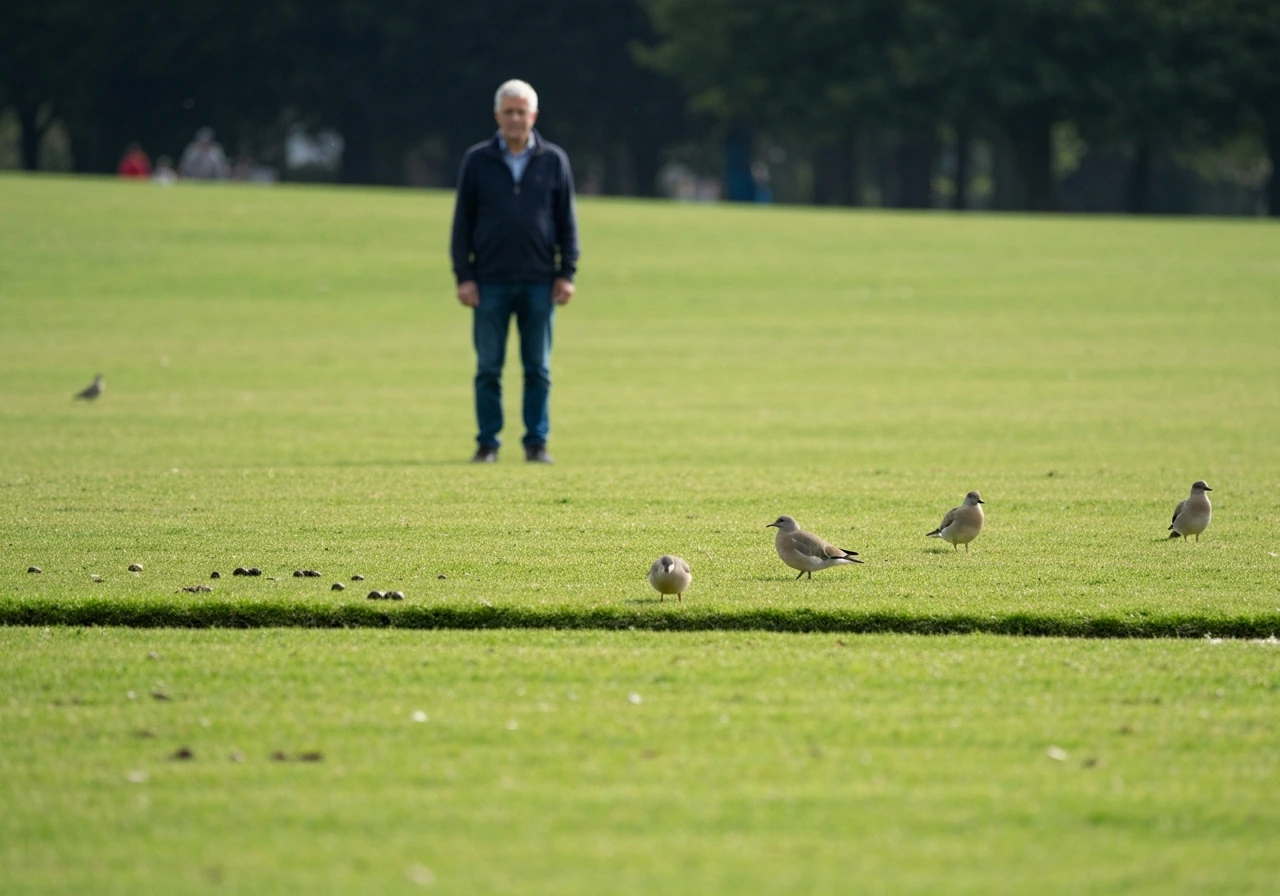
Before you act, take a moment to observe. Most bird situations are readable if you know what to look for. Location and behavior together tell most of the story. Bird repellent meaning can help you interpret whether a sign is referring to keeping birds away versus interpreting bird behavior as a warning omen.
| What You Observe | Likely Situation | Immediate Action |
|---|---|---|
| Bird swooping repeatedly at people in one spot | Active nest nearby, adult defending territory | Avoid the area; mark it with a visual cue if needed |
| Large flock roosting on a building or structure | Communal roost; possible droppings buildup below | Don't disturb; assess droppings risk; contact property manager |
| Single bird on the ground, not flying | Injured, sick, or window-strike victim | Don't touch; call wildlife rehabilitator |
| Bird hissing, puffing up, or spreading wings at you | Threat display from a bird feeling cornered or protecting young | Back away slowly; give the bird an exit route |
| Droppings accumulation under an overhang or ledge | Active or recent roost; health hazard potential | Wet before any cleaning; consider professional removal |
| Repeated window strikes at one location | Glass visibility problem | Apply closely spaced decals (2-4 inch spacing); adjust feeders |
| Posted sign warning of bird activity | Official warning from property/airport management | Follow posted instructions; do not enter restricted areas |
Practical Steps You Can Take Today
Prevention is almost always easier than dealing with an established bird problem. Here are the most effective things you can do right now depending on your situation:
- Secure food sources. Open trash, compost piles, pet food left outside, and unsecured grain or feed are the primary attractants for urban and suburban bird problems. Lock bins, bring pet food inside, and cover compost.
- Mark your windows. Apply closely spaced decals, tape, or external screens to any window where strikes have occurred. The 2-to-4-inch rule from Audubon is the benchmark. Don't assume one or two large stickers are enough.
- Don't approach nests. If you've spotted a nest, keep 10 to 15 feet away minimum. Brief observations are fine. Extended disturbance is not, and physical contact is illegal if the nest is active.
- Manage lighting at night. During spring and fall migration, interior lights visible through glass significantly increase collision risk. Turn off non-essential lights or use exterior shades during peak migration nights.
- Use appropriate protective gear near droppings. Gloves and a properly fitted N95 or higher respirator are the minimum before cleaning any bird waste, even small amounts in an enclosed space.
- Document bird activity before reporting. If you're contacting wildlife control or a property manager, note the species if possible, the specific location, the time of day, and how long the activity has been occurring. It speeds up the response significantly.
When to Call in Help
Most bird situations resolve on their own or with simple adjustments, but some genuinely need professional involvement. Here's when to make the call:
- Large droppings accumulation (more than a few square feet) in an enclosed or semi-enclosed space: hire a company specializing in hazardous waste or biohazard cleanup. The CDC is explicit that this isn't a DIY job at scale.
- A bird that appears sick, is staggering, or has died and you're in an area with any reported avian flu activity: contact your state veterinarian or local animal control. The CDC advises not to stir up dust or feathers in these scenarios.
- Birds on or near an airport or airfield: this is an FAA-regulated situation. The FAA's AIM urges pilots to request airport management to disperse wildlife before takeoff, and airport wildlife managers handle this professionally. Report unusual activity to airport operations.
- A protected raptor (hawk, owl, eagle) has nested on your property and is creating a genuine safety hazard: USFWS permits are required for any intervention. Contact a licensed wildlife biologist or your regional USFWS office.
- Aggressive birds are causing genuine injury risk in a public area: contact your local animal control, parks department, or property manager. Documented aggressive behavior is something they can and should address.
The Symbolism Side: Birds as Warning Omens
If the "warning sign" you're thinking about is more symbolic than physical, you're drawing on one of the oldest threads in human culture. Across folklore traditions from Europe to Asia to the Americas, certain birds have been understood as heralds. Not necessarily of doom, but of change, attention, or transition. Ravens, crows, and owls appear most consistently in warning contexts across cultures, typically associated with the idea that something significant is about to shift.
In dream interpretation, a bird acting as a warning figure often represents the dreamer's own intuition trying to surface. A hissing or diving bird in a dream, much like in real life, tends to symbolize a threat being actively defended against, something in the dreamer's life that feels encroached upon. An unusual flock or swarm of birds in dreams is often read as a period of disruption or rapid change rather than catastrophe specifically.
It's worth being clear-eyed about what this tradition actually says. Most bird omens in folk traditions are about vigilance and readiness, not predetermined disaster. Even in cultures where a particular bird's call was considered a bad sign, the prescribed response was usually protective action, not passive acceptance. The symbolism functioned as a prompt to pay attention, which is honestly not that different from what a bird behaving unusually in your backyard is telling you on a purely practical level.
Bird warning themes also show up in idiom and language in ways people don't always notice. If you're also curious about bird insult meaning and related figurative language, the idioms and expressions here can give you a clearer comparison point. Phrases like "a little bird told me" frame birds as conveyors of hidden knowledge. The idea of reading bird behavior as environmental intelligence is ancient, and modern ornithology hasn't entirely disproven it. Flocking behavior and sudden departures really do correlate with incoming weather systems. The mythology and the ecology aren't always as far apart as they seem. If you're drawn to the spiritual dimension of bird encounters, it's worth exploring what different traditions say about bird signs and their meanings more broadly.
The Difference Between a Nuisance and a Genuine Hazard
One question that comes up often: is this bird situation actually dangerous, or just annoying? The honest answer is that most bird encounters fall into nuisance territory, not genuine danger. A mockingbird diving at your head during nesting season is unpleasant but not medically threatening. A single window strike is sad but not a health emergency. A roost of pigeons on your balcony railing is messy and potentially a slow-building health concern, but it's not an acute crisis.
The situations that escalate from nuisance to hazard are usually about accumulation and exposure over time. Droppings building up in enclosed spaces, repeated unprotected contact with bird waste, or a property with a long-standing roost problem that hasn't been addressed are where real health risks develop. Treat early signs seriously enough to act on them and you'll almost always prevent the situation from reaching that level. That's the practical core of what any bird warning sign, literal or figurative, is really telling you.
FAQ
How can I tell if a bird warning sign is about health risks versus aggressive birds or nesting activity?
Look for clues in the wording and placement. Signs posted at entryways, loading docks, and sidewalks around large roosts often point to droppings and cleanup hazards. Signs near eaves, fences, or specific walkways during certain months usually indicate active nesting and the need to avoid an area while chicks are present.
Are birds under a warning sign ever dangerous in the way people fear (like rabies or “attacking” for no reason)?
Most aggressive birds are acting defensively during breeding, not behaving randomly. A rabies-like threat is uncommon in this context. If a bird is unusually uncoordinated or lethargic, treat it as a possible illness case and contact local wildlife or animal control rather than approaching.
What should I do if birds are dive-bombing me but I have to pass through the area multiple times a day?
Change the route when possible and reduce time near the nesting spot. Wear a cap or brimmed hat, keep movements steady (no sudden waving at the birds), and consider using a helmet if the attacks are repeated at head height. If the problem persists through the nesting cycle, ask property management or a wildlife professional about non-destructive exclusion options.
I have bird droppings on a balcony. Is it safe to clean them right away if I mist the area first?
Mist-before-cleaning helps, but the safe approach depends on how much is present and whether it is dry. If there is a significant accumulation, or you cannot control aerosols, hire a professional. Avoid sweeping, blowing, or using compressed air, and use gloves plus a properly fitted respirator or mask appropriate for dust control.
What if the droppings are fresh and still wet? Do I still need to avoid blowing or sweeping?
Yes. Even seemingly fresh material can aerosolize when disturbed, especially if it has dried on surfaces. Still wet the area first, clean gently, and avoid actions that create dust or fine particles, particularly in enclosed spaces.
Can I remove an empty nest or only nests that are completely gone?
Only remove nests that are confirmed vacated. Avoid handling nests that might still have hidden eggs or dependent young, and do not take the nest material and store it. If you are unsure whether it is active, pause and contact a licensed wildlife or pest management provider for confirmation.
If I accidentally disturb an active nest, will the situation automatically get worse?
Disturbance can increase the chance that parents abandon the nest, so it is best to stop any activity that brings you close. After an accidental close approach, step away and minimize future visits, because additional disruptions compound the risk.
Are window decals always effective, and what is the spacing rule that prevents birds from slipping through?
Decals and tape only work if they make the glass visible across the entire window surface. Keep spacing tight, typically a few inches apart, so birds cannot target the gaps. Apply coverage to the full pane, not just a small strip, and replace if they start peeling.
Do turning off interior lights at night really matter if my windows face outside trees or open sky?
Yes, especially during migration periods. Interior lighting can increase reflections and make glass appear like an open passage. Turning off or reducing lights at night can lower the number of birds trying to fly through the building.
What should I do with a bird that seems disoriented or circling on the ground?
Keep people and pets back and avoid direct handling. Note the time, location, and behavior, then contact local wildlife rescue or animal control for guidance. Disorientation can be illness, collision injury, or weather-related exhaustion.
When is it appropriate to call a professional instead of trying to solve the problem myself?
Call a professional if droppings are widespread in a way you cannot safely control, if nests are active and you cannot maintain distance, if there is recurring window-collision activity on multiple panes, or if birds occupy enclosed spaces like vents or attics. Professionals can also help with code-compliant exclusion methods.
Does a “bird warning sign” apply to the spiritual or omen meaning if I’m only trying to stay safe?
You can treat the figurative meaning as a cue to pay attention without making safety decisions based on fate. Use the encounter to trigger practical checks, like watching for nesting in the area, looking for accumulation sites, and adjusting behaviors that increase exposure.
If I’m seeing unusual bird behavior, how long should I observe before acting?
Short, calm observation is usually enough to interpret whether the situation is nesting defense, a temporary disturbance, or weather-related movement. If birds are aggressively defending a specific spot, treat it as immediate nesting protection and avoid lingering. If behavior is widespread and rapidly changing, watch for environmental triggers like incoming storms and reduce time outside near the activity.
Next Articles
Bird Verb Meaning: Uses, Behaviors, Idioms & Sightings
Discover what 'bird' means as a verb, definitions, behaviors, idioms, sightings, and practical next steps.
Bird Sighting Meaning: How to Interpret What You Saw
Interpret bird sighting meaning with context, behavior, symbolism, and practical steps to identify the species and next
Bird Visit Meaning: Spiritual vs Real-World Reasons
Bird visit meaning explained: spiritual symbolism vs real-world causes like weather, food, nesting, dreams, and safe nex