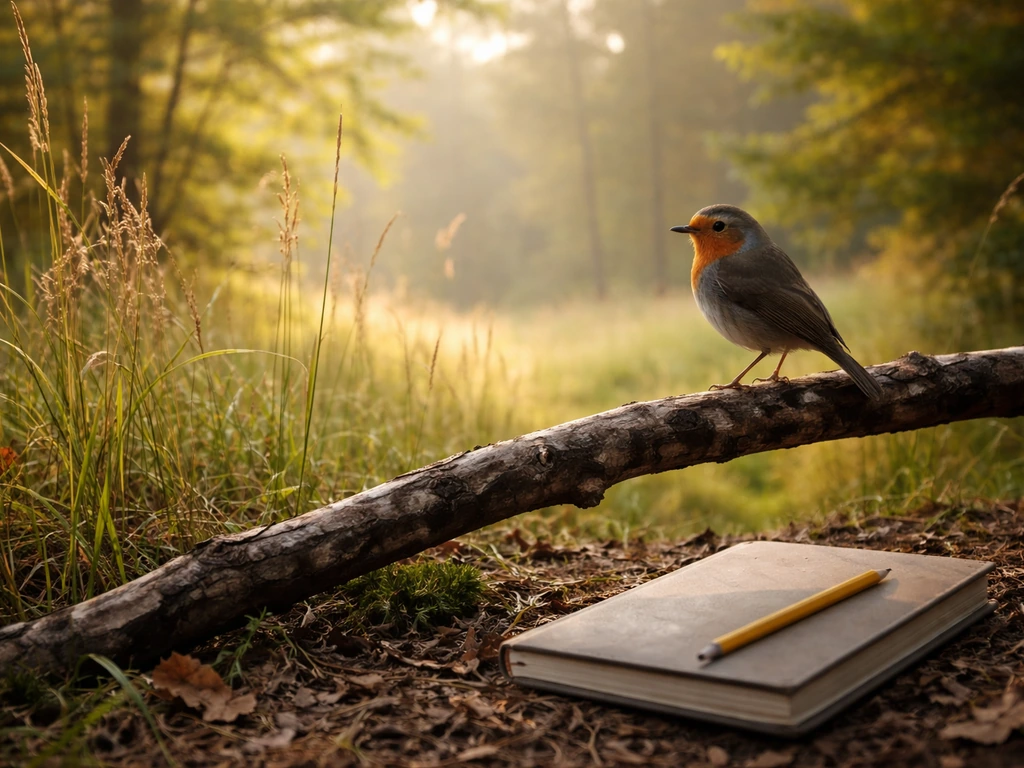
Bird activity meaning depends entirely on which kind of 'bird activity' you're asking about. If you're watching real birds outside your window right now, the answer is usually behavioral and seasonal: singing signals territory or mate-finding, flocking signals safety in numbers, and sudden bursts of movement after a storm signal birds recovering and resuming normal routines. If you're chasing a spiritual or omen-based reading, different cultures have very specific traditions around what kinds of bird actions are said to mean. And if you stumbled onto a phrase like 'bird-dogging' or 'bird-brained,' those are idioms with no connection to actual bird behavior. Let's untangle all three so you know exactly where you stand.
Bird Activity Meaning: What You See, Hear, or Dream

Marcus Holloway
19 Jun 2026
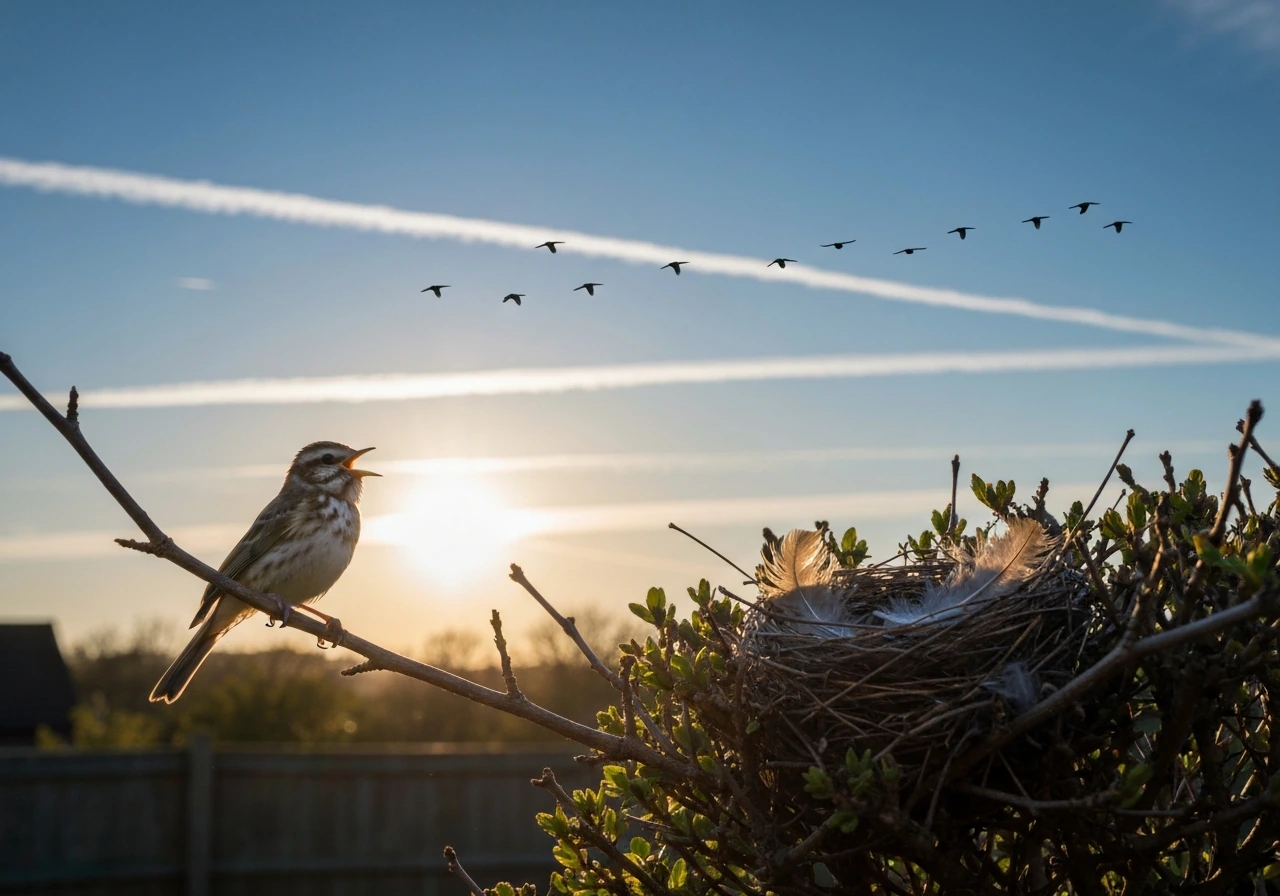
Which kind of bird activity are you actually asking about?
This question comes up in three genuinely different contexts, and mixing them up leads to frustration fast. The first is plain naturalist observation: you see birds doing something unusual outside and want to know what it means biologically. The second is spiritual or symbolic interpretation: you had a bird encounter that felt meaningful, or you're curious what different traditions say about certain bird behaviors. The third is linguistic: you're trying to decode a bird-based phrase or idiom and need a plain-English definition.
The practical test is simple. Ask yourself: is there an actual bird in front of you, or are you working from a phrase, a dream, or a cultural reference? If there's a real bird, start with the behavioral explanation before reaching for symbolic ones. If it's a phrase or dream, skip straight to the idiom and symbolism sections. That order saves a lot of unnecessary mystification.
What singing, flocking, circling, and sudden activity are actually telling you
Singing and the dawn chorus
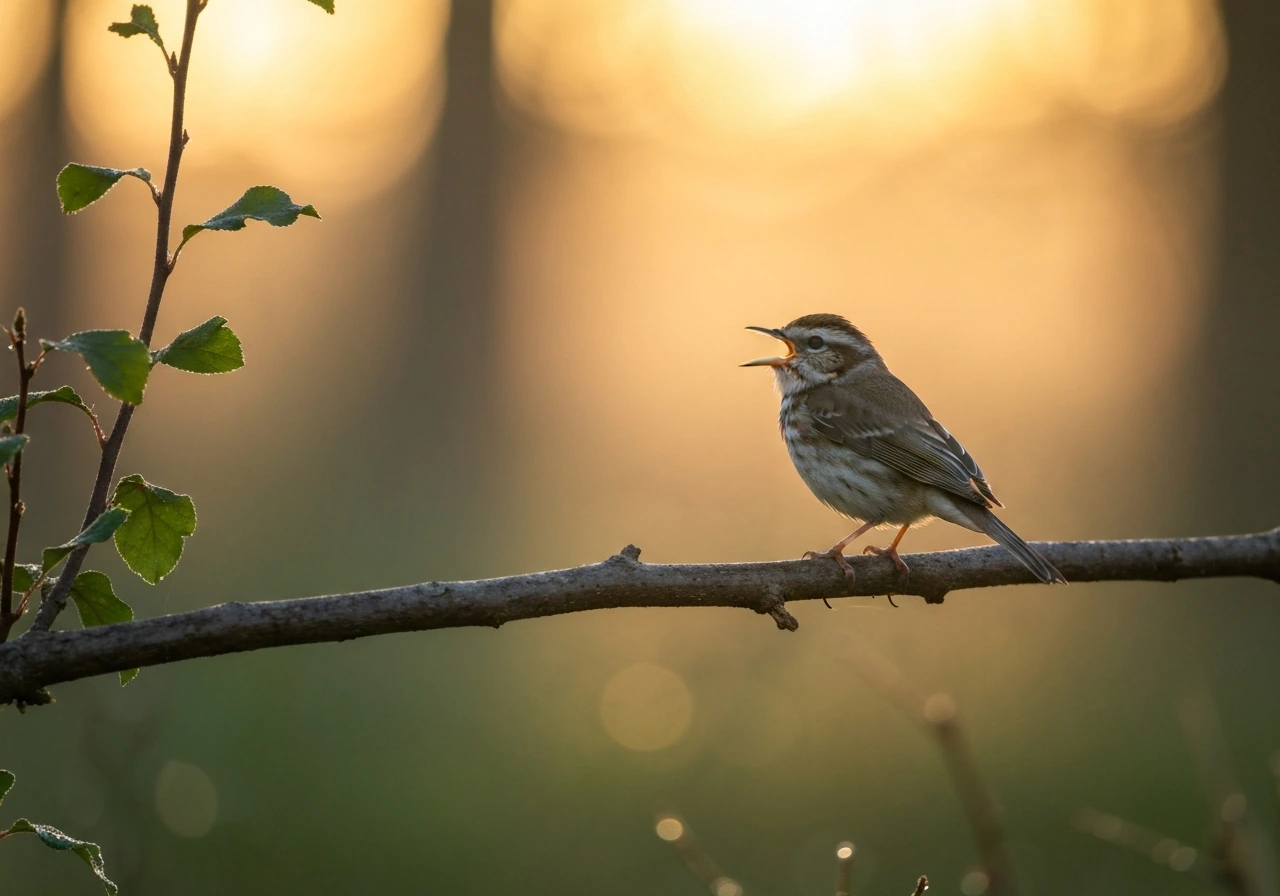
That wall of birdsong early in the morning, especially from roughly March through May in the US and Canada, is called the dawn chorus. Peer-reviewed research confirms the two main functions are mate attraction and territorial defense. Male birds singing loudest and earliest are essentially advertising fitness to potential mates while simultaneously warning rivals to stay out. National Geographic notes that both sexes participate in some species, though males typically dominate. If you're hearing intense singing at dawn and wondering whether something is wrong, nothing is: it's one of the most normal, healthy signs of a functioning local bird population.
Flocking
Large gatherings of birds moving together have a straightforward explanation rooted in survival. Audubon describes the core advantage as 'safety in numbers': a predator has a much harder time isolating and catching one bird out of hundreds moving in coordinated waves. Flocking is most visible during migration and in the winter months when food sources concentrate birds in specific areas. If you see a massive flock swirling and shifting shape over a field or treeline, that fluid motion is a collective antipredator response, not a sign of distress.
Circling and mobbing
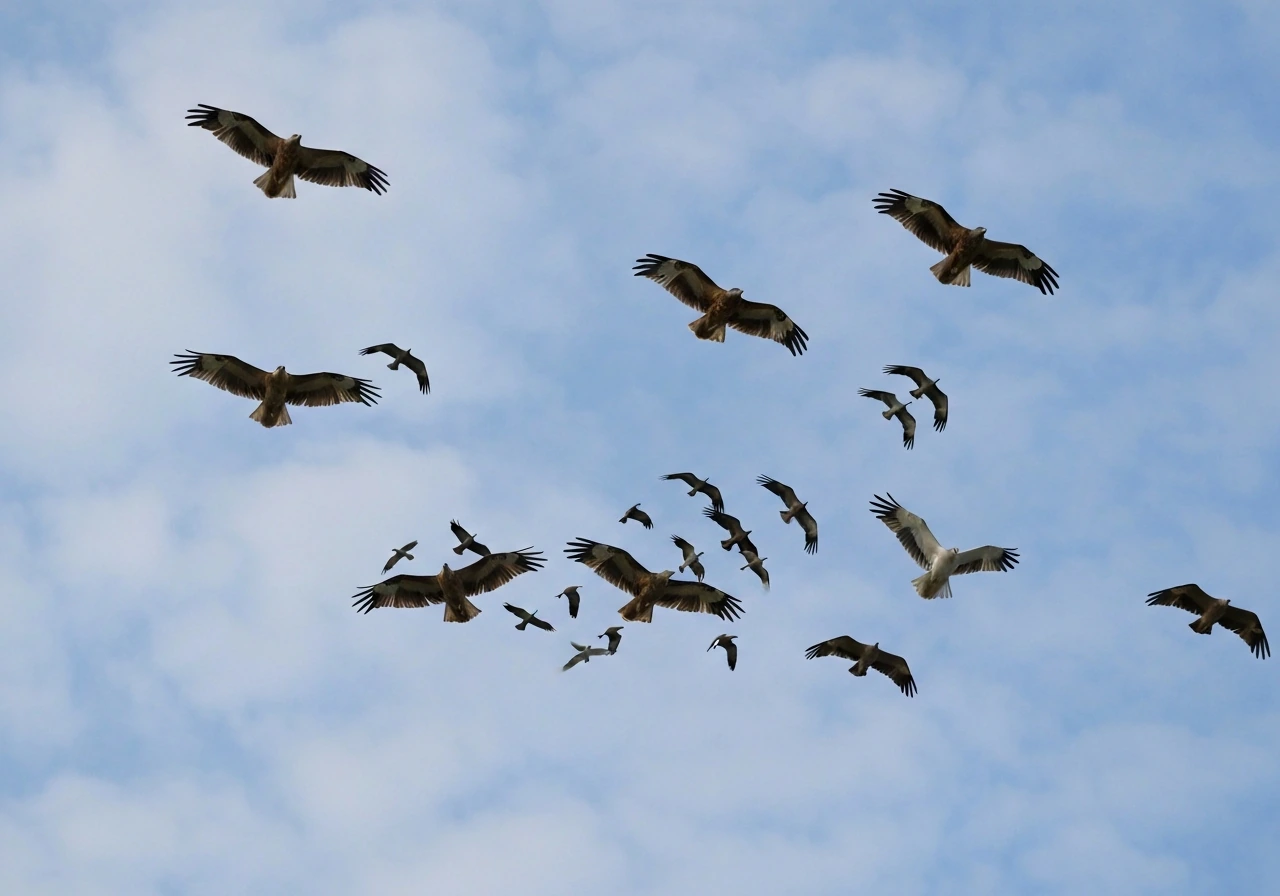
Birds circling overhead, especially raptors like hawks and vultures, are typically riding thermal air currents to gain altitude with minimal effort. That's energy efficiency, not ceremony. But when you see smaller birds dive-bombing or harassing a larger bird, that's mobbing: a documented behavior where small birds collectively drive a potential predator away from nesting territory or young. All About Birds confirms that mobbing rarely harms either party; the point is to annoy the larger bird into leaving. If crows are pestering a red-tailed hawk in your backyard, they're running security, not causing a crisis.
Sudden activity after a storm
A burst of bird activity after rain, wind, or a cold front is almost always birds returning to their normal feeding and socializing routines after hunkering down during bad weather. blank" rel="noopener noreferrer">All About Birds notes that small birds ride out storms by perching in sheltered spots and conserving energy. Once conditions clear, they have ground to make up: foraging, re-establishing positions, and vocalizing. What looks like an unusual frenzy is really just catch-up behavior. It's worth noting that time of day also matters here; USGS research on bird censusing highlights that bird activity peaks reliably at certain hours, so an apparent surge after a storm might partly reflect that the storm ended right when birds would naturally be active anyway.
Nesting, feeding, preening, and molting: reading the season
Nesting
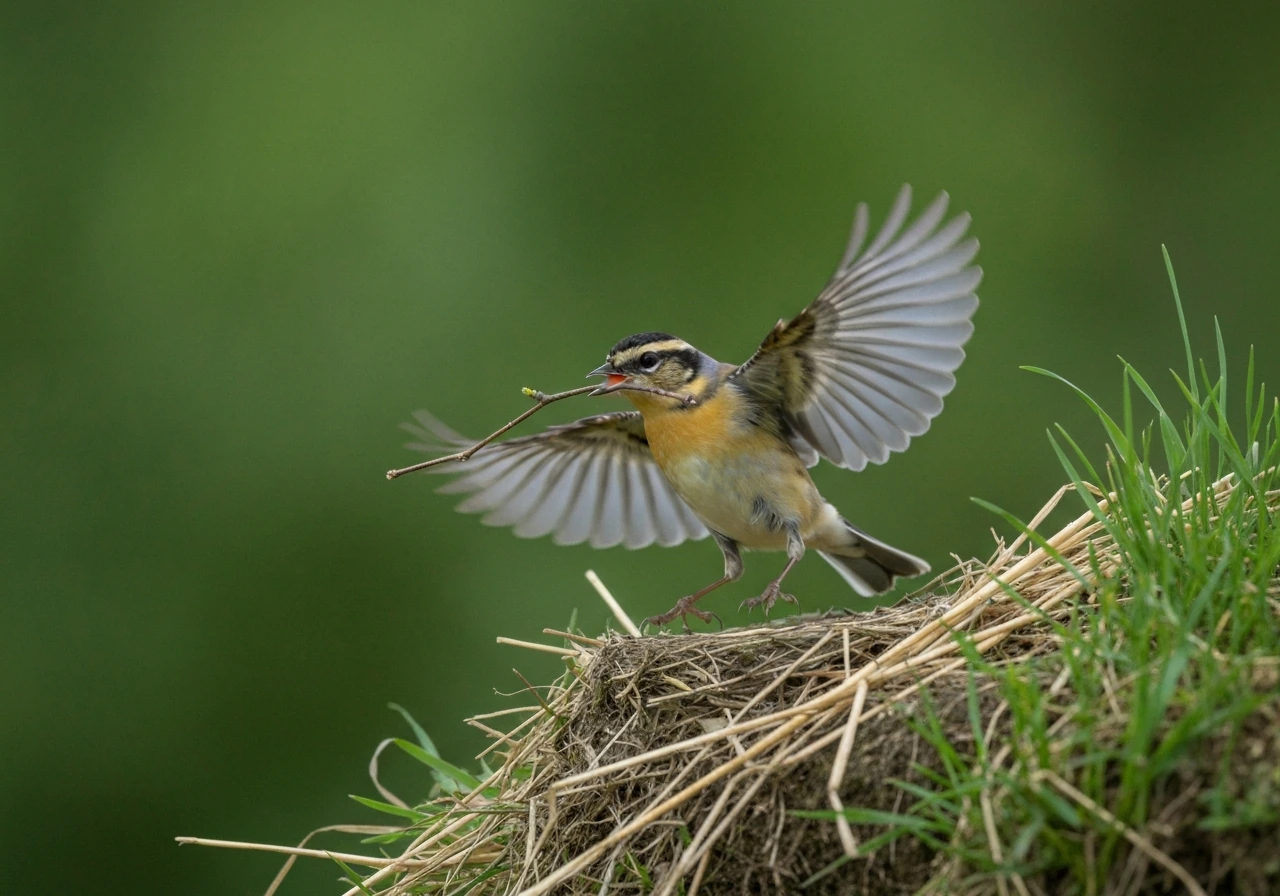
Nest building is a spring and early summer signal almost everywhere in the Northern Hemisphere. If you're watching a bird repeatedly carry grass, twigs, or mud to the same spot, it's constructing a nest. This is a healthy, normal behavior that means the bird has found suitable habitat and is preparing to breed. The main practical concern for most people is whether to interfere. You shouldn't: disturbing an active nest can cause abandonment and, in many countries, is illegal under migratory bird protection laws.
Feeding and foraging
Heavy feeding activity at birdfeeders or in yards typically follows a seasonal logic. Spring and fall migration brings species that don't normally visit. Winter concentrates resident birds because natural food sources thin out. A yard suddenly full of birds isn't mysterious; something about that spot (shelter, food, water) is meeting a need. If you see birds gathering seeds aggressively or fighting at feeders, that's normal competitive foraging. If a bird appears to be struggling to eat, drooping, or standing still on the ground, that's a different situation covered in the next section.
Preening
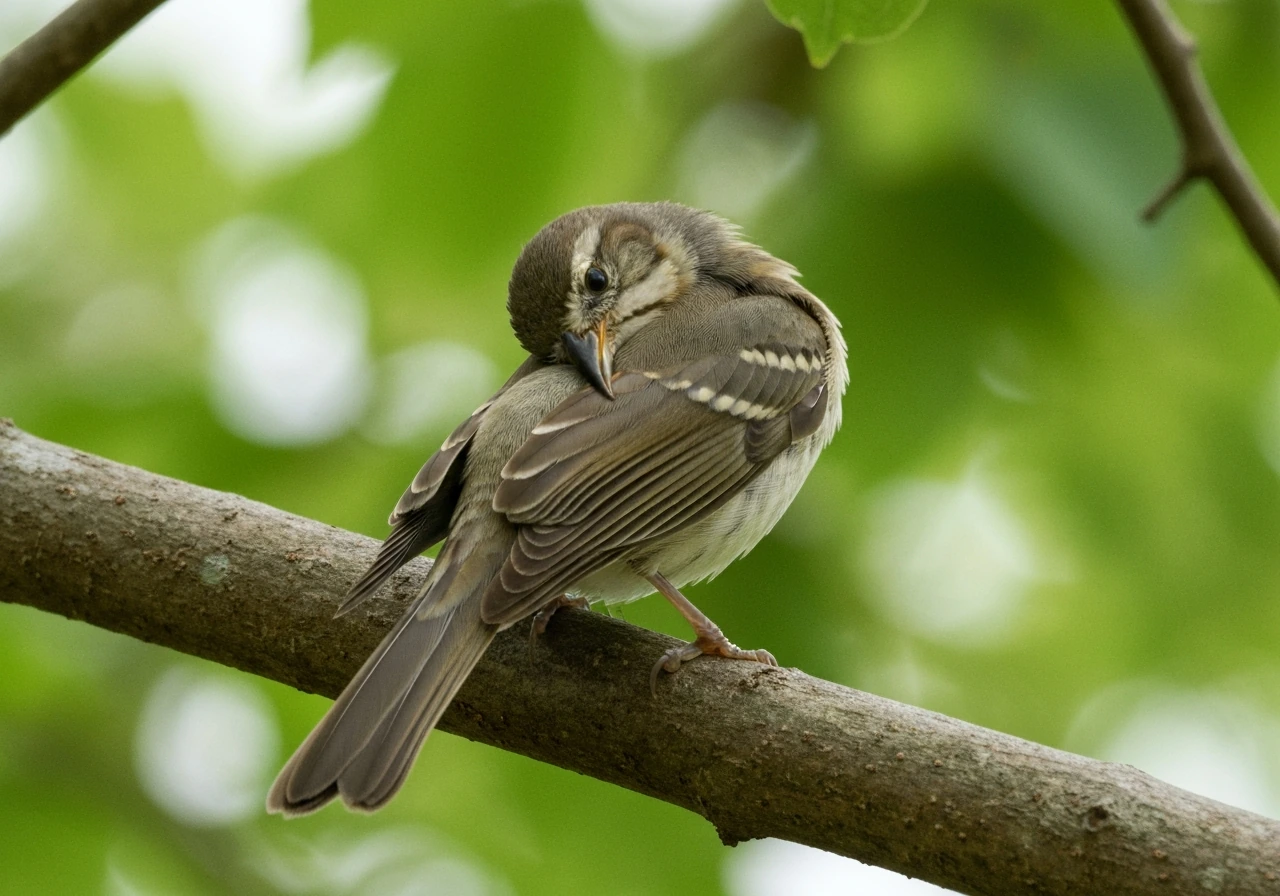
Preening is a bird arranging and maintaining its feathers using its beak. It's a sign of a healthy, calm bird. Birds that feel threatened don't preen; they stay alert. A bird sitting on your fence and methodically working through its feathers is comfortable and doing essential maintenance work, distributing oils from a gland at the base of the tail across the feathers to keep them waterproof and functional. Extended preening is a good sign, not a cause for concern.
Molting
Molting is the process of shedding and replacing feathers, and it can make birds look genuinely alarming to people who don't recognize it. A robin missing most of its head feathers in late summer is almost certainly molting, not diseased. Most songbirds molt once or twice a year, typically after breeding season, when the energetic demands of raising young have passed. Flight feathers often molt in a staggered pattern so the bird retains the ability to fly throughout the process. If a bird looks patchy or ragged but is behaving normally (foraging, alert, flying), molting is the most likely explanation.
Birds at your home: windows, porches, and lights
This is one of the most common reasons people search for bird activity meaning, and the explanation is almost always physical rather than symbolic. Birds collide with windows because glass reflects sky and trees, making it look like open space. They gather at porches and lights at night because insects cluster around artificial light, and the birds follow the food. These are practical problems with practical solutions.
Window strikes: what to do right now
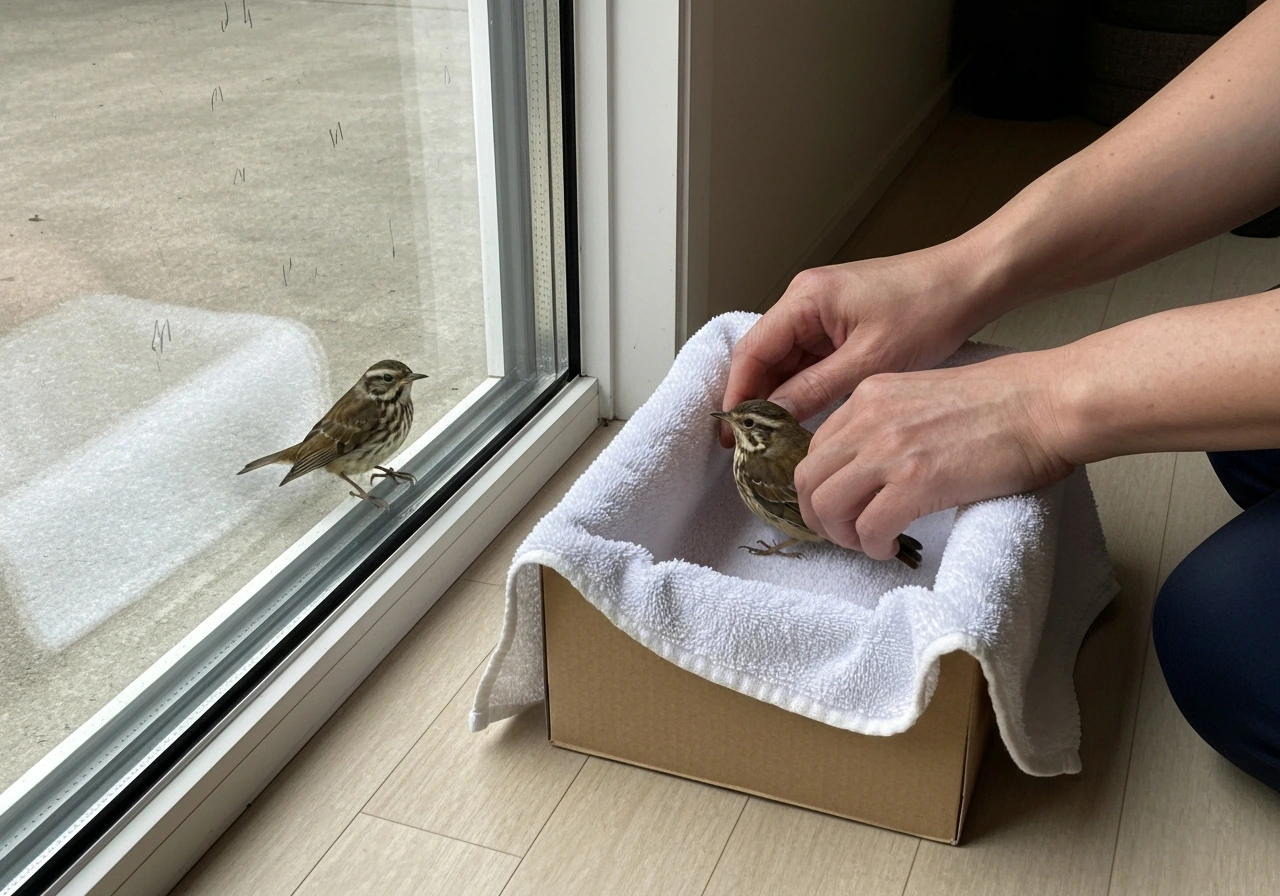
If a bird just hit your window and is sitting stunned on the ground, here's the immediate protocol recommended by the Wildlife Center of Virginia and confirmed by Tufts Cummings Wildlife Clinic: place the bird gently into a shoebox or unwaxed paper bag (not a plastic bag), keep it in a warm, quiet, dark place, and do not offer food or water. If it recovers within a couple of hours and appears alert and upright, you can release it. If it doesn't recover, shows visible injury (blood, swelling, labored breathing, eyes that won't stay open), or you're uncertain, contact a licensed wildlife rehabilitator or veterinarian. The Alaska Department of Fish and Game adds: report dead or ill birds that aren't clearly tied to a window strike to your local wildlife hotline, as clusters of unexplained deaths can signal disease.
Preventing collisions
Both the U.S. Fish and Wildlife Service and USGS confirm that window collisions are a significant and largely preventable threat to birds. The most effective approaches include applying window film, tape patterns, or exterior screens that break up the reflective surface and signal to birds that glass is there. Reducing interior lighting at night, especially during migration season (spring and fall), helps because light attracts birds and increases collision risk. Sun shades and awnings on the outside of windows reduce reflection during the day. These are inexpensive fixes that make a real difference.
Repeated visits to porches or specific spots
A bird returning to the same porch, window ledge, or spot repeatedly is usually doing one of three things: defending a territory it can see reflected in the glass (a common spring behavior where the bird thinks it sees a rival), foraging in an area with reliable food or insects, or, more rarely, finding a sheltered roosting spot. The territorial reflection behavior, where a bird pecks or throws itself against a window for days, looks distressing but rarely injures the bird. Covering the reflective surface with paper or screen from the outside typically resolves it within a week once the bird stops seeing a 'rival.'
Spiritual and cultural meanings of bird activity
Bird behavior has been read as meaningful across almost every culture in recorded history, and it's worth knowing the tradition even if you approach it skeptically. The ancient Roman practice of augury, documented in sources like Cicero's De divinatione and described by Britannica, was literally the art of interpreting bird behavior to divine the future. Trained augurs read the direction of bird flight, the species involved, and the nature of the call to make civic and military decisions. Ornithomancy, the broader term for reading omens from birds' actions and cries, appears across Greek, Roman, and many Indigenous traditions.
What different kinds of activity are traditionally said to mean varies widely by culture and species. A few common interpretive threads that appear across multiple traditions:
- A bird singing near or at a home is often read as a sign of good news or incoming visitors in European and Asian folk traditions.
- A bird flying into a house (especially through a window) is considered an ill omen in many Western folk traditions, though the same event in some Indigenous traditions signals a message from ancestors.
- Circling birds, particularly ravens or crows, are associated with death or change in Northern European and Celtic traditions; the same behavior in other contexts simply reflects scavenging behavior around a carcass.
- A bird landing on you or showing unusual tameness is often interpreted as a spiritual encounter or message in Native American and many African traditions.
- Owls calling at night carry negative omens in many cultures, particularly in Latin American and South Asian folklore, though they're straightforwardly nocturnal hunters in ornithological terms.
The responsible way to engage with these readings is to treat them as layers of meaning rather than predictions. You can find a bird encounter genuinely moving or symbolically resonant without claiming to know the future. If a hawk appearing at a difficult moment feels like a prompt to pay attention, that's a valid personal response. Just don't skip a vet visit for a genuinely injured bird because the encounter feels spiritually significant.
Bird idioms and slang: a completely separate category
If you're looking up 'bird activity meaning' because you encountered a phrase rather than an actual bird, the behavioral and symbolic information above doesn't apply. If your goal is specifically the bird culling meaning, that refers to how the term is used in conservation and policy discussions. Bird-based idioms have their own etymology and meanings entirely disconnected from ornithology.
| Expression | Actual Meaning | Connection to Real Birds |
|---|---|---|
| Bird-dogging | To closely watch someone or something; to persistently pursue (Merriam-Webster) | None: borrowed from hunting dogs that track birds, but used for human behavior |
| Bird-brained / birdbrained | Stupid or silly (Cambridge Dictionary); attested from 1910 (Etymonline) | None: reflects outdated assumptions about bird intelligence, not actual bird cognition |
| A bird in the hand is worth two in the bush | Hold onto what you have rather than risk it for something potentially better (Phrases.org.uk) | None: birds are metaphorical; this is purely a lesson about risk |
| Bird law | Popularized as slang for absurd or nonexistent legal reasoning (from the TV show 'It's Always Sunny in Philadelphia') | None: not a real legal category |
| For the birds | Worthless, trivial, or not worth considering | None: idiomatic dismissal with no behavioral counterpart |
The key distinction: when you hear or read these phrases, you're working with language history and cultural shorthand, not bird behavior. Merriam-Webster's entries for 'bird-brain' and 'bird-dog' make clear these are independent idiomatic usages. Looking up the behavior of actual birds won't help you decode them.
Your checklist: how to interpret bird activity responsibly
Run through these steps in order and you'll reach the right interpretation almost every time. If you are trying to understand bird classes meaning, focus on what each category of behavior or context suggests rather than treating it like a fixed prophecy.
- Identify what you're actually dealing with: a real bird, a phrase, a dream, or a cultural reference. Each path requires a different approach.
- If it's a real bird, note the behavior specifically: is it singing, flocking, circling, striking a window, nesting, preening, molting, or acting distressed? The specific behavior narrows the explanation dramatically.
- Add seasonal and time-of-day context: spring singing at dawn = dawn chorus; fall flocking = migration or wintering; ragged feathers in late summer = molt. Season explains most 'unusual' bird activity.
- Check for distress signals before anything else: blood, visible injury, inability to fly, eyes closed, labored breathing, or a bird lying on its side means call a wildlife rehabilitator now, not later.
- If there's a window strike with no obvious injury, follow the shoebox protocol: dark, quiet, warm, no food or water, give it two hours. If no recovery, get professional help.
- To prevent future window collisions, apply exterior tape patterns, screen, or window film, and reduce interior lights at night during migration season (spring and fall).
- If you want the spiritual or cultural layer, look up the specific behavior (a bird flying into the house, an owl calling, a hawk landing nearby) rather than 'bird activity' in general. The traditions are very behavior-specific.
- If it's a phrase or idiom, treat it as a language question and consult a dictionary or phrase database rather than a bird behavior guide.
- If you're interested in systematic bird observation in your area, look into formal counting methods like bird censuses or local colony tracking, which give you a baseline for what's genuinely unusual versus seasonal norms.
Bird activity meaning is rarely mysterious once you match the right framework to the right situation. A bird colony definition refers to a group of birds that nest and live close together, often for protection and breeding success. Real birds follow biological logic that seasons, weather, and the time of day explain cleanly.
A complete count over the entire study area within a specified time period is what the “true census” concept refers to, while counts from parts of an area are treated as samples that require extrapolation-based estimates “true census” vs counts from parts of an area. Cultural and spiritual readings offer a meaningful interpretive layer on top of that, but they work best when you're not using them to explain away a bird that needs medical help.
And if someone just threw a bird idiom at you in conversation, none of the above applies: that's purely a language question, and the answer lives in a dictionary.
FAQ
How can I tell the difference between normal bird activity and something that’s genuinely wrong?
Yes. If you see the same species repeating the same behavior at the same spot, note time of day and season, then check whether it matches a biological pattern (nesting, feeding, guarding young, or window-reflection territoriality). If the behavior is paired with injury signs (blood, labored breathing, inability to fly), switch to medical action rather than interpretation.
Can I use spiritual bird meaning as guidance without missing real-world problems?
If you use symbolism as a personal prompt, define a practical next step that does not replace care. For example, treat the encounter as a reminder to check on window hazards, reduce outdoor lighting, or contact a rehabilitator only when there is an actual injury.
If the bird seems okay after a window hit, should I still do anything?
After a window strike, a bird can sometimes appear alert but still have internal injuries. Watch for abnormal breathing, persistent wobbling, or refusal to perch within a few hours. If you cannot get a reliable release outcome, contact a licensed wildlife rehabilitator for assessment.
What feeder or yard behavior suggests illness rather than normal competition?
Feeding behavior changes when a bird is stressed by competition or scarcity. As a rule, aggressive pecking and short chases are usually normal, but repeated collisions with the ground, lethargy, or visible drooping can indicate illness, starvation, or injury. Stop offering food until you can identify what is happening and consider contacting local wildlife resources if symptoms persist.
Why do smaller birds harass hawks or other birds, and does it mean the predator is injured?
Mobbing is often most intense around nesting season, when small birds defend territory or young. If mobbing targets the same larger bird repeatedly, it is usually a defense response, not a guarantee the larger bird is sick. Still, if the larger bird is grounded or acting impaired, that is a separate issue.
How do weather and time of day change bird activity meaning?
Yes. Several “meanings” people read into activity are actually timing and location effects. For example, dawn chorus is expected in spring, migration flocks spike during migration corridors, and post-storm bursts often align with natural daily activity windows. Check the date, weather, and whether it’s dawn, midday, or dusk before concluding it has symbolic significance.
What should I do if a bird keeps returning to the same window even after I try to help?
If birds are constantly trying to get at a specific window, reflection pecking can continue until the “rival image” stops. External solutions generally work best, cover reflective surfaces from outside, and avoid solutions that only change reflections from indoors. Plan for several days of adjustment and retest after the birds stop returning to the same exact spot.
If I saw birds in a dream, how do I interpret bird activity meaning in a practical way?
For dreams, “bird activity meaning” is usually metaphorical rather than predictive. A practical approach is to link the dream action to your waking context, such as anxiety (constant flitting), protection needs (circling near you), or change (migration). If the dream includes panic or recurring distress, consider it a cue to address underlying stress rather than interpret it literally.
What if someone tells me bird activity meaning based on an idiom they heard?
Many idioms get misread as if they describe real birds. If you heard “bird-brained” or “bird-dog,” treat it as language, not field observation. The safest next step is to look up the phrase’s definition and usage in context, then ignore bird-behavior explanations.
Why are birds gathering around my porch lights, and how can I reduce it humanely?
Birds around your porch or near lights are often responding to insect concentration. Try turning off unnecessary outdoor lights at night, using motion-activated lighting, and reducing glare with warm, shielded fixtures. These changes usually reduce bird congregation without harming them.
Next Article
Bird Sighting Meaning: How to Interpret What You Saw
Interpret bird sighting meaning with context, behavior, symbolism, and practical steps to identify the species and next