When a bird does something specific, it almost always means something concrete and biological first: it's grooming, stressed, defending territory, courting a mate, or signaling danger to the flock. Once you understand what the behavior is doing for the bird's survival, the cultural and spiritual meanings people attach to it start making a lot more sense too. That same approach also helps you interpret what people call the bird course meaning of the behavior understand what the behavior is doing for the bird's survival. This guide walks through the most common bird behaviors you're likely to notice, explains what they actually signal in the moment, and helps you tell normal activity from signs that something is genuinely wrong.
Bird Behavior Meaning: What Preening, Molting, Nesting Mean

Marcus Holloway
28 Apr 2026
Quick translation: how to read bird body language
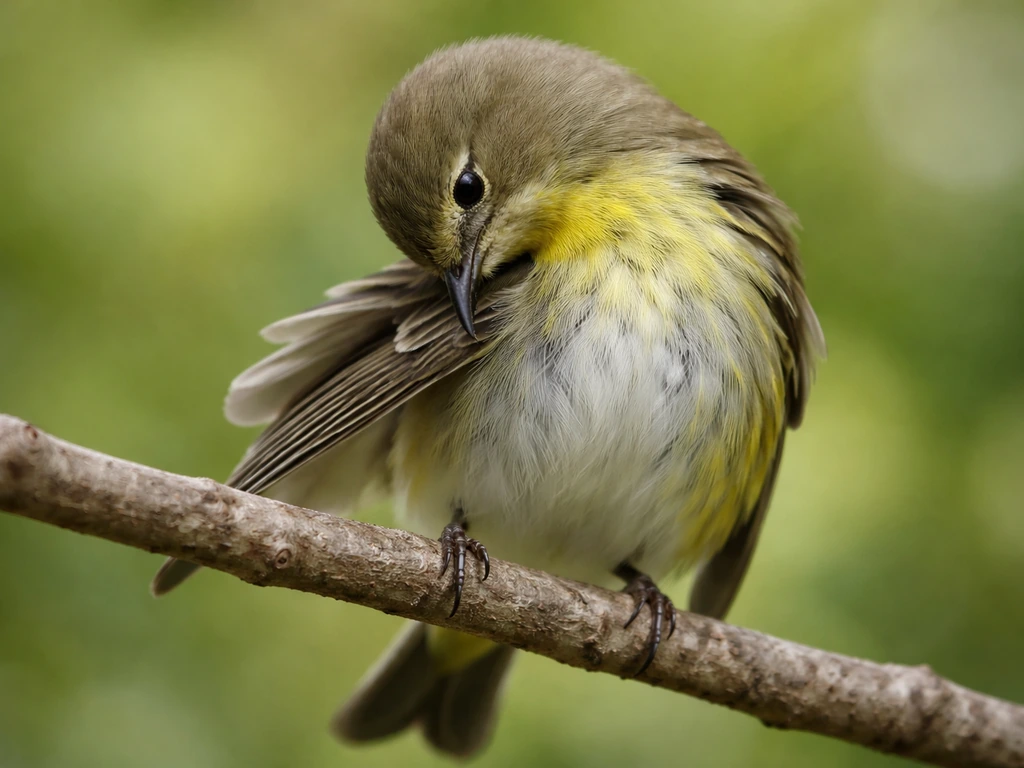
Birds communicate almost entirely through posture, movement, and sound. Once you know what to look for, reading a bird becomes surprisingly straightforward. The key is watching the whole bird at once, not just one feature.
| What you see | What it usually means | When to look closer |
|---|---|---|
| Fluffed feathers, eyes half-closed, sitting still | Sick or cold; in cold weather brief fluffing is fine, but sustained fluffing with lethargy is a clinical warning sign | If it persists more than a few minutes in warm weather |
| Head tucked under wing | Resting, comfortable, feels safe | Only concern if the bird can't rouse when approached |
| Rapid head-bobbing | Alertness, attention, or crop-related feeding behavior in some species | Unusual if paired with stumbling or disorientation |
| Wings drooping, sitting on ground | Could be exhaustion, window strike injury, or shock | Always warrants a closer look; don't assume it will shake off |
| Tail pumping or fanning | Excitement, agitation, or territorial display depending on species | Paired with alarm calls = genuine threat nearby |
| Crouching low, feathers slicked flat | Fear or submission; often seen when a predator is close | Normal response; watch for what triggered it |
| Puffed chest, wings slightly spread | Dominance display or courtship | Normal; back away to reduce stress on the bird |
Context is everything. A fluffed sparrow on a freezing January morning is just keeping warm. That same posture in July, combined with sitting on the ground and closed eyes, is a bird that needs help. Always factor in temperature, time of year, and whether the bird reacts normally when you approach before drawing a conclusion.
Behavior deep-dive: preening, comfort vs stress signals
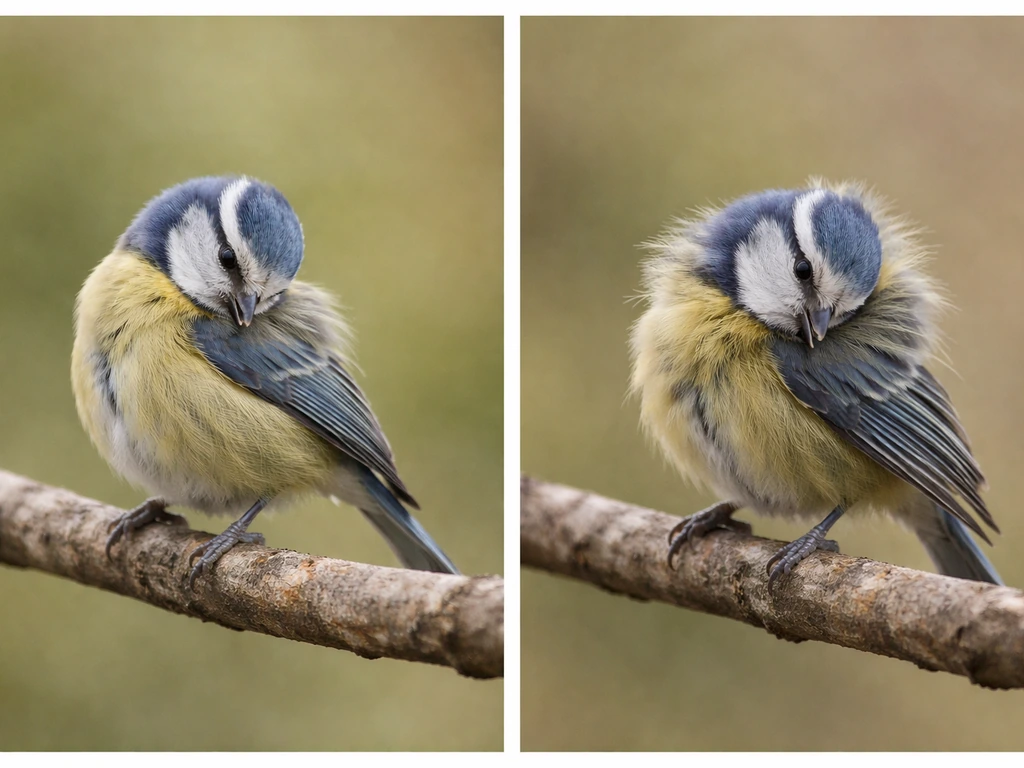
Preening is one of the most misread behaviors in birds. People often assume a bird grooming itself is bored or anxious. In reality, preening is essential maintenance. Birds run their feathers through their bills to realign the tiny interlocking barbs that keep feathers aerodynamic and waterproof. They also spread preen oil (from the uropygial gland near the tail) to condition feathers and, in some species, suppress bacteria and fungi. A bird that preens regularly is a healthy, comfortable bird.
During molt, preening does an extra job: it helps remove the blank" rel="noopener noreferrer">protective waxy sheaths from newly growing pin feathers (also called blood feathers), which lets the new feather unfurl properly. You might see a bird working carefully at a specific spot on its wing or back, not because something is wrong, but because a new feather needs help emerging. Social birds often engage in allopreening, where they groom each other, particularly in areas they can't reach themselves, like the back of the head. This is a bonding behavior and a clear comfort signal.
When preening crosses into a problem
Overpreening, or feather-destructive behavior, looks different from healthy grooming. The bird isn't maintaining feathers anymore; it's damaging them. This can be triggered by skin disease, parasites, pain elsewhere in the body, nutritional deficiency, or chronic stress. The red flags to watch for are bald patches (especially on the chest, under the wings, or around the base of the tail), visible skin irritation or redness, broken feather shafts, and a bird that preens compulsively even when nothing seems to be irritating it. If you see any of those signs in a pet bird or a bird you're observing closely, that's a veterinary or wildlife-rehabber situation, not something to wait out.
- Normal preening: rhythmic, covers all body areas, bird is alert and active in between
- Allopreening: two birds grooming each other, especially at the head and neck, comfort and bonding signal
- Overpreening: repetitive focus on one area, visible feather damage, bald spots, skin changes
- Comfort signals to look for: relaxed posture, one-leg standing, soft eye, slow blinking
- Stress signals to look for: repetitive movements, feather-pulling, pacing, exaggerated startle response
Molting and feathers: what's normal and what's not
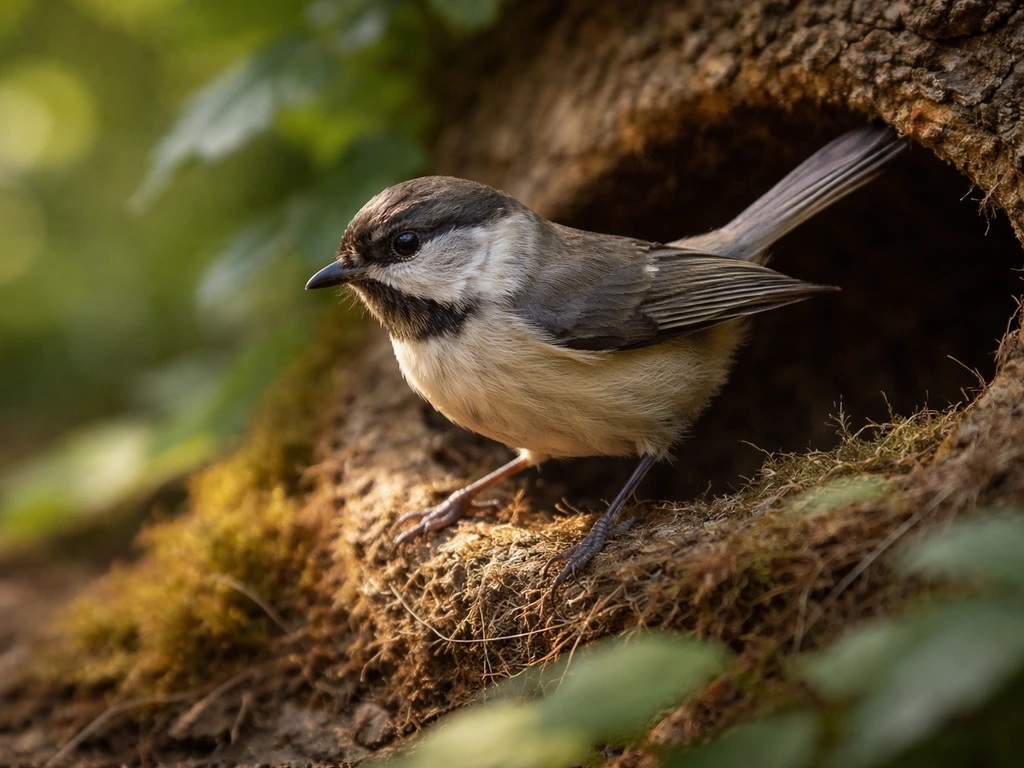
Molt is the periodic process by which birds replace worn-out feathers with new ones. It happens because feathers, unlike skin or hair, can't self-repair once they're damaged. A complete molt replaces every feather over the course of weeks or months. A partial molt replaces only certain feathers, often just the body feathers or flight feathers, depending on the species and season. Most songbirds go through at least one complete molt per year, typically in late summer after breeding.
During a normal molt, you might notice a bird looking a bit ragged, with gaps in the wing or tail, or pin feathers visible on the head (those small, dark, spine-like structures poking through). This is completely normal. The bird is manufacturing new feathers, which requires significant energy, so it may be slightly less active than usual. That's not illness; that's biology doing its job.
Signs that something is actually wrong
Abnormal molting looks noticeably different from the routine version. Instead of an orderly, symmetrical pattern of feather loss and regrowth, you see bald patches with no new feathers coming in, broken or deformed feathers, bleeding pin feathers (which are painful and serious), weight loss alongside feather loss, lethargy, and behavior changes. Parasites and certain diseases can cause feather loss that mimics molt but follows none of the normal patterns. If feather loss is patchy, asymmetrical, accompanied by skin changes, or not followed by obvious regrowth, that warrants a closer look from someone with expertise.
| Feature | Normal molt | Abnormal feather loss |
|---|---|---|
| Pattern | Symmetrical, follows species-typical sequence | Patchy, random, or concentrated in one area |
| Regrowth | Pin feathers visible and developing | No new feather growth, or misshapen new feathers |
| Skin | Normal color and texture | Redness, irritation, flaking, or visible parasites |
| Behavior | Slightly reduced activity, otherwise normal | Lethargy, weight loss, loss of appetite |
| Feather condition | Old feathers shed cleanly | Broken shafts, bleeding pin feathers, deformed feathers |
Nesting and parental behavior: courtship, territory, and safety
Nesting season changes everything about how a bird behaves. A normally mild-mannered robin can become aggressive and territorial. A mockingbird that ignored you all winter will now chase you down the street. Understanding what's driving these behaviors makes them much less alarming and, honestly, more impressive.
Courtship displays
Courtship behavior is designed to advertise fitness and establish pair bonds. Depending on the species, this can include elaborate song (often the male's primary tool for attracting a mate and warning off rivals), display flights, puffed plumage, offering food to a potential mate (courtship feeding), building or presenting nest materials, and ritualized postures. When you see a bird singing intensely from the same exposed perch every morning, it's almost certainly advertising territory and mate-readiness at the same time.
Territorial aggression and distraction displays
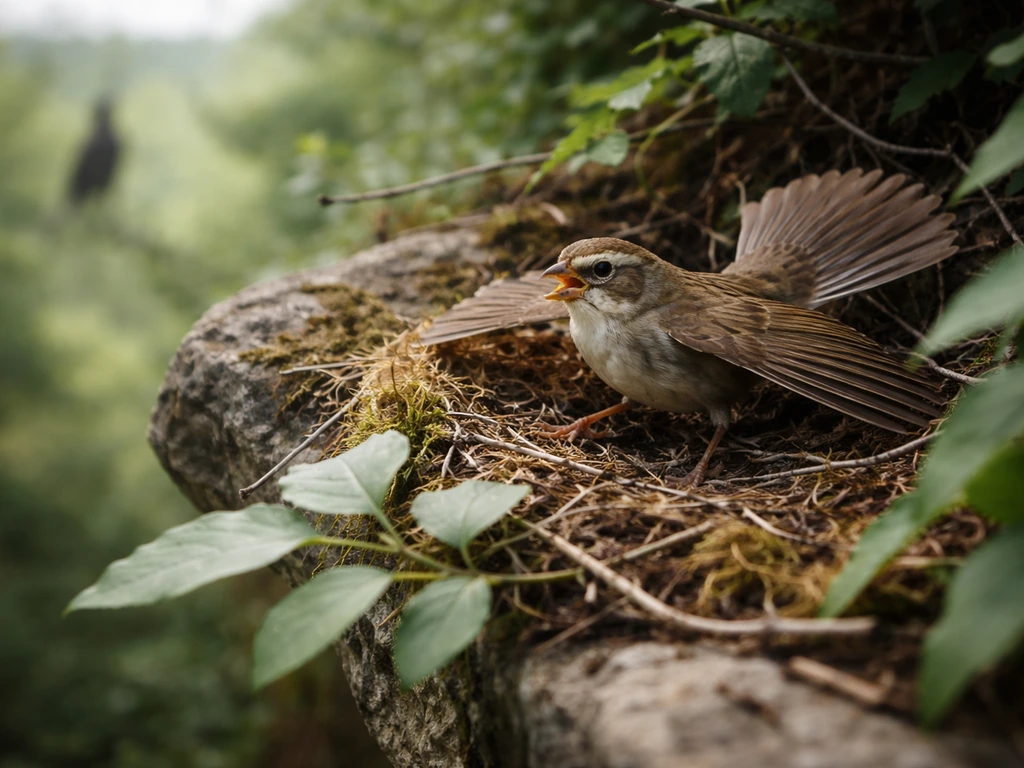
Once eggs or chicks are present, parental behavior shifts from attraction to protection. One of the most striking nest-defense tactics is the distraction display, where a parent bird deliberately draws attention to itself and away from the nest. Ground-nesting birds like killdeer are famous for this: they'll drag one wing along the ground, mimicking an injured bird, to lure a predator or curious human away from eggs or chicks. This is sometimes called a blank" rel="noopener noreferrer">broken-wing display. The bird isn't actually injured; it's putting on a performance under significant stress. The best thing you can do is back away, and the bird will drop the act once you're far enough from the nest.
Aerial mobbing, where smaller birds chase and dive-bomb a larger bird or predator (or occasionally a person who wanders too close), is another defensive tactic you'll see regularly. Crows mobbing a hawk, swallows dive-bombing a cat, hummingbirds harassing a crow twice their size, all of these are coordinated threat responses, not random aggression.
When to leave a nest alone
Most wildlife agencies recommend leaving active nests strictly undisturbed. Nest disturbance can cause parents to abandon eggs or chicks, and in many countries disturbing active nests of native birds is illegal. If you find a nest, observe from a distance and minimize your time nearby. If you find a nestling on the ground, the common advice to 'never touch a baby bird because the parents will reject it' is actually a myth: most birds have a poor sense of smell and will accept a returned nestling. If you can safely see the nest and reach it, putting the bird back is the right move.
Context changes the meaning: species, season, location, one vs many
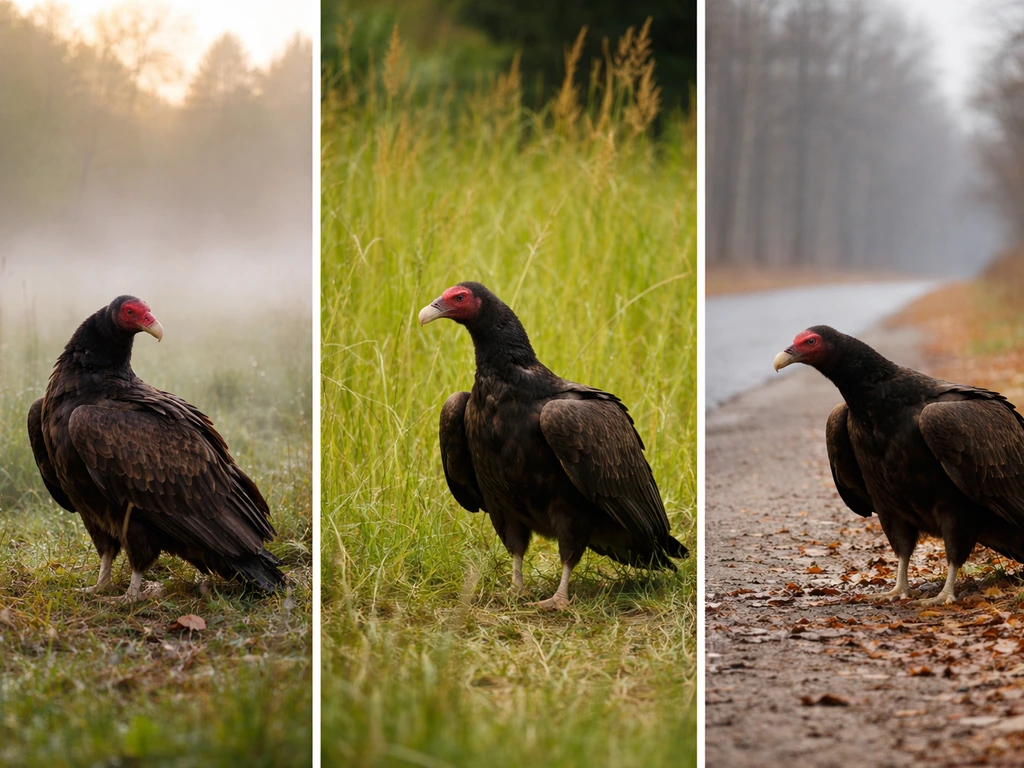
The single biggest mistake people make when interpreting bird behavior is stripping context away from the observation. The same behavior in different situations can mean completely different things.
- Species matters: a turkey vulture circling overhead is not an omen of death; it's using thermal currents to scan for food. A songbird circling low and calling repeatedly is genuinely alarmed.
- Season matters: a bird singing loudly in April is probably establishing breeding territory. That same song in October is more likely a territorial assertion over winter feeding grounds.
- Location matters: a bird sitting calmly on a busy city sidewalk is either injured or unusually habituated to humans. The same behavior in a quiet forest suggests injury or illness.
- One bird vs. many matters: a single bird behaving oddly warrants attention. A flock of birds suddenly flushing in the same direction is responding to a predator, not malfunctioning.
- Time of day matters: dawn song is normal territorial behavior. Unusual calling in the middle of the night from a species that doesn't normally call at night can indicate a disrupted roost or predator pressure.
- Weather matters: birds hunker down before storms, feed heavily before cold fronts, and migrate in large numbers on clear nights in autumn. These are adaptive responses, not distress signals.
This context-dependence is also why the site's coverage of behavioral definitions across species is genuinely useful: a term like 'preening' or 'nesting' means something specific ornithologically, but what it looks like in practice, and what it means for that individual bird, shifts with every variable around it.
Spiritual and cultural symbolism of common behaviors (and how it differs from biology)
People have been reading meaning into bird behavior for as long as there have been people. Roman augurs watched the flight patterns of birds to divine military strategy. Bird colonel meaning is an example of how people apply cultural interpretations to observed bird behavior. Native American traditions assign specific birds and their behaviors deep spiritual significance. Folk traditions across every continent attach omens, both good and bad, to birds entering homes, birds singing at unusual times, or particular species appearing in dreams. None of that is nonsense; it reflects how central birds have been to human observation of the natural world.
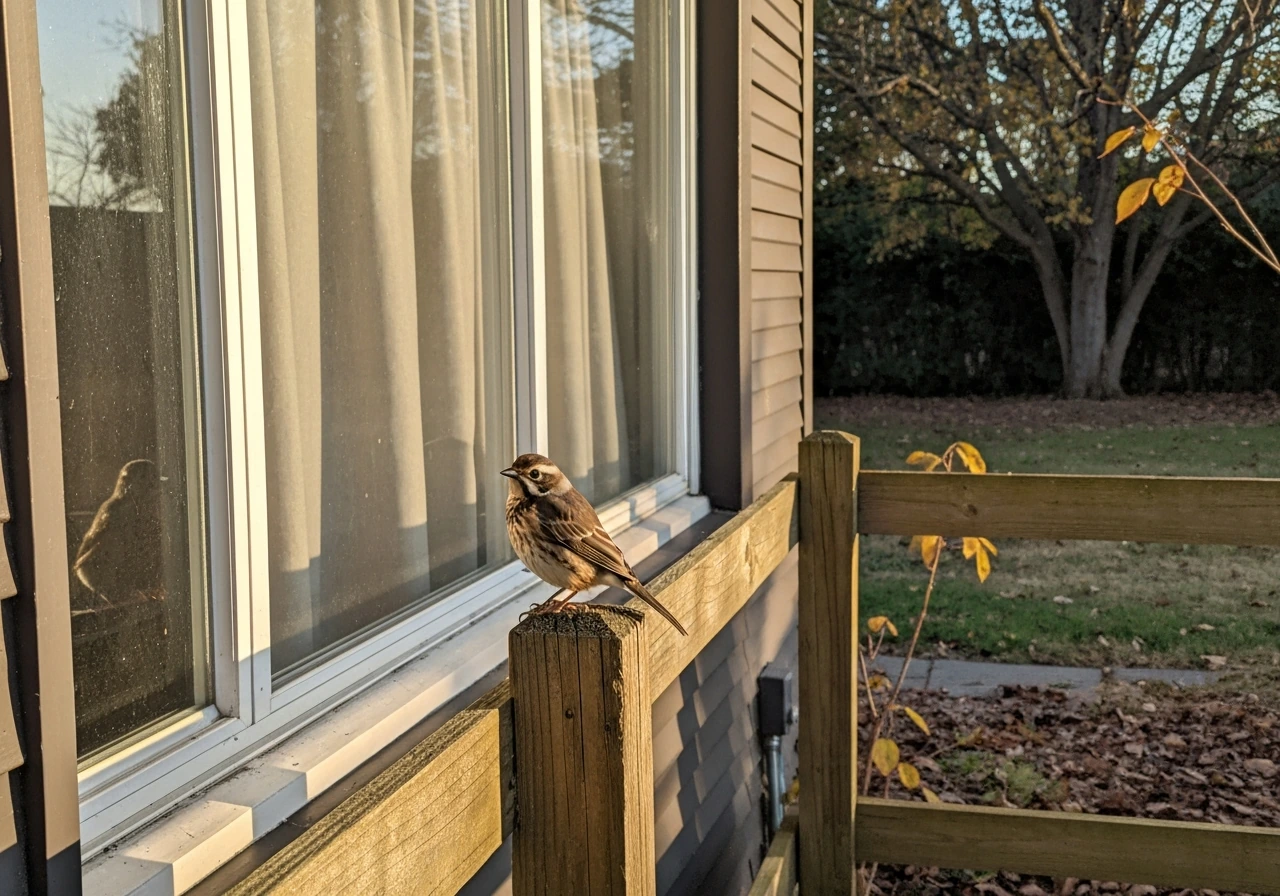
Where things get worth unpacking is when cultural symbolism is treated as a substitute for biological explanation rather than a complement to it. A bird tapping repeatedly at a window is almost certainly seeing its own reflection and responding to a perceived territorial intruder, not delivering a message from a deceased relative. That doesn't make the emotional significance the moment carries for the person watching less real; it just means the biological explanation and the personal meaning can coexist without either canceling the other out. Bird abatement meaning is one example of how people label bird behavior, so it helps to interpret it alongside the situation and the bird's needs.
Some of the most commonly symbolized behaviors have clear biological roots worth knowing: molt and feather loss, symbolizing transformation and renewal in many traditions, does represent a literal biological transformation. Nesting behaviors, associated with home, fertility, and new beginnings cross-culturally, are genuinely about reproduction and shelter. Flocking and murmuration are often read as symbols of community or spiritual movement, and biologically they represent predator avoidance through collective coordination. In each case, the symbolism reflects something the behavior actually does for the bird; the human meaning tracks the natural meaning, even if the two developed independently.
It's also worth noting that bird-related language has embedded behavioral observation into everyday speech. Expressions and idioms involving birds often draw on real behavioral traits: the way specific birds act gave rise to phrases that stuck in the culture long after most people stopped watching birds closely. The symbolic meanings attached to birds in dreams, the slang uses of bird-related terms, and even informal codes involving bird names all have this layered quality where natural history and human meaning are tangled together. If you’ve ever heard people use bird code names, those phrases usually come from this same mix of observation and everyday shorthand informal codes involving bird names.
What to do today: observation checklist, troubleshooting, and when to seek help
If you're trying to make sense of something a bird just did, here's a practical way to work through it quickly.
Quick observation checklist
- What species is it, or what's your best guess? Behavior that's normal for a vulture is alarming in a sparrow.
- What's the time of year? Spring and summer behaviors are almost always tied to breeding. Fall behaviors often relate to migration or territory establishment ahead of winter.
- Is the bird alone or with others? Flock behavior follows different rules than individual behavior.
- Is the bird moving normally? Can it fly, walk, and perch without difficulty?
- Are its feathers in good condition, or do you see bald patches, drooping wings, or visible injury?
- Is it alert and reactive, or does it seem unresponsive to your presence?
- Did something specific happen before you noticed the behavior (a loud noise, a window, a predator)?
- Where exactly is it: on the ground, in a bush, at a feeder, near a road?
Common scenarios and what to do
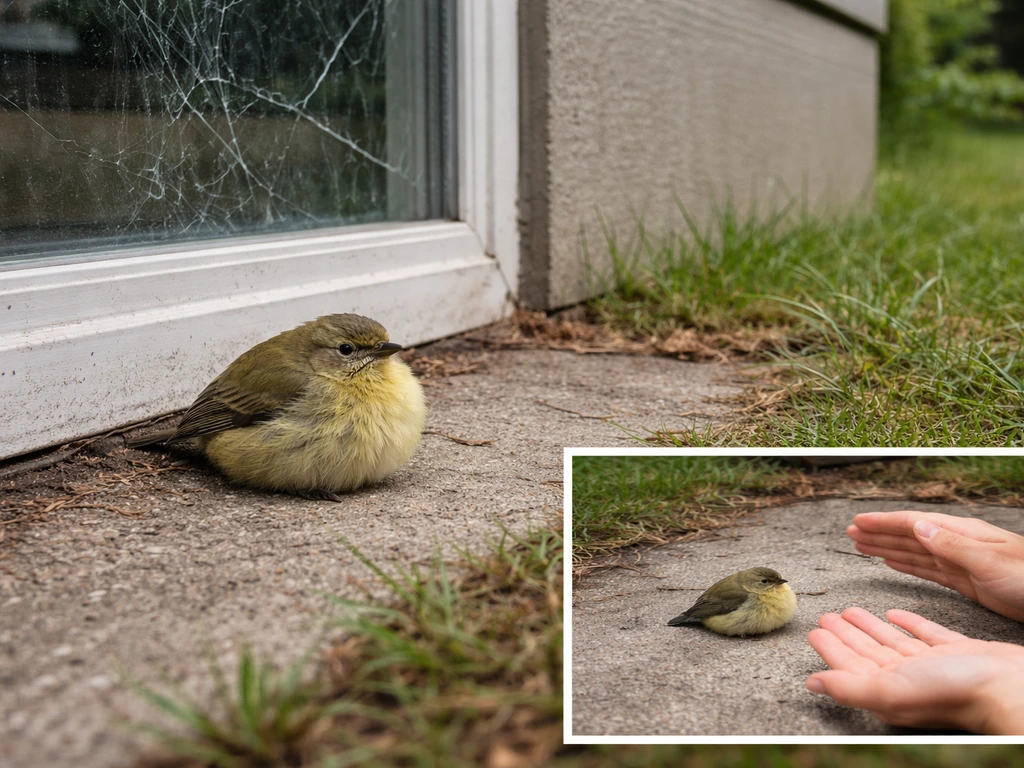
If a bird has hit a window and is sitting stunned on the ground: do not offer food or water, do not handle it more than necessary, and do not assume it will recover on its own. Place it gently in a cardboard box with ventilation holes (no perch needed for a stunned bird) in a dark, quiet spot at room temperature, and contact a licensed wildlife rehabilitator as soon as possible. Window strikes can cause internal injuries that aren't visible; some birds die hours later from those injuries even after appearing to recover. Time matters here.
If a bird appears to be sick (fluffed, lethargic, sitting on the ground, not reacting to approach): don't try to nurse it yourself unless you're qualified. The same goes for a bird with visible wounds, a bird that's been caught by a cat (even without visible injury, cat bacteria are dangerous to birds), or a bird with broken feathers and skin irritation that suggest parasites. Your local wildlife rehabilitation center is the right resource, and most have phone guidance even if you can't bring the bird in immediately.
If a bird is acting aggressively near a specific spot: assume there's a nest. Back away, give the area a wide berth for the breeding season, and let the birds finish raising their young. The aggression will stop on its own once the chicks fledge.
If a bird is preening heavily or you notice feather loss: normal during molt season (late summer for most species) as long as regrowth is happening and the bird's behavior is otherwise normal. Abnormal if bald patches appear without regrowth, skin looks irritated, or the bird seems unwell in other ways.
When to contact a professional
- Window strike with stunned or unresponsive bird: contact a wildlife rehabber immediately
- Visible injury (wound, broken wing, blood): wildlife rehabber
- Bird caught by a cat, even if it looks fine: wildlife rehabber (cat bacteria require antibiotic treatment)
- Persistent lethargy, fluffing, and unresponsiveness in warm weather: veterinarian or wildlife rehabber
- Bleeding pin feathers in a pet bird: avian veterinarian, this is a medical emergency
- Active nest being disturbed by construction or a predator: contact your local wildlife agency for guidance on legal obligations and options
- Baby bird on the ground: try to locate and return it to the nest first; if you can't find the nest, contact a rehabber
Bird behavior is one of the richest observational puzzles in the natural world precisely because every action tends to have a real purpose, whether that's survival, reproduction, or communication. Getting good at reading it doesn't require field-guide expertise; it mostly requires slowing down, watching the whole bird in its context, and separating what you know from what you're assuming. The biology usually explains the moment clearly enough. What you do with the meaning beyond that is up to you.
FAQ
How can I tell the difference between normal preening and overpreening in a wild bird I can’t catch?
Look for whether the bird is still adding normal feather condition, like smooth, regularly aligned contour feathers after grooming, and whether it has any sustained skin changes. Overpreening is more likely when you see bald or thinning patches, redness or scabs, broken feather shafts, or frantic, repeated grooming of the same spot with no improvement over time. Timing also helps, if heavy grooming spikes suddenly outside typical molt periods.
Do birds ever preen because they are trying to cool down or relieve heat, not because they’re grooming feathers?
Yes. Some birds use behaviors that look like grooming during heat, such as standing low, shifting posture, spreading wings to increase airflow, or doing brief bill-to-feather motions while regulating temperature. If the bird is panting or frequently splayed, in hot weather, and the activity eases as conditions improve, heat stress is more likely than a grooming problem.
What does it mean when a bird is “molt-stressed,” suddenly less active or quieter, but not obviously sick?
Reduced activity and a slightly ragged look can be normal during molt because feather production is energy-demanding. “Molt-stressed” becomes concerning when you also see weight loss, drooping posture that persists, bleeding pin feathers, lack of any new growth pattern, or ongoing disorientation. Those signs point toward disease, parasites, or injury rather than normal replacement.
Is feather loss ever caused by things that mimic molt, like shedding from an injury or scrape?
Yes. Injuries, entanglement, and chronic rubbing from a band, collar, or net can cause localized feather loss that does not follow the usual orderly, symmetrical replacement. A key difference is whether regrowth starts in the characteristic way as the season progresses, and whether you see a wound, matting, or a clear source of trauma near the affected area.
If I find a nestling on the ground, when is it actually safe to put it back?
It’s generally appropriate to return it if you can locate the original nest, the nestling is uninjured (or only lightly soiled), and you can place it back without causing further injury. Avoid prolonged handling, keep it warm and shaded if it seems chilled, and only do quick restoration. If the bird is bleeding, appears severely injured, or you cannot reach the nest, contact a wildlife rehabilitator instead.
What should I do if I suspect a window strike but the bird flies off after a minute?
Still assume there may be internal injury. Give it quiet time nearby, keep pets and people away, and observe from a distance for hours, especially for repeated staggering, open-mouth breathing, inability to perch, or sudden worsening. If symptoms appear or it seems unable to fly normally, contact a wildlife rehabilitator promptly.
When birds are mobbing a predator, is it okay to intervene or “scare the predator away”?
Usually the best choice is to back away and let the birds do their coordinated defense. Human interference can redirect or escalate aggression, and mobbing often targets the exact predator path. If you must act, do it minimally and from far away, such as removing yourself from the area rather than chasing animals.
How close should I stay when observing an active nest, and does distance change by species?
Yes, distance should increase for species that show strong nest defense like ground-nesters or cavity nesters that may alarm rapidly. A practical rule is to use your visibility as a limit, you should be able to observe behavior without repeatedly causing alarm calls, diving, or attention-drawing distraction displays. If parents change from normal visits to persistent defense, you’re too close.
Are “distraction displays” always a sign of a nest nearby?
Mostly, but not always. Birds can perform distraction-like behaviors around other high-risk situations, such as defending fledglings that are temporarily grounded, or when a predator is near a preferred roost area. If the behavior is repetitive in the same spot and intensifies when you move toward that area, it strongly suggests nearby dependent young.
What does “bird behavior meaning” usually refer to, biological or cultural, and how do I keep them separate without dismissing symbolism?
Meaning in the biological sense is about function in the moment, like thermoregulation, grooming, reproduction, or defense. Cultural symbolism is interpretation layered onto what people already observed. A useful decision aid is to start with biology first, then treat symbolism as personal meaning rather than a cause, especially for urgent cues like bleeding pin feathers, bleeding wounds, or persistent lethargy.
Next Articles

Bird colonel meaning: definition, origins, and symbolism
Understand bird colonel meaning: disambiguate the phrase, link colonel authority symbolism, and find likely references f
Bird Sighting Meaning: How to Interpret What You Saw
Interpret bird sighting meaning with context, behavior, symbolism, and practical steps to identify the species and next
Bird Visit Meaning: Spiritual vs Real-World Reasons
Bird visit meaning explained: spiritual symbolism vs real-world causes like weather, food, nesting, dreams, and safe nex