Bird preening means the act of a bird cleaning, oiling, and repositioning its feathers using its beak. It is a routine maintenance behavior, not a sign of vanity or distress. Birds do it every day, multiple times a day, because healthy feathers are essential for flight, insulation, waterproofing, and attracting mates. A bird’s habitat also matters, because the environment shapes the kind of feather care and maintenance it needs bird habitat definition.
Bird Preening Meaning: What It Looks Like and Why Birds Do It

Marcus Holloway
18 Apr 2026
When someone searches 'bird preening meaning,' they are usually asking one of two things: what the behavior actually looks like in nature, or what it means symbolically in culture and language. If you’re actually searching for bird catcher meaning, keep in mind that it’s a different phrase than bird preening meaning, which refers to the behavior of cleaning and maintaining feathers. This article covers both, clearly and separately.
The Quick Definition
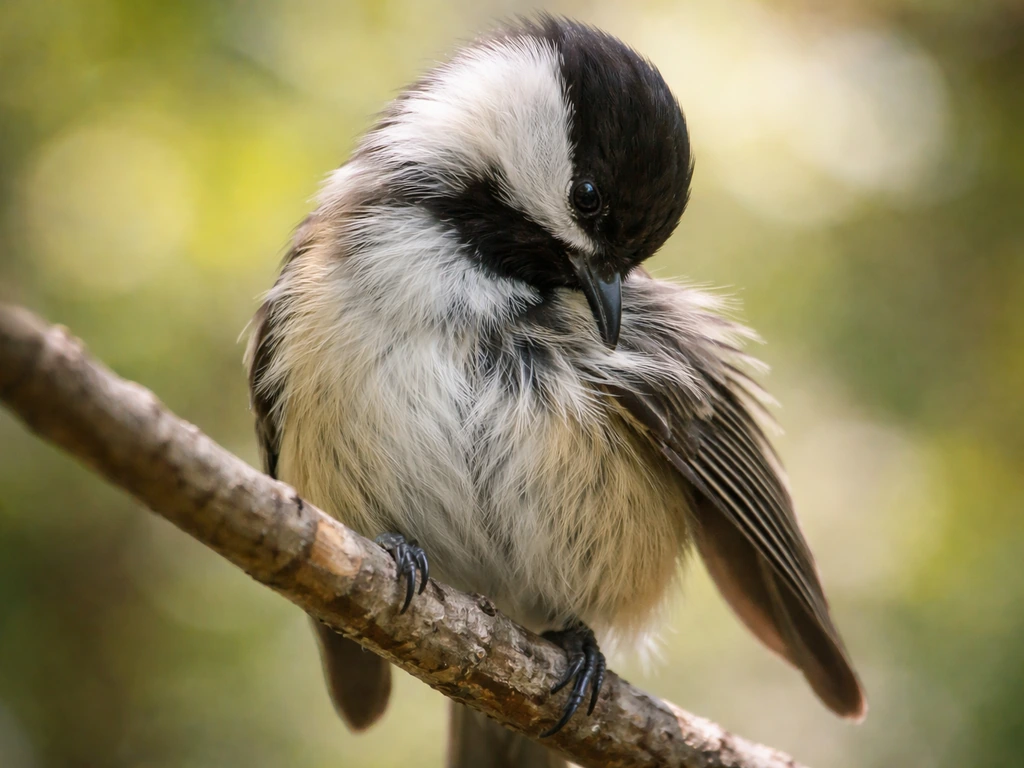
Preening is the primary way birds maintain their plumage. A bird uses its beak to comb through individual feathers, zipping apart any barbs that have separated and locking them back together. It also collects oil from a small gland at the base of its tail called the uropygial gland (also called the preen gland), then spreads that oil over its feathers, skin, legs, and feet.
When preening, birds rub their bill or head over the gland pore and spread the oil over their feathers and other body areas like legs and feet, as Britannica describes collects oil from a small gland at the base of its tail called the uropygial gland (also called the preen gland). That oil keeps feathers supple, water-resistant, and in some species has antimicrobial properties that help fight feather-degrading bacteria.
Preening is not the same as scratching, shaking, or ruffling feathers, though birds do all of those too. It specifically involves the beak working methodically through the plumage, usually starting at the base of a feather and moving outward toward the tip. You can see it clearly in backyard birds after a bath, or in parrots when they settle in for a quiet period in the afternoon.
What Birds Are Actually Doing When They Preen
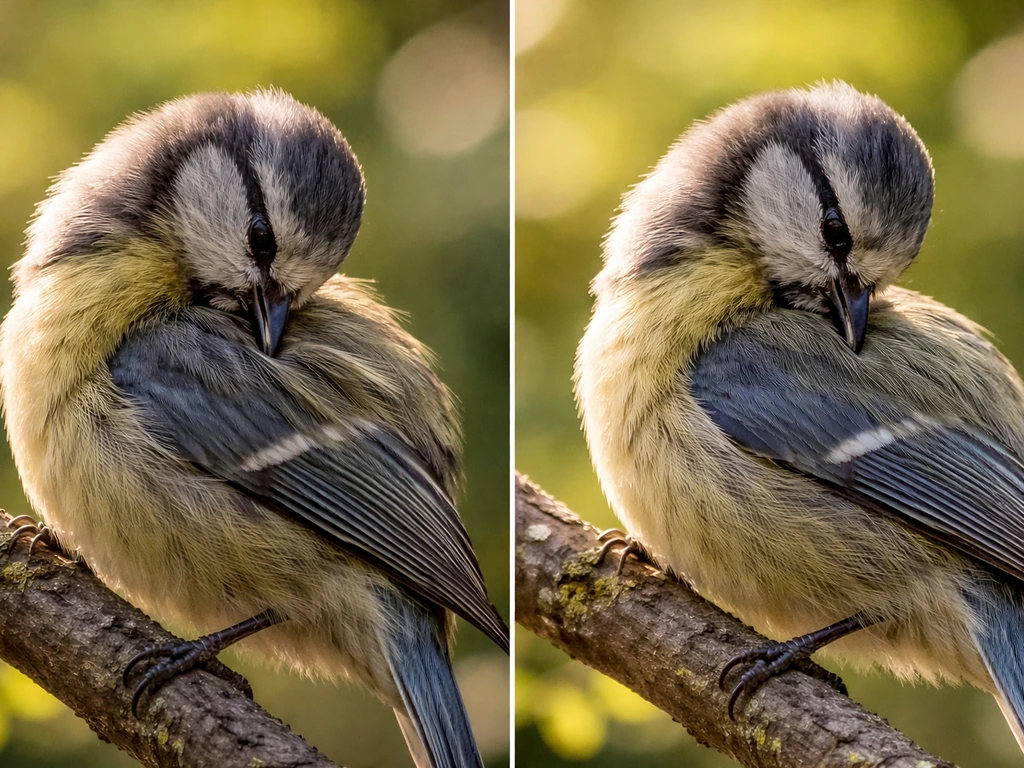
The mechanics matter because they help you recognize healthy preening versus something that looks wrong. In a typical preening session, a bird cranes its head back toward the base of its tail, contacts the uropygial gland with its bill or head, picks up a small amount of oil, and then systematically works that oil through the feathers. The beak acts almost like a zipper tool, realigning the tiny interlocking structures (barbules) that give feathers their smooth, aerodynamic surface.
This is not a casual activity. Research from the Association of Avian Veterinarians indicates that some parrot species spend between 20 and 66 percent of their waking time in the wild on grooming behaviors, including both self-preening and allopreening (preening a partner). A CHEST journal article page describes birds spending a significant portion of their waking time on grooming behaviors, including self-preening and allopreening Birds and Their Preening. For wild birds generally, a significant chunk of the day goes toward feather maintenance. Think of it less like grooming and more like daily equipment checks.
Allopreening is worth knowing about separately. When two birds preen each other, especially around the head and neck where a bird cannot easily reach itself, it is a strong social bonding signal. In mated pairs or bonded cage companions, mutual preening is a healthy and affectionate behavior. It is also a good indicator that a bird trusts you if it tries to preen your hair or eyebrows.
Preening vs. Similar Behaviors
People often confuse preening with other feather-related behaviors. Here is how they differ:
| Behavior | What it looks like | Purpose | Normal frequency |
|---|---|---|---|
| Preening | Beak working through feathers, contact with preen gland | Clean, oil, and realign feathers | Multiple times daily |
| Molting | Feathers falling out in patches or gradually; pin feathers visible | Replace old feathers with new growth | Seasonally (usually 1-2x per year) |
| Dust bathing | Bird rolling and flapping in dry dirt or sand | Remove excess oil, deter parasites | Regularly in ground-feeding birds |
| Water bathing | Splashing in a birdbath or puddle, then shaking dry | Clean feathers before preening redistributes oil | Several times per week |
| Feather plucking | Bird pulling feathers out at the root, visible bald patches | Sign of stress, illness, or behavioral disorder | Not normal; warrants attention |
Molting is probably the one most commonly confused with a preening problem. During a molt, you will see loose feathers and short pin feathers (new feathers still in their protective sheath) emerging from the skin. The bird may look a bit ragged for a few weeks. That is completely normal. Preening actually increases during a molt because the bird is working to remove the sheaths from pin feathers and keep the new growth tidy. What is not normal is patchy bald spots caused by the bird pulling feathers out rather than the feathers naturally shedding.
Normal Preening vs. a Problem: What to Watch For
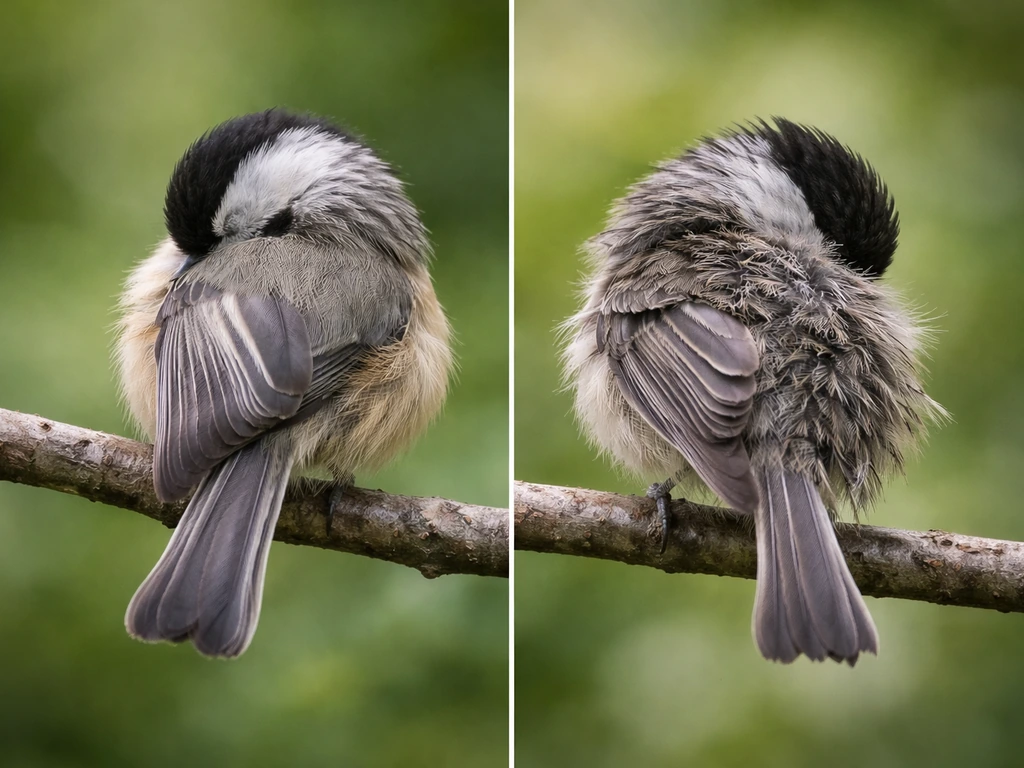
Most preening you will ever see is completely healthy. The signs of normal preening are straightforward: the bird is relaxed, moves methodically through different feather groups, takes breaks, and looks alert and otherwise comfortable. Its feathers should look smooth and intact afterward, not chewed or ragged.
Excessive or abnormal preening is a different story. The clinical term is feather destructive behavior, and it ranges from mild overpreening (feathers look slightly frayed or barbless) all the way to self-mutilation of feathers and the underlying skin. The Merck Veterinary Manual describes the range clearly: typical red flags include feather loss in areas the bird can reach, abnormal pin feathers, blood visible in the feather shaft, and in some species a noticeable absence of powder down.
Signs that preening has crossed into a problem
- Bald or thinning patches, especially on the chest, inner wings, or back
- Feathers that look chewed, stripped of barbules, or broken at the shaft
- Blood on feathers or skin
- The bird targets the same spot repeatedly for long stretches
- Visible skin irritation, redness, or lesions
- Behavioral changes alongside overpreening: loss of appetite, lethargy, aggression, or withdrawal
- Sudden onset of heavy preening after a diet change, new household product, or environmental change
The causes of problematic preening are wide-ranging, which is one reason it can be hard to troubleshoot on your own. Medical contributors include liver damage, kidney failure, tumors, infections, and internal parasites. Environmental triggers include contact with human skin oils or moisturizers on the feathers, improper feather trimming, insect bites, or being housed with a dominant cage mate who is injuring the bird. Psychological causes like boredom, isolation, or chronic stress can also drive a bird to overpreen.
What to Do Today
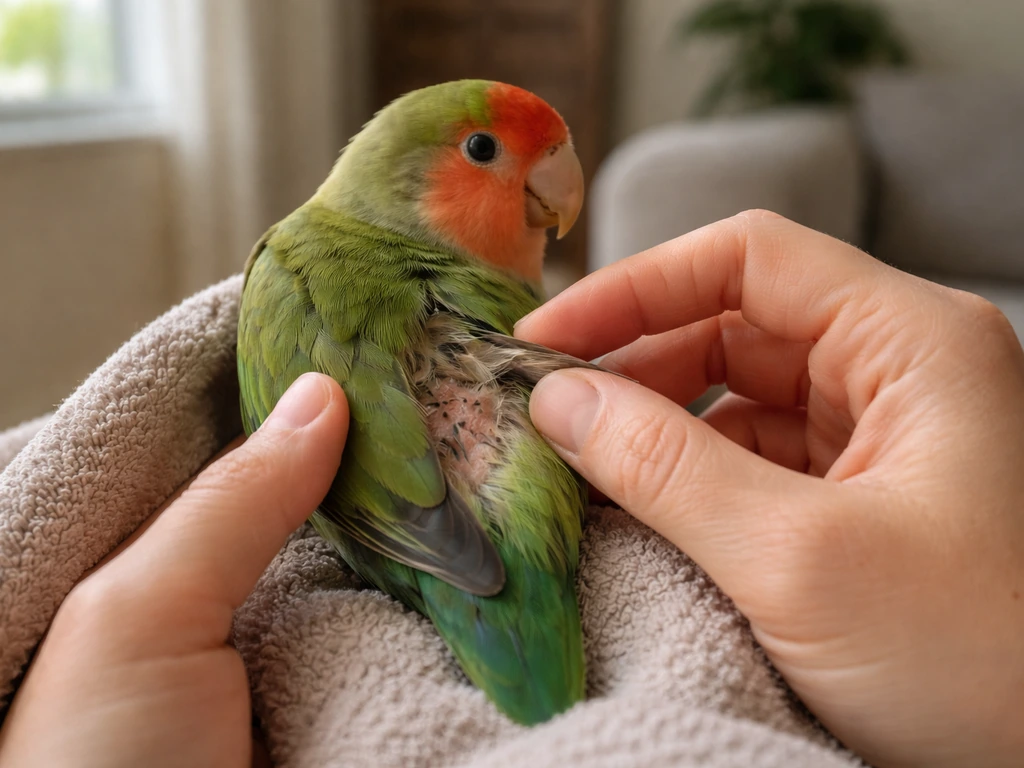
If you are watching a wild bird preen in your yard, you almost certainly do not need to do anything. Enjoy it. But if you own a pet bird or have found a bird that seems to be overpreening, here is a practical sequence to follow.
- Look at the feathers closely. Are they intact, or are there bald spots, broken shafts, or skin visible? If the feathers look healthy and the bird is otherwise acting normally, monitor for a few days before worrying.
- Check for recent changes in the environment. New cleaning products, air fresheners, candles, scented lotions you have used before handling the bird, new foods, or a change in cage location can all trigger stress-related overpreening. Remove or reverse recent changes if you can.
- Add a bathing routine. A light mist from a spray bottle or a shallow dish of water offered a few times a week supports normal preening and has been shown in clinical settings to reduce feather plucking behavior. Use plain, room-temperature water.
- Assess the social environment. If the bird shares a space with another bird, watch for signs of bullying or feather chewing by the cage mate. A dominant companion can cause feather damage that looks like self-inflicted overpreening.
- Increase enrichment and interaction. Boredom is a real driver of abnormal preening. Foraging toys, new perches, varied foods, and regular out-of-cage time all reduce the likelihood of stress-based behavior.
- Call an avian vet if you see bald patches, skin damage, blood, or behavioral changes alongside the preening. The Association of Parrot Societies recommends veterinary evaluation to rule out health problems before assuming the cause is behavioral. An avian vet can check for infections, parasites, nutritional deficiencies, and organ-related conditions that would not be visible to you at home.
For wildlife observers who spot a bird on the ground that appears to be overpreening or pulling feathers: do not handle the bird unless it is clearly injured and cannot move. Contact a licensed wildlife rehabilitator in your area. In most countries it is illegal to keep or transport wild birds without a permit, and rehabilitators have the training and equipment to assess the animal properly.
The Symbolic and Cultural Side of Preening
Across many cultures and spiritual traditions, birds are understood as symbols of the soul, transformation, and communication between worlds. Preening, as the behavior that keeps a bird fit for flight and beautiful, carries its own layer of meaning within that framework.
In symbolic readings, preening is most consistently associated with self-care, preparation, and presentation. A bird that preens is readying itself, tending to its own condition before it takes flight or faces the world. From this perspective, observing a bird preen can be interpreted as a prompt toward self-maintenance: attending to your own needs, appearance, or inner state before engaging with external demands.
Pride and identity are also common themes. Because preening makes a bird look its best, it is connected symbolically to self-respect, dignity, and the idea that how you present yourself reflects your inner confidence. In some traditions, especially those that read birds as spiritual messengers, seeing a bird preen near you is taken as an invitation to invest in yourself, to not neglect your own care in service of others.
There is also a readiness dimension. Birds preen most intensively before flight, before courtship displays, and after bathing. Symbolically, this maps onto the idea of preparing for something important: a transition, a new beginning, or a moment that requires you to show up fully. If you find meaning in bird symbolism, preening can be read as a signal that preparation and attention to detail matter before the next move.
It is worth noting that the word 'preening' in human terms has taken on a somewhat negative connotation in modern usage, which is covered more in the idiom section below. The natural behavior itself, though, carries mostly positive symbolic weight: care, readiness, and pride without arrogance.
How 'Preening' Lives in Everyday Language
The word 'preen' has traveled from ornithology into everyday English, and the journey is revealing. When we say a person is 'preening,' we almost always mean it critically. We picture someone admiring themselves in a mirror, seeking compliments, or performing confidence in a way that reads as hollow or self-congratulatory. The phrase 'preening for the cameras' is a good example: it suggests someone who is more focused on appearances than substance.
This is a meaningful departure from the biological reality. In birds, preening is functional, necessary, and completely unselfconscious. In human usage, it carries a shade of vanity or excess. The idiom has absorbed the surface-level appearance of the behavior (a bird grooming itself, rearranging its feathers to look its best) without the practical purpose underneath it.
Related expressions reinforce this theme. 'Ruffling feathers' describes causing social disruption or offending someone. 'Smooth feathers' or 'smooth things over' implies restoring calm after conflict. These idioms draw on the visual language of preening and plumage to describe social dynamics, suggesting that how we maintain our public presentation is as instinctive and as loaded with meaning as how a bird maintains its coat.
The idiom 'birds of a feather flock together' is not directly about preening, but it connects to the same territory: plumage as identity and belonging. And the broader tradition of bird-related language in English (from 'bird-brained' to 'free as a bird' to the idea of someone 'pluming themselves' after a success) reflects how deeply bird behavior has shaped the way we talk about human behavior. Preening sits at the intersection of self-care and self-display, which is exactly why it became such a useful metaphor.
If you are interested in exploring more bird-related terms and what they reveal about human language and behavior, the site also covers topics like bird fancier meaning and bird enthusiast meaning, which deal with how people define their relationships with birds, and bird husbandry definition, which is where practical bird care and language intersect most directly. If you’re comparing preening habits with broader care responsibilities, the bird husbandry definition is a useful next step.
If you’re looking for the bird rearing meaning behind those terms, it refers to the purpose and process of raising birds for a specific outcome bird husbandry definition. Bird rearing meaning describes the purpose and process of raising birds for a specific outcome. In real-world bird keeping conversations, the phrase bird breeder meaning is used to describe someone who raises birds intentionally as part of a breeding program.
If you’re wondering about bird keeper meaning, this kind of wording also comes from how people describe their relationship to caring for birds bird fancier meaning.
FAQ
Is it normal for my pet bird to preen all day or right after eating?
Yes. Birds often preen right after a bath to spread gland oil, and they may also preen before or after moving between resting and active periods. Timing alone does not indicate a problem, what matters is whether the bird stays relaxed and the feathers look orderly afterward.
How can I tell normal preening from feather-destructive behavior at home?
Look for methodical, relaxed grooming, with the beak combing through feather groups, brief pauses, and no visible skin damage. Concerning patterns include repeated preening of the same spot until feathers are missing, chewing at the skin, or sudden changes in posture (hunched, withdrawn) during grooming.
What are the most common overlooked environmental causes of excessive preening in pet birds?
In many cases, overpreening is not fixed by simply adding a “preening routine.” Common triggers include contact with lotion, sunscreen, cooking fumes residue on feathers, or rough cage surfaces that worsen irritation. If you suspect a trigger, remove it first and monitor, but if hairline bleeding, bald patches, or lethargy appear, arrange an avian vet visit promptly.
My bird looks ragged and I see a lot of preening, is it always molting?
Do not assume molting problems are preening-related. During molts, pin feathers (new feathers in a sheath) and a ragged look can be normal, and birds may preen more to remove sheaths. However, patchy bald areas from pulling and blood in the feather shaft are not normal molt behavior.
Can preening another bird be harmful, or is allopreening always a good sign?
Yes, and it helps interpret behavior. Allopreening near the head and neck is often a bonding sign, but if it turns into persistent nipping or one bird being unable to escape, it can cross into stress or injury. Watch for the other bird’s body language, fluffed posture, and any emerging bare or damaged areas.
Why does my bird preen my hair or eyebrows, and when should I discourage it?
If you notice a bird preening a partner that is newly introduced, or you see it around your own pet’s head, it can be social comfort. Still, stop encouraging direct preening if your bird appears overly fixated or if they start targeting the same spot aggressively. For pet owners, letting birds manage grooming with minimal handling is usually safest.
What should I do if I find a wild bird preening on the ground?
If a wild bird is approachable but not visibly injured, avoid handling. Handling can cause stress, increase injury risk, and may violate wildlife laws depending on your location. For any bird with blood, inability to fly, abnormal limp posture, or hairline feather loss paired with weakness, contact a licensed wildlife rehabilitator or an animal rescue service for guidance.
Does room humidity affect preening, and is misting helpful?
Often, yes. Birds frequently preen after sleep or after coming inside, especially if the air is dry. If you have a pet bird, ensure proper humidity and avoid misting with additives like fragrances or essential oils, which can irritate skin and feathers and worsen grooming issues.
Can nutrition issues cause changes in preening behavior?
Diet and hydration can indirectly influence feather quality. If feathers become brittle or the bird seems to target more areas than usual, talk to an avian veterinarian about nutrition, because deficiencies (for example, protein or fatty acid balance) can contribute to poor plumage condition. Avoid supplements without guidance, since some additives can be harmful in excess.
My bird keeps rubbing one spot, is that still preening?
No. Preening is usually brief and purposeful, the bird’s posture is generally calm, and the feathers show improvement after grooming. If you see constant frantic rubbing, vigorous scratching-like movements, or the bird repeatedly attacks the same location without relaxing, prioritize evaluation for skin irritation, parasites, or injury.
Next Articles

Bird Verb Meaning: Uses, Behaviors, Idioms & Sightings
Discover what 'bird' means as a verb, definitions, behaviors, idioms, sightings, and practical next steps.
Bird Sighting Meaning: How to Interpret What You Saw
Interpret bird sighting meaning with context, behavior, symbolism, and practical steps to identify the species and next
Bird Visit Meaning: Spiritual vs Real-World Reasons
Bird visit meaning explained: spiritual symbolism vs real-world causes like weather, food, nesting, dreams, and safe nex