
"Bird bathing" most commonly means exactly what it sounds like: a bird splashing around in water to clean its feathers, cool down, and manage parasites. But depending on where you encountered the term, it could also refer to dust-bathing behavior that gets mislabeled as water bathing, a backyard birdbath setup you're trying to get right, or even a symbolic meaning in a dream or spiritual context. This guide covers all three angles so you can figure out which one applies to your situation and know what to do next.
Bird Bathing Meaning: What It Is, Symbolism, and Tips

Marcus Holloway
4 Apr 2026
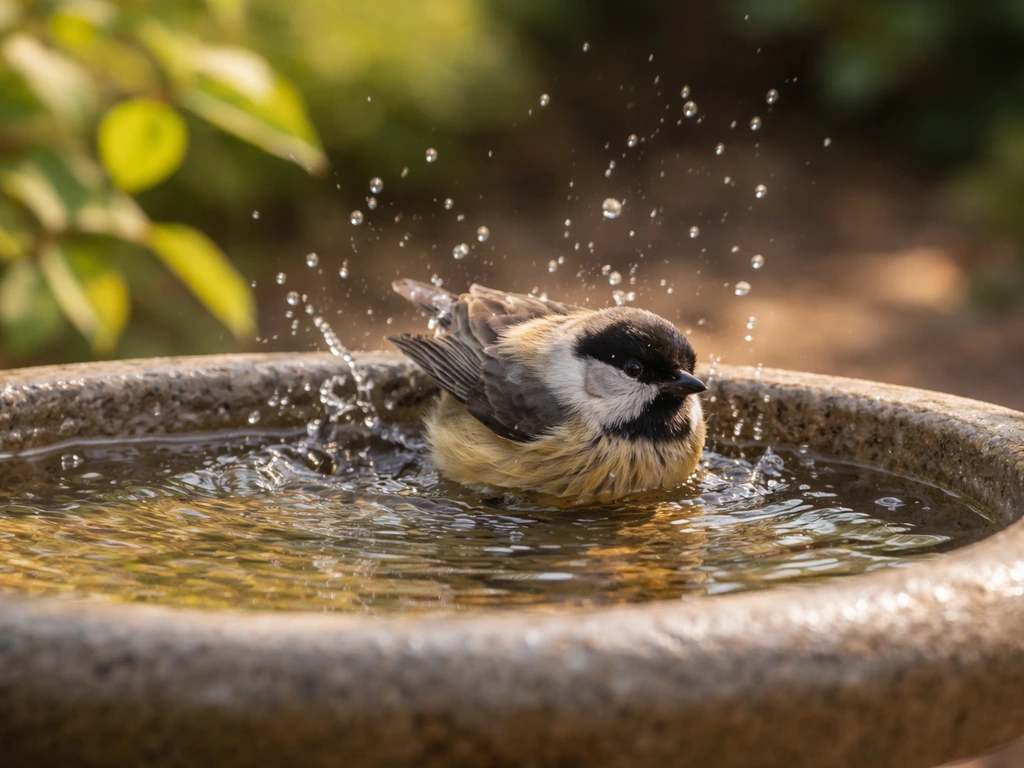
What bird bathing actually means, in plain English
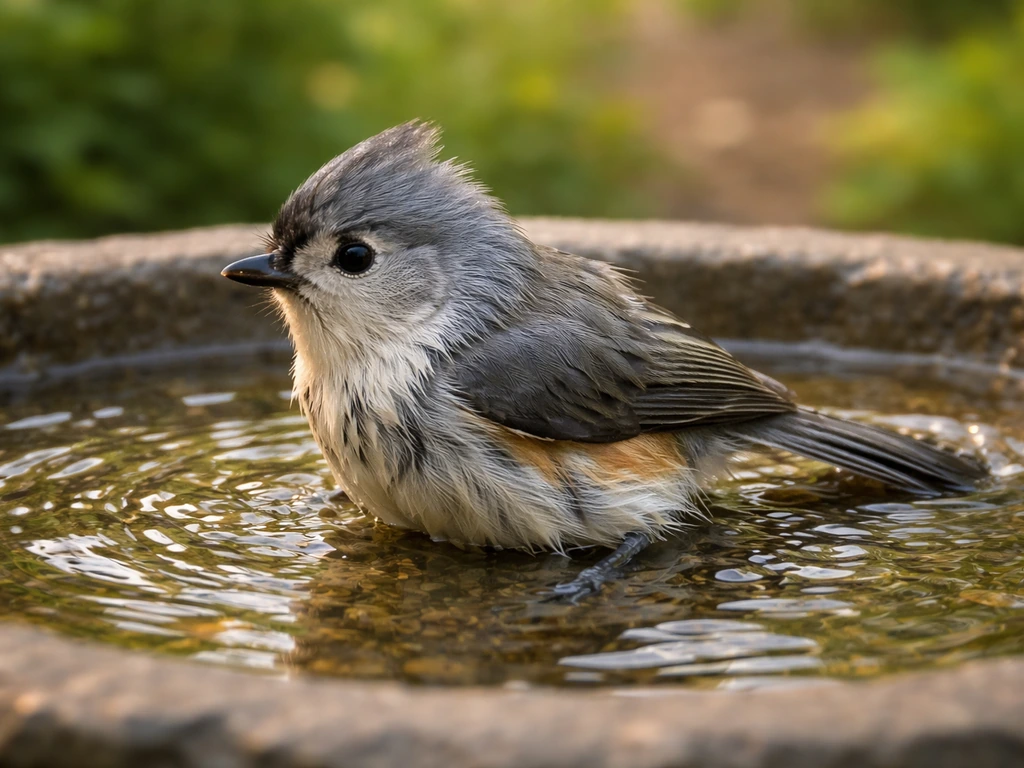
When a bird bathes, it deliberately wets its feathers in a shallow water source, whether that's a birdbath, a garden puddle, a sprinkler stream, or a rain-soaked leaf. The bird typically wades in, crouches low, and uses rapid wing-flicking and head-dipping motions to push water through its plumage. It's an active, purposeful behavior, not incidental contact with water. After the splash session, the bird flies to a nearby perch, shakes off excess water, and spends a significant amount of time preening. That post-bath preening is actually where most of the maintenance work happens.
In casual backyard usage, people also say "bird bath" to describe the physical object, a shallow basin of water set out to attract birds. If you've been Googling "bird bathing meaning" because you just bought a birdbath and want to know what's normal, the practical sections below have you covered. If you're here because of a dream or a spiritual encounter, scroll down to the symbolism section. And if you're not entirely sure whether what you saw was actually water bathing or something else, the next section will sort that out.
Bathing vs preening vs dust-bathing: how to tell what you're seeing
These three behaviors get lumped together constantly, and while they're all part of the same feather-maintenance system, they look very different in the field.
| Behavior | Where it happens | What it looks like | What it does |
|---|---|---|---|
| Water bathing | Birdbath, puddle, sprinkler, stream edge | Crouching in water, rapid wing-flicking, head-dipping, splashing | Removes dirt, loosens parasites, cools the bird |
| Preening | Dry perch, branch, or fence | Bill running through individual feathers, rubbing head on back (to spread preen oil) | Realigns feather barbs, distributes oil from preen gland, removes debris |
| Dust-bathing | Dry soil, sand, or fine dirt patch | Flopping sideways in dirt, fluffing feathers, throwing dust with wings | Absorbs excess oil, smothers feather lice and mites, aids thermoregulation |
| Sunbathing | Open ground or perch in direct sun | Body feathers fluffed, one or both wings spread wide and held out, feathers fanned | Assists parasite control, may help with vitamin D synthesis, supports feather condition |
Dust-bathing is the one most often misidentified. If you see a bird rolling around in a dry dirt patch and flinging soil with its wings, that's not a bird having a bad day. It's performing a deliberate maintenance routine. Dust baths help remove excess preen oil so the bird can then re-apply a fresh, even layer, and the abrasive dust also physically disrupts ectoparasites like feather lice and mites. Sunbathing looks alarming to new birders because the spread-wing posture can look like an injured bird, but it's usually completely normal feather maintenance behavior, as documented by ornithologists at the British Trust for Ornithology.
The key practical takeaway: water bathing and preening almost always go together. If you see a bird bathing and then immediately preening on a branch nearby, that's a healthy, normal sequence. The water loosens dirt and parasites, and the preening physically removes them and realigns feather structure.
Why birds bathe: the real health reasons
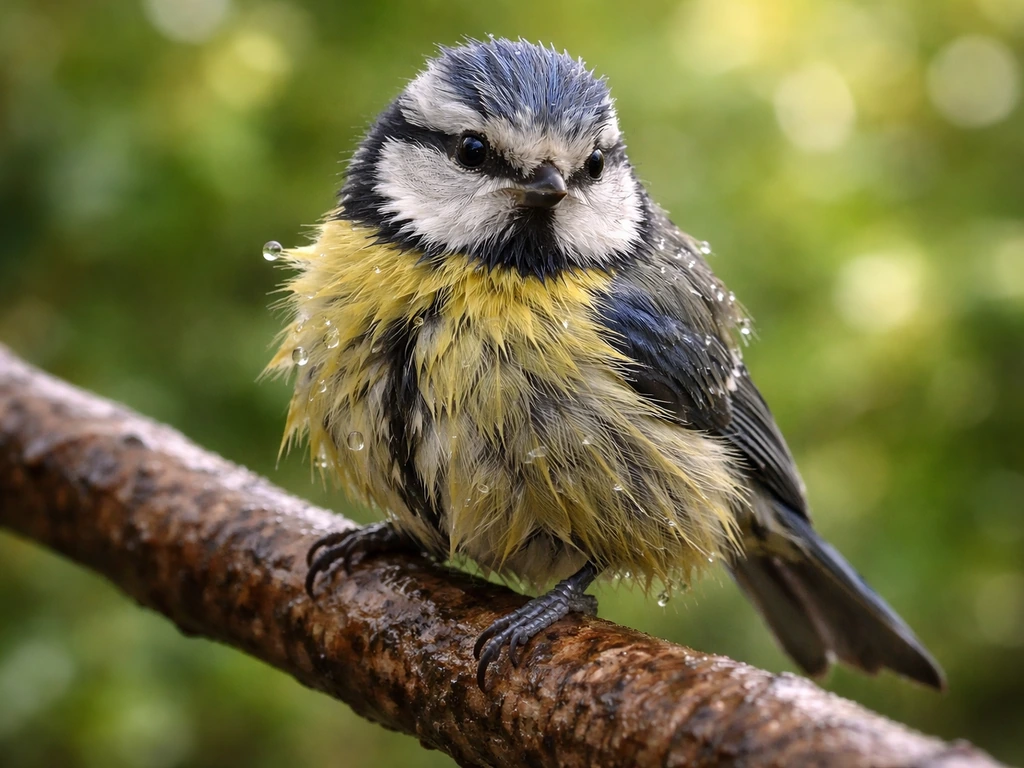
Bird bathing isn't a luxury behavior. It's a maintenance requirement tied directly to flight performance, thermoregulation, and parasite control. Here's what's actually going on:
- Feather structure: Feathers are made of interlocking barbs that zip together like velcro. Dirt, dried preen oil, and debris cause those barbs to separate and mat. Water bathing resets them so preening can re-zip them back into a smooth, aerodynamic surface.
- Preen oil distribution: Birds have a preen gland at the base of the tail. The oil from that gland gets spread across feathers during preening to keep them supple and water-resistant. Bathing first removes old buildup so the fresh application can work properly.
- Parasite control: Feather lice, mites, and other ectoparasites live on birds year-round. Both water bathing and dust bathing physically dislodge or smother these parasites, reducing infestation load without any chemical intervention.
- Thermoregulation: During hot weather, birds use water bathing to cool their body temperature. The RSPB explicitly notes that birds take dips to cool down in hot periods, and the Smithsonian National Zoo confirms that accessible water sources help birds manage heat year-round.
- Post-bath hygiene: The full sequence of bathing followed by preening is what delivers the real benefit. Water bathing that isn't followed by preening is incomplete maintenance.
If you're thinking about the cultural and spiritual side of bird bathing and want to understand what it might represent symbolically, it's worth knowing this biological grounding first. The ritualistic quality of the behavior, its regularity, its pairing of cleansing with careful self-maintenance, is part of why it resonates so strongly in folklore and dream interpretation.
The spiritual and cultural meaning of bird bathing
Across many cultural traditions, water is associated with purification, renewal, and transition. When a bird bathes, it combines two symbolically charged elements: a creature that represents freedom, spiritual messengers, or the soul in flight, with the purifying act of immersion in water. That combination has made bird bathing a recurring motif in dream symbolism, folklore, and spiritual traditions.
In dream interpretation, seeing a bird bathing or a bird bath's meaning is frequently interpreted as a symbol of spiritual cleansing, personal renewal, or the shedding of emotional burdens. The image of a bird voluntarily entering water, emerging cleaner, and then carefully tending itself resonates with ideas about intentional self-care and readiness for something new. Dream dictionaries like DreamMoods frame birdbath imagery specifically around spiritual cleansing, though these are interpretive frameworks rather than empirical claims.
In Islamic dream interpretation traditions, ritual bathing is strongly associated with purification concepts, and bird-related bathing imagery can be filtered through those same themes. The artist Leonora Carrington used bird and bath imagery in ways that layered together animism, surrealism, and personal transformation, and if you want to explore that specifically, there's a deeper look at bird bath Leonora Carrington meaning worth reading.
If you're approaching bird bathing from a spiritual encounter angle, say you witnessed a bird bathing right in front of you at an unexpected moment, many people interpret that as a sign of purification, an invitation to release something, or a reminder of self-renewal. These interpretations aren't scientifically verifiable, but they're culturally coherent and meaningful to those who hold them. The honest approach is to hold both: the bird was doing routine feather maintenance AND that behavior can carry symbolic weight in a spiritual framework, depending on your beliefs.
One area of symbolic overlap that comes up often is the bird kiss meaning, where gentle contact between birds is read through a lens of affection or spiritual communion. Bathing behaviors, especially communal bathing where multiple birds use the same water source, carry a similar quality: an intimacy that makes them feel symbolically significant beyond pure biology.
How to set up a safe birdbath today
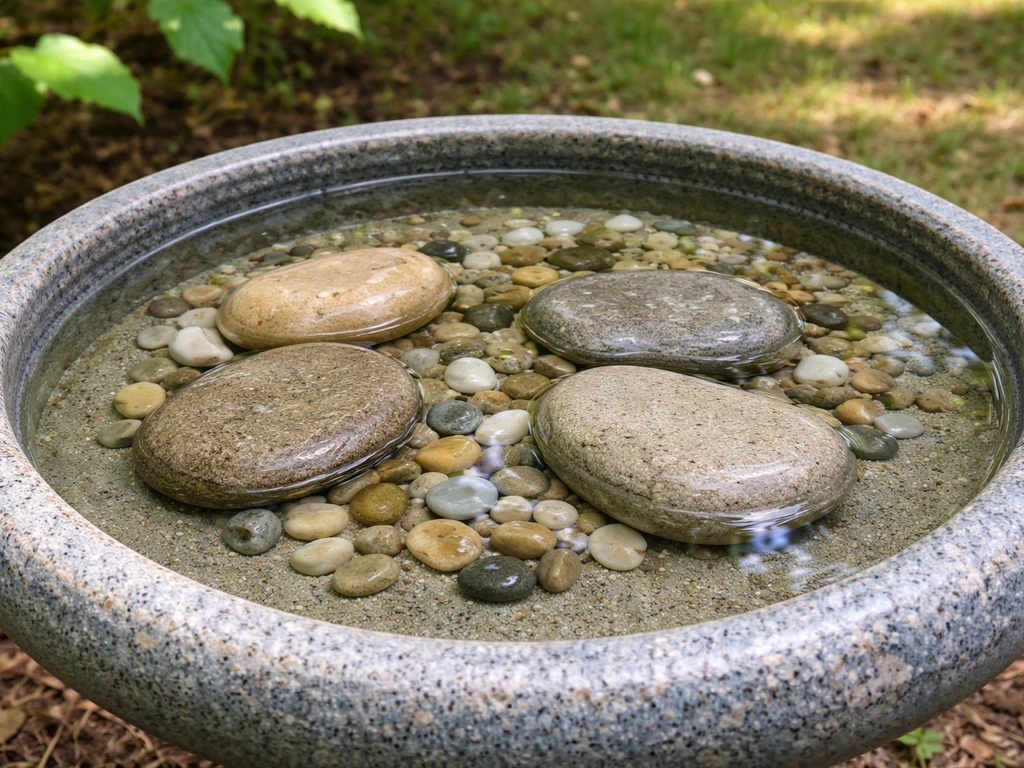
If you're here because you want to attract birds and give them a safe place to bathe, here's what actually matters. Most of the advice online overcomplicates it. You need the right depth, a good location, and a cleaning habit. That's it.
Depth and shape
This is where most people go wrong. Birds don't bathe in deep water. They need very shallow water that mimics a natural puddle. The Chicago Bird Alliance recommends about one inch at the edge sloping gently to about two inches in the center.
The RSPB's guidance puts the maximum depth at around 10 cm (about 4 inches) for a wide basin and emphasizes gently sloping sides. The University of Florida IFAS Extension advises no deeper than two to three inches at the deepest point, with sloped sides birds can easily navigate. If your basin is deeper than that, birds will avoid it or perch at the edge and never fully bathe.
A simple fix: add a flat stone or two to the center to reduce depth and give smaller birds a landing surface.
Placement
Location is about safety, not aesthetics. The National Wildlife Federation recommends placing birdbaths near cover, meaning shrubs or trees that birds can fly to quickly if a cat or hawk appears. But don't put the bath directly under a dense bush where cats can hide and ambush. The Washington Department of Fish and Wildlife even suggests using a wire fence around the base of a birdbath stand to deter outdoor cats.
Aim for a spot that's in partial shade (which slows algae growth and keeps water cooler), within a few feet of a shrub or tree for escape cover, and visible from a window if you want to watch. Also place it where you can reach it easily for cleaning, because a bath you can't easily access won't get cleaned.
Keeping it clean
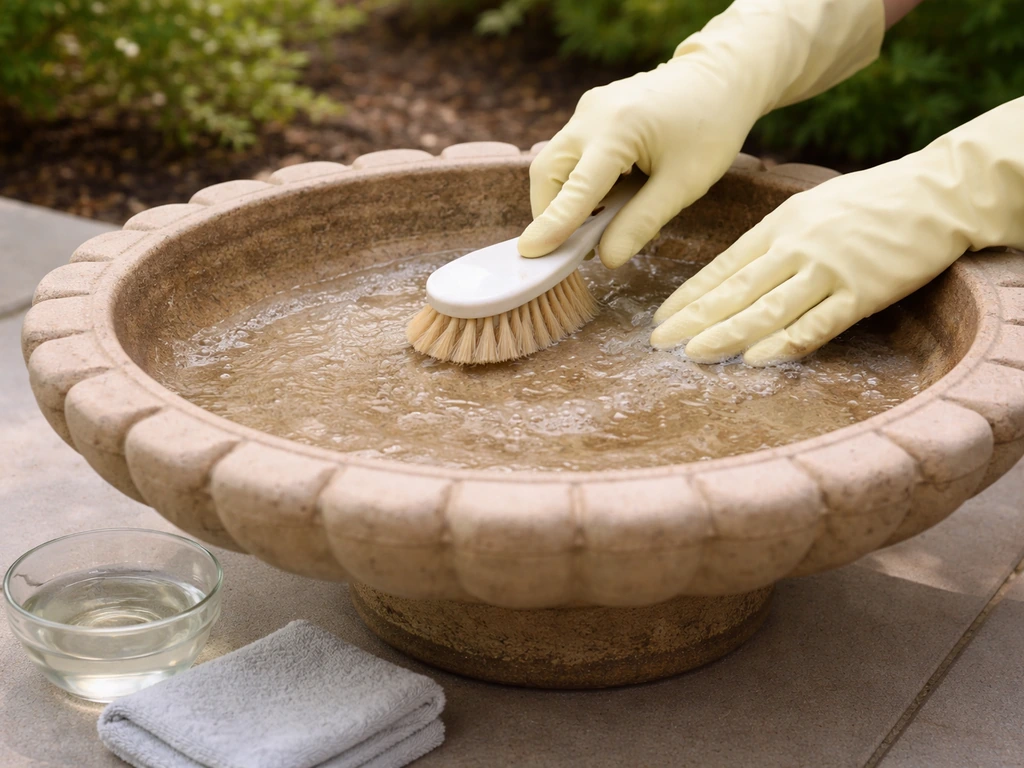
Dirty water is worse than no water. The U. S. Fish & Wildlife Service also advises cleaning out a bird bath daily and monitoring water levels so birds have access to fresh, cool water [clean out a bird bath daily and keep an eye on water levels](https://www.
fws. gov/story/how-do-birds-keep-cool-summer). Audubon recommends rinsing and scrubbing your birdbath with a solution of nine parts water to one part vinegar. Critically, they warn against synthetic soaps and cleansers because these can strip essential oils from bird feathers, which is exactly what you don't want to cause.
A stiff brush, vinegar solution, and a thorough rinse is all you need. On frequency: DC Health recommends flushing birdbaths at least twice per week as a mosquito-control measure, and that's a solid maintenance baseline. Mosquito eggs develop into adults in roughly a week, so changing water every two to three days eliminates that risk entirely.
Getting birds to actually use the bath
Setting up a birdbath and having birds ignore it is frustrating, but it's usually fixable. Here are the most common reasons birds don't use a bath and what to do:
- The water is too deep: Add flat rocks or marbles to raise the floor. Birds want to stand in water, not swim in it.
- The surface is too slippery: Glazed ceramic and smooth concrete are hard for birds to grip. Rough up a smooth basin with sand and exterior paint, or use a textured mat.
- It's in the wrong spot: If it's too exposed (no nearby cover) or too hidden (cats can sneak up), birds will avoid it. Move it.
- The water is stagnant or dirty: Birds can detect water quality. Change the water every two to three days even if it looks clean.
- There's no movement: Birds are strongly attracted to moving water. A dripping hose, a small solar fountain, or a simple dripper attachment transforms the bath's effectiveness dramatically.
- It's the wrong season: Birds bathe year-round but frequency increases in hot weather and during molting. In winter, they need liquid water, so a heated birdbath or a bird bath heater becomes valuable.
- Local bird traffic is low: If you've just set up the bath, it may take days or weeks for birds to discover it. Patience matters.
If you've seen birds bathing under a sprinkler or in a rain puddle but not in your birdbath, the issue is almost always depth or surface texture. Puddles are naturally shallow and have irregular, grippy surfaces. Matching that is the goal. You can also think about what the difference is between a bird bath shower meaning and full water immersion bathing, since some species strongly prefer misting or fine spray over standing water and may need a different setup entirely.
Speaking of which, mist baths and bird shower meaning in the backyard context refer to the behavior of birds deliberately flying through fine mist or sprinkler spray to wet their feathers without wading into standing water. Warblers and hummingbirds in particular prefer this method. If you're attracting these species, a misting attachment on a garden hose near foliage works much better than a basin.
What to avoid and when to actually worry
Most bird bathing is completely routine and healthy. But there are a few genuine risks worth knowing about.
Things to avoid
- Synthetic soaps or dish detergent: These strip feather oils. Vinegar and water only for cleaning.
- Additives like essential oils or commercial water treatments: Unless a product is explicitly designed for birdbaths, skip it. Birds drink this water.
- Algae-control chemicals: Many are toxic to birds. Clean mechanically instead.
- Deep water without a ramp or rock: Small birds can drown in deeper water if they fall in and can't get out. Always slope or add structure.
- Placing the bath under a tree that fruits or drops debris heavily: You'll spend all your time cleaning it.
- Neglecting it: Stagnant water grows algae, bacteria, and mosquito larvae. A neglected birdbath is a disease risk for birds and a mosquito breeding ground for your yard.
When to actually be concerned
Most of what looks like unusual bathing behavior is normal. A bird bathing in cold weather is fine. A bird splashing vigorously and shaking is fine. A bird returning to the same bath multiple times in a day is fine.
What's worth paying attention to: a bird sitting in water but not moving, a bird that seems unable to fly away after bathing, or a bird bathing in an unusual location repeatedly while showing signs of lethargy. These can indicate illness, injury, or in rare cases, neurological effects from pesticide exposure. If a bird is sitting still in your birdbath and not responding normally, give it space and observe from a distance.
Contact a local wildlife rehabilitator if it stays in place for more than an hour.
The mosquito risk is also real and worth taking seriously. The CDC has documented that standing water in birdbaths can support mosquito development, and West Nile virus cycles through both mosquitoes and bird hosts. The simple fix: change the water every two to three days. That single habit eliminates the mosquito risk almost entirely while keeping the bath attractive to birds.
Putting it all together
"Bird bathing" is most likely to mean one of three things depending on your context: a healthy, routine behavior you're watching in your backyard, a question about how to set up the right water source to attract birds, or a symbolic meaning in a dream or spiritual encounter. All three are legitimate.
The biology is straightforward: birds need to bathe regularly, it's integral to feather health, parasite control, and temperature management, and they'll do it reliably if you give them safe, shallow, clean water in a good location. Smithsonian's National Zoo also notes that keeping the water source clean, such as a well-maintained fountain or birdbath, can help create a year-round safe haven for birds.
The symbolism is real too, cleansing and renewal are durable cross-cultural themes attached to this behavior, and you don't have to choose between the two readings.
If you want to dig further into how the physical act connects to its interpretive meanings, the bird bath meaning quick shower angle explores what it means when bathing is rushed or partial rather than thorough, which has its own layer of behavioral and symbolic nuance. Start with the practical setup, get birds using the bath, and the meaning, both biological and cultural, will follow naturally.
FAQ
Is “bird bathing meaning” different from “bird bath meaning” when I’m talking about dreams or symbolism?
Not usually. In most dream discussions, both phrases point to the same theme, spiritual cleansing or emotional release. The distinction is practical, “bird bathing” describes the action, while “bird bath” often emphasizes the setting or “place” where renewal happens.
How can I tell if a bird is water bathing or just drinking?
Water-bathers usually crouch low and splash, then perform wing-flicking and head-dipping. Drinkers tend to peck with their head down and do not follow with immediate preening. If you never see the shaking and preening afterward, it’s more likely drinking.
Do birds bathe every day, or is it occasional?
Many birds bathe regularly when conditions allow, but frequency varies by season, temperature, and how clean the water source is. If your bath stays algae-free and you refresh water on schedule, you often get more consistent visits within a few days.
Why do birds sometimes bathe in the same spot repeatedly but not in my birdbath?
They may be using a preferred substrate, like wet gravel, a shallow dish, or leaves after rain, because it feels more natural and grippy. To copy that, add a textured surface (for example, small flat stones) and keep water shallow rather than smooth and deep.
Is it safe to use soap or bleach to clean a birdbath?
Avoid synthetic soaps, detergents, and bleach. These residues can interfere with feather oils, and birds may keep returning to the bath and re-expose themselves. Stick to a vinegar and water rinse plus a thorough water-only scrub and rinse.
Can I leave water in the birdbath overnight in the summer?
You can, but it increases mosquito risk and also accelerates algae and bacterial growth. A practical compromise is to refresh water at least every two to three days, and more often if temperatures are high or the bath gets heavy debris.
Do I need to worry about birds swallowing dirty bath water?
They do swallow small amounts, so contaminated or stagnant water is a real issue. The best prevention is frequent dumping and scrubbing, and preventing leaf litter and droppings from accumulating in the basin.
What should I do if a bird is sitting in the bath but won’t fly off?
Don’t try to handle it. Give it distance and monitor it. If it remains unable to move normally for more than about an hour, contact a local wildlife rehabilitator, since it can indicate injury, illness, or toxin exposure.
Will my birdbath attract mosquitoes if I keep it filled?
Standing water can support mosquito development, especially if it becomes stagnant. The solution is simple and highly effective: change the water every two to three days (or more often), and remove debris so larvae have less opportunity to thrive.
Should I place the birdbath in full sun or shade?
Partial shade is usually better. It slows algae growth and keeps water cooler, which makes the bath more inviting in warm weather. Full sun can quickly turn the basin green even with decent cleaning habits.
What if I only see hummingbirds or small birds, will they use the same bath as larger birds?
Smaller birds often need even shallower, easier-to-land surfaces. Consider lowering the effective water depth with stones in the center and keep the sides gentle so they can wade safely. For hummingbirds, misting or fine spray near foliage can outperform a standing-water basin.
Is there any meaning when multiple birds bathe together in the same place?
Biologically it’s usually about a reliable water source and safety, but it can still feel meaningful. If you’re reading it spiritually, many people interpret communal bathing as social renewal or shared purification, yet the immediate “why” is still access to safe water.