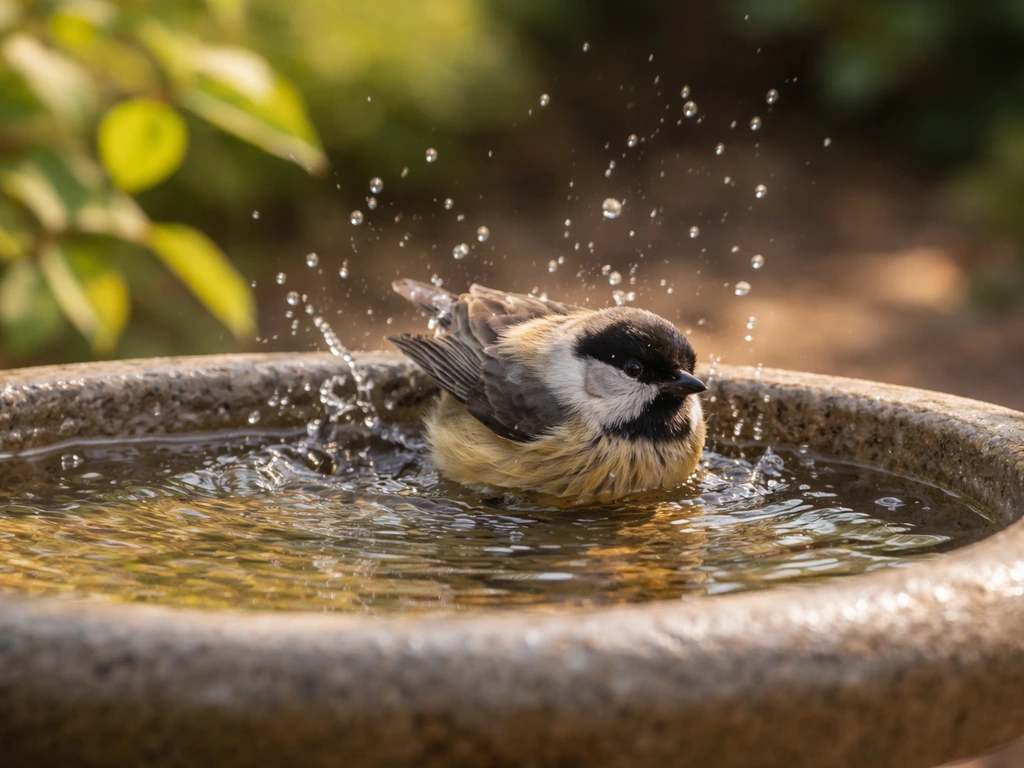
A bird bath is exactly what it sounds like: a shallow basin filled with water where birds can drink, bathe, and cool down. The term is used in everyday English as a standard noun, written either as two words (bird bath) or one (birdbath), and both spellings are widely accepted. Collins English Dictionary defines it as "a small basin or trough for birds to bathe in, usually in a garden," while Wikipedia expands that slightly, describing it as an artificial puddle or small shallow pond. Either way, the core meaning is the same: it is a water feature designed for birds, typically placed outdoors in a yard or garden.
Bird Baths Meaning: Human Use, English Usage, Slang

Marcus Holloway
5 Apr 2026
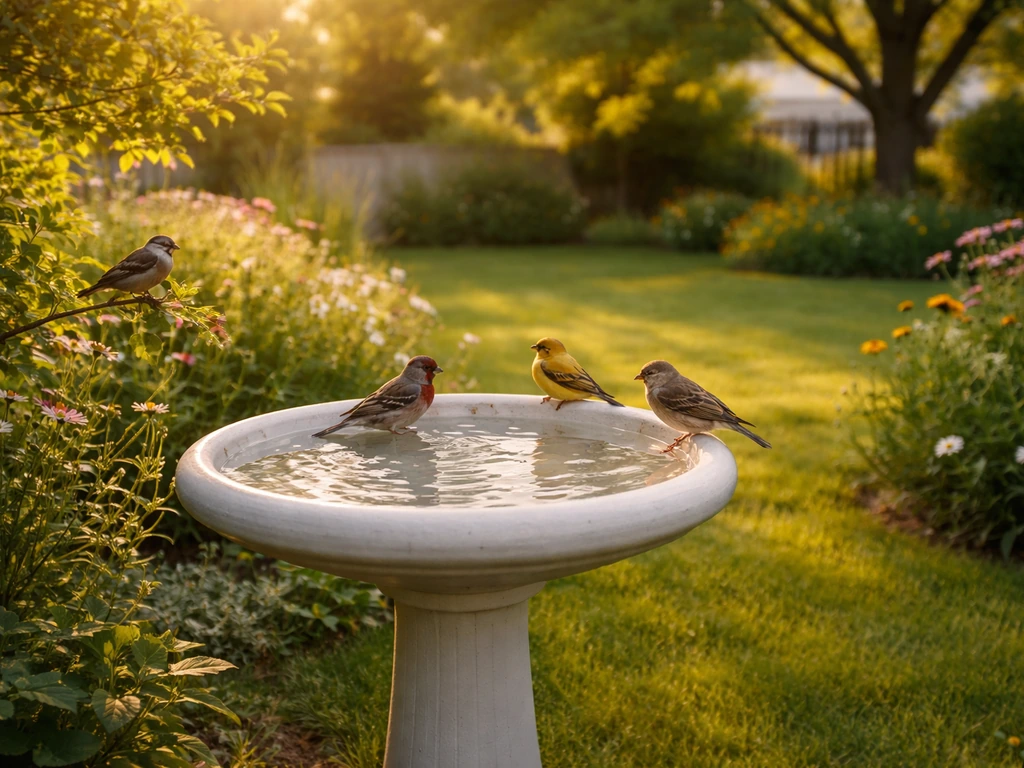
What a bird bath actually is
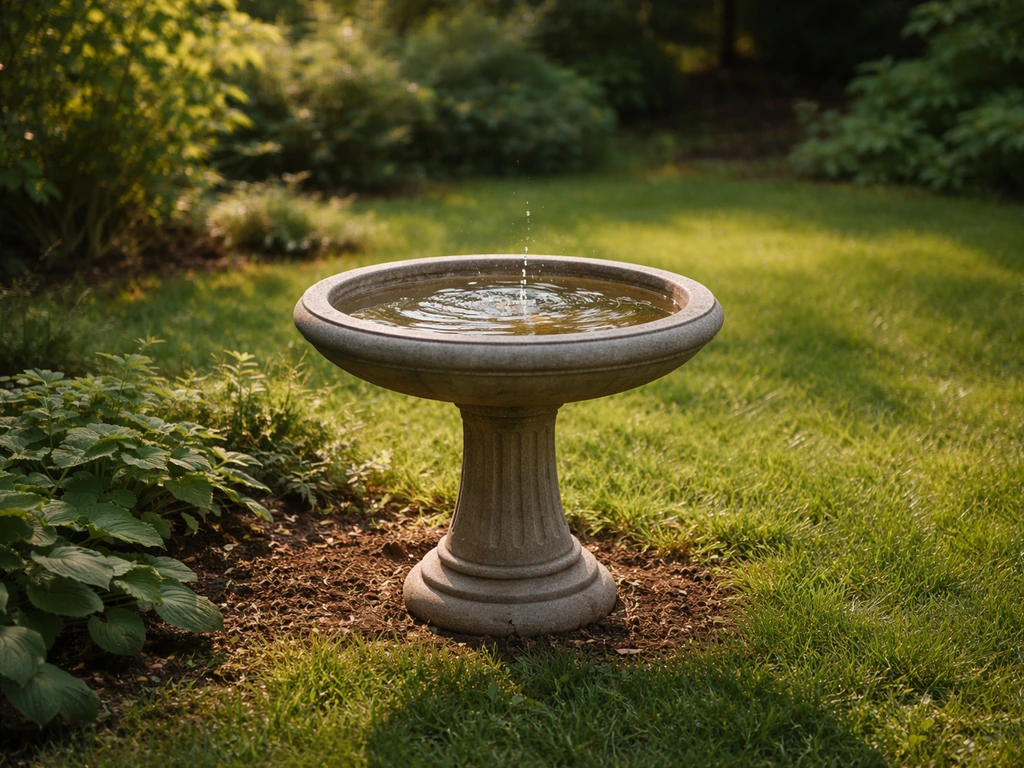
The physical object comes in many forms. The most recognizable is a pedestal birdbath, a basin mounted on a column or stand, designed to sit in a backyard and attract local birds. But bird baths can also be carved depressions in rocks, simple saucers set on the ground, or even heated basins designed to stay ice-free in winter. The shape matters less than the water depth: the National Wildlife Federation is clear that birds will not bathe in water deeper than a couple of inches, so a good bird bath stays shallow. You don't need anything expensive, either. An Audubon-affiliated guide points out that a purpose-bought basin isn't strictly necessary as long as the water is clean, shallow, and accessible.
Birds use bird baths for three specific things: drinking, bathing, and cooling down. Bathing isn't just about comfort. It helps birds remove parasites and dirt and keeps their feathers in proper working condition, which matters for flight and insulation. So when you set one up, you're supporting genuine bird health, not just adding a garden ornament.
Why people use them (the meaning for humans)
When a person says they want to "install a bird bath" or "set up a bird bath in the garden," they mean they're creating a water source to attract and support wild birds. In its Garden for Wildlife materials, the National Wildlife Federation provides wildlife-garden tip sheets that backyard bird-bath messaging can draw on to support general backyard wildlife care [wildlife support](https://www. nationalwildlifefederation. com/-/media/Documents/PDFs/Garden-for-Wildlife/Tip-Sheets/Bird-Feeders.
pdf). The motivation is usually a mix of wildlife support and enjoyment: people like watching birds, and a bird bath is one of the most reliable ways to bring more birds into a yard. All birds need water for drinking and bathing year-round, which means a bird bath isn't just a warm-weather feature. Natural History Museum guidance recommends keeping it ice-free and topped up in winter, too.
Maintenance is part of what people mean when they talk about "using" a bird bath. The water needs to be changed and refreshed regularly, and the basin cleaned every few days, to prevent disease from spreading among birds. That practical responsibility is baked into the term when it appears in gardening and wildlife-care contexts. Phrases like "dig a pond and/or install a bird bath" (from Collins' usage examples) show how naturally the term sits in everyday gardening language.
If you want a deeper look at the behavioral side of what birds are actually doing when they use one, the article on bird bathing meaning breaks that down in more detail, including why the behavior itself carries symbolic weight in some cultures.
How the phrase is used in English (and what non-native speakers should know)
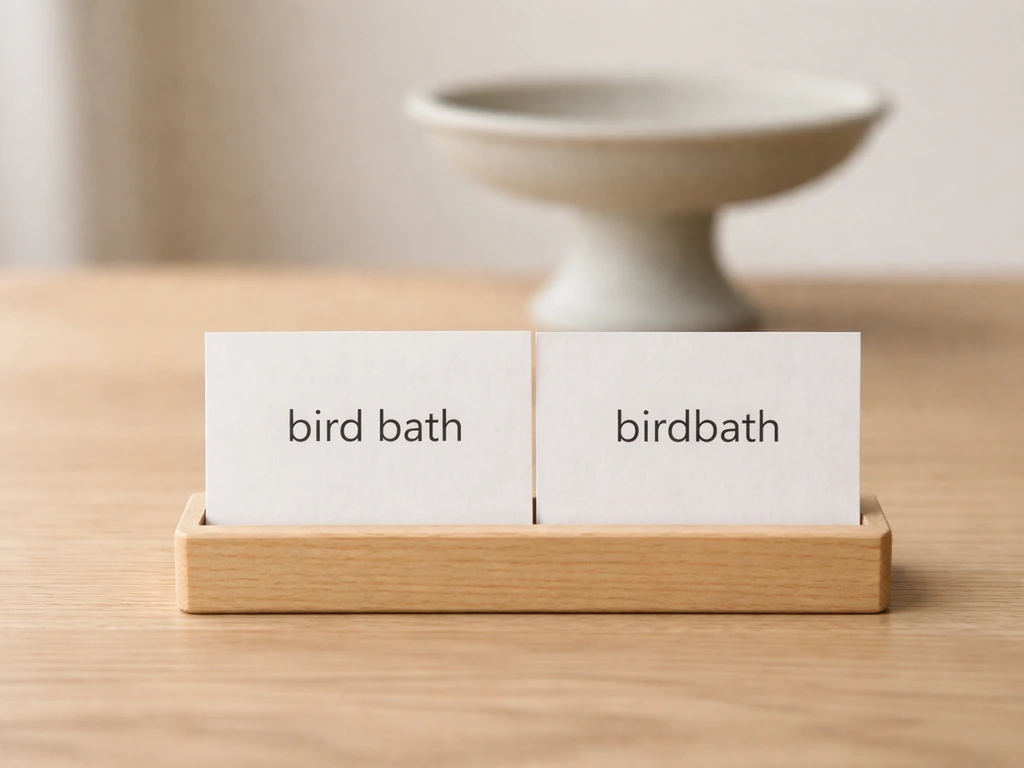
In standard English, "bird bath" is a compound noun. You can write it as one word (birdbath) or two (bird bath), and dictionaries including Collins and Merriam-Webster treat both as correct. Collins notes it as a British English noun and flags "birdbath" as an alternative spelling. For non-native speakers, this spelling variation is worth knowing: if you search for one form and don't find it, try the other. In French, for example, Collins translates it as "abreuvoir à oiseaux," which captures both the watering and bathing functions.
The phrase is used in very straightforward sentences in everyday English: "I placed a bird bath near the flower bed," or "The sparrows were splashing around in the bird bath all morning." It never requires special context to be understood. It's a literal, concrete noun in almost all standard uses. The ambiguity only comes in when people start using it informally or figuratively, which leads to the slang question.
Is "bird bath" used as slang?
Yes, in a few contexts, though none of them are widely established in mainstream English. The most documented figurative use is a quick, minimal wash using a sink instead of a shower or full bath. Wiktionary lists this sense explicitly: washing oneself superficially, without a proper shower. This matches what you see in casual online discussions, including Reddit threads where people describe "taking a bird bath" to mean a fast sink wash. It's a relatable, playful expression, and it maps onto the literal image of a bird splashing quickly in a shallow basin.
If the idea of a quick sink wash sounds familiar, that's because there's a distinct but related expression covered in the article on bird bath meaning quick shower, which looks at exactly this usage in more depth.
There's also a Cockney rhyming slang sense: on British slang sites, "bird bath" is listed as rhyming slang for "laugh," with example usage like "You're 'aving a bird bath, mate." This is very specifically regional British slang and won't be understood outside that context. A third usage, circulated on internet slang aggregators, describes a more explicitly sexual sink-wash, but this is not mainstream or broadly recognized. If you encounter the phrase and aren't sure which meaning applies, context is everything: a gardening article means the literal basin, a casual conversation about hygiene shortcuts likely means the quick-wash sense, and Cockney dialogue might mean "laugh."
For comparison, the bird bath shower meaning article and the piece on bird shower meaning both explore how the washing metaphor extends into different figurative uses, if you want to trace the full range of these expressions.
Slang comparison: what does "bird bath" mean in different contexts?
| Context | Meaning | How common? |
|---|---|---|
| Gardening / wildlife | A water basin for birds to drink and bathe in | Very common, standard English |
| Casual hygiene slang | A quick sink wash instead of a shower | Informal, widely understood |
| Cockney rhyming slang | Rhymes with 'laugh' (as in 'you're having a laugh') | Regional British, niche |
| Internet/explicit slang | A sexual connotation related to sink washing | Fringe, not mainstream |
Bird baths in symbolism and cultural meaning
Bird baths show up in art, literature, and spiritual writing in ways that go beyond the garden object. When they appear symbolically, they almost always carry themes of cleansing, purification, and renewal. This connects naturally to broader water symbolism across cultures, where water represents purification, transition, or spiritual refreshment. A poem featured on the Poetry Chaikhana site uses a bird bath as a lens for themes of baptism and communion. Spirituality writers like Denise Linn have framed bird bathing as a metaphor for emotional or spiritual cleansing. Dream interpretation sites describe bird bath dreams as symbols of purification and rebirth.
It's worth separating these interpretive layers from the literal meaning. The symbolic readings are based on cultural association and personal interpretation, not scientific claims about birds. That said, the symbolism isn't random: it maps onto real bird behavior. Birds genuinely use water to clean themselves and maintain their health, so the metaphor of washing away what doesn't serve you has an intuitive logic to it.
In art history, Leonora Carrington used bird imagery throughout her surrealist work in layered, often spiritual ways. The article on bird bath Leonora Carrington meaning explores how that particular artistic tradition handles bird and water symbolism, which is a fascinating corner of this subject if you're approaching it from a literary or art-historical angle.
Related bird expressions that help clarify meaning
"Bird bath" sits within a broader family of bird-related expressions in English, and knowing the neighbors helps. The phrase connects most naturally to the behavioral vocabulary around birds and water. Bird preening, for example, is the related grooming behavior birds perform after bathing, using their beaks to clean and align feathers. Ornithology Education explains that after birds splash water onto their feathers, they vigorously shake and preen afterward Bird Baths / Birds in the Backyard. Understanding that context makes it clearer why bird bathing (and by extension, the spaces designed for it) carries such strong associations with care and maintenance.
Some bird idioms in English use water or washing as a frame. "Water off a duck's back" describes something that doesn't affect a person. "Clean as a whistle" and similar phrases echo the idea of effortless cleanliness associated with bathing birds. None of these are direct synonyms for bird bath, but they share the same cultural logic: birds and water together signal something being refreshed, cleaned, or renewed.
On a more affectionate note, bird expressions also include gestures of closeness: the bird kiss meaning is another example of how bird behavior translates into human language as a term of warmth or tenderness, showing how varied the range of bird-derived expressions really is.
How to interpret "bird bath" when you encounter it
If you've landed here wondering what "bird bath" means in a specific context, here's a practical guide. In gardening, nature writing, or wildlife contexts, it always means the literal water basin for birds. In casual spoken English or informal writing, it likely means a quick, minimal wash. In a Cockney dialogue or British regional context, it might be rhyming slang for "laugh." In poetry, dream interpretation, or spiritual writing, it's almost certainly being used as a symbol of cleansing or renewal, and you should read it as metaphor rather than literal description.
The main thing to hold onto is that "bird bath" doesn't have one single figurative meaning the way an established idiom does. It's a literal term that has picked up informal and symbolic uses around the edges. Most of the time, especially in everyday English, you can take it at face value.
FAQ
What does “birdbath” mean, is it different from “bird bath” in meaning?
They mean the same thing. The difference is spelling style, one word vs two. In practice, some product listings use “birdbath,” while gardening writing often uses “bird bath,” and both are understood as the outdoor basin for birds.
Does “bird bath” ever refer to indoor plumbing or a household fixture?
In mainstream English, no. If it is indoor, people usually say “sink wash” or “quick wash,” not “bird bath.” “Bird bath” for indoor use mainly appears in slang like the quick sink-wash interpretation.
How shallow should a bird bath be, and does depth change the meaning people expect?
Depth does not change the word’s meaning, but it changes whether birds will actually use it. A common practical target is shallow enough that birds can stand and reach the surface to bathe, not a deep dish like a bowl for serving.
If someone says “set out a bird bath,” does that mean buy one, or can it be improvised?
It generally means provide a clean, accessible water source outdoors. People often improvise with trays, saucers, or shallow basins, as long as you can keep the water refreshed and the surface easy for birds to use.
What does “use a bird bath” imply, is it only bathing or also hygiene upkeep?
In gardening and wildlife-care contexts, “use” includes maintenance tasks like refreshing water and cleaning to reduce disease risk. Readers may expect you to change water regularly rather than leaving it untouched for long periods.
What should I do if I encounter “bird bath” in casual chat and I’m not sure which meaning it has?
Check surrounding words. Mentions of “sink,” “wash,” or “shower” point to the quick-wash slang. Garden words like “yard,” “sparrows,” or “trough” point to the literal basin. Mentions of “laugh” or British slang tone may indicate rhyming slang usage.
Is the figurative “taking a bird bath” usage always about a sink wash?
Most commonly, yes, it refers to a quick superficial wash, but people sometimes use it loosely to mean “a quick wipe-down.” If the conversation mentions not showering properly, it usually stays in that hygiene-shortcut range.
How does the meaning change for non-native English learners who search for it online?
Search both spellings, “bird bath” and “birdbath,” and also add “garden” or “trough” if you want the literal object. For slang results, add terms like “rhyming slang,” “laugh,” or “quick wash” to narrow the match.
Are there common misunderstandings with “bird bath” dreams or symbolism?
Yes, some people treat dream interpretations as factual predictions. A safer approach is to read the symbolism as personal metaphor (cleansing, renewal) rather than assuming it predicts real-world events, especially since the phrase’s literal meaning does not determine dream outcomes.
What related bird term helps clarify the “care and maintenance” aspect of bird baths?
“Preening” is the key companion behavior. After bathing, birds groom and straighten feathers with their beaks, so a bird bath is part of a broader routine of cleaning and feather care, which is why it is strongly associated with health and upkeep.