A "bird kiss" most commonly means one of three things: a series of small, gentle pecks on the cheeks (romantic slang), a kaomoji emoticon used to show affection online, or the real courtship behavior birds display when they touch bills or feed each other beak-to-beak. Which meaning applies to you depends almost entirely on where you encountered the phrase, and this guide walks through each interpretation so you can land on the right one fast.
Bird Kiss Meaning: Symbolism, Slang, Dreams, and Real Birds

Marcus Holloway
13 May 2026
What people mean by "bird kiss" (common usages)

The phrase shows up in a few distinct contexts, and they don't always overlap. Here are the main ways real people use it:
- Romantic slang: Small, light kisses given rapidly on the cheeks or face. Urban Dictionary defines a bird kiss as giving someone "a bunch of gentle, small kisses," like pecks. It's affectionate and playful rather than passionate.
- Playful/sexual slang: Urban Dictionary also includes a darker, humorous "tasteful bird kiss" usage that describes an unpleasant escalation (think: a regurgitation joke). This version is clearly used for shock-comedy effect online and isn't a mainstream romantic term.
- Online emoticon/kaomoji: The bird kiss is a recognized Japanese emoticon style, often written as something like (。ˇ ⊖ˇ), showing a bird with its beak open in a kissing gesture. It's used in digital communication to express affection or playfulness.
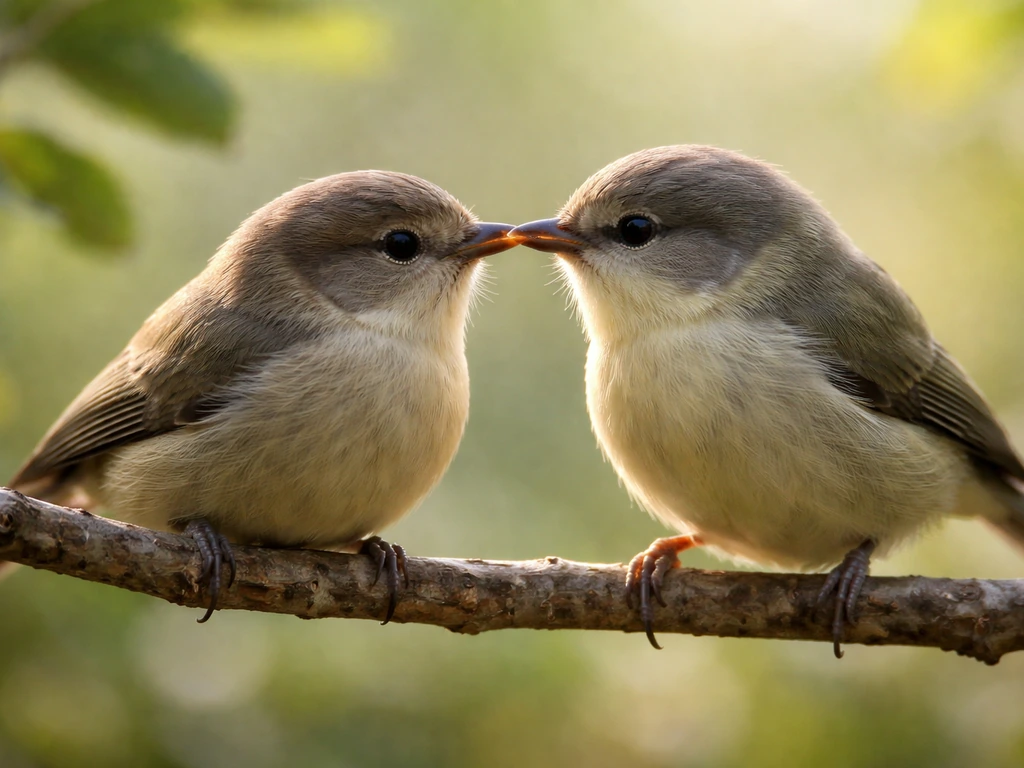
- Literal bird behavior: In wildlife and birding communities, "bird kiss" describes courtship contact where two birds touch bills, rub beaks together, or engage in mutual feeding (allofeeding). It's a real, observable behavior.
- Spiritual or dream symbolism: Some people encounter the phrase while processing a dream or an omen, interpreting a bird making close contact with a person as carrying spiritual meaning.
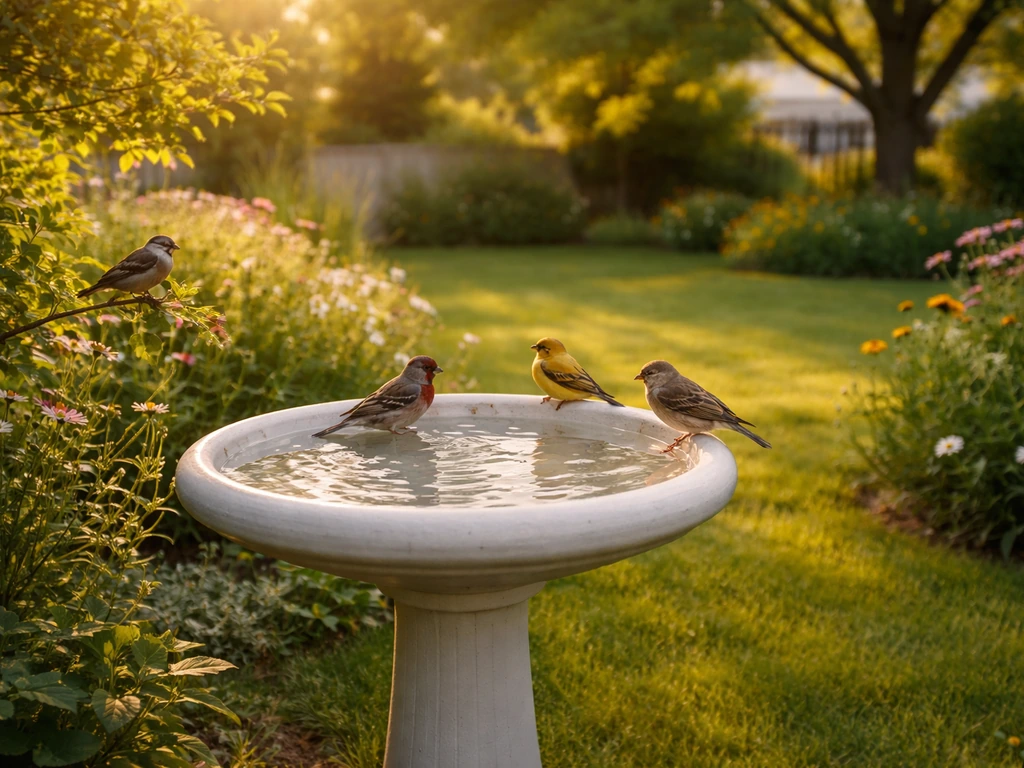
Most searches for "bird kiss meaning" fall into the first or last category. If you meant something you read about backyard birds, you might also be looking up bird baths meaning and how they attract different species. If you got a text from someone saying they want to give you bird kisses, that's the romantic slang definition. If you dreamed a bird landed on your face, that's a different conversation entirely.
Birds in flirty and romantic language: idiom vs. literal behavior
Birds have always carried romantic and affectionate connotations in language. Calling someone "my little bird," a "love bird," or describing their kisses as bird-like taps at something light, quick, and sweet. The "bird kiss" as slang borrows from that tradition. It positions the kisser as delicate, playful, and a little fluttery, the opposite of a deep or intense kiss. It's the kind of phrasing that shows up in texts between people who are being cute with each other, in romance novels, or in lyrics.
The kaomoji version operates the same way but in digital spaces. Japanese emoticon culture has a long history of assigning emotional weight to small symbols, and the bird kiss kaomoji specifically conveys warmth and playfulness rather than desire. If someone sends you (。ˇ ⊖ˇ)in a chat, they're being affectionately goofy, not making a literary reference.
Contrast this with the literal side: actual birds "kissing" is documented courtship and pair-bonding behavior, not a metaphor. Species like pigeons, parrots, and various songbirds rub bills together, engage in mutual preening, or pass food from beak to beak as part of strengthening a bond with a mate. When birders or wildlife writers describe this as a "kiss," they're using the human term as a loose analogy for beak-to-beak contact, not suggesting the birds have romantic feelings in the human sense.
Cultural and spiritual symbolism: when birds meet "kiss" imagery
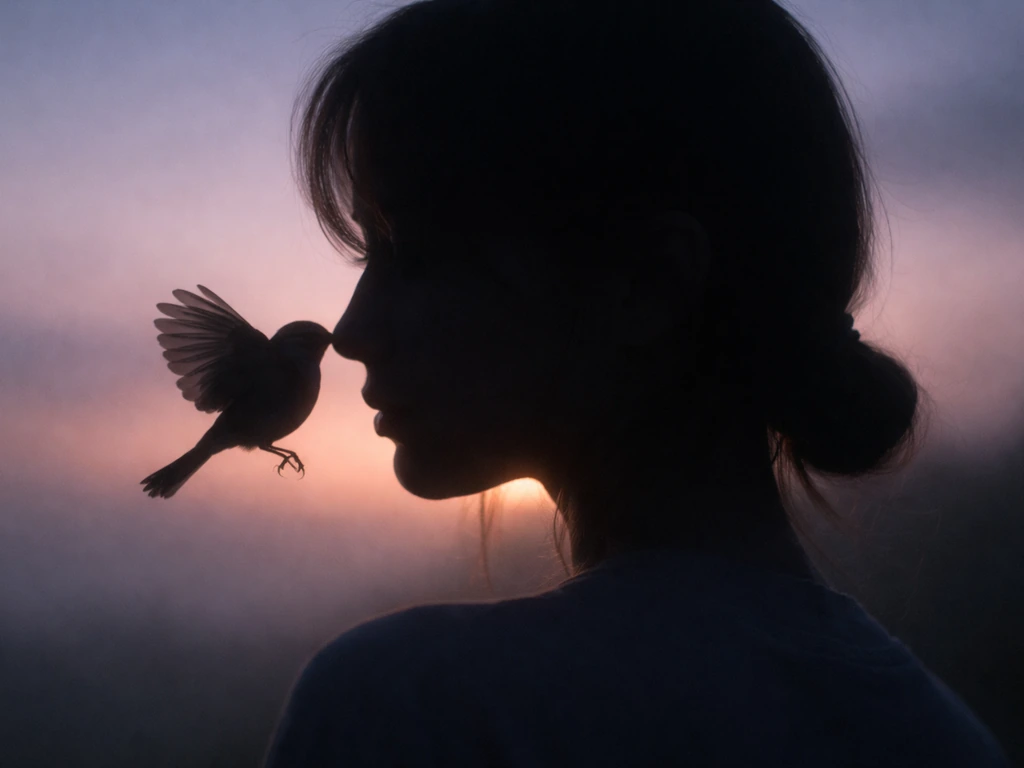
Birds carry deep symbolic weight across virtually every culture: messengers, souls of the departed, omens of love or death, divine intermediaries. The combination of a bird with kiss imagery (a bird pressing close to a person, a bird landing on lips, two birds touching beaks) pulls from several overlapping traditions.
- In Celtic and European folklore, certain birds landing on or near the face were read as a soul making contact, either a deceased loved one sending a message or a blessing from a spirit guide.
- In Greek mythology, doves were sacred to Aphrodite, goddess of love. A dove's kiss or touch was associated with the transmission of love or divine favor.
- In some Indigenous North American traditions, a bird touching a person is treated as a meaningful encounter, a prompt to pay attention to something in your life rather than a coincidence.
- In Eastern traditions, cranes and swallows touching is symbolic of fidelity and long partnership. The image of two birds with touching bills appears on wedding textiles, ceramics, and poetry throughout Chinese and Japanese culture.
- In Christian iconography, the dove as Holy Spirit descending and touching a person carries a sense of divine kiss or blessing, a concept that bled into Renaissance art and literature.
None of these traditions uses the exact phrase "bird kiss," but the imagery they encode is consistent: a bird making close contact with a person or another bird is rarely neutral symbolically. It usually signals connection, transmission of something (love, a message, a blessing), or the presence of something beyond the ordinary moment.
Dream and omen interpretations of a bird kiss
Dreams about birds are among the most commonly searched dream symbols, and when the dream involves a bird making direct contact with your face, lips, or cheek, people naturally want to know what it means. Dream interpretation is inherently personal, but there are some recurring themes in folklore and psychology worth knowing.
In general dream symbolism, a bird landing on or near your face tends to be read as a positive sign: messages arriving, new insight, or an emotional connection being offered. A bird kissing or pecking your lips is sometimes interpreted as someone trying to communicate something important to you, either a person in your waking life who hasn't spoken up, or your own subconscious signaling that you need to say something.
Omen-wise, a wild bird voluntarily approaching a person's face (outside of dreams, in real life) is treated in many folk traditions as particularly significant. In some European superstitions, a bird landing on your shoulder or brushing your face meant news was coming. In others, the species mattered: a robin was a good omen, while a crow or raven making close contact carried more ambiguous meanings, sometimes warning, sometimes wisdom.
The honest framing here is that dream symbols and omens are meaningful because you make them meaningful. If the image of a bird kissing you in a dream stirs something emotionally, that feeling is worth paying attention to, regardless of what any folklore tradition prescribes. The symbolic history around the image just gives you a vocabulary to explore what it might be pointing at.
How to figure out what "bird kiss" means in your specific situation
Because the phrase genuinely spans multiple domains (slang, spirituality, ornithology, dreams), the fastest path to the right interpretation is to identify where you saw or heard it. Because the phrase genuinely spans multiple domains (slang, spirituality, ornithology, dreams), the fastest path to the right interpretation is to identify where you saw or heard it, and if you're really asking about “bird bath shower meaning” instead, check that context too. If you searched for “bird shower meaning,” it usually points to a similar idea about how bird-related phrases are interpreted from context. Use this as a quick guide: A bird bath can also be part of a quick shower routine for birds, so it helps to understand what it means when you see the phrase Use this as a quick guide.
| Where you saw it | Most likely meaning | Next step |
|---|---|---|
| Text message or DM from someone you know | Romantic/affectionate slang: small, gentle pecks | Take it as a playful, sweet gesture of affection |
| A meme, post, or chat using (。ˇ ⊖ˇ) or similar | Japanese kaomoji expressing playful affection online | It's an emoticon equivalent of a blown kiss or wink |
| Social media post with shock-humor tone | Comedic slang (the regurgitation joke version) | It's being used for gross-out humor, not romance |
| A poem, song lyric, or literary quote | Metaphor drawing on bird symbolism: lightness, love, spirit | Look at the emotional context; the bird likely represents something tender or fleeting |
| A dream you had | Dream/omen symbolism: connection, incoming message, intuition | Reflect on who or what in your life might be trying to reach you |
| A real-life wild bird encounter | Behavioral or spiritual omen depending on your framework | Read it as meaningful contact, or look up the specific bird species for folklore associations |
| A nature documentary or birding article | Literal courtship behavior: bill rubbing, allofeeding | It's describing real bird biology, not a metaphor |
Context almost always resolves the ambiguity. The same two words mean very different things in a flirty text versus a bird behavior article, and you're usually already sitting in the right context to know which one applies.
If you meant a literal bird kiss: what it looks like biologically, and what to know about safety
If you're watching actual birds and wondering what they're doing when they press their bills together, here's what's happening. Many species engage in beak-to-beak contact as part of courtship or pair bonding. It typically takes a few forms:
- Bill rubbing: Two birds gently rub or press their beaks together, reinforcing their bond. Common in parrots, pigeons, and doves.
- Allofeeding (courtship feeding): One bird passes food to another, beak-to-beak. This looks like kissing but is actually a ritualized behavior where the male demonstrates he can provide food, and the female assesses his fitness as a mate.
- Mutual preening (allopreening): Birds use their bills to preen each other's feathers, especially around the head and neck, areas they can't reach alone. This is a bonding behavior and often follows or precedes bill touching.
- Cloacal contact: Actual mating in birds involves a brief cloacal kiss, where both birds press their cloacas together to transfer sperm. This is quick (under a second for most species) and looks nothing like what people imagine.
On the safety side: if a pet bird or a wild bird presses its bill to your lips or face, there are real hygiene considerations. If you were really asking about bird bathing meaning, it generally refers to the behavior birds use to clean their feathers and regulate comfort. Birds can carry bacteria like Chlamydia psittaci (which causes psittacosis in humans) and Salmonella, among other pathogens. This doesn't mean bird contact is dangerous in normal circumstances, but letting a bird touch your mouth or lips directly is not recommended, especially with wild birds or birds you don't know the health history of. Responsible bird owners know to enjoy beak contact on hands or cheeks rather than lips, and to wash hands after handling any bird.
It's also worth noting that a wild bird voluntarily approaching a person close enough for facial contact is genuinely unusual behavior. If it happens to you, the bird may be habituated to humans (common in urban parks), injured or disoriented, or simply curious. It's a remarkable moment, and it makes sense that people assign meaning to it, both the spiritual traditions mentioned above and the simple emotional weight of an animal choosing to trust you that much.
Putting it all together
"Bird kiss" is one of those pleasantly layered phrases that works in slang, in symbolism, in biology, and in dreams, and none of those layers cancels the others out. If you meant a bird bath by Leonora Carrington, the symbolism and intended meaning can be different from the phrase people use in flirty or dream contexts Bird kiss. If you got it in a text, someone's being sweetly flirty. If you dreamed it, your subconscious is probably processing something about connection or communication. If you watched two birds do it in your backyard, you witnessed a genuine bonding behavior that ornithologists find just as remarkable as the folklore traditions do. Birdfact explains that while some people talk about “mouth kissing,” bird mating more typically involves cloaca contact blank" rel="noopener noreferrer">cloaca rather than “mouth kissing”. The meaning that matters most is the one that matches where you are right now.
FAQ
How can I tell if “bird kiss” is romantic slang or something more serious?
If you saw “bird kiss” in a flirty message or caption, it usually means small, sweet pecks or affectionate tickly kisses, not an explicitly sexual act. Look for cues like emojis (hearts, sparkles), “cute” wording, or the phrase being used as a nickname (for example, “come here, bird kisses”).
What does “bird kiss” mean when it appears as a symbol or kaomoji in a chat?
Kaomoji versions are typically used as playful warmth, and they are not meant to be decoded as a literal bird reference. If the text is otherwise affectionate but casual, treat it as a digital “adorable kiss” signal, not a message about courtship birds.
In a dream, does “bird kiss” mean different things depending on where the bird touches you?
If the phrase is tied to a dream, the most useful distinction is where the contact happens (cheek versus lips versus face overall). Cheek or near-face contact often reads as reassurance or kindness, while lips is more likely interpreted as communication, confession, or something someone is “trying to say” to you.
What’s the fastest way to confirm which meaning someone intends when they say “bird kiss”?
If you only heard the phrase and are trying to guess which meaning fits, ask one quick clarifying question or check for surrounding context. For example, “Did you mean like cute pecks, or the bird behavior?” works well because the answer reveals whether it was romantic slang, a kaomoji, or literal wildlife talk.
Is beak-to-beak contact always romantic “kissing” in birds?
For real birds, beak-to-beak contact can be courtship or pair-bonding, but it is not always the same behavior across species. Some species rub bills as social grooming or reassurance, so if you want to interpret it correctly, note the species and whether the birds are paired or interacting with other birds.
What should I do if a wild bird actually approaches and touches my face?
If a wild bird touches your face, it can be a sign of habituation, injury, or disorientation, and it is not something to “test” repeatedly. If the bird seems unsteady, lets you get too close, or acts unusually, keep distance and consider contacting local wildlife help.
Are there health risks if a bird touches my lips or mouth?
Yes, hygiene matters. Even though normal bird contact is not automatically dangerous, direct beak-to-mouth or beak-to-lips contact is not recommended, especially with wild birds or birds of unknown health status. If it happens, wash hands thoroughly and avoid touching your eyes or mouth until you have cleaned up.
How do I interpret “bird kiss” symbolism without turning it into a certain omen?
If you are interpreting “bird kiss” spiritually, be careful not to treat a symbol as a guaranteed omen. A good decision aid is to separate emotional impact from prediction: ask yourself what feeling the image stirred (comfort, longing, urgency), then decide what action that feeling suggests in your waking life.
Next Article
Bird Baths Meaning: Human Use, English Usage, Slang
Bird bath meaning: what it is for birds, how humans use the term in English, and any figurative symbolism.