When a bird swoops at you, the most likely explanation is simple: you got too close to a nest. Birds swoop as a defense behavior, diving toward a perceived threat to drive it away from eggs or chicks. It's not personal, it's not an omen by default, and it's not random aggression. That said, context matters a lot, and the same physical behavior can carry real symbolic weight depending on whether you're asking about what happened in your backyard, what you dreamed about last night, or what folklore traditions say about sudden bird encounters.
Bird Swooping Meaning: Causes, Safety Steps, Folklore

Marcus Holloway
9 Jul 2026
What people mean when they say "bird swooping"
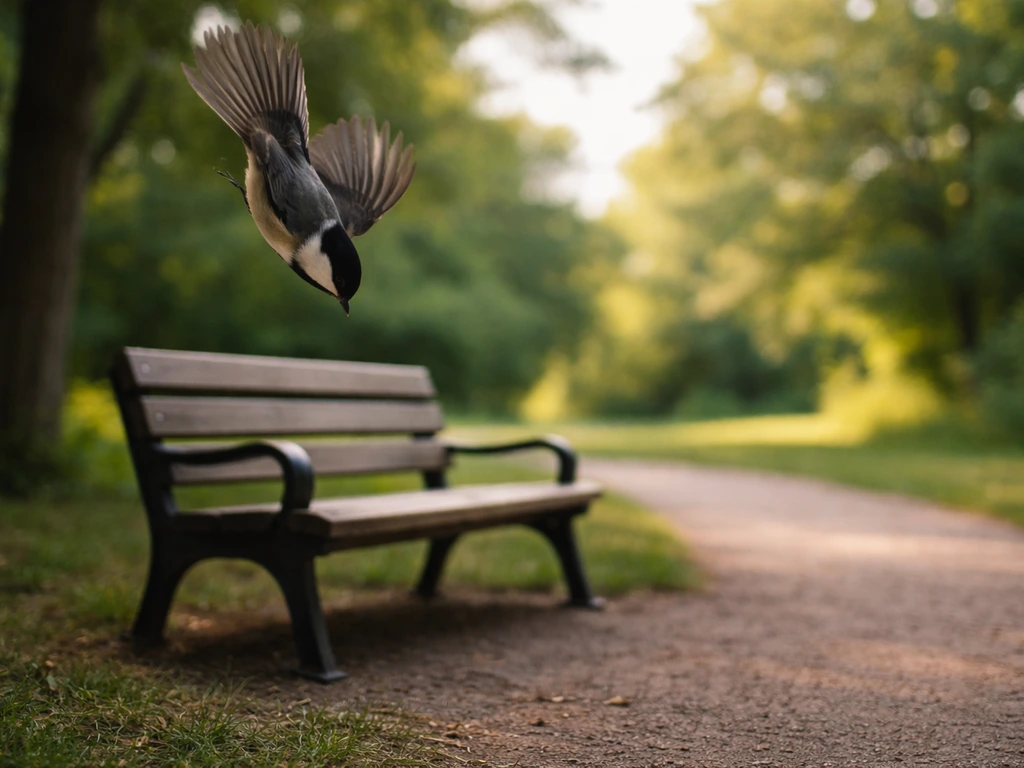
"Bird swooping" refers to the fast, downward diving flight a bird makes toward a person, animal, or object. The Cambridge Dictionary defines a swoop as moving quickly downward to attack or seize, and that's exactly how it looks in practice: the bird drops or angles sharply toward you, sometimes making contact, sometimes pulling up just short. In everyday speech, people use the phrase to describe being targeted by a bird, usually to ask either "why did that happen?" or "what does it mean?"
The word itself also shows up in idioms like "in one fell swoop," where it carries a metaphorical sense of sudden, forceful action rather than any literal bird behavior. But when most people search for "bird swooping meaning," they're asking about a real encounter, a dream, or a symbolic interpretation, and this guide covers all three. If you’re trying to understand what a bird shaped cloud meaning might represent, you can treat the symbolism like you would any other interpretation: start with context, then narrow it down swooping meaning.
Why birds swoop: the real causes
There are several distinct reasons a bird might swoop at you, and the cause changes how you should respond.
Nest defense (the most common reason)
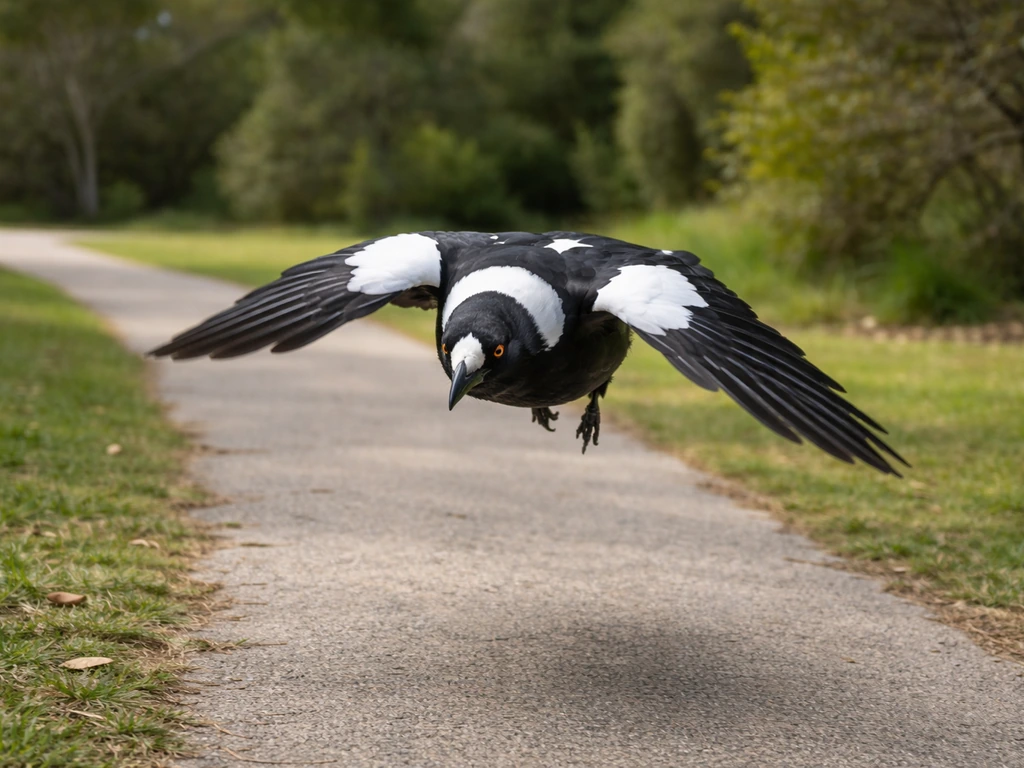
This is behind the vast majority of swooping encounters. The Queensland government describes it plainly: swooping is "a territorial response to protect their eggs and young during their breeding season." A bird that sees you enter what it considers its defense zone will fly directly at you to push you back. Audubon calls this dive-bombing "anti-predator behavior" and notes it's the most aggressive form of nest defense a bird can perform. It doesn't matter if you're a threat or not. To the bird, proximity equals danger.
The Australian Magpie is probably the world's most famous swooper, but the behavior spans many species. RSPCA Queensland lists Australian Magpies, Crows, Magpie-larks, Noisy Miners, Grey Butcherbirds, and Masked Lapwings as commonly swooping birds, and adds that any nesting bird may swoop if you get too close. In North America, Northern Mockingbirds are well-known for dive-bombing pedestrians near sidewalk nests, according to Audubon. Gulls do it too: the RSPB confirms gulls will dive-bomb when they feel their nesting site or chicks are threatened.
Hunting and prey dives
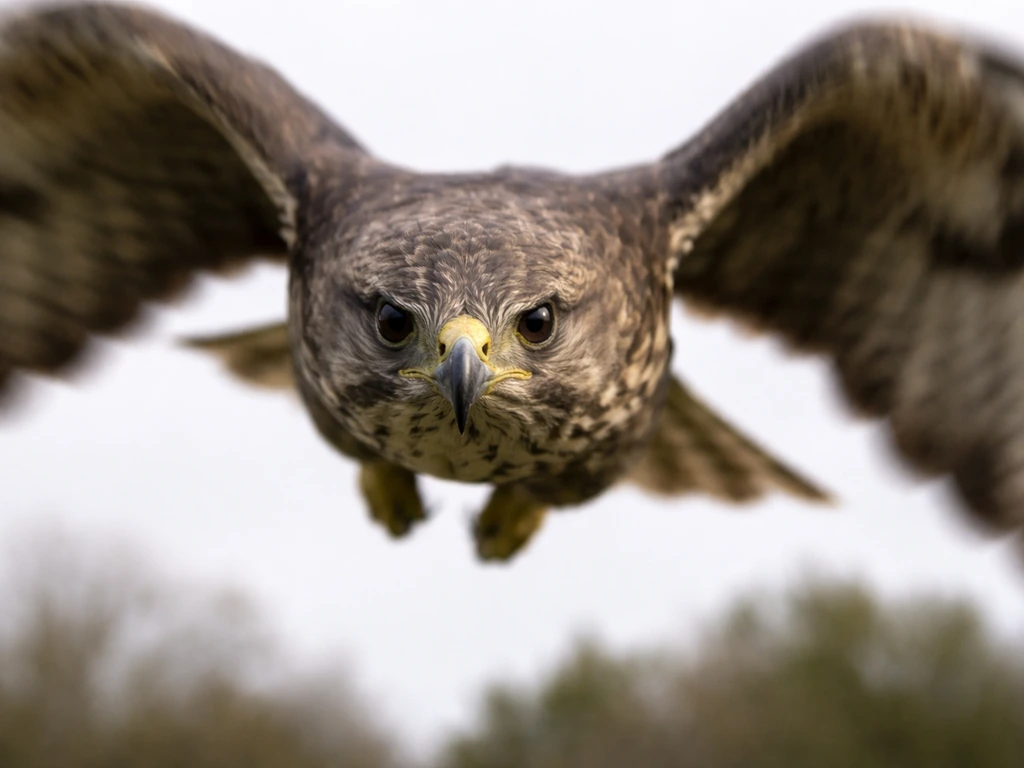
Raptors like falcons, hawks, and eagles swoop as part of hunting. If you see a large bird of prey diving at high speed in an open field or toward water, it's more likely chasing prey than targeting you. This type of swoop is fast, direct, and usually not aimed at humans. You'll notice the bird's focus is below or away from you rather than locked onto your movement.
Territorial warnings outside nesting season
Some species are territorial year-round, not just when nesting. A bird that swoops at you in winter is more likely enforcing a feeding territory or responding to a perceived rival, especially if you're near a bird feeder or a patch of food-rich habitat. The behavior looks similar to nest defense, but the timing and location are your clues.
Courtship and display flights
Some birds perform dramatic swooping flights as part of courtship displays, where males dive to impress females or establish dominance. These are usually aimed at other birds rather than people, but if you're standing in the middle of an active display territory, you might catch the edge of one. The bird's attention will be on another bird, not on you.
What to do if a bird swoops at you right now

Here's the practical guide. These tips are backed by guidance from wildlife authorities across Australia, the UK, and North America, and they apply regardless of species. Wildlife Victoria also notes that swooping behaviour can vary by site and season, and it provides a regional approach through Victoria’s Swooping Bird Map plus safety guidance for entering swooping areas.
- Walk quickly, don't run. Running triggers a chase response and makes you look more like fleeing prey. Multiple Australian wildlife councils and ABC News specifically emphasize: walk fast, stay calm.
- Keep your eyes on the bird. Research suggests that birds are less likely to swoop if they know you can see them. Making eye contact (or at least facing toward the bird) signals that you're aware and watching.
- Protect your head. Cover your head with a hat, bike helmet, or umbrella if you have one. The University of Melbourne's safety bulletin recommends this as a primary protective measure. Sunglasses also protect your eyes.
- Move out of the defense zone. Birds typically only swoop within about 50 to 100 metres of their nest, sometimes up to 200 metres according to Queensland government guidance. Once you're outside that radius, the behavior stops.
- Walk in a group if possible. Wildlife Victoria recommends traveling in a group, as birds are generally less likely to engage with multiple people together.
- Don't fight back or try to scare the bird. Waving arms, throwing things, or making loud noises tends to escalate the situation. Queensland government guidance is blunt on this: "Don't fight back."
- Warn others. If you've identified an active swooping zone, Wildlife Victoria suggests putting up a warning for others. Many councils run reporting systems for exactly this purpose.
- If the bird is a gull protecting a grounded chick (common in urban areas), the RSPCA notes it will stop swooping once you've moved away from the young bird. Locate the chick if you can and simply walk away from it.
Spiritual and cultural interpretations of a swooping bird
Bird behavior has been read as meaningful across nearly every human culture for thousands of years. The practice even has a name: ornithomancy, which Merriam-Webster defines as divination through the observation of birds' flight and calls. Roman augurs made political and military decisions based on bird behavior. Greek tradition drew on bird flight and cries for omens. The idea that a bird swooping toward you carries a message is old, widespread, and deeply embedded in human storytelling. If you’re also asking what bird loafing means, that term points to a different kind of behavior than swooping bird loafing meaning.
In many folk traditions, a bird swooping close or directly toward a person is interpreted as a warning, a message, or a sign of approaching change. In the same way that symbolism gets attached to bird behavior, people also interpret a bird hanging upside down in specific ways swooping toward you. Some traditions read it as a call to pay attention, as if the universe or a spirit is trying to get your notice. Others frame it as a sign of protection, with the bird acting as a guardian pushing away spiritual harm. A few traditions read it as an omen of conflict or challenge ahead, especially if the bird is dark-colored or associated with death symbolism in that culture.
Here's how I'd sanity-check a spiritual reading: start with the natural explanation first. If it's spring, you're near trees or a rooftop, and the bird kept swooping at the same spot regardless of who walked past, the behavioral explanation almost certainly accounts for it. The symbolic layer becomes more interesting when the context is unusual, when the swoop happens outside nesting season, in an unexpected location, to a person going through a significant life moment, or repeatedly in a way that genuinely feels pointed. Cultural meaning and behavioral reality don't have to cancel each other out. You can acknowledge both.
Bird swooping in dreams

Dreams about birds attacking or swooping tend to cluster around a few consistent themes in dream interpretation: feeling threatened or overwhelmed, conflict with something external, anxiety about a situation you can't fully control, or vulnerability. If the bird in your dream swooped and actually struck you, interpretations often emphasize confrontation, a challenge you need to face rather than avoid. If the bird swooped and you evaded it, some frameworks read that as processing a fear that hasn't fully manifested yet.
It's worth noting that birds in dreams are also frequently symbols of freedom, intuition, and perspective. A swooping bird, even an aggressive one, can be read as something trying to wake you up rather than harm you, similar to how real birds swoop not to injure but to redirect. If you've just had a real-world swooping encounter and then dream about it, that's almost certainly your brain replaying the experience rather than delivering a spiritual message. Context within the dream (the species, how you felt, what happened after) matters as much as the swoop itself.
Dreams about bird movement more broadly, including birds falling, circling, or hanging in unusual positions, often share thematic territory with swooping dreams. In many belief systems, the phrase “bird falling from sky” is also treated as a sign, so people often ask how the symbolism differs from a swoop or dive-bomb bird movement more broadly. Each has its own symbolic tradition worth exploring separately.
Reading the situation: how to figure out what's really going on
Whether you want a practical explanation or a meaningful one, gathering context clues is the same first step. Here's what to observe.
Time of year
This is the single most useful clue. Most swooping is nest-defense behavior, and nest defense is seasonal. In Australia, magpie swooping season peaks in spring (August to November). In North America, mockingbirds and red-winged blackbirds swoop most aggressively from April through July. If it's breeding season for local birds, defensive swooping is by far the most probable explanation. Outside those windows, territorial behavior or pure display becomes more likely.
Location and the bird's behavior pattern
A bird that swoops at anyone who passes a specific spot is defending a territory or nest. A bird that singles you out while ignoring others is rarer and worth noting. Check whether there's a nest nearby, a grounded chick, or an obvious food source. The RSPCA's guidance on gulls is a good example: if there's a fledgling on the ground nearby, the parent will swoop anything in its vicinity until you move away from the chick.
Species
Knowing what bird swooped at you narrows the interpretation significantly. A Masked Lapwing in an Australian park in October? Classic nest defense. A Red-tailed Hawk in a field? Possibly hunting. A gull in a coastal town in June? Almost certainly a rooftop nest nearby. If you're trying to apply cultural symbolism, species matters too: crows and ravens carry different traditional meanings than robins or swallows.
What the bird did after the swoop
Did it pull up short and return to the same perch? That's a warning pass, the most common nest-defense move. Did it make contact? That's a more aggressive defense response, still behavioral, but escalated. Did it follow you past 100 metres? That's unusual for pure nest defense and might indicate an unusually bold individual or a different kind of territorial behavior. Did it carry something in its talons? Then you likely witnessed the end of a hunt, not a threat display at all.
| Scenario | Most likely cause | What to do |
|---|---|---|
| Spring/summer, same spot, any passerby targeted | Nest defense | Walk quickly past, protect head, stay outside 50-100m range |
| Raptor diving in open field | Hunting prey | Watch from a distance, no action needed |
| Gull swooping in urban area near fledgling | Protecting grounded chick | Move away from the young bird, swoop will stop |
| Outside breeding season, near bird feeder | Territorial feeding defense | Give the bird space, consider repositioning feeder |
| Bird swoops once, makes eye contact, moves on | Warning or display | Note the species and timing; behavioral cause most likely |
| Repeated swoops on a significant personal day, unusual location | Could carry symbolic meaning alongside behavioral cause | Investigate behavioral cause first, then apply cultural context if relevant |
Putting it all together
The most useful frame for "bird swooping meaning" is this: behavior first, symbolism second. A bird swooping in spring within 100 metres of a tree is almost always a parent protecting a nest. That's not a diminished experience. It's actually fascinating when you understand what the bird is doing and why. Once you've satisfied the behavioral question, the door is wide open to also ask what that encounter means to you culturally, spiritually, or emotionally. If you are wondering about the bird circling meaning specifically, the key is whether it matches a defensive or territorial pattern in the moment. The two readings aren't competing. They're just answering different questions.
FAQ
Is a bird swooping at me ever dangerous, or is it just annoying?
Yes, but only in certain cases. If the bird repeatedly dive-bombs after you move away, or it makes contact (pecking or clipping) without settling, treat it as high-risk and keep distance. If the swoop stops once you leave the area, it is almost always nest or territory defense.
What should I do immediately if a bird starts swooping while I’m walking?
Start by changing your route rather than waving or running. Back away slowly and go around the area, because sudden movement can keep the bird engaged. If you have to pass, keep your head and body covered and move in a steady line, since most birds are tracking your approach into their defense zone.
Can I prevent swooping by moving the nest or touching the chicks?
Do not try to touch, feed, or chase the bird, and avoid removing “the problem” by grabbing chicks or nests. Even if you think it’s only a small bird, nest-defense behavior can escalate, and disturbing chicks can prolong the defense for days.
Why would a bird swoop at me if it’s not breeding season?
It can happen outside nesting season, but the pattern matters. If the bird targets everyone who passes one spot, it may be defending a food-rich territory. If it targets you specifically while ignoring others, look for something you are carrying or wearing that resembles a predator or rival, such as a shiny object or pet out of control.
How can I tell whether the bird is defending a nest versus reacting to something about me?
If multiple people are being targeted at the same time and the bird stays near a fixed area, it’s likely protecting a nest or chicks. If only you are targeted, note whether you walked closest to the ground, approached a feeder, carried a dog or stroller, or entered a path the bird consistently monitors.
Does the bird type (magpie, gull, hawk, etc.) change the likely reason for swooping?
Species can change what “meaning” is most plausible. For example, gull rooftop defense often ties to a specific building or ground nest area, while magpies and lapwings usually defend a broader ground-level zone near vegetation. If you can identify the species and the location (coast, park, rooftop, field), you can narrow the likely cause fast.
How do I know whether bird swooping is “just nature” or actually a sign or omen?
In most cases, the most likely explanation is physical, not predictive. A “sign” interpretation becomes more worth considering only if the event is unusual for your area, you repeatedly experience swooping in different contexts, or the timing aligns with a meaningful personal milestone. Otherwise, treat it as a local wildlife behavior.
What’s the difference in dream meaning if the bird hits you versus if you dodge it?
If the bird in your dream attacked you and you did not escape, many interpretations lean toward unresolved conflict or a situation you feel forced to confront. If you evaded it, it often points to fear being processed or a threat you are learning to manage, not necessarily the threat’s literal future.
What details should I record to figure out what the swooping likely means?
Document the details. Note species if possible, time of day, exact location (tree line, sidewalk, rooftop), distance, whether it carried anything, whether it made contact, and whether the behavior stopped after you left. Those specifics help separate nest defense, hunting, display, and territorial rivalry.
How can I tell if a raptor swoop is hunting versus the bird defending something nearby?
If a large raptor is diving, don’t assume it’s a threat to you. Watch where the bird’s focus goes: hunting swoops usually aim at prey on the ground or water rather than tracking your movement for a defense sequence. If it follows your line repeatedly near you with a defensive pattern, that’s different.
Next Articles
Bird Loafing Meaning: Behavior vs Lazy Slang and What to Do
Bird loafing meaning: spot relaxed lounging behavior, check warning signs, and know when to contact wildlife help.
Bird Falling From Sky Meaning: Real Causes, Omens, Dreams, What To Do
Bird falling from the sky meaning explained: real causes, omens, dream symbolism, and step by step what to do safely.
Bird Verb Meaning: Uses, Behaviors, Idioms & Sightings
Discover what 'bird' means as a verb, definitions, behaviors, idioms, sightings, and practical next steps.