A bird falling from the sky usually means one of three things: you witnessed a real bird in distress (window strike, illness, exhaustion, or worse), you're processing a dream image that felt unsettling, or you're wondering whether it carries some spiritual or omen-based meaning. Most of the time, the answer is purely practical. But because all three interpretations are valid reasons to search this phrase, this guide covers each one directly so you can find what you actually need.
Bird Falling From Sky Meaning: Real Causes, Omens, Dreams, What To Do

Marcus Holloway
30 May 2026
Real event, spiritual omen, or dream? Start here
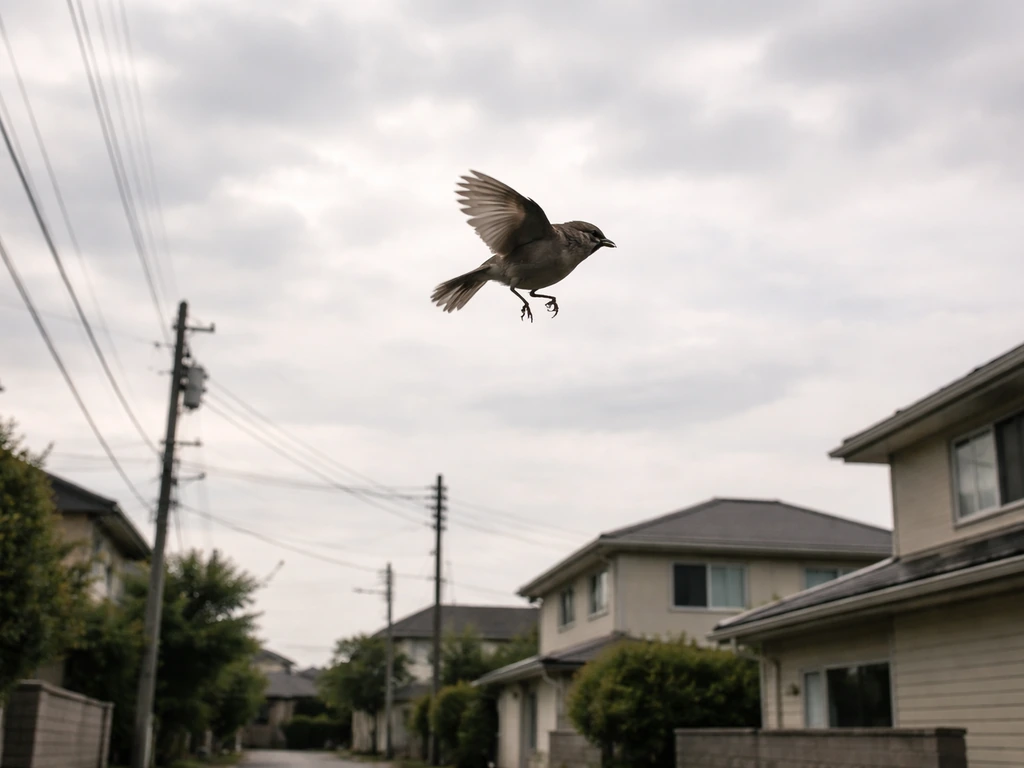
The phrase "bird falling from the sky" gets used in three very different contexts, and mixing them up leads to confusion. If you just watched a bird drop in your yard or on a sidewalk, you're dealing with a real-world situation that needs a practical response. If someone mentioned it as a sign or you're wondering about folklore, that's a cultural and spiritual question. And if it happened in a dream last night, the interpretation framework is completely different. Each section below is written to stand on its own, so jump to whichever one matches your situation.
Why birds actually fall from the sky
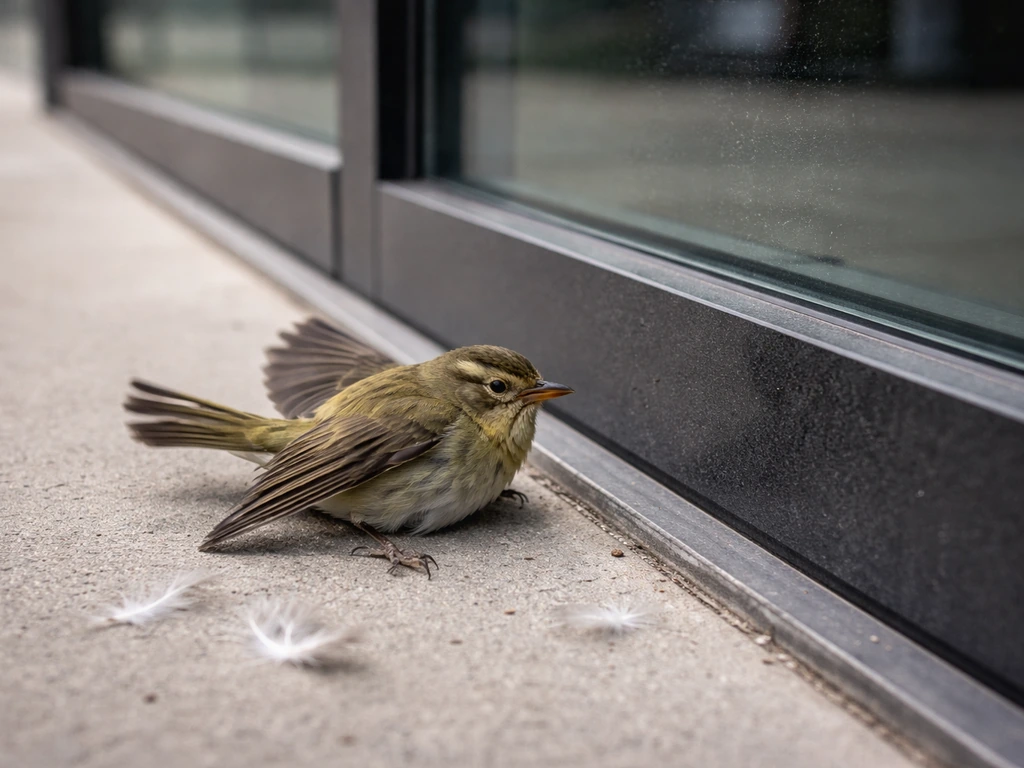
Birds don't fall without a reason, and in most cases that reason is something identifiable. Here are the most common causes, and knowing them helps you figure out how serious the situation is.
Window and building collisions
This is the single most common cause of a bird suddenly appearing grounded. Glass is invisible to birds, and they fly straight into it at full speed. What's deceptive is that a window-strike victim can stand up, look alert, and even flutter around for 20 to 30 minutes before dying from internal bleeding or brain trauma. If you find a bird near a window or glass door, assume a collision happened even if the bird seems okay.
Disorientation from artificial light
Millions of songbirds migrate at night and navigate by stars. Artificial light from buildings, towers, and lit windows disrupts that navigation, causing birds to circle, become exhausted, and eventually drop to the ground. Artificial light can also make birds circle and exhaust themselves, which connects to the bird circling meaning people often look up. This happens most often during spring and fall migration peaks, and cities with heavy light pollution see the highest numbers. It's one of the reasons the U.S. Fish and Wildlife Service specifically flags nighttime lighting as a major threat to birds.
Illness and toxin exposure
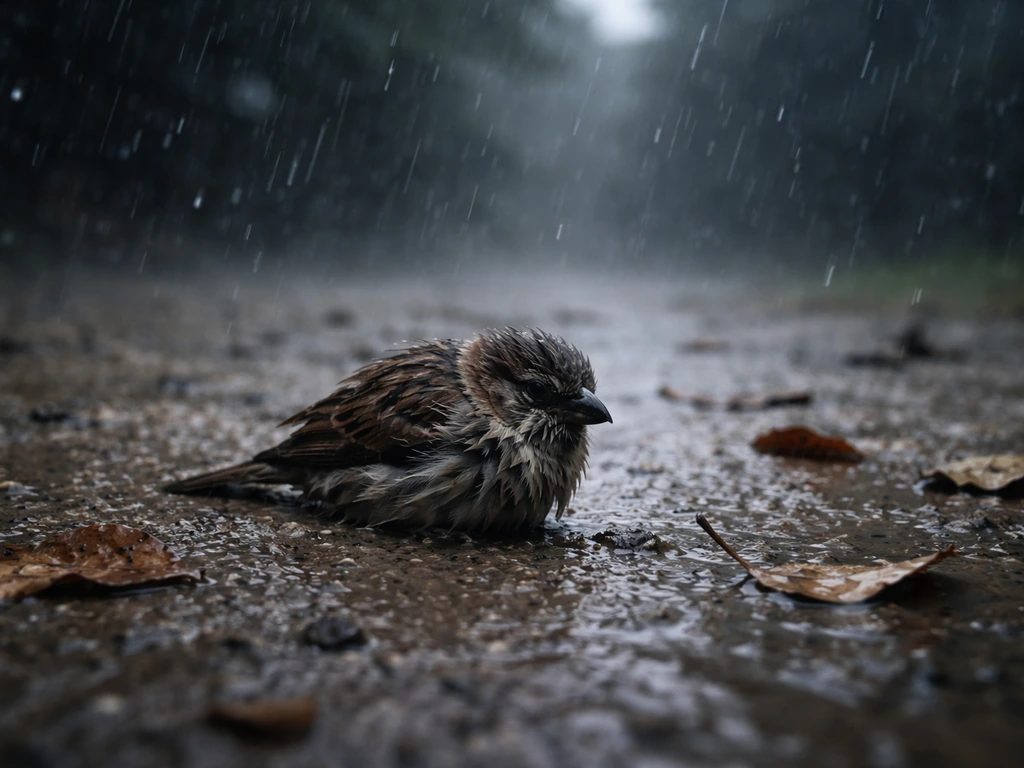
Avian botulism is a good example of how disease brings birds down fast. The toxin from Clostridium botulinum causes progressive paralysis, and affected birds often look physically fine externally but can't hold their heads up or control their bodies. You might see a bird that appears drunk or unable to stand. Other diseases, including avian influenza, can cause sudden death or rapid decline. A bird found dead on the ground with no visible injury is often a disease or toxin case.
Exhaustion and extreme weather
Long migratory flights, sudden storms, and temperature extremes can push birds past their physical limits. A bird that simply ran out of fuel mid-flight may land anywhere it can, including open ground where it's vulnerable. These birds sometimes recover on their own given a few hours of rest, but they're also easy targets for cats and other predators while grounded.
Predator strikes and injuries
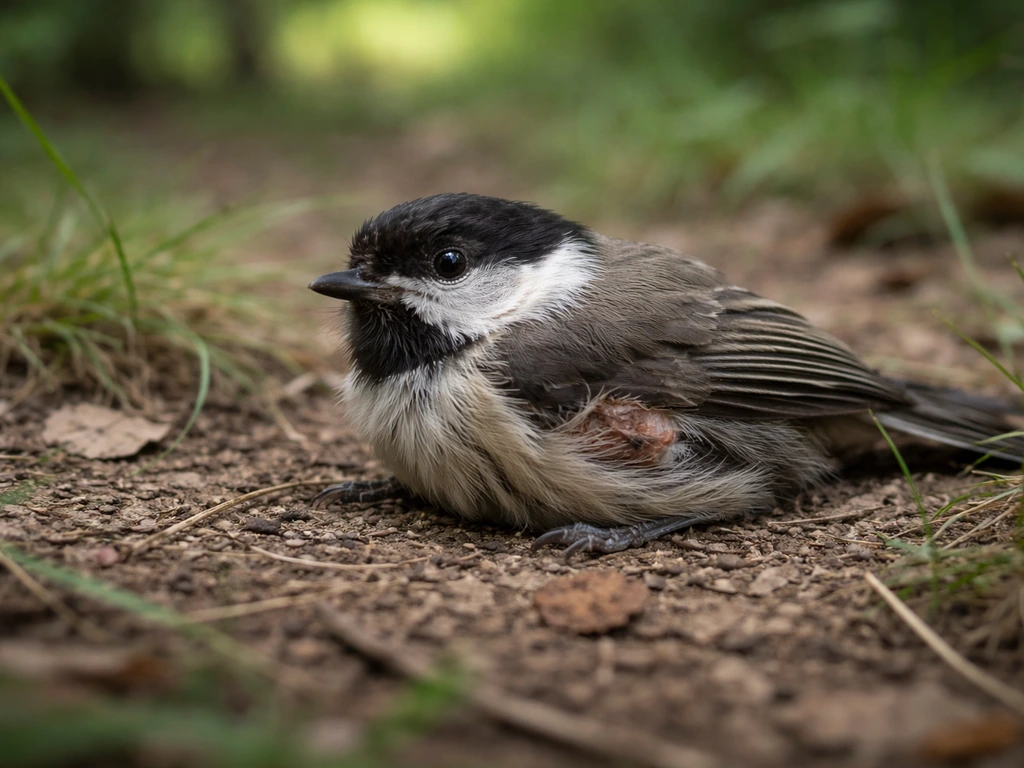
A hawk or falcon hit can knock a bird out of the air entirely. If the strike doesn't kill it immediately, the injured bird lands and can't get back up. You might not see the predator, just the aftermath. Puncture wounds from talons aren't always obvious at first glance, but the bird will be unable to use one wing or will be holding itself oddly.
Is it an omen? What different cultures say
People have been reading meaning into birds for thousands of years, and a bird falling from the sky is one of those images that carries weight in several traditions. Some people also use the phrase bird loafing meaning when they notice birds behaving unusually or appearing grounded bird falling from the sky. It's worth knowing what those interpretations are, even if you're approaching this from a skeptical angle.
In many Western folk traditions, a bird falling or dying near your home was read as a warning of coming difficulty, often linked to death or illness in the household. This association appears in European superstition going back centuries and shows up in literature and poetry as a shorthand for bad omens. A dead bird falling at your feet specifically was considered particularly dire in some regional English and Irish folklore.
Other traditions frame it very differently. Some Indigenous American belief systems interpret a fallen bird not as a warning but as a messenger completing its journey between worlds, a transitional symbol rather than a purely negative one. In certain Eastern traditions, a bird falling near you prompts reflection on what in your own life may need releasing or changing, framing it more as a nudge toward transformation than a prediction of harm.
The honest reality check: there is no scientific or epidemiological data linking bird-fall events to outcomes in the people who witness them. The CDC's approach to sick and dead birds is entirely surveillance-based: report it, avoid contact, let authorities test if needed. That's not to dismiss the cultural meaning people find in these moments, but it's worth separating what folklore says from what it can actually predict.
What a falling bird means in dreams
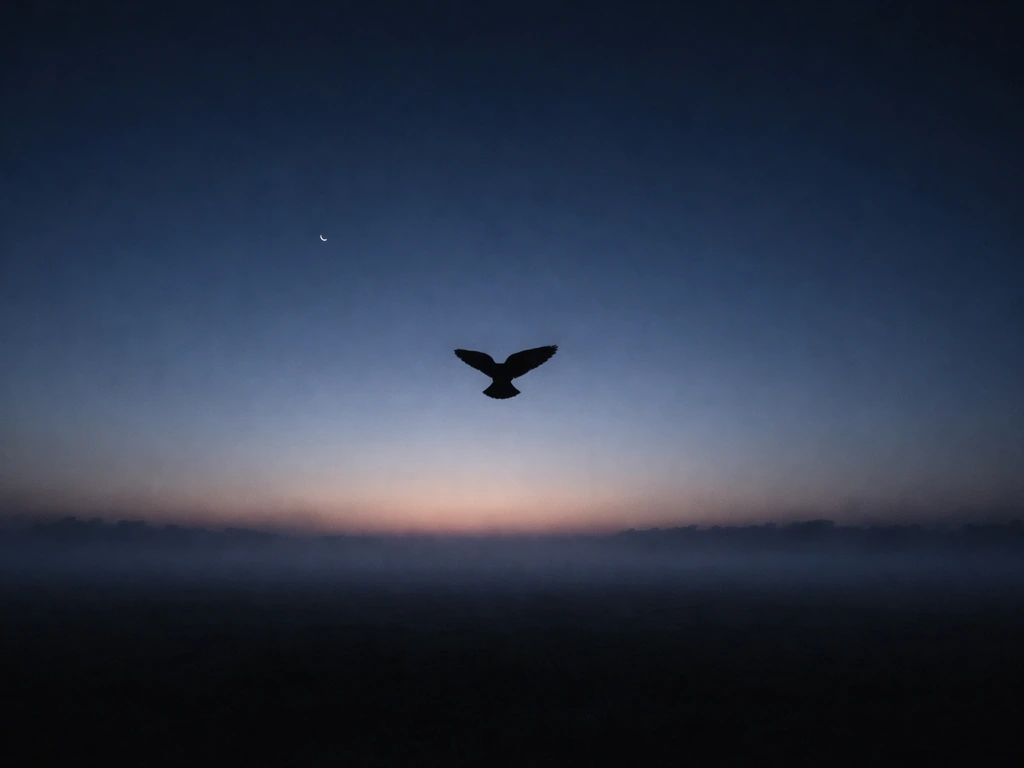
Dream interpretation is inherently subjective, and anyone who tells you there's one fixed meaning for a falling bird in a dream is oversimplifying. That said, certain themes come up consistently across different interpretation frameworks, and they're worth thinking through if the image stuck with you.
Birds in dreams are frequently connected to freedom, communication, ambition, and the ability to rise above daily problems. If you are trying to pin down what a bird shaped cloud meaning could be, it may help to compare dream symbolism with the feelings and context around the sighting Birds in dreams. When a bird falls in a dream, the common threads involve something in those areas feeling unstable or blocked.
Dream interpreters often connect it to a loss of confidence, a project or relationship losing momentum, or anxiety about a transition you're going through. The fall itself matters too: a sudden drop feels different emotionally from a slow glide downward, and your emotional reaction inside the dream is usually a better guide than any fixed symbol dictionary.
Some useful questions to ask yourself after this kind of dream: What area of your life has felt uncertain lately? Have you been holding back from something you used to pursue freely? Is there a relationship or creative project where you've felt your energy dropping? The falling bird image tends to surface when something that once felt effortless is now requiring more effort than expected, or when you're afraid of failing at something that matters to you.
This connects loosely to the symbolism explored in bird circling and bird swooping imagery, both of which deal with birds in motion and what that motion represents about your mental or emotional state. The falling version tends to carry more urgency and weight, which is probably why it's vivid enough to send someone searching after they wake up.
What to do right now if you found a fallen bird
If this is happening in real time, here's a step-by-step approach that wildlife clinics and Audubon both support. Your goal is to stabilize the situation without making things worse.
- Don't touch the bird with bare hands. Use gloves, a cloth, or a towel. This protects both you and the bird from stress and potential disease transmission.
- Assess quickly: Is the bird breathing? Is it upright or flopped over? Can it hold its head up? These observations tell you how urgent the situation is.
- If the bird is alive but stunned, place it in a cardboard box lined with a towel. Make sure the box has air holes but is otherwise dark and quiet. Dark and quiet reduces panic and stress.
- If the bird feels cold, place a heating pad set to low under one half of the box (not the whole floor), or use a warm water bottle wrapped in a cloth. This gives the bird a way to regulate its own temperature.
- Do not give the bird food or water. This is one of the most common mistakes people make. An incorrect diet or forced water can injure or kill a bird that might otherwise have recovered. Even well-meaning feeding can cause aspiration.
- Keep the box away from pets, children, and noise. Place it somewhere dim and quiet while you make calls.
- If the bird appears dead, do not touch it with bare hands. Use a bag or gloves and contact your local animal control or state wildlife agency for guidance on disposal or reporting.
When and how to contact wildlife rehab or animal control
Contact a licensed wildlife rehabilitator as your first call whenever a bird is injured, ill, or acting abnormally. Local animal control is the right backup if you can't reach a rehabber. Here's a simple decision guide:
| What you're seeing | What it likely means | Who to contact |
|---|---|---|
| Bird on the ground, stunned but alive, near a window | Window collision with possible internal injury | Wildlife rehabilitator (first), then animal control |
| Bird alive but can't hold head up, appears paralyzed | Possible botulism or neurological illness | Wildlife rehabilitator immediately |
| Bird breathing, alert, sitting on ground | Exhausted migrant; may recover in a few hours | Monitor for 2 hours, then contact rehabber if no improvement |
| Bird dead, no visible injury | Disease, toxin, or collision aftermath | Don't touch; contact state wildlife agency or animal control |
| Multiple dead birds in the same area | Possible disease outbreak or toxin event | Contact state wildlife agency and local health department immediately |
When you call, be ready to describe: the species if you can identify it (or just the size and color), where you found it, what it's doing right now, and whether there are other birds affected nearby. This information helps the rehabber or agency decide how urgently to respond and whether it needs to be tested. For avian influenza surveillance, your state wildlife agency or local health department can tell you whether reporting or collection is needed in your area.
To find a licensed wildlife rehabilitator near you, search the National Wildlife Rehabilitators Association directory or contact your state's fish and wildlife agency. Audubon also recommends calling local animal services if a rehabber can't be reached quickly.
How to prevent this from happening again
If birds are hitting your windows or getting disoriented around your home, there are concrete steps that actually work. Most people underestimate how effective window treatments and lighting changes can be.
Making windows visible to birds
The key principle is pattern density. Decals and window tape only work when spaced close enough that birds register the pattern as a solid barrier. Audubon recommends no more than 2 to 4 inches between decals. Canada's government guidance specifies no gaps larger than 5 centimeters between pattern components. A single hawk silhouette sticker in the center of a large window does very little. You need coverage across the full pane.
- Window film with a dot or line pattern (applied to the outside surface) is one of the most effective retrofits
- Exterior screens or netting create a physical buffer that prevents contact even if a bird heads for the glass
- Tempera paint or soap applied in a grid pattern on the outside of glass is a low-cost, temporary option
- Cord curtains hung in front of windows work well for large picture windows
- Moving feeders to within 3 feet of windows (so birds can't build fatal speed) or more than 30 feet away (so they're less likely to associate the window with the feeding area) both reduce strikes
Reducing light pollution during migration
If you live in a migratory corridor or near a flyway, turning off or dimming non-essential exterior lights from roughly 11 PM to dawn during peak spring (April and May) and fall (August through October) migration makes a meaningful difference. The U.S. Fish and Wildlife Service specifically recommends attention to lighting during these peak periods and cautions against cooler-color LEDs that contribute to skyglow. Close blinds and curtains on lit rooms at night to reduce the light spill that draws in disoriented birds.
Yard and habitat choices
Keeping cats indoors is one of the highest-impact actions any individual can take for bird safety. Cats are a leading cause of bird mortality in North America, and a grounded bird that's already stunned or exhausted has almost no defense. Planting native shrubs and trees near your home also gives low-flying and grounded birds places to recover without being fully exposed. Avoid pesticide use that could poison the insects birds eat, which can cause secondary toxin exposure similar to the botulism pathway described earlier. If you also saw a bird hanging upside down, the meaning can differ, so check the specific “bird hanging upside down” interpretation bird hanging upside down meaning.
FAQ
What should I do immediately if I find a bird that looks injured but isn’t clearly dying yet?
If the bird is alive but grounded, keep it in a quiet, dark, sheltered spot (inside a box with air holes) only until you contact a wildlife rehabilitator. Do not offer food or water, because many species require specialized diets and the stress can worsen shock. If there is blood, visible wounds, or neurological signs (head tilt, tremors, inability to stand), treat it as urgent and skip any attempt to “nurse” it yourself.
Can a window-strike bird recover on its own if it looks alert?
Yes, window strikes are common even when the bird appears alert. The “looks okay” phase can last tens of minutes, but internal injuries like brain trauma or internal bleeding may progress after the collision. A practical rule is: if it hit a window recently or you find it near a glass door, assume collision injury and contact rehab rather than waiting to see if it “recovers.”
Is it ever safe for a person to touch or move a bird that fell from the sky?
It depends on the situation and the species, but assume “don’t handle” unless you have training. If you must move the bird to reduce danger (like keeping it from traffic or cats), use thick gloves or a towel to gently guide it into a container, and wash hands afterward. Avoid grabbing by the wings or neck, and never try to feed a wild bird.
What if I notice several dead or sick birds around the same area, not just one?
For disease surveillance, especially when there are multiple sick or dead birds, you usually should not collect or bag them yourself unless local guidance tells you to. Instead, follow your state or local health department and wildlife agency instructions, and keep pets away. If the event involves several birds within a short time, that pattern increases the likelihood of a transmissible issue.
How can I tell whether the cause is a collision, illness, or something else?
You can look for clues that suggest the cause without needing to be a veterinarian. External trauma suggests a collision or predator strike, repeated circling near lights suggests disorientation from nighttime lighting, and a bird that looks “physically normal” but cannot control posture or hold its head often points toward neurologic illness or toxin exposure. These clues can help you decide how urgently to report and what you tell the rehabber.
If I had this dream, what’s a practical way to interpret it without relying on a “fixed meaning”?
If a bird falls in your dream, treat the image as a prompt to check specific life areas that feel blocked, risky, or losing momentum. A helpful next step is to map the dream feeling (panic versus calm, sudden versus gradual fall) to a real-world situation you have been avoiding, and then choose one concrete action, like scheduling a conversation or setting a small milestone for a project.
Can the “omen meaning” be used in a grounded, non-fear-based way?
If you want omen-style meaning, use it as reflection rather than a prediction. A safer approach is to ask, “What change would be wise right now?” and then look for actionable alignment, like reducing health risks, repairing relationships, or addressing a transition you have been postponing. If you rely on folklore, avoid making irreversible decisions based only on the symbolism.
Does the time of day (day vs night) change the most likely cause?
Timing and context matter. Daytime likely points more toward collisions, while nighttime often points toward disorientation from artificial light during migration. Season also helps: spring and fall migration peaks increase the odds that lighting disruption is involved. If it happened during peak migration hours, prioritize lighting fixes even if you are also contacting a rehabilitator.
What are the highest-impact fixes if birds keep hitting my windows or getting disoriented around my home?
Start with a quick safety assessment: keep cats indoors, reduce outside lighting (especially between about 11 PM and dawn during spring and fall peaks), and improve window visibility. For windows, coverage across the full pane matters more than one sticker in the center, and you want the pattern spaced close enough that birds register it as a barrier. If birds keep hitting the same window, increase spacing density and consider more robust treatments.
Does a bird hanging upside down mean something different than a bird falling from the sky?
Yes. If a bird is found hanging upside down, paralysis or balance issues can indicate illness or neurological problems, which changes what you should report and how urgently. It’s also consistent with some toxin or neurologic pathways, so contacting a rehabilitator quickly matters. Checking the specific “bird hanging upside down” interpretation can help you decide what details to share.