Bird molting means your bird is shedding old, worn feathers and growing fresh ones to replace them. It's a completely normal, biologically timed process, not a random shedding event, not a sign of sickness, and not something you need to intervene in. If you've spotted a scruffy-looking robin in your backyard, a blue jay with a suspiciously bald head, or noticed feathers scattered under your feeder, you're almost certainly watching a molt in progress.
Bird Molting Meaning: Process, Timing, and What to Do Now

Marcus Holloway
26 Apr 2026
What 'bird molting' actually means in plain English
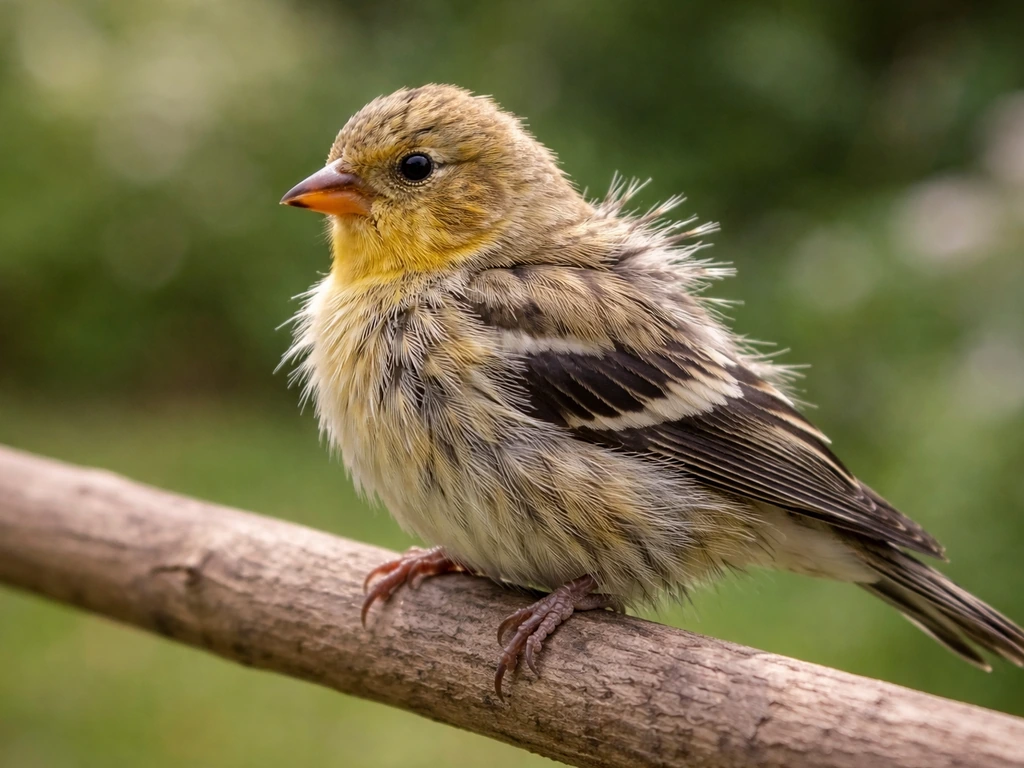
Molting is the replacement of all or some of a bird's feathers on a scheduled cycle. Feathers are made of keratin, the same stuff as your fingernails, and they wear out. UV exposure, abrasion, and the physical demands of flight degrade feathers over time, so birds have evolved a built-in renewal system. The old feather falls out (or is pushed out), and a new one grows in its place. It's as routine as a snake shedding its skin, and it follows a predictable biological schedule driven by hormonal signals tied to the seasons.
One nuance worth knowing: if a bird loses a single feather outside of its regular molt cycle, say, from a predator strike or a fence collision, that feather can begin regrowing immediately without waiting for the next scheduled molt. So feather replacement can be both continuous (a one-off regrowth after a loss) and cyclic (the full or partial molt that sweeps through the bird's plumage on a seasonal timetable).
The molting process: stages, timing, and what you'll actually see
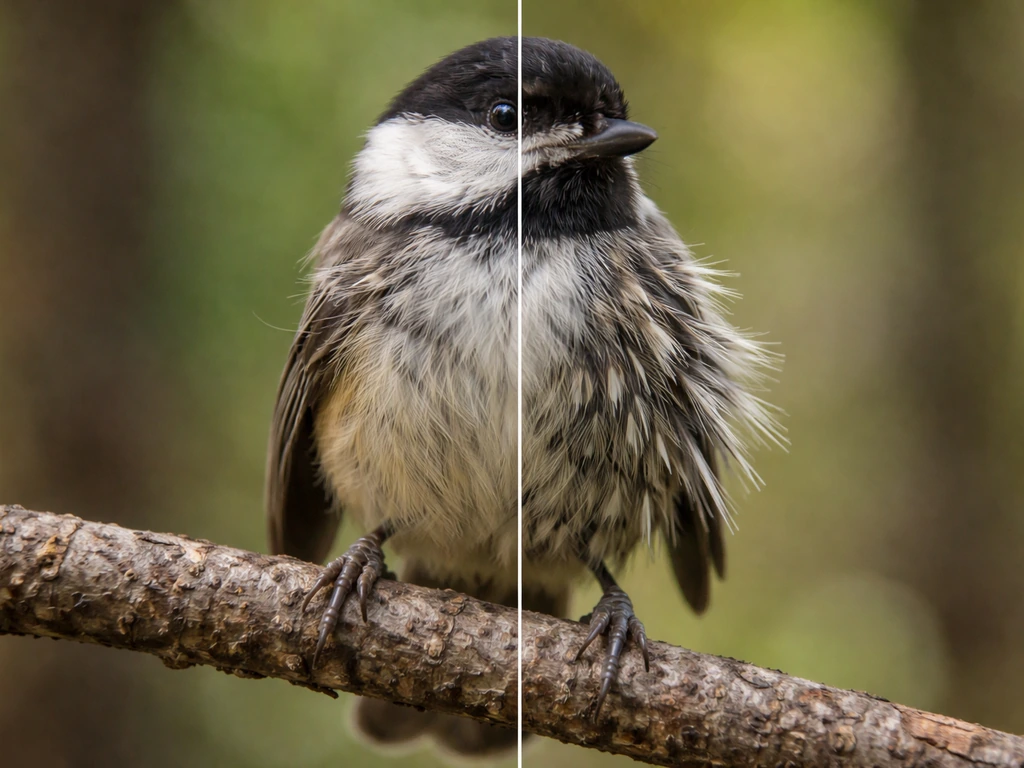
The most common molt for North American birds is called the prebasic molt, and it typically runs from July through September, with many songbirds hitting their stride in late July to early August. This is a post-breeding molt: birds wait until nesting is done, then replace their flight feathers, body feathers, and tail feathers before migration or winter. This post-breeding timing also helps explain the bird breeding meaning behind when molt happens. Some species also have a partial pre-breeding molt in late winter or early spring that refreshes head and body feathers without touching the flight feathers.
Molts don't happen all at once, because a bird that lost all its flight feathers simultaneously would be grounded and vulnerable. Instead, feathers drop and regrow in a deliberate sequence. For most North American songbirds, the innermost primary flight feather goes first and the molt works outward, so you can sometimes spot the gap in a bird's wing silhouette mid-molt. Tail feathers follow a similar pattern: the central tail feathers tend to be shed first, which is actually a useful field clue for telling normal molt from injury (more on that below).
Pin feathers and the 'spiky' look
As new feathers grow in, they emerge as pin feathers, sometimes called blood feathers. These look like small, waxy, tubular shafts protruding from the skin, they're literally feathers mid-construction, with a blood supply running through the shaft while growth is active. They can make a bird look pointy or spiked in certain areas, particularly around the head. This is completely normal. Once the feather fully grows in, the blood supply recedes and the shaft splits open to reveal the finished feather.
The blue jay bald-head moment
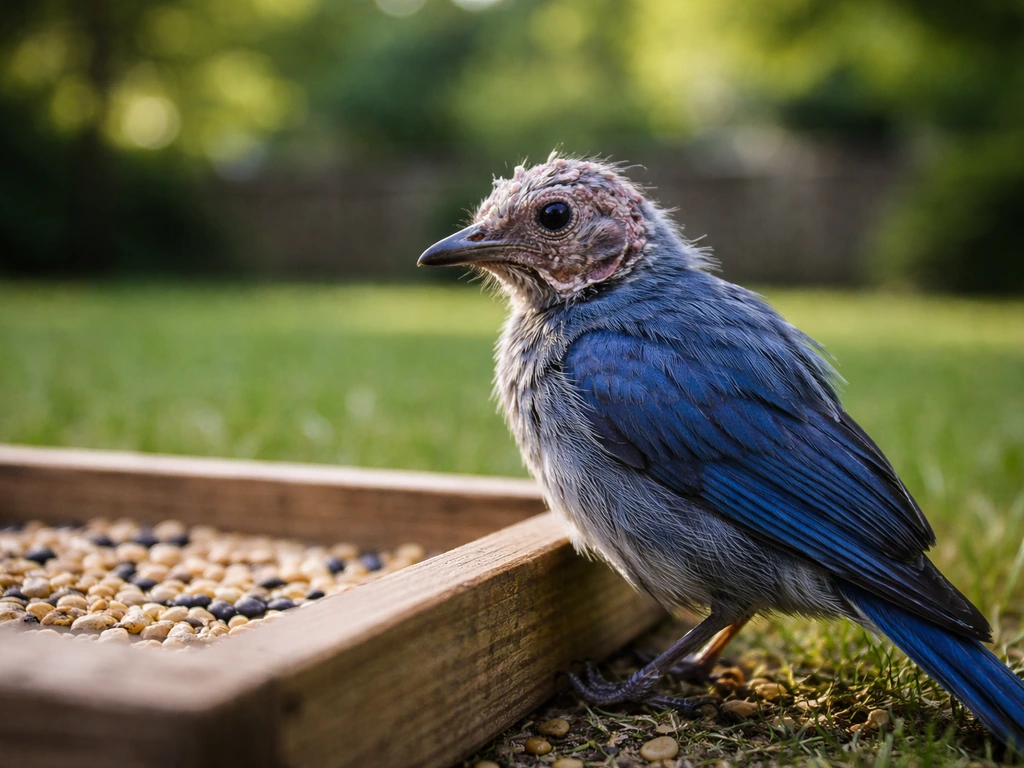
One of the most dramatic-looking molts you'll encounter at backyard feeders is the blue jay's annual molt, which typically kicks off in June. Blue jays and some other corvids can replace their head feathers (the 'capital tract') in synchrony rather than a few at a time, leaving a genuinely bald-looking black head for a brief period. People sometimes panic and assume the bird is diseased. It isn't. That haunted, punk-rock, slightly zombie-looking blue jay with no head feathers is just in the middle of its scheduled renovation. The feathers grow back within a couple of weeks.
Why birds molt: hormones, health, and seasonal survival
Molt is triggered by hormonal changes that respond to seasonal light cues, specifically changes in day length. As days shorten in late summer, the hormonal cascade that wound down breeding activity starts cueing feather replacement. The timing is not accidental: birds deliberately schedule molts to avoid overlap with other high-energy demands. Migrating burns enormous calories, breeding burns enormous calories, and growing new feathers burns enormous calories.
Bird migration is the seasonal movement of birds from one region to another, usually driven by changes in food, weather, and breeding needs bird migration definition. Bird migration explained in this guide covers how and why birds move seasonally. Bird nesting is the process of selecting a site and building or using a structure where eggs are laid and cared for bird nesting definition. Birds are remarkably strategic about not doing all three at the same time.
Feathers are critical for insulation, waterproofing, and flight efficiency. A degraded set of feathers heading into winter or a long migration is a genuine survival liability. Research shows that the quality of feathers grown during molt can have carry-over effects on a bird's reproductive success the following season. Rushing through a molt too quickly can actually compromise feather quality, so the pace of molt reflects real trade-offs the bird is managing. This isn't just cosmetic upkeep, it's a survival system.
Molting vs injury: how to tell the difference
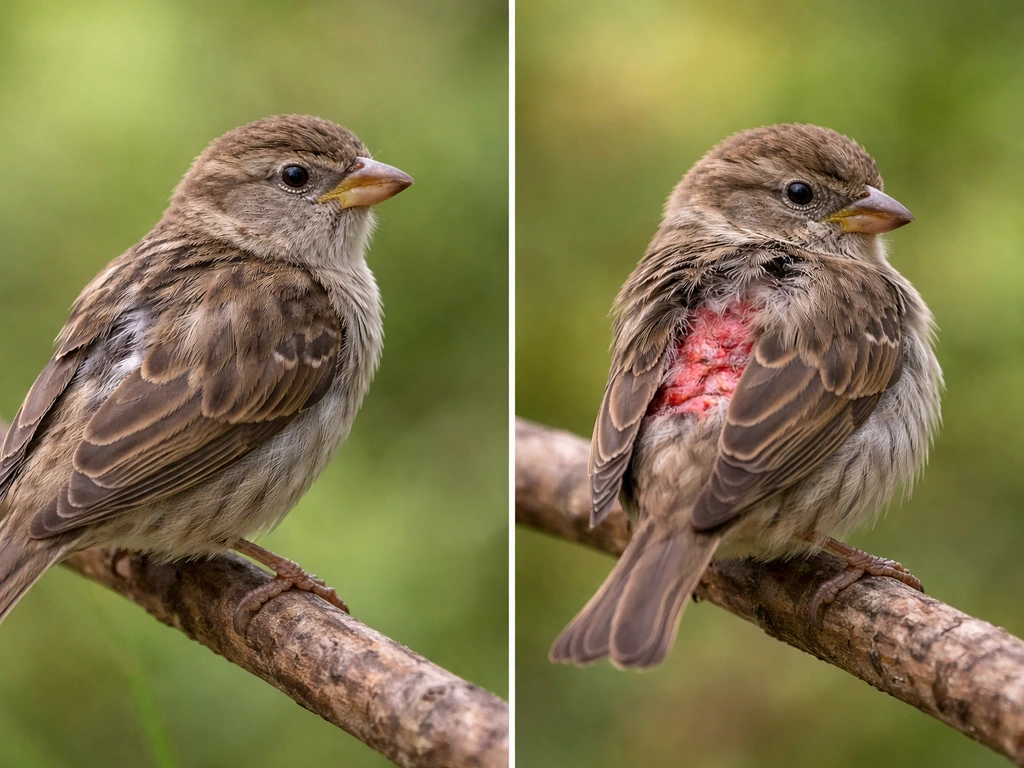
This is the practical question most people want answered: is that ragged-looking bird okay, or does it need help? Here's how to read the signs.
Signs you're looking at a normal molt
- Feather loss follows a symmetrical or gradual pattern — gaps appear in matching places on both wings, or the tail is missing its central feathers first
- The skin where feathers are missing looks normal — no redness, swelling, scabbing, or discharge
- You can see pin feathers (small, waxy, tubular shafts) in the area, indicating active regrowth
- The bird is behaving normally: foraging, flying, reacting to threats, visiting feeders
- The overall appearance is 'scruffy' rather than 'injured' — like a bad hair day, not a wound
- The timing fits: late July through September is peak molt season for most North American songbirds
Red flags that suggest something more serious
- Feather loss that is patchy and asymmetrical, not following the typical sequential molt pattern
- Skin under missing feathers looks red, inflamed, crusty, or has visible lesions or discharge
- The bird is lethargic, sitting on the ground, or not reacting normally to your presence
- You notice visible wounds, cuts, swelling, or a drooping wing
- The bird has lost feathers in a way that looks sudden and random rather than gradual
- Evidence of external parasites — mites or lice visible on the skin or feathers
The short version of the distinction: normal molt shows normal skin and active regrowth in a predictable pattern. If you’re also trying to understand bird nesting, the timing of molts and seasonal behaviors can matter. Injury or illness typically shows abnormal skin, unusual feather-loss distribution, or a bird that simply isn't acting like a healthy bird. A scruffy bird eating sunflower seeds at your feeder is almost certainly molting. A bird sitting still on the ground that doesn't fly away when you approach is a different situation entirely.
What to do if you find a molting bird
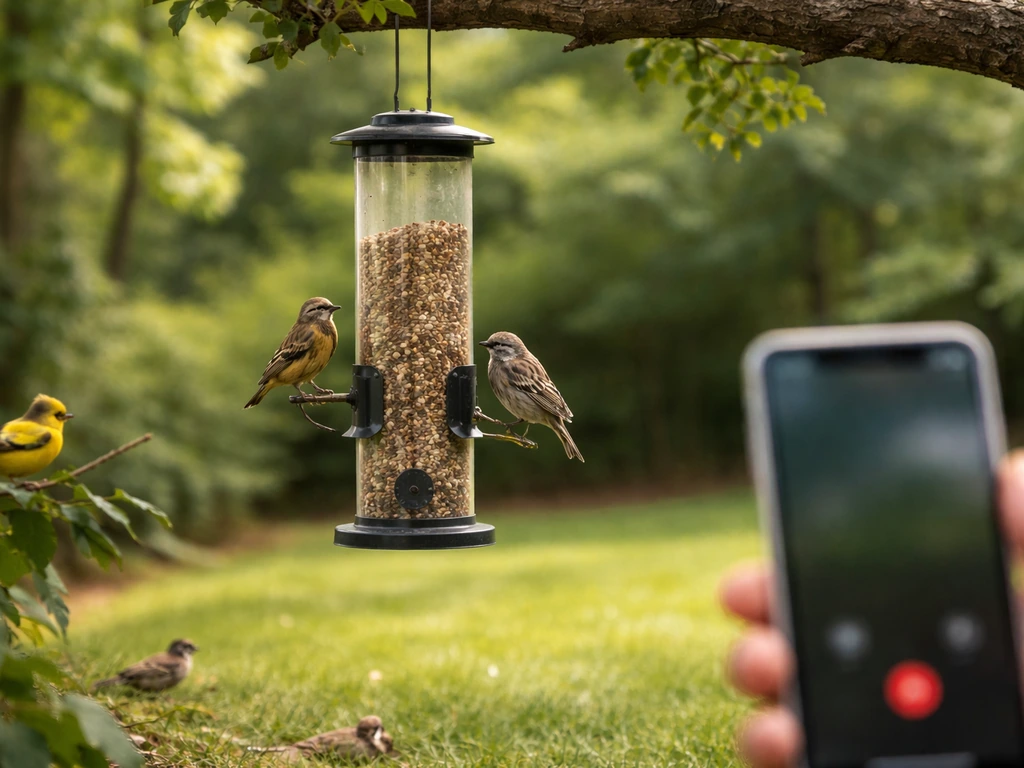
If the bird looks scruffy but is otherwise acting normally, the answer is simple: leave it alone. Watch from a distance, keep feeders stocked with high-energy foods (black-oil sunflower seeds, suet, and nyjer are all good options through molt season), keep cats indoors, and let the bird get on with it. Molting birds may be slightly more vulnerable to predation because reduced flight capacity is possible during primary feather replacement, so minimizing stressors, including your proximity, is genuinely helpful.
If the bird shows any of the red flags listed above, lethargy, visible wounds, inability to fly, abnormal skin, here's what to do: The RSPCA says that if you suspect a wild bird is sick or injured, it should be taken for treatment even when obvious wounds are not visible because birds can hide signs of illness or injury If the bird shows any of the red flags listed above, lethargy, visible wounds, inability to fly, abnormal skin, here's what to do.
- Do not attempt to handle the bird unless it is in immediate danger (like in the middle of a road). Wild birds are protected by law in the U.S. and UK, and taking one home without authorization is illegal.
- If the bird is clearly injured and needs to be moved to safety, use a towel or cloth to gently contain it, minimizing direct contact and keeping handling brief.
- Place it in a ventilated, covered box in a quiet, dark, warm space — darkness reduces stress — and do not offer food or water until a professional advises.
- Contact your nearest licensed wildlife rehabilitator or wildlife center immediately. In the U.S., the U.S. Fish and Wildlife Service website can help you find a rehabilitator. In the UK, the RSPCA advises taking small injured birds to the nearest vet.
- Do not attempt to nurse the bird yourself. Even well-intentioned care from untrained people can worsen outcomes and is not legal for many species.
One extra note worth raising in 2026: with highly pathogenic avian influenza (H5N1) still circulating, public health guidance from the CDC emphasizes keeping domestic cats indoors and away from wild birds and their droppings. If you're handling a bird you suspect is sick, basic hygiene precautions, gloves, hand washing, avoiding touching your face, are sensible regardless of the cause.
The cultural and spiritual meaning of molting birds
Across many cultures, the molting bird has been read as a symbol of renewal, transformation, and the necessity of letting go. The biological reality is actually a perfect metaphor: something that once served the bird fully, its old feathers, becomes a limitation, and the bird has to release it before it can grow something better. Bird mutation meaning is different from molt, though both can involve visible changes in feathers. That's a theme that maps cleanly onto human experiences of change, grief, identity shifts, and life transitions.
In some Indigenous North American traditions, shed feathers found on the ground carry spiritual significance, representing messages from the spirit world or transitions between states of being. In European folklore, a bird losing its feathers has sometimes been read as an omen of change in the household where it appears, not necessarily negative change, but change nonetheless. The phoenix, the most famous feather-renewal myth of all, draws directly on the molt archetype: death of the old form, emergence of the new.
In dream interpretation traditions, feathers and feather loss tend to cluster around themes of minor disruption, transition, or the shedding of influences that no longer serve you. Dream-meaning sources aren't scientific, and I'd be the first to say you shouldn't treat them as literal guidance, but the recurring symbolism is worth noting, because it tracks with what molt actually is biologically: a controlled, purposeful shedding in service of something stronger. The vulnerability of the mid-molt bird, looking ragged and temporary, is part of the symbol too. It's not a permanent state. It's a stage.
This symbolic layer connects naturally to other bird behaviors that carry meaning on this site. Bird nesting and bird migration, for instance, share the same structural arc as molt: a purposeful biological transition driven by seasonal forces, loaded with cultural meaning around home, journey, and renewal. Molting sits in the middle of that cycle, after breeding winds down, before migration begins, which gives it a distinct 'between things' quality that folklore has long found meaningful.
Common myths about molting birds, answered
| The myth | What's actually true |
|---|---|
| A scruffy bird at my feeder must be sick | Probably not. Late summer scruffiness is peak molt season. Check for normal skin, active feeding behavior, and the timing — July to September is the sweet spot. |
| Bald-headed blue jays have a disease | Nope. Some blue jays replace head feathers all at once, producing a temporarily bald look. It resolves in a week or two and the bird is fine. |
| Those spiky things on the bird's head are parasites | Those are pin feathers — new feathers actively growing in. They're completely normal and a good sign that molt is progressing. |
| If a bird loses a feather, it has to wait until next year to regrow it | Not true. Individual feathers lost outside the scheduled molt cycle can regrow immediately. |
| Molting birds need my help to survive | Healthy molting birds don't need intervention. The best thing you can do is leave them alone, keep feeders stocked, and keep cats indoors. |
| Feathers on the ground mean something is wrong | Shed feathers are a normal byproduct of molt. Finding a feather under a tree or feeder is usually just molt housekeeping, not evidence of injury or attack. |
The most important takeaway about molting is that it is a sign of health, not a sign of trouble. A bird that is molting is a bird that survived long enough to need new feathers, and is investing biological resources in preparing for the next season. The temporary awkward phase in between, all spiky pin feathers and patchy plumage, is worth appreciating for what it is: a living system rebuilding itself from the inside out.
FAQ
How can I tell a normal molt from feather loss caused by parasites or pecking from other birds?
Normal molt tends to follow a predictable pattern and includes regrowth phases like pin or blood feathers. Parasites or chronic stress usually cause more random, patchy loss, often with broken or missing feather shafts and irritation signs like constant preening, scabbing, or bare skin in irregular spots. If you see heavy feather loss without any new growth, or the bird seems persistently agitated, that points more toward an issue than a scheduled molt.
What does it mean if the bird is molting but still has a full, intact-looking tail and wings?
That usually suggests a partial molt rather than a full replacement. Many species renew specific feather tracts (for example, head and body) without swapping flight feathers right away. Look for pin-feather tubes in the affected area, since active regrowth is the strongest clue that the bird is on schedule for that species.
Is it okay to give extra vitamins or supplements during molt?
In most cases, a good-quality staple diet is better than adding random supplements. Molting birds need energy and protein, but excess supplements can be counterproductive for some nutrients. Focus on high-quality foods you already tolerate well through the season, and if you want to change anything, match it to the bird type (seed-eaters versus insectivores) rather than using broad “bird multivitamin” products.
If a molt takes weeks, should I worry if my backyard bird seems quiet or stays near cover?
Some quiet or more ground-hugging behavior can be normal while new feathers are growing in, especially during the pin-feather stage. The key is whether the bird is otherwise alert and feeding regularly. If you notice prolonged hiding, refusal to eat, or clear weakness, treat it as a possible health issue rather than “just molting.”
Why do I sometimes find lots of feathers under the feeder, but the bird looks almost unchanged?
Feather shedding can be cumulative and not always visually dramatic on the bird in the moment. Feathers can fall as they loosen and the molt continues, while the bird still looks mostly intact until regrowth fills the gap. Also, dominant or territorial birds might be displacing other birds, causing scattered feathers without the specific individual looking “finished” or “obviously molting” at your vantage point.
Should I move the bird to a safer area or help it if it is stuck on the ground during molt?
If it is alert enough to hop away, the best help is usually to keep distance and reduce stressors (pets, loud activity, close approaches). Only intervene physically if the bird cannot right itself, cannot escape danger, or shows obvious injury. In that case, use minimal handling and contact a licensed wildlife rehabilitator for guidance, because handling timing and hygiene matter.
Can I handle the bird if it looks ragged, or should I avoid touching during a molt?
Avoid touching when you suspect normal molt. Even if the bird is not sick, pin-feather growth and fragile new shafts can be easily damaged by handling. If you must handle due to imminent danger (for example, a cat attack risk), wear gloves, avoid touching your face, and wash hands afterward, but prioritize getting professional help for any bird that appears injured or ill.
What if the bird is molting at an unusual time of year in my region, is that still “normal”?
It can be. Some species have partial molts outside the typical full-cycle window, and local factors like food availability can slightly shift timing. However, a major molt occurring at the same time every year in an individual bird’s off-season location could also indicate stress or an underlying problem. If the bird’s plumage changes are extreme or accompanied by lethargy or abnormal skin, treat it as suspicious rather than assuming seasonality alone.
Do cats or other predators pose a higher risk to molting birds, and what should I change around my yard?
Yes. Reduced flight efficiency during some phases of primary feather replacement can make birds easier targets. Keeping cats indoors, placing feeders where escape routes are visible, and reducing ground-level risks (for example, not leaving cover that traps birds) can materially lower risk during peak molt weeks.
How long does a typical molt take, and when would I expect the bird to look “normal” again?
Many backyard species are visibly in transition for several weeks, but “normal” timing depends on which feathers are being replaced. A partial molt can look resolved quickly, while a flight-feather replacement can take longer. If you do not see any sign of new growth (no pin feathers, no progressive pattern change) after a couple of weeks, reassess the situation for injury, disease, or chronic stress.
Next Articles
Bird Migration Definition Meaning and How It Works
Bird migration definition in plain language, how birds travel by season, and what it symbolizes in culture and daily lif
Bird Nesting Meaning: What It Says and What to Do
Learn bird nesting meaning: symbols, behaviors, and a safe checklist for what to do when you spot nesting birds.

Bird Verb Meaning: Uses, Behaviors, Idioms & Sightings
Discover what 'bird' means as a verb, definitions, behaviors, idioms, sightings, and practical next steps.