
Bird migration is the regular, seasonal movement of birds between two areas: the breeding grounds where they raise young, and the non-breeding (usually wintering) grounds where they survive the off-season. It is not random wandering. Migration is a round trip, built into a bird's biology, timed to the seasons, and driven by real survival needs like food availability, temperature, and daylight length. If you have ever watched a V of geese overhead in October and felt something shift, you have already experienced migration in the most direct way possible.
Bird Migration Definition Meaning and How It Works

Marcus Holloway
21 Apr 2026
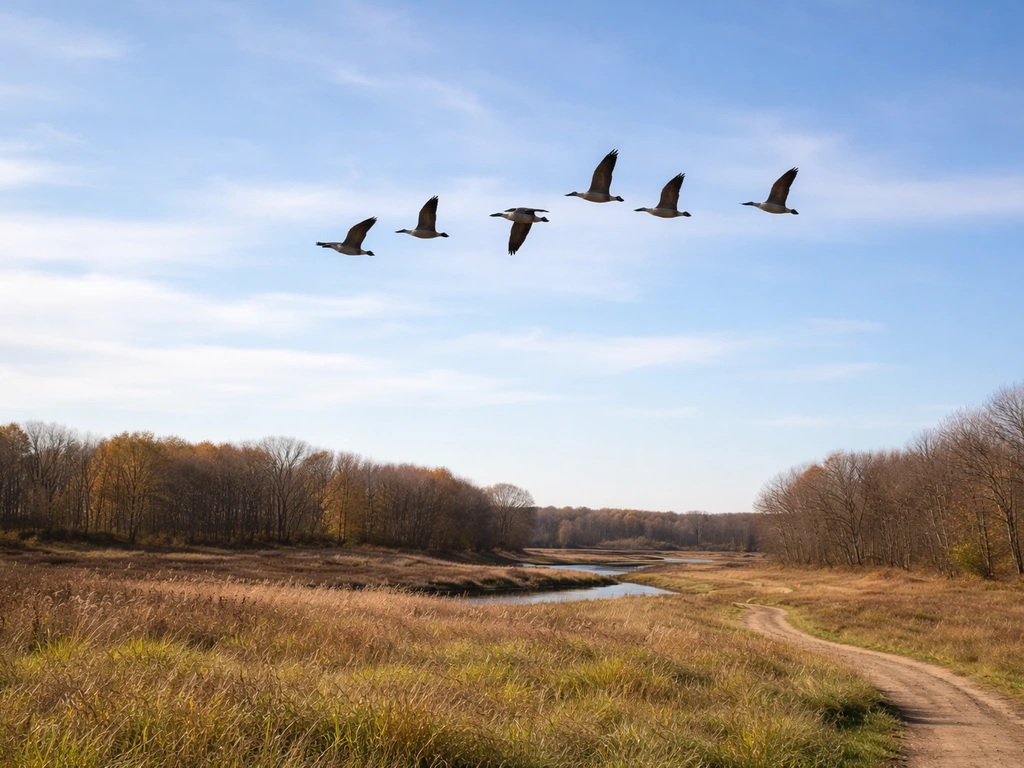
What bird migration actually means, in plain language

At its simplest, bird migration means birds moving from one habitat to another on a predictable seasonal schedule, then coming back. Bird breeding meaning relates to the purpose behind where birds go to raise young during the breeding season. Audubon Adventures for kids explains migration as [moving from one region to another in a regular cycle](https://netapp. audubon. org/AudubonAdventures/migration_kids.
htm), usually to breed and/or find food in spring, then returning in fall to winter. The U. S. Geological Survey describes it as animals making long journeys each year from breeding grounds to wintering grounds.
Bird migration explained in this way also helps you predict when you might see it near your home. The Smithsonian National Zoo frames it across what ornithologists call the "annual cycle," which covers three linked periods: breeding, migration, and overwintering. The Smithsonian National Zoo and Conservation Biology Institute describes [the “annual cycle”](https://nationalzoo. si.
edu/migratory-birds/introduction-migratory-birds) as the full yearly sequence that includes birds’ breeding, migration, and overwintering periods. All three matter. A bird that breeds successfully in Canada but loses its wintering habitat in Central America is still in trouble, which is why more than half of North American bird species are considered at risk unless migratory habitats across the entire annual cycle are conserved.
It is worth separating migration from two things people sometimes confuse it with. Migration is not the same as nomadic movement, where birds wander unpredictably in search of food with no fixed return. And it is not the same as irruption, where species like snowy owls occasionally push south in large numbers due to prey crashes up north. Migration is the regular, repeating, return-trip version. That consistency is what makes it so trackable and so meaningful to people who pay attention to it.
Why birds migrate: food, weather, breeding, and staying alive
The short answer is survival. But the mechanics behind that are worth knowing because they explain so much about the timing and the routes birds use.
- Food availability: As seasons change, food sources collapse in one region and bloom in another. Insect-eating warblers cannot stay in New England through winter because there are no insects. They follow the food south.
- Temperature and weather: Cold itself is not always the trigger, but the conditions that come with it, frozen water, bare ground, and reduced prey, push birds toward warmer latitudes.
- Breeding: Many birds migrate north specifically because northern summers offer longer daylight hours and an explosion of insect life, which gives chicks a better chance of survival. The journey north is about reproductive opportunity.
- Daylight (photoperiod): This is the most reliable internal cue. As days shorten in late summer, hormonal changes in birds signal that it is time to start moving. Photoperiod is more dependable than temperature alone, which is why migration happens on a roughly consistent calendar each year.
- Safety and competition: Less crowded wintering grounds can reduce competition for food and shelter compared to year-round residence in one place.
These triggers work together. A bird does not decide to migrate the way a person books a flight. The decision is baked in, triggered by light changes, reinforced by temperature and food cues, and fine-tuned over thousands of generations of natural selection.
How birds find their way: navigation and timing
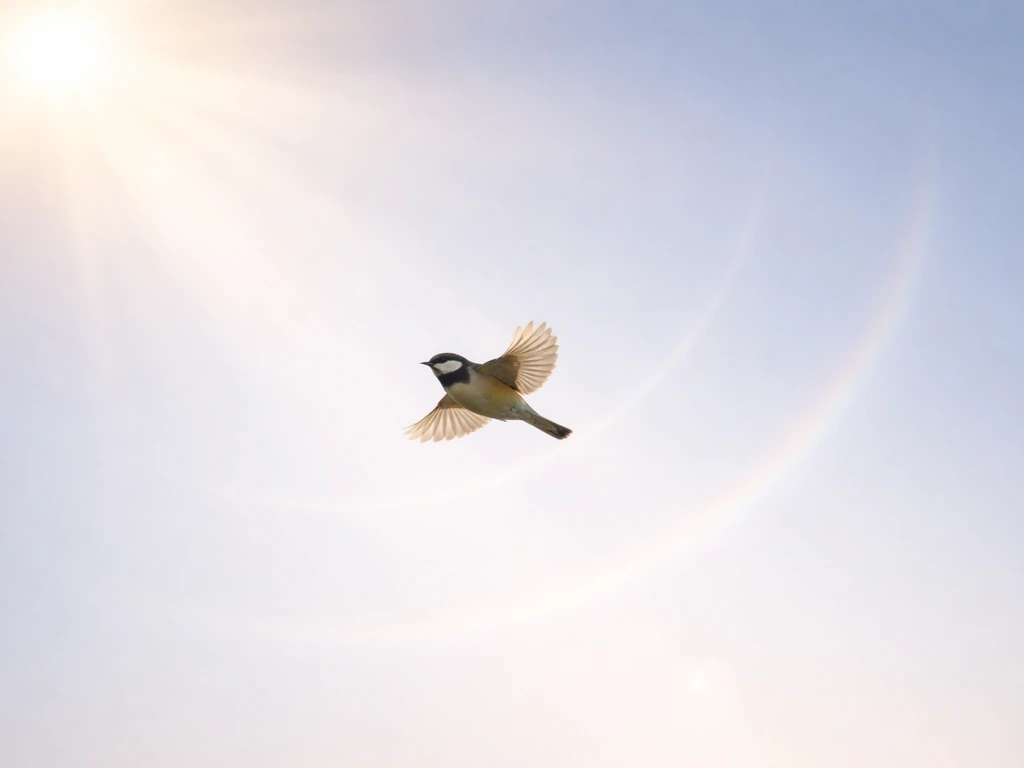
This is the part most people find genuinely surprising. Birds use multiple navigation systems simultaneously, and researchers are still working out exactly how they integrate all of them. What we do know is impressive.
- The sun compass: Birds use the position of the sun relative to the time of day to orient themselves. They have an internal clock that lets them correct for the sun's movement across the sky.
- The star compass: Nocturnally migrating birds (and most songbirds migrate at night) orient using star patterns, particularly the rotation point of the night sky around Polaris. Young birds learn this before their first migration.
- The magnetic field: Birds have magnetite crystals in their beaks and a light-sensitive protein in their eyes called cryptochrome that may let them "see" the Earth's magnetic field as a directional overlay. This is still an active area of research.
- Landmarks and memory: Experienced migrants use coastlines, mountain ridges, river valleys, and other physical features as navigation aids. This is why certain bottleneck points, like Cape May in New Jersey or Hawk Mountain in Pennsylvania, concentrate huge numbers of birds during peak migration.
- Infrasound: Some research suggests birds can detect very low-frequency sound waves produced by weather systems and geography, which may help them stay oriented over long distances.
Timing is controlled by a combination of that internal photoperiod clock and environmental conditions. A warm front in spring will trigger movement because it signals favorable tailwinds and food. A cold front in fall does the same in reverse. Watching the weather is one of the best ways to predict when migration will be heavy on any given night.
Types of migration and how they differ
Not all migration looks the same. The classic long-distance migration (think Arctic Tern, which travels from the Arctic to the Antarctic and back, covering roughly 44,000 miles annually) is the dramatic version. But there are several distinct patterns worth knowing.
| Migration Type | Description | Common Examples |
|---|---|---|
| Long-distance (neotropical) | Birds travel between North America and Central/South America or the Caribbean | Ruby-throated Hummingbird, Blackpoll Warbler, Baltimore Oriole |
| Short-distance | Movement within a continent, often just a few hundred miles | American Robin (partial), Dark-eyed Junco, some sparrows |
| Altitudinal | Movement up and down mountain slopes rather than across latitudes | Mountain Bluebird, Clark's Nutcracker, some grouse |
| Partial migration | Only part of the population migrates; others are year-round residents | American Robin, Canada Goose (some populations), House Finch |
| Irruptive | Irregular, food-driven movement with no fixed schedule | Snowy Owl, Common Redpoll, Pine Siskin |
| Leapfrog | Populations that breed farther north winter farther south, leapfrogging intermediate populations | Fox Sparrow, some shorebirds |
Understanding these types matters for local observation. If you live in the American Southwest, you are more likely to see altitudinal migrants than neotropical ones. If you are on the Atlantic Coast, you are positioned along one of North America's four major flyways (the Atlantic Flyway), which concentrates an enormous variety of species during spring and fall. The four flyways are the Atlantic, Mississippi, Central, and Pacific, and knowing which one runs through your region is one of the most useful pieces of context you can have.
How to actually spot migration where you live
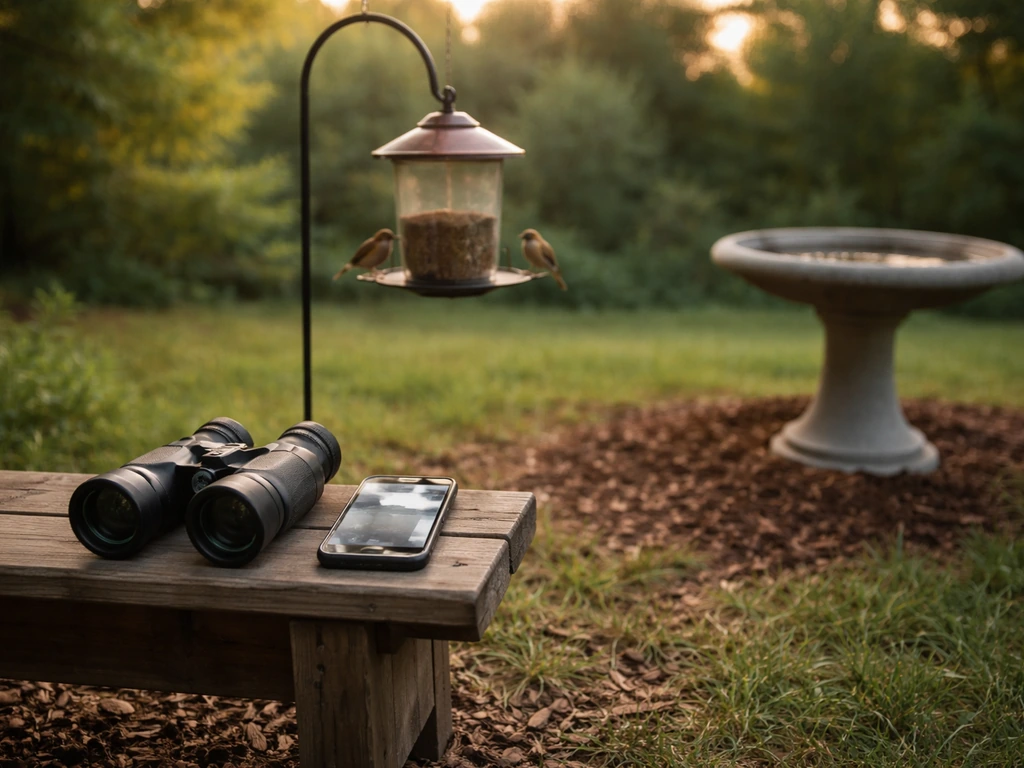
This is where the definition becomes something you can experience directly. Migration is not happening in some distant wilderness. It is moving through your backyard, your city park, and over your roof at night, right now in spring (late April is peak migration across much of North America) and again in fall.
When to look
- Spring migration in North America typically runs from late February through late May, with peak activity in late April and early May across the mid-latitudes.
- Fall migration runs from late July (shorebirds and some warblers begin early) through November, with peak songbird movement in September and October.
- Early morning, the first two hours after sunrise, is the best time to find migrating birds that landed overnight. They will be feeding actively before moving on.
- The night after a clear, calm night with southerly winds in spring (or northerly winds in fall) often produces excellent fallouts of tired migrants, especially if it follows a period of storms.
What to watch for
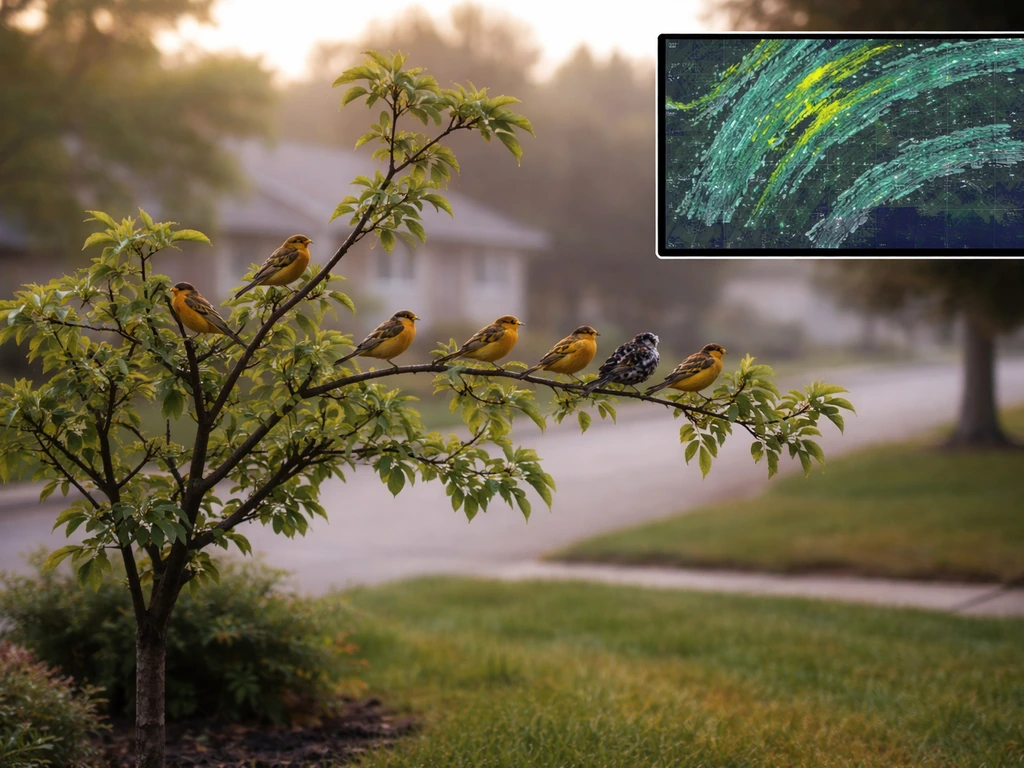
- Sudden appearance of species you do not normally see in your yard or local park. A wave of warblers in a suburban tree line is a classic migrant fallout.
- Radar: NEXRAD weather radar picks up massive movements of migrating birds as a diffuse "bloom" expanding from roosts around sunset. Apps like BirdCast use this data to show real-time migration forecasts.
- Calls at night: Many songbirds give short, distinct flight calls as they migrate after dark. Standing outside on a still night in May and listening often rewards you with a stream of faint chips overhead.
- Concentrations at water: Lakes, rivers, and coastlines stop migrants. If you have access to a pond or even a small park near water, migration density there will be higher than in dry suburban sprawl.
- Behavioral cues: Migrating birds often feed frantically (hyperphagia) before departures. A bird stuffing itself with berries or insects is likely fueling up for a flight.
You do not need to travel to a famous hotspot to see migration. I have watched warblers drop into a single ornamental crabapple tree in a parking lot median during a May fallout. The birds are moving everywhere. You just need to be outside at the right time and paying attention.
What migration means beyond biology: symbolism, folklore, and language
Migration has never been just a biological event for human cultures. The sight of birds departing and returning has carried meaning across nearly every civilization that paid attention to the sky, which is most of them.
In many traditions, migrating birds are messengers of seasonal change and divine timing. The return of swallows to Capistrano is one of the most famous examples in North American folklore, so reliable that a specific date (March 19, St. Joseph's Day) became attached to it. In ancient Egypt, migratory birds were associated with the soul's journey, a connection that shows up in the concept of the "ba," which was often depicted as a bird departing the body. In Celtic traditions, birds moving between worlds carried news between the living and the dead. Across Indigenous North American cultures, the return of specific migrants, geese, cranes, and swallows, marked the start of planting seasons and ceremonial cycles.
In everyday language, "migration" itself has become a metaphor for any significant transition: people "migrate" to new cities, ideas "migrate" across cultures, and data "migrates" between systems. The underlying meaning holds in each case: a purposeful journey between one state and another, with an implication of return or transformation. When people describe a major life change as a kind of migration, they are drawing on thousands of years of watching birds do exactly that.
Spiritually, migrating birds are often read as symbols of freedom, resilience, and trust in natural cycles. The fact that a 12-gram warbler navigates thousands of miles without GPS, then finds its way back to the same patch of forest the following year, resonates with ideas about instinct, purpose, and faith in a larger order. Whether you approach that through a religious lens or simply as a matter of awe at natural engineering, the symbolic weight is real and widely shared.
This connects naturally to the broader symbolism explored in bird nesting meaning, bird breeding meaning, and bird molting meaning, all of which anchor specific behaviors in both natural history and human interpretation. Spiritually, migrating birds are often read as symbols of freedom, resilience, and trust in natural cycles. (related option: bird mutation meaning can also add context for how certain traits appear or shift in bird populations).
Bird breeding meaning adds another layer, helping you connect the timing of migration to why birds raise young in particular seasons. Bird molting meaning is another seasonal behavior that can help you understand what a bird is doing and why it matters. Bird nesting meaning, for example, can help you interpret what a bird is trying to achieve and how it fits into the seasonal cycle.
How to go deeper: next steps for understanding migration where you are
If you want to move from definition to direct experience, here is what I would actually do. Bird molting meaning is another basic bird biology topic that helps explain changes you might notice in feathers and behavior across the year.
- Check BirdCast (birdcast.info): This Cornell Lab of Ornithology tool gives real-time and three-day migration forecasts for your specific region, using radar data. It will tell you tonight whether migration is expected to be light, moderate, or heavy. It is the single most useful tool for knowing when to go outside.
- Open eBird and look at recent sightings near you: eBird (ebird.org) aggregates millions of real birder observations. Filter by your county and the past week to see exactly what migrants have been reported locally. You can also look at bar charts to understand which species peak when in your area.
- Find your local Audubon chapter or birding club: These groups run free or low-cost migration walks, especially in spring. Going out with someone who knows what to listen and look for compresses your learning curve dramatically.
- Download a bird ID app with sound: Merlin Bird ID (free, from Cornell Lab) identifies birds from photos or sound recordings. Its Sound ID feature will identify birds calling overhead at night during migration, which turns a walk outside into a real-time species list.
- Learn your flyway and your local hotspots: Search "Important Bird Areas" plus your state to find the migration concentration points nearest to you. Even one visit to a known hotspot during peak migration will give you a reference point for what heavy migration actually looks and sounds like.
- Keep a simple log: Even noting the date, location, and species you see (or hear at night) builds a personal phenology record that becomes more useful every year. You will start to notice patterns, which species arrive first, which linger, which are just passing through.
Migration is one of those phenomena that rewards attention with almost immediate payoff. You do not need years of experience to be moved by it. The definition is the starting point. A clear bird nesting definition helps you understand how breeding sites and nesting behavior fit into the seasonal cycle. The migration itself is happening right now, and most of it is within a few miles of wherever you are reading this.
FAQ
If I see birds moving in the fall, does that automatically mean they are migrating?
Not every seasonal bird movement is migration. Some species make partial migrations, moving only short distances or shifting in elevation, while others move only when local conditions change (for example, food shortages). If you see the same individuals repeatedly returning to nearby areas across seasons, you may be watching partial movement rather than a full round trip between distant breeding and wintering grounds.
How do rain, storms, and wind change what I see during migration?
Yes, weather can make migration look different, even on nights when it should be “peak.” Strong headwinds can slow birds and concentrate them near shorelines or along ridgelines, while storms and low visibility can increase the odds of collisions and “fallout” feeding behavior (birds dropping into trees or streets). If you want to spot migration, watch forecasts for wind direction, precipitation, and clear windows after weather fronts.
Why do migration dates and peak hours seem different in my neighborhood than in online guides?
A bird’s presence does not always line up with the species’ typical schedule. Juveniles, late breeders, and birds affected by storms may arrive earlier or later than usual. Also, your local habitat can shift timing, for example, sheltered valleys warming sooner or wetlands holding insects later, which can temporarily change which migrants you see first.
Where and when should I look if birds migrate mostly at night?
Many birds migrate at night, but that does not mean you will only see them overhead. Nocturnal migrants often show up as stopovers in early morning when they search for food, so the best viewing time can be dawn rather than dusk. If you hear sustained calls at night or spot birds flying low at sunrise, that can indicate active migration that just finished a movement phase.
What makes a place a good stopover during migration?
Stopover sites are the key. Birds may travel far, but they usually pause to feed and refuel at specific kinds of habitat such as wetlands, shorelines, ridges, or reliable food patches. Two locations can be equally “good” depending on resources like insects, fruit, or water, even if they are far apart.
What should I do if I find an injured or confused bird during migration nights?
If you find a grounded bird, assume it might be exhausted from weather, territorial behavior, or collisions. Keep pets indoors, reduce light, and move the bird only if it is in immediate danger from traffic or predators. For care or rescue, contact a local wildlife rehabilitator, because correct handling and release timing depend on the species and its migratory needs.
How does building or street lighting affect migrating birds?
Light pollution can be a major factor, especially in cities along major flyways. Bright exterior lights can disorient birds, cause them to circle, or increase collisions. Simple actions like turning off unnecessary lights at night, closing curtains indoors, and using motion-activated lighting can reduce problems during peak periods.
How can I tell the difference between migration and an irruption?
Yes. “Irruption” movements can look similar to migration to the casual observer because birds shift range quickly, but they are driven by food or prey crashes rather than the predictable seasonal cycle. If the movement is sudden, widespread, and not followed by a consistent return pattern the way migration is, it is more likely to be an irruption or a temporary range shift.
What practical steps help me predict migration activity around my home?
You can use multiple cues, not just calendar timing. Combine local weather (fronts and wind direction), time of day (night and dawn peaks), and habitat context (wetlands, coast, elevation, and your region’s flyway). If you track what species show up week to week, you will usually see patterns that match migration flow even without formal field training.
Why do some birds arrive later or take different routes than others?
The main “why” is survival across the annual cycle, but the tradeoffs vary by species. Some birds prioritize reaching breeding sites on time, while others prioritize safer conditions or better food availability en route. That is why you can see different migration speeds and route choices, even among birds that share similar landscapes.
Next Articles
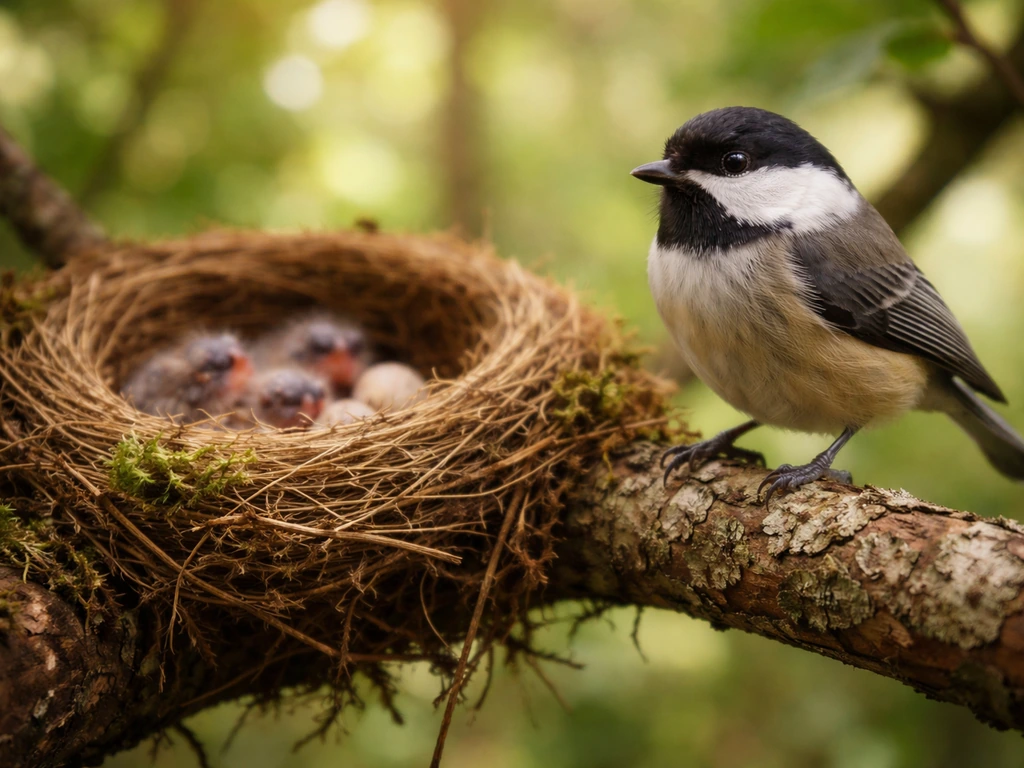
Bird Nesting Meaning: What It Says and What to Do
Learn bird nesting meaning: symbols, behaviors, and a safe checklist for what to do when you spot nesting birds.

Bird Verb Meaning: Uses, Behaviors, Idioms & Sightings
Discover what 'bird' means as a verb, definitions, behaviors, idioms, sightings, and practical next steps.

Bird Sighting Meaning: How to Interpret What You Saw
Interpret bird sighting meaning with context, behavior, symbolism, and practical steps to identify the species and next