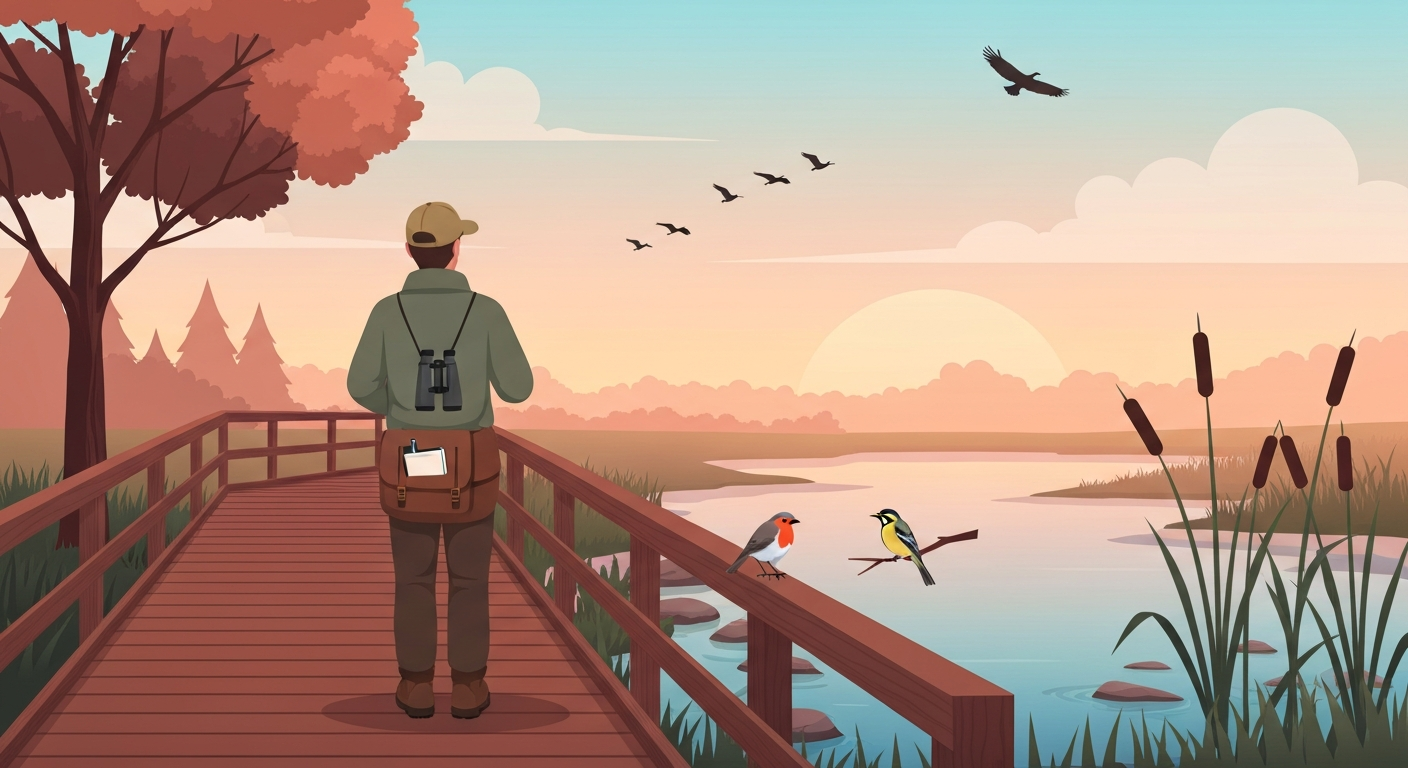
The study of birds is called ornithology. That is the formal, scientific term you will find in every dictionary and academic program, and it is the word to use if you want to be precise. Encyclopaedia Britannica defines ornithology as "a branch of zoology dealing with the study of birds," and Cambridge Dictionary keeps it even simpler: "the scientific study of birds." If someone asks what field a bird scientist works in, ornithology is the answer.
Bird Study Is Called Ornithology: Meaning and Next Steps

Marcus Holloway
2 Apr 2026
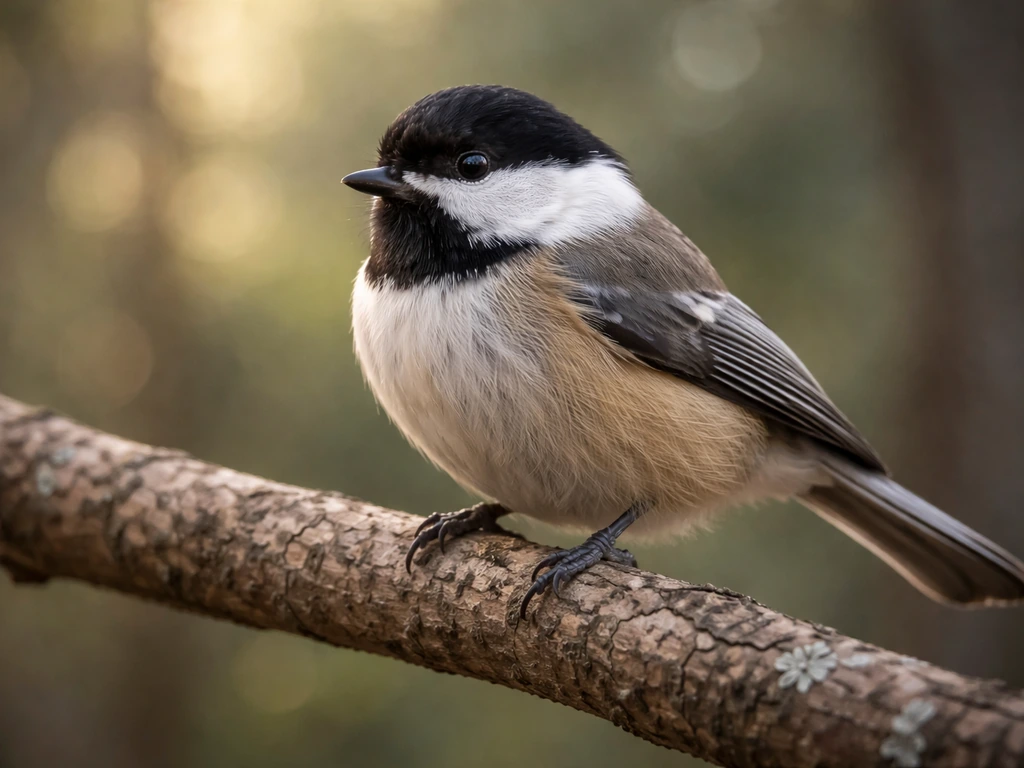
Ornithology vs. the other terms you might hear

Ornithology is specific. It covers bird anatomy, behavior, distribution, evolution, physiology, migration, and communication, which is basically everything about birds from a scientific standpoint. But a few related terms float around in conversation and course catalogs, and they are worth untangling.
Natural history
Natural history is an older and much broader framing. Collins Dictionary defines it as the sciences dealing with all objects in nature, including botany, mineralogy, and zoology, and notes that the term is especially associated with the early days of these sciences. In other words, natural history is not a bird-specific term at all. It is an umbrella that covers everything from rocks to plants to animals. Historically, a naturalist might study birds as part of a wide-ranging interest in the living world, but that is very different from a trained ornithologist whose entire focus is avian science.
Avian biology
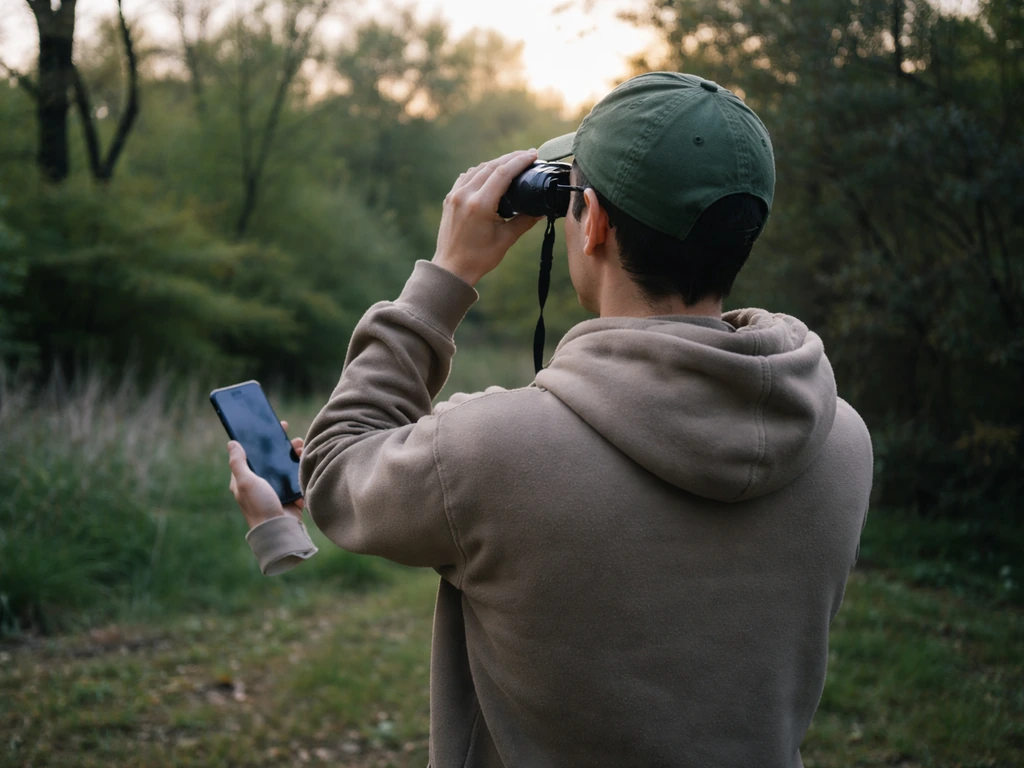
Avian biology is a more modern academic phrase, and you will see it used in university program names and course titles. The University of Georgia, for example, runs an Avian Biology major that trains students for careers in conservation, education, and wildlife recovery. Indiana University offers a "Biology of Birds" course covering avian systematics, ecology, behavior, and physiology. These programs sit within biological sciences departments and are effectively ornithology under a different label, one that signals a tighter connection to applied conservation and career preparation rather than pure research taxonomy.
Birdwatching and birding
Birdwatching (or birding) is recreational or citizen-science observation, not formal scientific study. Dictionary.com and Collins Dictionary both define birding as "the identification and observation of wild birds in their natural habitat as recreation." Bird watching is called birding by most practitioners today, and while it can feed into science through platforms like eBird, it is not the same credential as ornithology. A birdwatcher identifies and records species; an ornithologist designs studies, analyzes data, and publishes findings.
| Term | Scope | Who uses it | Scientific or recreational? |
|---|---|---|---|
| Ornithology | Birds only, all aspects of avian science | Researchers, academics, institutions like the American Ornithological Society | Scientific |
| Avian biology | Birds, emphasis on applied biology and conservation | University programs, conservation professionals | Scientific/applied |
| Natural history | All of nature: plants, animals, minerals | Older academic tradition, museums, generalist naturalists | Broad historical science |
| Birdwatching / Birding | Observation and identification of wild birds | Hobbyists, citizen scientists, outdoor enthusiasts | Recreational/citizen science |
If you need a single recommendation: use ornithology when talking about the scientific discipline, birding when talking about the hobby, and avian biology when discussing university programs or conservation careers. Natural history works as historical context but is too broad to mean bird study specifically.
Everyday phrases and how they compare to the formal terms
Outside the academy, people rarely say ornithology in casual conversation. Instead, you hear phrases like "I study birds," "I'm into birding," or "I'm a bird person." These are all perfectly clear, but they carry different connotations. Someone who says they "study birds" could mean anything from a PhD researcher to a backyard hobbyist keeping a life list. Someone who identifies as a birder is usually signaling a serious recreational commitment, while someone who calls themselves a bird lover is expressing affection more than a particular methodology.
The life list is one of the most culturally loaded everyday concepts in birding. Cornell Lab's All About Birds describes it as a record of every species a birder has ever identified, and for serious birders it can become a lifelong pursuit. The U.S. Fish and Wildlife Service even has guidance on maintaining one. This is not ornithology in the scientific sense, but it shows how bird study, even in its casual forms, develops its own specialized vocabulary and culture.
How bird-study language shows up in everyday expression and symbolism
Bird terminology does not stay inside the lab or the field. It bleeds into language, idiom, and cultural meaning in ways that are genuinely fascinating. Understanding ornithology gives you a better grip on why so many bird-related phrases exist and what they originally pointed to.
Take bird movement as an example. Migration is one of the most studied behaviors in ornithology, and it has generated a huge vocabulary: flyways, staging areas, irruption years, natal dispersal. But the same underlying concept, the seasonal movement of birds, shows up in folklore, poetry, and cultural symbolism across nearly every human culture. Swallows returning in spring, geese flying south in autumn, the appearance of certain species as omens of change: these cultural readings are rooted in real, observable ornithological behavior.
Similarly, bird culture (the study of how bird-related ideas and images function within human societies) draws heavily on ornithological knowledge to stay grounded. The Great Egret, for instance, serves as the symbol of the National Audubon Society, a choice rooted in the real history of egret plume hunting and the conservation movement that followed. Without knowing what an egret actually is and why its populations collapsed, the symbol loses most of its meaning.
Even something as mundane as a bird bite carries a layer of behavioral science behind it. Ornithologists study biting and aggression in birds as part of territory defense and stress response research. When people interpret aggressive bird behavior in folklore or symbolism (a crow attacking as a warning, a hawk striking as a sign), they are giving cultural readings to behaviors that ornithology explains mechanistically. Neither reading cancels the other out. They just answer different questions.
Where to start if you want to learn more today
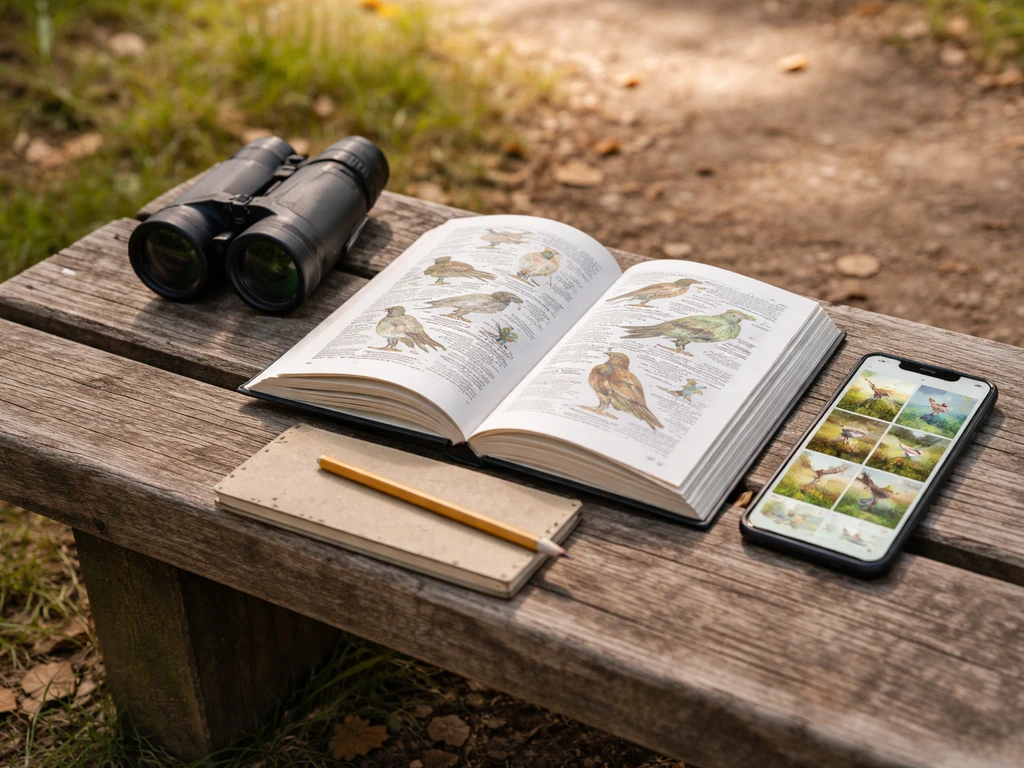
Whether you want to understand ornithology as a science, get into birdwatching as a hobby, or explore birds in a cultural and symbolic context, the starting point is slightly different for each path. Here is a practical breakdown.
For scientific ornithology
Look into the American Ornithological Society (AOS), which holds annual meetings covering the full breadth of modern ornithology research. A peer-reviewed paper on PMC describes the NAOCs as convening roughly every 4 years and notes their joint-meeting structure involving multiple ornithological societies blank" rel="noopener noreferrer">annual meetings. NAOC’s website also describes the North American Ornithological Conference as a gathering for ornithological research and conservation, including details for past meetings such as NAOC 2020 blank" rel="noopener noreferrer">NAOC’s website describes the North American Ornithological Conference as a gathering for ornithological research and conservation. University programs in avian biology or zoology are the formal route if you want a career. For self-directed learning, the Cornell Lab of Ornithology is the best free resource on the internet: their website, publications, and eBird platform are all built around rigorous science. Cornell University Press also publishes accessible books on bird migration, songs, calls, and behavior that bridge scientific depth and general readability.
For birdwatching as a hobby
Audubon's "How to Start Birding" guide recommends starting with three things: a field guide, a weatherproof notebook, and a birding app. The Merlin Bird ID app from Cornell Lab is free, excellent for beginners, and can identify birds from photos or sound recordings. NC State University's tips for new birders also recommend Merlin and suggest starting in your own backyard or a local urban park before heading into more complex habitats. Audubon society materials for beginners also point birders to blank" rel="noopener noreferrer">Merlin for identification and to eBird for logging checklists. The Great Backyard Bird Count, run by Audubon and Cornell Lab, is one of the easiest ways to participate in citizen science immediately: download Merlin, create a free eBird account, and start submitting checklists. In a Reddit discussion about Merlin “lists/checklists” versus eBird “complete checklists,” commenters also discuss how syncing works with an eBird account download Merlin, create a free eBird account, and start submitting checklists.
For cultural and symbolic bird study
If your interest is in what birds mean, in language, folklore, spirituality, or cultural history, start by grounding yourself in what the birds actually do. Knowing that ravens are highly intelligent, socially complex birds explains a lot about why they appear as tricksters and wisdom figures across so many unrelated mythologies. Audubon's education programming and resources (which reach more than 100,000 school children a year through Audubon Adventures) blend natural history with cultural context in a way that works well for adult self-directed learners too.
- Download the free Merlin Bird ID app (Cornell Lab) to start identifying birds around you right now.
- Visit the Cornell Lab of Ornithology website (allaboutbirds.org) for free articles, sound recordings, and species guides.
- Pick up a regional field guide for your area, a physical book is still one of the best learning tools.
- Join a local Audubon chapter or attend a bird walk, the U.S. Forest Service lists local events and clubs for beginners.
- Create a free eBird account to log what you see and contribute to real ornithological data.
- If cultural meaning interests you, pair a solid field guide with folklore or literary references to the same species, and notice how the biology and the symbolism often reinforce each other.
The short answer was always ornithology, but the longer answer is that bird study is a genuinely wide territory. You can enter it as a scientist, a hobbyist, a citizen-science contributor, or someone chasing cultural and symbolic meaning, and all of those paths are legitimate. The word you choose to describe what you are doing just depends on which path you are on.
FAQ
When is it correct to say I do ornithology versus birding?
If you are doing research at a university, publishing papers, or running formal surveys and analyses, the most accurate label is ornithology. If you are doing observations for learning or enjoyment, birding is usually the better match. For something in between, you can say you are “studying birds” (general language) and specify whether you are collecting records, mapping sightings, or doing structured research.
What should I say if someone asks what I study, and I do not fit neatly into ornithology or birding?
“Studying birds” is ambiguous because it can mean anything from keeping casual records to running peer-reviewed projects. If you want to be understood, add one detail, for example “I study bird behavior and migration,” or “I bird for identification and build a life list,” or “I help with citizen science checklists.”
Can natural history mean the same thing as bird study?
Natural history can include birds, but it is broader and not automatically bird-specific. If you join a “naturalist” group, you might be doing plants, insects, and geology too. For a bird-only focus, ornithology or birding will usually be clearer, and for academic training, avian biology is the signal people expect.
If I use eBird or submit checklists, am I doing ornithology?
Yes, you can contribute to science through birding, especially when you submit standardized observations to citizen-science platforms. However, the distinction is about method and output: citizen science typically supports data collection, while ornithology involves designing studies, analyzing data, and publishing results. Your badge or bio can reflect that, for example “citizen scientist” or “birding contributor.”
Are avian biology degrees different from ornithology degrees?
Academic programs under related names usually still connect to ornithology because they cover the core biological questions and lab or field methods. “Avian biology” and “biology of birds” programs often emphasize conservation, ecology, and applied research more than classification-only work, but the underlying science is still bird-focused.
How do life lists relate to more scientific bird study?
“Life list” is a personal record, while “study” in the scientific sense requires repeatable methods. If you plan to move from casual birding to a research-style project, track more than names, such as time of day, location coordinates, habitat notes, and whether you used a consistent protocol (for example point counts or transects).
How do I avoid confusion when using terms like bird culture or bird movement?
Be careful with terminology like “bird culture” or “bird movement” in casual conversations, since different groups may use it differently. If you mean symbolic or cultural interpretation, say “cultural meanings of birds.” If you mean the animals’ seasonal movements in the wild, say “bird migration” or “movement ecology.”
What is the best next step if I want to learn more, but I am not sure which path I am on?
A helpful next step is to match your goal to the learning pathway: for identification and habit learning, start with a field guide, a notebook, and an ID app. For research literacy, focus on papers or structured courses covering behavior, migration, and methods. If your goal is education or conservation careers, look for programs that explicitly teach applied projects and monitoring design.