
A bird strike warning is an official advisory telling pilots, crews, airport operators, or facility managers that there is a known or elevated risk of birds colliding with aircraft (or other equipment) in a specific area. It is not a declaration of emergency. It is a heads-up: birds have been spotted, reported, or detected by radar in a zone where they could cause a problem, and the people responsible for safe operations need to act on that information.
Bird Strike Warning Meaning: What It Signals and Next Steps

Marcus Holloway
17 Jun 2026

Where you'll actually see a bird strike warning
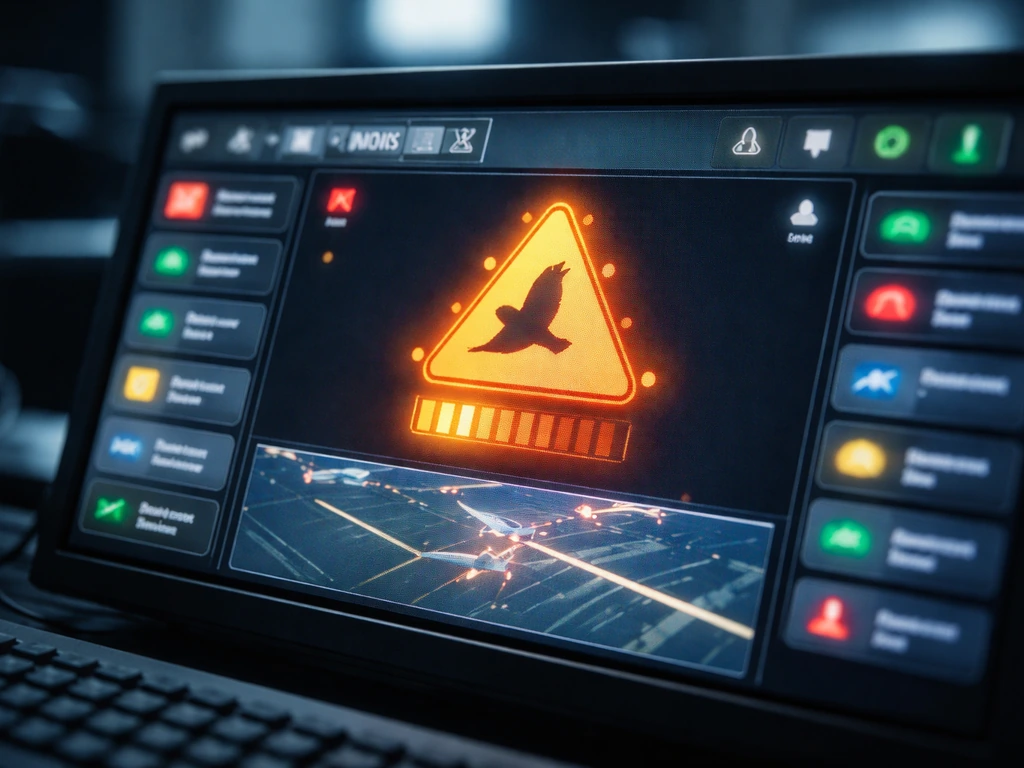
Most people encounter a bird strike warning in one of three settings, and the format changes depending on where you are.
Aviation (the most common context)
In aviation, bird strike warnings show up as NOTAMs (Notices to Air Missions), ATIS broadcasts, or controller radio calls. A NOTAM might read something like: "High concentration of birds on all runways and approach surfaces creating a bird-strike hazard at low levels" with altitude bands listed (0-200M, 200-400M, etc.). The FAA uses Q-code "HX" in NOTAM systems specifically to flag a concentration of birds. A more specialized version, called a BIRDTAM, provides detailed risk information for low-level airspace, including grid coverage and altitude banding. The U.S. Air Force also runs AHAS (Avian Hazard Advisory System), a near-real-time GIS tool that uses weather radar to monitor bird activity and can display explicit WARNING-level risk polygons by region. Pilots are expected to check NOTAMs for bird activity before flying, especially near airports.
Ships, wind farms, and industrial facilities

Outside of aviation, maritime vessels operating in known migratory corridors may issue internal crew alerts during peak bird-migration periods, since large flocks create visibility hazards and birds can land on vessels in large numbers. Wind energy facilities and solar farms use bird activity monitoring as part of their wildlife management compliance programs. Here, a "bird strike warning" means the facility's detection system (radar, acoustic, or visual) has flagged elevated bird activity near turbines or panels, triggering curtailment protocols or deterrent activation.
Apps and digital flight planning tools
Pilots using flight planning apps may see bird activity overlaid on their route map, pulled directly from AHAS data or NOTAMs. General aviation apps sometimes flag bird-risk zones on approach paths. If you are a private pilot and your app pops up a bird strike warning for your planned route, treat it exactly like any other hazard advisory: check the altitude band, understand the risk level, and decide whether to adjust your routing or altitude.
What a bird strike warning actually means in plain language
Strip away the acronyms and the short answer is this: someone or something has observed birds in a location where aircraft (or other machinery) are operating, and the risk of a collision is high enough to be worth broadcasting. It is an advisory, not an alarm. If you are trying to understand the bird strike plane meaning in context, also look at the plain-language meaning of the warning so you know whether it is an advisory or an emergency plain language. The FAA's ATC guidance specifically frames these as "advisory information," not emergency declarations. Controllers issue bird activity information to pilots during taxi, approach, and departure phases so pilots can make better decisions. It is the aviation equivalent of being told there is a wet floor: you don't stop walking, but you watch your step.
The warning may come from a pilot report (a pilot who just flew through a flock and called it in), a tower sighting (someone in the control tower spotted birds on the runway), or radar detection (AHAS or similar tools picked up large bird movement on weather radar). All three are legitimate sources, and the advisory stays active on the ATIS until conditions change or a set time passes. In an r/ATC discussion about “bird activity” advisories on ATIS, controllers and pilots also describe how these warnings can remain active even when pilots may not see birds, and they note the vagueness of “in vicinity” boundaries persistent “bird activity” advisories on ATIS.
What it signals operationally: risk levels and real-world impacts

Not all bird strike warnings carry the same urgency. Published risk frameworks (including those used by ICAO and referenced in academic bird-strike risk studies) sort bird hazards into levels based on probability and severity. Some systems use three tiers: low danger (Level 1), moderate danger (Level 2), and high danger (Level 3). The specific species involved matters: a single sparrow near a runway is different from a flock of Canada geese on an approach path.
Operationally, when a bird strike warning is active, you can expect some or all of the following to be underway:
- Airport wildlife control staff deploying deterrents (pyrotechnics, trained raptors, noise cannons, or vehicles driving the runway)
- ATIS updated to include a caution about bird activity, with location and runway specified
- Controllers issuing advisories to every aircraft in the affected area
- Pilots given the option to request alternate runways or holding patterns
- Inspection crews checking runways before aircraft use them
- In some cases, brief runway closures until the flock disperses
From a passenger perspective, this might translate into a short delay on the ground, a runway change, or a holding pattern before landing. Actual cancellations specifically because of a bird strike warning (not a post-strike inspection) are uncommon but not impossible. If an aircraft has already sustained a bird strike, that is a different situation: the crew will follow post-strike inspection procedures, and the flight may be pulled from service pending a check. Bird strikes don't automatically mean the aircraft is lost or even seriously damaged, but they always require a documented inspection and assessment before the aircraft flies again.
Why bird strike warnings happen: the usual causes
Bird strike warnings are not random. They tend to cluster around predictable patterns, and understanding those patterns helps you make sense of why a warning is active right now.
Season and migration
Spring and fall are peak risk windows because that is when billions of birds are moving across continents. In North America, spring migration runs roughly March through May, and fall migration runs August through November. Many species migrate at night, which means dawn approaches and early-morning departures carry elevated risk. Warnings are substantially more common during these windows.
Time of day
Dawn and dusk are the highest-risk periods. Many bird species are most active at these times, and visibility is lower for both pilots and birds. Raptors like red-tailed hawks and vultures become active once thermal air currents build mid-morning, adding a secondary risk window during the day.
Weather
The FAA's guidance explicitly notes that migrating birds' flight altitudes vary with winds aloft, weather fronts, terrain, and cloud conditions. A weather front that pushes birds lower, fog that reduces visibility, or strong tailwinds that concentrate migrating flocks all increase the likelihood of a warning being triggered. Paradoxically, clear nights with favorable winds are prime migration nights, meaning the morning after a "perfect" night often sees high bird activity near airports.
Airport location and local habitat
Airports near water bodies, wetlands, agricultural land, or open grasslands are chronically higher-risk. Gulls, geese, starlings, and blackbirds are attracted to grass airfields and food sources near runways. Some airports have persistent local populations of high-risk species, meaning warnings are more frequent regardless of season. The ICAO Wildlife Hazard Management Handbook and EASA regulations both require aerodrome operators to assess their specific local species mix as part of a formal wildlife hazard management program.
Species involved
Species size and flocking behavior drive the severity of the warning. Canada geese, white pelicans, and vultures are among the highest-damage species due to their body mass. European starlings cause serious engine damage when encountered in large murmurations. Smaller birds like sparrows are lower individual risk but can still damage aircraft when encountered in large numbers at high speed.
What to do right now, depending on your role

If you are a passenger
You will rarely be told directly that a bird strike warning is affecting your flight, but if your departure is delayed or your route changes without obvious weather cause, bird activity could be the reason. Your job is simple: follow crew instructions, stay buckled until you are told otherwise, and trust that the protocols in place are working as designed. If you are checking flight status and see delays at your departure airport, it is worth checking whether a NOTAM for bird activity has been issued at that airport (apps like ForeFlight or even the FAA's public NOTAM search can show you). The FAA’s Advisory Circular 150/5200-32C also explains how to report wildlife aircraft strikes through the FAA Bird/Other Wildlife Strike reporting system and the National Wildlife Strike Database a NOTAM for bird activity.
If you are a pilot or flight crew
- Check NOTAMs for bird activity along your entire route before departure, not just at your destination
- Review AHAS if you are flying low-level or military routes in the continental U.S.
- When a controller issues a bird activity advisory, acknowledge it and adjust your situational awareness accordingly
- If you experience a bird strike (confirmed impact, vibration, smoke, or unusual engine indications), follow your aircraft's emergency procedures, declare as appropriate, and plan for an inspection on the ground
- After any confirmed strike or close call, file a report using FAA Form 5200-7 (Bird/Other Wildlife Strike Report) or via the FAA's online wildlife strike reporting system — this is not optional, it feeds the national database that makes future warnings more accurate
If you are ATC or airport operations staff
- Issue bird activity advisories to all aircraft in the affected area as soon as activity is confirmed via pilot report, tower observation, or radar
- Update ATIS immediately with specific wording: include the location (runway, approach path), approximate species or flock size if known, and altitude
- Coordinate with airport wildlife management staff to deploy active deterrents
- Keep the advisory active on ATIS until you have confirmation the area is clear, not just because a set amount of time has passed
- Document all bird activity and any resulting strikes in the airport's wildlife strike database, and submit reports to the FAA's National Wildlife Strike Database
If you are a property or facility operator (wind farm, solar facility, private airstrip)
- If your monitoring system flags elevated bird activity, activate your wildlife management protocol (this may mean turbine curtailment, deterrent deployment, or logging the event)
- Contact your regional FAA wildlife strike coordinator if your facility is near an airport or approach path
- For private airstrips, the AOPA recommends checking NOTAMs for nearby airports and avoiding operations during peak migration periods at dawn and dusk
- Work with a USDA Wildlife Services specialist if your facility has a persistent bird attraction problem (food sources, water, shelter) that is drawing high-risk species regularly
The other layer: what birds and warnings mean in culture and symbolism
Because this site sits at the intersection of practical ornithology and cultural meaning, it is worth briefly noting that birds and warnings have a very long shared history outside of aviation safety. Across dozens of cultures, birds have been read as omens and messengers. The formal practice of taking signs from birds' flight, calls, or behavior is called ornithomancy, and it predates written history. The academic field of ethno-ornithology documents how deeply birds are embedded in human ritual, language, and divination systems across the world.
In that symbolic tradition, a bird appearing unexpectedly, behaving unusually, or arriving in large numbers has often been interpreted as a warning from something beyond the ordinary, a signal to pay attention, change course, or prepare for something difficult. In that sense, the bird attack meaning is often used metaphorically to describe perceived danger or an ominous sign. The specifics vary by culture, species, and context. A raven arriving at a Norse longhouse carried different weight than an owl calling at midday in ancient Rome. What is consistent across traditions is the idea that birds notice things before humans do, that their behavior reflects something about the environment worth heeding.
It is worth separating that interpretive layer cleanly from the operational one. If you are a pilot and you see a bird strike warning on your NOTAM, the relevant meaning is the aviation safety one. But if you are someone who encountered this phrase while exploring what birds mean as cultural symbols, the convergence is genuinely interesting: both systems, the technical and the symbolic, treat birds as early-warning indicators worth taking seriously. The aviation system just replaced the augur's staff with a weather radar.
If you are exploring the cultural or spiritual dimension of bird encounters and warnings, the sibling topics on bird strike meaning, bird attack meaning, and bird strike plane meaning go deeper into how people interpret these events through both a practical and a symbolic lens. In Islam, interpretations of a bird attack dream meaning often focus on symbolism, personal circumstances, and whether the dream is taken as a reminder to be cautious bird attack dream meaning islam.
Quick reference: bird strike warning at a glance
| Context | What the warning looks like | Immediate action |
|---|---|---|
| Aviation (commercial/GA) | NOTAM, BIRDTAM, ATIS broadcast, controller radio call | Pilot checks route, adjusts altitude/approach; ATC issues advisory |
| Military aviation | AHAS WARNING-level risk polygon, mission planning restriction | Review AHAS area output, adjust sortie timing or routing |
| Airport operations | Wildlife hazard condition change, internal alert | Deploy deterrents, update ATIS, inspect runways |
| Wind/solar facility | Monitoring system alert (radar or acoustic) | Activate curtailment or deterrent protocol, log the event |
| Private airstrip/property | NOTAM for nearby airport, local observation | Delay operations, contact USDA Wildlife Services if persistent |
| Flight planning app | Bird activity overlay or hazard flag on route | Review NOTAM details, check AHAS, consider route/altitude change |
FAQ
How can I tell if a bird strike warning is just an advisory or an actual emergency?
You can often tell whether it is advisory versus emergency by the exact wording and source. In aviation contexts, ATIS, ATC advisories, and NOTAM text generally frame it as hazard information, and crews keep flying using standard procedures. A true emergency announcement would usually include an immediate requirement (for example, declare an emergency, immediate landing priority) rather than just elevated bird-risk notes and altitude bands.
If my route has a bird risk overlay, what should I use to decide whether to change altitude or routing?
For pilots, the altitude band is the key decision aid. If the warning lists specific layers (for example, 0–200 m), you can evaluate whether your assigned altitude and routing fall inside or outside those bands. Also note that winds aloft and fronts can shift bird movement, so an app overlay might lag what ATIS or the latest ATC advisory says in real time.
Do bird strike warnings automatically disappear when the birds are no longer a problem?
Bird strike warnings can remain published even after the risk drops, especially if the update cycle is slower than the underlying bird movement. Use a “latest check” approach: confirm current details through the most recent ATIS/NOTAM or controller updates rather than relying on the first alert you saw in planning.
What does it mean when the warning lists all runways versus one runway?
If the advisory says “all runways” versus “specific runways,” treat it as a higher likelihood that operational changes may be required. A runway-specific warning might affect which runway is selected for sequencing, while an “all runways” note makes it more likely you could see holding or delays until dispersal or deterrence efforts reduce risk.
As a passenger, how likely is it that bird alerts are the cause of my delay, and how can I verify it?
For passengers, it is reasonable to assume the crew and ground team are monitoring the situation, but you usually will not get an exact species or count. If you see a departure delay or runway change with no obvious weather or mechanical cause, checking for an active bird-related NOTAM at the departure airport can confirm the reason.
What’s the difference between a bird strike warning and a bird strike that already happened to the aircraft?
Do not confuse “bird strike warning” with “post-strike inspection.” If an aircraft actually had a strike, you would expect the crew to perform specific inspection and maintenance sign-off before the aircraft returns to service. A warning alone typically drives preemptive routing, speed, runway selection, or monitoring, not a required aircraft withdrawal.
What does it change in my decisions if the warning is based on a radar detection versus a tower sighting or pilot report?
The alert may come from pilot reports, tower sightings, or radar-based monitoring. Radar-driven alerts can be broad, while pilot or tower reports can be more localized and immediate. When both are present, crews generally weight the most current operational source (controller/ATIS) more heavily for near-term decisions.
I fly GA, what’s the practical next step when I see a bird strike warning during preflight?
If you are in general aviation with limited cockpit workload, the practical rule is to brief the hazard like any other. Know the advisory’s active area, comply with any ATC restrictions, and if you are uncomfortable, request deviations or delay rather than trying to “push through” an unfavorable band during peak periods.
How often should I re-check for bird strike advisories if my departure time changes?
Because dawn and dusk are common trigger times, you should not wait until takeoff to reassess. Re-check ATIS and any bird-related NOTAM just before departure, especially if the flight time shifts you into a different part of the day or if your departure time slides toward morning approach windows.
Next Articles

Bird Attack Meaning: Dream, Symbolism, and What to Do
Meaning of bird attack in dreams and symbolism, plus safe steps to handle a real bird attack.

Bird Strike Plane Meaning: What It Means in Aviation
Plain-English bird strike plane meaning: how bird impacts are reported, what damages occur, how serious, and what to exp

Bird Attack Dream Meaning in Islam and Daily Guidance
Interpret bird attack dreams in Islam, refine symbolism by details, and get calm dua and practical steps to act safely.