Bird abatement means using systematic methods to stop birds from landing, roosting, or nesting in places where they cause problems for people, property, agriculture, or safety. It is not about harming birds. The goal is to make a space less attractive or less accessible to birds so they go elsewhere, using tools like exclusion netting, spikes, habitat changes, noise deterrents, and trained raptors. You will see the term used everywhere from airport wildlife management programs to warehouse pest control to rooftop maintenance, and the core idea is always the same: reduce unwanted bird activity without turning the problem into a bigger legal or safety mess.
Bird Abatement Meaning: What It Is and How to Use It

Marcus Holloway
21 May 2026
What bird abatement actually means, in plain English
At its simplest, bird abatement is nuisance bird management. The word "abatement" comes from the legal world, where it means reducing or eliminating a nuisance, and it gets applied to birds when a flock, colony, or individual bird becomes a recurring problem at a specific location. Think pigeons colonizing a parking structure, European starlings fouling a grain storage facility, or Canada geese taking over an airport runway edge. The abatement part is everything you do to change that situation.
It is worth separating this from the broader term "nuisance wildlife management," which can cover raccoons, deer, coyotes, and other animals. Bird abatement is specifically focused on birds and particularly on the behaviors of landing, roosting, and nesting in places you do not want them. That narrower scope matters because birds come with their own legal protections and health risks that do not apply the same way to other wildlife.
Culturally, birds have always occupied a complicated space in human experience. On this site we explore that tension a lot, from birds as omens and spiritual messengers to expressions like "bird-brained" that reduce them to comic irritants. Bird abatement sits at the practical end of that spectrum: the moment a bird stops being a symbol and starts being a liability. But even in that practical context, the way people respond to birds reveals something about how we interpret their presence, which is why understanding the terminology matters.
Why people need bird abatement in the first place
Bird problems range from annoying to genuinely dangerous, and the risk level determines how urgently you need to act. Here are the most common reasons bird abatement programs get put in place:
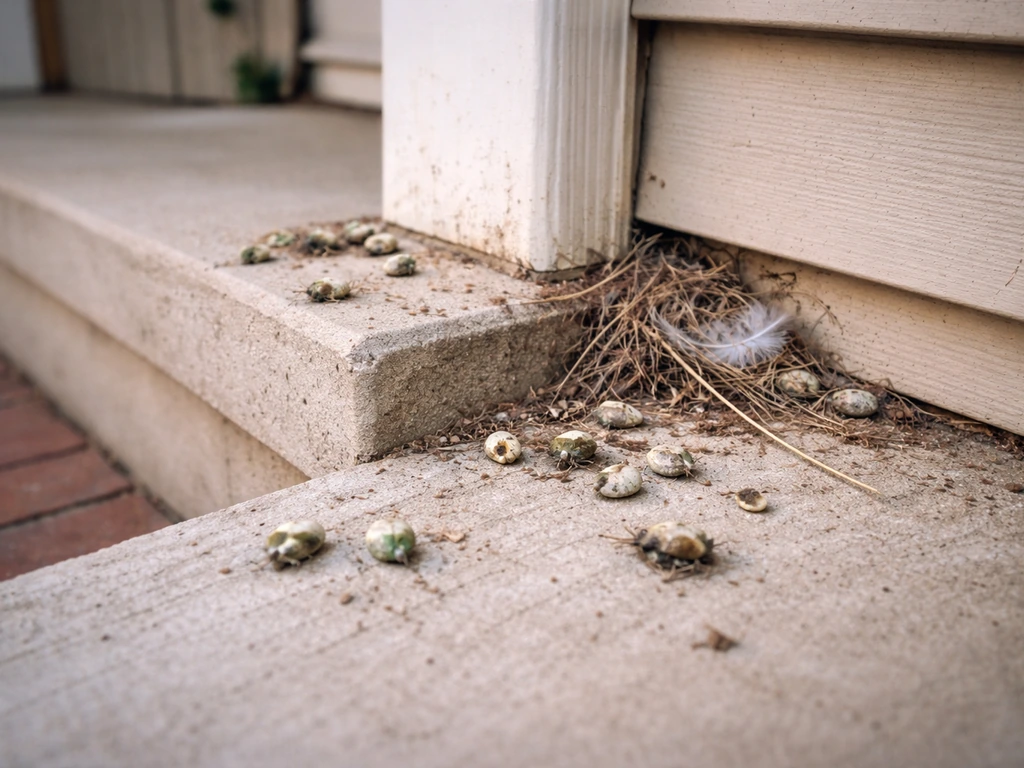
- Health hazards from droppings: Bird and bat droppings can harbor Histoplasma, the fungus that causes histoplasmosis, a potentially serious lung infection. Disturbing large accumulations of dry droppings, by sweeping or shoveling without protection, aerosolizes spores and significantly raises the risk of infection.
- Structural damage: Accumulated droppings are acidic and corrode metal, concrete, and painted surfaces. Nesting materials block gutters and HVAC systems. Repeated roosting on ledges causes long-term building damage.
- Aircraft safety: Bird strikes are one of the most well-documented aviation hazards. FAA regulations (14 CFR § 139.337) require certificated airports to take immediate action when wildlife hazards are detected, and the entire framework of airport wildlife management is built around bird abatement principles.
- Agricultural losses: Birds eat seeds, damage crops, and contaminate stored grain. Starlings, blackbirds, and pigeons are common culprits on farms.
- Noise and sanitation: Large roosts near homes or commercial buildings create persistent noise, odor, and visual mess that degrades quality of life and property values.
The CDC is direct on the health side: large accumulations of bird droppings should ideally be handled by professional hazardous-waste removal companies, not DIY cleanup with a broom. That guidance alone tells you bird abatement is serious enough to treat systematically rather than reactively.
The main types of bird abatement methods
There is no single bird abatement solution that works for every situation. Professionals and airport wildlife managers organize methods into a few broad categories, and the best programs combine two or more of them.
Exclusion
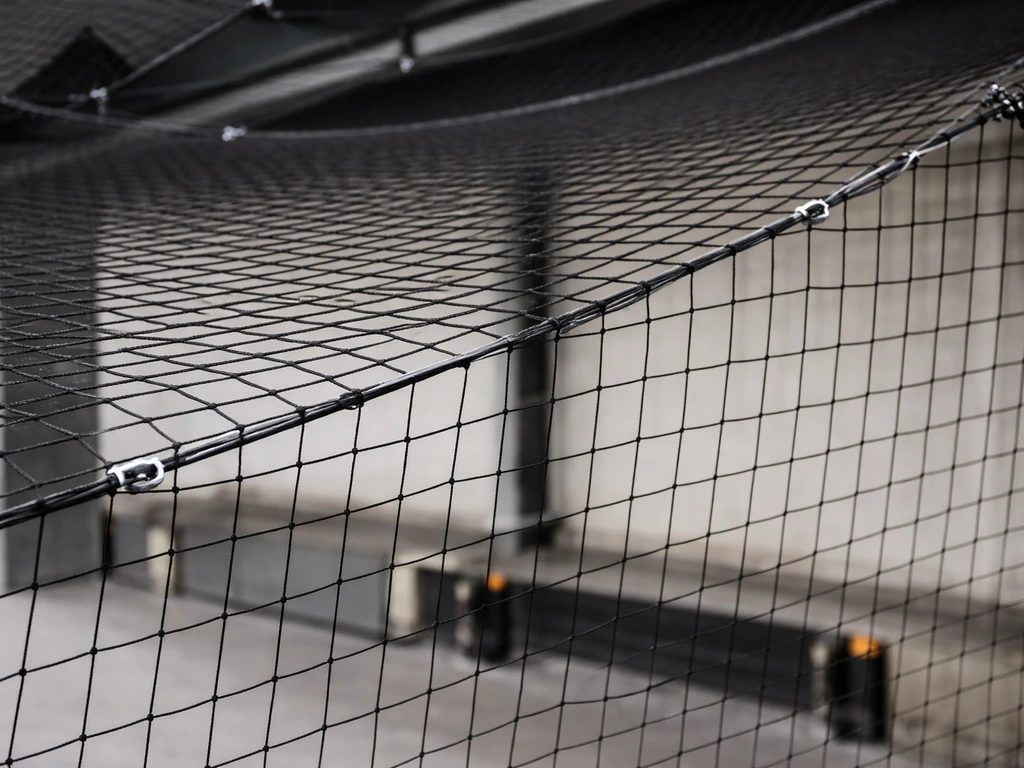
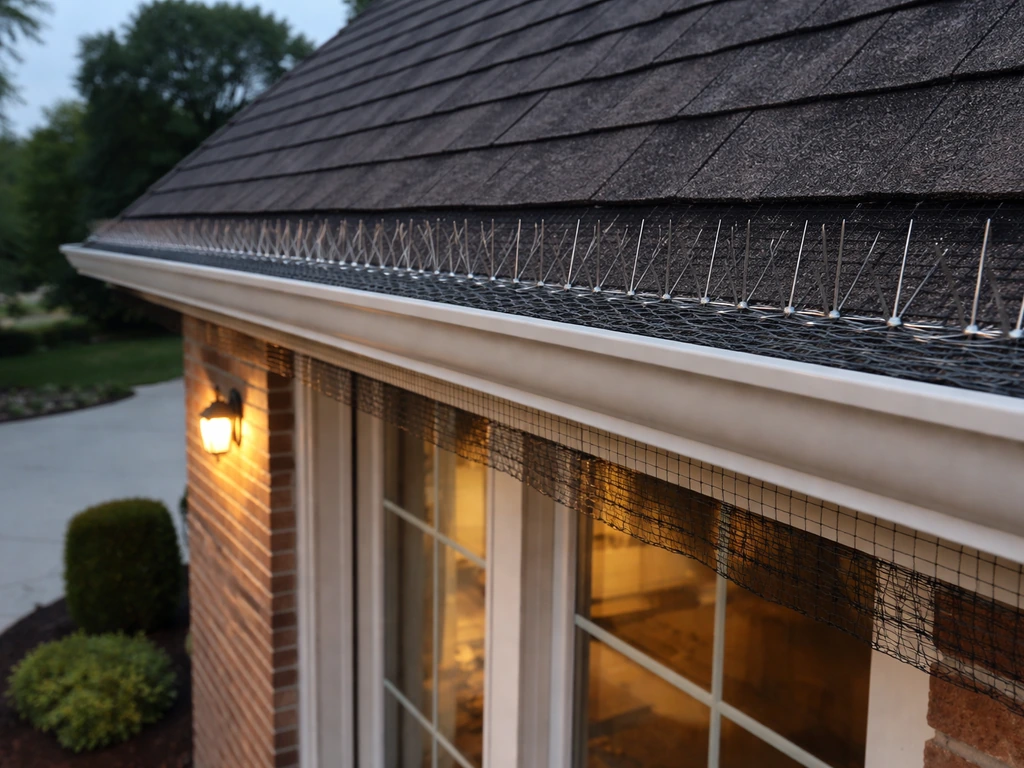
Exclusion physically prevents birds from accessing a space. Bird netting stretched across courtyards, loading docks, or building facades stops birds from entering and nesting. Spikes installed on ledges, signs, and parapets prevent birds from landing and roosting at specific points. These are the most durable and reliable solutions when installed correctly, because they remove the possibility of the problem rather than just discouraging it.
Deterrence
Deterrence makes a location uncomfortable or frightening enough that birds avoid it without being physically blocked. Methods include visual deterrents (reflective tape, predator decoys, laser systems), audio deterrents (distress calls, propane cannons), and biological deterrents such as trained falcons or dogs that patrol an area and disrupt roosting habits. FAA airport wildlife management guides list trained raptors as a legitimate deterrence tool, especially at airfields where large flocks are a strike hazard. Deterrence alone tends to lose effectiveness over time as birds habituate, so it works best combined with exclusion or habitat changes.
Habitat modification
This is the most overlooked but often the most powerful long-term strategy. Birds are attracted to areas because those areas provide food, water, and shelter. Eliminate those attractants and you reduce the bird problem at its source. The FAA's wildlife hazard management framework is actually built around this concept: proper landscaping choices, removing standing water, cutting grass to eliminate seed sources, and avoiding plantings that produce fruit or berries near runways all reduce wildlife hazards. The same logic applies to a parking lot, a warehouse, or a rooftop.
Sanitation and cleanup
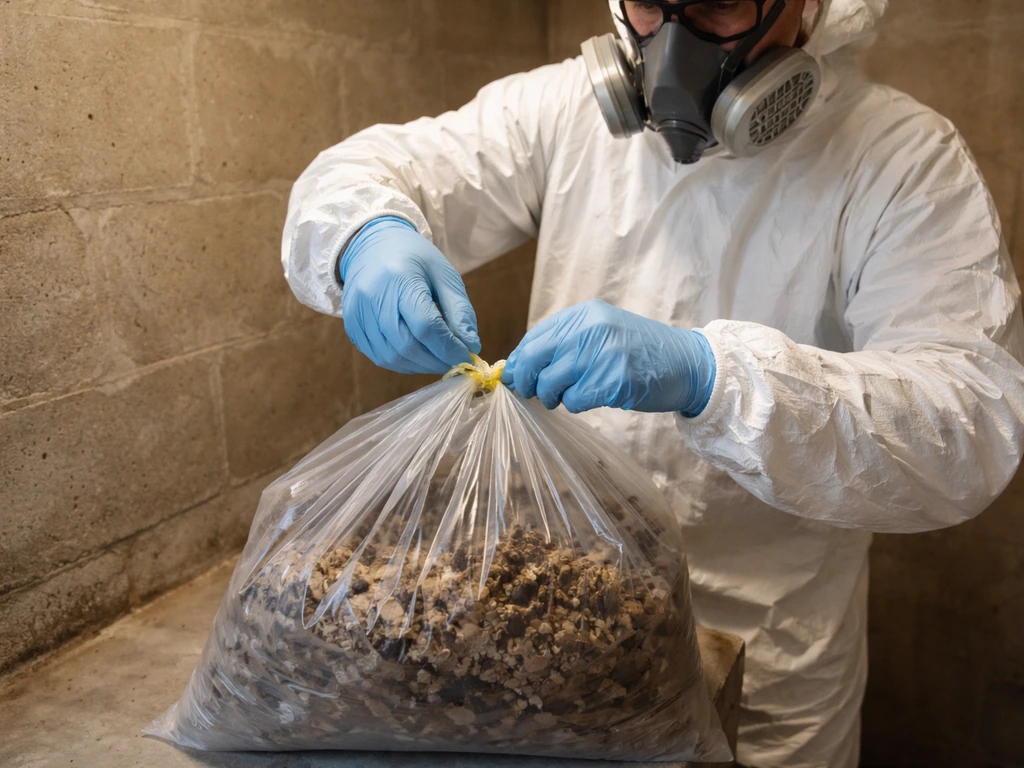
Cleaning up existing droppings and nesting material is part of abatement, but it is also the step that carries the highest health risk if done wrong. CDC and NIOSH guidance specifically warns against dry sweeping or shoveling bird droppings, because that generates the dust that carries Histoplasma spores. The CDC explains that dry sweeping or shoveling bird droppings creates dust that can carry Histoplasma spores [dust that carries Histoplasma spores](https://www. cdc.
gov/histoplasmosis/index. html). If cleanup is needed, wet the material first to suppress dust, use respiratory protection, and for large accumulations, call a licensed hazardous-waste or bird-control professional. Cleanup also removes the olfactory and visual cues that attract birds back to the same spot, making it both a health measure and a deterrence step.
Choosing the right approach for your specific situation
The best way to pick a solution is to first identify exactly what bird species you are dealing with, then identify what is attracting them. If you are working with species ID lists or documentation, you may also see bird code names used to label types and risks without getting too technical. Different birds respond to different strategies, and what works for pigeons on a building ledge will not work for Canada geese on a golf course pond.
| Scenario | Primary bird type | Most effective approach |
|---|---|---|
| Rooftop ledge fouling | Pigeons, starlings | Exclusion (spikes, netting) + cleanup |
| Airport runway perimeter | Gulls, geese, raptors | Habitat modification + deterrence + monitoring plan |
| Grain storage or barn | Starlings, sparrows | Exclusion (netting entry points) + sanitation |
| Open courtyard or plaza | Pigeons, sparrows | Netting + removal of food sources |
| Pond or open water areas | Canada geese | Habitat modification (reduce grass, add barriers) + harassment |
| Commercial warehouse | Pigeons, swallows | Exclusion (seal entry points) + deterrence |
The key question to ask yourself is: what specifically is bringing birds here? Is it standing water? A dumpster that is not sealed? A ledge with the right sun exposure for roosting? Gaps in a roofline that make perfect nest cavities? Once you find the attractant, you can address it directly rather than just reacting to the birds themselves. Habitat modification combined with exclusion addresses the root cause. Deterrence alone rarely sticks long-term.
Scale matters too. A single nesting pair is a very different problem from a roost of several hundred birds. Larger infestations almost always warrant professional assessment, both for effectiveness and for legal reasons.
What to avoid, and the legal basics you need to know
This is the part people skip, and it is the part that gets them in trouble. Bird abatement in the United States operates within a real legal framework, and ignoring it can result in federal penalties.
Federal protections you cannot ignore
The Migratory Bird Treaty Act (MBTA) is the big one. It prohibits the take of protected migratory bird species, and "take" is defined broadly: it includes killing, capturing, trapping, and even disturbing nests and eggs, without prior authorization from the U.S. Department of the Interior. Most songbirds, shorebirds, raptors, and many common pest species like swallows are protected under the MBTA. Starlings, house sparrows, and feral pigeons (rock doves) are generally not protected under the MBTA, which is part of why abatement programs for those species are more straightforward. But you need to verify before you act.
Bald and golden eagles have an additional layer of protection under the Bald and Golden Eagle Protection Act, which prohibits any disturbance of the birds, their nests, or their eggs without a federal permit. Criminal penalties apply. If you have eagles using your property, you need to contact a licensed wildlife professional or U.S. Fish and Wildlife Service before doing anything.
Practical things to avoid
- Do not attempt lethal removal of birds without confirming the species is not protected and that you have the appropriate permits.
- Do not dry sweep or shovel large accumulations of droppings without respiratory protection and dust suppression. The health risk is real.
- Do not touch sick or dead birds with bare hands. Use gloves, seal birds in plastic bags, and wash thoroughly afterward.
- Do not rely on a single deterrent method long-term without a plan to adapt, since birds habituate to most deterrents within weeks to months.
- Do not work at height on ledges or rooftops without proper ladder safety and fall protection. OSHA guidelines on ladder positioning exist for good reason.
- Do not assume a bird problem will resolve on its own. Roosting and nesting sites are revisited year after year unless conditions change.
State and local regulations can add further requirements, especially around protected species lists and permitted methods. When in doubt, a licensed wildlife control operator familiar with your region is worth calling before you start, not after something goes wrong.
Next steps you can take today
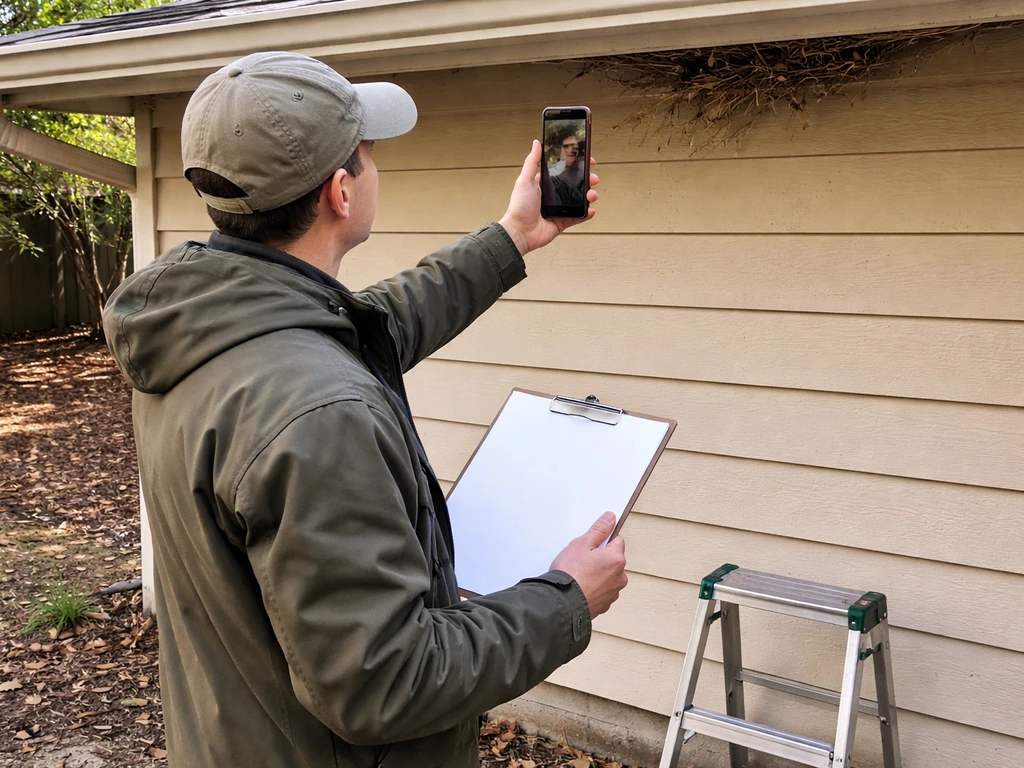
If you are dealing with an active bird problem right now, here is how to move forward in a way that is safe, legal, and actually effective:
- Do a site inspection. Walk the affected area and document where birds are landing, roosting, or nesting. Take photos. Note the time of day when bird activity is highest.
- Identify the species. Look up the birds you are seeing and confirm whether they are protected under the MBTA. If you are not sure, a local wildlife extension office or licensed pest control professional can help.
- List every attractant you can find. Standing water, open food waste, dense low shrubs, ledges with good sun exposure, gaps in rooflines, fruit-bearing trees nearby. Write them all down.
- Prioritize habitat fixes first. Remove or address the attractants you found. This is the lowest-cost, most legally straightforward step and often reduces bird pressure significantly on its own.
- Choose an exclusion method matched to the problem. For ledge roosting, spikes or parallel wires. For enclosed spaces, netting. For entry gaps, hardware cloth or foam sealant appropriate for the gap size.
- Add deterrence if needed. Pair physical exclusion with audio or visual deterrents for faster results, especially during the transition period after exclusion is installed.
- Handle cleanup safely. If droppings have accumulated, wet the surface before cleaning, wear an N95 or better respirator, use gloves, and bag the waste securely. For large accumulations, call a licensed hazardous-waste professional.
- Document and monitor. Keep a record of what you did and when. Check the site weekly for the first month to see if birds have shifted to a new spot and to catch any exclusion failures early.
- Call a licensed professional if the problem is large, if you are dealing with a protected species, or if you are unsure about any step. This is especially true for airports, food-production facilities, and commercial buildings with significant accumulations.
Bird abatement is one of those topics where the terminology sounds technical but the core principles are straightforward once you break them down. If you are trying to understand bird course meaning in context, it is helpful to start from how bird abatement defines and manages bird behavior around a specific site. Understand what is attracting birds, remove or block access to those attractants, choose methods that are legal for your species, and handle cleanup safely.
The same careful observation that makes bird behavior fascinating in a cultural and symbolic sense, whether you are thinking about what a bird's presence might mean or simply watching how they use a space, turns out to be exactly the right starting point for solving a practical bird problem too. If you are wondering about bird behavior meaning, start by observing what the birds are doing and why a location seems to fit their needs.
If you have heard the phrase “bird colonel meaning,” the context is usually about bird-related terminology rather than a specific abatement method. If you are trying to interpret that phrase correctly, it can help to understand what bird abatement professionals mean by the specific terms they use bird-related terminology.
FAQ
Does bird abatement mean I can use poison or traps to get rid of birds?
Not as a default. Bird abatement focuses on stopping landing, roosting, or nesting, mainly through exclusion, habitat changes, or deterrence. Using poisons or capture methods can be both ineffective and legally risky for protected species, so you generally need species identification and the right, permitted method before choosing anything beyond exclusion and habitat control.
How do I tell whether my birds are protected under the Migratory Bird Treaty Act or other laws?
Start with species identification, not just “pigeons” or “seagulls.” Protection varies by species and sometimes by life stage and location. If you cannot confidently identify the species, treat the situation as potentially protected and contact a licensed wildlife professional to avoid accidental “take” issues, especially if nests or eggs are involved.
Can I remove an active nest or eggs as part of cleanup?
Usually not without authorization. The article’s legal framework is important here because disturbing active nests and eggs can count as a prohibited form of “take” for many protected birds. If nests are active, focus on prevention for the future (exclusion and habitat changes) and get guidance on when and how removal is allowed.
What is the biggest mistake people make during cleanup?
Dry sweeping, dry shoveling, or otherwise generating dust from droppings and nesting material. That can aerosolize pathogens like Histoplasma spores. If cleanup is needed, wet the materials first to suppress dust, use respiratory protection, and consider professional hazardous-waste handling for large accumulations.
Will deterrence devices like lasers or noise scare birds away permanently?
Often not. Many deterrents lose effectiveness as birds habituate, especially if the attractants remain (food, water, nesting cavities). Deterrence works best as part of a combined plan, typically paired with exclusion and habitat modification so birds have fewer reasons to return.
What should I do if birds keep coming back after I install netting or spikes?
Check for access gaps and “alternate routes.” Birds can often find nearby ledges, openings, or roofline seams that were missed. Reinspect after wind or maintenance work, confirm the barriers are continuous, and remove attractants nearby (standing water, unsecured trash, food sources) so the surrounding environment does not keep inviting them back.
How do I decide between DIY abatement and hiring a professional?
Scale and health risk are good decision points. If you have a large roost, significant droppings buildup, or unknown species, professional assessment is usually safer and more effective. Pros also help with legal compliance and choosing the right system for the species and site layout.
Is bird abatement the same as getting rid of other nuisance wildlife?
No. Bird abatement is specifically about birds and their landing, roosting, and nesting behaviors, and birds often have stricter legal protections than other nuisance animals. If you are dealing with non-bird wildlife, the correct category may be nuisance wildlife management, which may use different methods and regulations.
Can I treat standing water and landscaping as part of bird abatement?
Yes, and it is usually one of the highest-impact long-term steps. Remove or manage attractants like standing water and seed or fruit sources near the problem area. Pair landscaping changes with exclusion where needed, because removing attractants alone may not fully stop nesting if birds already have access to cavities or ledges.
What information should I gather before choosing an abatement method?
Document species (photos and time of day if possible), where birds land or roost, and what seems to attract them (open dumpsters, gaps in rooflines, sun-exposed ledges, water sources). Also note whether nesting is active, since that affects what is legally permissible and which interventions are safest.
Next Article
Bird Course Meaning: How to Interpret It and Confirm
Bird course meaning explained: route or bird class, context clues, common mixups, and steps to confirm for your case.