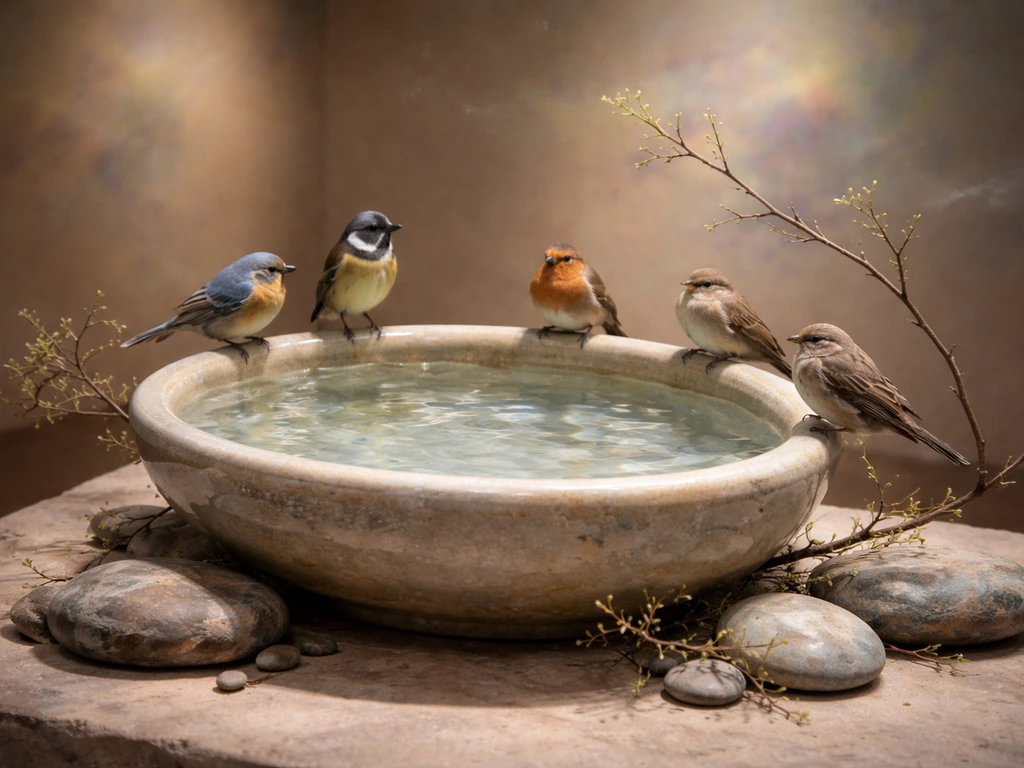
If you searched 'bird bath meaning quick shower,' you are probably asking one of two things: how to set up a bird bath so birds can take a fast rinse right now, or what it symbolically means when a bird bathes. This guide covers both. A bird bath is a shallow, water-filled basin that gives birds a place to drink, bathe, and cool down. The 'quick shower' part refers to exactly what it sounds like: birds do not soak for long. A typical bathing bout lasts under a minute, a rapid splash-and-shake that keeps feathers in top condition. Whether you want to attract birds today or interpret what a bathing bird might mean spiritually, you are in the right place.
Bird Bath Meaning and Quick Shower Setup for Birds

Marcus Holloway
2 Jul 2026
What 'Bird Bath' Actually Means
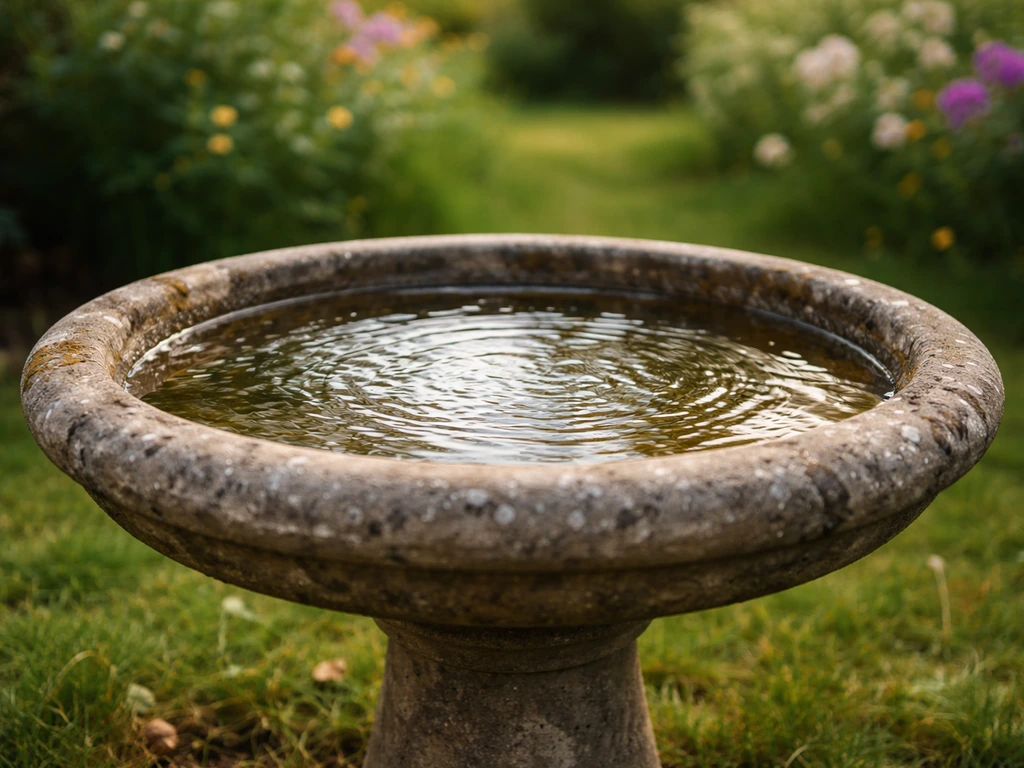
Literally, a bird bath (also written birdbath) is an artificial puddle: a water-filled basin placed in a garden or yard where birds can drink, bathe, and cool themselves. The Cambridge Dictionary defines it simply as a container for birds to bathe in, used as a garden feature. That definition captures the practical object well, but it undersells what the bird bath represents as an idea.
Symbolically, a bird bath carries layered meaning. Water and birds together have long represented purification, transition, and renewal across cultures. The bath is a threshold moment: the bird arrives carrying the dust and burden of flight, enters the water, and leaves cleaner and lighter. That arc maps neatly onto older symbolic frameworks where water cleanses not just the body but the spirit. So when the phrase 'bird bath' shows up in dreams, folklore, or idiom, it tends to carry those overtones of refreshment and new beginnings, even if nobody is consciously thinking about ornithology.
There is also a casual human idiom worth noting: people sometimes call a quick human wash-up a 'bird bath,' meaning a fast sink-side rinse rather than a full shower. If that is the sense you were searching for, the cultural logic is the same: birds take brief, efficient baths, so the phrase captures the idea of a minimal but sufficient clean.
Why Birds Bathe: It Is Not Just About Getting Clean
Birds bathe for reasons that go well beyond basic hygiene. The British Trust for Ornithology explains that water bathing helps oil from the preen gland spread evenly across feathers. That oil coating is what keeps feathers flexible, waterproof, and properly aligned for flight. Without regular bathing and preening, feather condition degrades, which affects everything from warmth retention to aerodynamic efficiency.
- Feather maintenance: wetting loosens dirt and helps distribute preen oil across the entire plumage.
- Parasite control: bathing physically dislodges feather mites, lice, and other external parasites.
- Thermoregulation: on hot days, a quick splash cools the skin and feathers, helping birds manage body temperature.
- Behavioral comfort: bathing appears to be genuinely pleasurable for many species; birds often return to the same bath repeatedly.
- Micro-showering: the BTO notes that some birds 'shower' by rolling in wet leaves, dew, or rain rather than immersing themselves at all.
After bathing, birds typically fly to a nearby branch or fence, shake off excess water, and then spend time preening, drawing each feather through the bill to realign the tiny barbs that give feathers their structure. That post-bath preening session is as important as the bath itself.
Set Up a Bird Bath Today: A Fast, Practical Plan
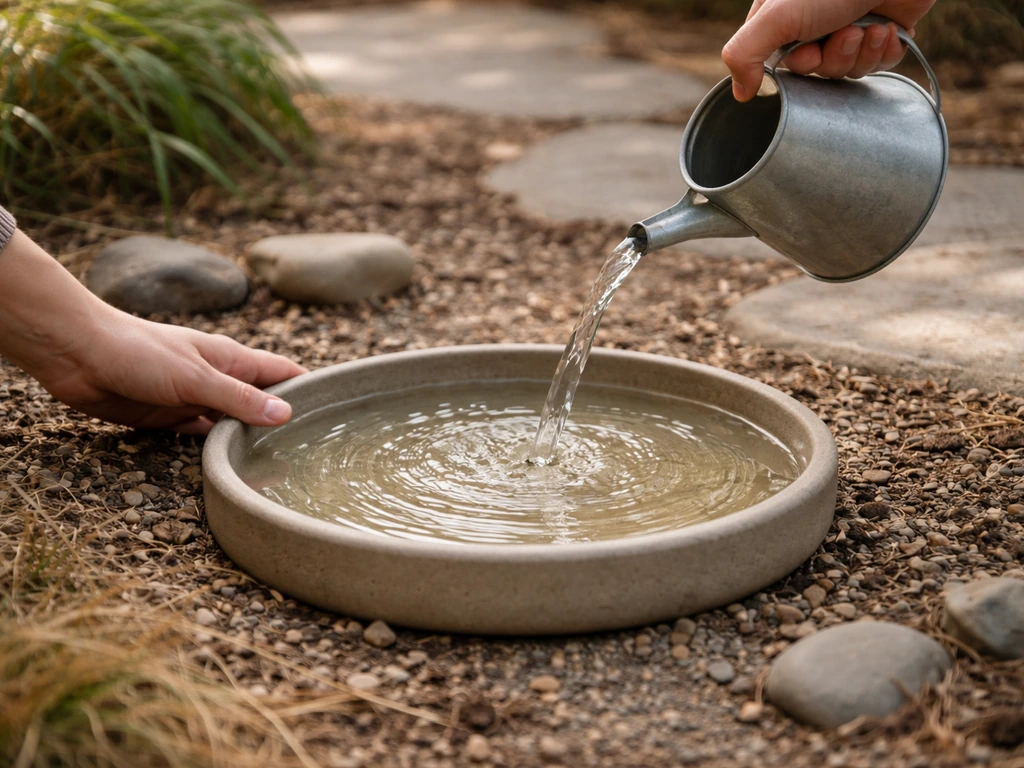
You do not need to spend much money or time to give birds a working bath by this afternoon. The essentials are a shallow container, clean water, and a sensible location. Here is how to do it quickly.
Choose Your Basin
Any shallow, waterproof container works. A traditional pedestal bird bath from a garden center is ideal, but a terracotta saucer, a shallow plastic tray, or even a clean garbage can lid set on the ground will do the job right now. The key measurement is depth: no more than 2 to 3 centimeters (about 1 inch) at the edges, with a maximum of 10 centimeters (4 inches) at the center. Birds are not strong swimmers. If your container is too deep, add a large flat stone to the center to create a shallow wading area.
Pick the Right Spot
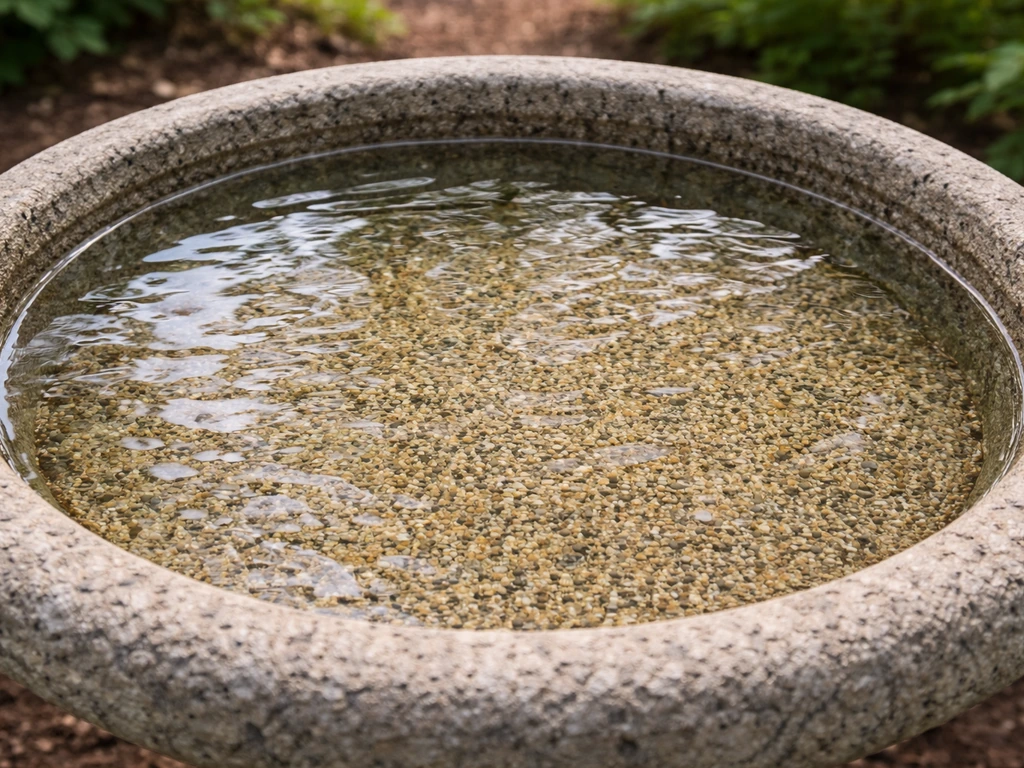
- Place the bath within 3 meters of a shrub or tree so birds have a quick escape route if a predator appears, but not so close that a cat can use the foliage as cover.
- Avoid spots in full afternoon sun if you are in a warm climate; the water heats up fast and evaporates quickly.
- Partial shade (morning sun, afternoon shade) keeps the water cooler and fresher longer.
- Put it somewhere visible from a window if you want to watch; birds are more comfortable when they can see their surroundings clearly.
Fill It and Add a Rough Surface
Fill the basin with plain, clean tap water. Birds prefer a slightly rough surface underfoot so they do not slip; a layer of coarse sand or a textured stone tile on the bottom helps a lot. If the basin is smooth, the rough stone in the center solves both the depth and the traction problem at once.
Add Movement If You Can
Moving water attracts birds far more effectively than still water. Even a simple dripper or solar-powered mini-fountain costing a few dollars makes a significant difference. The sound and glint of moving water alerts birds from a distance. If you cannot add a dripper today, try hanging a container with a small hole above the bath so water drips in slowly.
Keeping It Safe and Clean
A neglected bird bath can spread disease faster than no bath at all, so the maintenance routine matters. The RSPB recommends replacing the water every single day and washing the bath out on a weekly basis. That sounds like a lot, but the daily refill takes about thirty seconds, and the weekly scrub takes only a few minutes.
- Daily: empty any remaining water, rinse the basin, and refill with fresh water. This prevents bacterial buildup and removes droppings.
- Weekly: scrub the basin with a stiff brush and a weak solution of one part white vinegar to nine parts water, or use a diluted bleach solution (one part bleach to ten parts water). Rinse extremely thoroughly before refilling because residue is toxic to birds.
- After each rain: check the water level and tip out any overflow that has collected debris from surrounding surfaces.
- Seasonally: in very hot weather, check the water level twice a day because evaporation and heavy bird use can empty a small basin fast.
On water temperature: in summer, water sitting in direct sun can get uncomfortably warm. Shade placement or a daily midday refill keeps it cool. In winter, if you live somewhere water freezes, a purpose-made bird bath heater or a simple floating rubber ball that you press down each morning to break ice will keep the water accessible. Never use antifreeze or salt.
What a Bird's Quick Shower Actually Looks Like
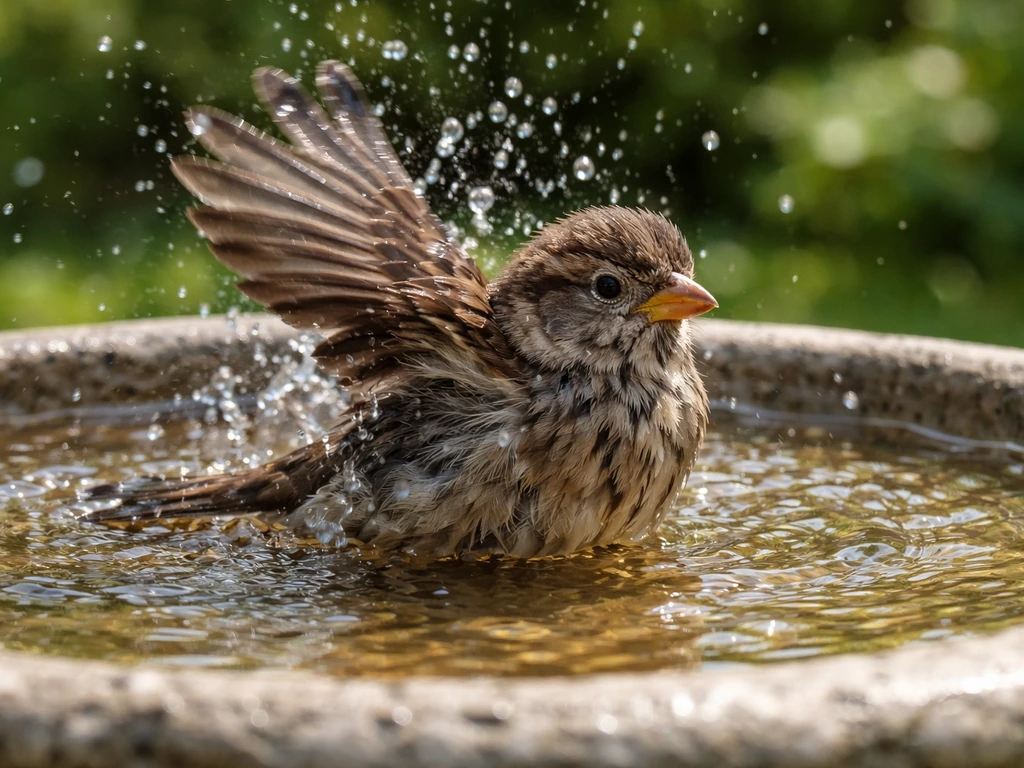
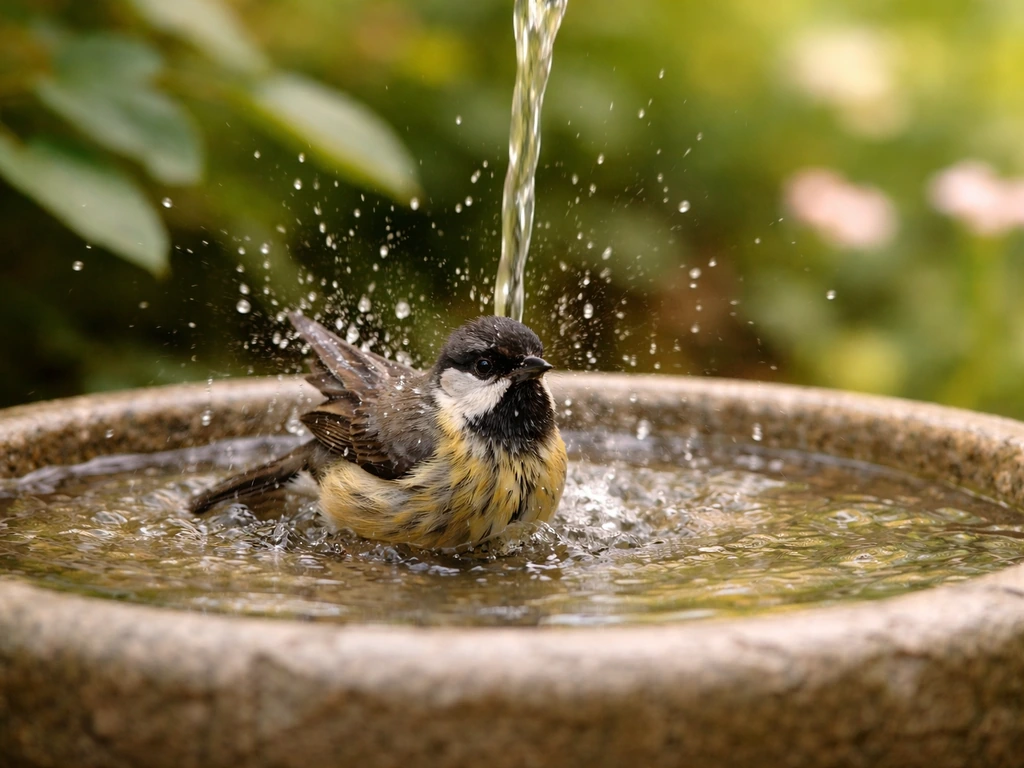
Ornithology Education describes the typical sequence well: a bird wades in, then flutters and splashes water up onto its back and wings repeatedly, soaking the feathers down to the skin. The whole bathing phase often lasts less than a minute. The bird then shakes vigorously while still in or near the water, exits, finds a sunny or breezy perch nearby, and begins the real work: preening each feather group systematically.
That brevity is the source of the human idiom. When people call a fast human wash-up a 'bird bath,' they are referencing this behavior accurately: in, splashed, out, done. It is efficient, not lazy. For birds, the quick shower serves a very precise functional purpose, and it works because the post-bath preening does the detailed maintenance work.
Behaviorally, a bird bathing signals several things at once. It means the bird feels safe enough in that location to be temporarily vulnerable (wet feathers reduce flight performance). It signals that the bird is in good overall health, since sick or stressed birds rarely take the time to bathe. And in social species, group bathing can indicate a relaxed flock dynamic. If you see a bird bathing regularly in your yard, you have genuinely earned its trust.
Spiritual and Cultural Readings of Birds Bathing
Across many traditions, water and birds together carry symbolic weight that goes well beyond garden observation. Birds are frequently used as messengers between the earthly and spiritual realms in folklore, and when they appear interacting with water, the imagery intensifies. Water is one of the oldest symbols of purification, transformation, and renewal in human culture. A bird entering water and emerging cleaner is a near-universal metaphor for leaving the old behind. If you are wondering about the bird kiss meaning, look for the same themes of affection, trust, and emotional renewal that show up in bird symbolism more broadly bird entering water and emerging cleaner.
Renewal and Cleansing
In many spiritual interpretations, watching a bird bathe is read as a sign of renewal or release: something in your life is being washed clean. It is a particularly common reading in dream symbolism. In that same spirit, many people look up bird bath Leonora Carrington meaning when interpreting what a bathing bird represents in art and dreams dream symbolism. A bird bathing in a dream is often interpreted as the dreamer processing an emotional or spiritual cleansing, letting go of something that no longer serves them. Related concepts of purification appear in baptism traditions, ritual bathing in many world religions, and rites of passage that use water as the medium of transformation.
Omens and Luck
In folk traditions, a bird choosing to bathe near your home is generally considered a good omen. It signals that your space is safe, welcoming, and energetically clean. Some European and Asian folk beliefs hold that birds are sensitive to the spiritual atmosphere of a place and will not linger where the energy is troubled. A bathing bird, therefore, can be read as an affirmation: the bird is comfortable, unbothered, engaged in the most vulnerable and peaceful act it performs. Seeing one is interpreted as confirmation that the space around you is in good order.
Dream Symbolism
Dreams involving bird baths or birds bathing tend to cluster around themes of self-care, fresh starts, and clearing mental or emotional clutter. A bird bathing peacefully suggests harmony and a readiness to move forward. That is why people often look up bird bathing meaning when they see the behavior in their yard or in a dream. A bird struggling in water, or a bath that is dirty or blocked, typically flips the reading toward anxiety about stagnation or being overwhelmed. As always with dream interpretation, the emotional tone of the dream matters as much as the image itself. The physical concept of the 'quick shower' translates into dream language as: a fast but meaningful reset is available to you.
It is worth noting that related concepts like bird bathing in general, the meaning of a bird shower, and even specific artistic interpretations (such as the surrealist painter Leonora Carrington's engagement with bird imagery) all draw on overlapping symbolic territory: birds as agents of spiritual freedom, and water as the medium through which that freedom is restored. In that context, “bird bath shower meaning” points to both the quick rinse itself and the symbolic messages people attach to a bird bathing.
Why No Birds Are Visiting (and How to Fix It)
If you set up a bird bath and nothing is happening, the problem is almost always one of a handful of fixable issues. Here is what to check.
| Problem | Likely Cause | Fix |
|---|---|---|
| No birds visiting | Location too exposed, or too close to cover for cats | Move the bath to a spot with nearby but not adjacent shelter |
| No birds visiting | Water is still; birds cannot hear or see it | Add a dripper, small fountain, or hang a leaking container overhead |
| No birds visiting | Bath is too deep | Add a flat stone or reduce water level to 1-2 cm at edges |
| Green algae forming | Too much direct sunlight and warm standing water | Move to partial shade; clean weekly with vinegar solution |
| Mosquito larvae | Water sitting stagnant for more than a few days | Refill daily; add a small solar-powered agitator to keep water moving |
| Birds splashing water out fast | Basin too shallow overall | Use a larger, wider basin; refill more frequently in hot weather |
| Cats ambushing birds | Bath placed too close to dense shrubs | Move the bath to open ground with clear sightlines, at least 2m from cover |
Patience is also part of the fix. Birds are cautious about new objects in their territory. A newly placed bath can take several days, or even a couple of weeks, before local birds accept it as safe. Once one bird uses it, others tend to follow quickly. Keep the water fresh during that waiting period so it is ready when they decide to investigate.
If algae keeps returning despite shade and weekly cleaning, consider adding a few drops of a bird-safe enzyme product designed for water features. Avoid any copper-based algae treatments unless they are explicitly labeled safe for birds; copper is toxic to many species at even low concentrations.
The Short Version: What to Do Right Now
If you want a practical result today: grab any shallow container, fill it with clean water to about 2 cm deep, place it somewhere open but near a tree or shrub, add a rough stone for footing, and check back in a few days. Refill it daily. That is genuinely all it takes to get started. If you were searching for meaning rather than a setup guide, the core symbolic reading is consistent across cultures: a bird bathing, especially a quick and efficient one, represents purposeful renewal. Clean, refresh, move on. It is one of nature's neatest metaphors, and it turns out to be accurate ornithology at the same time.
FAQ
How often should I change the water if I want a quick shower experience for birds?
Plan on a complete water swap every day. Even if the bath looks clean, bird droppings and shed feather oils can build up quickly and discourage use. A daily top-off is not enough, because it does not remove contaminants, it only dilutes them.
What depth is safest if I am using a shallow lid or tray instead of a pedestal bird bath?
Aim for about 2 to 3 cm (1 inch) at the edges and no more than about 10 cm (4 inches) in the deepest part. If you cannot measure, use the “wading test” approach: the bird should be able to stand comfortably with its feet in water without needing to swim.
Do birds really bathe for less than a minute, and what if they stay longer?
Most bathing bouts are brief, then followed by vigorous shaking and preening. If a bird stays in the bath unusually long, it can be too cold or too shallow traction, or the bird may be cooling down in heat. Check shade, footing texture, and whether the water temperature feels comfortable (not sun-warmed).
Is still water okay, or do I need a dripper or fountain for birds to use it quickly?
Still water can work, but moving water usually increases visits because the sound and glint help birds locate it faster. If you cannot add a pump, try a simple gravity dripper setup (a small container with a pinhole) so water moves gently without splashing the ground heavily.
Can I use soap, plant fertilizer, or “cleaning products” to keep the bath safe?
No. Never add soap, detergents, or garden chemicals to the bath. For algae, use only bird-safe water-feature products, and confirm they are explicitly safe for birds (avoid any copper-based treatments unless labeled appropriate for bird use).
What should I do if the bath attracts mosquitoes?
Mosquitoes often breed in still, neglected water. The fix is strict daily changes, plus placing the bath where birds can access it quickly and safely. If you want to reduce standing time further, consider a dripper or mini-fountain that keeps water moving rather than pooling.
Why do birds stop using my bath after a week or two?
Common causes are dirty water, loss of footing texture (sand or textured tile becoming slick), or predators having an easy vantage point nearby. Remove the bath temporarily, scrub it, refresh the rough surface, and reposition it so birds have cover (tree or shrub) within a few hops.
Can winter freezing make a “quick shower” impossible?
It can, because birds need accessible liquid water. Use a purpose-made bird bath heater where appropriate, or a simple tool like a floating rubber ball to break ice each morning. Do not use antifreeze or salt, as those can be lethal to birds.
Should I place the bird bath in direct sun or full shade?
Use shade to prevent overheating, but not so much that the bath stays perpetually stagnant and grows algae faster. A practical approach is morning sun with afternoon shade, then adjust based on whether you see algae return despite weekly scrubbing.
If I am trying to interpret “bird bath meaning,” how should I treat dreams differently from seeing birds in my yard?
In the yard, bathing behavior often correlates to comfort and safety in that location. In dreams, interpretations usually focus on emotional cleansing or renewal, the dream tone matters, peaceful imagery suggests release or self-care, while dirty or blocked water tends to point to stagnation or being overwhelmed.
Next Article
Bird Bath Leonora Carrington Meaning and How to Verify It
Interpret Leonora Carrington bird-bath symbolism in her surreal nature myths plus steps to verify the exact artwork mean