A chirping bird almost always means one thing first: communication. Birds are constantly exchanging information with each other and with their environment, and sound is their primary tool. Whether you're hearing a single brief chip note from a shrub or a sustained chorus outside your window at dawn, there's a specific behavioral reason behind it. The trick is reading the context to figure out which one.
Bird Chirping Meaning: What It Likely Signals and Why

Marcus Holloway
3 Apr 2026
What "bird chirping" actually means in plain language

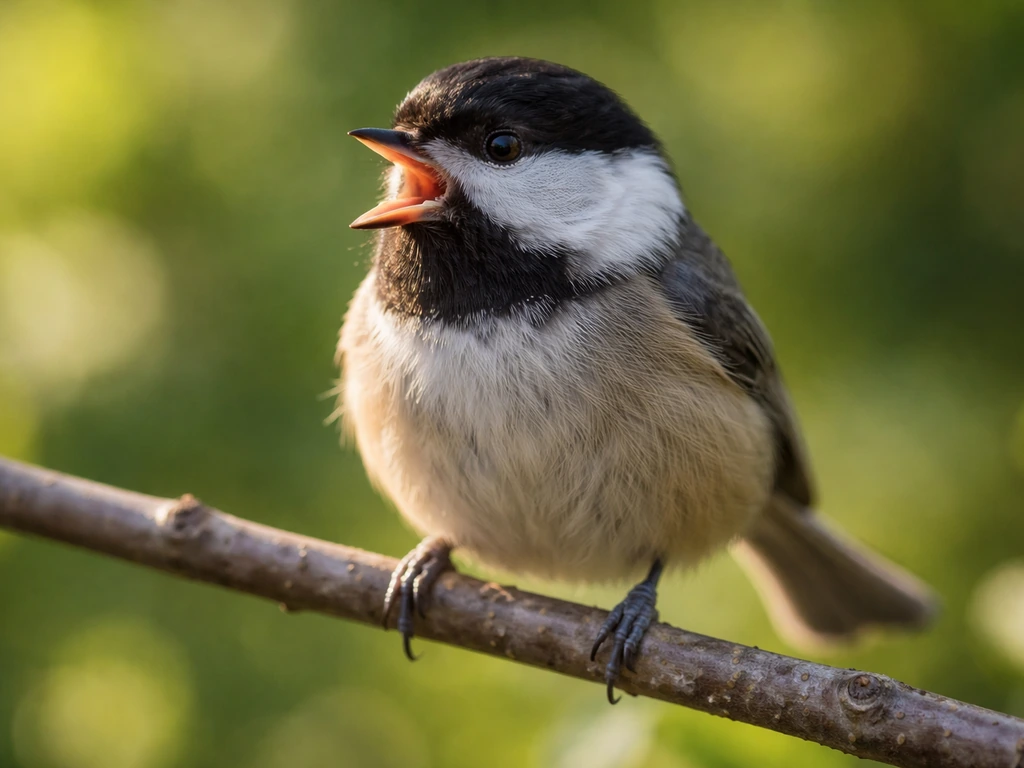
In ornithology, bird vocalizations fall into two broad categories: songs and calls. Songs are longer, more complex sequences, almost always produced by males, and they're tied to courtship and territory. Calls, which include most of what people describe as "chirping," are shorter and more functional. They communicate things like "I'm over here," "danger," or "follow me." So when someone says a bird is chirping, they're typically describing a call, not a song, even if the two overlap in casual conversation.
The word "chirp" itself refers to a short, sharp, high-pitched note. A single chirp is usually a contact call or a mild alert. Repeated, rapid chirping often signals alarm or heightened arousal. Slow, evenly spaced chirps through the day tend to be location calls, a bird keeping tabs on nearby companions. When you hear chirping, the pattern (single vs. repeated, fast vs. slow, steady vs. frantic) tells you almost as much as the sound itself.
Context clues: time of day, location, and what the bird is doing
Context is everything with bird sounds. The same species will chirp differently depending on what's happening around it, and the same chirp pattern means different things at 5 AM versus 2 PM versus midnight.
- Dawn and early morning: This is peak vocal activity for most songbirds. The dawn chorus is driven by males advertising territory and fitness before the day's distractions begin. Lots of overlapping chirps at dawn are completely normal and generally indicate a healthy bird population in the area.
- Midday: Chirping slows considerably for most species. If you hear intense or repeated chirping in the middle of a hot afternoon, it's worth paying attention. It often means a predator (a hawk, a cat, a person) is nearby, or a bird is in distress.
- Dusk: Birds do a second, shorter round of calling as they settle in for the night. If you're noticing birds gathering in trees and producing soft, frequent chips, they're likely coordinating before roosting. For more on that behavior, the article on bird roosting meaning explains what's going on when they settle collectively for the night.
- Night: Most chirping at night comes from a narrow set of species. Northern Mockingbirds sing through the night during breeding season. Some sparrows and warblers call during nocturnal migration. An unfamiliar chirp at 2 AM is almost always one of these scenarios.
- Location: Chirping in a dense bush or low shrub often points to a sparrow or wren. High in a canopy? Warblers or vireos. Near a feeder? House finches, chickadees, or sparrows running contact calls. Indoors? That's a separate problem entirely (covered below).
The main behavioral reasons birds chirp
The U.S. Forest Service's basic birding guidance identifies blank" rel="noopener noreferrer">contact calls and alarm calls as two of the primary functions of bird vocalizations, alongside the more complex territory and mating songs. In practice, most chirping falls into one of four real-world categories.
Mating and courtship
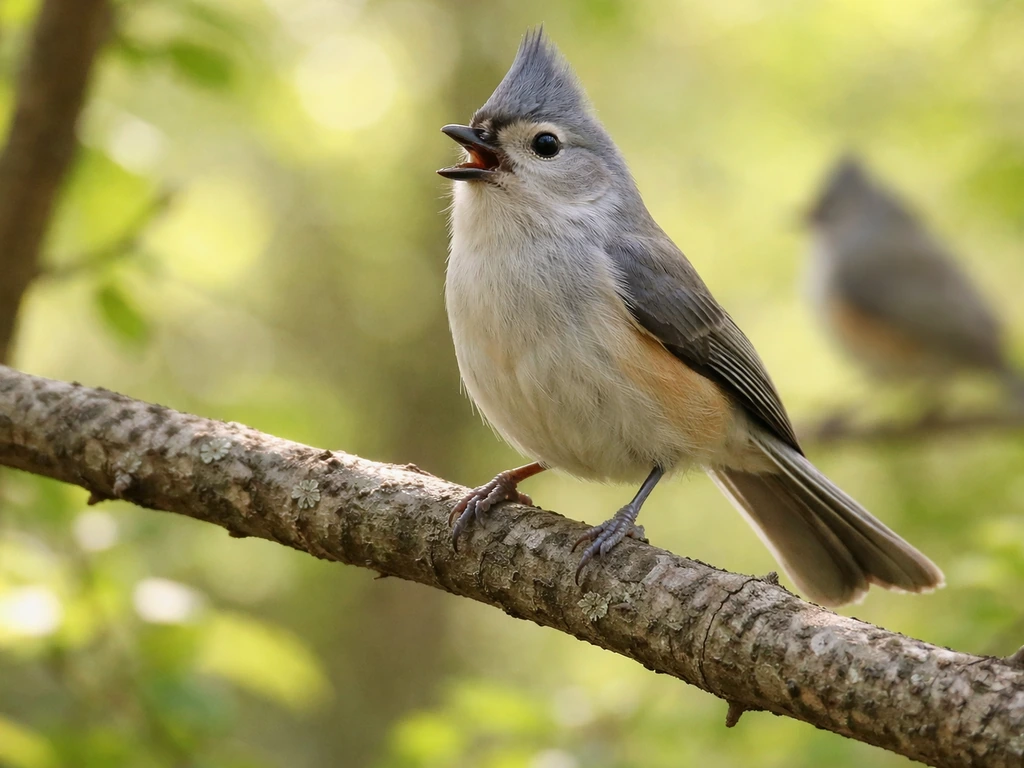
During breeding season (roughly February through July in North America, peaking in spring), male birds ramp up their calling to attract mates. What sounds like cheerful chirping in your backyard in April is often a male broadcasting his location and health to females in the area. These calls are typically cleaner and more musical than alarm calls, and they repeat at regular intervals.
Territory defense
Birds will chirp aggressively to warn off competitors. If you see two birds of the same species in close proximity and one is producing sharp, insistent calls, you're likely watching a territorial dispute. The chirping is essentially a warning: this space is claimed. Backing away and making yourself less interesting usually de-escalates the situation quickly.
Alarm calls
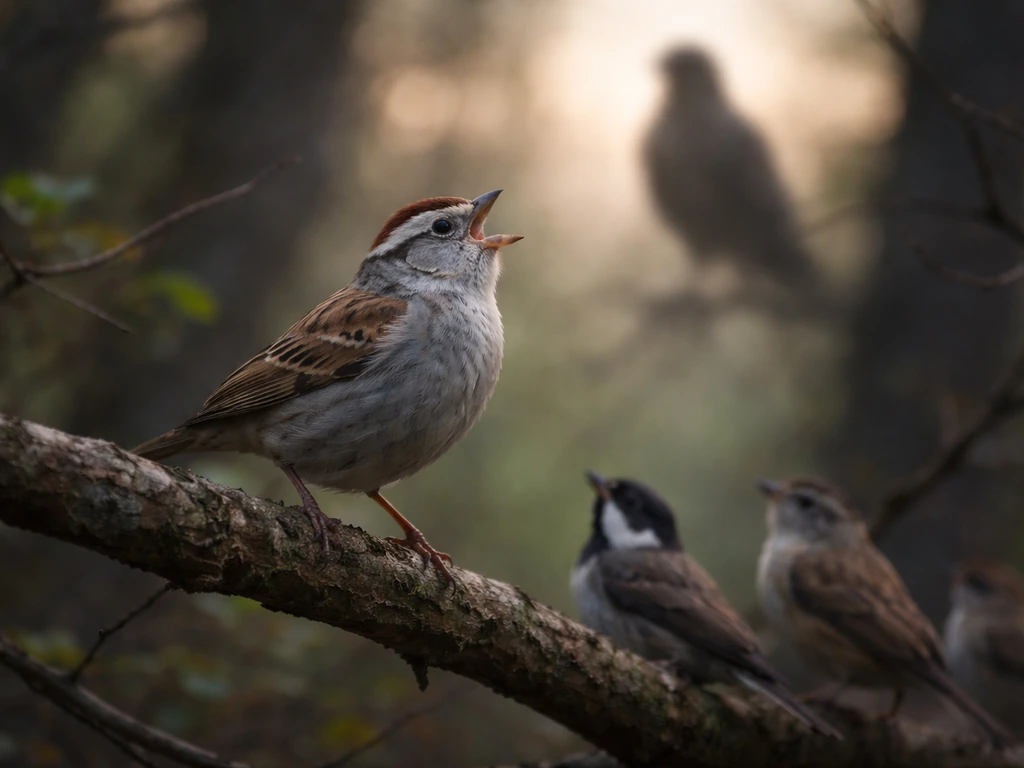
Alarm calls are some of the most important sounds a bird makes, and many species can actually understand each other's alarm calls across species lines. A sharp, repeated chip at high speed, often accompanied by a bird physically mobbing a spot or diving repeatedly, is an alarm. If you hear this and can't find an obvious cause, check for a perched hawk, a snake, or a cat. Other birds in the area will often go silent or join in when an alarm call starts.
Contact calls and flock coordination
Many birds use soft, brief chirps throughout the day just to stay connected with nearby flock members, a kind of constant low-level "I'm here, where are you?" exchange. This is especially common in species that forage in loose groups. When you see a group of birds moving through your yard together and chirping softly, they're almost certainly running contact calls. This behavior connects closely to the larger social dynamics covered in the article on bird flocking meaning, which explores why birds coordinate movement and what it signals.
Symbolic and spiritual meanings of chirping birds
Across cultures, a chirping bird has been read as a sign, message, or omen for centuries. It's worth taking these seriously as cultural frameworks, while being clear that the bird is just being a bird. That said, here's what different traditions have made of the sound.
In many Western folk traditions, a bird chirping near your window or door is considered a message from a departed loved one, especially if the encounter feels unusual (a bird that won't leave, or one that makes direct eye contact). This belief shows up in American and British folk culture alike. It's not hard to see why: birds arrive seemingly from nowhere, are mobile between worlds (sky and ground), and their calls can feel startlingly intimate.
In Chinese tradition, birds chirping in the morning are a good omen, associated with happiness and positive energy entering the day. Many Asian cultures share the association between birdsong and auspicious beginnings. In Celtic folklore, specific birds carried specific meanings, but generally, a bird calling repeatedly near someone was interpreted as a message demanding attention, either of good fortune approaching or danger ahead.
Native American traditions vary significantly by nation and region, but birds broadly hold messenger roles, connecting the physical and spiritual worlds. A bird that behaves unusually (chirping persistently in an unexpected place) is often treated as a signal to pause and reflect on what's happening in one's life.
The grounded takeaway: if you find yourself drawn to assigning spiritual meaning to a chirping bird, the most honest approach is to notice what the encounter made you feel or think about, and treat that as the message, rather than trying to decode the bird's behavior as a literal code. The bird is doing bird things. What you bring to the encounter is the interpretive layer.
How to identify the bird from the chirp itself
Identifying a bird by its call alone is genuinely possible with a little practice, and it's one of the most useful birding skills you can build. Here's a practical approach:
- Describe the sound before looking it up. Is the chirp high or low? Single or repeated? Does it go up at the end (rising) or down (falling)? Is it sharp and dry, or slightly musical? Jotting down even a rough description helps a lot.
- Use a free app like Merlin Bird ID (from the Cornell Lab of Ornithology). Its Sound ID feature listens in real time and identifies likely species from live audio. It's remarkably accurate for common backyard birds.
- Match the sound to what you're seeing. A small, brown bird in a low shrub producing a sharp "chip" is almost certainly a sparrow or a wren. A red bird producing a series of clear whistles is almost certainly a Northern Cardinal. Use both the sound and the visual to narrow it down.
- Pay attention to note patterns, not just pitch. Some species have very distinctive rhythms. A Carolina Wren, for example, delivers rapid bursts of sound in a clearly structured phrase. Chickadees famously say their own name. Some trills are distinctive enough to ID by rhythm alone, and the article on bird trill meaning goes deeper on how to distinguish trill-type calls from standard chirps.
- Check range maps. Once you have a candidate species, confirm it's actually found in your region and in the current season. A lot of misidentifications happen when someone hears what sounds like a tropical bird in New England in January.
| Chirp Pattern | Likely Meaning | Common Species |
|---|---|---|
| Single sharp chip, repeated slowly | Contact call, staying in touch with nearby birds | Sparrows, warblers, chickadees |
| Rapid, insistent chipping (frantic pace) | Alarm call, predator or threat nearby | Robins, jays, chickadees |
| Musical series of clear notes at dawn | Territory/mating song | Cardinals, robins, thrushes |
| Soft, frequent chips while moving through yard | Flock coordination contact calls | Juncos, sparrows, waxwings |
| High-pitched, thin single note | Nocturnal migration call | Warblers, thrushes (at night) |
| Loud, complex repeating phrases at night | Male advertising territory | Northern Mockingbird |
When chirping is a sign something's wrong
Most chirping is totally normal, but there are situations where a chirping bird is signaling a problem that needs human attention, or at least awareness.
A bird trapped indoors or in a structure
If you hear persistent chirping inside your walls, attic, or chimney (especially in spring), a bird has likely become trapped or built a nest in an enclosed space. The sound will often be muffled, and you may hear scratching alongside the chirping. This is a welfare issue. Open a nearby window or door to give the bird an escape route if it's inside a room. If it's in a wall cavity or chimney, contact a wildlife removal professional rather than sealing the opening, which can trap the bird inside.
Nestlings and fledglings calling for food
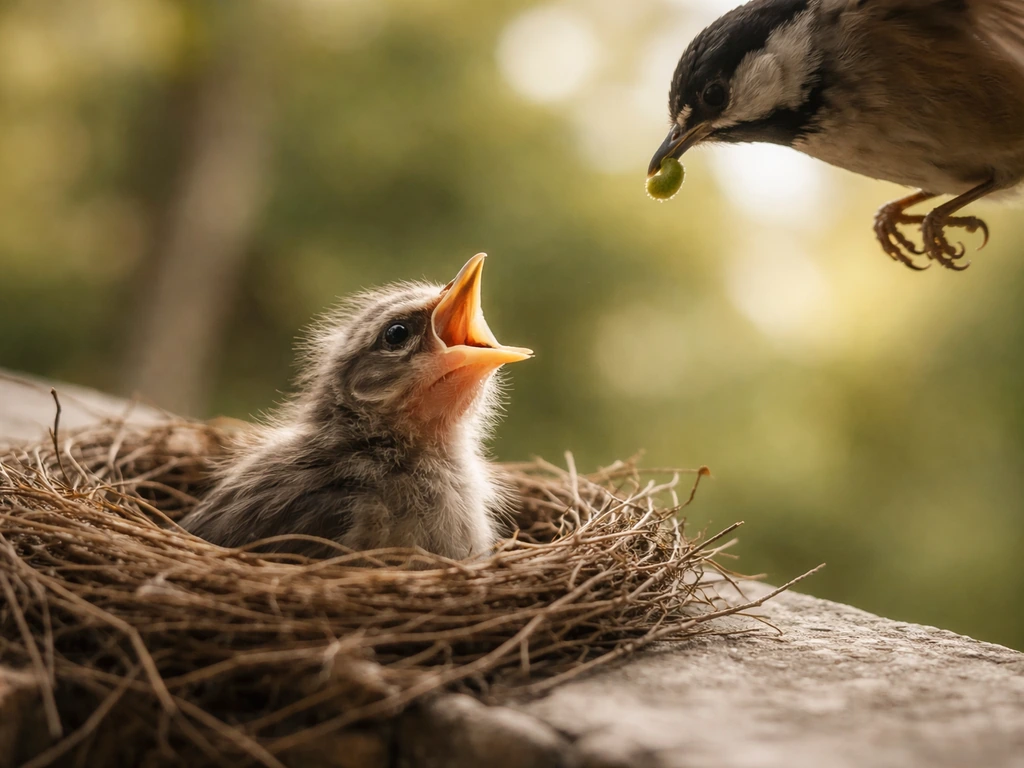
Baby birds produce a specific high-pitched, repetitive chirp called a "begging call," and it can be quite loud. If you find a bird on the ground producing this call, don't assume it needs rescuing. Fledglings (young birds with some feathers) are often out of the nest intentionally, still being fed by parents on the ground. Watch from a distance for 30 to 60 minutes before intervening. If the bird is clearly injured, or if the parents don't appear after an hour, contact a licensed wildlife rehabilitator.
Large-scale coordinated alarm behavior
If multiple birds in your yard suddenly erupt in alarm calls simultaneously and you can see them moving in a synchronized, agitated way, take it seriously as a predator alert. Hawks and outdoor cats are the most common triggers. The large-scale coordinated version of this behavior, where hundreds of birds respond together, is related to the phenomena described in the article on bird murmuration meaning, which explains how collective bird behavior reflects both social bonding and predator response.
Unusual chirping from a pet or indoor bird
For pet birds (canaries, budgies, parakeets, cockatiels), a sudden change in chirping pattern can indicate stress, illness, or environmental discomfort. If your bird goes from normal chatty chirping to silence, or starts producing unusual distress calls, check the temperature, lighting, and air quality in the room first. Persistent abnormal vocalization paired with fluffed feathers, loss of appetite, or lethargy warrants a vet visit.
Your quick next-step checklist
If you just heard a chirping bird and want to figure out what it meant, work through this short list:
- Note the time of day. Dawn or dusk chirping is almost always normal. Midday or nighttime chirping narrows your candidates significantly.
- Describe the pattern. Single slow chips = contact call. Fast frantic chips = alarm. Musical repeating phrases = song (territory or mating).
- Look at the location. Where was the bird? Low shrub, high canopy, near a feeder, inside your home? Location narrows the species pool immediately.
- Use Merlin Sound ID or a similar app to identify the species if you can still hear it.
- Check whether other birds responded. If nearby birds went silent or started mobbing a spot, there's likely a predator. If they kept doing their own thing, it was probably a routine call.
- If the sound is coming from inside a wall, chimney, or attic, stop and contact a wildlife removal professional before sealing anything.
- If you found a bird on the ground chirping, watch for 30 to 60 minutes before touching it. In most cases, the parents are nearby.
- If you're curious about the symbolic meaning: note what the encounter made you feel or think about, look up the species in a field guide or on this site, and cross-reference any cultural associations that interest you.
Bird chirping is one of the most common sounds most people hear every day, and it carries more information than it gets credit for. Whether you're interested in what the bird is actually communicating, what the sound means in folklore and spiritual traditions, or just trying to figure out if a bird is stuck in your chimney, the context almost always gives you the answer. Start with the behavior. The meaning follows from there.
FAQ
How can I tell whether a bird is singing or just chirping (bird chirping meaning)?
Most “chirping” you hear is a call, not a song. A quick check is length and structure, calls tend to be short and repetitive, songs are longer sequences with more musical phrasing and often peak around dawn during breeding season.
What should I do if the chirping bird is making noise inside my house?
If the sound is coming from inside walls, a chimney, vents, or between floors, treat it differently from outdoor alarm calling. Muffled chirps plus scratching, and chirps that keep returning from the same spot, often point to entrapment or nesting inside an enclosed cavity.
Can I identify a bird by its chirping sound only, and how accurate is it?
Don’t rely on chirping alone for species ID, background sound and timing can mislead you. Use a combination of location (tree type, height, habitat), time of day, and overall call rhythm, then confirm with a visual when possible.
What if I hear rapid alarm-like chirping but I can’t find the source?
A bird that is alarm-calling but you cannot locate a predator is still useful information. Watch for what other birds do next, they often go quiet or join in, and scanning the area immediately after the first alarm call helps you catch the trigger.
Does the meaning change between breeding season and the rest of the year?
Breeding-season calling usually ramps up when days lengthen, and it often repeats at steady intervals. In contrast, contact calling and location calls are more tied to ongoing movement and group spacing, not just seasonal peaks.
Why would bird chirping meanings change because of rain or strong wind?
Yes, weather shifts can change vocal behavior without meaning “danger.” Windy conditions, rain, and temperature drops can reduce or alter calling, while birds may chirp more when calm, sheltered, or when they resume activity after weather pauses.
How do I distinguish territorial or courtship chirps from real danger alarm calls?
Repeated fast chirps plus physical mobbing usually means alarm, not courtship. If multiple birds mob a specific spot and fly at it repeatedly, prioritize checking overhead and nearby ledges for a perched predator.
If I hear a baby bird begging, how do I know whether to intervene?
A “begging call” from the ground can be a fledgling practicing life outside the nest. The best rule is wait and watch briefly, about 30 to 60 minutes, unless the bird looks injured or parents do not return after about an hour.
What does bird chirping meaning mean for a canary, budgie, or parakeet?
Yes, pet birds often change vocal patterns when stressed. Sudden silence, prolonged distressed chirps, or chirps paired with fluffed feathers and lethargy are red flags, but also check basics like room temperature, lighting schedule, and exposure to drafts or smoke.
How can I avoid over-interpreting spiritual or omen meanings of bird chirping?
Humans often interpret chirps as messages to them, but birds do not “target” individuals. A safer approach is to note your response, then look for practical causes first, like a nearby predator, nesting site, or a pet’s distress cues.
Is it normal for other birds to stop chirping after one bird alerts?
“Birds going silent” is especially meaningful after an alarm call, it often signals that the predator is close enough that the group switches to quieter behavior. Still, don’t assume silence means safety, predators can remain out of sight.
What does it mean when many birds start alarm-calling at the same time?
If you hear simultaneous alarm across many birds in a localized area, think predator alert first. Common triggers include hawks, crows near a nest, and cats, and the best next step is to look for movement at canopy edges, rooftops, and ground cover rather than just the nearest tree.
Next Articles

Bird Verb Meaning: Uses, Behaviors, Idioms & Sightings
Discover what 'bird' means as a verb, definitions, behaviors, idioms, sightings, and practical next steps.

Bird Sighting Meaning: How to Interpret What You Saw
Interpret bird sighting meaning with context, behavior, symbolism, and practical steps to identify the species and next
Bird Visit Meaning: Spiritual vs Real-World Reasons
Bird visit meaning explained: spiritual symbolism vs real-world causes like weather, food, nesting, dreams, and safe nex