
When a bird lands on your car, it almost always means one of a few ordinary things: the bird wanted a perch, spotted its own reflection and got territorial, was confused by light or surface cues, or was hunting insects off your hood. That's the honest, practical answer. But if you're also curious about what folklore and symbolism say about the moment, there's a genuine tradition of reading bird encounters as messages about travel, direction, and change, and the "car" detail actually adds an interesting layer to that interpretation. This article covers both, so you can decide what the encounter means to you, and then get on with your day.
Bird Lands on Car Meaning: Practical Causes and Symbolic Interpretations

Marcus Holloway
19 Apr 2026
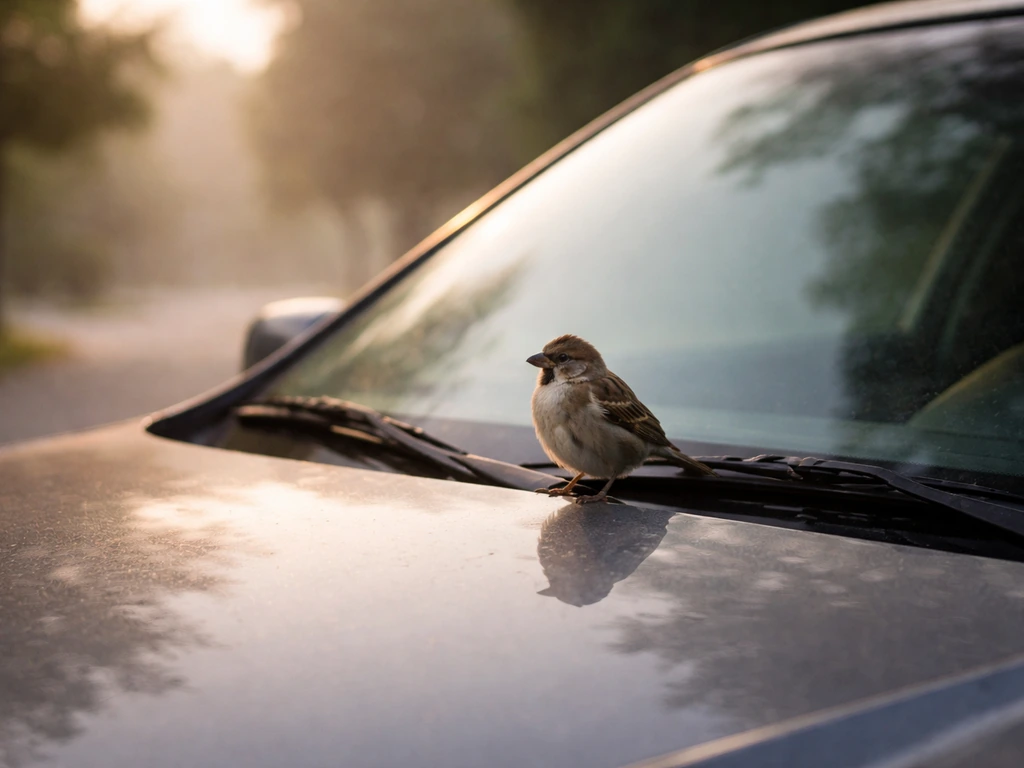
What people actually mean when they ask about a bird landing on a car
The search is genuinely ambiguous, and that's worth naming upfront. Some people asking this question just watched a pigeon sit on their windshield and want to know if it's normal. If you're really trying to name what you saw, you may also be thinking of the specific nesting behavior where a bird sitting on eggs is called incubation. Others just had an unusual or striking encounter and feel like it meant something, the way unexpected animal moments sometimes do. A third group are curious about superstitions and omens specifically. All three are legitimate, and the answer is different for each. The practical explanation and the symbolic one aren't in conflict; they just describe the same event from different angles.
The practical side: why birds actually land on cars
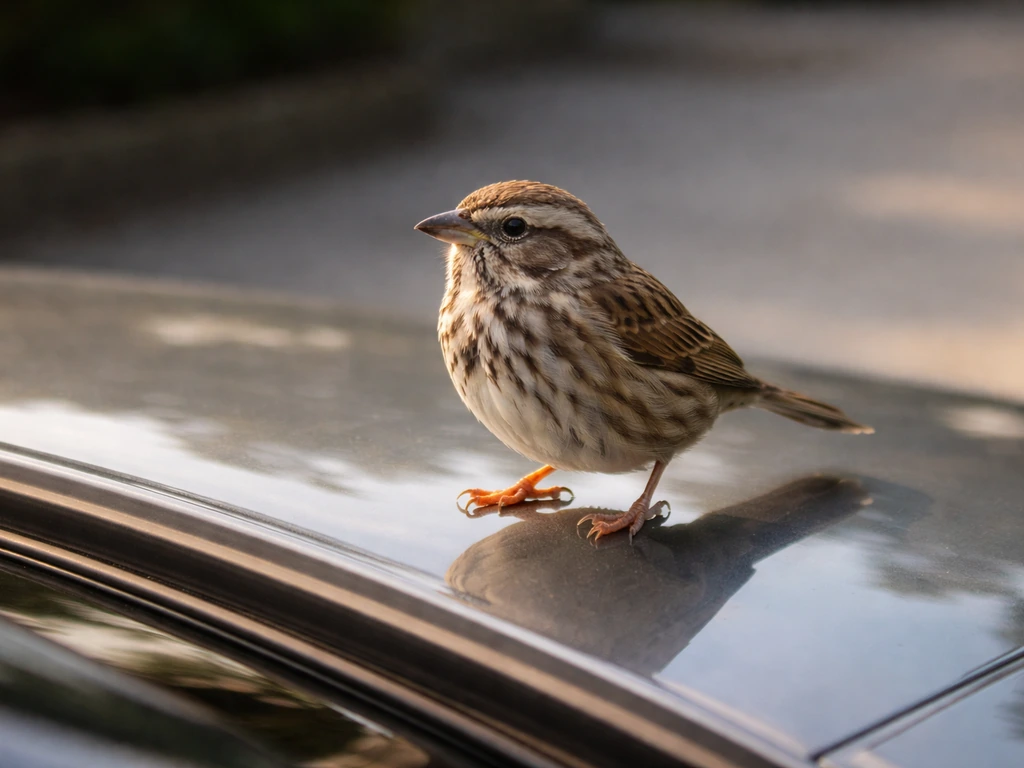
Most of the time, a bird on your car is doing exactly what birds do on any flat, elevated surface. Cars are warm, often parked near food sources, and elevated enough to give a decent sightline. The specific reason depends a lot on the species, the setting, and what your car looks like from a bird's perspective.
Territorial birds and reflections
One of the most documented causes of repeated bird visits to a specific car is territorial aggression triggered by reflections. A northern cardinal attacking its own reflection in a car side mirror is a classic example Audubon has recorded. The bird sees what looks like a rival and returns again and again to fight it off. If a bird keeps coming back to the same spot on your car, especially near a mirror or a shiny door panel, this is almost certainly what's happening. It's not a message. It's a bird that hasn't figured out it's fighting itself.
Insects on the hood and front panels
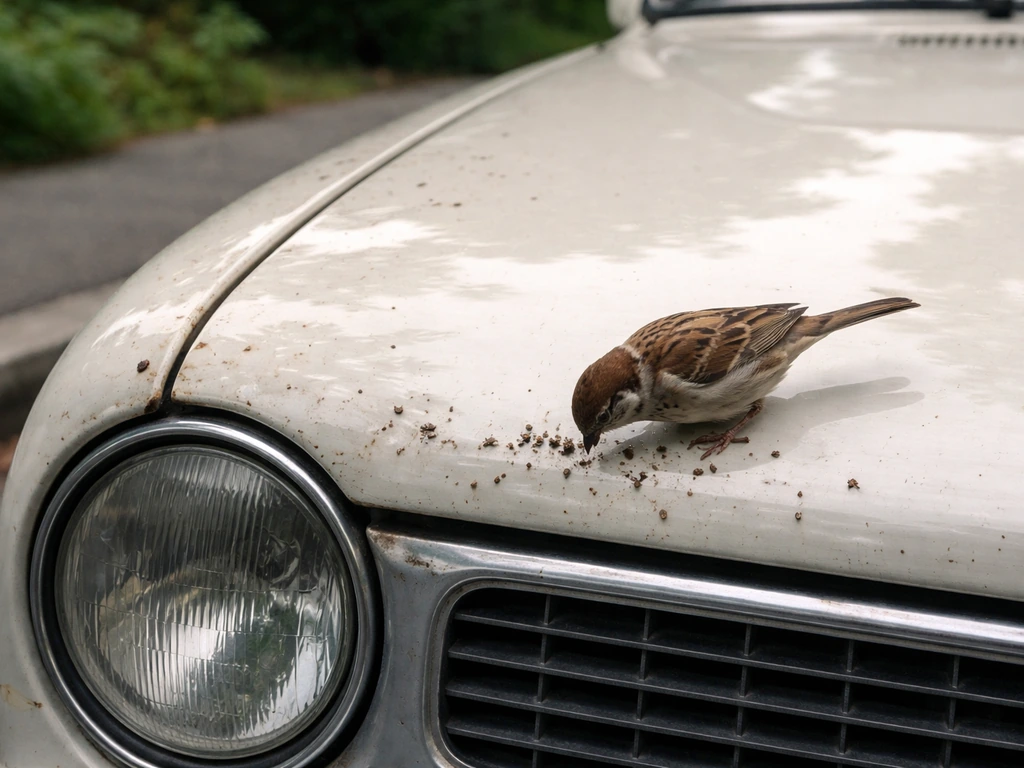
A long-running observational study (1971 to 2022) documented urban birds, particularly house sparrows and various corvid relatives, foraging for insects on the front panels of parked cars. If you've driven recently and noticed a bird picking around your grille or hood, it's harvesting bugs caught there during your drive. This is especially common in warmer months and near areas with heavy insect activity.
Roosting, warmth, and urban perching
Pigeons and similar urban birds scout quiet locations to rest, and a parked car in a calm lot is an easy target. Engine warmth after a drive makes a hood or roof even more appealing. There's nothing unusual about this; it's the same logic that puts birds on telephone wires and rooftops.
Confused waterbirds during migration
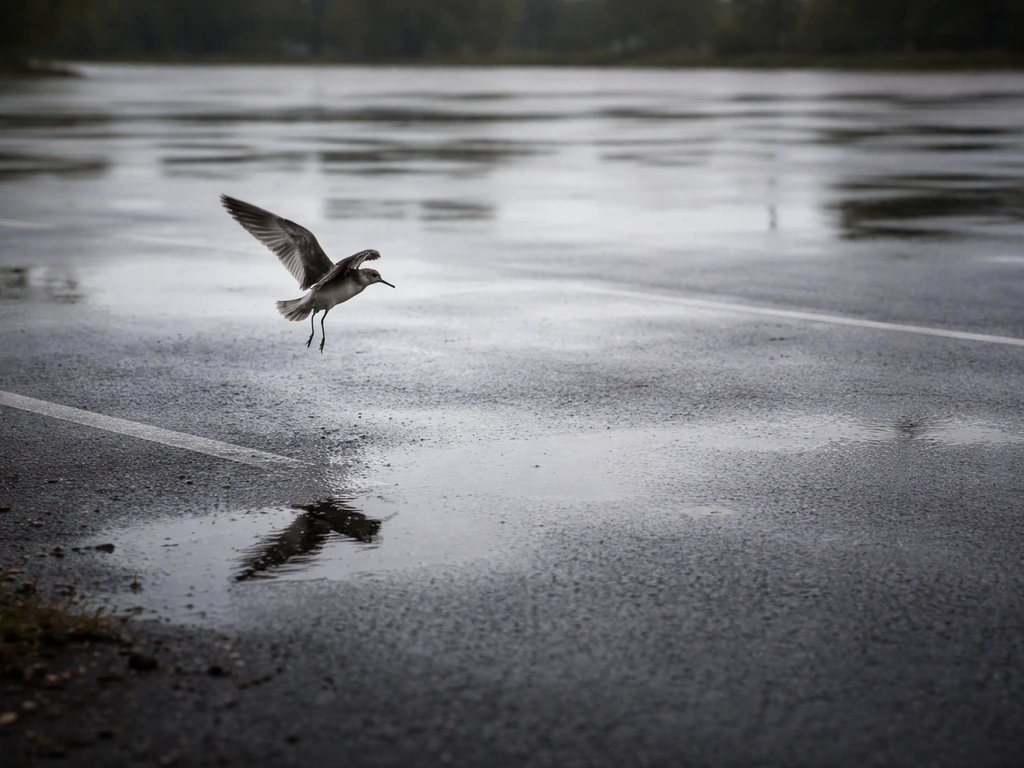
This one surprises people. Audubon has documented cases where waterbirds, particularly during spring migration, crash-land in parking lots because large, flat asphalt surfaces visually mimic bodies of water from the air. If you find a grounded waterbird near your car looking distressed or unable to take off from flat ground, that's a bird that made a navigational error and may need help. Audubon Great Lakes recommends contacting a licensed wildlife rehabilitator through a service like Animal Help Now in those cases.
Light and glass cues
The U.S. Fish and Wildlife Service notes that birds can be drawn toward light shining from inside structures and that glass surfaces create visual confusion because birds can't read them the way humans do. A car windshield lit from inside, or a highly reflective surface, can attract or disorient birds in ways that have nothing to do with you personally.
Spiritual and cultural readings people associate with the moment
It's worth being honest about something: there are no well-established, academically sourced traditions that assign a single specific meaning to a bird landing on a car. The car is a modern object, and most bird omens in folklore predate it by centuries. What you'll find online is mostly informal, aggregated folk belief that applies general bird symbolism to this specific scenario. That said, those informal readings are genuinely widespread, and they draw on real cultural traditions around birds as messengers, symbols of transition, and carriers of luck. So here's what people typically say, with appropriate context.
Birds as messengers and omens
Across many cultures, birds arriving unexpectedly are read as messages or signs. In European and Indigenous American traditions alike, birds crossing your path or landing near you can be interpreted as attention-signals from the universe, ancestors, or spiritual guides, depending on the tradition. The specific bird matters: a crow means something different from a robin or a dove in most folk systems. A cardinal is often read as a visitation from a deceased loved one in American popular folk belief. A sparrow is associated with community and simplicity. A hawk or eagle landing nearby tends to get read as a call toward higher perspective or significant decision-making.
Luck, good and bad
Bird droppings landing on you or your property are, counterintuitively, widely considered good luck in many Western folk traditions, the idea being that something unpleasant arriving unexpectedly signals good fortune to follow. A bird simply landing (without droppings) is more neutrally read as a moment of notice or awareness. In some traditions, a bird that lands and stays for a while is read as a particularly strong sign, while one that lands and immediately leaves is a glancing message.
Species-specific symbolism at a glance
| Bird | Common symbolic reading | Practical reality check |
|---|---|---|
| Cardinal | Message from a deceased loved one; spiritual connection | Likely reacting to its own reflection in your mirror |
| Crow or raven | Change, transformation, or warning; intelligence and mystery | Foraging or scouting; highly adaptable urban bird |
| Sparrow | Community, simplicity, persistence | Hunting insects off your hood or grille |
| Pigeon or dove | Peace, transition, homecoming | Roosting on a convenient warm surface |
| Hawk or eagle | Vision, focus, major decision ahead | Hunting from an elevated vantage point |
| Waterbird (heron, loon) | Patience, solitude, deep emotion | Possibly disoriented during spring migration |
What the "car" adds to the symbolism
This is where it gets genuinely interesting, if you're into symbolic interpretation. In dream analysis and personal symbolism, cars almost universally represent movement, direction, and personal agency, your life path, where you're headed, and who's driving. A bird landing on a car, in that framework, adds the element of a message or pause arriving right in the middle of your journey. In that context, “bird before land meaning” is usually treated as a sign about timing, travel, and the direction of what comes next. It's not a door or a house (stability, the self at rest) but a vehicle in motion or ready to move.
People who work with dream symbolism often read a bird landing on a vehicle as a prompt to reconsider direction, a signal to slow down before a decision, or a reminder that something beyond the immediate journey deserves attention. This connects naturally to the broader tradition of birds as guides for travelers, which shows up in everything from ancient Greek augury (where birds' flight paths informed military strategy) to maritime folklore where birds near ships signaled land and safety.
This theme is relevant to a related topic worth exploring: what it means when a bird lands directly on a person, which carries a more personal and intimate symbolic weight than a bird on a vehicle. The car creates a layer of mediation between the bird and you, which some symbolic traditions read as a more general, directional message rather than a personal one.
Superstitions, and how to keep them in perspective
Superstitions around birds are some of the oldest and most persistent in human culture, and they're not going away. But it's worth remembering that they exist because birds are genuinely remarkable animals that have always lived at the edge of human experience, appearing suddenly, vanishing, navigating by stars, and surviving almost everywhere. The impulse to read meaning into their behavior is deeply human and not inherently irrational.
Where it becomes worth gently pushing back is when superstition tips into anxiety. A bird landing on your car is not, by any established reliable tradition, a reliable predictor of bad luck, death, or misfortune. The "bad omen" readings you'll find attached to certain birds, particularly crows and black birds, are mostly regional folk traditions that contradict each other across cultures. In Japan, for example, crows are considered sacred and protective. In Norse mythology, Odin's ravens Huginn and Muninn are symbols of wisdom, not doom.
The most grounded approach: take the moment in, note what species it was and what it was doing, and let the meaning be whatever feels genuinely useful to you rather than anxiety-inducing.
What to actually do right now
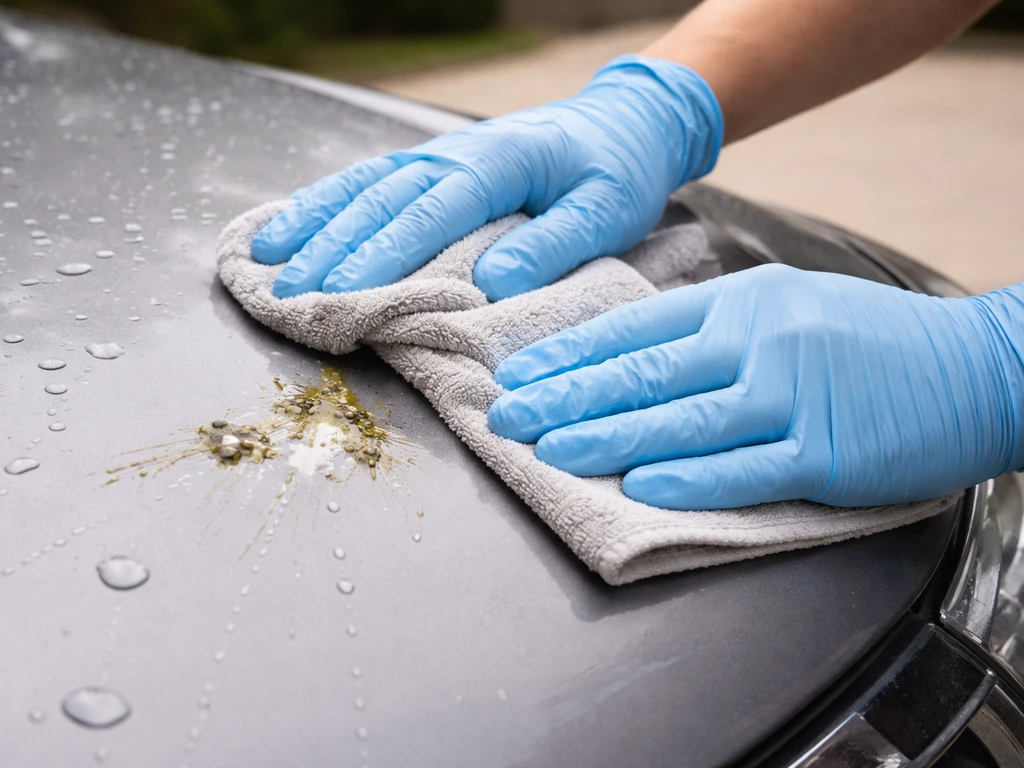
If you just had a bird on your car and you're wondering what to do next, here's the practical rundown.
Cleaning droppings safely
Bird droppings are acidic and abrasive and can etch into car paint within 24 to 48 hours, so you want to deal with them promptly. But don't wipe them dry; that's how you scratch the clear coat. The right approach is to soak the area first with water or a dedicated car-safe cleaning spray, let it soften for a minute or two, then gently wipe with a soft microfiber cloth. A bicarbonate of soda dissolved in warm water works well as a gentle cleaning solution. Avoid ammonia-based cleaners, which can damage the clear coat. Standard vehicle maintenance guidance treats bird droppings alongside tree sap as routine exterior particles that need prompt removal.
Stopping territorial birds from returning

If a bird, especially a cardinal or robin, keeps attacking a specific mirror or window on your car, Audubon's recommended fix is simple: fold your mirrors in when you park. If folding isn't possible, cover the mirror temporarily with a paper bag or cloth. Audubon also says this reflection-triggered behavior can happen with vehicle windows and exterior mirrors, and that temporarily covering mirrors with paper bags can help stop the response. This breaks the reflection cue that's triggering the territorial response. The behavior usually stops once the bird moves on to other priorities, which typically happens within a few weeks.
Checking for nesting activity
If a bird has visited your car multiple times and you park in the same spot regularly, check around and underneath for nesting materials. Birds can and do attempt to build nests in wheel wells, under hoods (if there are accessible gaps), or in nearby structures directly above where you park. If you find a nest with eggs or chicks, be aware that most wild birds are federally protected in the U.S. under the Migratory Bird Treaty Act, meaning you can't remove an active nest. Your best move is to simply move your car to a different spot for a few weeks.
Handling a distressed or grounded bird
If the bird can't fly or appears injured, don't try to handle it yourself unless you need to move it out of immediate danger. Contact a local licensed wildlife rehabilitator. The Animal Help Now tool (animalhelpnow.org) is a reliable way to find one quickly by location.
When a bird on your car signals a real problem
Most single bird visits are genuinely harmless. But there are a few situations where the encounter signals something worth addressing more seriously.
- Repeated visits from the same bird over days or weeks suggest territorial behavior or early nesting activity nearby. Check mirrors, wheel wells, and the undercarriage.
- A flock roosting on your car regularly, especially pigeons, means droppings are accumulating. Accumulated droppings create a real hygiene concern: the CDC notes that large buildups of bird droppings may require professional hazardous-waste cleaning due to histoplasmosis risk, a fungal infection that grows in soil contaminated by bird droppings. Don't disturb large dry accumulations without respiratory protection.
- A grounded waterbird near your car in a parking lot is likely disoriented and stranded. Waterbirds can't take off from flat, dry surfaces the way other birds can. They need help.
- Paint damage: if you notice etching or dull spots on your car's finish after a bird incident, that's acid damage from droppings and needs attention from a professional detailer before it gets worse.
- Any bird that appears to repeatedly fly into your windshield or windows while you're driving is a road-safety concern, particularly at speed. Slow down, pull over briefly if it's persistent, and let the bird clear the area.
The vast majority of bird-on-car encounters don't rise to any of these levels. A bird perched on your roof for a few minutes and then gone is just a bird. Clean up after it, check the mirror situation, and move on. But when the visits become a pattern, or when droppings are building up, the practical response matters more than any symbolic reading.
Putting it all together
A bird landing on your car is, in almost every case, an ordinary piece of bird behavior: perching, foraging, reacting to a reflection, or getting confused by a surface. The symbolic tradition that surrounds bird encounters is real and culturally rich, but it's interpretive rather than predictive. The two readings can coexist. You can note that a hawk landed on your hood before a big decision and find that meaningful, while also acknowledging it was probably hunting from an elevated perch. Neither interpretation cancels the other.
What you do next is mostly practical: clean the droppings promptly, deal with the mirror if a bird is attacking it, check for nests if visits are recurring, and contact a rehabilitator if the bird needs help. That's genuinely all that's required. The meaning, if you want one, you get to assign yourself.
FAQ
Does a single bird landing on my car count as “good luck” or is it just normal?
If the bird only landed briefly and left, it is usually safe to treat it as normal behavior, but you still want to check two things: whether it was targeting a mirror or windshield reflection, and whether droppings landed during the visit. Repeated attention to the same reflective spot is a bigger indicator of a “behavioral reason” than a one-time landing.
What should I do if the bird keeps attacking my side mirror?
Yes. If you see a bird striking or repeatedly pecking at its reflection, avoid leaving it a clear line of sight. Folding mirrors when parked (or temporarily covering the mirror) reduces the trigger. Also wash the specific panel if there are fresh glossy residues or window streaks that can intensify glare for birds.
How can I tell if the bird is just perching or trying to build a nest on my car parking spot?
Treat it as a nest-building or foraging attempt and inspect before driving, especially if the bird was visiting the same wheel area, hood edge, or underside repeatedly. Look for twigs and nesting debris in wheel wells and around gaps. If you find an active nest (eggs or chicks), do not disturb it, and move the car to a different spot rather than trying to relocate the nest.
Can I wipe bird droppings off immediately, or will that damage the paint?
If droppings are still wet, rinse promptly and use a soft microfiber cloth after soaking. If they have dried, soaking first is key, because wiping dry can scratch clear coat. For heavy buildup, repeat gentle soaking rather than scrubbing. When in doubt, use a car-safe exterior cleaner designed for paint-safe removal.
What if the bird looks injured or can’t take off after landing near my car?
Do not approach an adult waterbird or any bird that appears grounded due to injury or navigational issues unless it is in immediate danger (like in active traffic). Instead, keep people and pets away and contact a licensed wildlife rehabilitator. Moving the bird yourself without training can worsen injuries and can also violate wildlife protection rules depending on the species and situation.
Are there any cleaning products I should avoid when removing bird droppings from a car?
Avoid ammonia-based glass cleaners and harsh degreasers on painted surfaces or near trim, because some products can cloud or degrade finishes. For windows, use a glass cleaner that is safe for automotive glass, but for paint and clear coat, stick to gentle soaking and microfiber wiping. If droppings are on sensors or camera lenses, clean lightly and avoid abrasive materials.
Does it mean more if the bird stays on my car for several minutes instead of landing and leaving?
If the bird landed and stayed for a while, many symbolic systems treat that as a “stronger” sign, but the practical reality is often the bird is resting or thermoregulating on a warm surface. Use a simple decision rule: if it stays near one reflective element, handle the reflection trigger; if it stays near the hood foraging, clean the panel and monitor for repeated insect-hunting.
If I’m doing symbolic interpretation, how do I connect it to my current life situation without spiraling into anxiety?
Yes. Car-related symbolism can shift with what kind of “pause” you associate with the moment. In dream-style interpretations, the key variables are usually the direction theme (travel, choice, upcoming route) and your emotional response (calm, alarm, curiosity). If you felt anxious, treat it as a cue to slow down before a decision rather than a prediction of outcomes.
At what point should I stop assuming it’s random and start changing how I park or where I park?
Bird droppings themselves are the main car concern because they can etch paint, but piles of droppings around tires or under panels can signal repeated visits. If you notice worsening accumulation, recurring birds at the same time of day, or birds repeatedly hovering near specific spots, it is more likely worth adjusting parking location or addressing nest and reflection triggers.
What information should I note the next time it happens to figure out the most likely cause?
A bird landing on your car can be a normal perch, but if a bird keeps returning to the same exact spot, you should record two details next time: species and what surface it targets (mirror, hood, windshield, roof edge). That information helps you decide between reflection aggression, foraging, resting, or nest behavior and prevents unnecessary worry.