
Bird banding means attaching a small, uniquely numbered metal or colored ring to a bird's leg so researchers can track and identify that individual bird over time. It is a core scientific tool used across North America and much of the world to study migration, survival rates, population trends, and behavior. If you spotted a bird with a band and are wondering what it means, or what to do next, the short version is: write down the band number and any colors you see, then go to reportband.gov to submit your observation. You may even get a certificate back telling you where and when that bird was originally banded.
Bird Banding Meaning: What It Is, Why It Happens

Marcus Holloway
18 May 2026
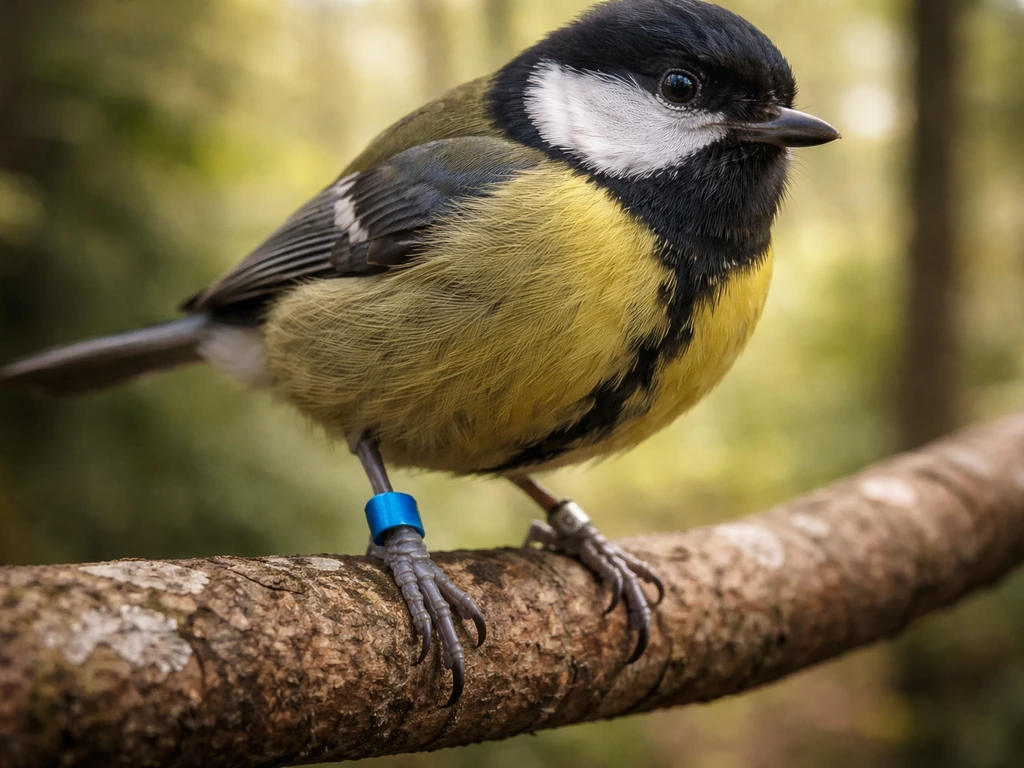
What bird banding actually means: bands, tags, and trackers
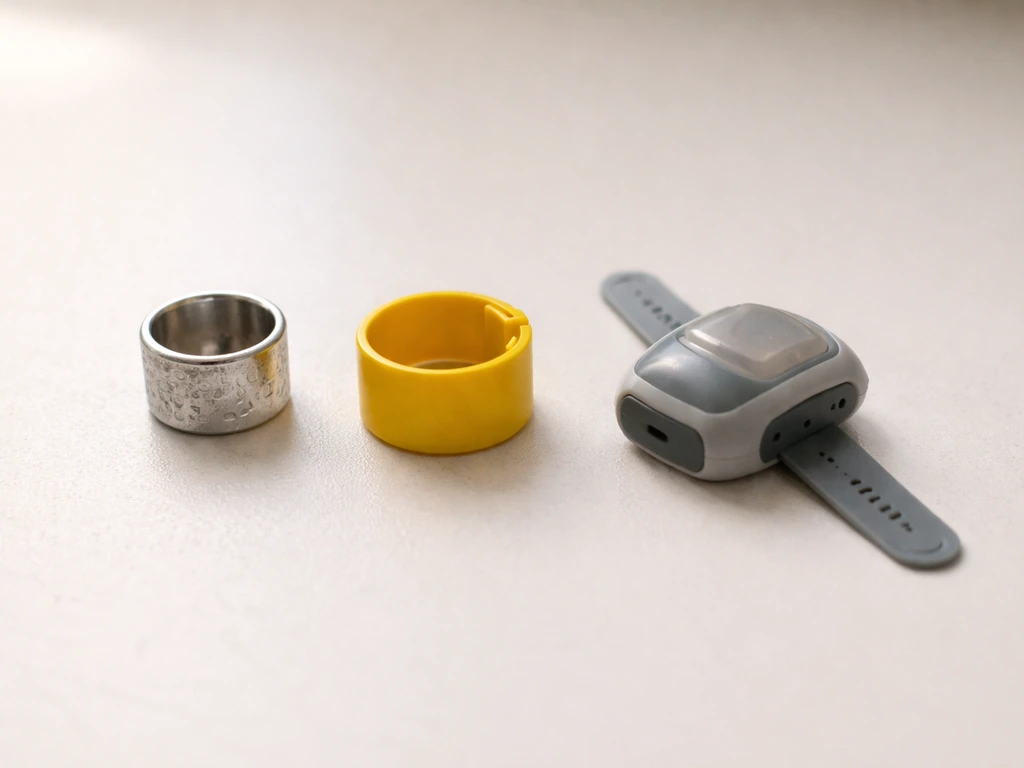
The word "banding" is the North American term for what British and European ornithologists call "ringing." Same practice, different vocabulary. A band (or ring) is a small loop, usually made of aluminum or a lightweight alloy, crimped around a bird's leg. In the United States, federal bands are issued by the USGS Bird Banding Laboratory (BBL) and are stamped with a unique 8 or 9 digit number along with the web address www.reportband.gov, so anyone who finds one knows exactly where to report it.
People sometimes use "band," "tag," and "tracker" interchangeably, but they mean different things in practice. A leg band is a passive identifier: it carries a number but transmits nothing. A tag or tracking device, like a geolocator or satellite transmitter, actively records or transmits location data. Colored plastic bands serve a middle purpose: they let observers identify individual birds at a distance without needing to recapture them, because each color combination is unique to that bird. Researchers often combine a federal metal band with colored bands or other auxiliary markers so a bird can be identified both up close and from afar.
Auxiliary markers are a broader category that includes neck collars with radio transmitters, patagial wing tags, nasal saddles, and even dye applied to feathers to make less obvious markers visible. The federal banding permit covers the metal band; auxiliary markers require additional authorization. If you see a bird with something attached to its neck, back, or wing rather than just its leg, that is an auxiliary marker, and it is still worth reporting through the same channels.
Why researchers band birds: the science in plain English
The North American Bird Banding Program has been running since 1920. Each year, about one million bands are shipped from the BBL to licensed banders, and close to 100,000 encounter reports flow back into the system. That accumulation of data, built over a century of individual observations, is what makes banding so powerful. Here is what scientists are actually trying to learn:
- Migration routes and timing: By banding a bird in one location and recording where it later appears, researchers can map the routes entire species take across continents.
- Survival and productivity: Constant-effort banding sites, like those in the Monitoring Avian Productivity and Survivorship (MAPS) program, use repeated captures at the same locations each year to estimate how long birds live and how successfully they reproduce.
- Population trends: When the number of birds being banded at a site drops over time, that signals a decline in the local population, often before other monitoring methods catch it.
- Local movement and behavior: Colored leg bands let observers track individuals within a single wetland, forest, or city park, which reveals territory use, social structure, and site fidelity.
- Response to environmental change: Banding data can show how species shift their ranges or migration timing in response to climate change, habitat loss, or disease.
The BBL also maintains longevity tables, which record the oldest individuals of each species ever documented through banding records. Those tables set the baseline for what we know about maximum lifespans in wild birds, information that would be nearly impossible to gather any other way.
What you'll actually see: bands, banders, and how it all works
What a band looks like
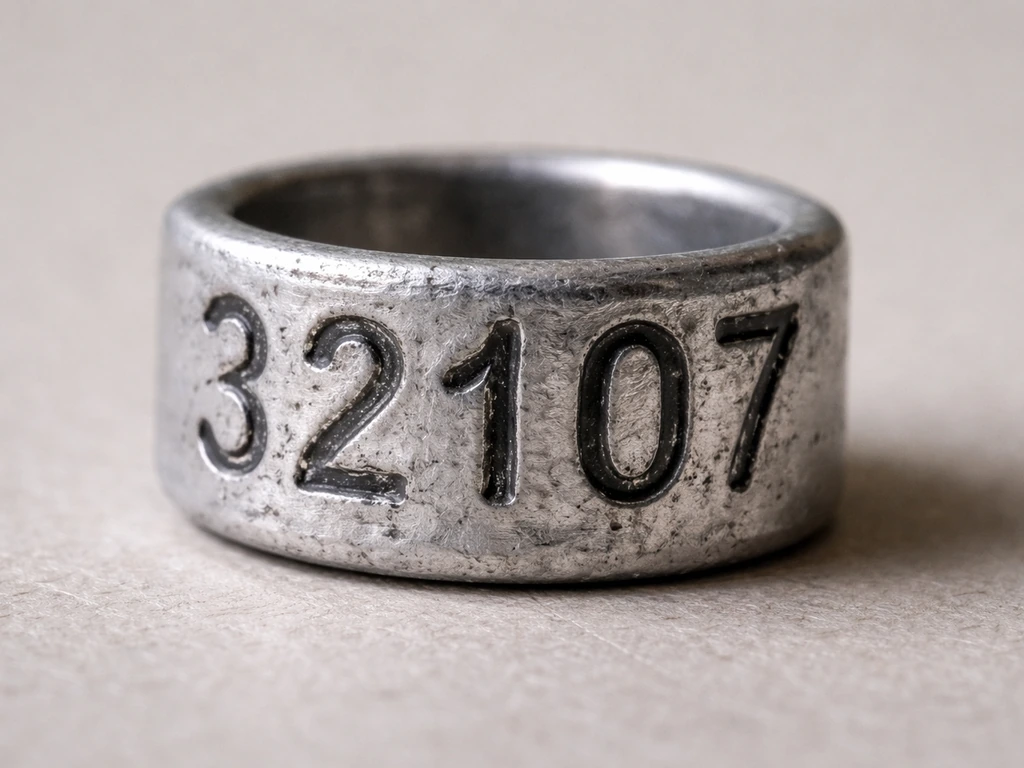
Federal metal bands are small, lightweight, and sized precisely to each species. The BBL publishes a full band-size reference table covering North American species, because a band that fits a chickadee would slide right off a goose. The band wraps around the tarsus (the section of leg just above the foot) and is sized to allow normal movement without slipping. You can read more about bird leg anatomy in the related coverage of what bird legs and bird feet are called on this site, which gives useful context for understanding exactly where and how bands are placed. Bird leg anatomy and what terms like tarsus mean can also help you interpret what you are seeing on a bird, including the bird legs meaning people look for what bird legs and bird feet are called. If you are curious about the specific terms, bird feet are called and the band wraps around the tarsus just above the foot, so this anatomy overview helps you visualize exactly where the band sits. If you are also wondering what bird feet meaning refers to in everyday language, the term usually points to how people interpret foot features and movement in birds what bird legs and bird feet are called.
Colored plastic bands may appear alone or stacked in specific combinations on the left or right leg. Researchers keep detailed records of which combination belongs to which individual, so a field observer who reads "left leg: blue over green, right leg: metal" has enough information to identify that exact bird in the database without ever touching it.
Who does the banding
Banding is not something anyone can do on their own. In the United States, you need a federal migratory bird banding permit, issued by the USGS/FWS. Banders may be professional ornithologists, wildlife biologists, or trained citizen scientists working through universities, wildlife agencies, or established banding stations. Some banding stations operate as long-term monitoring sites with decades of continuous data. Others are set up temporarily during migration seasons to sample populations as they pass through.
The banding workflow

- Birds are captured humanely, usually with mist nets (fine mesh nets stretched between poles that birds fly into without injury) or live traps baited with food.
- Each bird is measured, weighed, aged, and sexed. The bander records species, physical measurements, fat deposits, and overall condition.
- A correctly sized band is applied to the leg using specialized pliers designed to close the band to the right diameter without pinching.
- The bird is released, ideally within minutes. The whole process is designed to minimize time in hand.
- The bander submits the banding record to the BBL, where it enters the North American Bird Banding Program dataset.
Does banding hurt birds? Ethics and welfare
This is probably the most common question people ask when they first learn about banding, and it deserves a direct answer. When done correctly by a trained bander using properly sized bands, banding causes minimal harm. The official framework governing U.S. banding, developed jointly by USGS and FWS, is built around minimizing fear, pain, stress, and suffering at every stage of capture, handling, and release. The humane capture and handling guidance that banders follow covers everything from net setup to how long a bird can be held in a bag before processing.
That said, tracking devices are a different matter. Research reviewed by the British Trust for Ornithology found that tracking devices, particularly those with invasive attachment methods, can affect survival and reproductive success. The more invasive or heavy the device relative to the bird's body weight, the greater the potential impact. This is why there is ongoing work to develop lighter, less intrusive trackers and why welfare is supposed to be the top priority in method selection. A simple leg band on a properly sized bird is far less impactful than a backpack-style geolocator.
Federal permits are also explicit about what banders cannot do: you are not authorized to remove or modify a band from a bird you did not band yourself, except in cases where the bird's health or safety is directly at risk. That rule applies to the public too. If you find a banded bird that appears injured, contact a licensed wildlife rehabilitator rather than trying to remove the band yourself.
What not to do if you find a banded bird
- Do not remove the band. It is illegal and you risk injuring the bird.
- Do not handle a healthy wild bird to get a closer look at the band.
- Do not cut or bend the band to read the number more easily.
- Do not assume a banded bird is someone's pet or needs rescuing just because it has a band.
- If the bird is visibly injured or dead, note the band information before any other action, then contact a wildlife rehabilitator or your local wildlife agency.
What to do when you spot a banded bird
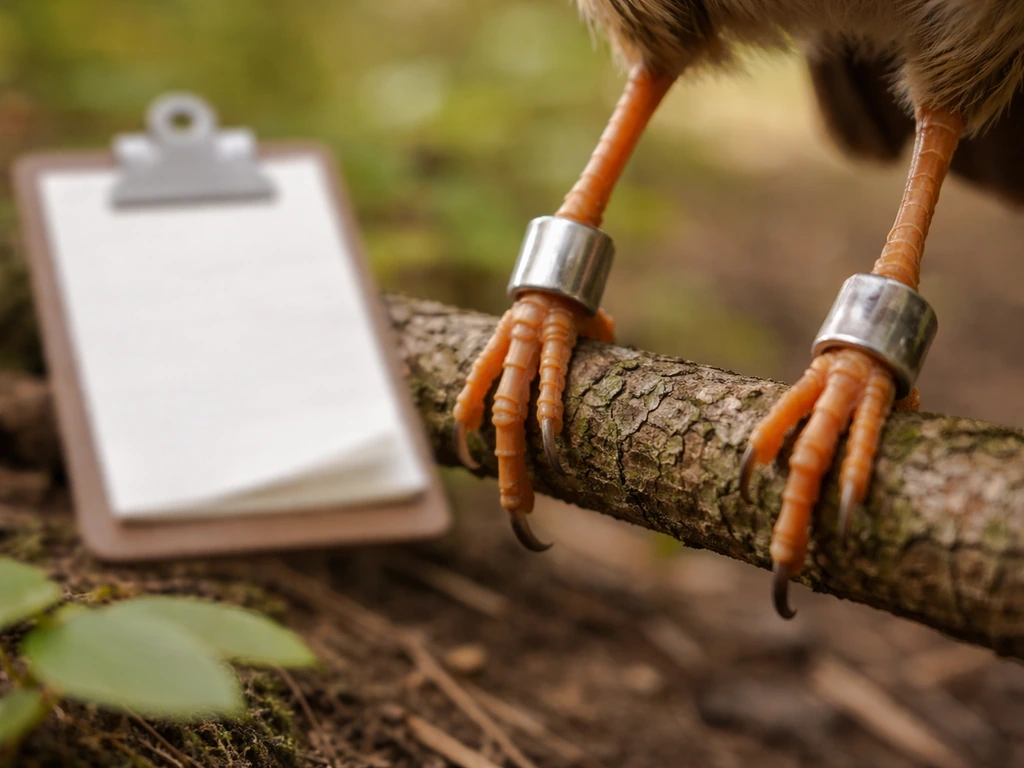
Seeing a banded bird is genuinely useful to science, but only if you report it. The USGS estimates it takes about two minutes to submit a report, and even partial information is worth submitting. Here is what to record on the spot:
- The band number: read it carefully, noting each digit. If the band is worn or partially obscured, record what you can and note that some digits were unclear.
- All band colors and their positions: which leg, and in what order from top to bottom if there are multiple bands stacked.
- Species, if you can identify it.
- Date, time, and precise location (GPS coordinates if possible, or the closest named landmark).
- What the bird was doing and its apparent condition.
- A photograph if you can get one without disturbing the bird.
If you cannot submit your report immediately, write everything down in a notebook or your phone's notes app. Smithsonian National Zoo describes resighting workflows for color-banded birds and recommends writing observations down when internet submission is not immediately available write everything down in a notebook or your phone's notes app.. The Smithsonian recommends this as a backup specifically because color combinations can be easy to misremember after the fact. Once you have everything recorded, go to reportband.gov to file your encounter. The site is mobile-friendly and walks you through each field.
The distinction between a metal federal band and a color marker band matters for reporting: federal metal bands go through reportband.gov. Color-marker-only sightings may also go through the same portal, but some research projects ask observers to report directly to the project coordinator whose contact information is listed in a color-band database. If you are unsure, reportband.gov is always the right starting point.
How to look up a band number and what the results mean
After you submit your report at reportband.gov, the BBL processes the encounter and, if the record can be matched and verified, sends you a certificate of appreciation. USGS notes that certificates of appreciation are given to people who find birds with leg bands or color markers and report them through the BBL “Report a bird with a federal band or color marker” website certificate of appreciation. That certificate includes the species, sex, age at banding, and where and when the bird was originally banded. This is the part that can feel surprisingly personal: you might learn that a sparrow hopping around your backyard was banded two years ago in a state 800 miles away, or that a shorebird in your local marsh completed its journey from a breeding ground in northern Canada.
The BBL also publishes yearly updated datasets through the North American Bird Banding Program, covering banding records and encounter records going back over a century. Researchers, banders, and the public can access summary data and longevity tables through the BBL's data tools. If you are doing deeper research, these datasets let you explore patterns across species and decades rather than just a single bird's history.
One important note: not every band you encounter is a federal BBL band. Foreign banding schemes (Canadian, Mexican, and others) use their own systems, and some specialty research projects use bands that look different from the standard federal butt-end band. The USGS provides guidance on which bands should and should not be reported to the BBL. When in doubt, report it anyway and let the BBL sort out the category.
The 'meaning' people read into banded birds
Because this site sits at the intersection of natural history and cultural meaning, it is worth addressing why people search for the spiritual or symbolic meaning of a banded bird, not just its scientific function. Birds in general carry enormous symbolic weight across cultures: they represent messages, souls, transitions, and the boundary between worlds. A bird that has been "marked" by human hands fits naturally into those frameworks. It has been touched, released, and returned to the wild. It carries a visible sign of having passed through a particular place and time.
In many folk traditions, a bird that returns to you, or that appears in an unusual or repeated way, is read as a messenger or an omen. A banded bird adds a layer to that: it is literally identifiable as an individual with a history. If the same banded song sparrow returns to your yard for three winters in a row, that is not mystical, but it is remarkable. It tells you something real about site fidelity, loyalty to a familiar place, and the persistence of individual lives within a species. Whether you read that as science or as something more is up to you, but the underlying fact is the same: this specific bird has lived a specific life, and the band is the evidence.
The idea of the "marked" creature appears in folklore well before modern banding programs. In many cultures, a bird that bears a mark was considered either protected or watched over, chosen in some way. The modern reality is more prosaic but arguably more interesting: the mark means this bird is part of a global monitoring system, contributing data to a scientific record that will outlast any individual researcher. This is where people often ask for the bird luger meaning, since the visible marker can make the bird feel connected to a story or signal beyond biology the mark means. If there is a meaning to assign, it is that even a single small bird's movements and survival matter enough to track.
If you are curious about what different aspects of a bird's physical appearance or behavior mean symbolically or practically, this site covers related territory like the meaning behind a bird standing on one leg, the significance attached to bird legs and feet across cultures, and what it means when you notice a bird leg band specifically. People also search for how "bird buddy" lights are interpreted, but the exact meaning depends on the device model and the light pattern shown bird buddy lights meaning. Those articles provide useful context for interpreting what you see when you encounter a wild bird up close.
Quick reference: banding terms at a glance
| Term | What it means | What to do if you see one |
|---|---|---|
| Federal metal band | Aluminum or alloy ring with an 8 or 9 digit number and www.reportband.gov stamped on it | Record the number and report at reportband.gov |
| Color band | Plastic ring in a specific color, used alone or stacked to identify individual birds at a distance | Note the color, position (left/right leg), and order; report at reportband.gov |
| Auxiliary marker | Neck collar, wing tag, back-mounted tracker, or nasal saddle used alongside or instead of a leg band | Record all visible details and report at reportband.gov |
| Foreign band | A band from a non-U.S. banding program, which may look different from a federal BBL band | Report at reportband.gov and let BBL route it appropriately |
| Geolocator / satellite tag | A small electronic device that records or transmits location data, usually attached to the back or leg | Do not handle; photograph and report through reportband.gov or the research project contact |
FAQ
What if the band number or the colors are too blurry for me to read clearly?
Submit what you can. If any digits are legible, record them with a note like “first three digits uncertain,” and include location, date, time of day, and bird description (species, size, plumage). Even partial matches can sometimes be matched to a band record when combined with the encounter details.
Is it legal or safe for me to remove a band from a bird if I’m just curious?
Do not remove or alter a banded bird unless a licensed wildlife professional advises it. Permits do not allow the public to take bands off for inspection, and removing it can injure the leg or destroy a data marker needed for identification.
If I find a bird that seems sick or injured and it has a band, should I report it differently?
Yes, prioritize safety and welfare. Contact a licensed wildlife rehabilitator immediately, and still report the band details if you are able to do so without delaying care. Do not attempt removal, especially if the bird is struggling, bleeding, or unable to perch.
How can I tell whether what I saw was a federal band versus a different kind of marker?
Federal metal bands are typically stamped with a unique multi-digit number and are associated with the USGS reporting system. Color-marker-only projects may use different tracking databases. Your best first step is always to submit the observation to reportband.gov with a clear description of where the marker is placed (leg only versus neck or wing).
What if the band was on the other leg than I expected, or I might have mixed up left and right?
Left versus right matters for matching in many projects. If you are unsure, say so in the report (for example, “colors on both legs, left and right uncertain”) and include a sketch or photo. If you can, take a quick second look from a safe distance before leaving the area.
Can banding explain why the bird looks different, like extra colors or missing feathers?
Not by itself. The banding mark is usually a small ring or set of colored bands and does not change plumage appearance broadly. If you notice unusual feather loss, sores, or swelling, treat it as a health concern and consider contacting wildlife rehab, then report the band details for research.
Do trackers mean the bird is more at risk or that the birdbanding meaning is different?
Trackers can carry additional risks compared with a simple leg band, so the “meaning” is different in practice. A tracker is an active device or a more intrusive attachment method, and projects often have separate welfare rules and reporting expectations. If you suspect a transmitter or harness rather than a leg band, describe its location and shape so researchers categorize it correctly.
Should I report if I only saw a colored band and not the number?
Often yes. For many color-band studies, a combination of colors and which leg they were on can still identify the individual. If you cannot read any number, focus on exact color order (for example, “blue over green”) and placement on the leg.
How soon after I see the bird should I report?
Report as soon as practical. Details like color order, band position, and the exact date can fade quickly, and the portal is designed for quick submission. If you cannot report immediately, write everything down right away, then submit later from your notes.
What kinds of birds can have bands or rings?
In general, many migratory birds are banded, including songbirds and shorebirds, but the exact species depends on the project and permit. If you can, identify the species accurately in your report, because the band size and reporting pathway depend on species-level matching.
Will I get personal information back about “my” bird?
Typically you receive a certificate of appreciation if the encounter can be matched and verified. It commonly includes species, age and sex when banded, and the original banding location and date. It does not usually provide live tracking or private-location details, since these programs focus on reported encounters and aggregated records.
Next Articles
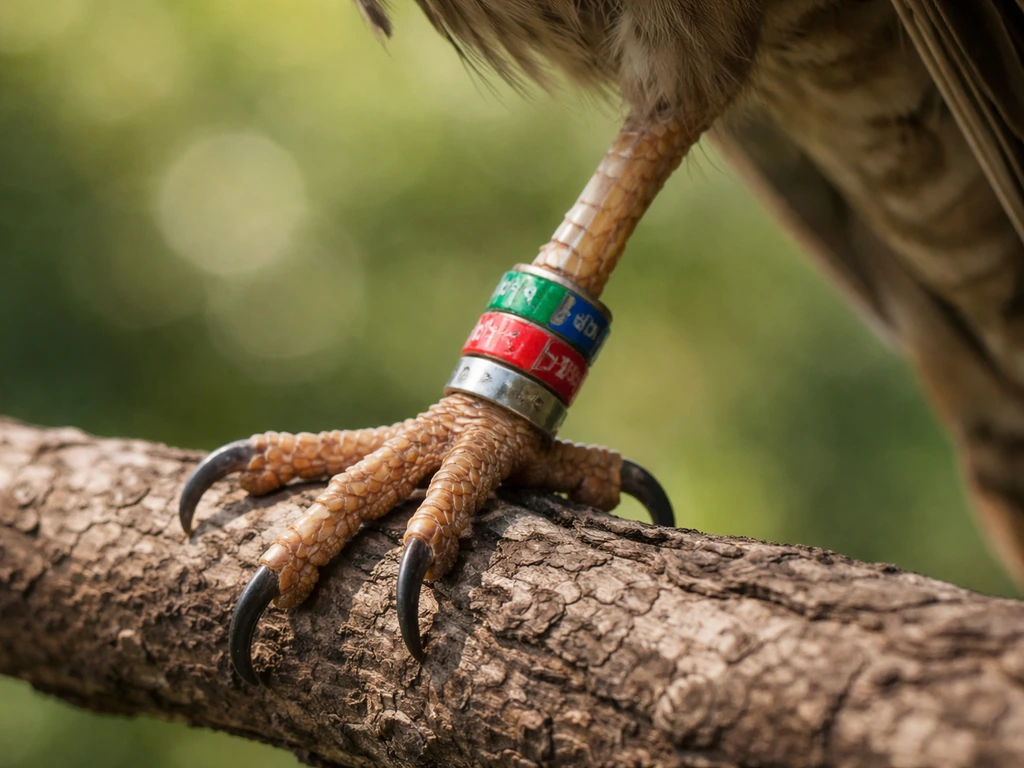
Bird Leg Band Meaning: How to Decode Codes and Colors
Decode bird leg band codes and colors, identify likely origin, and safely report sightings plus symbolism vs facts.
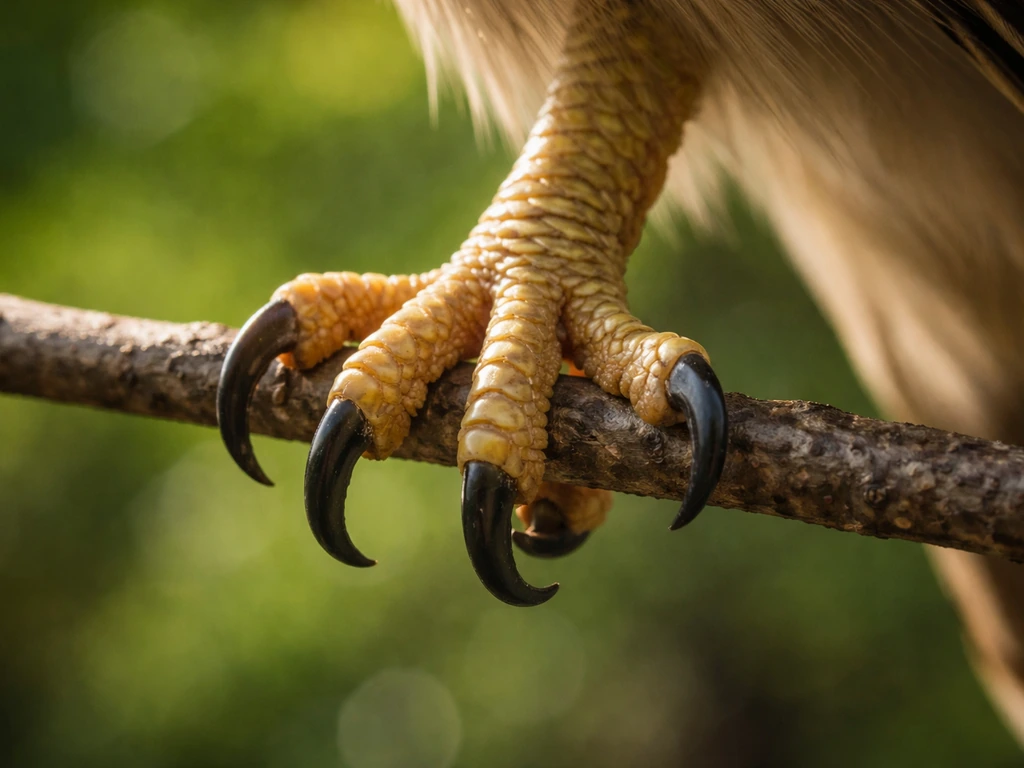
Bird Feet Are Called: Talons, Claws, Legs Explained
Learn what bird feet are called by type, talons vs claws vs legs, plus tips to identify birds from foot features.

Bird Verb Meaning: Uses, Behaviors, Idioms & Sightings
Discover what 'bird' means as a verb, definitions, behaviors, idioms, sightings, and practical next steps.