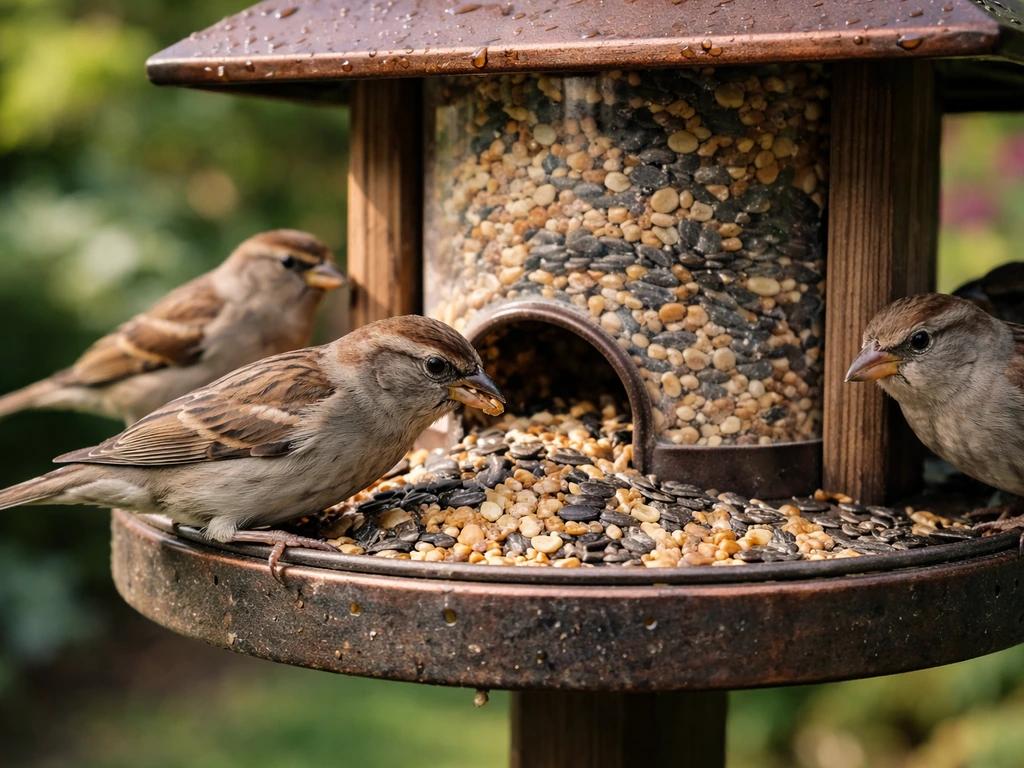
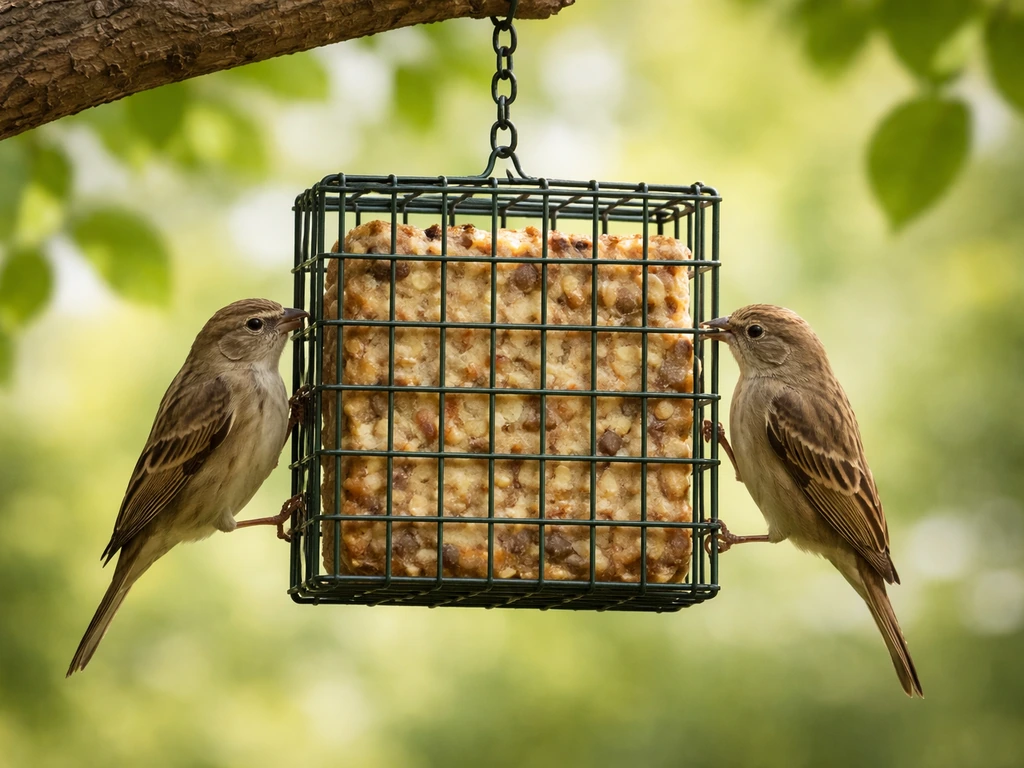
Bird suet is rendered animal fat (usually beef kidney fat) used as a high-energy food for wild birds. The phrase "bird crop meaning" can come up when people talk about how birds process and store food in their crop bird food. It comes in blocks, cakes, or balls, and you hang it in a mesh feeder or cage feeder where birds cling to the surface and peck at it. It's one of the most effective winter bird foods you can offer, especially for woodpeckers, chickadees, and nuthatches, because fat is calorie-dense and easy for birds to digest quickly.
Bird Suet Meaning: What It Is, What Birds It Feeds

Marcus Holloway
25 Jun 2026
What 'bird suet' actually means
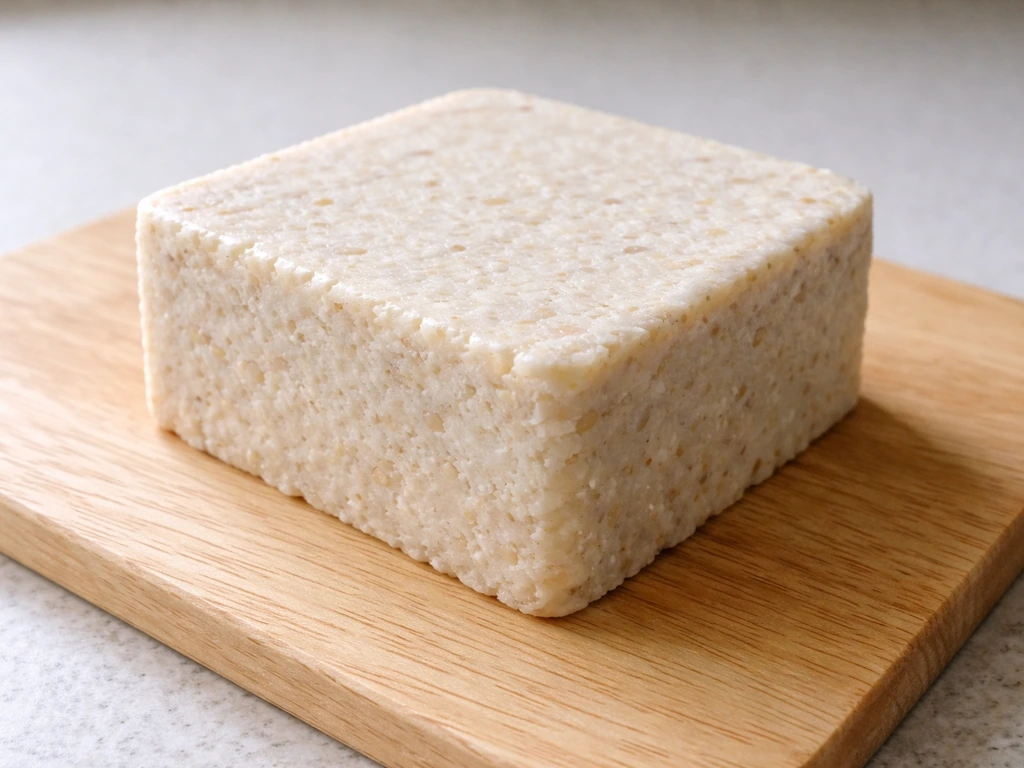
The word "suet" refers specifically to the blank" rel="noopener noreferrer">hard fat found around the loins and kidneys of cattle, sheep, or mutton. In cooking, it's a traditional ingredient in pastries and puddings. In bird feeding, that same raw fat is rendered (melted down and purified) into what's called tallow, then pressed into cakes or blocks sized to fit standard feeders. When people search for "bird suet meaning," they're usually asking one of two things: what the term means in the context of bird feeding, or whether there's a cultural or symbolic layer to the practice. When people ask “bird feed meaning,” they are usually clarifying what the phrase refers to in the context of feeding birds. This article covers both.
Practically speaking, suet as a bird food is just a delivery system for dense calories. Birds that forage for insects in bark furrows (woodpeckers, nuthatches) are naturally set up to cling to a vertical surface and dig in. Suet mimics that experience and replaces the insect protein and fat those birds need, particularly when cold weather makes finding real insects nearly impossible.
What suet is made of and what forms it comes in
Most commercially sold bird suet starts with beef kidney fat as its base. That base is either sold raw (a plain white block) or rendered and mixed with additional ingredients before being pressed into a cake. Rendered suet stays solid at temperatures up to around 90°F (32°C), which is why most bird-store suet holds its shape through a cool or mild day but starts to melt and spoil in summer heat.
Beyond plain beef fat, suet cakes often include a range of mix-ins depending on the birds you're targeting. Wild Birds Unlimited’s suet guide provides a product variety chart that lists specific suet formulations such as “Simply Suet,” “Simply Seed,” “Nuts & Fruit,” “Fruit Cakes,” and “Insects,” along with which birds each type targets blank" rel="noopener noreferrer">a range of mix-ins depending on the birds you're targeting. Common additions include rolled oats, cornmeal, bird seed, raisins, unsalted nuts, dried insects, and fruit. Some formulas swap beef fat for lard or even coconut oil. Common product types you'll see on shelves include:
- Plain or "Simply Suet" blocks: just rendered beef fat, no additives
- Seed-and-suet cakes: sunflower seeds or mixed seed pressed into the fat
- Nuts and fruit cakes: dried fruit, peanuts, or tree nuts added for extra nutrition
- Insect cakes: dried mealworms or other insects included, which strongly attract insect-eating birds
- Fat balls or suet balls: a European-style format, essentially the same mix shaped into a sphere
If you're comparing suet to other feeding options, it sits in a different nutritional category than bird seed or bird feed. Seed is primarily carbohydrate and some protein. Suet is almost entirely fat and calories, which makes it a supplement rather than a standalone diet. For birds in winter, that distinction matters a lot.
Which birds suet attracts (and when to put it out)
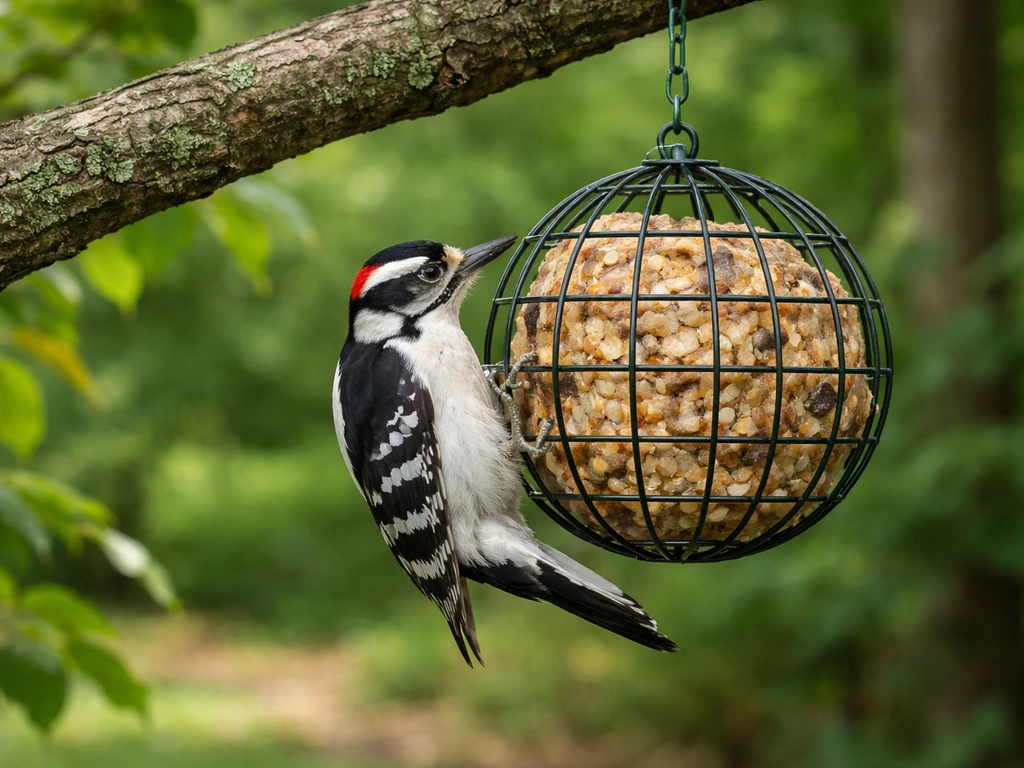
Suet feeders pull in a specific crowd: birds that naturally forage on bark and branches for insects. Downy Woodpeckers are probably the most frequent visitors you'll see, according to Audubon, and they're joined by a reliable group of other species.
| Bird | Notes |
|---|---|
| Downy Woodpecker | Most frequent suet feeder visitor; clings easily to vertical feeders |
| Hairy Woodpecker | Larger cousin to the Downy; regular suet visitor |
| White-breasted Nuthatch | Forages bark for hidden insects; naturally adapts to suet feeders |
| Black-capped Chickadee | Quick, acrobatic feeder; visits frequently in winter |
| Tufted Titmouse | Common companion to chickadees at suet feeders |
| Blue Jay | Opportunistic; will visit suet regularly |
| European Starling | Aggressive suet visitor; can dominate feeders |
| Carolina Wren | Less frequent but will visit, especially seed-and-suet mixes |
| Pine Warbler | Occasional suet visitor in the Southeast |
Timing matters. Suet is most valuable in fall and winter, when insects are scarce and birds need to consume large amounts of calories just to maintain body heat. Audubon frames winter bird feeding as direct seasonal survival support, not just a hobby. You can offer suet year-round, but in summer you need to be more careful (more on that below). If you want to know the best feeding windows within a day, early morning and again near dusk are the most active feeding times, especially in colder months.
How to use bird suet safely at home
Choosing a feeder
The standard suet feeder is a simple wire cage or mesh basket that holds a suet cake and lets birds cling to the outside to peck through the openings. These are inexpensive and widely available. One useful variation is the upside-down suet feeder: the cake sits inside a cage and birds have to hang below it to feed. This naturally discourages starlings, which don't like feeding in that position, while woodpeckers and nuthatches handle it with no trouble. If starlings are overwhelming your feeder, switching to an upside-down design is one of the most effective fixes.
Placement
Hang your suet feeder on a branch or pole at a comfortable height for viewing, ideally near trees or shrubs so birds have a staging perch nearby. For many people, the phrase “bird perches meaning” connects to the idea of birds choosing safe spots to rest and forage. Woodpeckers in particular are more likely to visit if the feeder is close to larger trees they already use. Keep it away from squirrel launch points where possible, though suet is less attractive to squirrels than seed is. Placing it in a shaded spot during summer reduces how quickly the fat melts and goes rancid.
Heat and rancidity: the summer problem
This is the biggest safety issue with suet. Standard rendered suet can become rancid in hot weather, and rancid fat is harmful to birds. Once temperatures regularly exceed 90°F (32°C), plain suet can go bad quickly. You have a few options: buy suet labeled as "no-melt" or "high-melt" (specially processed to stay stable at higher temps), take your feeder down during peak summer heat and put it back out when things cool off, or switch to a different food type during the hottest months. Many experienced backyard birders simply reduce or pause suet feeding in July and August and restart in September. One Reddit user describes reducing or stopping suet feeding during hot weather because the fat can go rancid, then restarting once it cools reduce or pause suet feeding in July and August.
Cleaning your suet feeder
Clean your suet feeder every one to two weeks during regular use, and more often during heavy use or wet weather. A dilute bleach solution (around 10% bleach to water) works well: soak the feeder for about 10 minutes, scrub with soap and water, rinse thoroughly, and let it dry completely before refilling. If you see mold or the suet has turned soft and smells off, discard the suet immediately and clean before replacing it. Don't clean bird feeders in your kitchen or anywhere food is prepared, since bird feeders can carry bacteria and pathogens.
Also sweep or rake the ground below your feeder regularly. Fallen suet attracts rodents and can grow mold, which can make ground-feeding birds sick. A clean setup below the feeder is just as important as a clean feeder.
Quick setup checklist
- Buy a wire cage suet feeder (or upside-down version to manage starlings)
- Start with plain rendered beef suet or a seed-and-suet cake
- Hang near trees or shrubs where woodpeckers and nuthatches are already active
- In summer heat above 90°F, switch to no-melt suet or pause feeding
- Clean the feeder every 1 to 2 weeks with dilute bleach solution
- Rake the ground below the feeder weekly to clear dropped suet and droppings
The cultural side: what feeding birds with suet represents
If you landed on this page looking for something beyond the ornithological definition, that makes sense. This site covers how bird-related terms carry meaning in culture and language, not just in field guides. If you're wondering about bird seed meaning specifically, the same idea applies to how people interpret feeding and seeds in everyday language bird-related terms carry meaning in culture. And suet feeding does have a cultural dimension worth acknowledging.
Provisioning food for birds has a very long history. Cornell University Press notes that birds appear in ancient cultural and religious records, and traditions of feeding wild birds stretch back across many cultures. Today, putting out suet (like putting out bird seed or bird feed) is often framed as an act of stewardship: you're giving something back to wildlife that shares your space. There's a reason backyard bird feeding is one of the most popular wildlife-related activities in North America. It creates a daily, tangible connection to the natural world, and it's deliberately reciprocal.
In some folklore traditions, feeding birds in winter is associated with generosity and protection. The act of offering fat specifically, the richest and most calorie-dense food available, carries a connotation of abundance shared even in scarcity. You're not just tossing scraps. You're offering the densest nourishment you have. Whether you read that symbolically or just practically, suet sits at an interesting intersection of utility and meaning.
The birds that respond most strongly to suet, woodpeckers especially, have their own symbolic weight in many traditions: persistence, industry, and the ability to break through hard surfaces to find what's hidden underneath. Watching a Downy Woodpecker work a suet cake with that same methodical energy it brings to a tree trunk is a small but oddly satisfying reminder of that.
If you're exploring related terminology, the meaning behind bird seed, bird feed, and bird perch all connect naturally to how we think about supporting and interacting with wild birds, both practically and culturally. Suet is the high-energy anchor of that setup, particularly in cold months, but it fits into a broader vocabulary of bird-human relationship that this site covers throughout.
FAQ
Does “bird suet meaning” ever refer to symbolism, or is it purely an animal-fat definition?
In most bird-feeding contexts, the meaning is practical (rendered animal fat as a high-energy food). The symbolic side shows up in how people describe winter feeding as stewardship, generosity, or protection, but it is not part of the technical definition of suet itself.
Can I use homemade suet for birds, and how is it different from store-bought?
Yes, but you need to render and strain the fat so it is purified enough for birds and less likely to carry off-odors. If you make it from unrendered scraps, it can go rancid faster, so use smaller portions, label the date you made it, and remove it sooner during warm weather.
How do I tell if my suet has spoiled before I put it out?
Discard any suet that smells “off,” has a noticeably sour or rotten odor, or has turned very soft and smeared at cool-to-mild temperatures. Mold on the feeder or suet is also a clear stop signal, rinse the feeder, and replace with a fresh cake.
Why are there no birds at my suet feeder, even though it should be winter food?
Placement is often the issue. Try hanging it near trees or shrubs for quick cover, keep it at a stable height where birds can cling safely, and consider switching feeder type (mesh cage versus upside-down) if starlings or larger birds are dominating the feeding access.
Is suet safe for all birds, or should I target specific species?
Suet is best for bark and branch foragers like woodpeckers, nuthatches, and chickadees. Smaller birds that prefer open platforms may visit occasionally, but a suet feeder is not ideal as the sole food for them because it is almost entirely fat, not balanced nutrition.
What feeder type reduces starlings and aggressive birds without excluding woodpeckers?
An upside-down feeder often helps because some birds dislike feeding while hanging below the cake. Woodpeckers and nuthatches usually adjust quickly, while starlings tend to stay away more consistently.
Can I feed suet in summer, and what’s the safest way to do it?
If you do, use “high-melt” or “no-melt” suet and place the feeder in shade. Still remove it during peak heat (or when it begins to soften excessively), since rancid fat is the main summer risk.
How far off the ground should I hang suet, and what about squirrels?
A common approach is to hang it at a height where you can see it but birds can reach it from nearby perches, usually near trees or shrubs. Keep it away from squirrel launch points and consider a baffled pole or squirrel guard if you notice squirrels repeatedly getting to the feeder.
How often should I clean the feeder, and should I wear gloves or avoid certain products?
Clean every one to two weeks, and more often if it is wet, heavily used, or you see residue buildup. Use a dilute bleach soak as described in the article, rinse thoroughly, and let it fully dry before refilling. Avoid leaving chemical smell behind.
Is it a problem if birds drop pieces of suet on the ground?
Yes, it matters. Fallen suet attracts rodents and can grow mold, which can make ground-foraging birds sick. Sweep or rake under the feeder regularly, and replace suet promptly if you see soft, degraded chunks.
Can I mix suet with seed, or use suet in a regular seed feeder?
Do not put suet into a typical seed tray. Suet needs a cage or mesh design that lets birds cling and peck from the surface, and it can melt and contaminate seed quickly, increasing spoilage risk.
What time of day should I refill suet during winter?
Refilling in the morning is usually effective, and birds also feed near dusk. If you see peak visitation times in your yard, match your refills to those windows so you are not leaving a feeder full of melting or softening fat for long periods.
Next Article
Bird Seed Meaning: Definition, Confusions, and Symbolism
Bird seed meaning explained: definition, common confusion with seed terms, symbolism, and practical tips for safe bird f