Whether a phrase is birdwatching slang or a regular English idiom about birds depends almost entirely on context. If you're unsure whether you're reading birdwatching slang or a general English idiom, this bird watch meaning guide will help you pin down the intended sense. "Tick" and "lifer" are genuine birding jargon with precise meanings inside the hobby. "Bird-brained" and "blank" rel="noopener noreferrer">bird-dogging" are everyday English expressions that happen to mention birds but have nothing to do with birdwatching. Once you know which category a phrase belongs to, the meaning usually clicks immediately.
Bird Watching Slang Meaning: Decode Common Birding Terms

Marcus Holloway
29 Apr 2026

What 'bird watching slang' usually means: jargon vs idioms
People use "bird watching slang" to describe two very different things, and it helps to separate them from the start. The first is genuine birding jargon: specialized vocabulary that developed inside the hobby and is used by birders to communicate quickly and precisely with each other. Terms like "lifer," "twitch," and "pishing" live here. The second is everyday English idioms that contain the word "bird" but belong to the general language, not to ornithology at all. "Bird-brained," "birds of a feather," and "bird's-eye view" are this kind. Both groups get lumped under "bird watching slang" in search engines, which is why people end up confused.
The practical split: if the phrase is used among people actively birding and refers to a specific behavior, sighting, gear item, or listing activity, it's birding jargon. If you'd hear it at a dinner table or in a business meeting with no bird in sight, it's a general idiom. Audubon explicitly frames its own glossary entries as "lingo" rather than standard English, which tells you how self-aware the birding community is about this distinction.
Common birdwatching terms people label as slang

These are the words you'll actually hear on a birding walk, in an eBird submission, or on a birding forum. Bird shot meaning can refer to what counts as a “bird” in a given context, or to a metaphorical use where “shot” is the key idea. A bird walk meaning is essentially what you can expect to find and discuss during that kind of outing. They're not informal or sloppy; they're the shared vocabulary of a serious hobby that just sounds like slang to outsiders.
Listing terms
- Lifer: A bird species you're seeing for the very first time in your life. Audubon describes it as "a species that triggers a lifelong passion for birding," and gives the example of a first-ever Snowy Owl sighting. Life tick is a direct synonym.
- Tick: To add a bird to one of your lists. When you spot a new species, you tick it. Birda defines "tickable species" as birds that can be added to your life list once seen.
- Life list: The running total of every species you've ever seen, often tracked through apps like eBird. eBird also supports year lists, country lists, and county lists off the same data.
- Patch list / Yard list: A patch is a regular local birding spot. A yard list is specifically the birds you've seen from or in your own residence. eBird formalizes both as distinct list types.
- Checklist: In birding, a checklist isn't a to-do list. It's a record of every bird you observed during a single outing, combined with effort data like how long you were out and how far you walked.
- Twitch: Dropping everything and traveling to see a rare bird that has unexpectedly shown up somewhere. Audubon notes there's no single exact definition, but the urgency is always part of it.
- Twitcher: Someone who regularly chases rare birds to tick them on a list. Wikipedia reserves the term for birders who travel specifically for that purpose, not casual observers.
Behavior and technique terms
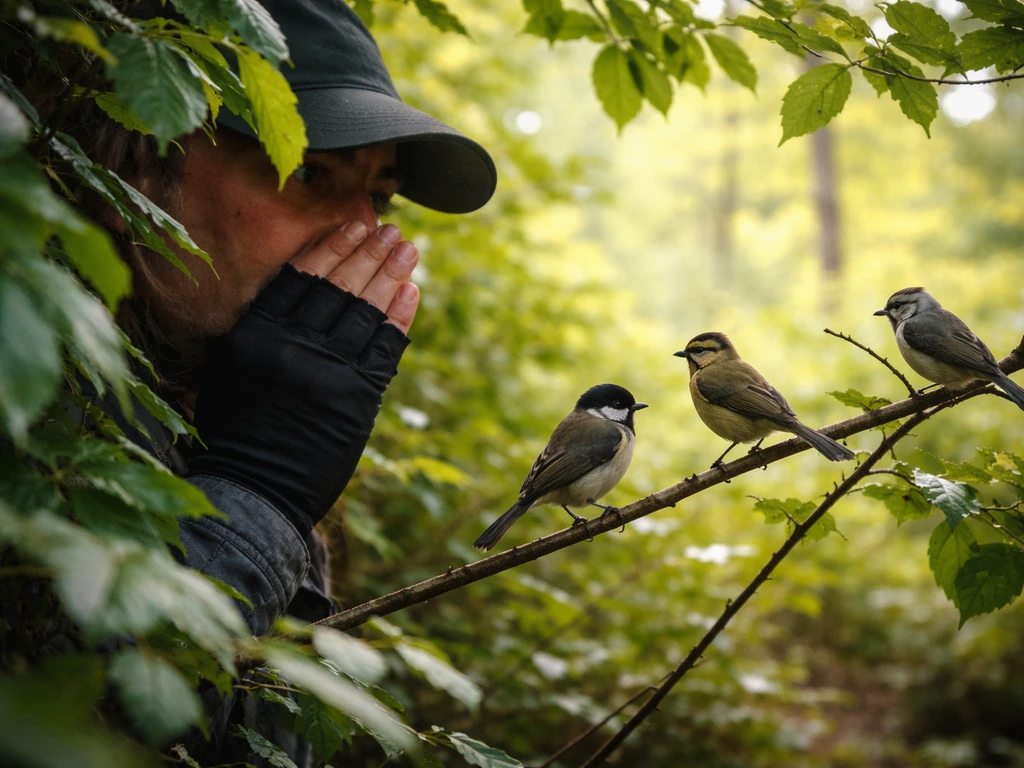
- Pishing: Making a soft, repeated hissing or scolding noise (often described as "pshhhh") to lure small songbirds out of cover. Wikipedia defines it as an imitated alarm or scold call. Audubon notes it works best for small woodland songbirds and is considered less harmful than playing recordings, though excessive pishing is flagged as unethical by some birding organizations.
- Dipped (or dipped out): You went to see a rare bird and it had already left. A miss.
- Vagrant: A bird found far outside its normal range, usually the target of a twitch.
Everyday bird-related slang and idioms
These expressions use "bird" as a metaphor or figurative reference. They're part of general English, not the birding hobby, and they carry meanings that have drifted far from anything ornithological.
| Expression | Literal origin | Figurative meaning | Register |
|---|---|---|---|
| Bird-brained / birdbrained | Comparing a person's intellect to the small brain of a bird | Stupid or scatterbrained person. U.S. slang since 1936 per Etymonline. | Casual insult |
| Bird-dogging | A bird dog retrieves game for hunters, staying close and focused | To closely watch someone or persistently seek something out. Merriam-Webster traces the verb to the early 20th century. | Business / dating slang |
| Birds of a feather (flock together) | Birds of the same species group together | People with similar interests or character naturally associate. Established English proverb. | Proverb / everyday speech |
| Bird's-eye view | The perspective a bird has when flying high above | An elevated, broad overview of a situation or place. Wikipedia notes the steep-angle visual definition. | General / professional |
| Like a bird | Reference to a bird's lightness or ease of movement | Easily, gracefully, without difficulty. Listed as a fixed idiomatic comparison by Collins Dictionary. | Casual / descriptive |
| Bird law | No ornithological basis; popularized culturally | A nonsensical or made-up legal concept, often used humorously to reference absurd authority claims. | Humor / internet slang |
How to decode a bird slang term from context
The fastest way to figure out what a bird-related phrase means is to ask three quick questions about where you saw or heard it.
- Where did you encounter it? If it appeared in an eBird comment, a birding forum, a field guide app, or a conversation on a nature trail, it's almost certainly birding jargon. If it appeared in a novel, a workplace conversation, a news article, or a social media argument, it's almost certainly a general idiom.
- Does it refer to a specific bird activity or sighting? Jargon like "tick," "twitch," "lifer," or "pishing" all describe something a birder physically does or records. General idioms like "bird-brained" or "bird-dogging" describe human behavior using birds only as a comparison.
- What's the tone and intent? Jargon is functional: it communicates something specific about a birding event. Idioms are figurative: they describe something about a person, situation, or quality. If someone calls you a birdbrain, they're not commenting on your ornithology skills.
A useful secondary check: look for a proper-noun connection. Birding jargon often appears alongside species names, location names, or platform names (eBird, Birda, Audubon). If a "bird" phrase has none of those anchors nearby, it's probably figurative.
Examples with literal vs figurative breakdowns
Seeing the same word in different sentences makes the distinction concrete. Here are the most commonly confused terms played out in real usage.
"Tick"
- Birding (literal): "I finally got to tick the Black-throated Blue Warbler off my life list this morning." Means: the speaker saw this species for the first time and added it to their personal record.
- General English (figurative): "We just need to tick all the boxes before the project launches." Means: complete all required steps. Has nothing to do with birding.
"Twitch"
- Birding (literal): "Three of us drove four hours for the twitch when that Painted Bunting showed up in Vermont." Means: an urgent trip to see a rare, unexpected bird.
- General English (figurative): "He had a nervous twitch whenever the phone rang." Means: an involuntary physical movement. Completely unrelated.
"Bird-dog"
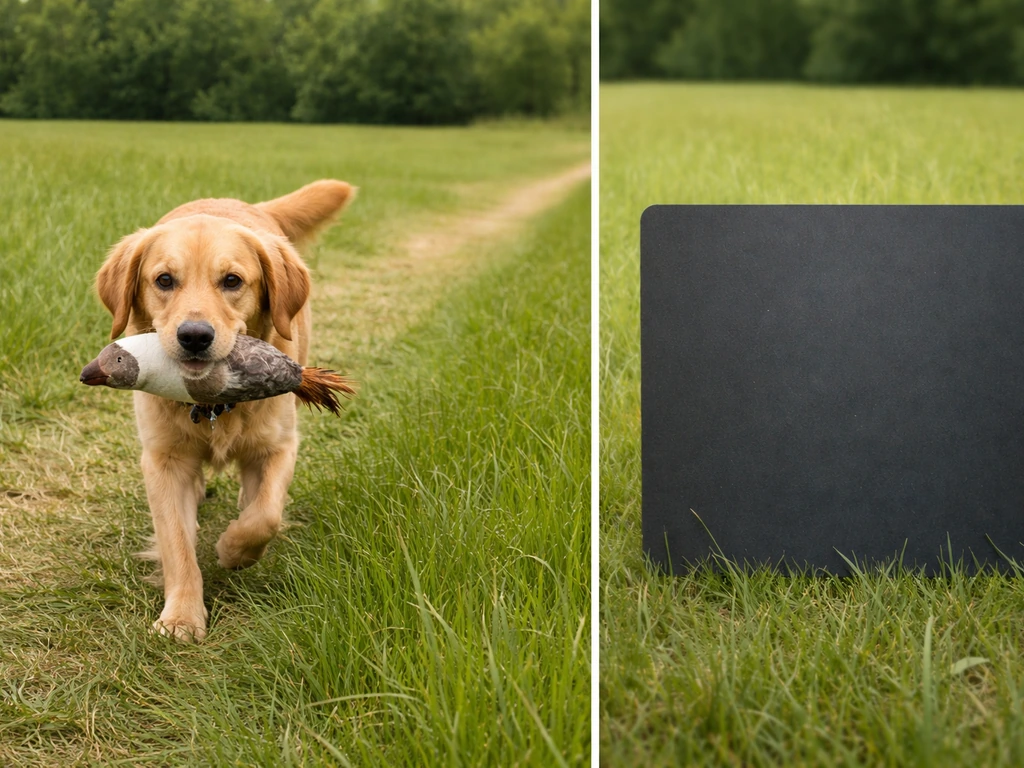
- Hunting (literal origin): A trained retriever breed that flushes and retrieves game birds for hunters.
- General English (figurative): "He bird-dogged every promising sales lead for weeks." Means: persistently pursued something with focused attention. Merriam-Webster's entry also flags "date stealers and scouts" as roles the term got attached to over time.
"Pishing"
- Birding (literal): "We spent ten minutes pishing at the edge of the thicket and pulled out a Winter Wren." Means: making scolding or hissing sounds to attract small birds out of hiding.
- No common figurative use: "Pishing" stays inside birding almost exclusively. If someone outside a birding context uses it, they're almost certainly borrowing the term deliberately.
Your quick reference checklist for decoding bird slang
Run through this whenever you hit a bird-related phrase you don't recognize.
- Check the source: Was it in a birding app, forum, or trail conversation? Start with birding jargon definitions (Audubon's dictionary, eBird glossary, Birda help center).
- Check the source: Was it in general writing, social media, or everyday speech? Look it up in a standard dictionary (Merriam-Webster, Collins) as an idiom or slang term.
- Ask: does it describe an action a birder takes (listing, traveling, making a sound, recording a sighting)? If yes, it's likely birding jargon.
- Ask: does it describe a human quality, behavior, or situation using a bird comparison? If yes, it's a general idiom.
- Search the exact phrase plus "birding" or "ornithology" to see if it appears in a hobby context. If no birding results appear, it's everyday language.
- If the term relates to seeing, recording, or chasing a specific bird species, cross-reference eBird's glossary or Audubon's lingo guide for a precise definition.
- If it connects to cultural, spiritual, or symbolic meaning (freedom, wisdom, omen), it belongs to a third category: bird symbolism in language. That meaning is separate from both jargon and idiom, and worth treating on its own.
Why birds keep showing up in language and symbolism
Birds generate more slang, idioms, proverbs, and symbolic vocabulary than almost any other animal group, and there's a practical reason for it. If you mean bird walking meaning as a figurative phrase in general English, it works differently from birding jargon like twitching or pishing. Humans have been watching birds for as long as we've had language. Birds signal weather, seasons, danger, and abundance. They appear in folklore from every culture on earth as messengers, omens, and stand-ins for the human soul. That deep familiarity is why the language keeps reaching for them.
The jargon that birders use today (twitching, ticking, lifers, pishing) is just the most recent layer of a very long accumulation. Beneath it sit centuries of proverbs like "birds of a feather flock together," poetic phrases like "bird's-eye view," and insults like "birdbrained" that date to the 1930s. All of them draw on the same source: the way birds move, flock, sing, migrate, and observe the world from a vantage point humans can't quite reach. That aerial perspective specifically makes birds useful as metaphors for overview, freedom, and insight across dozens of cultures.
The birding hobby itself is deeply connected to this symbolic weight, even when practitioners are focused entirely on lists and field marks. The appeal of twitching a rare vagrant isn't purely scientific; it carries a sense of meaning, of being present for something exceptional. Understanding that cultural layer helps explain why birding language developed such a rich, self-aware vocabulary, and why people outside the hobby still reach for bird metaphors constantly in everyday speech. Topics like bird watcher meaning, bird walk conventions, and even bird shot terminology all carry their own layers of literal and figurative meaning that branch off from the same root.
FAQ
How can I tell if a “bird” phrase is hobby jargon or just a normal idiom?
Many birding forums and checklists use slang like “twitch” or “ticking” as shorthand for specific actions. If the phrase is tied to a reporting workflow (for example, an eBird submission, a trip plan, or a discussion of what counts on a list), treat it as jargon. If it shows up as a casual insult or compliment with no birding actions attached, it is more likely figurative English.
What should I look for around the phrase to confirm it is birding slang?
Birders may use abbreviations that look like slang but are actually community conventions. If you see shortened forms next to a species name, date, location, or a “life list” concept, assume it belongs to birding communication rather than general English. When in doubt, check whether the surrounding sentence includes listing, sighting approval, or calling behavior.
Does “bird shot” always mean the same thing?
“Bird shot” can be literal (photographing or legally relevant “shot” in a context where birds are being taken) or figurative (a sudden chance, or a “shot” at something). A quick decision rule is to see whether “shot” pairs with equipment or capture (literal) versus outcome language like “best shot,” “long shot,” or “given the shot.”
What exactly is a “lifer,” and how is it different from everyday use?
A “lifer” is specifically a birding-list milestone, it does not mean “someone who sees birds” in general conversation. If the phrase is being used to mark a new species on your personal list (often with “got my first” or “on my life list”), it is birding jargon. If it appears as an everyday description of a person’s identity or job, it is not using the birding sense.
When people say “pishing,” do they mean the birding technique or something else?
“Pishing” and other vocal-calling terms are usually described as an action you do on the ground, not as a personality trait. If the phrase is paired with sounds, baiting calls, or technique (for example, “using pishing to bring them in”), it is birding jargon. If it is used like “he was pishing around” with no bird context, it is probably not the birding meaning.
What common spelling or form mistakes lead to misunderstandings?
Some terms come in near-miss spellings that can change the meaning, for example “twitch” versus “twitching,” or “tick” versus “ticking.” If you can replace the word with an action or list verb and the sentence still makes sense (tick = record on a list, twitch = go chase a bird), you likely have the intended jargon form. If the replacement breaks the sentence, it may be figurative usage.
How should I interpret bird-related slang when it appears in news or social media?
If you encounter a phrase in a general news article or social post, assume it might be metaphorical even if it contains bird terms. A practical next step is to look for telltales like a specific species name (literal birding) versus abstract wording about insight, perspective, or freedom (figurative).
Does “bird walk” mean an actual birding outing every time?
When someone says they “went on a bird walk,” they usually mean a guided or informal outing focused on observing and discussing birds, not merely walking outside. If the sentence includes expected activities (field marks, listening for calls, listing sightings), it aligns with birding usage. If it’s just “a stroll” with no mention of birds or observation, it may be figurative marketing language.
What if the sentence contains no clear birding context? Which meaning should I choose?
Birders often share in-group meanings for phrases, even when those phrases can exist in everyday English. If a phrase appears with birding platforms or organizers (mention of eBird, events, checklists, or location hotspots), it’s more reliable to use the jargon meaning. If you cannot find any birding context in the surrounding text, default to the everyday idiom.
Next Articles
Bird Walking Meaning: Literal, Idioms, Dreams, Spiritual Sign
Discover bird walking meaning: literal cues, idioms, spirituality, dreams, and a framework to interpret your situation s

Bird Walk Meaning: Real Birding vs Metaphor Explained
Bird walk meaning explained: real birding stroll or metaphor, plus how to tell from context and symbolism, dreams
Bird Watch Meaning: What It Is and How to Start
Bird watch meaning in everyday English and birding culture, plus how to start with binoculars, spots, and bird ID.