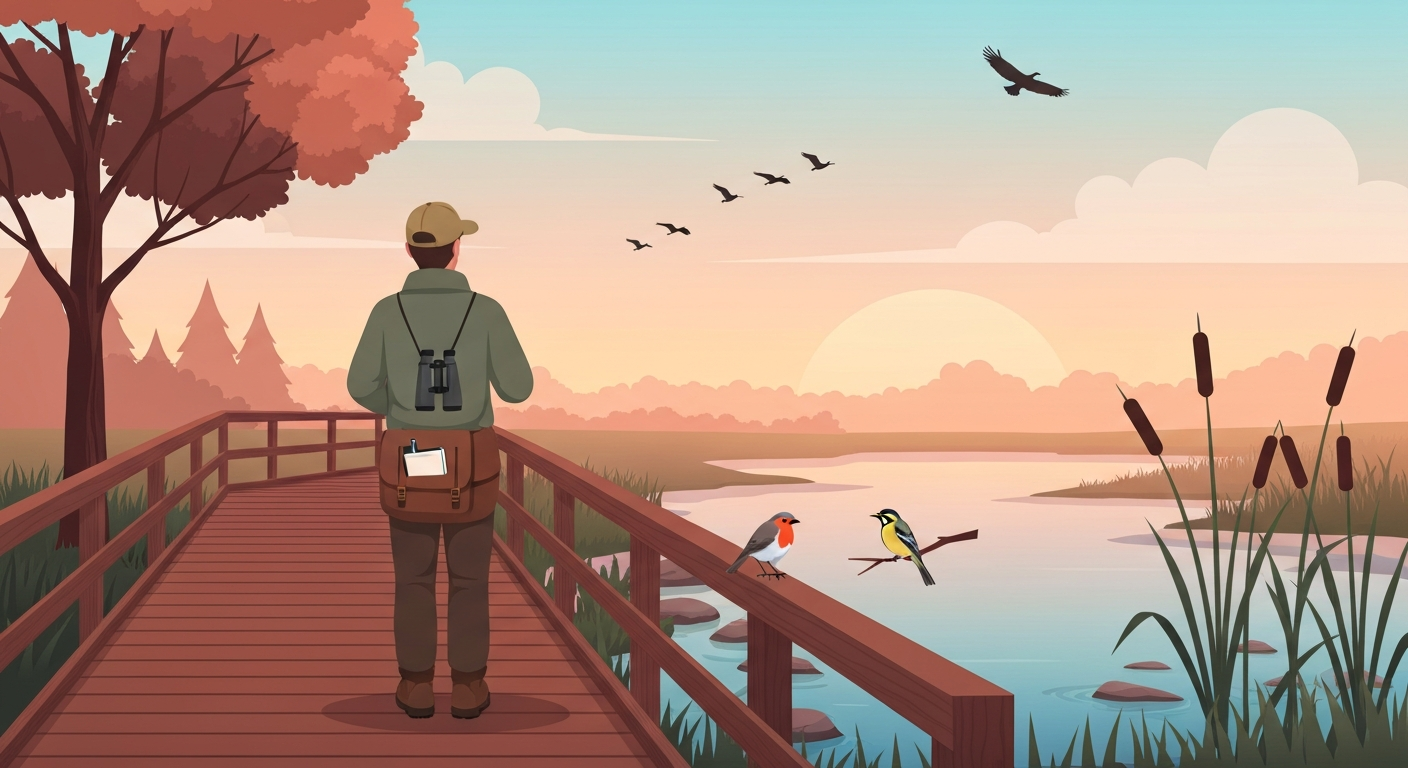
A bird watcher is a person who observes birds for enjoyment, curiosity, or study. That's the short answer. The longer one is that the term carries a whole spectrum of meaning depending on who's using it and in what context, ranging from someone who glances at a robin from a kitchen window to a dedicated hobbyist logging species counts on eBird before breakfast. If you're here because you're unsure what the term means, how it compares to "birder," or what connotations it carries in everyday speech, this guide covers all of it.
Bird Watcher Meaning: Definition, Birding vs Watching

Marcus Holloway
12 Apr 2026
What bird watcher actually means
Merriam-Webster defines "bird-watcher" as a noun directly linked to the sense of "birder," treating the two as functionally equivalent in standard dictionary usage. Cambridge frames a birdwatcher as someone enthusiastic about the activity, using the example of a person who spots a rare duck and decides to become a zoologist. Even Merriam-Webster's kids' definition section reinforces the plain-English reading: a person who watches birds. So at its core, the word is descriptive and neutral. There's no built-in judgment in it.
A Princeton University Press excerpt puts a useful distinction on paper though: "bird-watcher" tends to describe someone who simply enjoys watching birds, while "birder" is framed as a "wild bird enthusiast," implying a more active, invested relationship with the hobby. These aren't rigid definitions, but they reflect a real community conversation about what the words signal.
Casual watching vs. active birding: where the real line sits
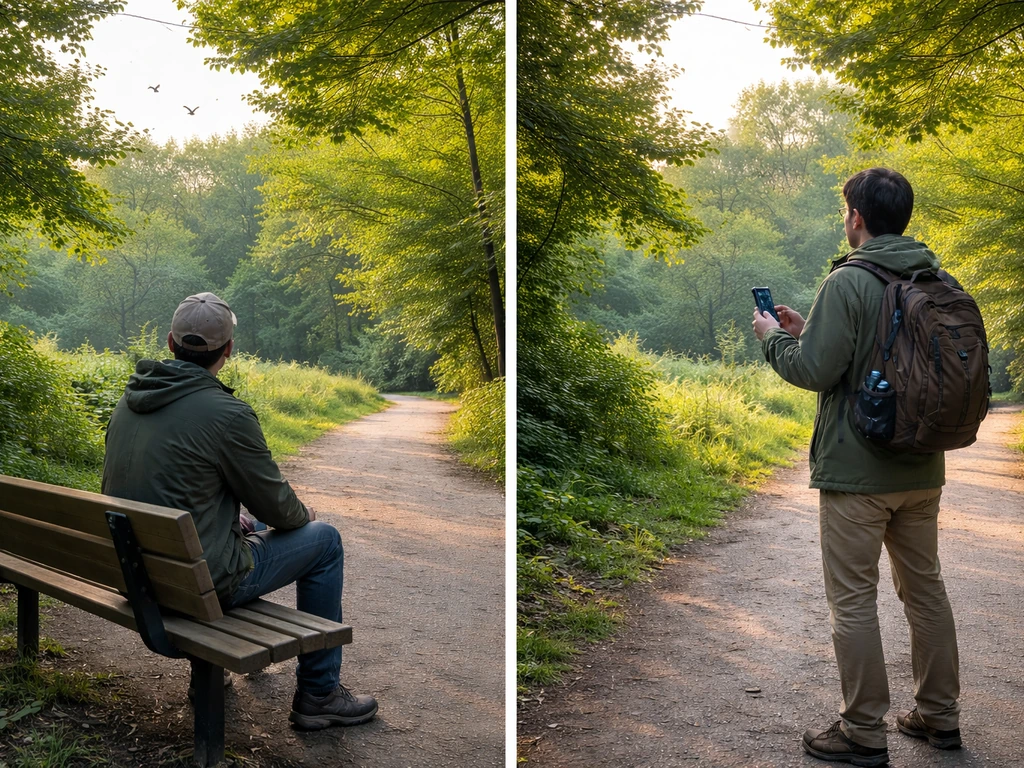
In practice, most people use "bird watcher" and "birder" interchangeably, but there's a soft cultural distinction worth knowing. If you want a useful mental model: birdwatching tends to describe a relaxed, leisurely appreciation of birds, while birding implies active observation, species identification, and often some form of recording. Audubon has explicitly discussed this divide, noting that some people in the community define birdwatching as more casual, while "birder" gets reserved for those more deeply involved. A Nebraska Passport watchable wildlife guide captures it bluntly: a birdwatcher casually watches, while a birder actively observes.
The Golden Gate Bird Alliance has addressed this community distinction directly, acknowledging that "birdwatcher" and "birder" are not always treated as perfectly synonymous by people who participate in the hobby. Wikipedia reinforces this, noting that in North America especially, some participants actively distinguish themselves from "birdwatchers. Wikipedia notes that in North America, many birders differentiate themselves from "birdwatchers," and that "birder" is unfamiliar to many laypeople in North America especially, some participants actively distinguish themselves from "birdwatchers. " None of this makes one label better than the other, but it does mean the word you choose can communicate something about your level of engagement.
For the purposes of this site, which digs into bird-related language and expression, understanding bird watch meaning in its fullest sense means recognizing that the phrase does double duty: it describes both a pastime and an identity people claim with varying degrees of seriousness.
What bird watchers actually do
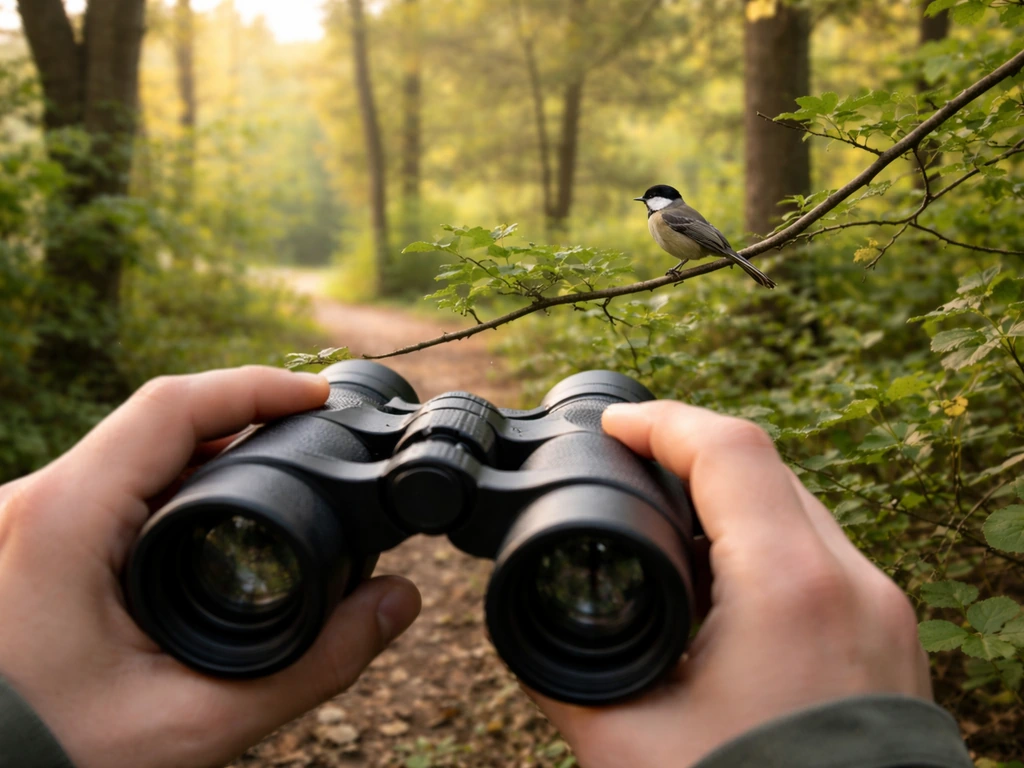
At the casual end, watching birds might mean keeping a feeder stocked and noticing which species show up. At the more engaged end, birding means heading out with a specific purpose, trying to identify species by sight and sound, and recording what you find. Audubon describes birding as appreciating and observing birds and explains that trying to identify a species helps you understand the bird and its habitat better, including its field marks and calls.
Platforms like eBird formalize this further. A "complete checklist" on eBird is one where birding was your primary purpose and you reported every species you could identify by sight or sound, to the best of your ability. It doesn't require that you identified every single bird to species level, just that you made a genuine effort. Checklists use specific protocols (traveling, stationary, or incidental) rather than treating all reports the same. This kind of structured observation is where casual bird watching shades into citizen science.
For nest monitoring specifically, programs like NestWatch take this even further. A nest monitor visits a nest site, records eggs and live young, and eventually logs the outcome and "ends the attempt" when nesting is complete. The protocol is based on standardized field research methods and aims to produce data comparable across thousands of contributors. That's a long way from watching sparrows at a feeder, and yet the person doing it is still, at heart, a bird watcher.
Gear, habits, and beginner basics
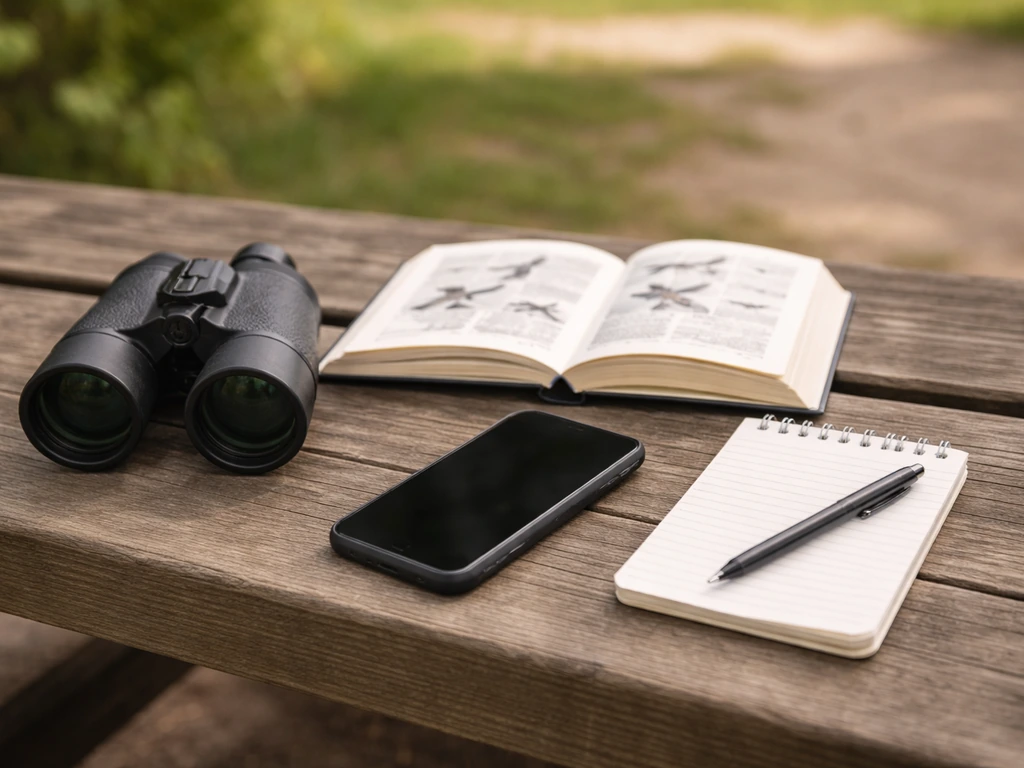
You don't need much to start. Audubon recommends a pair of binoculars and a good field guide or app (their own Bird Guide app being one solid free option) as the core starter kit. Binoculars matter not just for getting a clear view, but also for ethics: Buffalo Audubon emphasizes observing from a distance and using binoculars or spotting scopes specifically to avoid disturbing birds in their habitat.
Audubon also frames birding as something accessible from your backyard or local park, which lowers the barrier considerably. You don't need to travel to a wildlife refuge on day one. Start with what's near you, learn those species well, and build from there.
A few practical habits to pick up early:
- Watch where you're walking, especially when using binoculars near roads. Audubon's safety tips specifically flag this as a common hazard for new birders.
- Don't use audio playback recordings to attract birds in heavily visited areas or near rare and threatened species. Both the American Birding Association and Audubon Washington list this as a core ethics point.
- Stay on trails and avoid disturbing habitat. Treading into nesting areas to get a closer look does more harm than good.
- When counting birds at a feeder (as in Project FeederWatch), record the highest number of a given species seen at one time, not a running total added together across multiple sightings.
- Write down your observations in the field rather than trying to reconstruct them later. eBird's review guidance specifically recommends field notes for accuracy.
How people use the term in everyday conversation
In casual speech, "bird watcher" is generally a neutral or affectionate term. It's used without irony to describe someone who's interested in birds, often in a way that carries a quiet, contemplative image: someone patient, outdoors-minded, probably retired (though that stereotype is fading fast as the hobby grows younger and more diverse). There's no real negative connotation attached to the term in standard usage.
That said, the phrase does live in a world of related slang and idioms, and it's worth knowing the neighborhood. The birding community has its own in-group language, something Audubon captures in their "Dictionary For Birders," which uses humor to define everything from gear obsessions to the species that first triggered a lifelong passion for the hobby. If you want to understand bird watching slang meaning and how insiders talk about the activity among themselves, that's a rich vein to explore.
Outside the community, "bird watcher" rarely appears in idioms or figurative speech the way that, say, "bird-brained" or "bird law" do. It's more of a descriptive role than a culturally loaded phrase. When it does show up in conversation with any edge, it usually comes from context rather than the term itself, like the gentle ribbing someone might give a friend who owns seven field guides.
Bird watcher vs. related roles: a quick comparison
| Term | Core meaning | Level of formality | Main activity |
|---|---|---|---|
| Bird watcher | Person who observes birds for enjoyment or curiosity | Casual to moderate | Observation, appreciation |
| Birder | Active bird enthusiast who identifies and records species | Moderate to dedicated | Identification, listing, citizen science |
| Ornithologist | Academic or scientific expert who studies birds professionally | Formal/professional | Research, taxonomy, field science |
| Nest monitor | Volunteer who tracks nesting activity using structured protocols | Semi-formal (citizen science) | Data collection, nest visits |
| Feeder watcher | Observer focused on birds visiting a feeder setup | Casual to structured | Counting, species logging at feeders |
Ornithology (the academic study of birds) sits at the far formal end: an ornithologist is a scientist, not just an enthusiast. Bird watching and birding occupy the large middle ground where most people actually live. Nest monitoring and feeder watching are specific citizen-science roles that a bird watcher can step into without becoming a professional researcher.
It's also worth separating "bird watcher" from terms that sound similar but mean something different. Bird walking meaning, for instance, refers to a specific type of guided group walk focused on bird observation, which is a distinct activity from solo birdwatching. Similarly, bird walk meaning carries its own usage context worth understanding if you start moving in organized birding circles.
Why birds and bird watchers keep showing up in language and symbolism
Birds occupy an unusual place in human language and culture. They're visible, vocal, and ubiquitous, which makes them easy raw material for metaphor and meaning. Cultures across history have read omens into bird behavior, used birds to stand in for spiritual ideas (freedom, death, prophecy), and embedded bird references into idioms so deeply that most people don't register the origin anymore. "Bird shot" is another example of how bird-related language carries meaning far beyond ornithology itself, and if you're curious about the range of that vocabulary, the bird shot meaning is a useful case study in how a single bird-connected term can branch into multiple domains.
The figure of the bird watcher fits into this broader cultural frame too. There's a long tradition of bird observation as a contemplative, almost meditative practice, something associated with patience, attention, and a certain willingness to slow down. That image shows up in literature, in the spiritual resonance people attach to birding, and in the way citizen science projects like eBird have turned personal observation into collective knowledge. The bird watcher isn't just a hobbyist in a field; they're part of a long human relationship with birds as objects of fascination.
iNaturalist taps into this same impulse by letting observers document wildlife including birds, with observations moving from "Needs ID" to "Research Grade" as the community verifies them. The platform reflects how birdwatching as a personal practice becomes part of something larger once it's shared and verified. The individual bird watcher, in other words, has never been purely solitary.
How to become a bird watcher and talk about it accurately
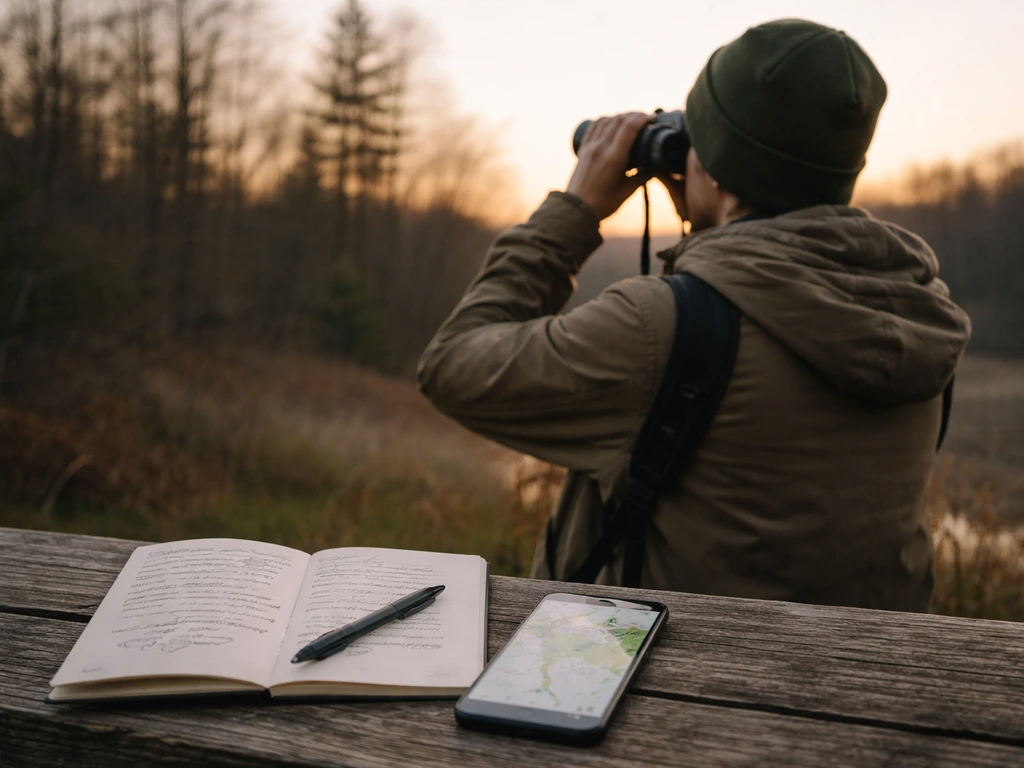
If you want to become a bird watcher, the bar to entry is genuinely low. Here's a practical starting sequence:
- Get a pair of binoculars. You don't need expensive ones to start. A basic 8x42 or 10x42 model works well for most beginners.
- Download a free identification app. Audubon's Bird Guide app is a solid choice and covers North American species with photos, range maps, and audio calls.
- Start in a familiar place: your yard, a nearby park, or a local nature trail. Audubon specifically frames birding as something you can do from your backyard.
- Learn to observe before you identify. Watch behavior, note size and shape, listen to calls. The identification often follows once you've really looked.
- Log what you find. Even a simple notebook works. If you want to contribute to citizen science, set up an eBird account and start submitting checklists using the appropriate protocol (stationary if you stay in one spot, traveling if you move).
- Learn the ethics early. Staying on trails, keeping distance, and avoiding audio playback in sensitive areas are norms the community takes seriously.
As for how to talk about it accurately: use "bird watcher" when you mean someone (including yourself) who observes birds casually or with moderate engagement. Use "birder" when you mean someone actively identifying species, listing, or contributing to structured data collection. Use "ornithologist" only for scientists. Most people in the hobby are comfortable with either of the first two, and the distinction matters more within the community than it does in everyday conversation.
If someone asks what a bird watcher is, the honest answer is: someone who pays attention to birds, on whatever terms they choose. The word is a starting point, not a qualification. Whether you're standing at a window with morning coffee or filling out an eBird complete checklist with detailed field notes, you're doing the same thing at its core: watching birds and finding it worth your time.
FAQ
Is “bird watcher” the same as “birdwatcher,” or does the spelling change the meaning?
In everyday conversation, yes. “Bird watcher” usually means the same general idea as “birdwatcher,” and “bird watcher meaning” discussions typically refer to people who observe birds for enjoyment or interest. The only time spelling starts to matter is in a community or platform context, where users may prefer one form consistently (for example, birdwatcher as a single word).
If I identify birds sometimes, am I still a bird watcher or am I a birder?
It can be. If you are actively trying to identify birds by sight or sound and making a genuine effort to submit observations in a structured way, many communities will treat what you’re doing as “birding,” which often aligns more with “birder.” If you are mostly just enjoying what you see, it is usually better described as bird watching.
Do I need to submit checklists or identify species to qualify as a bird watcher?
Not always. A person can be a “bird watcher” without keeping records, and they can also avoid a “complete checklist” mindset. If you never plan a session around identification, never note the species you saw, and simply observe, your activities fit the casual end described in the article more than the birding end.
What should I do on eBird if I see a bird but cannot identify it to species?
Yes, especially with “complete checklist” style rules. Many platforms emphasize “best effort” reporting, so you should record what you can confidently identify and leave uncertain observations at an appropriate level rather than forcing a species you are not sure about. That keeps your contribution useful even if you cannot ID everything.
How do I choose optics if I mostly watch from a feeder versus at a distant trail or marsh?
Binoculars are most useful when you have steady viewing and a realistic expectation of distance. For example, from a backyard feeder at 20 to 30 feet, binoculars often make details clear, while at farther wetlands you may need a spotting scope for small birds. The key is choosing optics that match your typical range so you can identify without crowding or disturbing birds.
Is it ever acceptable to get closer to birds for a better look?
Usually, there is no need. The article’s ethics point is mainly about minimizing disturbance, not about never approaching. A practical rule is to keep your distance, avoid getting between the bird and its food or shelter, and use long-range observation tools when you notice stress signals like agitation, repeated flushing, or alarm calls that increase in intensity.
Can a beginner jump directly into nest monitoring like NestWatch?
Yes, but it should be done carefully because “nest monitoring” is a specific protocol, not just casual interest. If a program requires visiting nests, you should follow their training and guidelines, since frequent disturbance can affect nesting success. For most people, feeder or habitat observation is a safer first step unless you are part of an approved monitoring effort.
Is “bird watcher” the name of the hobby, or the name of the person?
“Bird watcher” typically describes the person. “Birding” describes the activity. So if you are asking what to call the hobby itself, “birding” or “bird watching” are the usual labels for the practice, while “bird watcher” or “birder” refer to the person doing it.
Is “birder” ever meant negatively when someone uses it in conversation?
If it comes up, context drives tone. In-group, “birder” may imply higher commitment to identification and recording, but it is not necessarily an insult. Out of the community, “bird watcher” is generally neutral. The safer approach is to use the term the person prefers, or stick to “bird watcher” if you are describing yourself casually.
How is “bird walking” different from just doing bird watching on my own?
It depends on whether the observations are intentional and organized. If “bird walking” is a guided group activity with a focus on observing birds, then it is a distinct format, not the same thing as solo watching from a backyard. If you want to describe your personal involvement, you can say you “went bird walking” for that session while still being a bird watcher overall.
Next Article
Bird Verb Meaning: Uses, Behaviors, Idioms & Sightings
Discover what 'bird' means as a verb, definitions, behaviors, idioms, sightings, and practical next steps.