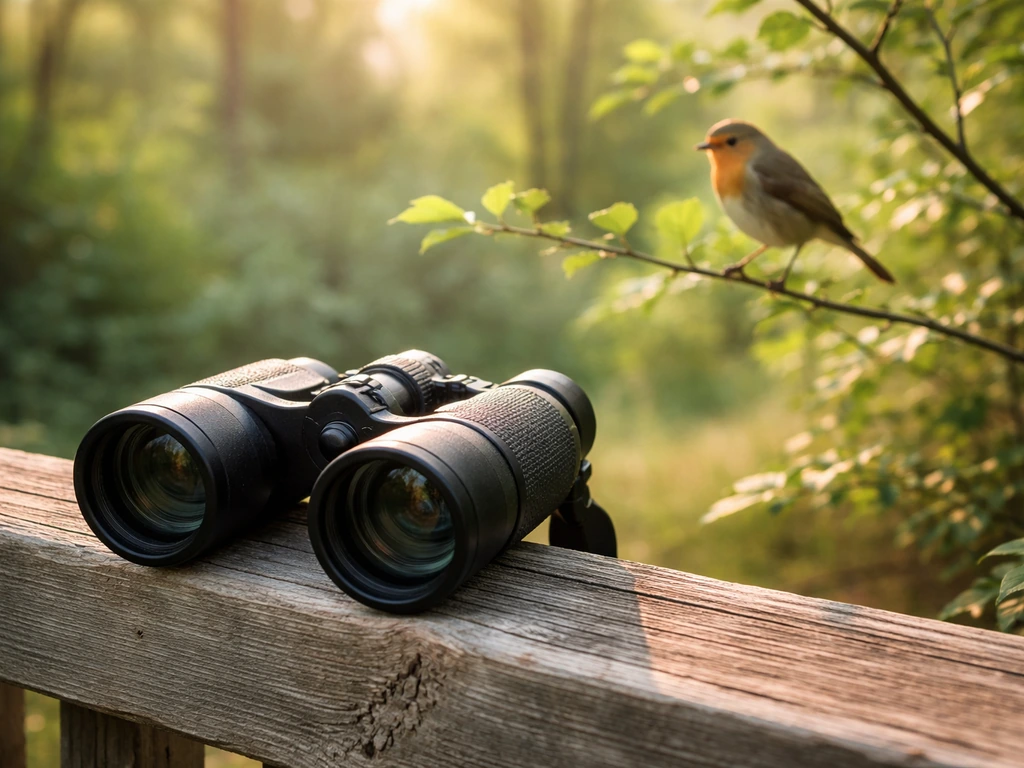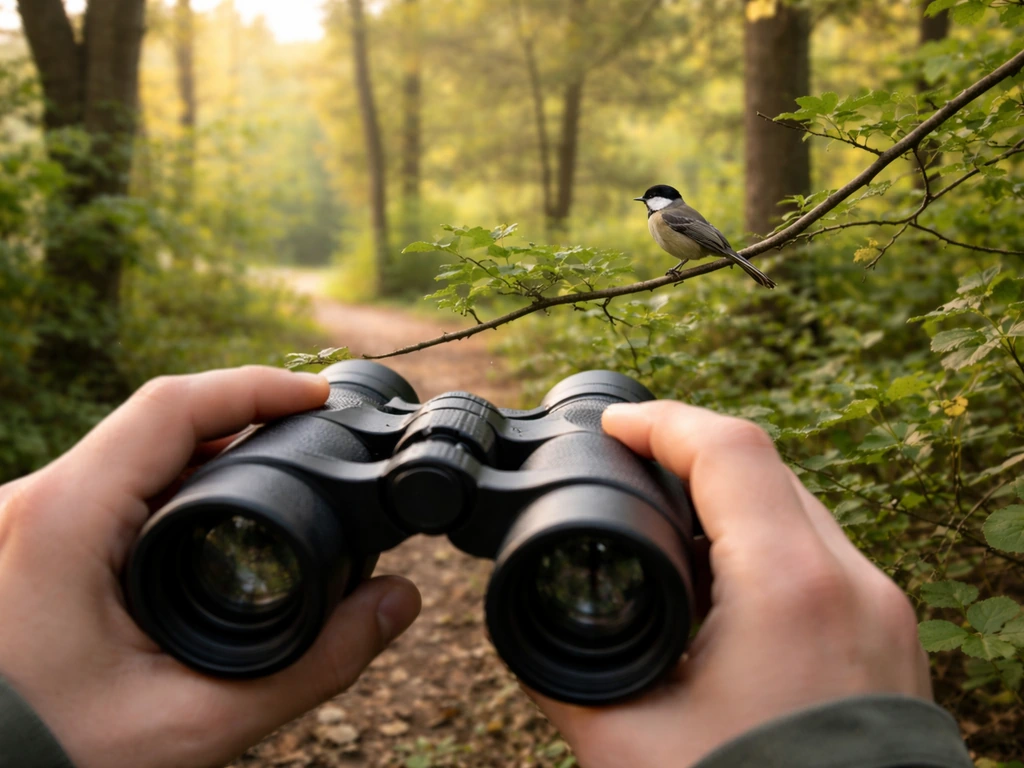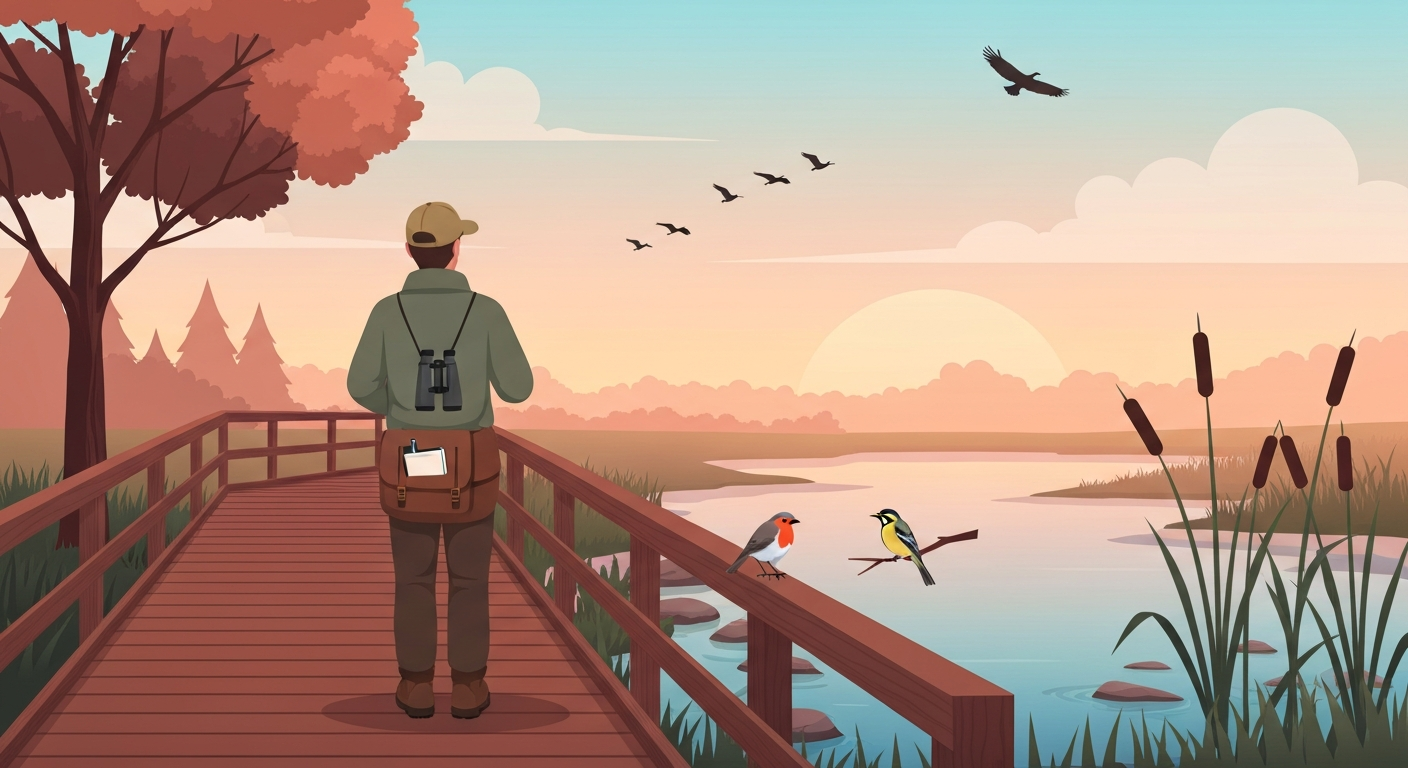
When someone says "bird walk," the most likely meaning is exactly what it sounds like: a group outing to observe and identify wild birds, usually led by an experienced birder. Merriam-Webster defines it as "a walk usually by a group of people and often under the guidance of a skilled leader" for observing wild birds in natural surroundings. Collins puts it similarly: an excursion, usually with an expert leader, for observing and studying birds in their habitat. That's the default, practical meaning, and it covers the vast majority of times you'll see or hear the phrase. Everything else, including slang, symbolism, and dream interpretations, comes second.
Bird Walk Meaning: Real Birding vs Metaphor Explained

Marcus Holloway
17 Apr 2026
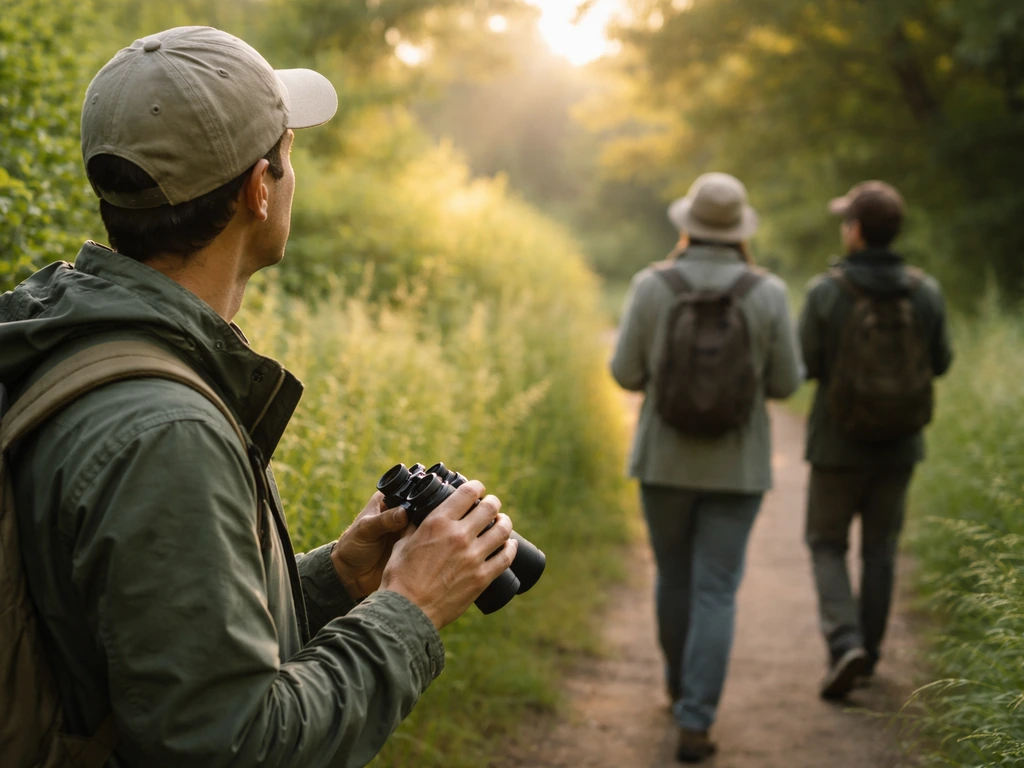
What "bird walk" actually means in everyday English
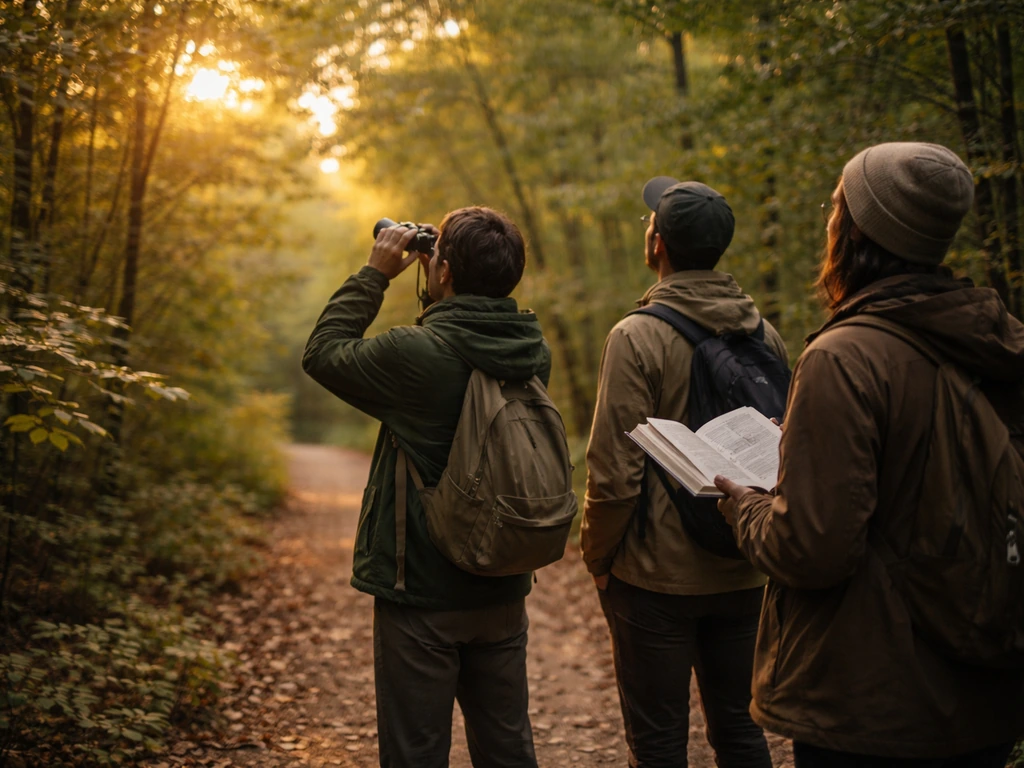
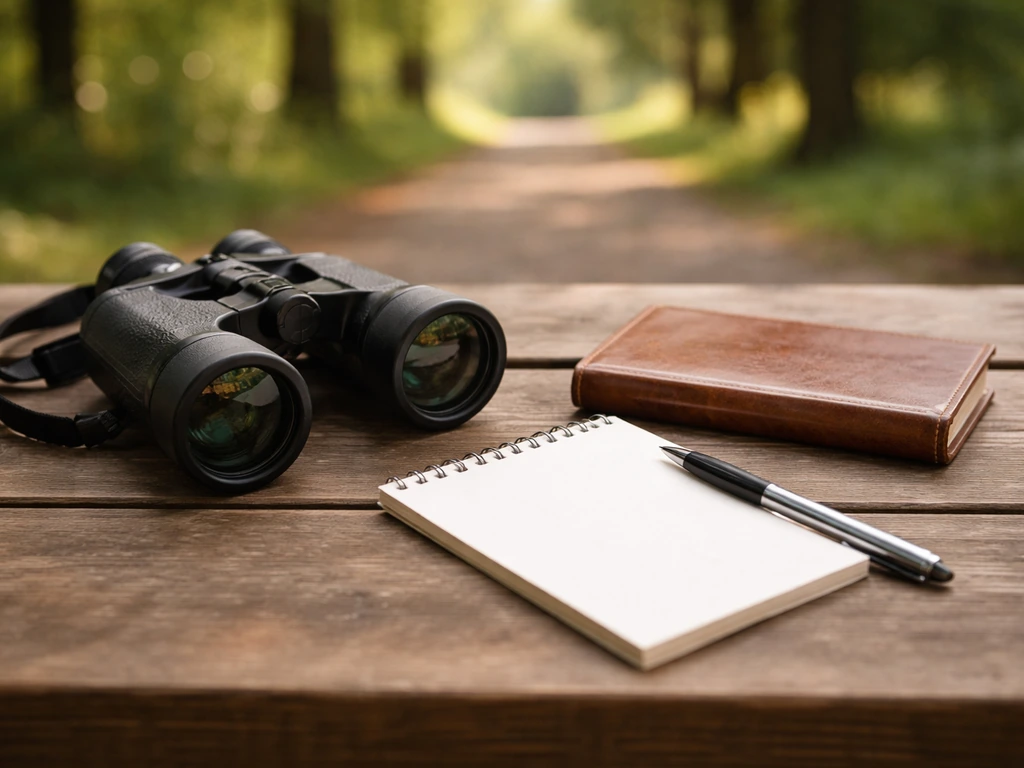
In everyday use, a bird walk is a structured or semi-structured outdoor activity where participants move slowly through a natural area, stopping to spot, listen to, and identify birds. It's a real event you can sign up for, not a vague metaphor. The U.S. Fish and Wildlife Service, Colorado Parks and Wildlife, and dozens of Audubon chapters around the country list guided bird walks on their calendars with specific times, meeting points, and gear lists. The typical advice you'll see across those listings: bring binoculars, grab a field guide, and wear comfortable shoes.
The pace of a bird walk is deliberately slow. One birding publication describes a birder's walk pace as roughly 10 yards per 15 minutes, which is less about covering ground and more about paying close attention to everything around you. That intentional slowness is actually part of what makes a bird walk distinct from a regular nature hike. You're not trying to get anywhere, you're trying to notice things.
Organizations like LLELA (Lewisville Lake Environmental Learning Area) welcome birders of all skill levels and run scheduled bird walks monthly, often at 7:30 a.m. on the second Saturday of most months. Valley Forge Audubon publishes guidelines specifically for bird walk participants and leaders, including advice like "bring extra binoculars if you have them and are comfortable sharing them." This is a well-established community activity with its own norms, not a casual phrase someone made up.
It's also worth knowing that Cornell Lab's All About Birds has written about the origin of the term, confirming that "bird walk" has a genuine history as a named birding activity. Cornell Lab’s All About Birds traces the history of “bird walks,” including early bird-club accounts that helped shape the idea of a morning “walk.” Cornell Lab's All About Birds has written about the origin of the term. The phrase has roots in organized birding culture that go back well before it became a social media caption.
Where you'll actually encounter the phrase
You'll run into "bird walk" in a handful of pretty distinct contexts, and the context almost always tells you which meaning is in play.
- Event listings and nature center calendars: This is the most common source. Parks, wildlife refuges, botanical gardens, and birding clubs use "bird walk" as a standard event title. If you see a date, a time, and a meeting spot, it's a real guided outing.
- Social media and hobby communities: Birders post about their bird walks the same way hikers post trail summaries. Photos of birds, lists of species spotted, and gear recommendations are all signs you're looking at the literal meaning.
- Travel and tour listings: Ecotourism companies use the term to describe guided wildlife experiences. Some venues, like the Deering Estate, even include gear pickup (binoculars and a bird guide from the gift shop) as part of the experience.
- Inclusive language discussions: Birdability has noted that "bird walk" can actually be an exclusionary term for birders who don't walk, recommending "bird outing" or "field trip" as alternatives. Even so, many birders who use wheelchairs or bird from their cars still use "bird walk" loosely to describe any birding excursion.
- Song and pop culture titles: Wikipedia lists "Bird Walk" as a title used for songs and other non-birding items, so if someone's referencing a track or a piece of media, the ornithological meaning is probably not what they mean.
- Slang and figurative use: Less common, but sometimes people use "bird walk" loosely to describe wandering or following something instinctively, in the same territory as phrases like "free as a bird" or "following your instincts."
If you're unsure which category you're dealing with, look at the surrounding text. An event page with a time and a location means a literal outing. A song title or lyric means pop culture. A dream journal entry or a spiritual forum means someone is looking for symbolic meaning. The phrase itself doesn't change; the context does all the work.
The cultural and folklore layer birds bring to the phrase
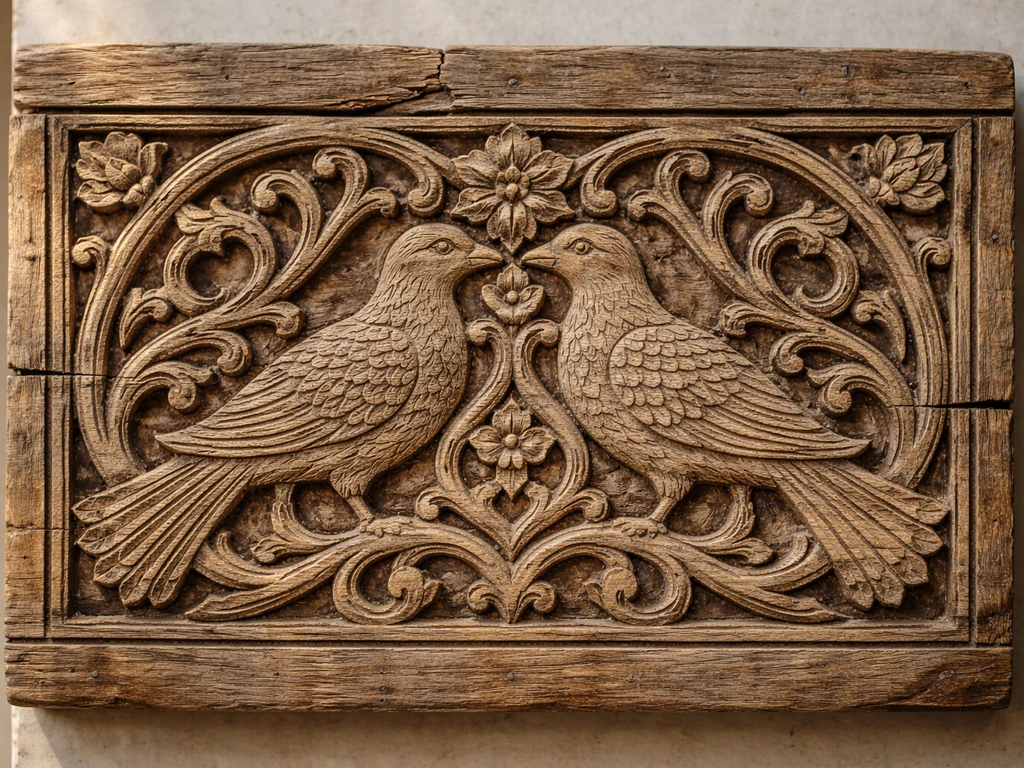
Birds carry a lot of cultural weight, and that weight does color how people interpret any bird-related phrase, including "bird walk." Across many traditions, birds have been treated as messengers, omens, and guides. The ancient practice of ornithomancy, reading omens from bird behavior, shows up in cultures from ancient Rome to pre-colonial Southeast Asia. The broader tradition of augury, divination using bird signs among other sources, was considered a serious civic practice in Rome, not fringe mysticism.
In some pre-Christian Philippine traditions documented by early Spanish colonial accounts, a bird crossing your path during a journey (specifically the tigmamanukan bird) was a significant omen, either auspicious or cautionary depending on which direction it flew. You didn't just ignore it. That instinct, the sense that a bird appearing in your path means something, is deeply embedded in human culture across many continents.
When someone talks about a "bird walk" in a poetic or reflective way, they may be tapping into this older sense: that walking among birds is a kind of attunement, a way of reading the world. That's not nonsense. It's a real tradition. But it's also very different from the Audubon Society's Saturday morning event, and conflating the two doesn't serve you. You can hold both meanings without letting one crowd out the other.
Spiritual and symbolic takes, and how to stay grounded
Some people land on the phrase "bird walk" while looking for spiritual meaning, either because they had a meaningful experience with birds outdoors, or because they're trying to interpret something someone said metaphorically. That's a legitimate angle, and there's real cultural depth to explore here. But the risk is over-mystifying something that has a perfectly clear, practical meaning first.
Birds in spiritual and symbolic traditions are most commonly associated with freedom, hope, communication, and guidance. Those associations show up across folklore, dream interpretation literature, and religious symbolism worldwide. If you're drawn to the idea that a "bird walk" has a deeper meaning for you personally, those themes are worth sitting with. Maybe the act of slowing down, going outside, and paying close attention to living creatures does carry some inner significance. That interpretation isn't wrong.
The sanity check is simple: ask what prompted the question. If you saw the phrase on a park website, the spiritual layer is probably not the main point. If you're processing a dream, a personal encounter, or something a mentor said, then the symbolic layer is fair game. You can explore the richer cultural territory around bird watching slang to see how bird-related language picks up figurative meaning over time, which helps you distinguish casual idiom from genuine symbolism.
The practical rule: start with the most literal interpretation, confirm it doesn't fit, then move toward symbolic readings. Don't jump straight to omen territory when someone just posted about a Saturday morning walk at the nature preserve.
Dream encounters and bird sightings: what to do with them
If "bird walk" came up in a dream, or if you're trying to interpret a significant bird encounter during an actual walk outdoors, the approach is similar to any dream analysis: focus on your emotional response first, then the specifics. Dream interpretation literature consistently connects birds to themes of freedom, hope, and communication, but the type of bird, its behavior, and how you felt in the moment all matter more than a generic bird symbol.
A bird that lands near you during a walk can feel meaningful, and across many cultures, it would have been treated as meaningful. Whether you interpret that through augury traditions, through personal intuition, or through the simple joy of a close wildlife encounter is up to you. The symbolism is layered and real. Just don't let it override what you actually observed.
If you want to go deeper on this angle, understanding what it means to be a bird watcher as a role and identity helps clarify why these encounters feel significant to so many people. There's genuine attentiveness involved in birding that can make ordinary moments feel charged with meaning.
For dreams specifically: note the bird's color, species if you can recall it, and whether it was flying toward you, away from you, or perched. Those details shape the symbolic read far more than the generic category of "bird dream." A bird walking alongside you in a dream reads very differently than one flying overhead or one trapped inside a room.
Common confusions and close phrases worth knowing
A few phrases overlap with "bird walk" closely enough to cause real confusion, especially in search results, social media, and conversation.
"Bird walk" vs. "bird walking"
These are nearly the same thing, but "bird walking" can refer specifically to the pace and movement style a birder adopts during an outing: slow, stop-and-start, highly attentive. If someone describes their bird walking technique or says they spent the morning bird walking, they're talking about the activity itself, not a specific event. "Bird walk" with no modifier is more likely an event or a noun; "bird walking" is often the gerund form describing what you're doing.
"Bird walk" vs. "bird watch"
These terms overlap substantially but aren't identical. A bird watch can happen from a stationary position, like sitting in a hide or at a feeder, while a bird walk implies movement through a landscape. In practice, birders use both terms interchangeably in casual speech, but event listings and formal program names tend to use "bird walk" when there's a guided route involved.
"Bird walk" vs. "bird shot"
This one comes up mainly as a search or autocomplete confusion. Bird shot is a specific type of small-pellet ammunition used for hunting birds, a completely different term with no overlap in meaning. If you're seeing both come up in search results or a conversation, the context should make the distinction obvious: bird shot belongs to hunting contexts, bird walk belongs to observation and recreation.
"Bird walk" vs. downtown birding or urban birding events
Some city birding events use names like "downtown birding walk" or "urban bird walk," which might look like a different concept but follow the same format: a guided group outing, just set in a city park or urban green space instead of a wildlife refuge. The term "bird walk" applies equally to both. If you see it on a city events calendar, it almost certainly means a guided outing, not a metaphor.
A quick comparison of the main meanings
| Context | Most likely meaning | How to confirm |
|---|---|---|
| Event listing or park calendar | Guided group birding outing | Look for a date, time, meeting location, and gear list |
| Social media post with bird photos | Literal birding outing (recap) | Check for species lists or location tags |
| Song title, album, or pop culture reference | Non-birding creative title | Look for artist/album attribution |
| Dream journal or spiritual forum | Symbolic or personal meaning | Focus on emotions, bird type, and personal associations |
| Figurative speech or metaphor | Wandering, following instinct, or bird-like behavior | Look at surrounding sentence for figurative language cues |
| Accessibility/inclusive language discussion | Any birding outing, not necessarily involving walking | Check if the source is discussing birding inclusivity |
Your next steps when you see or hear "bird walk"
Nine times out of ten, "bird walk" means a real, practical activity: a group of people going outside together to look at birds, usually led by someone who knows what they're doing. That's the definition you should default to. Before you look for a deeper meaning, ask whether the source is a park website, a birding club, or a social media recap of someone's Saturday morning. If it is, you've found your answer.
If you're looking for symbolic or spiritual meaning because the phrase came up in a dream or a meaningful personal context, the cultural tradition around birds as messengers and omens is genuinely rich and worth exploring. Just approach it the same way you'd approach any folklore: as one layer of meaning among several, not as a fixed answer. Confirm what fits your situation, set aside what doesn't, and stay honest about what you actually experienced.
- Identify the source: event listing, social post, song title, dream, or conversation.
- Apply the literal meaning first. Does it fit? If yes, you're done.
- If the context is clearly figurative or personal, bring in the symbolic layer: freedom, guidance, communication, attunement.
- For dreams, note the specific bird, its behavior, and your emotional response before reaching for general interpretations.
- If you're genuinely unsure what someone meant, ask them directly. Context from the speaker always beats interpretation from the outside.
FAQ
How do I tell if a “bird walk” is beginner-friendly or if it expects advanced birders?
Most guided bird walks are beginner friendly, but you should still confirm whether the group expects you to already identify common species. If the event listing does not say, email or arrive early and ask the leader whether they provide a quick intro to field marks and calls, and whether binocular sharing is common.
What should I expect in terms of pace and time commitment compared with a normal nature hike?
A bird walk is not the same as a casual hike, so you should plan to stop often and listen, bring patience for slow progress, and set aside enough time for repeats and re-checks. If an outing schedule lists a short distance, that does not mean it will be quick, it usually means the leader will linger for better viewing.
I do not have binoculars. What gear should I bring for a bird walk, and what can I skip?
If you do not own binoculars, you can often borrow or share, but you should still bring something to record observations (phone notes or a simple notebook). Ask the organizer whether they expect you to have a field guide or whether ID will be done verbally.
What weather or season factors can change a bird walk, and how should I prepare?
Because many bird walks depend on morning activity and visibility, weather matters. If it is windy, very rainy, or lightning-prone, the walk may be delayed or canceled, so check the organizer’s policy and bring layers you can remove when stopping in sun.
Are bird walks safe for kids or people with limited mobility, and how do I check accessibility?
Bird walks are typically led with safety norms, but not all groups are equally strict about distance from roads or water. Before you go, check whether the route is accessible, whether there is an easy alternative route, and whether participants should stay within a certain distance of the leader.
If I see “bird walk” on social media, how can I tell whether it’s a real event or just a metaphor?
If the phrase appears on social media as a “caption” or a “vibe,” it is usually not a formal event, but context still matters. Look for clues like a meeting point, a date, or organizer branding, those usually indicate a real outing rather than a poetic use of the term.
If “bird walk” comes up in a dream or spiritual discussion, how can I interpret it without over-mystifying?
Yes, but the interpretation can conflict if you do not separate “walking among birds” from “reading omens.” For personal meaning, focus on what you observed (bird behavior, your emotions, where you were), then treat symbolism as a secondary layer, not a certainty.
What’s the difference between “bird walk,” “bird walking,” and “bird watch”?
Common searches cause confusion with closely related terms. “Bird walking” usually describes the technique or the act of moving slowly and stopping often, while “bird watch” more often refers to staying put (feeder, blind, or hide) rather than moving as a group along a route.
What are the main edge-case contexts where “bird walk” might be misread in search results?
If “bird walk” shows up near hunting words, it is likely not about observation. A quick sanity check is whether the source mentions wildlife viewing gear (binoculars, field guide) and habitats, hunting contexts will often use ammunition or hunting terminology instead.
How can I get the most out of a bird walk if I struggle with identifying birds?
If you want practical benefits from a bird walk, choose an approach before you arrive: pick 3 target things to learn (for example, how to recognize a species by field marks, common calls, or flight patterns). Taking small goals helps you notice details even if you cannot identify everything.