
A bird catcher is, at its most literal, a person who catches birds, whether by net, trap, snare, or trained raptor. Noah Webster's 1828 dictionary defined BIRD-CATCHER plainly as 'one whose employment it is to catch birds; a fowler.' That occupational meaning is the anchor, but the term stretches further: it appears in scripture as a metaphor for entrapment, in dreams as a symbol of control or freedom, in surnames as evidence of a medieval trade, and occasionally in idiom and slang. If you ran into the word in an old text, a dream dictionary, a legal document, or a conversation about wildlife crime, this guide explains what it means in each of those contexts and how to tell the difference.
Bird Catcher Meaning: Literal, Cultural, Legal & Symbolic Guide

Marcus Holloway
24 Jul 2026
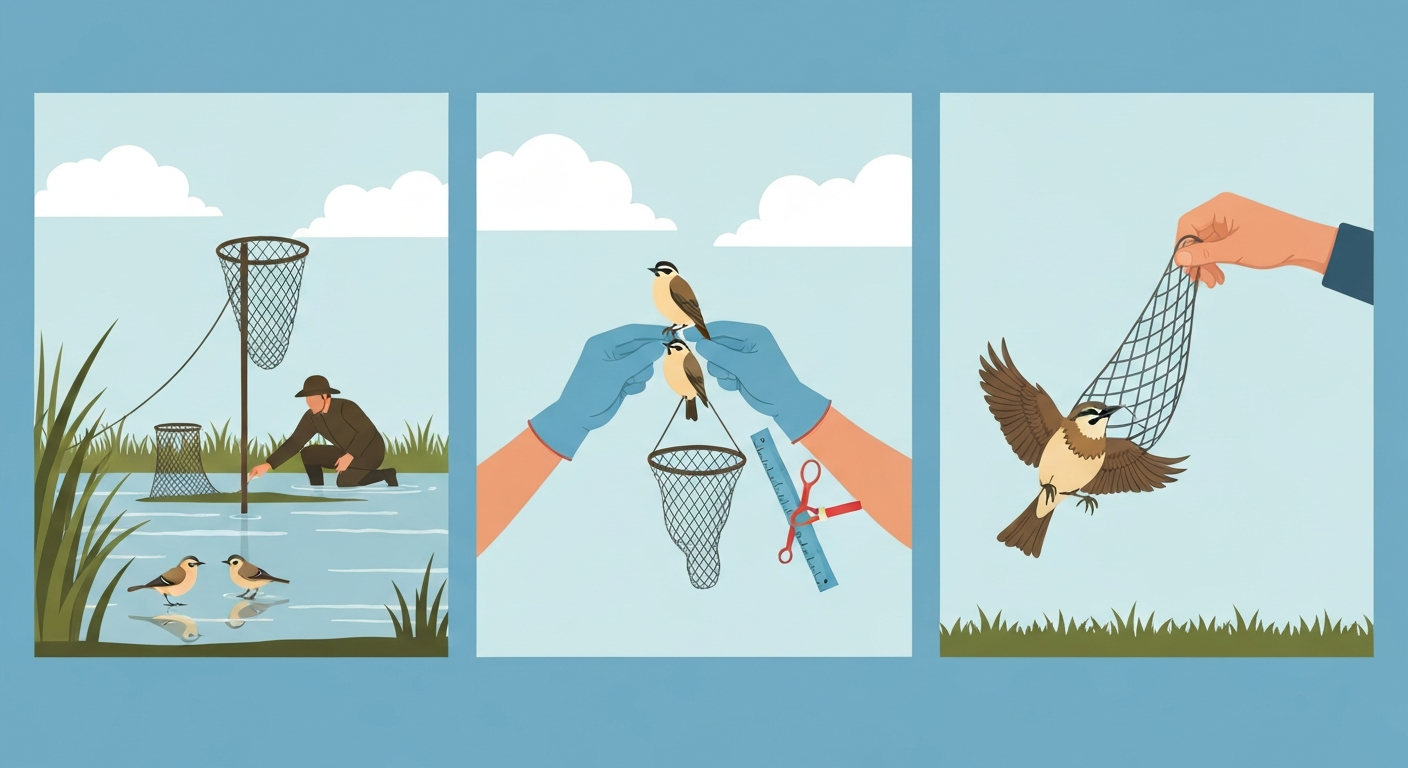
What 'bird catcher' literally means
The core definition is occupational: a bird catcher is someone who captures birds, typically wild ones, as a trade, subsistence activity, or scientific pursuit. English has several terms for this role, and they overlap more than you might expect.
Fowler: the original English word
The word fowler predates bird catcher by centuries. Merriam-Webster traces its use to before the 12th century, deriving it from Old English fugolere (bird hunter). In practical terms, a fowler was someone who hunted or trapped wild birds for food, feathers, or sale. The English surname Fowler itself comes directly from this occupation: Middle English foulere meant 'bird-catcher' or 'one who takes fowl,' and families bearing the name almost certainly had an ancestor who worked the trade. Fowler and bird catcher are effectively synonyms in historical English texts, with fowler being the older and more formal choice.
Falconer: related but distinct
A falconer is not a bird catcher in the traditional sense, even though falconry involves birds and hunting. The International Association for Falconry defines falconry as the art of training and flying birds of prey to take quarry. The key difference: a falconer trains a raptor to hunt on the falconer's behalf and then retrieves the bird. A traditional bird catcher or fowler used nets, snares, or birdlime to trap birds directly, usually for food or the live-bird trade. Falconry centers on a relationship with a trained hawk or falcon and involves specialized skills like manning, jesses, and telemetry. It is more accurately grouped with bird husbandry and bird keeping than with basic fowling. See a concise bird husbandry definition (bbc3a1b4-12a8-48e0-ae86-a9d3050b42dc) for distinctions between keeping captive birds and capturing wild ones.
Bird catcher in scientific research
Today the term most often describes a licensed researcher or bander who temporarily captures wild birds for scientific study. The USGS and the U.S. Fish and Wildlife Service publish technical guidance for this kind of work, particularly around mist-netting, which uses fine mesh nets to catch birds without injuring them. The Institute for Bird Populations produces a dedicated Mist Netter's Bird Safety Handbook covering safe extraction, handling, and release. See The Mist Netter’s Bird Safety Handbook, Institute for Bird Populations (safety & ethical protocol guidance) for practical guidance on extraction, minimizing injury, training, and permitting expectations See The Mist Netter’s Bird Safety Handbook — Institute for Bird Populations (safety & ethical protocol guidance) for practical guidance on extraction, minimizing injury, training, and permitting expectations.. In this professional context, 'bird catcher' carries a technical meaning grounded in protocols, permits, and animal welfare, a long way from the medieval fowler with a clap-net.
Tools and methods, from clap-nets to mist nets
The equipment bird catchers have used across history divides into a few broad categories. Each method has a different level of selectivity, animal welfare outcome, and legal status.
- Mist nets: fine nylon mesh strung between poles, essentially invisible to birds in flight. Standard tool for licensed banding and research. Requires formal training and permits in most countries.
- Clap-nets (or clap-netting): two hinged panels of netting spring shut over a baited area when an operator pulls a cord from a hide. Historically widespread; still documented in some Mediterranean regions, including Malta, where conservation NGOs have flagged large numbers of illegal clap-net sites.
- Springes and noose snares: loop-based snares that tighten when a bird steps or lands on them. Attested from ancient to early-modern periods. Generally prohibited for wild birds under modern law.
- Birdlime: a sticky adhesive paste applied to perches or branches. Birds land, become stuck, and are retrieved. Documented from antiquity and referenced in early modern English literature including Shakespeare. Most legal regimes now ban it as non-selective and inhumane.
- Funnel and decoy traps: cage or funnel-shaped traps baited with food or live decoy birds that lure targets inside. Used historically and in some legal pest-management contexts. Selectivity and legality vary by design and jurisdiction.
- Falconry equipment (jesses, hoods, lures, telemetry): used to train and fly raptors, not to catch birds directly. Represents a fundamentally different tradition.
The ethical divide between these methods is significant. Mist-netting under scientific protocol is designed to minimize injury and stress, with birds typically released within minutes. Birdlime and unattended snares offer no such assurance, which is why they appear on prohibited-methods lists in most developed legal frameworks.
Spellings, variants, and related job titles
The compound appears in three forms across print sources: bird catcher (two words), bird-catcher (hyphenated), and birdcatcher (closed). All three are documented in dictionaries including Wiktionary, the Century Dictionary, and historical lexicons. The hyphenated form bird-catcher appears most consistently in formal and historical texts, including Webster's 1828 entry. In contemporary use the two-word and closed forms are equally common, with no meaningful difference in meaning.
Related job titles worth knowing: fowler (the oldest English synonym, now archaic except in surnames and historical writing), trapper (broader, can include mammals), bander or bird bander (the modern scientific role, focused on capture and release), falconer (trained-raptor specialist, distinct from fowling), and the ancient Greek ornithotheras, glossed in the Liddell-Scott-Jones lexicon as 'bird-catcher, fowler,' showing the occupational term reaches back to classical antiquity.
It is also worth separating bird catcher from roles that overlap on this site. A bird breeder raises birds in captivity for reproduction. A bird keeper maintains captive birds. For the distinct role and responsibilities, see the bird keeper meaning explanation. A bird fancier is typically someone with a personal enthusiasm for keeping or showing birds. For more on what a bird fancier is and how that role differs from keeping or catching birds, see bird fancier meaning. A bird enthusiast is the most casual of these, implying interest rather than occupation. For more detail on the term and how it differs from related labels, see the entry on bird enthusiast meaning. None of these roles necessarily involves capturing wild birds, which is what bird catcher specifically implies. For information on keeping and raising birds, see bird rearing meaning.
Historical and cultural background
Bird catching is genuinely ancient. Ancient Greek texts reference ornithotheras as a recognized occupation. Egyptian tomb paintings depict fowlers using clap-nets in the Nile marshes. In medieval Europe the fowler occupied a specific social niche: supplying birds for the table (particularly larks, thrushes, and quail), providing songbirds for wealthy households, and supporting the feather trade. The occupational surname Fowler spread across England and its diaspora precisely because this was common enough work to identify a family.
Regional traditions developed their own methods and cultures. In parts of southern Europe, particularly around the Mediterranean, clap-netting for migratory songbirds became embedded in local culture as a seasonal practice tied to harvest and migration routes. In Japan, tori-sashi (bird catching with sticky lime) was practiced for food and for the pet trade. In the Middle East and Central Asia, falconry evolved as a parallel tradition among nomadic and aristocratic cultures, with UNESCO now recognizing it as an Intangible Cultural Heritage.
By the 19th century in Britain and America, the live-bird trade was a significant commercial enterprise. Street sellers in London sold caged goldfinches, linnets, and larks captured in the countryside. The scale of this trade helped drive early bird protection movements, contributing eventually to legislation like the Wild Birds Protection Act of 1880 in Britain and later the Migratory Bird Treaty Act of 1918 in the United States.
Folklore and symbolism: what a bird catcher means beyond the literal
The bird catcher is one of the oldest symbolic figures in religious and folk literature. In the Hebrew Bible the yaqosh (Strong's 3352) is the fowler or bird-catcher, and the 'snare of the fowler' (Psalm 91:3, Psalm 124:7) became a widely used metaphor for any hidden danger or entrapment. The image worked because everyone in the ancient world recognized it: a snare set for birds was the perfect symbol of an invisible trap, danger disguised as something ordinary.
In European folklore the bird catcher often represents a cunning or morally ambiguous figure, someone skilled at deception, able to lure creatures with false promises. Mozart's character Papageno in The Magic Flute (1791) is literally a bird-catcher, and his costume, pipes, and cheerful simplicity made him a folk archetype: the bird catcher as a figure of earthy, pre-civilized instinct, existing at the boundary between nature and human society.
Dream interpretation
In dream symbolism, encountering a bird catcher or being one tends to carry themes of entrapment, control, or the desire to possess something free. Dreaming of being caught in a bird catcher's net often reflects a feeling of restriction or manipulation in waking life. Dreaming of being the bird catcher may suggest a wish to hold onto something elusive, a relationship, an idea, or an opportunity, or it can reflect concerns about imposing your will on others. These interpretations follow from the same symbolic logic as the biblical snare of the fowler: the bird catcher occupies the predatory side of a freedom-versus-captivity axis that birds naturally represent. As with any dream symbol, context matters more than any fixed meaning.
Birds in the catcher's world: preening, behavior, and captivity symbolism
Part of the symbolic resonance of the bird catcher image comes from what birds themselves represent: freedom, soul, spirit, and the natural world. When a bird is caught, that symbolism is inverted or suspended. In traditions where bird preening is associated with self-care and vitality, a caged or trapped bird unable to preen freely becomes a symbol of diminished spirit. This layering of bird behavior and bird-catching imagery is common in both literary and spiritual contexts.
Idioms, slang, and figurative uses
Outside of literal and symbolic meanings, 'bird catcher' turns up in a handful of figurative contexts worth knowing if you encounter the phrase in speech or writing.
- Snare of the fowler (idiomatic, literary/biblical): any hidden trap or subtle danger. Used in preaching, political writing, and literature as a shorthand for invisible entrapment.
- Catching birds (colloquial, British): in some older British slang, 'catching birds' could refer to charming or entrapping women, echoing the bird-as-quarry metaphor. Now largely archaic.
- Bird in a net / caught like a bird: common figurative expressions across many languages for someone who has been outmaneuvered or trapped by circumstances.
- Papageno figure (literary shorthand): in music criticism and literary analysis, a 'Papageno-type' character refers to the cheerful, nature-bound bird-catcher archetype from Mozart's opera, someone instinctive and uncomplicated.
- Bird catcher as a device name: the term is also applied informally to physical objects that catch or deflect birds, such as deterrent spikes on buildings or window films. This is a product/commercial use, not an ornithological or cultural one.
The figurative thread running through most of these uses is the same: the bird catcher is someone (or something) that stops free movement. Whether the tone is cautionary (the biblical snare), comic (Papageno), or colloquially playful, the underlying metaphor is consistent enough to be useful when you encounter the phrase in an unfamiliar context.
Legal, ethical, and conservation realities
In most countries today, catching wild birds without a permit is illegal. The U.S. Migratory Bird Treaty Act (MBTA) prohibits pursuing, hunting, taking, capturing, killing, or possessing migratory birds unless specifically authorized by federal regulation. This covers the vast majority of North American bird species. Violating the MBTA carries civil and criminal penalties.
In the European Union, the Birds Directive (Directive 2009/147/EC) places sweeping restrictions on capturing wild birds and explicitly bans the large-scale and non-selective methods listed in Annex IV, including birdlime, clap-nets, and live decoys used for trapping. Directive 2009/147/EC (EU Birds Directive), legal text (capture and methods restrictions) explicitly lists prohibited large‑scale and non‑selective methods in Annex IV and requires member states to implement and enforce those restrictions Directive 2009/147/EC (EU Birds Directive) — legal text (capture and methods restrictions). Member states implement and enforce these rules nationally with varying levels of rigor.
Where illegal trapping still occurs
Despite strong legal frameworks, illegal songbird trapping using clap-nets and live decoys remains a documented problem in parts of southern Europe. BirdLife Malta and the Committee Against Bird Slaughter (CABS) have repeatedly documented large numbers of illegal clap-net sites in Malta, where migratory birds passing through the Mediterranean islands are targeted. The persistence of this practice reflects both cultural tradition and enforcement challenges, and it represents an ongoing flashpoint between heritage practices and conservation law.
Humane capture for research and conservation
Legal and ethical bird capture does exist: scientific banding programs, population monitoring, and translocation projects for conservation purposes all involve catching birds under strict protocols. The USGS and the Institute for Bird Populations publish detailed guidance on mist-netting, extraction techniques, and minimizing stress. Researchers must hold appropriate federal and state permits, complete hands-on training, and follow institutional review procedures. This kind of work is genuinely valuable: banding data has underpinned our understanding of migration routes, population trends, and the effects of habitat loss.
Invasive species and special cases
Some bird capture is legally permitted or even encouraged when it targets invasive non-native species. In the United States, European starlings and house sparrows are not protected under the MBTA because they are non-native, meaning individuals can legally trap them. Conservation programs sometimes recruit volunteers to operate live traps targeting these species to protect native cavity-nesting birds. This creates a narrow but real category of legally permitted, actively encouraged bird catching that sits quite differently from either scientific banding or the illegal songbird trade.
Bird catcher vs. related roles: a quick comparison
If you are trying to decide which term applies to a person, role, or context you have encountered, this table covers the core distinctions.
| Term | Core activity | Wild or captive birds? | Legal status (general) | Overlaps with |
|---|---|---|---|---|
| Bird catcher / fowler | Trapping or netting wild birds | Wild | Restricted or prohibited without permit in most jurisdictions | Trapper, bander |
| Falconer | Training and flying raptors to hunt | Wild-caught raptor, hunts wild prey | Legal under permit; UNESCO-recognized heritage | Bird keeper, husbandry |
| Bird bander (researcher) | Temporary capture, marking, and release for science | Wild | Legal under federal/state research permits only | Bird catcher (scientific sense) |
| Bird breeder | Raising birds in captivity for reproduction | Captive | Generally legal under relevant permits/regulations | Bird keeper, bird rearing |
| Bird keeper | Maintaining captive birds | Captive | Generally legal | Bird fancier, bird husbandry |
| Bird fancier | Keeping, showing, or enthusiastically collecting birds | Captive | Generally legal | Bird keeper, bird enthusiast |
| Bird enthusiast / birder | Watching, studying, or appreciating birds | Wild (observation only) | Legal | Bird fancier, ornithologist |
The cleanest way to read this table: bird catcher and fowler sit at the wild-capture end of a spectrum, while breeder, keeper, and fancier sit at the captive-management end. Falconer and scientific bander occupy distinct middle positions, each with their own legal frameworks and traditions. Bird enthusiast and birder sit entirely outside the capture question.
How to interpret 'bird catcher' when you encounter it
The context almost always tells you which meaning is in play. In a historical text, a religious passage, or a piece of folklore, bird catcher or fowler almost certainly refers to the literal occupation and its metaphorical shadow: the figure who sets snares, who lures the free and unsuspecting. In a scientific or conservation document, bird catcher or bander refers to a permitted professional following strict humane protocols. See the bird habitat definition for related information on habitats and how they affect bird capture and conservation. In a legal context, it is the unauthorized version of that same action that the law is restricting. In a dream, it is the symbolic dimension, freedom, control, and the thing you are trying to hold or the trap you fear. In a product description or casual conversation about window stickers, it is simply a commercial shorthand with no deeper meaning at all.
The term has been doing this kind of work across multiple registers for at least three thousand years. That durability says something: birds and the people who catch them have always occupied a charged symbolic space, sitting at the intersection of nature and civilization, freedom and possession, care and harm. Whether you are researching medieval occupational history, parsing a biblical metaphor, studying bird behavior in relation to captivity, or looking into wildlife law, the term bird catcher will keep turning up, and it is worth knowing exactly what it means each time.
FAQ
What is the literal meaning of "bird catcher" or "bird‑catcher"?
Literally, a "bird catcher" is someone or something that catches birds. Historically and in dictionaries this equates to a fowler — a person who hunts, traps, or snares wild birds. The term can also describe devices or methods used to catch birds (nets, springes, clap‑nets, hand‑nets, birdlime) and contemporary scientific capture techniques (mist‑nets used by licensed researchers).
How does "bird catcher" differ from "fowler" and "falconer"?
"Fowler" is the traditional lexical term for a person who hunts or traps birds — essentially synonymous with bird‑catcher. "Falconer" is distinct: it refers to someone who trains and works with birds of prey (raptors) to hunt quarry; falconry emphasizes training, husbandry, and sporting use, not trapping small wild passerines for sale or food. Falconry is an established discipline with its own rules and codes, whereas fowling/bird‑catching covers a wider range of capture methods.
What tools and methods are associated with bird‑catching?
Common historical and modern methods include clap‑nets (spring panels used with hides and decoys), springe/noose snares, hand‑nets, mist‑nets (for research), funnel traps with decoys, and birdlime (sticky adhesives used historically). Scientific capture (mist‑netting, banding) follows formal protocols to reduce injury and requires training and permits.
What is the historical and cultural background of bird‑catching?
Bird‑catching is an ancient occupation found across cultures (classical, medieval, and folk sources). It supplied food, pets, and songbirds for trade and featured in surnames (e.g., Fowler). Regional traditions (Mediterranean clap‑netting, birdlime use, decoying) appear in ethnographic records and folklore. The image of the fowler also appears in scripture and proverbs as a literal and metaphorical figure ("snare of the fowler").
Is "bird catcher" ever used symbolically or in dreams?
Yes. In folklore, scripture, and dream interpretation, the bird‑catcher can symbolize entrapment, temptation, loss of freedom, or an external force that captures the spirit (birds often represent the soul, messages, or freedom). Interpretations depend on cultural background: some sources treat it as a warning about deceit or a call to guard freedom; others read it materially (fear of loss). Distinguish folkloric sources from ecological or behavioral literature when interpreting symbolic uses.
How is "bird catcher" used idiomatically or as slang?
Idiomatic uses draw on the literal sense: calling someone a "bird‑catcher" may imply they lure or entrap others, or are involved in shady capture or profiteering. In some dialects historic uses simply meant a bird‑dealer or fowler. Modern slang is context dependent and less common; check surrounding text for metaphorical intent.