
"Bird code names" most commonly refers to standardized four-letter (and sometimes six-letter) abbreviations used by ornithologists, bird banders, and birdwatchers to identify species quickly. Think AMRO for American Robin or NOCA for Northern Cardinal. That said, the phrase gets used in a handful of other contexts too, from ciphers and puzzles that use bird names as labels, to military or ops-style callsigns, to the symbolic bird language buried in idioms like "hawk" and "dove." The fastest way to get the right answer is to figure out which system you're actually dealing with, and this guide walks you through exactly that.
Bird Code Names: How to Identify and Decode Them

Marcus Holloway
1 Jun 2026
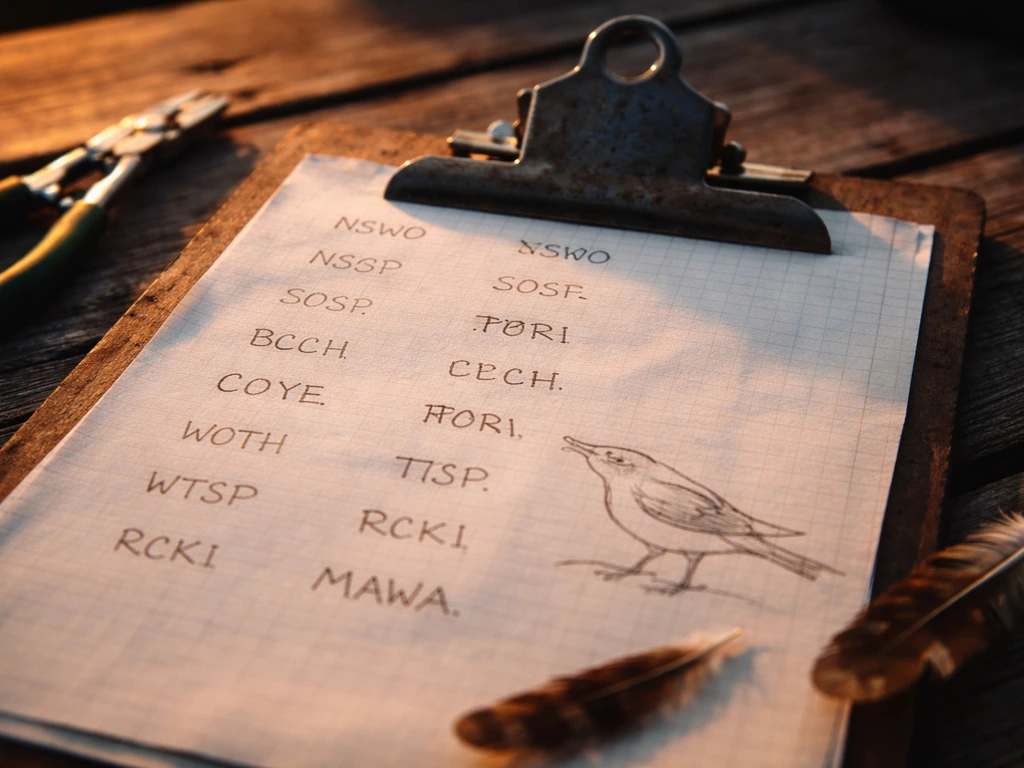
What 'bird code names' usually refers to (and how to pick the right meaning)
The dominant real-world use of "bird code names" is ornithological alpha codes, also called banding codes. These are shorthand species labels developed for use in field data, banding records, and tools like eBird. The Bird Banding Laboratory (BBL) and the Institute for Bird Populations (IBP) are the two main authorities that publish and maintain these lists for North and Central American species.
But "bird code names" genuinely does mean different things depending on where you encountered the phrase. Here are the most common contexts:
- Ornithological / banding alpha codes: four-letter or six-letter abbreviations for bird species, used in scientific fieldwork, eBird, and banding reports
- Puzzles and ciphers: bird names used as stand-ins or labels for letters, numbers, or other values in a self-contained rule set (usually explained in the puzzle itself)
- Military or ops callsigns: "bird" is used broadly in military slang to mean aircraft or helicopter, so "bird code" can refer to callsign systems (related to how "bird colonel" uses the term)
- Symbolic or idiomatic bird labels: hawks, doves, owls, and eagles used as descriptive shorthand in politics, finance, and institutional contexts
- Games and roleplay: custom naming conventions where bird names label factions, characters, or items
If you found the phrase in a birding app, field protocol document, or banding report, you're almost certainly looking at alpha codes. If you found it in a game manual, puzzle sheet, or forum post, you'll need to verify the rule set from that specific source. Everything below will help you tell them apart and decode whichever system you're facing.
How to identify the specific code-name system you're dealing with
The clearest clue is the format of the code itself. Here's what to look for:
| What you see | What it likely is | Where to verify |
|---|---|---|
| Four uppercase letters (e.g., AMRO, NOCA, BALO) | BBL/IBP ornithological alpha code | IBP birdpop.org or BBL at USGS |
| Six uppercase letters (e.g., CATUST for a scientific name) | IBP six-letter scientific-name code | IBP standardized alpha-code PDF or CSV |
| Entries like UNHA or UNRV alongside species codes | Field-protocol placeholder codes | The specific field protocol document you're using |
| Bird names written in full (Falcon, Raven, Hawk) as labels | Symbolic, cipher, or game-based system | The puzzle rules, game manual, or forum post source |
| "Hawk" and "Dove" as political or policy descriptors | Idiomatic / metaphorical usage | Political or financial news context |
Two more signals worth checking: if the document mentions "BBL" or "IBP" anywhere, or references update years (the IBP publishes annual update files from 2014 through 2025), you're looking at the standardized alpha-code system. If codes appear in a spreadsheet without any cited authority, treat it as an unknown system and verify before trusting any mapping.
How bird-code naming actually works

The four-letter (English name) rule
For most North American species, the four-letter alpha code comes from the English common name using a simple positional rule. For a two-word name, take the first two letters of each word: American Robin becomes AMRO, Northern Cardinal becomes NOCA. For a one-word name, take the first four letters: Willet becomes WILL. For a three-word name, take the first letter of each of the first two words and the first two letters of the third: Great Blue Heron becomes GBHE.
Carolina Bird Club explicitly cautions that these rules produce "collisions" where different species map to the same code, and exceptions exist throughout the list.
When a collision happens, one species typically gets a modified code and the change is documented in the official list.
The six-letter (scientific name) rule
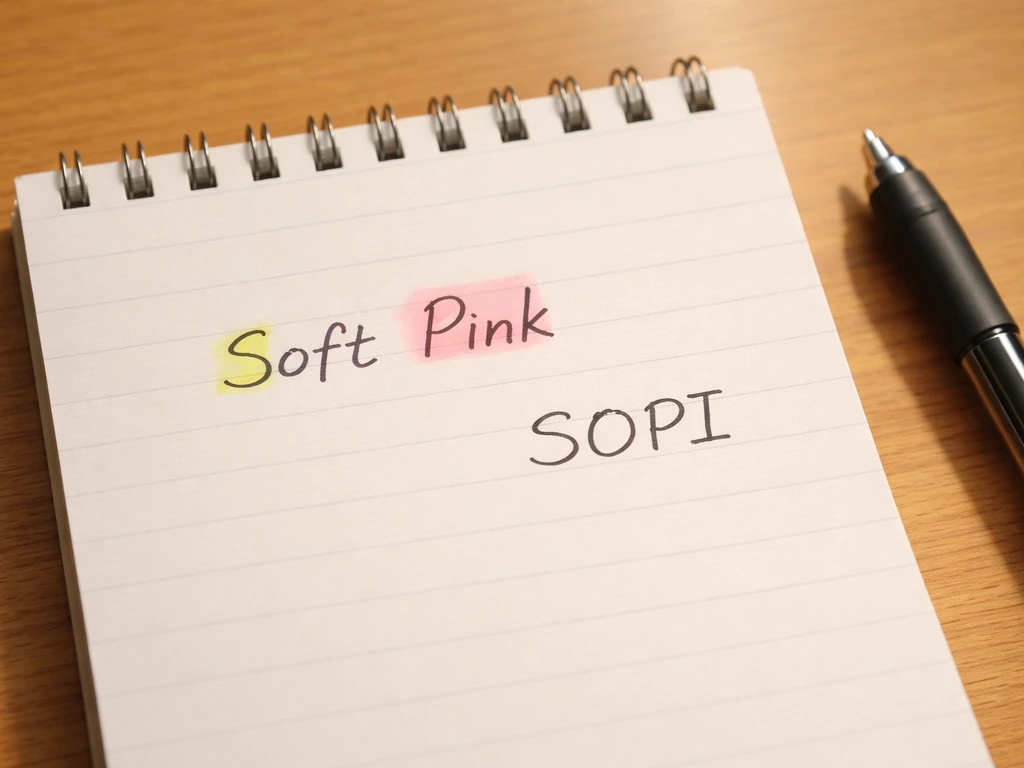
The six-letter code is built from the scientific (Latin) name rather than the English common name: take the first three letters of the genus and the first three letters of the species epithet. These codes appear alongside four-letter codes in the IBP's published PDFs and CSV files. If your source uses six-letter codes, you need the IBP scientific-name list specifically, not just the English-name list.
BBL vs IBP: why it matters for verification
The BBL (Bird Banding Laboratory, operated by USGS) and IBP (Institute for Bird Populations) both publish alpha codes, but they don't always agree. Some species carry different codes between the two authorities. Goldeneye, one of the most commonly used alpha-code lookup tools, draws from both and notes that where codes differ, it lists the IBP code first. If you're cross-checking a code and getting conflicting results, the first thing to check is which authority the original document used.
Taxonomy updates change codes over time
Bird taxonomy gets revised regularly, and when species are split, lumped, or renamed, their codes change too. IBP publishes year-specific update files (2014 through 2025 are listed on their page as of today). Goldeneye notes when it has been updated to reflect the latest taxonomy. This means a code that was valid in 2020 might map to a different species in 2025, so edition and year matter when decoding.
Common bird-symbolism meanings behind popular code-name choices
When bird names appear in non-ornithological code systems (puzzles, ops callsigns, institutional logos), the choice of bird is rarely random. Certain birds carry such consistent cultural weight that they function almost as ready-made symbols. Understanding these associations helps you interpret why a particular bird name was chosen as a label, even if the "code" is just a metaphor dressed up in naming. Bird abatement meaning refers to what “abatement” signifies in the context of reducing or preventing bird activity, rather than an ornithological alpha code. If the code is leaning on bird symbolism rather than species identifiers, bird behavior meaning can help you interpret why a particular bird label was chosen.
- Eagle: strength, alertness, and national authority. The CIA's official seal uses eagle imagery explicitly to represent strength and vigilance. Eagle appears in codes and callsigns because it carries immediate connotations of power and command.
- Owl: wisdom, observation, and sometimes a warning. In Western tradition, the owl's association with Athena made it a symbol of knowledge and careful judgment. Medieval European symbolism gave it darker connotations, so it can cut both ways in code systems.
- Hawk: aggression, assertiveness, and a bias toward action. In politics and finance, "hawk" has been used for decades to describe those who favor strong or forceful responses. An "inflation hawk" or a foreign-policy hawk means someone who pushes for decisive, often hard-line positions.
- Dove: peace, diplomacy, and de-escalation. The hawk/dove pairing is one of the most durable metaphors in political language, with dove consistently representing negotiation and peaceful resolution.
- Raven / Crow: intelligence, trickery, and sometimes ill omen, depending on the cultural tradition. These birds appear frequently in puzzle and cipher systems precisely because they carry mysterious associations.
- Falcon / Swift: speed, precision, and agility, making them natural fits for operations-style callsigns and project code names.
This symbolic layer matters because it tells you something about the intent behind a code name. A puzzle designer who labels a difficult level "Raven" is making a different statement than one who uses "Robin." If you're trying to decode a non-scientific bird code system, the symbolism is often the map.
Step-by-step: decoding a bird code name in practice

Here's a practical workflow you can follow regardless of which system you're facing.
- Identify the code format. Is it four uppercase letters? Six uppercase letters? A full bird name used as a label? This tells you whether you're dealing with alpha codes or something else.
- Check your source document. Does it cite BBL, IBP, eBird, or another specific authority? Does it mention a year or edition? If yes, go directly to that authority's official list. If no, you'll need to test hypotheses.
- Apply the formation rule to test it. For a four-letter code, try reconstructing the code from a species name using the positional rules described above. If AMRO reconstructs correctly from American Robin, you're in the right system.
- Check for collisions and exceptions. If two species could produce the same code, consult the official IBP or BBL list to see which one was given the standard code and which was modified.
- Verify the taxonomy year. Pull the IBP update file for the year your document was created and confirm the mapping hasn't changed due to a species split or rename.
- If it's not alpha codes, look for the rule set in the original source. Puzzles and games always embed their own decoding logic. If the rule isn't stated, check the forum post, game manual, or community wiki that accompanies it.
- For symbolic or idiomatic bird labels, map the bird to its most common cultural association (see the symbolism section above) and then check whether that association fits the context you're reading it in.
One practical edge case worth knowing: some field protocol documents include placeholder codes like UNHA (unknown hawk) or UNRV (unknown raptor variant) alongside standard alpha codes. These aren't part of the IBP or BBL alpha-code lists. They're protocol-specific labels. If a code you're trying to decode doesn't appear in the official lists, check whether the document you're reading has its own appendix of custom codes.
Where to find authoritative code-name lists and how to cross-check
For ornithological alpha codes, these are the primary sources you should work from, in rough order of authority: IBP provides standardized 4- and 6-letter alpha-code lists and hosts multiple downloadable formats such as PDF and CSV, including year-specific update files.
- IBP (birdpop.org): publishes the standardized 4- and 6-letter alpha-code lists in PDF and CSV formats, plus annual update files for 2014 through 2025. The CSV is especially useful for bulk cross-checking.
- USGS Bird Banding Laboratory (USGS.gov): the BBL's "Understanding BBL Codes" page explains the banding code system and links to official code documentation. Use this if your source document explicitly references BBL.
- Goldeneye alpha-code dictionary: an online lookup tool that compiles codes from both BBL and IBP. It notes where the two authorities differ and specifies that IBP codes are listed first when there's a discrepancy. Useful for quick lookups, but always confirm the edition against the IBP update year.
- eBird species profiles: the species code appears directly in the eBird species URL, making it a fast sanity check when you need to confirm that a code maps to a specific species in a modern eBird context.
- Carolina Bird Club's four-letter code reference: a community document that explains the formation rules clearly and calls out known misuses. Good for understanding why a code looks the way it does, not just what it maps to.
For non-ornithological bird code systems (games, puzzles, ciphers), there's no universal authoritative list because each system is self-contained. Your best path is always the original source document, followed by the community that produced or maintains it (a game's official wiki, a puzzle designer's notes, or the forum thread where the cipher was introduced).
Quick troubleshooting checklist when mappings don't match

- Wrong authority: check whether your document uses BBL codes and you're looking them up on an IBP list, or vice versa
- Wrong taxonomy year: a species split or rename between your document's date and the list you're using can break the mapping
- Collision case: two species produce the same four-letter code under the rules; one gets a modified code, so look for the exception in the official list
- Protocol-specific placeholder: the code may not be in any standard alpha-code list because it was invented for a specific field protocol
- Symbolic vs literal: in a non-scientific context, a "bird code" may refer to what the bird represents, not the species itself; check whether hawk means the bird or the policy stance
- Edition mismatch in games or puzzles: if the mapping looks almost right but a few codes are off, check whether there's a newer or older version of the rule set in play
Bird code names sit at an interesting intersection of practical science and cultural language. The alpha-code system is a genuine tool built for field efficiency, but birds have always carried meaning beyond their species labels. When you understand both layers, whether you're cross-checking a banding code in a CSV or figuring out why a puzzle labeled a clue "Raven," you're working with the same thing: a shorthand for something bigger that needed a name.
If your goal is to understand what a specific bird phrase like “bird colonel” is implying, the symbolism angle is the closest adjacent consideration to alpha-code lookups bird colonel meaning. The bird course meaning angle usually comes up when people use bird names in non-scientific code systems, where symbolism matters as much as the label itself.
FAQ
What should I do if a bird code name appears in my data but I cannot find it in either the IBP or BBL lists?
Treat it as a custom or protocol-specific label. First look for an appendix, legend tab, or “unknown” category in the same file. Codes like UNHA or UNRV are commonly placeholder labels, not official alpha codes, so the fix is to map using that document’s own codebook rather than forcing an IBP or BBL lookup.
How can I tell whether a code is based on the English common name rules or on the scientific-name (genus/species) rules?
Use the code length and format as your fastest discriminator: four-letter codes generally follow the English-name positional pattern, while six-letter codes are typically built from the scientific name’s genus and species epithet. If your source provides the scientific names alongside codes, you can verify quickly by checking whether the first three letters match the genus and the next three match the species epithet.
Why might the same four-letter code refer to different species when I look it up in two different tools?
Collisions and authority differences both cause mismatches. Two species can share the same derived four-letter label, and different authorities (IBP vs BBL) can assign different codes for the same species. Resolve this by checking which authority the tool prioritizes and whether the tool documents collision-resolution rules.
If I’m decoding codes from 2020 but the list I’m using is newer, how do I avoid year-mapping mistakes?
Make sure you use the list edition that matches the data collection year, not just the newest published lookup. IBP publishes year-specific update files, so a split or rename can shift which species owns a particular alpha code. If your dataset includes a “year” or “banding season,” use that value to select the correct mapping version.
What’s the best way to confirm a decoded bird code when I have access to additional columns like location or date?
Cross-validate with plausibility filters. If the code maps to a species outside the expected geographic range for the site and season, it is likely wrong (or based on a different authority or year). Many field tables include banding station, region, or date, which can confirm whether your code assignment makes biological sense.
Are collision cases always handled with an obvious modified code, or do I need to account for ambiguity?
Do not assume every collision is disambiguated within the code text. Some protocols handle collisions by relying on additional context columns (like species group, subspecies fields, or separate “notes” columns). If a collision is known for your region or dataset, look for supplemental fields before concluding the mapping is incorrect.
How do I interpret a bird name that’s used as a label in a puzzle or ops-style system, not an alpha code?
Assume symbolism drives the choice, not taxonomic identity. Compare the bird label to the puzzle mechanics (difficulty level, role, or narrative function) and see whether other labels follow a consistent theme. If the puzzle community has a glossary for clue meanings, that glossary usually outperforms any alpha-code search.
If a source mixes bird alpha codes with nonstandard labels, how should I decode safely?
Segment the dataset first. Decode only entries that clearly match the expected code patterns and citeable authority context, then leave unknown tokens for a second pass using the source’s legend or custom code appendix. This prevents one stray placeholder code from contaminating your entire mapping workflow.
Next Article
Bird Abatement Meaning: What It Is and How to Use It
Bird abatement meaning and practical steps to prevent droppings, nesting, noise, and safety hazards with safe methods.