"Bird before land" is not a traditional English idiom you'll find in a dictionary. It's a shorthand phrase that grew out of Florence Scovel Shinn's 1925 book The Game of Life and How to Play It, where she used the image of Columbus spotting birds and twigs before reaching America as a metaphor for recognizing early signs that something you're hoping for is getting closer. In plain terms: the bird is the small signal, the land is the outcome. You see the bird first, and that tells you the land is near.
Bird Before Land Meaning: Symbolic and Everyday Use

Marcus Holloway
16 Jun 2026

Is "bird before land" an idiom or a misquote?
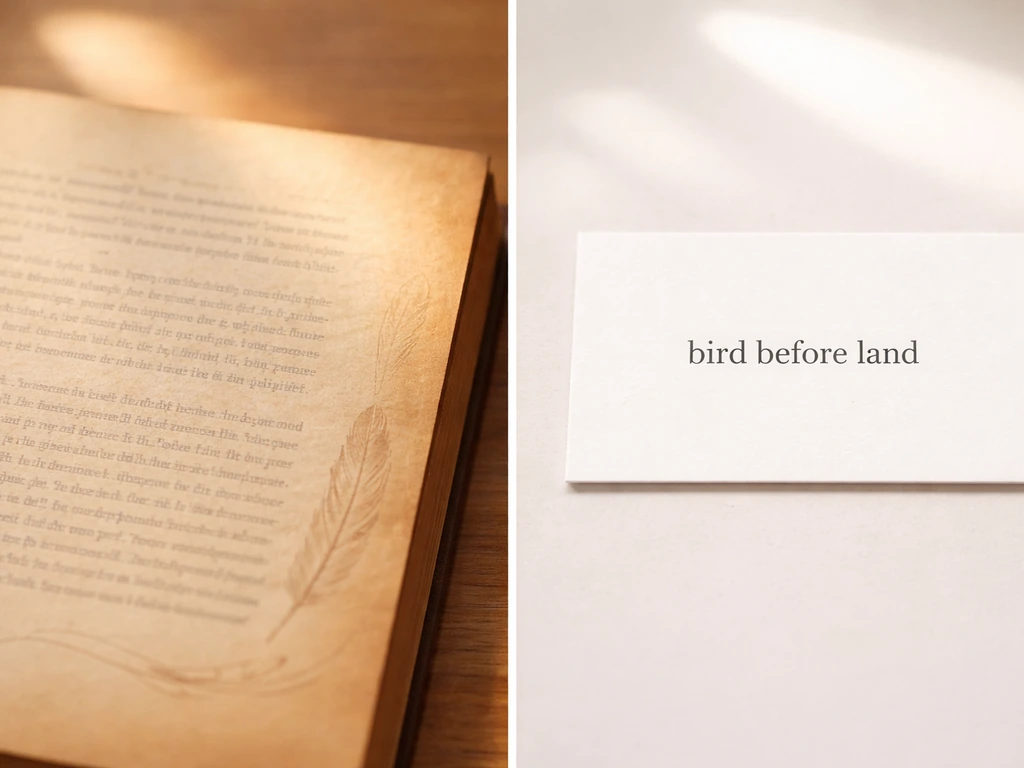
It's neither a classic idiom nor exactly a misquote. It's a condensed version of a longer analogy. Shinn's original passage reads: "Before Columbus reached America, he saw birds and twigs which showed him land was near." She later says to treat a small physical sign as "birds and seaweed" rather than the destination itself. Nobody in 1925 was saying "bird before land" as a set phrase. That three-word version is a modern shorthand, popularized mainly through manifestation communities online, and it caught on because it's compact and memorable.
So if you saw it in a social media post or a blog and wondered whether you were missing a well-known saying, you weren't. The phrase didn't originate in folk tradition or literature the way something like "a bird in the hand" did. It evolved from a specific spiritual self-help book and then got trimmed down through repeated use. That's important to know, because it shapes how you interpret it.
What it actually means in plain language
At its core, "bird before land" means: pay attention to early indicators rather than waiting for the final proof. The nautical logic is real and practical. Sailors in the age of exploration knew that seabirds tend to stay closer to land than to open ocean, so spotting one meant land was within range even if you couldn't see it yet. The U.S. Army Survival Manual actually includes this same principle: more birds are found near land than over open sea, and lookouts were trained to watch for them as early signals of approach.
In everyday use, the phrase functions as a reminder not to dismiss small signs just because the big outcome hasn't arrived. You might apply it to a job application (an encouraging email from a recruiter is the bird, the job offer is the land), a relationship, a business decision, or any situation where you're waiting and tempted to give up too early because the final result isn't visible yet.
The symbolic and spiritual angle: birds as timing messengers
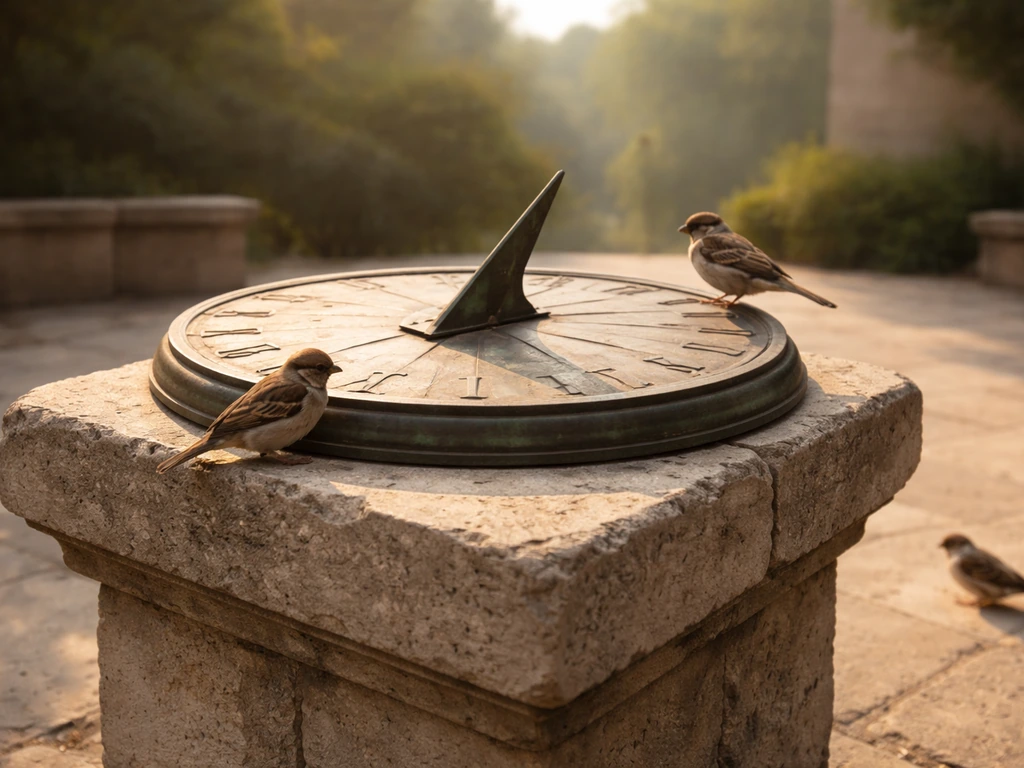
Reading birds as early messages or omens goes back a long way. The Romans formalized it under a practice called augury, which involved trained priests called augurs who observed bird behavior, specifically their flight patterns, direction, and cries, to determine whether the gods approved of a proposed action. The broader term for this is ornithomancy, divination through bird observation, and it was widespread across many cultures, not just Rome. The Environmental Literacy Council explains that birds sit on eggs as part of incubation and temperature regulation, not because the eggs predict an omen Why do birds sit on eggs?.
In many Native American traditions, birds carry messenger roles between the human world and the spiritual. The bald eagle, for instance, is regarded in some communities as a literal messenger to the Creator, and eagle feathers are bestowed at ceremonies for that reason. Across dozens of tribal nations documented by folklorists, birds appear as narrative figures who carry information, warnings, or guidance, often arriving before a major change occurs.
The spiritual reading of "bird before land" fits neatly into this longer tradition. A related question some people ask is what a bird lands on a car is meant to signal fits neatly into this longer tradition. If you encounter a bird in an unusual way and feel it carries significance, the framework says: this isn't the outcome itself, it's a signal that the outcome is approaching. That's the key interpretive point. The bird doesn't equal the destination. It indicates proximity to it.
How context changes the interpretation
A real-world bird encounter
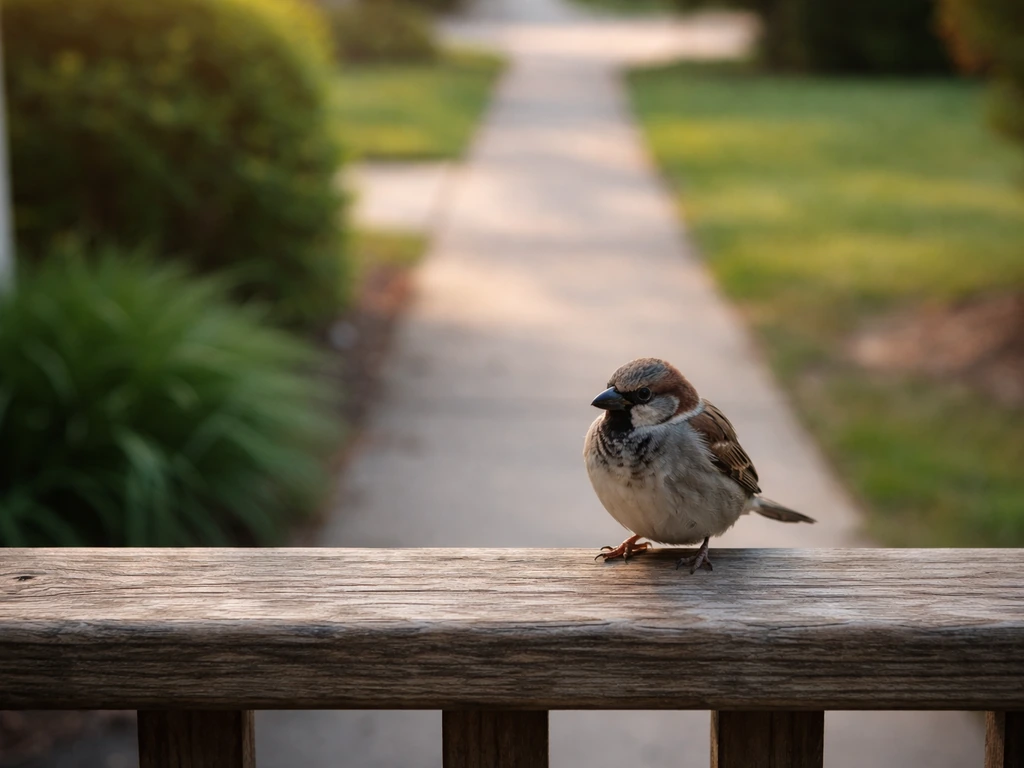
If a bird lands near you, follows you, or shows up in a notable way, some people interpret that as a message or omen. If you’re wondering about the bird landing on you meaning, this same idea points to it as an early sign rather than the final event itself. Whether you take a spiritual approach or not, the practical version of "bird before land" suggests treating it as a prompt to reflect: what are you waiting on right now, and is there a small sign you've been ignoring? A bird sitting on eggs is called a brooding hen, and it ties into the idea of waiting for something to hatch. The species matters too if you're going the symbolic route. A dove carries different traditional associations than a crow or a hawk. Thayer Birding notes that different species can carry different symbolic readings, for example interpreting a dove as expecting joyful news and good luck a dove's symbolic meaning (joyful news and good luck). The behavior matters as well: a bird calmly sitting near you reads differently than one hitting your window.
A dream involving birds
Bird dreams are generally read as positive in most dream interpretation frameworks, with themes of freedom, transition, and spiritual movement. But the meaning shifts depending on the bird, its behavior, and how you felt during the dream. A bird flying freely overhead reads differently from one trapped in a cage. If your dream featured a bird appearing just before something significant happened in the dream narrative, the "bird before land" frame is a natural fit: the bird was the signal, and the land was the shift that followed.
A quote or social media post
If you found the phrase in a quote someone posted or a caption under a photo, it's almost certainly being used in the Shinn-derived manifestation sense: small signs that something you've been hoping for is close. Reddit threads in manifestation communities use it regularly this way, with people sharing experiences they're labeling as "birds before land" moments, small coincidences or encouraging signals that make them feel their goal is approaching.
How to apply this without overthinking it
The biggest trap with any omen-based framework is becoming so focused on labeling every bird sighting that you stop actually doing anything. Reddit users in manifestation communities have explicitly noted this: over-focusing on whether something counts as a "bird before land" sign can become its own form of stalling. Here's a more grounded approach:
- Notice the sign without immediately labeling it. Write down what happened, when, and what you were thinking about at the time.
- Ask what "land" represents for you right now. If you can't name a specific hoped-for outcome, the sign has nothing to point toward.
- Identify one concrete action you can take in the direction of that outcome. The bird is meant to encourage movement, not replace it.
- Set a review point. If the signal was encouraging, check in with yourself in two to four weeks about whether things have shifted.
- Don't force signs. If you have to stretch to make something count as a bird before land moment, it probably isn't one.
Journaling prompts that can help: What outcome am I waiting on right now? What small, easy-to-dismiss signals have shown up recently? Am I treating a preliminary sign as the final proof, or dismissing a real signal because it isn't the big arrival yet?
Common mix-ups with other bird phrases
Because bird-related expressions are common in English, it's easy to conflate different phrases that have nothing to do with each other. Here's how "bird before land" differs from some others you might encounter on this site:
| Phrase | What it actually means | Relation to "bird before land" |
|---|---|---|
| A bird in the hand | Value what you already have over uncertain future gains | Opposite framing: "bird before land" is about anticipating future arrival, not protecting current possession |
| Bird in the bush | Something possible but not yet secured | Closer in theme (future uncertainty) but focused on risk, not on reading signs of approach |
| Bird-dog (verb) | To closely watch or seek out something | Completely unrelated; it's a hunting/surveillance idiom with no omen or timing meaning |
| Bird law | Legal frameworks protecting migratory birds (e.g., Migratory Bird Treaty Act) | No connection; a regulatory term, not a symbolic one |
| Bird-brained | Describes someone as scatterbrained or foolish | No connection to signs or omens |
The phrase that comes closest thematically is "a bird in the bush," which also uses a bird as a metaphor for something not yet in hand. But where that idiom counsels caution about chasing uncertain things, "bird before land" is encouraging: it says the uncertain thing is actually close, you just can't see it yet. They pull in opposite emotional directions.
What to do when you can't confirm the original wording
If you heard or read something that sounded like "bird before land" but you're not sure of the exact phrasing, here's how to track it down and make sense of it:
- Search the exact phrase in quotes. If you're not getting clear results with "bird before land," try "birds before land" (plural) or "birds and twigs" alongside Shinn's name. The plural version is more common in the original source material.
- Check the context of where you saw it. Was it a manifestation blog, a spiritual quote account, a dream forum, or something else? Each community uses the phrase with slight variations in emphasis.
- Ask for the full quote if someone sent it to you. Three words stripped from a longer passage can shift meaning significantly. The full Shinn analogy makes the Columbus framing explicit, which clarifies everything.
- If it came from a dream, focus on the emotion and sequence rather than trying to match exact wording to a phrase. What was the bird doing, and what happened after? That narrative logic matters more than the label.
- If it was a real bird encounter you're trying to interpret, note the species if you identified it. Spiritual and folklore interpretations of bird sightings are often species-specific, and a general "bird" meaning can point you in a different direction than a specific one would.
One thing worth knowing: because this phrase doesn't have a single canonical source the way a biblical verse or a Shakespeare line would, there's no definitive authority on what it "must" mean. The Shinn origin is the clearest thread, and it's a useful one. But how you apply it depends entirely on your own situation and what resonates as a real signal versus wishful pattern-matching. That judgment call is yours to make, and it's better made with a clear head than an anxious one.
FAQ
Is “bird before land” an actual English idiom I should look up in a dictionary?
It is meant to be a sign of closeness, not a guarantee. If you treat it as proof that an outcome is inevitable, you can stop taking practical steps. Use it as a prompt to continue your plan (follow up on the job, keep the conversation going, or run the next test), then reassess once you have concrete evidence.
What if I just saw a bird, does it automatically count as a “bird before land” sign?
No. If the bird sighting is random, unrelated, or you cannot connect it to the specific situation you are waiting on, applying the phrase usually turns into wishful pattern matching. A good rule is to only treat it as relevant if it coincides with a real, nearby action you can take right now.
How can I avoid over-interpreting every bird sighting?
Keep it specific and time-bound. Try writing, “I am waiting on X, the bird sign I noticed was Y, and I will take step Z within 7 days.” If nothing changes and you still cannot name a reasonable action, treat the sign as a coincidence and move on.
What counts as the “land” in real-life situations, the final result or intermediate steps?
In the practical metaphor, “land” is the outcome, but it can include multiple milestones. For example, a recruiter’s email might be the bird, the interview invite is an intermediate “twig,” and the offer is the land. Breaking it into stages helps you calibrate hope with what you can verify.
Does the bird species or behavior change the meaning of “bird before land”?
Species and behavior can shape the symbolic reading (for instance, calm versus aggressive behavior), but they are secondary to context. If you feel anxious after the sighting, that emotional signal matters too, it may mean you need grounding rather than prediction.
How should I use “bird before land” if I already have strong evidence something is coming?
If you already have evidence, let that drive your decisions. The phrase works best when you have partial signals and limited visibility. In other words, don’t replace facts with symbolism, use symbolism to notice where you might be able to influence timing or preparation.
Can the “bird before land” idea help with manifestation without turning into procrastination?
You can, especially if it helps you stay patient and consistent. But for many people the healthiest use is operational: “I noticed a small encouragement, so I will do the next small task.” If it makes you delay action, that is a sign to switch to the grounded version.
How do I interpret “bird before land” in a dream scenario?
Yes. If you dream of a bird, pay attention to how you felt (relief, fear, excitement) and what happened immediately before or after the bird appeared. That sequence often maps cleanly to “signal first, shift next,” rather than treating the dream as a one-to-one prediction.
What’s a practical way to apply the “bird before land” meaning this week?
Try asking, “What outcome am I waiting on, what early indicator have I received, and what would count as proof next week?” Then choose one concrete step that creates progress. This keeps the metaphor supportive while still measuring reality.
Next Article
Bird in the Bush Meaning: Definition, Origin, Examples
Meaning of bird in the bush: concealed truth or unknown info, plus origin, examples, and how to use it correctly.