When someone says 'bird in the bush,' they're almost certainly using a shorthand version of the proverb 'a bird in the hand is worth two in the bush. Oxford Learner’s Dictionaries includes this proverb reference inside its bird entry, reinforcing that the meaning comes from the proverb as a whole blank" rel="noopener noreferrer">a bird in the hand is worth two in the bush. ' The phrase means that something you already have is more valuable than something uncertain or not yet obtained, even if that uncertain thing seems like a better deal. The 'bird in the bush' is the risky, unproven option. The 'bird in the hand' is the sure thing. That's the core of it.
Bird in the Bush Meaning: Definition, Origin, Examples

Marcus Holloway
4 Jun 2026
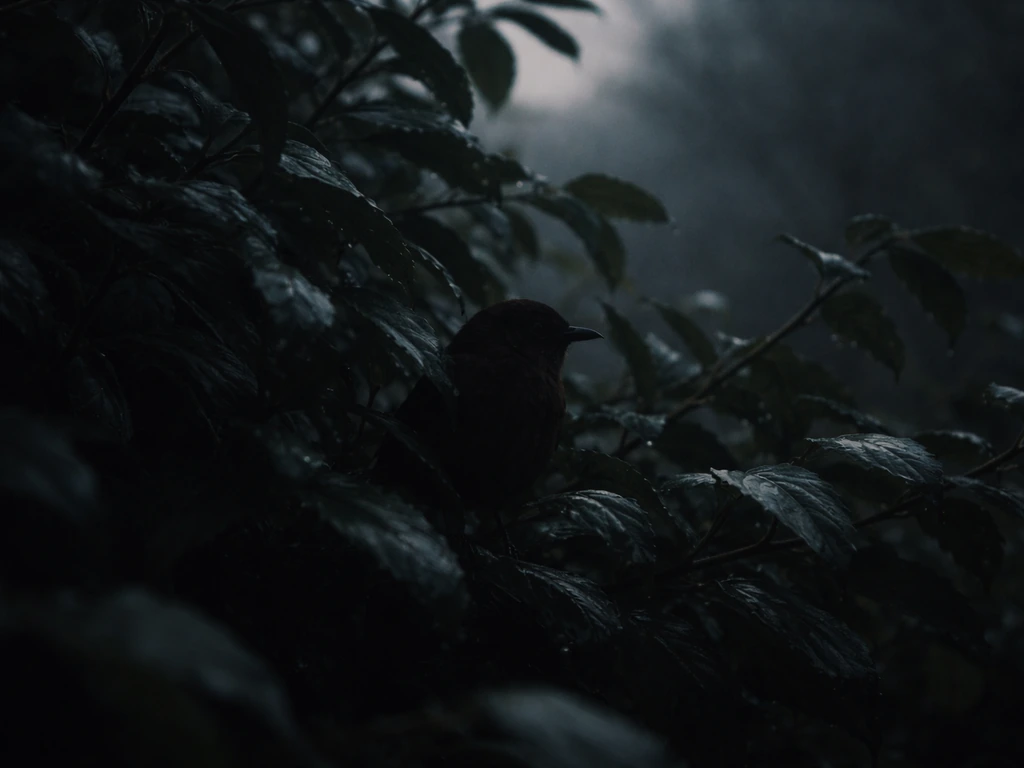
Quick definition: what 'bird in the bush' actually means
The phrase 'bird in the bush' refers to something speculative, unrealized, or not yet secured. It describes an opportunity or reward that exists only as a possibility, not a certainty. On its own, the phrase is the second half of a famous proverb, and it carries the sense of risk, uncertainty, and potential loss. You can think of it as the idiom's shorthand for: 'that tempting thing you don't actually have yet.'
Merriam-Webster treats 'bird-in-the-bush' as a fixed idiomatic chunk tied to the proverb, not as a phrase about literal birds or nature. Cambridge and Oxford both list the full proverb ('a bird in the hand is worth two in the bush') as the standard form, which confirms that 'bird in the bush' only really makes sense in context when the full proverb is implied or being echoed.
The figurative meaning in a real sentence
When writers or speakers drop the full proverb and just say 'bird in the bush,' they're usually making a compressed reference to the same idea. The figurative meaning is: something uncertain, promising but unproven, or not yet yours. Here's how it typically lands in a sentence:
- "Don't give up your steady job for a bird in the bush" — meaning don't gamble a sure thing for an unproven opportunity.
- "That investment is just a bird in the bush right now" — meaning the payoff is speculative, not guaranteed.
- "She chose the bird in the bush and regretted it" — meaning she took the risky option over the reliable one.
The emotional weight of the phrase leans negative, or at least cautionary. It implies a warning against chasing something uncertain when you already have something solid. That said, some writers use it neutrally or even positively to describe bold, optimistic choices. Context is everything, which is why you need to check what's around the phrase before locking in an interpretation.
Where the phrase comes from, and why it uses a bird
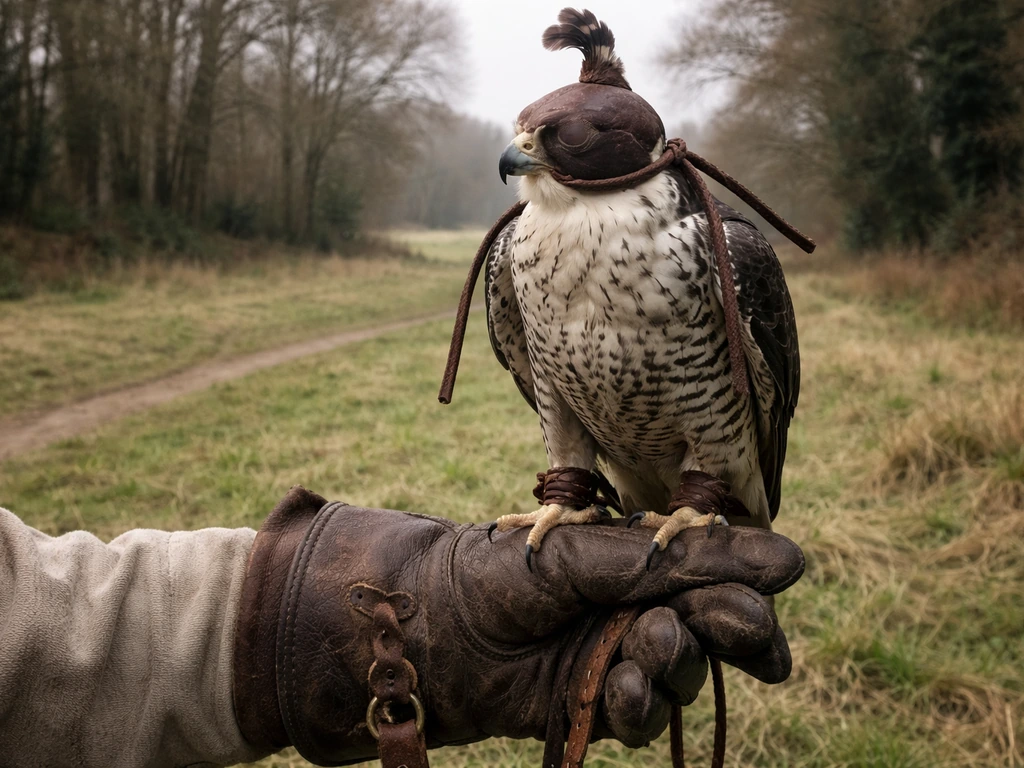
The proverb traces back to medieval falconry and hunting culture. In that era, a bird that was caught and held in the hand was literally valuable, it could be trained, sold, eaten, or used for sport. A bird still in the bush was just a possibility. You might flush it out and catch it, or you might spook it and end up with nothing. The concrete, physical reality of falconry gave the proverb its staying power: the imagery was immediately relatable to anyone who worked with birds or hunted.
The earliest written versions of the proverb in English appear in texts from the 13th and 14th centuries, and similar expressions existed in Ancient Greek and Latin literature well before that. The proverb was so widely shared across cultures precisely because birds were a common source of food and livelihood, making the 'held versus not held' contrast universally understood.
Birds occupy this recurring role in language and folklore because they combine accessibility with unpredictability. They appear close to human life (in gardens, fields, and markets) but can vanish instantly. That quality, being present but potentially gone at any moment, is exactly why 'bird in the bush' captures the feeling of an opportunity that might slip away.
How to tell which meaning applies: a quick context check
If you saw 'bird in the bush' in a sentence and aren't sure what it means in that specific context, run through these questions:
- Is there a contrast being made? If the sentence is comparing two options, one secure and one speculative, you're looking at the proverb meaning.
- Is there a warning or a choice involved? Phrases like 'don't risk it,' 'settle for what you have,' or 'take the sure thing' nearby all confirm the idiomatic meaning.
- Is the writer talking about actual birds or wildlife? If the surrounding text is about nature, birdwatching, or animal behavior, 'in the bush' might be literal. But check for quotation marks or a figurative tone first.
- Is it part of a longer proverb form? If you see 'a bird in the hand' anywhere nearby, the phrase is definitely the proverb.
- Is it capitalized or in quotation marks? That's often a signal that the writer knows they're using a set phrase, not literal language.
Oxford Learner's Dictionaries makes a useful distinction here: 'in the bushes' (plural, lowercase, no article) tends to appear in literal descriptions of physical space, like 'she was hiding in the bushes.' But 'in the bush' in a proverb or idiom context is a fixed expression with no literal bird involved. If your sentence uses the singular 'the bush,' it's almost certainly the proverb.
Common mix-ups with similar bird idioms
Several bird idioms get tangled up with 'bird in the bush,' and it's worth knowing the difference between them.
| Idiom | Core meaning | How it differs from 'bird in the bush' |
|---|---|---|
| A bird in the hand (is worth two in the bush) | Certainty beats speculation | This is the full proverb; 'bird in the bush' is just the risky half of it |
| Kill two birds with one stone | Accomplish two things at once | Efficiency idiom, not about risk or choice between options |
| The early bird catches the worm | Acting early leads to reward | About timing and initiative, not certainty versus uncertainty |
| Birds of a feather flock together | Similar people associate with each other | About social groups, completely unrelated to risk or opportunity |
| A little bird told me | Heard something from an unnamed source | About secrecy and gossip, not opportunity or value judgments |
The most common confusion is treating 'bird in the bush' as a standalone phrase with its own independent meaning, when it's really only half of the original proverb. If you see it used without the 'bird in the hand' counterpart nearby, the writer is assuming you'll supply the other half yourself. That's a safe assumption in most English-speaking contexts, but it can trip up readers who are less familiar with the full form.
How bird symbolism connects to this phrase
Birds have carried symbolic weight across almost every culture, and that symbolic resonance is part of why bird idioms stick so well in language. In many traditions, birds represent freedom, opportunity, and the soul's movement between known and unknown realms. A bird that is free (in the bush, not held) often symbolizes potential, but also elusiveness. A bird held in the hand represents possession, control, and safety, but also constraint.
That tension between freedom and security maps directly onto the proverb's message. You could read 'a bird in the hand' as a spiritual metaphor for what we've already accepted or internalized, and 'a bird in the bush' as the restless, ungrounded longing for something more. Folklore from European and Asian traditions frequently uses birds as symbols of the soul precisely because birds can be present one moment and gone the next, which is the same existential uncertainty the proverb is really warning about.
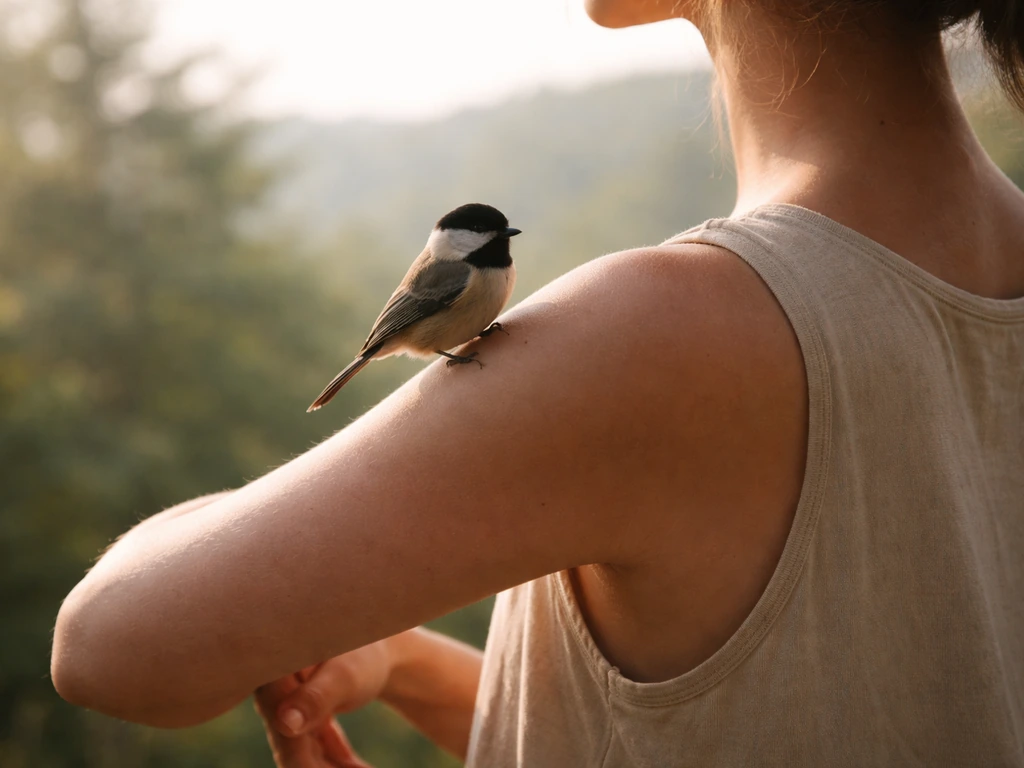
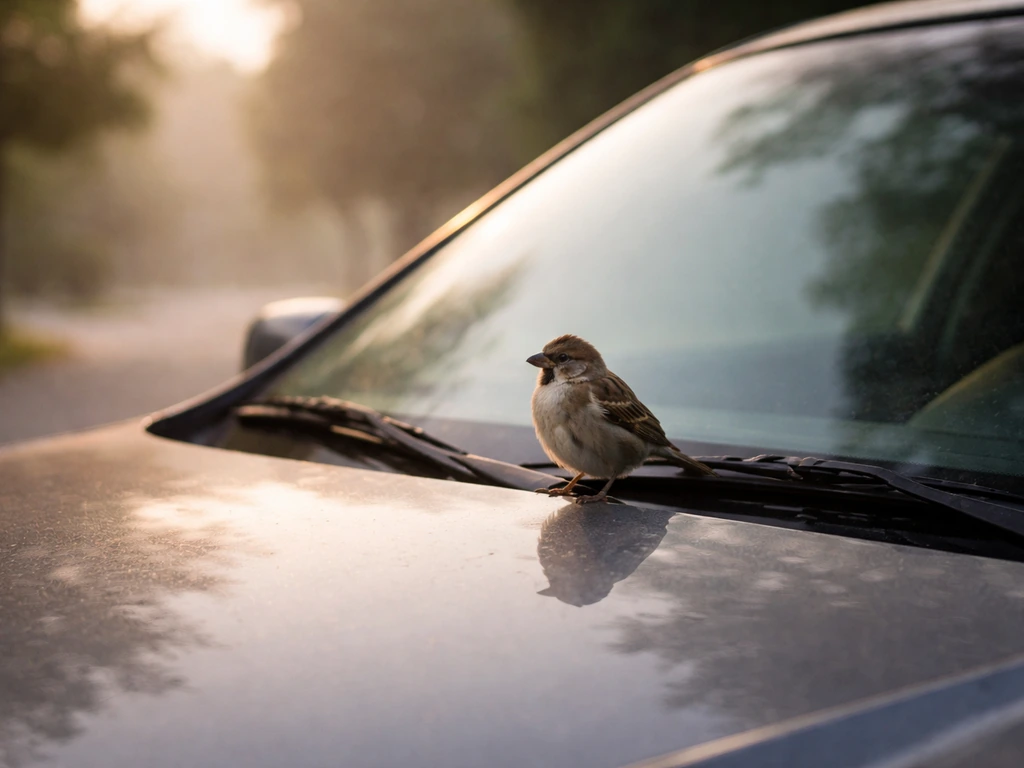
It's worth noting that the symbolism here is more cultural than strictly spiritual. You don't need a mystical reading to appreciate why the proverb chose birds over, say, fish or rabbits. Birds were common, visible, and could escape instantly. That practical reality became metaphor, and the metaphor became symbol. If you're interested in how bird encounters carry meaning in other contexts, the interpretation of a bird landing on you or a bird sitting in an unusual place follows a similar logic: birds symbolize the fleeting and the transitional, which gives them outsized meaning in language and culture. A bird landing on a car can be read as a similar kind of fleeting omen in everyday folklore, even though the most common meaning is still symbolic rather than literal a bird landing on you.
Usage examples and how to rewrite it if you're unsure
Here are the phrase in action, along with plain-English rewrites you can use if you want to avoid ambiguity or just express the same idea more directly.
| Original phrasing | What it means | Plain-English rewrite |
|---|---|---|
| "Don't chase a bird in the bush when you've got a good offer on the table." | Don't risk a sure thing for something speculative. | "Don't give up a solid offer chasing a better one that might not come through." |
| "The promotion felt like a bird in the bush." | The promotion seemed possible but wasn't certain. | "The promotion was a possibility, not a guarantee." |
| "He learned the hard way that a bird in the bush isn't worth much." | He found out that speculative opportunities often don't pay off. | "He discovered that chasing uncertain rewards usually backfires." |
| "She had a bird in the hand, but wanted the bird in the bush." | She had something secure but wanted something better and riskier. | "She had a safe option but gambled on a more appealing, uncertain one." |
If you're writing and want to use the proverb but worry it sounds clichéd, you can invoke just the 'bird in the bush' half as a quick shorthand, as long as your reader will recognize the reference. In formal writing or cross-cultural contexts, it's better to spell out the full proverb or paraphrase it plainly. The plain-English versions above work in any context without the risk of being misread.
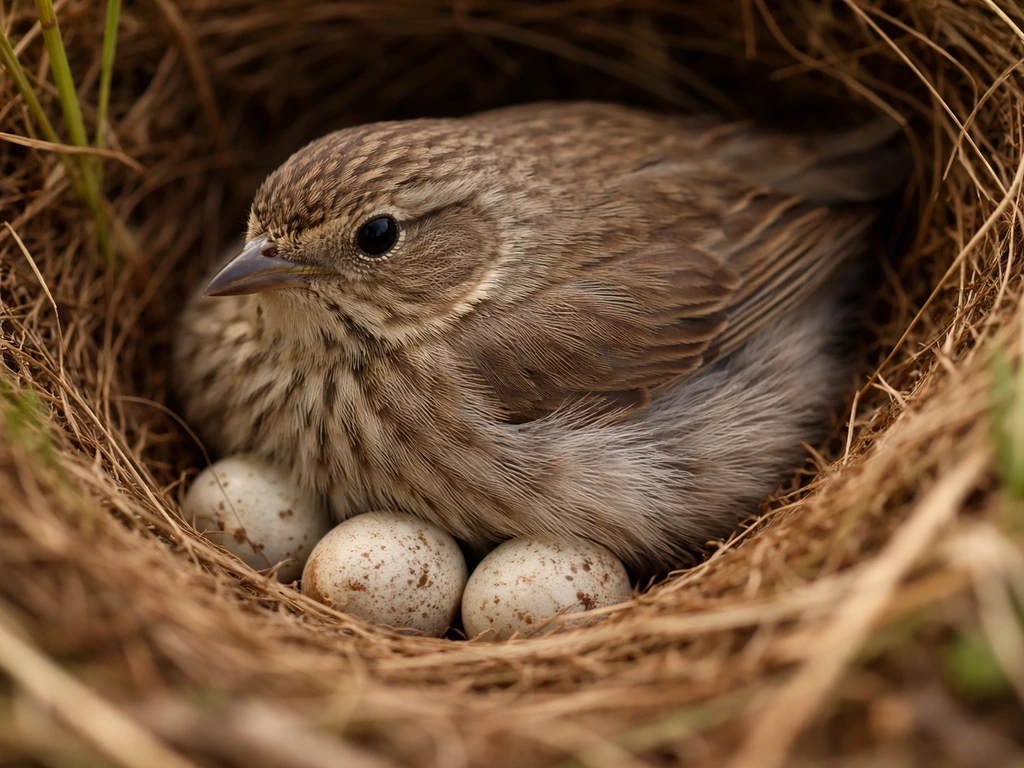
The bottom line: if you see 'bird in the bush' in something you're reading, it almost always means 'an uncertain, speculative, or not-yet-secured opportunity.' If you're writing and want to express that idea, the full proverb gives you the most clarity, but the shorthand works fine for audiences who know their English idioms. Either way, there's no actual bird involved. A bird sitting on eggs is commonly called a brooding bird.
FAQ
Is “bird in the bush” ever used literally, like an actual bird hiding in nature?
Rarely in standard idiom use. When the phrase appears as “bird in the bush” with the singular “the bush,” it almost always echoes the proverb. If the writer means a real location, you’ll usually see “in the bushes” (plural) or clear literal details.
What should I assume if I see “bird in the bush” without “bird in the hand” nearby?
Treat it as compressed shorthand. The writer is usually relying on you to infer the full comparison (certainty versus risk). If the surrounding sentence does not clearly contrast “already have” with “still uncertain,” the meaning can shift or become ambiguous.
Does the phrase always have a negative tone, or can it be positive?
It often sounds cautionary because it warns against chasing the uncertain. However, some speakers use it to describe bold risk-taking or optimistic bets. To decide, check whether the next phrase advises restraint or celebrates the gamble.
Is “bird in the bush” appropriate in formal writing, or should I avoid it?
In formal or cross-cultural settings, the safest option is to use the full proverb or a neutral paraphrase. The shorthand can be misunderstood by readers who know the literal “bird” meaning but not the idiom’s origin.
What’s the best plain-English substitute for “bird in the bush meaning” in a sentence?
Use something like “a tempting opportunity you do not have yet,” or “a sure thing beats a speculative option.” This keeps the meaning even if the reader does not recognize the proverb.
How do I distinguish it from similar bird phrases I might confuse it with?
Watch the specific structure and article use. “In the bushes” commonly means literal hiding space, while “in the bush” (singular) typically signals the proverb. Also, “bird in the hand” is the other half of the same comparison, so if you see “in the hand,” the meaning is almost certainly the full idea.
Can “bird in the bush” be used for money or career decisions, like job offers and investments?
Yes, it’s commonly used for financial or career tradeoffs: choosing a reliable option now versus an unverified one later (for example, a tentative job offer or an investment with uncertain returns). If the “sure thing” is not clearly defined in the sentence, consider specifying it to avoid confusion.
Is it correct to say “a bird in the bush” or “the bird in the bush”?
Both can appear, but “a bird in the bush” more closely matches the original proverb’s logic as part of a comparison. If you use “the bird in the bush” in isolation, readers may still infer the idiom, but clarity improves if you also mention “a sure thing” or “something you already have.”
What common mistake should I avoid when using the phrase?
Avoid treating it as a standalone reference to any bird-related idea. The idiom is about certainty versus uncertainty, so include context that signals you are discussing an opportunity or reward that is not yet secured.