
A bird trill means a rapid series of repeated high notes, and what it signals behaviorally depends almost entirely on which bird is making it and what that bird is doing at the time. It can be a territorial song, a mating display, a contact call between mates, or a nest-defense alarm. Getting the meaning right requires three things: identifying the sound type, narrowing down the species, and reading the context around it. Xeno-canto is an open repository of annotated bird sound recordings, which you can use to compare trill-type vocalizations across species.
Bird Trill Meaning: What It Signals in Nature and Spirit

Marcus Holloway
7 Jun 2026
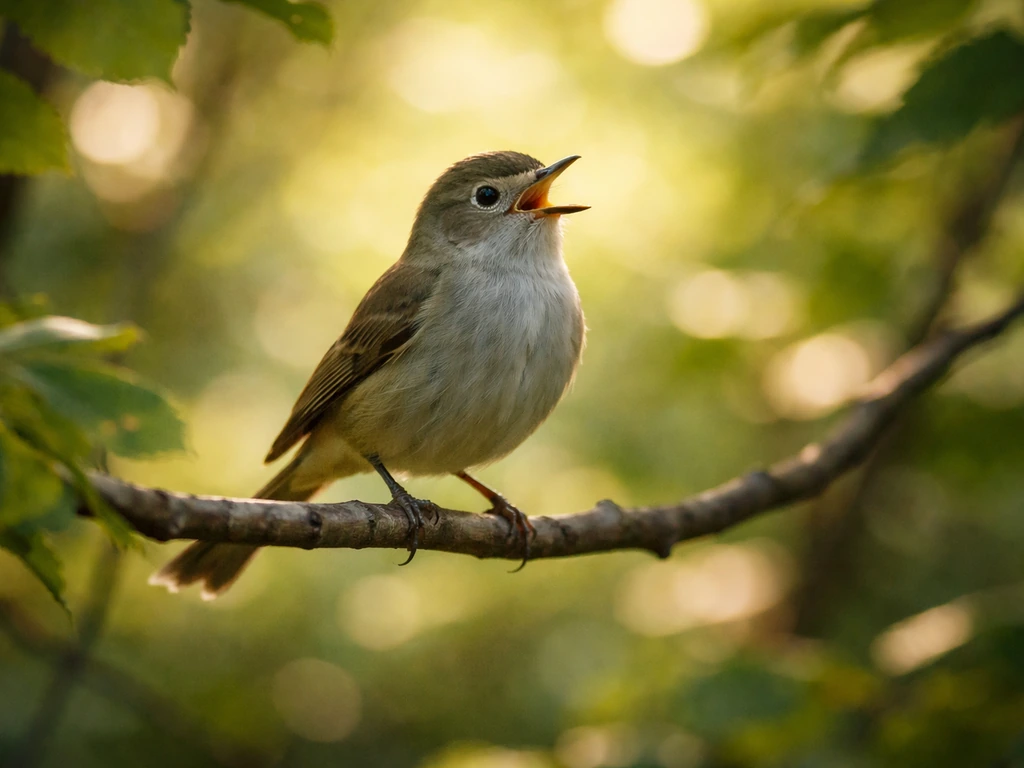
What a bird trill actually is in bird language
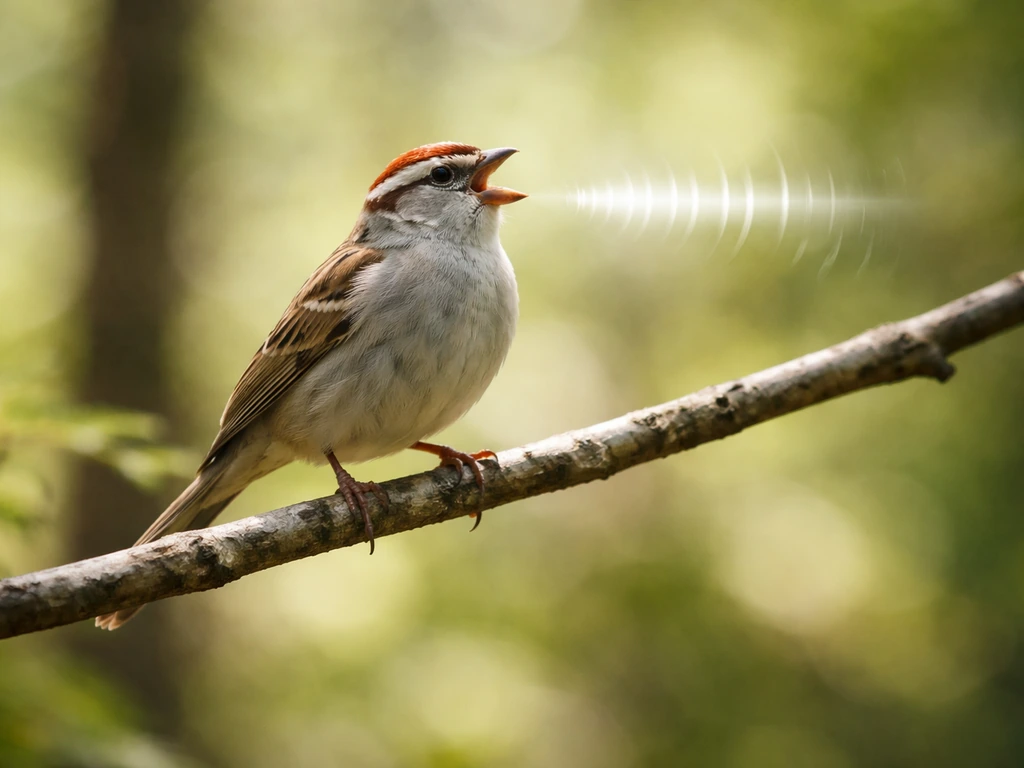
A trill is a specific kind of bird vocalization: a string of very quickly repeated notes delivered in rapid succession, usually at a high pitch. Both the Cambridge Dictionary and Merriam-Webster pin it as "a series of quickly repeated high notes sung by a bird," which is a useful anchor. In practice, ornithologists describe trills alongside rolls and rattles as closely related sound categories, all involving rapid note repetition. What separates a trill from a chirp or a whistle is the speed and repetition. A chirp is typically a single short note or a small cluster. A whistle is a sustained tone. A trill is a machine-gun burst of very short notes strung together so quickly they blur into a buzzing or rolling quality.
Bird language researchers and field guides treat a trill as a sound quality marker, something you use to narrow down identity before you even know what species you're listening to. Cornell Lab's All About Birds explicitly lists "clear trill" as a distinct sound category, separate from harsh, scratchy, or flutelike sounds. Recognizing that you're hearing a trill rather than a warble or a rattle is actually the first useful step toward correct interpretation.
It's worth separating "song" trills from "call" trills, because they mean different things. Songs tend to be longer, more structured vocalizations broadcast from an exposed perch, usually associated with territory or mating. Calls are shorter, more variable, and serve more immediate functions like keeping in contact or sounding an alarm. A trill can appear in either. The Wood Thrush, for example, ends its famous flute-like song with a complex trilling phrase, which is part of its territorial and mate-attraction broadcast. A Killdeer, on the other hand, uses a trilling vocalization as part of its nest-defense behavior, often combined with its broken-wing distraction display to lure intruders away from eggs.
Bird trill meaning: the most common interpretations
There is no single universal meaning for a bird trill. What trilling signals depends on function, and Audubon's guidance is clear on this: evaluate the context and purpose rather than assuming one fixed meaning. That said, the most common behavioral functions that produce trilling sounds fall into a few consistent categories.
- Territorial advertisement: Many songbirds broadcast trilled songs from perches to declare ownership of an area to rivals. The Chipping Sparrow's song, for instance, is a long dry trill that functions almost entirely as a territory marker.
- Mating and courtship: Trilling during breeding season is often connected to mate attraction. The Grasshopper Sparrow's primary song ends in a long high-pitched trill, and both males and females use a descending trill to announce their presence to each other near the nest.
- Contact calls: Shorter trills between paired birds can function as "I'm here" signals, keeping mates or family groups coordinated without the full broadcast of a song.
- Alarm and nest defense: Some species trill as a warning or distraction when something approaches a nest. The Killdeer is a good example here, trilling to announce disturbance before launching into its distraction display.
- Excitement or agitation: In some species, a rapid trill accompanies heightened arousal, whether positive (dawn song chorus) or defensive (rival intrusion).
On the symbolic and spiritual side, which is a real part of how people interpret bird sounds, a trill is often read as a sign of vitality, joy, or communication from the natural world. In folklore and spiritual traditions, the sustained, melodic quality of a trill has led people to associate it with messages of harmony or presence, as if the bird is trying to get your attention in the most musical way possible. That interpretive layer is worth noting, but it shouldn't substitute for the behavioral reading. The best approach is to identify what the bird is actually doing first, and then layer in any cultural or personal meaning from there.
Species matters: matching the trill to the right bird
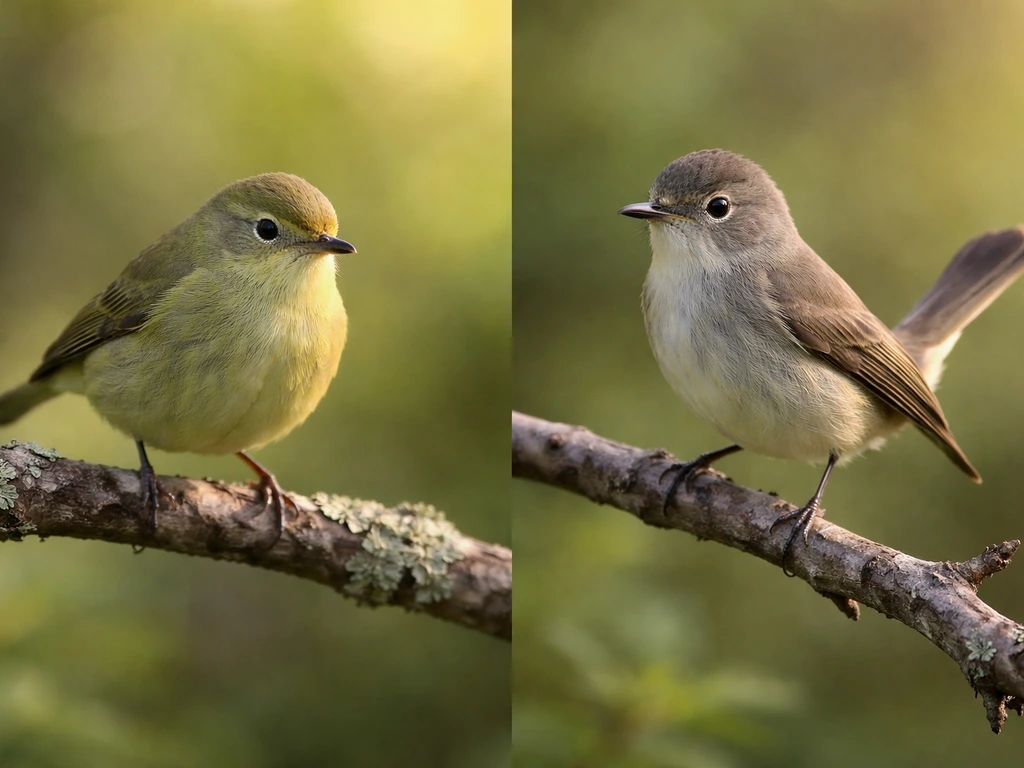
This is where most people get stuck, and it's the most important practical step. The same word "trill" covers sounds that are acoustically quite different across species. David Sibley's guides specifically flag that simple trilled songs, including those of the Chipping Sparrow and Dark-eyed Junco, are genuinely hard to separate from each other and require attention to finer details like pitch trajectory, tempo, and tone quality. Here are a few concrete examples to show how different a trill can be depending on the species.
| Bird | Trill Type | Primary Function | Key Distinguishing Feature |
|---|---|---|---|
| Wood Thrush | Complex, flutelike trilling phrase at end of song | Territory/mating broadcast | Preceded by rich flute-like notes; forest habitat; dawn/dusk |
| Chipping Sparrow | Long, flat, dry mechanical trill | Territorial advertisement | Uniform pitch with no rise or fall; suburban/edge habitat |
| Dark-eyed Junco | Short musical trill | Territory/contact | Slightly more musical than Chipping Sparrow; often near ground |
| Grasshopper Sparrow | Buzzy trill ending the primary song | Territory/mate contact | Insect-like buzz quality; open grasslands only |
| Killdeer | Rolling trill as alarm/distraction | Nest defense/alarm | Accompanies distraction display; open ground near water or pavement |
| White-throated Spadebill | High, thin, rattling trill | Song/contact | Neotropical species; very thin and high in pitch |
The takeaway here is that identifying a trill means identifying the bird first. A buzzy, insect-like trill in a meadow and a rich, complex trilling phrase at the end of a song in a forest are both called "trills," but they mean different things because they come from different birds in different ecological contexts.
Context clues: time of day, location, and what the bird is doing
Even without a visual on the bird, context alone can do a lot of the heavy lifting. Think of these as the field marks of the listening experience.
Time of day
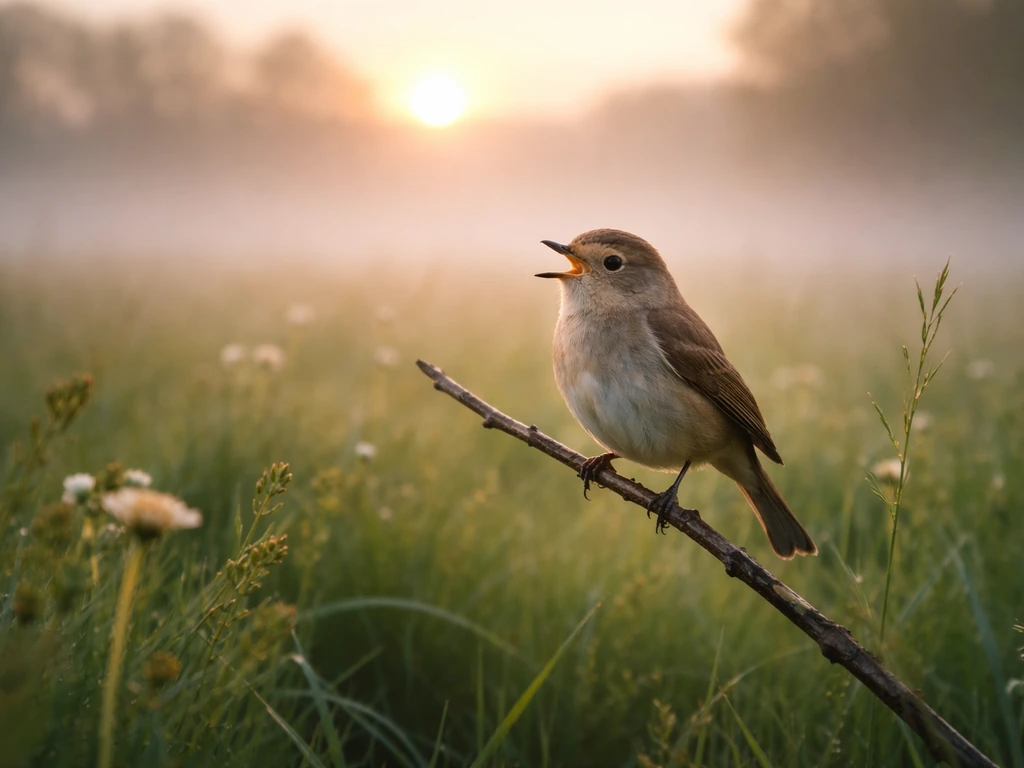
Dawn and early morning are dominated by territorial song, including trilled songs broadcast from high perches. If you hear a long sustained trill at 5am in late spring, it's almost certainly a territorial male singing his claim. Midday trills are more likely to be contact calls or alarm responses. Evening song is common but less intense than dawn, often still tied to territory.
Season
Spring and early summer are peak territory and mating season for most North American species, so trills heard from April through June are usually connected to breeding behavior. By late summer, many songbirds stop singing territory songs entirely (Wood Thrushes, for example, largely stop by late summer) and shift to quieter contact notes. A trill heard in October is more likely an alarm call or contact note than a territorial broadcast.
Habitat
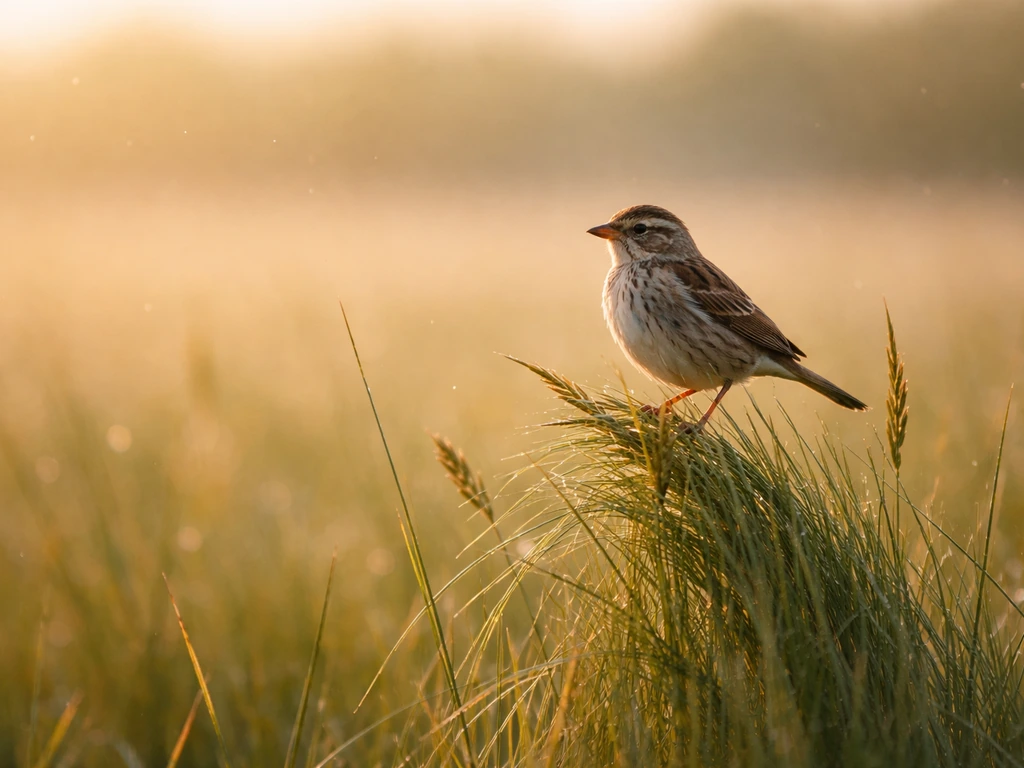
Habitat is one of the most reliable filters. An insect-like buzzing trill over open grassland almost certainly comes from a grassland specialist like a Grasshopper Sparrow, not a wood thrush. A rich trilling phrase in dense forest is never going to be a Killdeer. Matching habitat to species group cuts your candidate list dramatically before you even try to match the sound itself.
Behavior and context
If the bird is visible: is it singing from a high, exposed perch? That strongly suggests territorial broadcast. Is it moving nervously on the ground near a specific spot, trilling repeatedly? That's nest defense behavior. Is it calling while moving through vegetation with another bird nearby? Probably a contact call. Single bird versus a group also matters: some trilling sounds are specific to flock coordination, while others are given only by solitary birds defending territories. If you’re wondering about bird flocking meaning, that context can be a key clue to what the trilling is doing and why.
The same logic applies to bird chirping and other vocalizations more broadly: the sound type is just the starting point. The behavioral and environmental context is what actually unlocks the meaning. If you are specifically looking for bird chirping meaning, use the same method: confirm the sound type, then read the context to infer the likely purpose. Bird roosting behavior, flocking patterns, and group dynamics similarly change how you read any vocalization, including trills. Bird roosting meaning can affect how you interpret what you hear, since birds vocalize differently around sleeping sites and group roosts Bird roosting behavior.
How "trill" works as a metaphor and idiom in human language
Outside of ornithology, "trill" has a well-established life in human language. Merriam-Webster includes examples like "a bluebird trilled outside our window," and Dictionary.com extends the definition to mean "to resound vibrantly," applied to voices, song, or laughter. When someone describes a person's voice as "trilling," they're borrowing the bird's sound as a metaphor: rapid, high, vibrant, and musical.
In the same way that other bird behaviors have seeped into everyday English (think "bird-brained," or "bird-dogging" a lead), "trilling" carries a specific connotation of brightness and energy. A character in fiction who speaks in a "trilling voice" is being described as bird-like in a specific way: quick, high-pitched, lively, maybe slightly fussy or over-animated. It's a richer descriptor than simply "high-pitched" because it implies rapid repetition and a kind of musical excess.
In phonetics, a trill is also a specific consonant sound produced by rapid vibrations of the tongue or lips, like the rolled "r" in Spanish. So when someone asks about "bird trill meaning" in a language or phonetics context, they're actually reaching for a different definition. For the purposes of bird interpretation, the bird behavior definition is what matters, but it's worth knowing the word carries this double life.
Practical next steps: how to identify a bird trill and use what you find

Here is a direct action plan you can run with today, whether you just heard a trill in your backyard or you're trying to make sense of something you recorded last week.
- Record it. Open the voice memo app on your phone or use Merlin Bird ID's Sound ID feature and let it listen continuously for at least 30 seconds. The longer the recording, the better the match quality. Keep the phone steady and as close to the sound as safely possible.
- Note the context immediately. Before you forget: what time was it, what habitat were you in, was the bird visible, was it moving or stationary, was it alone or near other birds, and what was it doing? These details are more valuable than people realize.
- Run the recording through Merlin Sound ID. It will produce a list of possible species matches. Treat these as candidates, not conclusions. You need to decide whether the suggestion actually matches what you heard.
- Compare your audio to archived recordings. The Macaulay Library (searchable by species and audio type) and Xeno-canto (an open repository specifically for bird sound recordings) both let you filter and listen to confirmed recordings of the species Merlin suggests. If your trill sounds like the archived examples, you have a solid match.
- Apply your context filter. Does the species Merlin suggested actually occur in your region, habitat, and season? eBird's range maps can confirm this in about 30 seconds. If the species suggested doesn't fit your habitat and time of year, look at the next candidate on the list.
- Interpret the behavior. Once you know the species and the context, map it to the likely function: territorial song, contact call, alarm, or mating display. Audubon's beginner's sound guide is useful here for connecting function to behavior.
- Layer in the cultural or spiritual meaning if that resonates with you. If you're curious about what a specific bird's trill has meant across folklore or spiritual traditions, use the species identification as your anchor. A Wood Thrush trilling at dawn in a forest carries different cultural resonance than a Killdeer trilling over a parking lot. The symbolism is more meaningful when it's attached to the right bird.
Quick reference checklist
- Record at least 30 seconds of continuous audio
- Note time of day, season, habitat, and bird behavior
- Run audio through Merlin Sound ID and review candidate species
- Compare your recording to Macaulay Library or Xeno-canto examples
- Confirm species range and habitat with eBird
- Identify the function: territory, mating, contact, or alarm
- Apply cultural or spiritual interpretation using the confirmed species as context
The main thing to take away from all of this is that a bird trill is not a single signal with one fixed meaning. It is a sound type that serves many functions depending on the species, season, and situation. The fastest route to the right interpretation is always to identify the bird first and read the behavior second. Once you have those two pieces, you have something solid to work with, whether you're interested in the ornithological explanation, the cultural symbolism, or both.
FAQ
What should I do if I hear a bird trill but I can’t identify the bird?
If you only hear a trill and cannot see the bird, start by estimating where the sound is coming from (canopy, understory, ground, or open air). Then note whether it sounds like a repeated buzz (more likely call type) or a structured burst tied to a perch (more likely song type). Finally, use season and time of day to narrow the candidate list before guessing a meaning like territory or alarm.
Can a bird trill mean something different even if it sounds like “song”?
Yes. Some birds give trills during displays that look like singing but are actually courtship or duet behavior, and others use trills as contact notes. The key is to watch for function cues, such as repeated trilling while chasing, hopping, or interacting with a mate or group, versus sustained broadcasting from an exposed perch.
How do I avoid confusing a bird trill with rolls or chirps?
A common mistake is treating any rapid high note sequence as the same thing. Trills can be confused with rolls, rattles, and buzzy insect-like calls. Use “tempo and texture” as your first filter (very short rapidly repeated notes that blur into buzzing quality), then confirm with context like perch behavior, proximity to eggs or nest sites, and whether a bird is paired or solitary.
What if the trill I heard was distorted by wind or other birds?
Background noise can distort the category, especially wind, nearby traffic, or overlapping birds. If the trill becomes less clear when you move indoors or closer to the sound source, don’t over-interpret it. Record a 10 to 20 second clip, then replay slowly to check whether you hear discrete repeated notes or just a continuous buzz.
Is it wrong to treat a trill as spiritual meaning?
In human interpretation, a trill can feel like “joy” or “communication,” but that is secondary to the animal’s likely purpose. If you want a practical read, use behavior first: if the bird is near a nest site or shows distraction behavior, prioritize alarm or defense over symbolic meaning. Use symbolism as a bonus layer only after the behavioral context fits.
Do trills always mean breeding or territory in every season?
Not necessarily. Birds can trill outside the typical breeding window, especially after storms, during unusual weather, or when defending roost areas. If it’s late or early in the season, look for non-breeding explanations such as contact communication, flock coordination, or local defense.
How does my location (yard vs woods vs grassland) affect the likely meaning?
Yes, location can change interpretation. A bird calling from the ground near a specific spot is more likely nest defense or localized communication, while the same acoustic trill delivered from a high perch is more likely territorial broadcasting. Habitat type also matters, for example grassland vs dense forest, because different species have different trill textures.
What does a trill mean if more than one bird is trilling at the same time?
Duetting and pair interactions can make trills function as coordination, not just “one bird singing at you.” If two birds are alternating or responding to each other, try to track which one starts, how long the exchange lasts, and whether both birds change position. That often points to pair contact or courtship rather than a simple territory claim.
How can I tell if a trill is an alarm versus routine singing?
Yes. If you hear a trill that consistently occurs right after specific events, such as a hawk passing overhead, a person approaching a nest area, or another bird landing nearby, it’s often an alarm or response call. The “trigger” timing helps you distinguish defense from routine singing.
Can I use audio recordings to identify the bird and the trill type?
If you want to go beyond “sounds like a trill,” measure what you can from an audio recording: approximate pitch direction (rising, falling, steady), tempo (fast vs extremely fast), and whether the sound ends abruptly or continues as part of a longer phrase. These details often separate similar-sounding species and separate song trills from call trills.
What if someone says “bird trill meaning” but it’s actually about language or pronunciation?
Sometimes “trill” is used to describe a human voice or a rolled consonant in phonetics, which are different from the bird meaning. To avoid confusion, focus on context: if the source is clearly a bird in nature, interpret it as a bird vocalization. If the question is about speech or language, then the phonetic “trilled consonant” definition may apply.