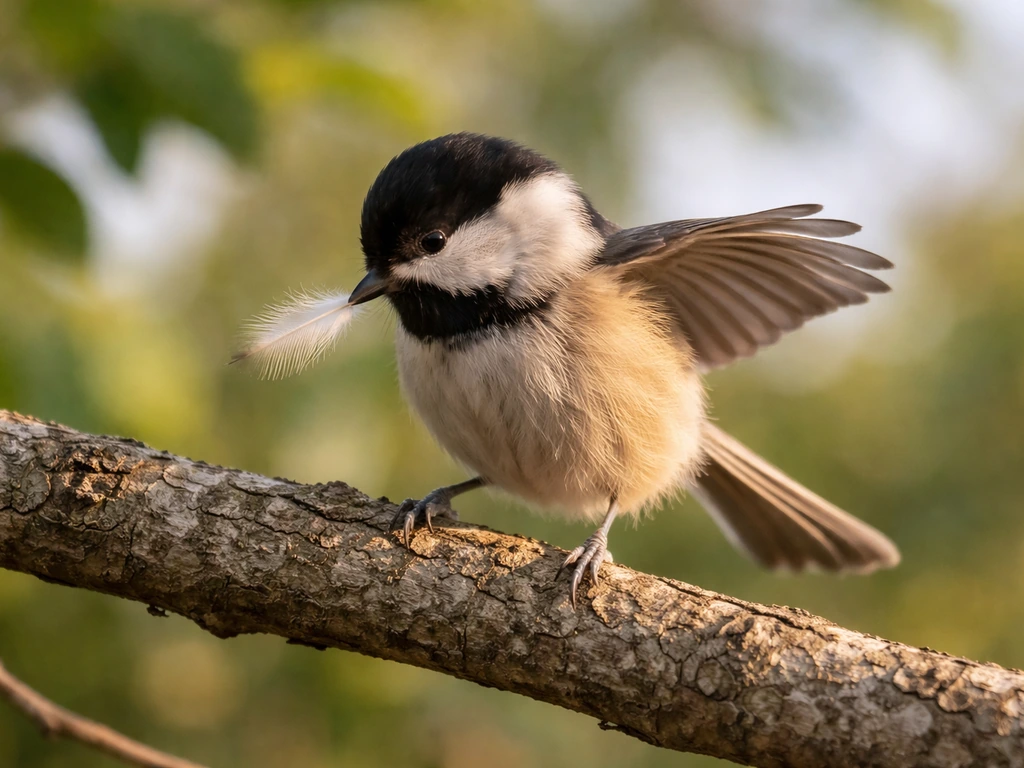
A bird bite is most commonly called a peck when it involves a quick, light strike of the beak, or simply a bite or beak injury when the contact is forceful enough to break the skin, crush tissue, or tear flesh. In clinical and veterinary contexts you will also hear the term avian bite wound or beak injury. The word peck covers the majority of everyday bird-human contacts, but the distinction matters because a large parrot's crushing bite and a goose's pinching nip involve very different forces, wound patterns, and infection risks.
What a Bird Bite Is Called: Terms, Injuries, Care & Meaning

Marcus Holloway
18 Jul 2026
Peck, bite, or beak injury: what's the right word?
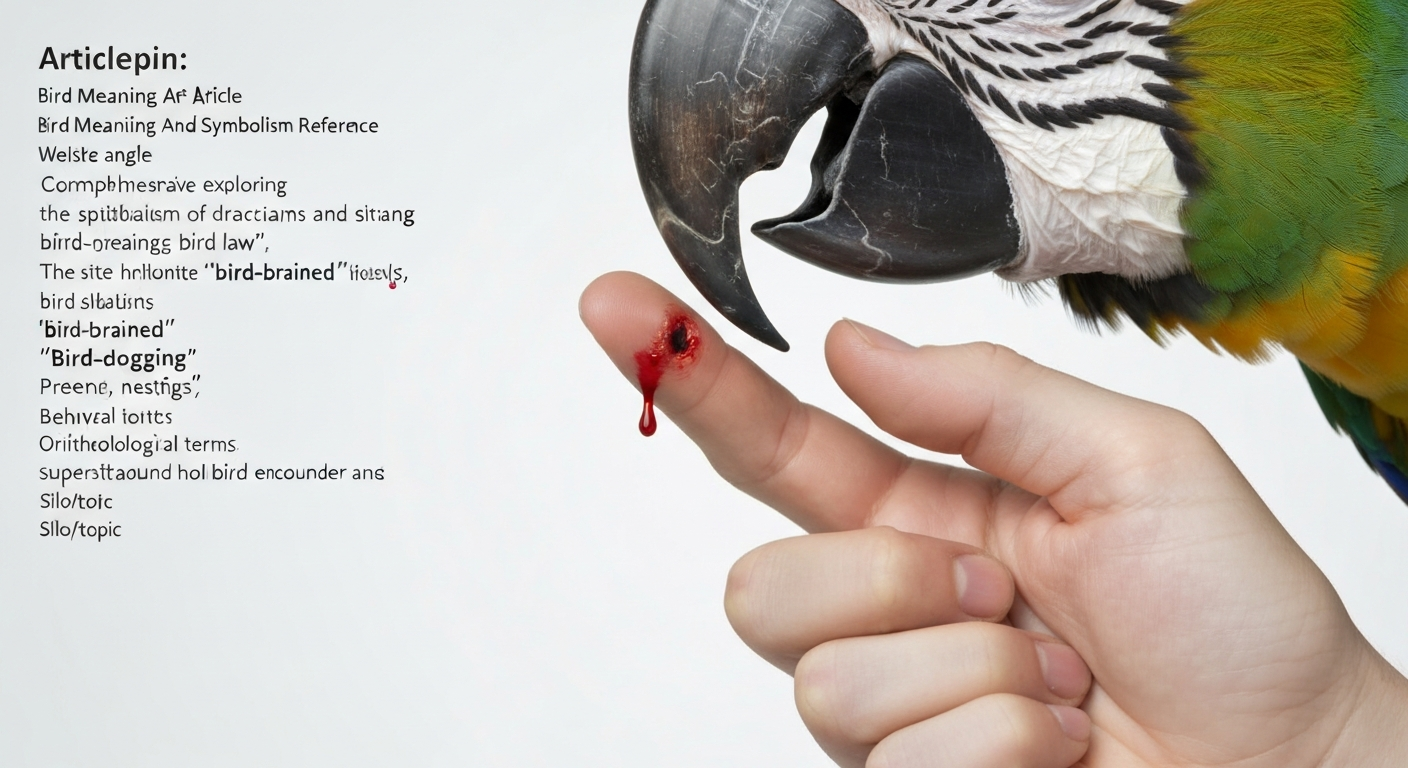
The three terms carve up the same territory in slightly different ways. Peck (from Old English) describes a bird striking or picking at something with its beak, usually in a quick, pointed motion. Merriam-Webster defines it as 'to strike or pierce with the beak' and reserves it for lighter, repetitive actions. Bite denotes seizing or cutting with the beak in a way that more closely parallels what teeth do in mammals: holding, crushing, tearing. In practice, when a parakeet taps your finger you call it a peck; when a macaw locks its beak around your hand and applies full force, every emergency physician who treats you will write bird bite or avian bite wound on the chart.
Beak injury is the umbrella clinical term that covers everything from a small puncture to a deep laceration or crush wound. Some academic papers use the phrase avian bite wound to signal that the case involves a bird specifically, separating it from the far more common dog-bite and cat-bite literature. For practical purposes: peck for casual, breaking-no-skin contact; bite or beak injury the moment skin is broken or significant force is applied.
How different birds actually hurt you
Beak shape is destiny when it comes to wound mechanics. Biomechanical reviews of avian skull evolution confirm that beak form is tightly linked to feeding ecology, which means a bird's beak predicts almost exactly how it will wound you. Here is how the major groups compare.
Parrots and psittacines
Parrots are the most clinically significant biters in the pet bird world, and the research backs that up. In vivo bite-force measurements show psittacines generate exceptionally large forces for their body size, with large macaws capable of applying hundreds of newtons to a very small contact area. That combination of a hooked upper mandible and a deep, curved lower bill produces puncture-plus-crush wounds, especially on hands and fingers. Published case reports have documented rapidly progressive soft-tissue infection and even acute compartment syndrome of the hand following parrot bites, so 'it's just a bird' is not a safe assumption when a large psittacine draws blood.
Raptors (hawks, owls, eagles)
Raptors are built to seize and tear. Their strongly hooked beaks and, equally importantly, their powerful talons mean that most raptor injuries to humans involve the feet rather than the beak. When the beak does connect it tends to produce a tearing laceration rather than a clean puncture. Injuries happen most often to falconers, wildlife rehabilitators, and researchers handling birds for banding. The wounds can be deep, and the beak's curved tip can introduce bacteria into tissue that is difficult to irrigate.
Waterfowl (geese, swans, ducks)
Geese and swans are famously aggressive but their lamellate (comb-like) bills are designed for filtering and grazing, not piercing. The typical result is a hard pinch or nip that bruises, may graze the skin, and occasionally breaks it if the bird clamps hard enough. Swans deliver a surprising amount of force and can bruise bone. Children and people who approach nesting birds are the most common victims. Serious lacerations are unusual but not impossible with a large, aggressive swan.
Gulls and corvids
Gulls have strong, hook-tipped beaks suited to tearing food, and dive-bombing gulls protecting nests will peck exposed scalp, ears, and hands hard enough to draw blood. Corvids (crows and ravens) are underestimated: research measuring bite force in jungle and carrion crows recorded maximum values up to several hundred newtons, with real variation by sex and species. A defensive crow can deliver a sharp puncture wound. Most corvid bites occur during wildlife rescue or when people get too close to fledglings.
Songbirds and small birds
Finches, sparrows, robins, and similar small birds simply do not have the beak size or jaw muscle mass to create wounds requiring medical attention in healthy adults. Their pecks feel like a sharp pinch and may leave a tiny red mark. Budgerigars in the pet world are the classic example: they bite regularly and it rarely breaks skin. Still, even small-bird pecks should be washed, especially if you are immunocompromised.
Types of beak injuries and how serious they actually are
Not all beak injuries are equal. Understanding what type of wound you are dealing with helps calibrate the response.
| Wound type | Typical cause | Severity / key concern |
|---|---|---|
| Puncture | Parrot, corvid, raptor beak tip | Moderate to high; deep track traps bacteria, hard to irrigate fully |
| Laceration | Raptor tearing, gull hook-tip, large psittacine | Moderate; may bleed freely, usually easier to clean than punctures |
| Crush injury | Large macaw or cockatoo jaw force | High; bruises deep tissue, may damage tendons or nerves in hand |
| Avulsion | Large raptor or macaw locking and pulling | Severe; tissue removed or partially detached, requires surgical assessment |
| Abrasion / graze | Goose nip, swan strike, small-bird peck | Low; skin surface only, low infection risk in healthy people |
| Eye injury | Any bird at face level, especially gulls and raptors | Urgent; even a minor peck near the eye requires same-day evaluation |
Eye injuries deserve a special mention regardless of bird size. The orbit offers very little protection from a pointed beak, and even a small bird can cause a corneal abrasion or worse if it strikes at face level. Any beak contact with or very near the eye is a same-day ophthalmology concern, not a 'watch and wait' situation.
First aid right after a bird bite
The steps below apply whether the bird was a pet parrot or a wild gull. Do them in order and do not skip the washing step, which is the single most important thing you can do to reduce infection risk.
- Control any active bleeding first: apply firm, direct pressure with a clean cloth or gauze. Most bird bites stop bleeding within a few minutes.
- Wash the wound thoroughly with soap and running water for at least five minutes. Copious irrigation is the cornerstone of bite-wound management across all clinical guidelines, including those from the American Red Cross.
- Rinse well to remove all soap, then pat dry with clean material.
- Cover with a sterile dressing or clean bandage.
- Check your tetanus status. Per CDC/ACIP guidance, if the wound is anything other than clean and minor and your last tetanus booster was five or more years ago, you need a Td or Tdap booster. If your last booster was under five years ago and the wound is clean and minor, you are covered for ten years.
- Do not attempt to close a deep puncture wound with tape or adhesive strips. Trapping bacteria in a deep track makes infection more likely.
- Seek medical evaluation if the wound is deep, on the hand or face, a puncture from a large bird, still bleeding after ten minutes of pressure, or if you are not sure of your tetanus history.
One thing you do not need to worry about with bird bites specifically: rabies. Rabies is a disease of mammals. Birds are not a rabies reservoir and routine rabies post-exposure prophylaxis is not recommended after bird bites. That is a meaningful difference from dog or cat bites, where the rabies question always comes up.
Infection risks: what can actually live in a bird's beak
Bird-bite infections are less common than dog or cat-bite infections, but they are documented well enough in the clinical literature that the risk is real. See Emerging Infectious Diseases article 'Prosthetic‑valve endocarditis after cat bite; discussion of empiric antibiotic choices' for discussion of empiric use of amoxicillin‑clavulanate in mammalian bites blank" rel="noopener noreferrer">See Emerging Infectious Diseases article 'Prosthetic‑valve endocarditis after cat bite; discussion of empiric antibiotic choices' for discussion of empiric use of amoxicillin‑clavulanate in mammalian bites.. The organisms to know about are the following.
- Pasteurella species, especially P. multocida: these bacteria colonize many birds and have been isolated from bird-associated wound infections. They can cause rapidly progressive cellulitis, especially in the hand. The standard first-line antibiotic for animal bites, amoxicillin-clavulanate (Augmentin), covers Pasteurella well.
- Chlamydia psittaci (psittacosis): this is the pathogen behind parrot fever. It usually reaches humans through inhaled dust from droppings or feather dander, but transmission through a bite from an infected bird is documented. Doxycycline is the treatment of choice, which is why some clinicians recommend it specifically for psittacine bites when psittacosis exposure is plausible.
- Staphylococcus and Streptococcus species: common skin bacteria that can contaminate any open wound regardless of source.
- Other oral flora from the bird's beak: bite wounds from any animal introduce a mixed bacterial population into the tissue.
Warning signs of infection to watch for
Most minor bird-bite wounds that are properly cleaned will heal without incident. Monitor the wound closely for the first 48 to 72 hours and treat any of the following as a reason to seek medical attention promptly:
- Increasing redness, warmth, or swelling spreading beyond the wound edges
- Pus or discharge from the wound
- Red streaking spreading from the wound (this can indicate spreading lymphangitis)
- Fever or chills
- Increasing pain rather than gradual improvement
- Loss of movement or sensation in a hand or finger after a bite in that area
- Swelling that makes the hand feel tight or a limb feel full under pressure (a warning sign of compartment syndrome in severe cases)
When to go to urgent care or the emergency room
A budgie nip that barely marks the skin does not need an ER visit. But several situations do warrant prompt medical evaluation, and this list is where most people underestimate the risk.
- Deep wounds, especially punctures: any puncture wound from a medium or large bird on the hand, wrist, or foot should be evaluated the same day. The hand's tendon sheaths and joint spaces can be inoculated by a deep puncture, and the consequences of missing an early tendon-sheath infection are serious.
- Wounds on the face, especially near the eyes: see above. Eye involvement is always urgent.
- Bleeding that does not stop after ten minutes of direct pressure.
- Wounds in immunocompromised people: anyone on immunosuppressant medications, with diabetes, HIV, or asplenia is at substantially higher infection risk and should be evaluated for any bird bite that breaks skin.
- Bites from unknown wild birds: wound management is the same, but the clinical context matters for determining whether additional workup is needed.
- Signs of infection developing within the first 24 hours: rapid onset suggests a virulent organism and needs evaluation quickly.
- Any bite you are uncertain about: the correct answer is always to get it checked rather than assume.
Prevention and safe handling for pet birds and wild encounters
The single biggest predictor of bird bites is a human behavior, not bird behavior. Most bites from both pet and wild birds are defensive responses to handling the bird incorrectly, approaching too quickly, invading a nest, or misreading stress signals. A few consistent habits prevent the vast majority of them.
For pet birds
Parrots and other pet psittacines bite most often when they are overstimulated, frightened, or defending territory (including their cage, their favorite person, or a nesting area). Positive-reinforcement training, regular handling from a young age, and learning to read body language (pinned pupils, raised feathers, tail fanning in parrots are all pre-bite signals) dramatically reduce biting incidents. When handling an unfamiliar or agitated large parrot, thick leather welding gloves offer real protection. Always schedule routine veterinary health checks for pet birds: knowing your bird's disease status matters if a bite does occur, particularly for psittacosis screening.
For wild bird encounters
Wild birds bite when cornered, injured, or defending a nest. The prevention rule is simple: do not handle wild birds unless you are trained to do so. Wildlife rehabilitators use thick leather gloves as standard equipment when handling raptors and large birds, and they approach injured birds by covering them with a towel or jacket first to reduce stress. If you find a grounded bird and need to move it, use a container rather than your bare hands. During nesting season, give nesting gulls, corvids, and geese a wide berth. If a bird is dive-bombing you, it has a nest nearby: move away from the area rather than trying to shoo it.
Key differences between pet and wild bird situations
| Factor | Pet bird | Wild bird |
|---|---|---|
| Disease history | Known (vet records available) | Unknown; assume possible pathogen exposure |
| Vaccination/health status | Trackable via owner | Not available |
| Handling frequency | Regular; bird may be tame | Infrequent; bird is almost always stressed |
| Antibiotic consideration after bite | Guided by bird's health records | Lower threshold for prophylaxis given unknown status |
| Protective equipment | Gloves for unfamiliar or large birds | Gloves and towel covering always recommended |
| Legal/reporting obligations | Generally none for minor pet-bird bites | Some jurisdictions require reporting wild-bird handling to wildlife authorities |
Cultural, symbolic, and idiomatic meanings of bird bites
Because this site is as much about what birds mean as what they do, it is worth noting that being bitten or pecked by a bird carries a modest but consistent body of symbolic interpretation across cultures. In many folk traditions, a bird pecking at a window or unexpectedly striking a person is read as a message demanding attention, a boundary being enforced, or a prompt to examine what part of your life is being intruded upon. The specific bird matters enormously in these readings: a crow's peck carries different weight in folklore than a dove's.
In dream interpretation, being bitten or attacked by a bird is often linked to feeling threatened by something quick and hard to control, or to a warning from the unconscious about a situation requiring attention. The English language also preserves the peck in idioms: someone who is 'peck-ish' is mildly hungry (British English), and the verb peck at is used figuratively for nagging, critical behavior. None of these symbolic readings change the first-aid steps, but they reflect how deeply bird behavior is woven into human language and meaning-making.
A quick glossary connecting to the wider world of birds
If you arrived here because a bird bit you, you may find yourself more curious about birds generally. A few terms worth knowing as you explore further: the formal study of birds is called ornithology, and someone who practices it professionally is an ornithologist. The recreational observation of birds in the field is called birding or birdwatching. For more on what bird watching is called and how the hobby works, see the birding overview. The practice of keeping and breeding birds is part of what is called aviculture. People with a passion for birds are called birders, twitchers (in British usage), or ornithophiles. And the remarkable collective movements birds make, from daily flocking to seasonal migration, fall under a set of terms worth exploring on their own. For more on the names and phenomena of collective and seasonal movements, see the entry on what bird movement is called. The broader human engagement with birds, including keeping and breeding, symbolic meanings, and leisure activities, is often referred to as bird culture.
FAQ
What is a bird bite called?
The everyday English term for a bird strike with its beak is usually a "peck." When the beak delivers stronger force that tears or breaks skin, people commonly call it a "bite" or a "beak injury." Clinically, descriptions use terms like puncture wound, laceration, crush injury or avulsion depending on the wound pattern.
How do "peck" and "bite" differ in meaning?
A "peck" normally means a quick, light strike or pick with the beak and often does not break skin. A "bite" implies stronger force, grasping or tearing with the beak and is used when the skin is punctured or lacerated. Medical descriptions focus on wound type (puncture, laceration, crush) rather than colloquial words.
Which bird species are most likely to cause serious beak injuries?
Large psittacines (parrots, macaws, cockatoos) and some corvids (crows, ravens) have strong bite forces and hooked bills that can crush or tear tissue. Raptors (hawks, eagles) have powerful hooked beaks that can lacerate. Even smaller birds can puncture the skin, but severe hand or face injuries are most often reported with parrots and some corvids.
What types of injuries do bird beaks produce?
Common patterns: puncture wounds (sharp, narrow, risk of deep contamination), lacerations (tearing or cutting), crush injuries (especially from strong-hooked bills), avulsions (tissue pulled away), and, rarely, compartment syndrome or deep soft-tissue infections in the hand.
How severe are infections from bird bites compared with mammal bites?
Infections after bird bites are uncommon compared with dog and cat bites, but they are documented. Puncture and crush wounds carry higher infection risk because they trap bacteria and foreign material. Certain pathogens (Pasteurella species and, for psittacines, organisms to consider such as Chlamydia psittaci) have been associated with bird-related infections, so clinical assessment is important.
What immediate first-aid should I perform after a bird bite or peck?
1) Ensure scene and bird are safe. 2) Control bleeding with direct pressure. 3) Irrigate the wound copiously with clean water and wash with soap for several minutes. 4) Apply a clean dressing and keep the wound covered. 5) Seek medical evaluation for deep, puncture, hand, face, or heavily contaminated wounds, or if bleeding does not stop.
Next Article
Bird Movement Is Called What Term Fits Your Observation
Learn the term for bird movement and match your observation to specific actions like hopping, nesting, flying, preening.