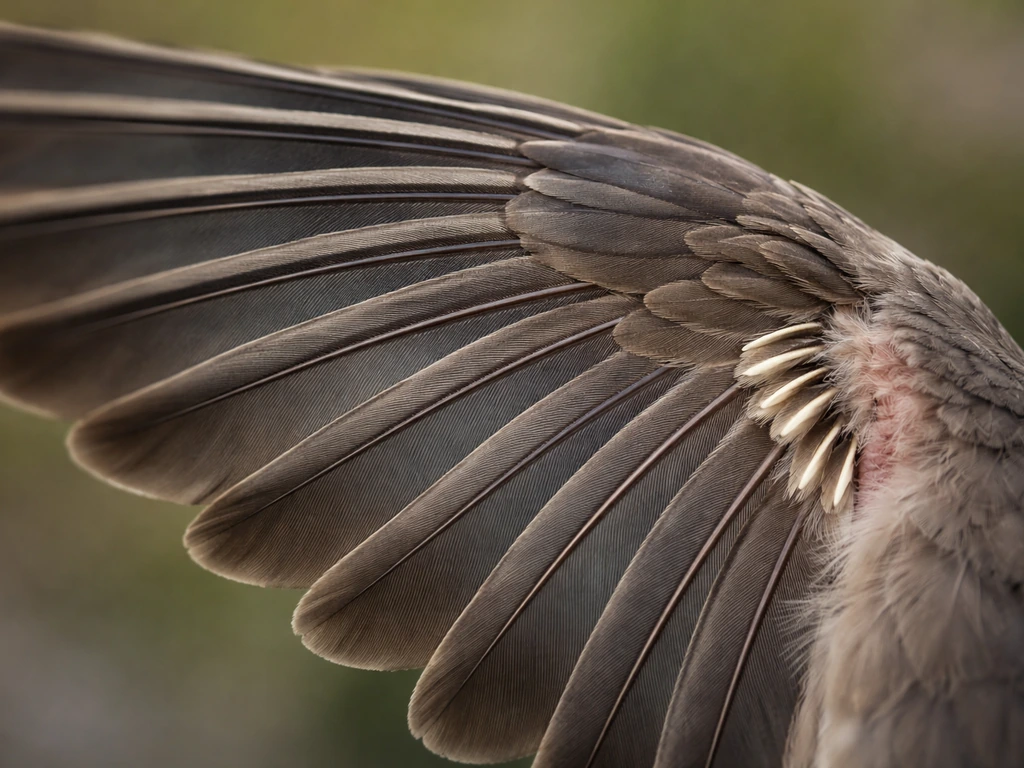
A bird's pinion is the outermost part of its wing, specifically the distal segment that includes the primary flight feathers, primary coverts, and the alula. Think of it as the bird's "hand" end of the wing, the part furthest from the body. That's the anatomical core of the word. But "pinion" carries a second, equally common meaning in English: to restrain or immobilize, whether that's a person pinioned to a wall or a captive bird pinioned so it can't fly. When someone searches for "bird pinion meaning," they're usually after one of three things: what the word means physically, what it means symbolically, or why it keeps showing up in a phrase or dream. This guide covers all three.
Bird Pinion Meaning: What Pinion Refers to in Birds

Marcus Holloway
20 Jun 2026
What "pinion" means in bird anatomy
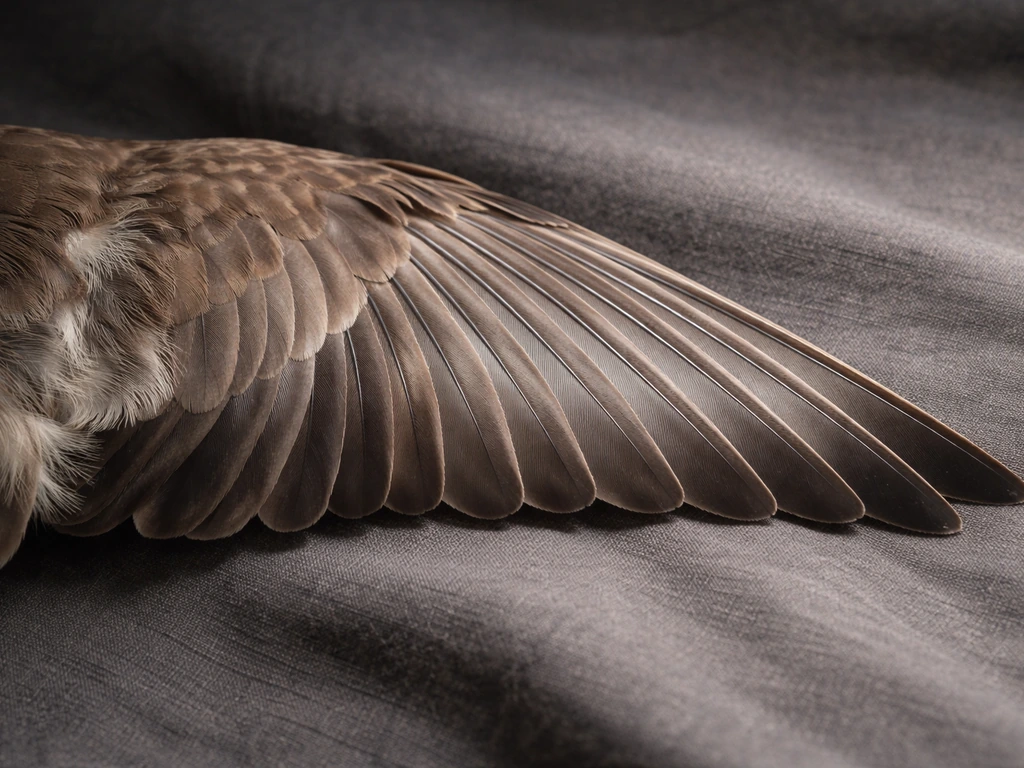
In strict ornithological terms, the pinion is the outermost joint of a bird's wing, the equivalent of the hand and wrist in human anatomy. It anchors the primary flight feathers, which are the large, powerful feathers responsible for thrust and lift. Older dictionaries, including Webster's 1828 edition, describe the pinion as "the remotest joint of a fowl's wing from the body," and that definition has held up well. Some sources extend the term slightly to include the primary coverts and the alula (the small cluster of feathers at the leading edge of the wing), but the core idea stays the same: the pinion is the outer flight region, not the inner wing or the shoulder area.
This distinction matters practically. When ornithologists number a bird's primary feathers, they count from the pinion outward. When falconers or avian veterinarians talk about "pinioning" a captive bird, they mean surgically removing that distal joint to permanently prevent flight. In the sense used by ornithologists and falconers, pinioning is the removal of the distal pinion joint (furthest from the body) to prevent flight pinioning a captive bird means surgically removing that distal joint to permanently prevent flight. Clipping flight feathers is a softer version of the same idea and has to be repeated after each molt. The U.S. Fish and Wildlife Service's Feather Atlas separates primaries from secondaries precisely because they attach to different parts of the wing: primaries attach to the "hand" bones at the pinion, while secondaries attach further inward at the elbow region.
So in short: pinion equals the outer wing, home of the primary feathers, the part of the wing that does the heavy lifting in actual flight.
"Pinion" in bird context vs common idioms
Here's where things get interesting, and a little confusing. Collins English Dictionary defines pinioned (pinion) as preventing movement or escape by holding or tying the arms. The word "pinion" in everyday English almost always shows up as a verb meaning to restrain: "He was pinioned against the wall," "She pinioned his arms behind his back." That's the sense most people know from thrillers and news reports. But the verb actually derives directly from the bird anatomy sense. To pinion someone is, at root, to treat them like a bird whose flight feathers have been cut, leaving them unable to move freely.
The two meanings share the same word but point in opposite directions emotionally. The anatomical pinion is the part of the bird that enables flight and freedom. The verb "to pinion" describes the act of taking that freedom away. That tension, between the wing as a symbol of possibility and the act of clipping it as a symbol of control, is exactly what makes the word so rich when it surfaces in literature, scripture, and dream imagery.
| Sense of "Pinion" | What It Refers To | Emotional Association |
|---|---|---|
| Noun (anatomy) | Outer wing joint and primary feathers of a bird | Freedom, flight, capability |
| Verb (action on birds) | Removing or clipping the outer wing to prevent flight | Restraint, captivity, control |
| Verb (common idiom) | Immobilizing a person by holding or binding the arms | Restraint, helplessness, being overpowered |
Where "pinion" shows up in language
"Pinion" is not a high-frequency word in casual conversation, but it appears consistently in a few specific contexts worth knowing.
- Literary and poetic writing: Older English poetry often used "pinion" as an elevated synonym for "wing," lending a formal or even sacred quality to bird imagery. You'll encounter it in 18th and 19th century verse where writers wanted something grander than "feather" or "wing."
- Biblical translation: The Hebrew word 'ebrāh (Strong's H84) is translated as "pinion" in some Bible versions and as "wing" or "feather" in others. This shows up notably in passages about eagles and divine protection. The King James Version and the Revised Version differ on this, with the Revised Version more likely to use "pinion."
- Falconry and aviculture: Practitioners use pinion and pinioning as technical vocabulary when discussing captive bird management, whether that's clipping feathers seasonally or permanent surgical pinioning of waterfowl in zoo settings.
- Crime and action writing: The verb "pinion" meaning to restrain a person appears in crime fiction, legal reporting, and dramatic prose. "The suspect was pinioned to the ground" is a typical example.
- Wildlife and conservation writing: Articles about captive birds, sanctuary management, or flight restriction frequently use "pinioning" as the standard term.
If you ran across "pinion" in a sentence and weren't sure which sense was meant, the quickest check is this: is it describing a bird's wing or a person being restrained? In that situation, the bird gape definition you want is about the natural mouth-opening behavior seen when a bird is calling or being fed. If neither context is obvious, look for whether a verb or a noun is doing the work in the sentence.
Cultural and spiritual symbolism of a bird's wing or pinion
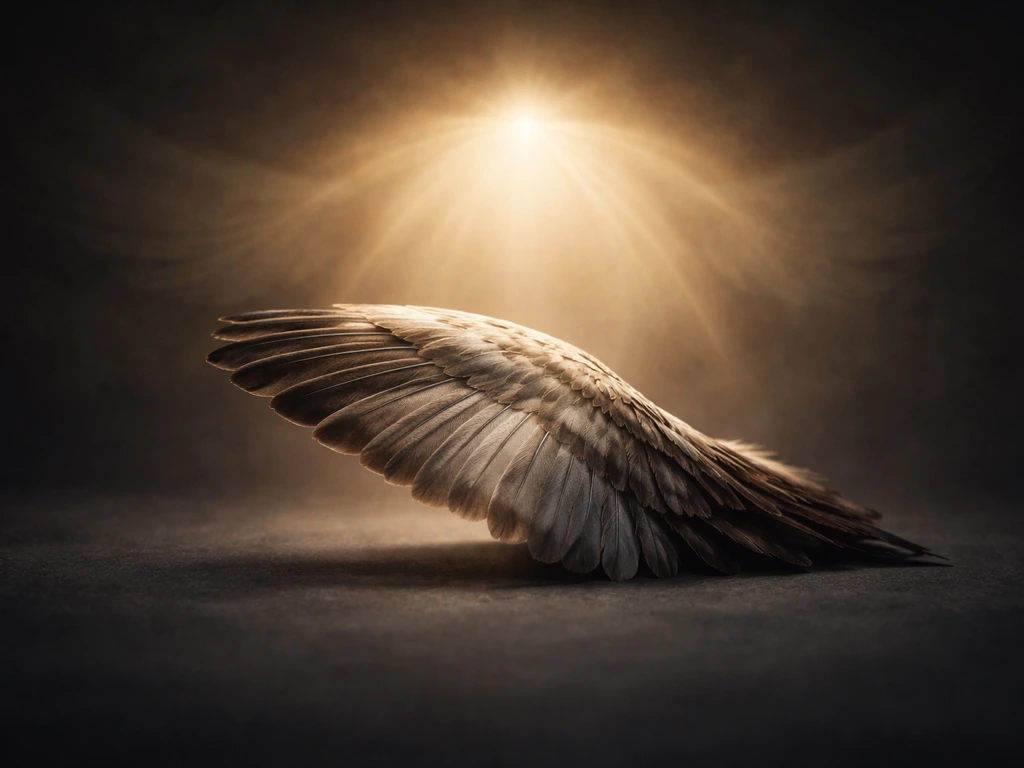
Wings, and by extension the pinion as the most powerful part of the wing, carry layered symbolic weight across cultures. The dominant themes are protection, freedom, divine connection, and vulnerability. None of these are arbitrary: they all trace back to what wings actually do for birds.
Protection and shelter
The most persistent symbolic use of bird wings across world cultures is shelter. Psalm 91 explicitly describes divine protection as being sheltered "under his wings," with the imagery of a bird covering its young. That metaphor works because it's biologically accurate: parent birds do physically cover and shield nestlings with their wings. This protective symbolism appears in Egyptian iconography (the goddess Isis with outstretched wings), in ancient Persian mythology with the Simurgh (a great bird associated with divine benevolence and renewal), and in many Indigenous traditions that treat eagle feathers as carriers of spiritual protection.
Freedom and aspiration
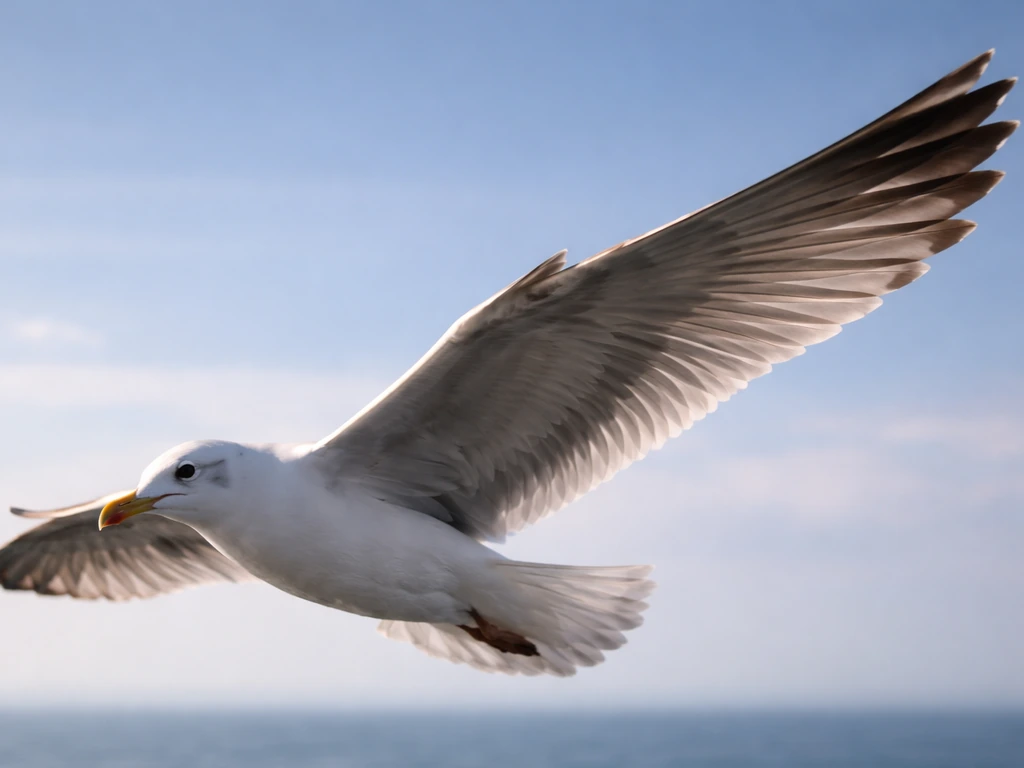
The pinion, as the outer wing that drives flight, maps naturally onto ideas of freedom, capability, and reaching beyond current limits. A bird with healthy primaries can go anywhere. This is why a clipped pinion, or a bird that cannot fly, becomes such a potent symbol of restriction, whether that's political oppression, personal limitation, or emotional confinement. The symbolism inverts cleanly: intact pinion equals freedom, damaged or removed pinion equals restraint.
Spiritual elevation and divine messengers
Across many traditions, wings mark something as belonging to a higher realm. Angels are depicted with wings. The eagle's pinion feathers are sacred in many Native American traditions precisely because the eagle flies highest and is seen as closest to the divine. The wing bridges the earthly and the spiritual, which is why feathers, especially primary feathers from the outer pinion, tend to be treated with the most reverence in ceremonial contexts.
How to interpret "bird pinion meaning" in dreams or real-life encounters
If you're here because you saw a bird with a damaged wing, dreamed about a bird's wing being clipped, or came across the word "pinion" in a reading and want to know what it might mean for you personally, here's a practical framework for working through it. If you meant “bird view meaning” instead, it refers to a perspective taken from above or at an elevated viewpoint pinion.
Step one: Get the context right
Before jumping to interpretation, nail down the specifics. The details change everything.
- What exactly happened? Was a bird's wing clipped, broken, or spread wide in flight? Was a person pinioned in a dream? Or did the word appear in a text you're studying?
- Which bird was involved? An eagle's pinion carries different cultural weight than a sparrow's. A hawk, a dove, and a crow all bring distinct symbolic associations.
- What was the emotional tone? A dream of a bird freely soaring on strong primaries feels different from a dream of a bird with its pinion cut. Both involve the pinion, but the interpretation diverges sharply.
- Was the wing intact or damaged? Intact and extended suggests freedom, aspiration, or spiritual readiness. Clipped or restrained suggests limitation, control, or a message about what's holding you back.
Step two: Match the imagery to the most relevant symbolic layer
Once you have the specifics, run the image through these common interpretive frames.
| Scenario | Likely Symbolic Layer | Practical Question to Ask Yourself |
|---|---|---|
| Bird flying freely, strong wings visible | Freedom, aspiration, spiritual lift | What in my life is opening up or ready to take off? |
| Bird with clipped or removed pinion | Restraint, loss of agency, enforced limits | Where do I feel my freedom or capability has been taken away? |
| Bird sheltering others under its wing | Protection, nurturing, divine care | Who or what is offering me shelter, or who needs my protection? |
| Being pinioned (arms held, unable to move) | Feeling trapped, overwhelmed, controlled | What situation or relationship is making me feel immobilized? |
| Finding a primary feather (pinion feather) | Spiritual message, connection to higher guidance | What bird left this, and what associations does that bird carry for me? |
A word on dream interpretation specifically
Dreams about bird wings are consistently grouped with themes of freedom, emotional state, and personal potential in most interpretive traditions. The pinion specifically, as the most flight-critical part of the wing, amplifies any of those themes. A dream where you see a bird's pinion feathers spread wide tends to read as expansive and positive. This is closely related to the bird's wing idea behind the bird eye view meaning, which focuses on how high-level perspective changes what you notice pinion specifically. A dream where those feathers are being cut or are already missing tends to read as a signal about constraint, fear of failure, or a transition that's been forced on you. Neither interpretation is rigid: emotional memory from the dream is always the best calibration tool.
Related bird terms and behaviors that help you pin down the meaning
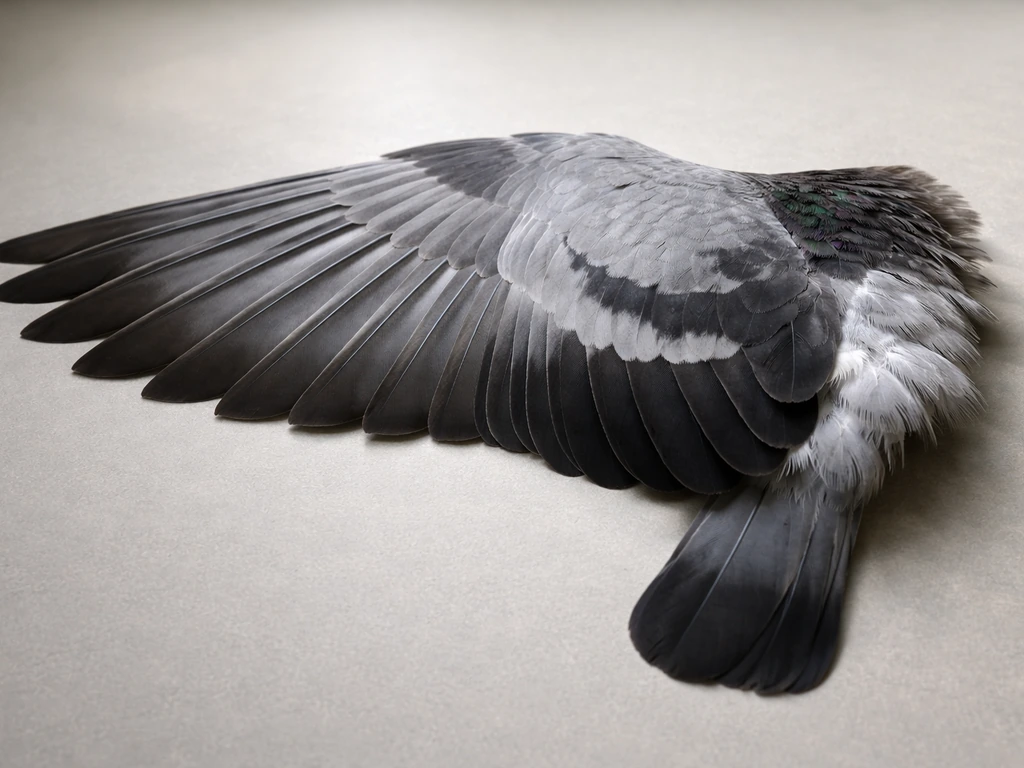
"Pinion" doesn't exist in isolation. A handful of related terms come up frequently when people are trying to understand bird anatomy, behavior, or symbolism, and clarifying them sharpens any interpretation. If you are wondering about bird gazing meaning, focus on what the bird is looking at and how that behavior fits the bigger symbolism in your situation pinion meaning.
- Primary feathers: These are the large flight feathers anchored in the pinion (the hand region of the wing). They are the feathers most responsible for forward thrust. When people talk about clipping a bird's flight, they almost always mean targeting these feathers.
- Secondary feathers: Located between the primary feathers and the bird's body, secondaries attach at the elbow area and contribute to lift rather than thrust. They're part of the wing but not the pinion.
- Alula: A small cluster of feathers at the leading edge of the wing, also attached in the pinion region. It acts like a bird's thumb and helps control airflow during slow flight or landing.
- Remiges: The technical collective term for all flight feathers of the wing (primaries and secondaries combined). If you see "remiges" in an ornithology text, it's broader than pinion.
- Pinioning vs. clipping: Pinioning is a permanent surgical procedure removing the pinion joint. Clipping is trimming the primary feathers and is temporary, needing to be redone after molting.
- Bird eye pinning: If you've come across the term "eye pinning" in relation to birds, that's a separate behavioral cue describing rapid pupil dilation in parrots, not related to wing anatomy at all.
- Molting: The seasonal process of shedding and regrowing feathers, including the primaries attached to the pinion. A clipped bird regains flight ability after molting unless pinioned surgically.
If you're exploring bird symbolism more broadly, the pinion connects naturally to discussions of bird eye meaning (what a bird's gaze communicates), bird gape definitions (the open mouth behavior and its signals), and the general idea of how specific physical features of birds carry distinct symbolic weight in both folklore and natural history. The wing is the most symbolically loaded part of the bird's body, and the pinion is the most flight-critical part of the wing, so it sits at the center of most of the big themes: freedom, restraint, protection, and transcendence.
If you walked away from this article with one working definition, let it be this: the pinion is the bird's outer wing, the part that makes flight possible, and everything it symbolizes flows from that basic fact. Intact pinion means flight is possible. Removed or clipped pinion means flight is blocked. The rest, whether you're reading scripture, interpreting a dream, or just trying to understand an idiom, follows from there.
FAQ
Is “pinion” the same as “primary feathers,” or is it different parts of the wing?
They are related but not identical. Pinion is the outermost wing region, especially where the primary flight feathers attach, but “primaries” are the specific feathers, while the pinion also includes nearby structures like primary coverts and the alula in many practical descriptions.
In anatomy terms, where is the pinion compared to the bird’s body, shoulder, and elbow?
The pinion is at the far end of the wing, the distal area near the “hand” bones. It is closer to where the primaries attach, and it is well beyond the elbow region where secondaries attach.
If a text says “pinion feathers,” is it definitely talking about the outermost wing?
Usually, yes, but some writers loosely use “pinion feathers” to mean outer primaries. To be safe, check whether the surrounding sentence is about flight feathers or restraint, and whether it mentions the “hand” end of the wing.
What does “pinion” mean in the phrase “pinioning a bird,” and is it always done surgically?
In falconry and veterinary contexts, it can refer to a practice intended to prevent flight, and historically it can involve surgical immobilization. In everyday speech, people also refer to clipping or other methods that reduce or remove flight ability, so the exact method depends on the context.
Is clipping flight feathers the same as pinioning, legally or medically?
Not exactly. Feather clipping is generally temporary and must be repeated after molt, while true pinioning is intended to permanently prevent flight. Regulations also vary by location and species, so any real-world action should be guided by a qualified professional and local rules.
Why do primaries and secondaries matter when someone asks about pinion meaning?
Because the pinion corresponds to the primaries side of the wing. When you see terminology about wing numbering or feather types, the count often starts at the pinion outward, which helps identify exactly which feathers a writer or researcher means.
If I see “pinion” in a dream, how can I tell whether the dream is about freedom or restriction?
Look for the state of the pinion feathers in the scene and the emotion you woke with. Spread, intact, or expansive imagery tends to map to growth and freedom themes, while missing, cut, or trapped-feeling imagery tends to map to constraint or forced transition.
What’s the most common mistake when interpreting the word “pinion”?
Confusing the anatomical noun with the verb meaning restraint. If the sentence is about a person being held, tied, or made unable to move freely, it is almost certainly using “pinion” in the restraint sense rather than the wing sense.
Does “pinion” ever mean “bird view,” the way some similar-looking words do?
Usually no. “Pinion” can appear in elevated-perspective wordplay or confusion with other terms, but “pinion” by itself most reliably refers to the outer wing region or the restraint verb. If the passage is explicitly about viewpoint, it may be a different word than “pinion.”
Next Article
Bird Eye View Meaning: Definition, Usage, Examples
Learn bird’s-eye view meaning, correct spelling, and how to use it for big-picture summaries and context.