
A bird deterrent is any device, material, or method used to discourage birds from landing, roosting, or nesting in a specific area without harming them. The goal is always prevention, not punishment. Whether you are dealing with pigeons fouling a rooftop, starlings raiding a garden, or gulls dive-bombing an outdoor cafe, a deterrent works by making the space uncomfortable, unfamiliar, or inaccessible so the birds choose somewhere else.
Bird Deterrent Meaning and How to Stop Birds Humanely

Marcus Holloway
18 Jun 2026
What 'bird deterrent' actually means in plain language
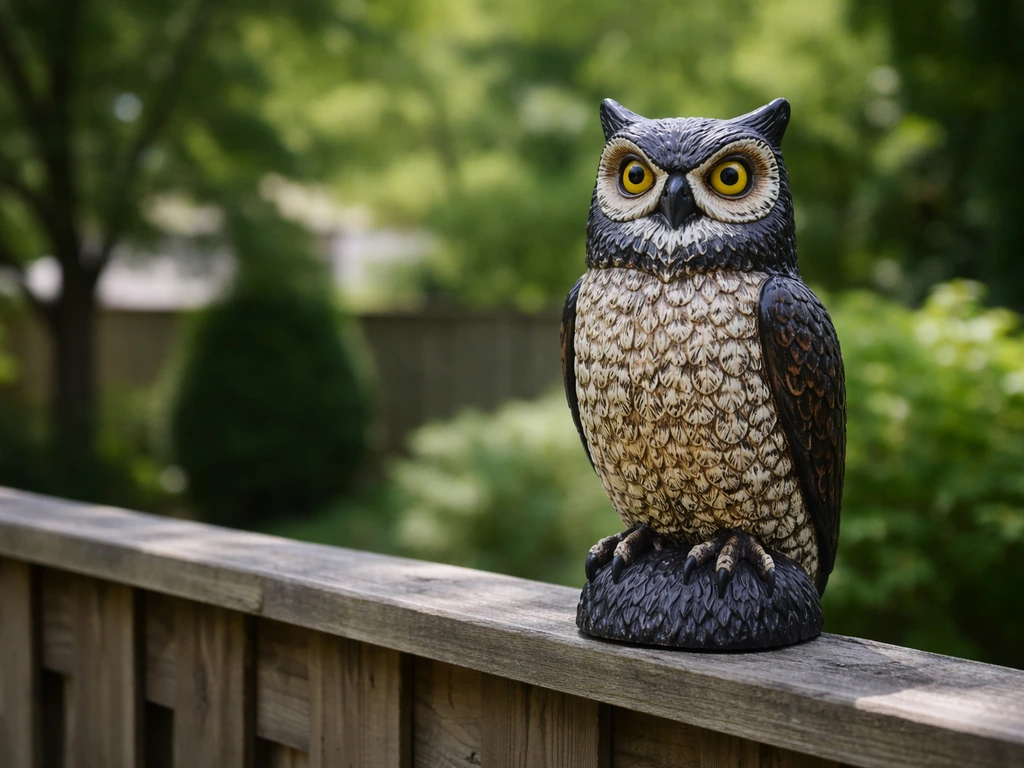
Strip away the product marketing and a bird deterrent is simply something that tells a bird 'not here.' It does not need to be sophisticated. A plastic owl on a fence post is a deterrent. So is a length of reflective tape, a net draped over berry bushes, or a non-toxic gel applied to a window ledge. What unites all of them is the intent: discourage presence, leave the bird unharmed, and reclaim the space. This is an important distinction because in the U.S., the Migratory Bird Treaty Act makes it illegal to kill, capture, or harm most wild bird species without a federal permit. Bird deterrents sit on the safe and legal side of that line because they use discomfort and inconvenience rather than injury.
It is also worth separating this from related but slightly different ideas. A bird repellent is typically a chemical spray or gel that creates an unpleasant sensory experience. A bird scarer leans more heavily on fright tactics like loud noises or sudden movement. Bird deterrent is the umbrella term that covers all of these approaches and more.
How bird deterrents work: the five main mechanisms
Birds are smart, and any single deterrent used alone tends to lose its effectiveness over time as birds habituate to it. The best setups combine two or more mechanisms. Here is how each one works.
Visual scare tactics
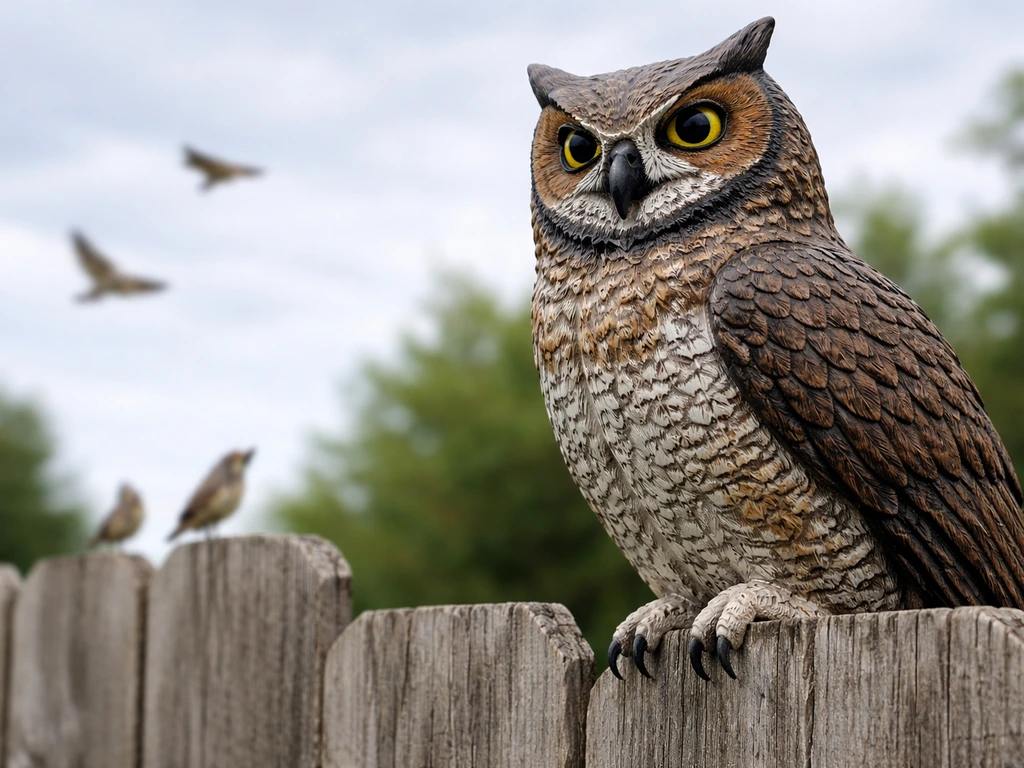
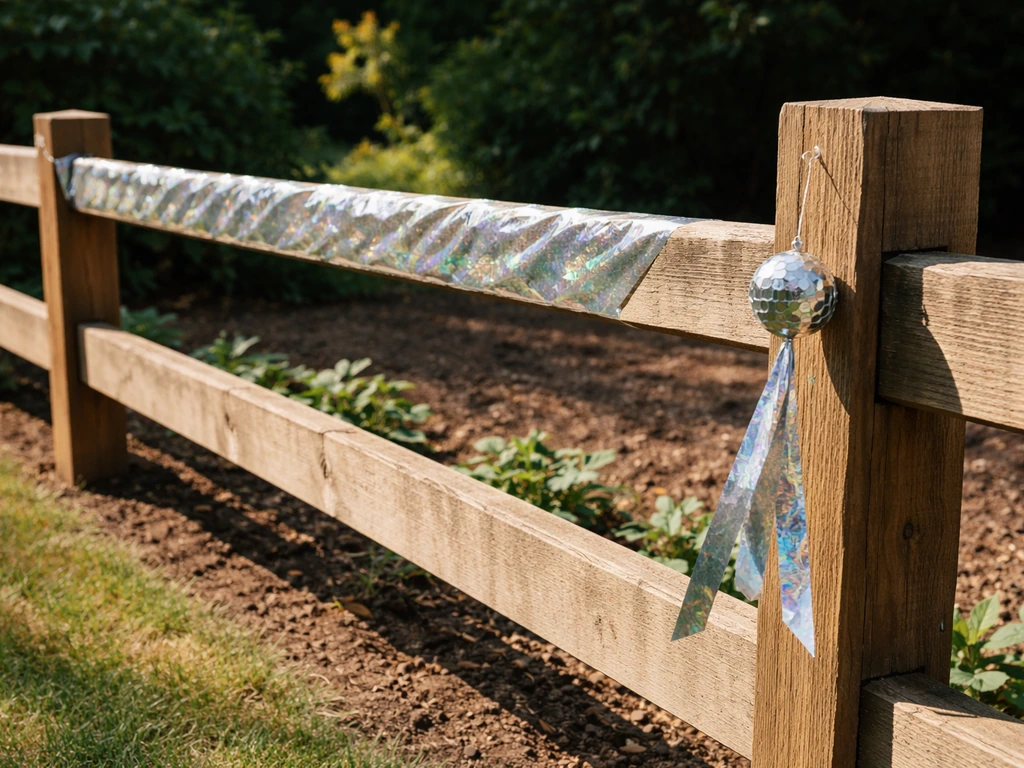
Birds are highly visual and respond strongly to perceived threats in their line of sight. Predator decoys (owls, hawks, herons), reflective surfaces, and holographic tape that mimics a predator's eye pattern all exploit this. Mylar tape and reflective pinwheels work by creating unpredictable light flashes that signal danger. The catch is that birds will eventually realize the owl never moves and the tape never actually harms them. Rotating the position of decoys every few days significantly slows that habituation.
Sound and noise
Ultrasonic devices, propane cannons, distress call speakers, and even simple wind chimes work through auditory disruption. Distress call systems that broadcast the actual alarm calls of the target species tend to be more effective than generic noise because they communicate 'danger' in a language the birds already understand. USDA-APHIS Wildlife Services notes that nightly harassment using sound at roost sites is used specifically to deter starlings from settling in. In a representative Reddit thread, people discuss that deterrent approaches should be framed around changing roost modification devices rather than lethal removal blank" rel="noopener noreferrer">roost harassment.
Motion and lasers
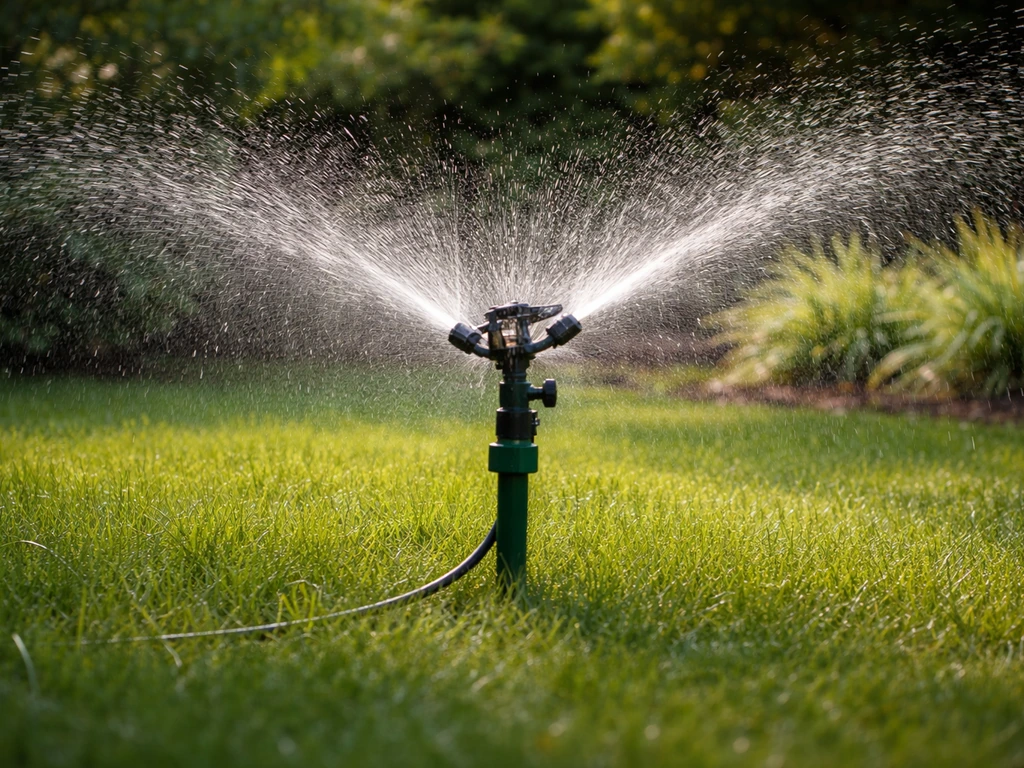
Motion-activated sprinklers, spinning windmill-style devices, and automated laser systems all create movement that birds associate with unpredictability and potential threat. Lasers in particular have moved into more formal use: USDA-APHIS Wildlife Services has a specific directive on laser use and safety for avian harassment, which treats them as a controlled method within integrated wildlife damage management. Handheld and automated laser units work best in low-light conditions, such as at dawn and dusk when birds are settling into roosts.
Taste and scent repellents
Non-toxic sprays containing methyl anthranilate (a grape-derived compound that birds find unpleasant but humans can tolerate) are widely used on turf, crops, and garden areas. Peppermint oil and other essential oil-based sprays are sold for milder situations. Any spray product used outdoors falls under EPA oversight, meaning you should always use products with registered labels and follow those directions precisely. The EPA's pesticide registration process specifically evaluates whether a product used according to label directions will avoid unreasonable adverse effects on the environment.
Physical exclusion
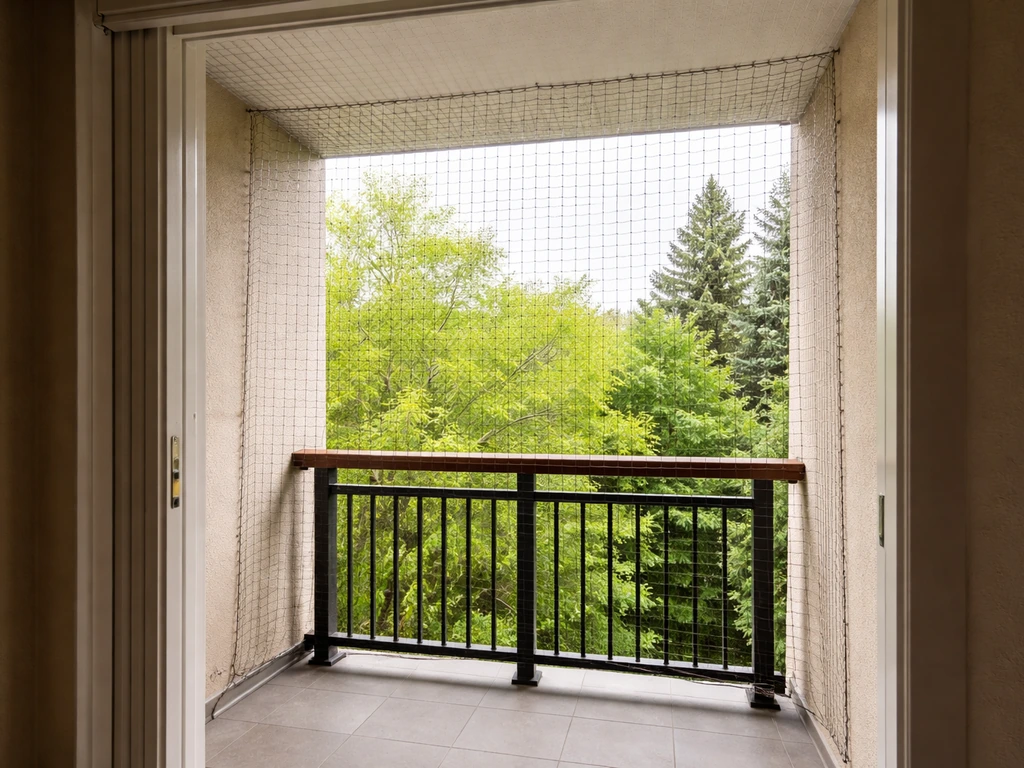
Nets, spikes, wire systems, and physical barriers do not scare birds at all. They simply remove the option to land or nest. This is the most reliable long-term approach because there is nothing for a bird to habituate to. A properly installed net over a fruit tree will keep birds out indefinitely. Spikes on a ledge mean there is no flat surface to stand on. The limitation is installation: partial coverage or gaps undermine the whole system.
Common types of bird deterrent products and how they are set up
| Deterrent Type | How It Works | Best For | Key Limitation |
|---|---|---|---|
| Bird spikes | Removes stable footing on ledges and beams | Pigeons, gulls on ledges, rooflines, signs | Partial installation fails; birds land in gaps |
| Netting | Physical barrier over crops, courtyards, eaves | Gardens, orchards, open buildings | Must be properly tensioned with no gaps |
| Reflective tape / Mylar | Unpredictable light flashes confuse and alarm birds | Gardens, balconies, fruit trees | Loses effect quickly without repositioning |
| Predator decoys | Visual threat triggers avoidance instinct | Open yards, ponds (herons), rooftops | Birds habituate in days unless moved regularly |
| Distress call speakers | Broadcasts species-specific alarm calls | Large open spaces, rooftops, warehouses | Noise complaints in residential areas |
| Taste repellent sprays | Makes surfaces or plants unpalatable | Turf, crops, garden beds, ledges | Washes off in rain; must be reapplied |
| Laser systems | Moving light beam triggers flight response | Warehouses, roosts, low-light environments | Requires proper training; eye safety rules apply |
| Anti-bird gel | Sticky, uncomfortable surface discourages landing | Narrow ledges, signs, pipes | Can trap small birds; avoid in warm climates where it liquefies |
| Bird wire / tension wire | Makes landing unstable on ledges and beams | Architectural surfaces, bridges, rooftops | Professional installation usually needed |
Where to use them: matching the setting to the right approach
Yards and gardens
Reflective tape, pinwheels, and motion-activated sprinklers work well in open garden settings because they are easy to reposition and cost little. For fruit trees and berry bushes, garden netting draped over the canopy and secured at the base is the most reliable option. Avoid leaving standing water near the garden if you are dealing with pest species, since water is a major attractant.
Rooftops and building exteriors
Ledges, HVAC units, and flat roofs are prime pigeon and gull territory. Bird spikes on ledges and parapet walls are the standard fix, but the installation has to be complete with no gaps. Bird wire systems (stainless steel wire strung on posts at a height that makes landing unstable) are a less visible option for historic or architecturally sensitive buildings. Anti-bird gel is sometimes used on pipes and narrow ledges but should be avoided in hot climates where it can melt and trap small birds.
Balconies and windows
Balcony netting is the most effective permanent solution. For windows attracting birds through reflection or collision (a different problem from roosting), frosted or patterned window film reduces the mirror effect that confuses birds. Predator decoys placed on railings help in the short term but need to be moved every couple of days.
Crops and agricultural land
Propane cannons, distress call systems, and laser units are used at scale on farms. Methyl anthranilate sprays are EPA-registered for turf and some crop applications. Bird-excluding netting over berry crops is extremely effective and increasingly standard on commercial soft-fruit operations. For grain fields, visual scare devices combined with sound systems give better coverage than either approach alone.
Warehouses, barns, and open buildings
Sparrows and starlings are the main offenders in open structures. Sealing entry points is step one, but for large openings, mesh or netting across doorways keeps birds out while allowing ventilation and human access. Laser harassment systems can clear birds from high rafters at dusk in large buildings without disturbing neighboring properties.
Vehicles
Birds perching on or nesting around vehicles are often attracted by warmth from an engine or a sheltered spot. In bird behavior, a hissing sound is often a warning or threat display, and its meaning can vary by species and context. Parking under cover when possible is the simplest fix. For outdoor parking, reflective sunshade windshield covers reduce the mirror effect, and covering the vehicle or using car covers eliminates the nesting surface entirely.
Matching the deterrent to the bird and the problem
Different species behave differently, and what works on a pigeon will not necessarily impress a gull or a sparrow. Knowing what you are dealing with changes everything.
| Bird Species | Typical Problem | Most Effective Deterrents | What Rarely Works |
|---|---|---|---|
| Pigeons | Roosting on ledges, nesting on rooftops, fouling | Spikes, netting, bird wire, exclusion | Decoys alone (they habituate fast) |
| Starlings | Large roost flocks, noise, fouling in open buildings | Laser harassment, distress calls, exclusion netting | Visual scares in large groups |
| Sparrows | Nesting in eaves, gutters, warehouse rafters | Sealing entry points, eave netting, mesh | Spikes (they are too small to be deterred) |
| Seagulls / gulls | Nesting on flat roofs, food theft in coastal areas | Netting over rooftop gravel areas, visual scares combined with sound | Spikes alone (gulls can still nest between strips) |
| Woodpeckers | Drumming on siding, nesting holes in structures | Visual deterrents (reflective strips at impact site), foam plugs in holes | Noise deterrents (they are persistent) |
| Canada geese | Grazing lawns, fouling near water features | Methyl anthranilate turf sprays, border collies, landscape modification | Single decoys |
Placement, timing, maintenance, and what to avoid
Get the placement right from the start
Bird spikes are the clearest example of how placement determines success or failure. A partial run of spikes on a ledge leaves gaps where birds simply land beside the strips. Full coverage of every usable surface is the rule, not the exception. Netting needs to be properly tensioned and anchored at every edge. Reflective tape works best when it can move freely in the breeze, so attach it loosely at intervals rather than pinning it flat.
Timing matters more than most people realize
Install deterrents before birds have established a roost or nest at the location. Once a bird has nested, you have a legal and practical problem. In the U.S., removing an active nest with eggs or chicks is a violation of the Migratory Bird Treaty Act for most species. The ideal window is early spring before nesting season, or immediately after birds have vacated for the season. For roost harassment, the best time to deploy lasers or distress calls is just before dusk when birds are arriving, not after they have settled.
Maintenance keeps deterrents effective
Move decoys every two to three days. Reapply taste sprays after rain. Check netting quarterly for holes or sagging. Replace worn reflective tape when it loses its shine. Rotate distress call sequences so the birds do not simply tune out the same loop. Deterrents that go unmaintained stop working, often within weeks.
What to avoid
- Sticky gels in warm climates or on surfaces where small songbirds could land and become trapped
- Pesticides or chemical repellents that are not EPA-registered for bird control use; always check that the label specifically covers your application
- Laser units without proper eye safety training; USDA-APHIS treats laser harassment as a controlled method for good reason
- Removing any active nest, eggs, or chicks without checking your state and federal protections first
- Relying on a single scare tactic without a backup, especially for smart, adaptable species like crows and gulls
- Sealing entry holes in buildings without first confirming no birds (especially young) are inside
Bird deterrent in culture and language: the wider meaning
This site spends a lot of time with the symbolic, spiritual, and idiomatic life of birds, so it is worth acknowledging where 'bird deterrent' sits in that broader picture. In literal use, a deterrent is entirely practical. But the word 'deterrent' carries weight in everyday language too, often appearing in phrases about discouraging unwanted behavior in people ('a deterrent to crime,' 'a deterrent effect'). When applied to birds, it picks up a faint metaphorical charge, especially in cultures where birds carry spiritual meaning as messengers, omens, or symbols.
In some folk traditions, deliberately discouraging a bird from your property carries a note of superstition. Chasing away a robin or a wren, for instance, is considered bad luck in parts of Britain and Ireland. Shooing away a crow might feel charged with meaning if you have been reading about crow symbolism. These cultural layers do not change the practical reality of pigeon fouling on a rooftop, but they are worth knowing if you find yourself feeling oddly conflicted about installing bird spikes. The symbolism around bird warning signs and bird behavior in folklore reflects how deeply birds are woven into human meaning-making, even when the problem in front of you is just droppings on a car. If you are also seeing bird behavior as a clue, you may be looking for the bird sign meaning behind common sightings.
The phrase 'bird deterrent' itself is not an idiom or slang term. It is a straightforward compound noun. But if you arrived at this article searching for a symbolic or spiritual interpretation of something a bird is doing near you, that is a different conversation. “Bird scarer meaning” can refer both to how deterrents work and to the symbolic or idiomatic sense people attach to bird-related scare tactics symbolic or spiritual interpretation. Bird behavior in dreams or in unexpected encounters tends to be interpreted through entirely different frameworks, none of which involve spikes or netting.
When deterrents are not enough: alternatives and escalation
Habitat modification
The most overlooked approach is simply removing what attracted the birds in the first place. Food sources (open bins, outdoor pet food, fallen fruit), water features, and dense low-hanging vegetation all draw birds in. Securing bins, cleaning up food waste, and trimming overgrown shrubs near buildings can reduce pressure significantly before any product is deployed.
Upgrading to full exclusion
If scare tactics have failed and the birds keep returning, the next step is physical exclusion. A properly installed exclusion system (full netting, sealed entry points, bird wire across every usable surface) is the most permanent non-lethal solution available. It costs more upfront but rarely needs replacement and works regardless of how smart or habituated the birds become.
Calling in a professional
Large infestations, protected species, nesting situations, and commercial or industrial scale problems are all cases where a wildlife management professional or pest control specialist with bird control experience is the right call. USDA-APHIS Wildlife Services can assist with damage assessment and connects property owners with integrated wildlife damage management resources. For urban pigeon and gull problems, licensed bird control contractors can carry out exclusion work, nest removal under proper permits where applicable, and ongoing monitoring programs. If you have any doubt about the legal status of what you are planning, contacting your state wildlife agency before acting is always the right move.
FAQ
What does “bird deterrent meaning” include, and what does it not include?
It means tools or methods intended to discourage birds from using a space without harming them. It does not include harming, trapping, or killing birds, and it also does not automatically mean “repellent” in the chemical sense, since deterrents can be visual or physical barriers too.
How can I tell if I’m dealing with a deterrent versus a repellent in product claims?
Look for whether the product creates unpleasant contact or odor (more like a repellent) versus making landing or nesting impossible or unpredictable (more like a deterrent). If the plan is mainly “block access” or “remove options,” it’s deterrence even without chemicals.
Do bird deterrents work immediately, or do birds need time to learn?
Some bird activity can stop quickly, especially with exclusion that removes access. For visual and audio scare tactics, expect a learning and habituation cycle, which is why timing (deploying before roosting or nesting) and rotating decoys matter.
Why did my bird deterrent stop working after a while?
Birds often habituate to a single cue, especially if the threat looks fixed or the sound repeats unchanged. Fix it by rotating decoys every couple of days, repositioning reflective elements, varying distress-call sequences, and combining deterrent types so no single signal becomes routine.
What is the biggest reason spikes, nets, or wires fail?
Incompleteness. Gaps, partial coverage, sagging, or loose edges create landing spots birds can use. For spikes, birds land right beside the strips if any usable flat surface remains uncovered.
Can I use an “anti-bird gel” on every surface and in any climate?
No. The article notes gel can melt and trap small birds in hot conditions, so avoid it where temperatures are likely to soften it. If you have heat exposure, prefer exclusion (netting, barriers, or wires) or surfaces designed for your specific bird-control system.
Are ultrasonic devices or propane cannons safe and reliable for common backyard birds?
They can be part of an integrated approach, but reliability varies because birds may habituate and because output intensity and placement affect results. If sound is your main tool, using species-appropriate distress call content and scheduling harassment at the right time (like before dusk) generally performs better than generic noise.
What’s the difference between roost prevention and stopping bird collisions or reflections on windows?
Roosting or nesting is about access to sheltered use areas, like ledges or rafters, where exclusion and barrier placement are key. Window reflection or collision is a different problem, and solutions like frosted or patterned film reduce the mirror effect rather than just deterring perching.
How do I handle standing water and attractants if I’m also installing deterrents?
Even strong deterrents struggle if the area stays attractive. Secure food sources, remove fallen fruit, trim dense low vegetation near structures, and eliminate water attractants, because water can pull birds into the same zone regardless of scares.
When is it too late to install a deterrent because of nesting or eggs/chicks?
If birds have already established an active nest, removing it can be illegal for many wild species in the U.S. That’s why the recommended window is early spring before nesting starts, or immediately after birds have fully vacated. If you find an active nest, pause and check legal requirements with your state wildlife agency.
Do I need professional help if I only have a few birds?
Not always. But it’s a good idea to call a specialist for large infestations, protected species, complex high-roof or industrial setups, or any situation where you might be tempted to do nest removal. For commercial operations, properly designed exclusion systems and ongoing monitoring usually justify professional oversight.
What should I do first if I am unsure which species is causing the problem?
Start by identifying behavior and location: ledges and HVAC suggests pigeon or gull roosting, while open structures might involve sparrows or starlings. Species affects what cues work best, so adjust your deterrent strategy once you know who the target is.
How often do I need to maintain deterrents for them to keep working?
The article highlights practical checks: reposition or rotate decoys every two to three days, reapply taste sprays after rain, inspect nets quarterly for holes or sagging, replace reflective tape when shine fades, and change distress call sequences so birds do not tune out the pattern.
What’s the most permanent non-lethal option if birds keep returning?
Proper physical exclusion. Full netting with sealed entry points, plus bird wire across every usable surface, removes the ability to land or nest. This works regardless of habituation to decoys, and it usually costs more upfront but requires less ongoing replacement.
Next Articles
Bird Sign Meaning: How to Interpret Bird Encounters
Learn bird sign meaning from real clues and common omens, with step-by-step tips, symbolism vs nature, and safety action

Bird Insult Meaning: What Bird Phrases Really Say
Understand bird insult meaning, decode common phrases, spot when teasing turns hurtful, and set boundaries.
Bird Warning Sign: What It Means and How to Stay Safe
Understand bird warning signs on buildings, farms, and schools and take safe, practical steps plus evidence-aware spirit