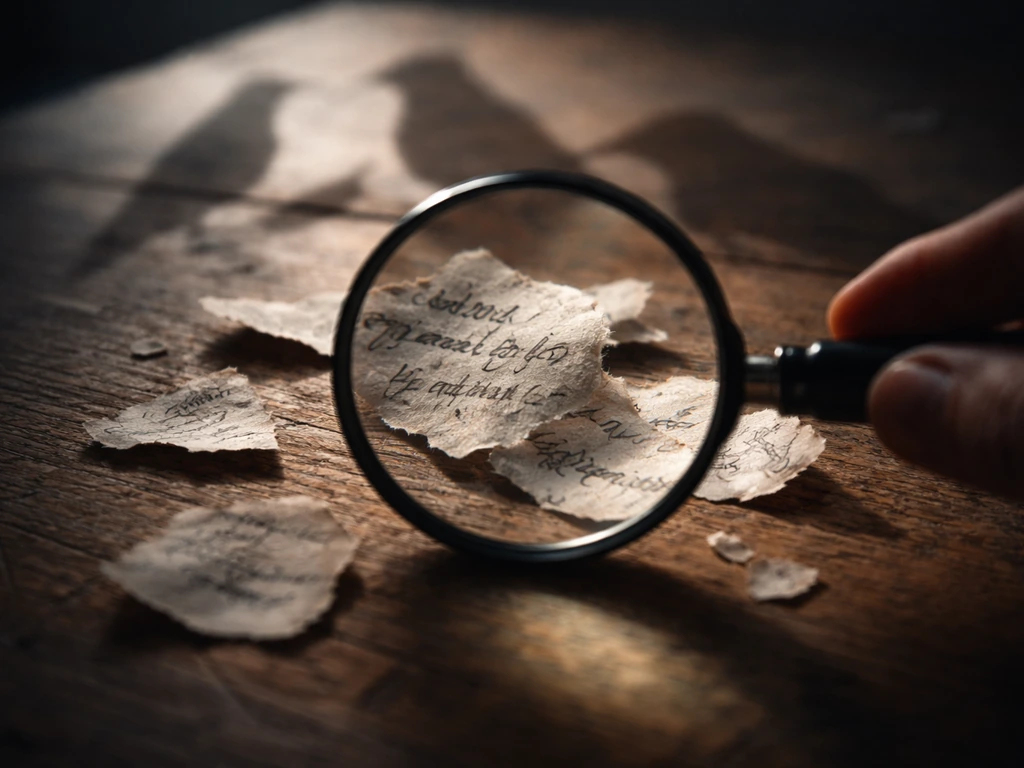
A bird sign is any bird encounter that prompts you to ask 'what does this mean?' It could be a robin landing two feet from you, a crow calling from your roof every morning, an owl outside your window at midnight, or a bird flying into your house. Most of the time, there is a practical ecological reason behind what you just witnessed. Sometimes, that experience also maps onto a deep layer of folklore, cultural symbolism, or personal meaning. Both things can be true at once, and you don't have to choose between them. What you do need is a clear starting point, which is why this guide walks you through interpretation step by step.
Bird Sign Meaning: How to Interpret Bird Encounters

Marcus Holloway
6 Jun 2026
What counts as a 'bird sign' in real life

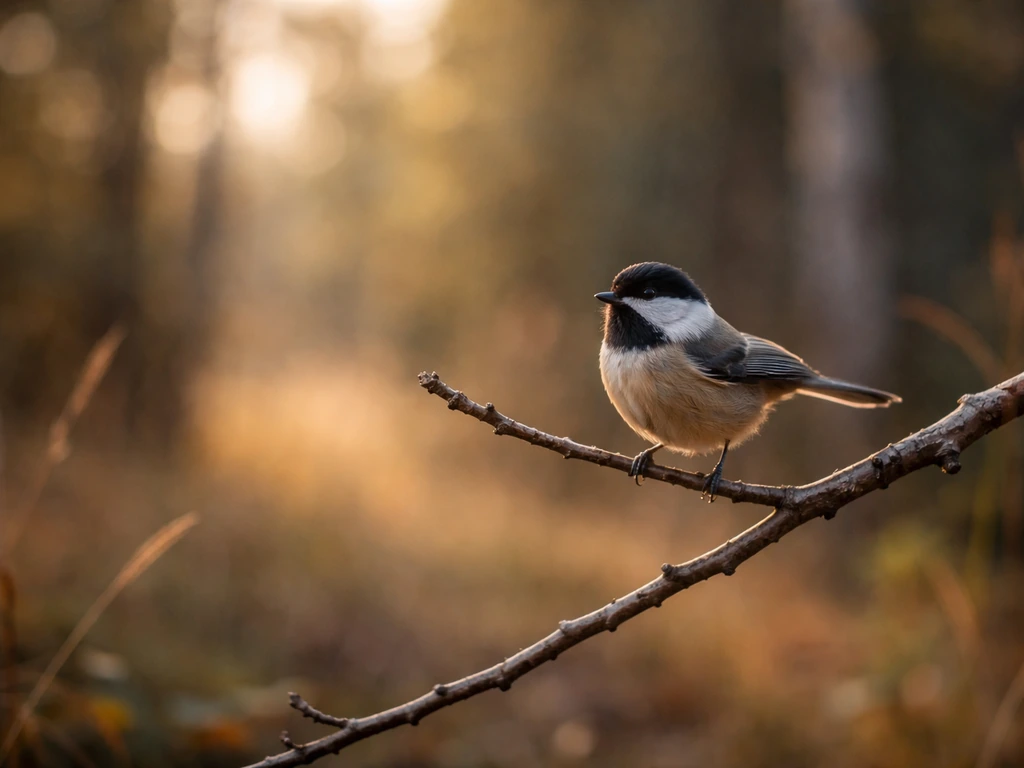
Not every bird you see is a 'sign,' and that's actually a useful place to start. In practice, people tend to treat a bird encounter as a sign when something about it feels unusual, repeated, or personally timed. The scenario might be a specific species showing up in an unexpected place, a bird behaving in a way that seems directed at you, or an encounter happening right when you're asking yourself a big question. These are the moments people search for 'bird sign meaning,' and they're worth taking seriously, whether your interest is spiritual, cultural, or simply curious.
Common situations people flag as potential bird signs include: a bird landing very close to you or following you, a bird entering your home, a bird repeatedly hitting or tapping at a window, hearing an owl or other nocturnal bird at an unusual hour, seeing a bird that feels rare or out of place for your area, finding a feather in your path, and witnessing a large flock behaving in a dramatic way. Each of these has both a natural explanation and, in many traditions, a symbolic one.
How to interpret a bird encounter: what to notice first
Before you jump to meaning, spend a moment observing. What you notice in the first 60 seconds dramatically changes how you interpret the experience. Here's the order that actually helps.
- Species: Can you identify it? Even a rough category (small songbird, large black bird, raptor, dove) narrows both the natural behavior explanation and the cultural symbolism significantly.
- Behavior: What is it actually doing? Singing, alarm-calling, pecking at glass, sitting still, following you, circling overhead? Each behavior has a well-documented ecological driver.
- Time of day: Dawn singing is almost always tied to territorial and mating behavior, especially in spring. Nocturnal bird sounds at night are normal for owls and some other species. An unusual bird active at the 'wrong' time is worth noting.
- Location and context: Is this your backyard, a hospital parking lot, a hiking trail? Location matters both ecologically (what food/nesting resources are nearby) and symbolically (many traditions weight encounters near liminal spaces like doorways or windows differently).
- Repetition: A one-time fly-by is ordinary. The same bird showing up in the same way for several days in a row is genuinely unusual and worth paying attention to.
- Your own state of mind: If you were in the middle of a question, a grief, or a decision when the encounter happened, that context shapes personal meaning, even if it doesn't change the biology.
Common bird behaviors and what they usually mean
Most dramatic bird behavior has a straightforward biological explanation. That doesn't make it less interesting, it just helps you interpret it more accurately.
Loud singing, especially at dawn
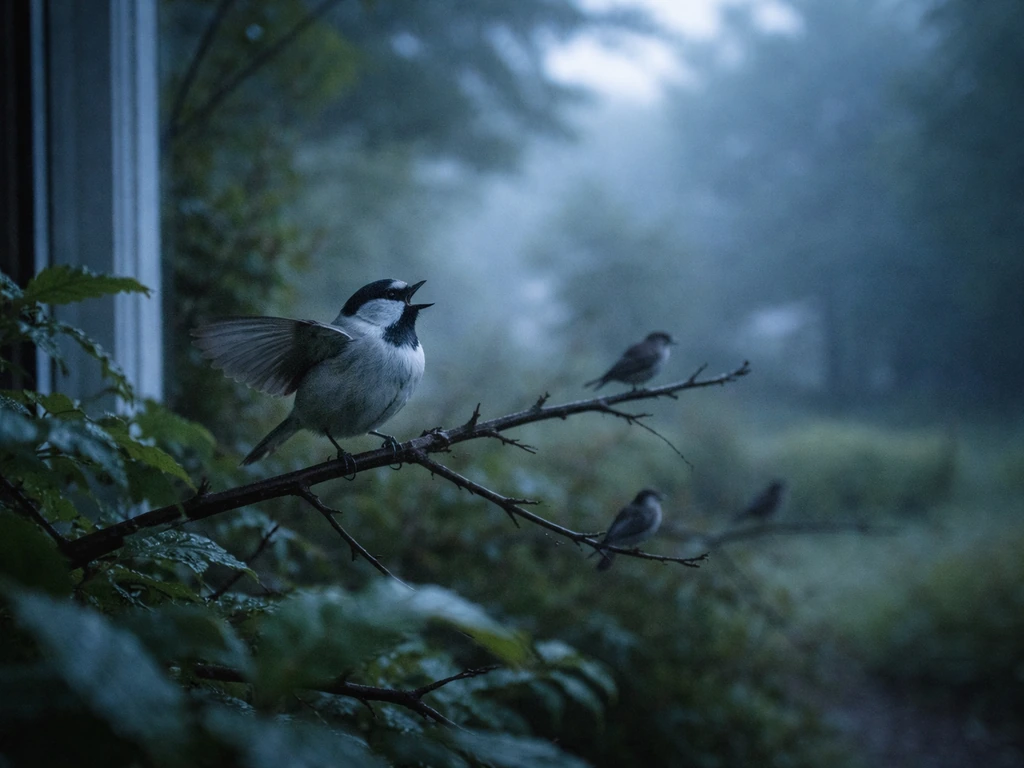
If birds are waking you up before sunrise in spring, that's the dawn chorus, and it's one of the most studied phenomena in ornithology. Cornell Lab research confirms that the timing and intensity of dawn singing is driven by territorial competition and mate attraction, peaking in spring. It's not directed at you, but it's also genuinely remarkable behavior, worth appreciating on both practical and symbolic levels.
A bird tapping or pecking at your window
This one confuses people constantly. When a bird repeatedly attacks a window, it's almost always seeing its own reflection and treating it as a rival intruder. It's territorial aggression, not a message. Male cardinals, robins, and mockingbirds are frequent offenders in spring and summer. The fix is to break up the reflection with window film, tape, or hanging something outside the glass. This is a very different scenario from a bird hitting the window hard once (a collision, covered below).
A bird following you or landing very close
This usually means you're near a food source, a nest, or you're simply in a bird's established foraging territory. Some bird species, particularly corvids like crows and jays, are genuinely curious and will investigate novel things, including people. If you've been feeding birds nearby, certain species will start to associate you personally with food. None of that makes the experience less meaningful if it feels significant to you, but the ecological explanation is almost always curiosity or resource proximity.
Alarm calls and aggressive behavior near you
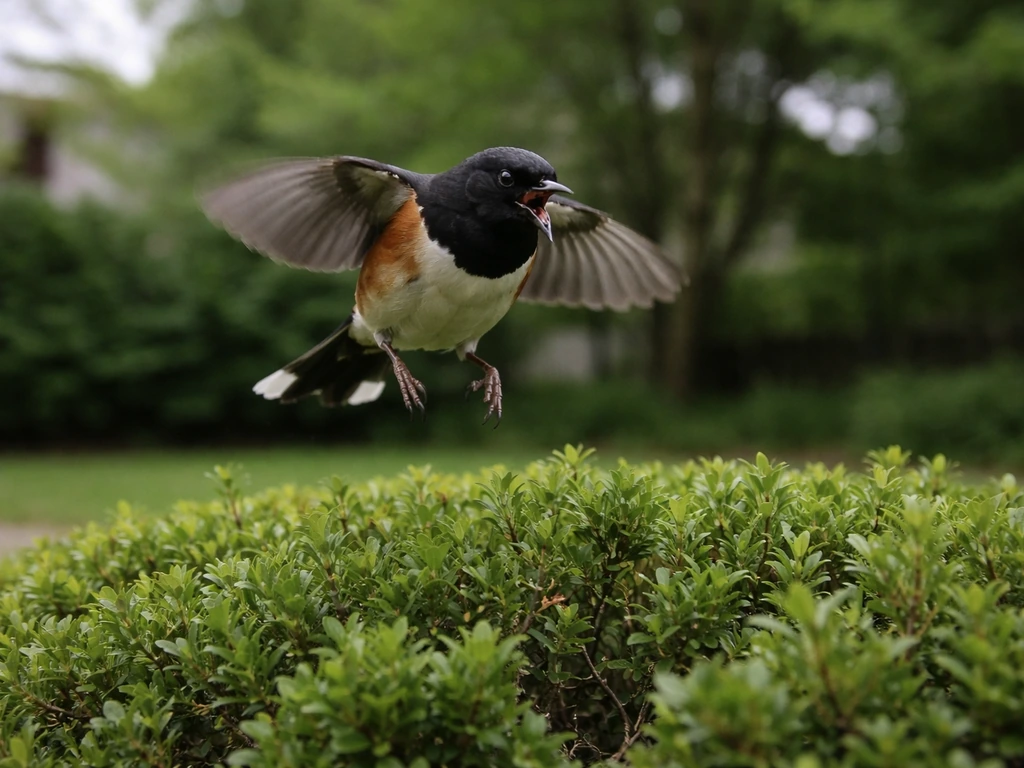
If a bird is diving at your head or making sharp, repeated chip notes, you are almost certainly near a nest. Nesting season triggers intense territorial defense, and U.S. Fish and Wildlife Service guidelines note that persistent calling and dive-bombing near humans are textbook nesting-defense behaviors, not omens. The practical response is to give the area a wide berth until the young birds fledge, which usually takes a few weeks. Alarm calls also serve a warning function within bird communities, so a sudden burst of alarm notes in your yard often means a predator (hawk, cat, or snake) is nearby.
A bird entering your home
Birds fly into houses through open doors and windows because they're following insect prey, fleeing a predator, or simply disoriented. Once inside, they're usually panicking, not delivering a message. Cornell Lab's guidance for this situation focuses on safe, calm handling: darken the room so the bird orients toward a window or door with light, and guide it out. The welfare of the bird comes first.
Spiritual and folklore meanings: what different traditions say
Bird symbolism in folklore is ancient, cross-cultural, and genuinely rich. The key is to engage with it as a layer of meaning, not as a fixed rulebook. Here are the most commonly cited traditional interpretations, organized by situation. Bird repellent products are usually designed to discourage birds by triggering discomfort or reducing the chance of landing, so the term refers to the practical function rather than a spiritual message bird repellent meaning.
| Situation / Species | Common Folklore / Spiritual Association | Cultural Context |
|---|---|---|
| Owl calling at night near home | Death, transition, or a spiritual message from ancestors | Wide range: Roman, many Native American traditions, Western European folklore; also wisdom (Greek, via Athena/Minerva) |
| Crow or raven cawing on roof | Bad omen, upcoming loss, or presence of spirits | Roman, Norse (Odin's ravens as wisdom), Swedish (ravens as ghosts of murder victims), widespread Western association |
| Dove landing near you or visiting | Peace, divine presence, new beginnings, hope | Christian (Holy Spirit, Noah's dove with olive leaf), broadly cross-cultural as a peace symbol |
| Black bird crossing your path | Warning, transition, or a message requiring attention | Widespread Western superstition; specifics depend heavily on species |
| Bird entering the home | An incoming message, a visiting spirit, or (in some traditions) an omen of death | British, Irish, and various Southern U.S. folk traditions; also common in West African diaspora folklore |
| Feather found in your path | Guidance from a spirit, angel, or ancestor; confirmation you're on the right path | Widespread; prominent in New Age practice and some Indigenous traditions |
| Singing bird near you unexpectedly | Good luck, an affirmative sign, joy arriving | Broadly positive across many European and Indigenous American traditions |
| Bird hitting a window (strike) | A warning, a spirit attempting contact, a death omen | British and Irish folk tradition in particular; not universal |
A quick note on using this table: none of these associations are universal. A crow is a death omen in some European traditions and a clever trickster hero in many Pacific Northwest Indigenous traditions. Context, culture, and your own relationship to these symbols all matter. Treat folklore meanings as lenses, not verdicts.
Species-specific interpretations
When you can identify the bird, you get a much more specific picture, both ecologically and symbolically. Here are the species people ask about most often.
Owls
Owls carry the heaviest symbolic weight of almost any bird. In Western and many Indigenous traditions, they are associated with death, the underworld, and transition, though Greek tradition also links them to wisdom through Athena. Hearing an owl at night near your home is significant in multiple folklore systems. Ecologically, owls calling at night are simply hunting and establishing territory; in many regions the barred owl and great horned owl are common suburban birds whose calls startle people who didn't realize they lived nearby.
Crows and ravens
Crows and ravens have layered, sometimes contradictory symbolism. Their association with death and ill omen in much of Western Europe relates to their black plumage, croaking voice, and carrion-eating diet. In Norse mythology, Odin's two ravens, Huginn and Muninn, represented thought and memory, making them symbols of wisdom and divine surveillance. In many Pacific Northwest Indigenous traditions, raven is a creator and trickster figure, anything but a bad omen. If crows are visiting your property regularly, the most likely practical reason is a food source or an established roosting site nearby.
Doves and pigeons
A dove appearing during a difficult or emotional moment is one of the most commonly reported 'sign' experiences. The peace symbolism of doves is among the most consistent across Western cultures, rooted in early Christian tradition (the dove at Jesus's baptism, Noah's dove returning with an olive branch) and carried forward into secular culture as a universal peace symbol. Whether or not you're religious, a dove appearing unexpectedly tends to feel like an affirmation, and that's a tradition thousands of years deep.
Cardinals
In contemporary American folk spirituality, a red cardinal visiting after the death of a loved one is one of the most widely shared 'sign' narratives. The idea that a cardinal represents a visiting spirit or a message from someone who has passed is relatively recent in folklore terms but has become deeply embedded in American grief culture. Ecologically, male cardinals are year-round residents in much of the eastern U.S. and are reliably visible at feeders, which means they show up regularly regardless of circumstance.
Hummingbirds
Hummingbirds are associated in many traditions (particularly Latin American and some Indigenous North American ones) with joy, playfulness, and love. Their arrival is generally read as a positive sign. Practically, hummingbirds follow flowers and feeders with reliable precision, so their presence is usually a sign you're in good habitat or have a good food source nearby.
Hawks and eagles
A hawk or eagle appearing overhead is widely interpreted as a sign of perspective, leadership, or spiritual vision. In many Native American traditions, eagles in particular are sacred messengers. A hawk circling overhead is ecologically hunting thermals and scanning for prey, but if one makes direct, low eye contact with you, that genuinely unusual behavior is worth noting on both levels.
Window strikes, injured birds, and what to do
A bird hitting your window is one of the most common 'sign' scenarios people search for, and it's also a genuine wildlife welfare situation that deserves a practical response first. Birds hit glass because they perceive the reflection of trees or sky in the window as open space, a sensory navigation error with no supernatural component. An estimated hundreds of millions of birds die from window strikes each year in the U.S. alone. Here's what to do.
- Check on the bird immediately but calmly. Don't hover over it or pick it up right away. A stunned bird may simply need a few minutes to recover.
- If it's dazed but upright, place a shoebox with air holes over it gently to keep it in a dark, quiet space. Darkness reduces stress and gives the bird time to recover. Check after 30 to 60 minutes.
- If the bird is clearly injured (bleeding, holding a wing oddly, unable to stand), do not try to treat it yourself. Contact a licensed wildlife rehabilitator. The Audubon Society and Wildlife Center of Virginia both emphasize that a layperson often cannot recognize the full extent of bird collision injuries.
- If the bird doesn't recover after a couple of hours in the box, seek veterinary or wildlife rehab help. The Tufts Wildlife Clinic recommends this as a firm threshold.
- To prevent future strikes, apply exterior window treatments: tape strips, decals, or insect screening on the outside of the glass. Note that window blinds or decals installed inside do not work during daytime. Step outside and look at what the bird sees, as the Wildlife Center of Virginia recommends, to understand the reflection problem from the bird's point of view.
- Do not apply symbolic meaning before you've secured the bird's welfare. The wildlife question comes first.
The repeated-window-pecking scenario is different: that bird is not injured, it's fighting its reflection. You'll notice it's more aggressive than stunned, returns repeatedly, and tends to happen in spring. Breaking up the reflection on the outside of the glass resolves this quickly and protects the bird from exhaustion. This situation is related to the broader topic of bird warning sign behavior, where what looks like a message is actually a territorial communication.
Bird signs in dreams and bird-related sayings
The word 'sign' connects naturally to two other areas this site covers: dream symbolism and bird idioms in everyday language. They're worth a quick connection here because people searching for 'bird sign meaning' sometimes arrive from one of those angles. If you're specifically looking for the bird scarer meaning behind a scare tactic, the symbolism can vary a lot by tradition and context bird sign meaning.
Birds in dreams
In dream interpretation, birds broadly represent freedom, spiritual aspiration, transition, and the movement between states of being. The specific species matters: dreaming of an owl often connects to fear of the unknown or a warning from the unconscious, while dreaming of a dove tends to signal peace or resolution. Dreaming of a flock usually points to community or collective movement. If you've had a striking real-world bird encounter and then dreamed about birds, your mind may simply be processing the experience, which is a completely normal psychological function. The symbolic language your unconscious uses draws on the same folkloric wellspring that makes bird signs feel significant when you're awake.
Bird idioms and what they tell us about bird meaning
The English language is saturated with bird references that carry embedded cultural meaning. 'The early bird catches the worm' encodes a belief about timing and reward that directly echoes how some people read bird signs: the timing of an encounter matters. 'A little bird told me' frames birds as information carriers, which parallels their role as messengers in folklore. 'Bird warning sign' phrasing shows up in how people describe both literal alarm calls (birds warning each other about predators) and the superstitious sense that a bird encounter is alerting you to something. Even negative expressions like 'bird-brained' or bird-related insults reflect a cultural ambivalence about birds, creatures that can stand for wisdom in one context and foolishness in another. That tension is part of what makes bird symbolism so persistent.
How to decide what a bird sign means for you
There's no single correct interpretation of a bird encounter, and anyone claiming otherwise is selling you something. What you can do is layer your interpretation thoughtfully. Start with the natural explanation: what is this bird likely doing here, biologically? Then ask whether the encounter has any of the qualities that traditions across cultures flag as significant: unusual species, unusual timing, eye contact, repetition, or synchronicity with a moment in your life. If both layers feel true, hold both. If the bird is clearly doing something explainable (nesting, foraging, chasing a reflection), let that be your anchor and treat any symbolic layer as personal and optional.
The most useful thing you can do after any memorable bird encounter is write down what you noticed: the species if you know it, the behavior, the time, the location, and what you were thinking or feeling when it happened. That record becomes meaningful over time, especially if patterns emerge. You'll also find that learning a little basic ornithology, what different calls mean, which species are territorial versus social, how migration timing works, makes bird signs far richer rather than less interesting. If you hear a bird hissing nearby, you can interpret it the same way by checking what the call is communicating in context bird hissing meaning. Knowledge and wonder are not opposites here.
FAQ
How do I tell if a bird encounter is actually a “sign” versus just normal wildlife activity?
Not always. A “real” sign interpretation usually starts when the encounter has at least one unusual element (timing, location, repetition, or behavior that seems oriented). If it is a routine sighting, like a common songbird in a typical spot, it is usually better to treat it as ecology first, and symbol second (if you still want it).
What should I do if a bird hits my window but doesn’t seem badly injured?
Window strikes can be fatal or leave birds stunned, even when the bird seems to fly away. If you find a bird on the ground, keep pets away, place it in a ventilated box, and contact a local wildlife rehabilitator or emergency line if it is nonresponsive, bleeding, or unable to regain steady flight within minutes.
How can I distinguish a collision from a bird fighting its reflection?
A quick rule: pecking or battering at one spot is usually territorial aggression toward a reflection (fix the reflection). One impact followed by disorientation is more consistent with a collision. If you see repeated returns to the same pane, treat it as the reflection problem and stop the cycle immediately.
If an owl or other nocturnal bird is calling near my house, does it always mean “something supernatural” is happening?
Yes. Loud nighttime calls can be normal hunting or territory behavior, but they also can indicate something nearby that affects the bird (like a rodent population or a nesting site). If the calls are new for your area, sharply increased, or occur with alarm calls, pay closer attention and check for practical causes like habitat changes or nearby predators.
Can I trust a bird’s folklore meaning if it doesn’t match my personal experience?
Folklore meanings are often species specific, but individual tradition is not always transferable. If your personal experience contradicts the cultural story (for example, you associate a crow with protection because of a past event), your lived meaning is valid. Use folklore as a lens, not a verdict, and let ecology guide what is most likely true about the encounter.
What’s the most reliable way to interpret a bird sign without overthinking it?
If you want a “best next step,” identify the species and the behavior first, then note timing and context (season, time of day, breeding period). Most “meaning” confusion comes from mixing up these categories. For example, dawn singing is about territorial competition and mate attraction, while dive-bombing usually indicates nesting defense.
Could my bird feeder or yard setup be causing “sign-like” behavior?
It can be. Feeding can change who visits and when, especially with corvids and some seed-eaters. If birds start arriving after you begin feeding, the encounter is often about food association and predictable foraging, not a new message. Adjusting or pausing feeding can help you see whether the pattern disappears.
Why do bird signs feel so intense when I’m stressed or making a big life decision?
Yes, especially if the encounter happens with high emotion or during a decision. In those moments, your brain is actively searching for meaning, which can make synchronicity feel stronger than it would otherwise. Keeping a short log (time, location, behavior, your state) helps you tell intuition from pattern building.
What if I see different birds repeatedly, does that mean I should interpret it as one unified message?
No, and you can reduce false alarms by checking repetition and specificity. If multiple different species show up, the message is less “symbolic one-off” and more often about your environment (food, nesting, migration timing) or your attention being heightened.
Do feathers found in my yard or on a sidewalk count as a bird sign meaning?
When you see a feather, location matters. Feathers found near a window or path can simply be natural shedding, wind transport, or proximity to a roost. If it is clearly fresh, very large, or associated with a specific bird species you have been seeing, it can feel more meaningful personally, but it still usually has a natural source.
How do I keep the symbolic interpretation from overriding the natural explanation?
If you are trying to get both layers right, treat it like two tracks: Track one is biology (what the bird is doing, what season it is, what resources are nearby). Track two is personal meaning (what you felt, what the timing reminds you of). When Track one is clear (nesting defense, reflection fight, foraging), it should anchor Track two.
Next Article
Bird Insult Meaning: What Bird Phrases Really Say
Understand bird insult meaning, decode common phrases, spot when teasing turns hurtful, and set boundaries.