When someone calls you "bird-brained," they're saying you're stupid or scatter-headed, full stop. It's one of the most common bird insults in everyday English, dating back to at least the 1910s and rooted in the folk assumption that birds, with their tiny brains, can't hold a thought for long. But bird-related insults aren't always that blunt, and the word itself is only half the story. Context, tone, and relationship determine whether you're dealing with a harmless tease, a casual dig, or something that's crossed a real line.
Bird Insult Meaning: What Bird Phrases Really Say

Marcus Holloway
28 May 2026

What "bird insult" usually means (and how people phrase it)
The most common bird insult in English is "birdbrain" or "bird-brained," and every major dictionary agrees on what it means: a stupid or silly person. Merriam-Webster, Collins, Britannica, and Dictionary.com all define it the same way, with some adding the nuance of "scatterbrained" alongside outright stupidity. Etymonline traces the adjective "bird-brained" to around 1910, with the noun "birdbrain" following close behind in the 1920s. The insult stuck because it's vivid and almost universally understood.
Beyond "birdbrained," English has a whole flock of bird-flavored put-downs and dismissive phrases. Calling someone a "goose" implies they're foolish (Etymonline notes the connection to an old proverb about knowing "no more than a goose"). Saying someone is "chicken" means cowardly. "Crow" can be used dismissively. "Dodo" implies someone is hopelessly outdated. These all work the same way: they map an animal trait (real or imagined) onto a person as a critique of their intelligence, courage, or relevance.
- Bird-brained / birdbrain: stupid, foolish, or scatter-headed
- Goose: silly, foolish, or naive
- Chicken: cowardly or easily scared
- Dodo: someone hopelessly out of touch or old-fashioned
- Crow / old crow: used dismissively, often about age or unpleasantness
- Cuckoo: crazy or wildly irrational
None of these are literal references to actual birds. They're figurative, and when someone uses them, they're making a judgment about your intelligence, behavior, personality, or identity.
Teasing, joke, or something worse? Reading context
The same word can be affectionate or genuinely hurtful depending entirely on the situation. A close friend calling you a "birdbrain" because you forgot your keys for the third time that week is very different from a coworker using it in front of your boss to undermine you. The insult itself is almost secondary to who's saying it, how, in front of whom, and how often.
Playful teasing between people who know each other well tends to be mutual, brief, and quickly forgotten. Both people are usually laughing. The power dynamic is roughly equal. Nobody walks away feeling diminished. That's the clearest sign you're in "joke" territory.
When the same language becomes one-directional, public, or repetitive, the vibe shifts fast. If someone is consistently the butt of bird-related put-downs, especially from someone with more social power (a popular peer, a supervisor, an older family member), that pattern is worth paying attention to. It stops being banter and starts being something that chips away at a person.
| Signal | Likely teasing | Likely harassment or bullying |
|---|---|---|
| Who says it | Close friend or peer with equal standing | Someone with more social/professional power |
| Tone | Warm, laughing, mutual | Cold, pointed, or performative |
| Audience | Private or small group that knows both parties | Public, in front of others to embarrass |
| Frequency | Rare, situational | Repeated, patterned |
| Your reaction | You also laugh, feel included | You feel diminished, anxious, or dread seeing that person |
The folklore angle: birds as messengers and symbols of being "put down"
It's worth pausing on why bird imagery specifically shows up in language used to diminish people. Across cultures and centuries, birds have carried enormous symbolic weight. In Chinese mythology, birds like the Qingniao functioned as divine messengers. In the Quran, Solomon's hoopoe acts as a wise intermediary. Ravens in European folklore were tied to omens, prophecy, and the realm of the dead. Birds sit at the intersection of heaven and earth, freedom and fragility, wisdom and instinct.
That symbolic range is exactly why bird language cuts both ways in speech. When someone calls you "bird-brained," they're invoking the small, flighty, survival-driven side of bird nature (a creature that acts on instinct without reflection). But that same bird imagery in spiritual traditions represents freedom, transcendence, and the carrying of messages between worlds. Bird hissing meaning can be very different depending on whether you're hearing it in nature or interpreting a cultural or symbolic context. The insult collapses the whole symbolic spectrum of birdhood down to its least flattering corner.
Some folklore traditions suggest that being compared to a particular bird isn't automatically a put-down. A raven connection might signal intuition or prophetic awareness in one cultural reading, even if the person using "bird" language in a modern insult isn't thinking about any of that. It's not mysticism to notice that the language we inherit carries older symbolic freight. Whether that framing helps you process a put-down is a personal call, but it does explain why bird comparisons feel so visceral and layered.
Bird idioms and cultural roots behind the slang
English is packed with bird-based idioms, and understanding the network helps you see where insults fit in the broader picture. "Birds of a feather flock together" (meaning similar people gravitate toward each other) is descriptive, not insulting. "Wild-goose chase" (a pointless, fruitless pursuit) can be dismissive of someone's efforts without being directly personal. These idioms color the emotional context of bird language generally, setting a cultural tone where birds often signal foolishness, futility, or groupthink.
Bird-dogging, bird law (as a comedic concept made famous in popular culture), and other bird-adjacent slang extend the idiom family into more specific social and behavioral territory. What they share is the use of bird imagery to comment on human behavior, usually with some implied judgment about wisdom, efficiency, or social fit. When a bird insult lands, it's borrowing from that whole tradition of using birds to represent human flaws.
What to actually say in the moment

You don't need a clever comeback. In most cases, a calm, clear response is more effective than escalating with wit. The goal is to signal that you noticed, you're not rattled, and you're not accepting the framing without putting more drama into the situation.
- Name it neutrally: "That felt like a put-down. Was that the intent?" This forces the person to either own it or walk it back, without you going on the defensive.
- Redirect with calm directness: "I'd prefer if we talked to each other without the name-calling." Simple, adult, no drama.
- Use humor if the relationship genuinely supports it: "Fair, but at least I remembered your name." Only works if the dynamic is actually playful.
- Say "stop" clearly: If you're in a school or peer context, StopBullying.gov's guidance is that a calm, clear "stop" is more effective than arguing or explaining why it hurt.
- Don't explain or justify yourself at length: Lengthy defenses often give the person more material to work with and signal that the insult landed hard.
After the moment passes, it's worth deciding whether this is a one-off or part of a pattern. That decision shapes everything that comes next.
When it crosses into bullying or harassment
A single "birdbrain" comment, while rude, probably doesn't constitute bullying or workplace harassment on its own. The EEOC is clear that not every unwelcome remark rises to the level of an unlawful hostile environment. What matters is whether the conduct is severe or pervasive enough to create an intimidating or abusive situation, judged from the perspective of a reasonable person. An isolated insult usually doesn't meet that bar, even if it genuinely stings.
Bullying, as defined by StopBullying.gov and reinforced by Department of Education research, requires two key elements: repetition and a real or perceived power imbalance. A peer who consistently calls you stupid, scatterbrained, or otherwise "bird-level" in front of others, especially over time and from a position of social dominance, fits that definition. The pattern matters more than any single comment.
Here's how to think about escalating the response depending on context:
- School setting: Document incidents with dates and details. Report to a teacher, counselor, or administrator. Check your state's anti-bullying law, which defines what schools are required to do.
- Workplace setting: Start with HR if the behavior is repeated or tied to a protected characteristic (race, sex, religion, etc.). The EEOC is the federal body for unlawful harassment complaints.
- Social or family setting: Set a direct boundary in a private conversation first. If the behavior continues, limit exposure or involve a trusted third party.
- Online or digital: Screenshot and document before blocking. Most platforms have reporting tools for harassment.
StopBullying.gov also makes a useful point for bystanders: you don't have to confront the situation head-on to help. StopBullying.gov also advises adults to intervene immediately to stop bullying on the spot, including guidance like not forcing bystanders to publicly explain what they saw gov also makes a useful point for bystanders: you don't have to confront the situation head-on to help.. Checking in with the person who was insulted afterward, or simply not laughing along with the group, changes the dynamic meaningfully. Being an upstander doesn't have to be dramatic.
Is this actually about a bird, or is it figurative?
Most of the time, the answer is obvious. If someone says "you're such a birdbrain," they're not commenting on your avian qualities. They're calling you stupid. The bird reference is purely figurative, a metaphor with about a century of usage behind it. Etymonline provides attestation and historical treatment of “bird-brained,” including that it is an English derogatory formed from “bird” + “brain,” and it notes an early attestation around 1910 blank" rel="noopener noreferrer">bird reference is purely figurative, a metaphor with about a century of usage behind it.. If you meant something different, like the phrase bird deterrent meaning, that refers to what keeps birds away rather than a slang insult. This is different from a literal bird repellent meaning, which refers to products designed to keep birds away.
Where it gets slightly less clear is when the language is more ambiguous. If someone says you're "acting like a headless chicken," are they criticizing your behavior in a stressful situation (almost certainly), or is there a more pointed insult underneath? If someone says you're bird scarer meaning. The way to check is to look at the target of the comment. Is it aimed at a specific action or moment? Or does it seem designed to make a broader statement about who you are as a person? Situational comparisons ("you're running around like a headless chicken right now") are generally less loaded than identity-level ones ("you're such a birdbrain").
It's also worth noting that in some regional and cultural contexts, bird-related language carries meanings that don't translate directly. In British slang, "bird" itself is a colloquial term for a woman, which adds a layer of potential intent if someone is using it in that context. If you're uncertain whether you've heard a literal, figurative, or culturally specific use of bird language, the most straightforward approach is to ask what the person meant, calmly and without accusation. Most people will clarify quickly, and their answer (or discomfort at being asked) tells you a lot about their intent.
Bird language in insults sits in the same interpretive space as other bird-related signals worth paying attention to: the words people choose, like the behaviors or signs birds display, carry meaning that shifts depending on context. If you’re also curious about how bird-related clues get read as a bird sign meaning, that mindset can help you compare what’s literal versus what’s metaphorical signs birds display. Just as a hissing bird or a specific bird warning sign means something very different depending on circumstance, a bird-based insult needs to be read in its full context before you decide how to respond.
FAQ
If someone says “birdbrain” online, does it count the same as in person?
Often it does, but the impact can hinge on visibility and repetition. A single comment in a private message may feel rude yet be less socially damaging than repeated posts, quote-tweets, or screenshots that create an audience and ongoing humiliation.
What’s a good way to ask for clarification without sounding accusatory?
Try a calm neutral question tied to the moment: “What did you mean by that?” or “Were you joking, or did you mean I was being careless?” If their answer is vague or defensive, that usually signals the intent was less playful than claimed.
How can I tell “teasing” from harassment when I’m not sure of the power dynamic?
Look at who benefits socially. If the speaker gains laughs, status, or control, and you are repeatedly the target (especially in front of others), it’s less likely to be harmless banter, even if the words seem “light.”
Can “bird” insults be about gender or ethnicity instead of intelligence?
Yes, sometimes. In some British slang, “bird” can refer to a woman, so a phrase that seems bird-themed may carry gendered intent. Also consider whether the same person uses other identity or body-related insults, not just “birdbrain” language.
What’s the safest response if the insult happens in front of coworkers or classmates?
Use a brief, non-escalating boundary statement and then redirect. For example, “That’s not okay. Let’s focus on the task.” Avoid long debates in public, since the goal becomes winning the crowd rather than addressing the behavior.
Is it ever appropriate to use a comeback to “birdbrain” or “goose” type insults?
Usually it’s better to pause. Quick wit can work with people you trust and when the relationship is clearly mutual, but if there’s any recurring pattern or audience, comebacks often become fuel and can make you look reactive.
At what point does repeated bird-related teasing become bullying or a workplace issue?
When it becomes repeated and targets you in a way that creates intimidation or emotional harm, especially with unequal power or public humiliation. An isolated remark typically does not rise to a legal hostile environment standard, but a documented pattern can matter.
Should I document insults even if they seem “just jokes”?
Yes, if it’s happening more than once. Save dates, screenshots, and the setting (who was present). Even if it never becomes a formal complaint, documentation helps you and HR, a teacher, or a manager assess the pattern accurately.
Can “headless chicken” or “chicken” be literal in any context?
In most casual English speech, it’s figurative, usually criticizing behavior under stress or cowardice. Literal meanings would require a clear animal reference, a direct conversation about animals, or context like a farm or wildlife topic.
What if the person insists they meant something else, like an idiom rather than an insult?
Ask what they were referring to in the specific moment, then compare it to their past behavior. If the explanation doesn’t match how they’ve used similar language before, or they keep targeting you with the same pattern, the “it was just an idiom” claim may be cover.
Does the severity change if they call you a “goose” instead of “birdbrain”?
Yes, usually the tone differs. “Goose” often implies foolishness in a more traditional or teasing way, while “birdbrain” is more direct about intelligence. Either can still be harmful, but the frequency and social setting determine real impact.
What should I do if I’m a bystander and someone laughs along?
A simple signal can help. Check in with the target afterward, don’t add your own laugh or comments, and if appropriate, use a quick neutral interruption like “That’s uncalled for.” The key is consistent behavior, not a dramatic confrontation.
What if I hear bird-related language that feels threatening or dehumanizing, not just “silly”?
Treat it seriously. If the language escalates beyond “stupid” into threats, targeting your identity, or urging others to exclude or harm you, prioritize safety and reporting rather than arguing about word meaning.
Next Articles
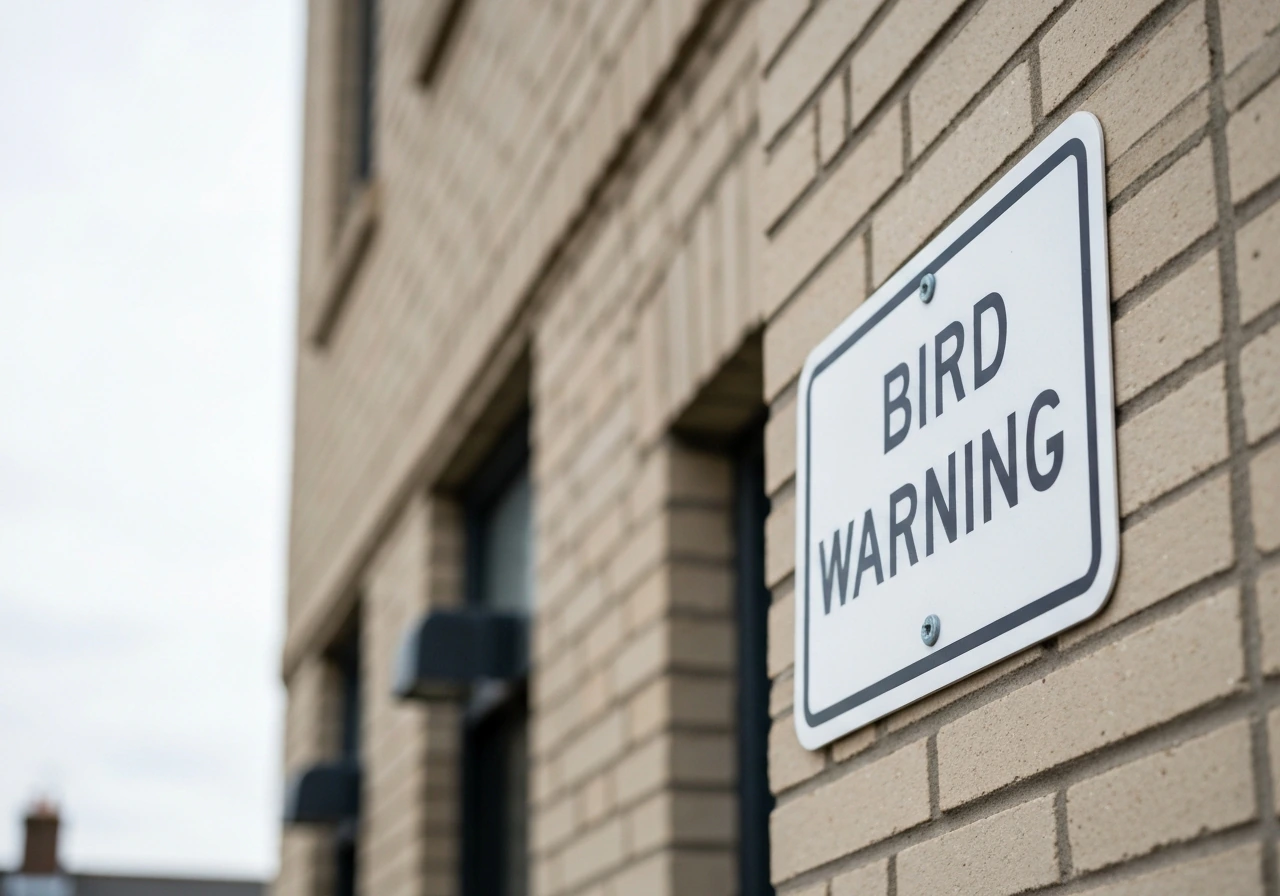
Bird Warning Sign: What It Means and How to Stay Safe
Understand bird warning signs on buildings, farms, and schools and take safe, practical steps plus evidence-aware spirit
Bird Verb Meaning: Uses, Behaviors, Idioms & Sightings
Discover what 'bird' means as a verb, definitions, behaviors, idioms, sightings, and practical next steps.
Bird Sighting Meaning: How to Interpret What You Saw
Interpret bird sighting meaning with context, behavior, symbolism, and practical steps to identify the species and next