
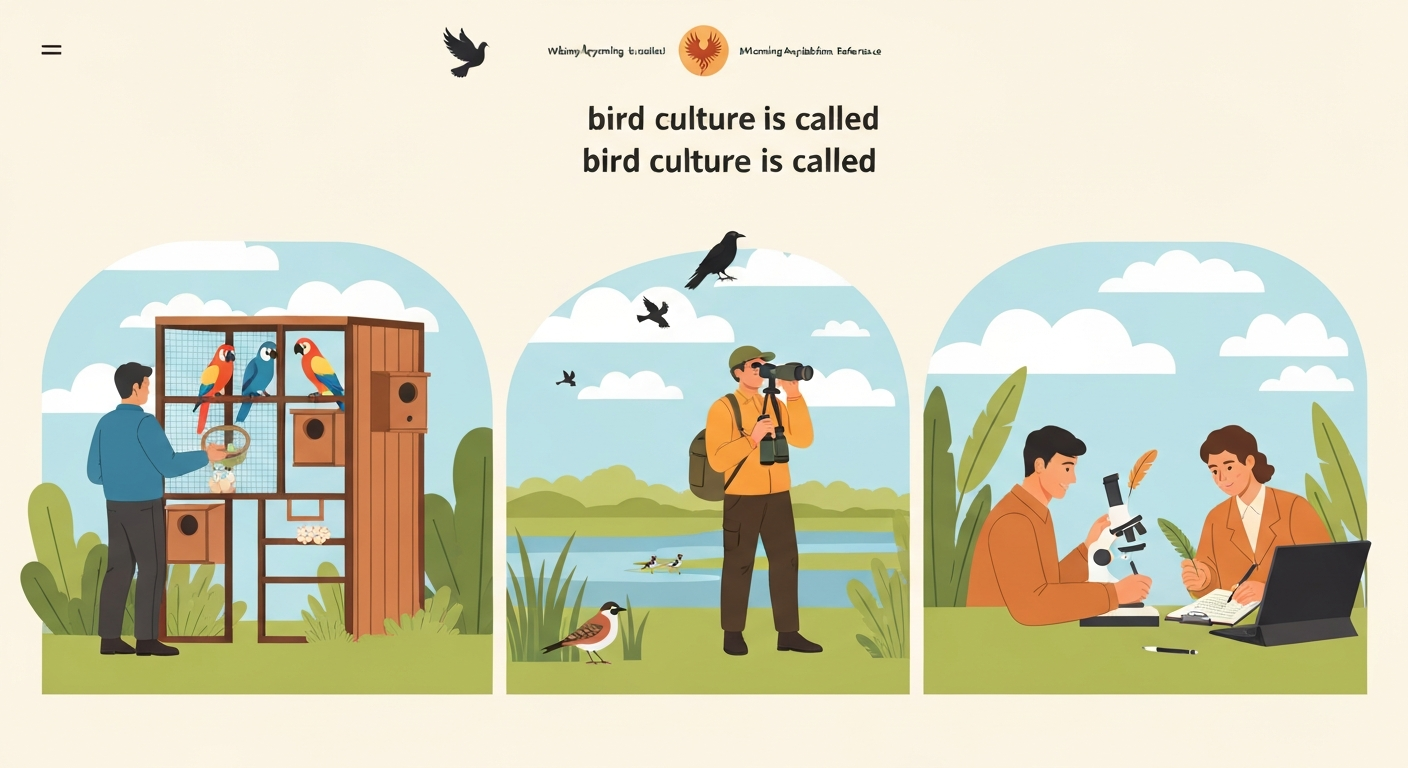
The practice of keeping and breeding birds in captivity is called aviculture, and that is the most precise answer when someone asks what bird culture is called. But depending on context, the phrase can also point toward ornithology (the scientific study of birds), birding or birdwatching (recreational observation), or even the broader human relationship with birds expressed through folklore, symbolism, and language. This article maps all of those meanings clearly, so whether you are a writer looking for the right word, a student doing research, or simply curious, you will leave with the exact label you need and enough context to use it correctly.
Bird Culture Is Called: Names, Terms, Idioms, and Uses

Marcus Holloway
23 Jul 2026
What bird culture is called: a direct answer and scope
When the phrase "bird culture is called" appears in a search query, it almost always means one of two things. The first is the literal husbandry sense: the deliberate keeping, raising, and breeding of birds, which is called aviculture. Merriam-Webster defines aviculture as exactly that, and organisations like the American Federation of Aviculture (AFA) and the Avicultural Society of America represent the community of people who practice it commercially, as a hobby, or for conservation. The second meaning is more figurative: the entire web of human engagement with birds, including study, observation, art, superstition, and language. That broader field does not have a single agreed label, but ornithology covers the scientific side, birding covers the recreational side, and cultural ornithology or ethno-ornithology is used in academic writing to describe how cultures interpret and represent birds. Knowing which meaning you need before you write or translate is the first practical step, and the rest of this article helps you make that call.
One-line definitions for the most common bird-related labels
Below are the core terms you are most likely to encounter or need. Each definition is kept tight so you can scan and identify the right one quickly.
| Term | What it means | Context |
|---|---|---|
| Aviculture | The keeping, raising, and breeding of birds in captivity | Hobbyist, commercial, conservation, research |
| Ornithology | The scientific study of birds: biology, behavior, ecology, evolution, and taxonomy | Academic, scientific |
| Birding / Birdwatching | Recreational observation of wild birds in their natural habitats | Hobbyist, citizen science |
| Birder / Ornithophile | A person who watches or is enthusiastic about birds | Informal to semi-formal |
| Peck / Pecking | A short, sharp strike or pick with the bill; the standard ethological term for a bird's bill action | Scientific, everyday |
| Migration | Seasonal, directional, long-distance movement between breeding and non-breeding areas | Scientific, ornithological |
| Flocking | Self-organized collective movement or roosting of birds in a group | Scientific, descriptive |
| Dispersal | One-way movement (natal or post-breeding) that promotes gene flow and range expansion | Scientific, movement ecology |
Quick answers to closely related questions
These questions come up alongside "bird culture is called" constantly, so here are the direct answers in one place.
- What bird study is called: Ornithology. It is the branch of zoology that covers the biology, behavior, ecology, evolution, and taxonomy of birds. Frank B. Gill's textbook Ornithology is one of the standard academic references in the field.
- What bird watching is called: Birdwatching or birding. Both terms are widely accepted; "birding" tends to carry a slightly more active, field-oriented connotation among enthusiasts, while "birdwatching" is the more familiar everyday term.
- What a bird lover is called: A birder in casual and hobbyist contexts, or an ornithophile in more formal or literary writing. An aviculturist is a bird lover who keeps and breeds birds specifically.
- What a bird bite is called: A peck. The verb "to peck" and the noun "peck" are the standard ethological terms. The word traces back through Old English and is also the root of the social-dominance idiom "pecking order," which was coined from observed dominance behavior in domestic fowl first documented by Thorleif Schjelderup-Ebbe in the early 20th century.
- What bird movement is called: Migration is the term for seasonal, long-distance directional movement. Dispersal refers to one-way movements (usually natal or post-breeding). Flocking describes collective group movement. The movement ecology paradigm, formalized by Nathan et al. (2008) in PNAS, provides a framework distinguishing all these phenomena by why the bird moves, how it navigates, and what external factors are involved.
When to use each label: scientific, hobbyist, and cultural contexts
The right word depends heavily on register and context. Using "aviculture" when you mean "ornithology" is a genuine mislabeling that will confuse readers who know the field. Here is how to distinguish the key terms in practice.
Scientific writing
In a peer-reviewed paper or academic report, prefer ornithology for the scientific discipline, migration for directional seasonal movement, dispersal for one-way movements, and peck or bill strike for the physical action of a bird's bill. For the specific action of a bird using its bill on a person or object, see what a bird bite is called, commonly described as a peck, bite, or bill strike depending on severity and context. Example: "Ornithological surveys conducted during the spring migration documented a 12 percent increase in warbler dispersal from the core breeding range." Avoid "birding" in formal scientific prose; it sounds recreational rather than systematic.
Hobbyist and recreational writing
In field guides, blog posts, or club newsletters, "birding" and "birdwatching" are both appropriate and warm. If you're asking what bird watching is called, the activity is commonly known as birding or birdwatching. "Birder" works well for the person. For clarity, a bird lover is called a birder, the common term for someone who watches and enjoys wild birds. The Cornell Lab of Ornithology's All About Birds platform and eBird explicitly position birders as contributors to citizen-science monitoring, so the hobbyist and scientific spheres overlap here more than in any other area. Example: "Local birders submitted over 400 eBird checklists during last weekend's Big Day count." Aviculture is appropriate when the topic is captive birds: breeding programs, aviaries, and pet bird communities.
Cultural, literary, and journalistic writing
When writing about birds in folklore, symbolism, or language, none of the scientific labels fit neatly. In these contexts, phrases like "bird culture," "the cultural role of birds," or "ethno-ornithology" are more accurate. Example: "Across many Indigenous North American traditions, the eagle carries a specific cultural weight that cannot be captured by ornithological taxonomy alone." This is where the broader meaning of "bird culture" lives, and it is worth flagging explicitly so readers do not confuse it with aviculture.
Behavioral and ornithological terms you should know
Beyond the big-category labels, several specific behavioral terms come up regularly in writing about birds. Here is what each actually means, grounded in research rather than assumption.
Preening
Preening is the maintenance behavior in which a bird uses its bill to groom its feathers, often applying secretions from the uropygial (preen) gland near the base of the tail. A 2017 critical review in Biological Reviews concluded that preen oil contributes to feather condition, waterproofing, and some degree of ectoparasite and bacterial control, though the precise fitness benefits vary by species. Preening is not vanity in the human sense; it is essential maintenance that directly affects a bird's ability to fly, stay warm, and avoid parasites. You will also see allopreening, which is when one bird preens another, most often a partner, and which carries a social bonding function.
Molting (Moulting)
Molting (American English) or moulting (British English) is the periodic replacement of feathers. Birds do not shed all their feathers at once in most cases; they follow species-specific strategies ranging from sequential molt (replacing feathers in a set order while retaining flight capability) to catastrophic or simultaneous molt, in which all flight feathers are dropped at once, temporarily grounding the bird. Recent syntheses emphasise moult as a renewal of feather function and document how moult strategies (sequential vs simultaneous) balance feather replacement with requirements for flight, thermoregulation and signalling (Feather function and the evolution of birds - Biological Reviews (2023) - review). Waterfowl like ducks are classic examples of simultaneous molters. A review published in PMC on convergent biannual molting strategies documents how molt timing balances feather renewal with the demands of flight, thermoregulation, and reproductive signaling.
Nesting
Nesting refers to the reproductive behavior of constructing and using a nest for egg-laying and rearing young. Nest architecture varies enormously: open-cup passerine nests built from twigs, grasses, and mud are the most familiar form in temperate regions, while the pendulous woven nests of weaverbirds and oropendolas represent the more elaborate end of avian engineering. A 2019 PeerJ study on construction patterns found that nest-building follows consistent sequential stages within species but differs markedly across taxa in materials, geometry, and attachment methods. "Nesting" in everyday language has also taken on a figurative human meaning (preparing a home for a new baby), which is a direct cultural borrowing from bird behavior.
Flocking
Flocking is the collective behavior in which birds fly, forage, or roost together in coordinated groups. Research using three-dimensional reconstructions of starling murmurations has shown that flocking emerges from local interaction rules, specifically alignment, short-range repulsion, and longer-range attraction between neighbors, rather than from any central organizer or leader. A group of starlings in flight is called a murmuration specifically; other collective nouns (a murder of crows, a parliament of owls) are cultural rather than scientific terms, discussed further in the idioms section below.
Courtship and Territoriality
Courtship in birds encompasses the displays, vocalizations, and physical behaviors used to attract and assess mates, ranging from the elaborate bower-building of bowerbirds to the sky-dancing of raptors. Territoriality refers to the active defense of a defined area, usually for breeding, feeding, or both, through behaviors like song, display flights, and direct confrontation. Both terms carry precise ethological definitions but also appear in everyday and figurative language, where "territorial" applied to a person is a direct metaphorical borrowing from bird and animal behavior research.
Bird idioms, slang, and cultural phrases: where they come from
English is unusually rich in bird-derived expressions, and knowing their origins helps you use them accurately and translate them responsibly.
| Expression | Meaning | Origin or note |
|---|---|---|
| Bird-brained | Foolish or scatterbrained | Popular since at least the mid-20th century; reflects a historically inaccurate view of avian intelligence. Modern neuroscience has rehabilitated bird cognition significantly. |
| Early bird (catches the worm) | A person who rises or acts early gains an advantage | Recorded in English proverb collections from the 17th century onward; still common in motivational and business writing. |
| Pecking order | A social hierarchy based on dominance | Directly derived from Thorleif Schjelderup-Ebbe's early 20th-century observations of dominance behavior in domestic fowl; entered general English by the mid-20th century. |
| Bird-dogging | Closely following or monitoring someone; also used in sales for lead prospecting | From hunting: a bird dog flushes and retrieves game birds. The figurative sense of persistent pursuit followed naturally. |
| Bird law | A colloquial (often humorous) term for poorly reasoned or arbitrary legal argument | Popularized in the U.S. by the TV series It's Always Sunny in Philadelphia; the character Charlie Kelly claims expertise in "bird law." Used online to mock legal absurdity. |
| A little bird told me | I heard a rumor from an unnamed source | Traced to Ecclesiastes 10:20 in the Bible ("a bird of the air shall carry the voice"); widely used in European languages. |
| Murder of crows / parliament of owls | Collective nouns for groups of specific birds | Mostly medieval English in origin; recorded in The Book of Saint Albans (1486). Many are fanciful rather than descriptive and are cultural rather than scientific terms. |
| Free as a bird | Unconstrained, liberated | Common in English across poetry and everyday speech; the flight metaphor connects freedom and birds across many world cultures. |
| The bird (rude gesture) | An offensive hand gesture | American English slang; derives from the extended middle finger, with "the bird" as a euphemism. Unrelated to ornithology. |
One practical point for translators: many of these idioms do not transfer literally. "Bird-dogging" has no equivalent bird-based idiom in most European or Asian languages and needs to be rendered by meaning (persistent pursuit, lead chasing) rather than image. "A little bird told me" does have near-equivalents in French (mon petit doigt me l'a dit, meaning "my little finger told me") and German (mein kleiner Finger sagt mir), which suggests the concept is shared but the animal metaphor is not.
Bird superstitions, symbolism, and cross-cultural meanings
Birds occupy a prominent symbolic position in virtually every major culture, and while the specific meanings vary, several recurring motifs appear across traditions. I find it useful to hold these interpretations as culturally specific rather than universal truths, while still taking them seriously as data about how human minds relate to the natural world.
Common symbolic motifs across cultures
- Soul and afterlife: In ancient Egyptian belief, the ba (a component of the soul) was depicted as a human-headed bird. In many European folk traditions, a bird entering a house, particularly a robin or a sparrow, is an omen of death or a visit from the spirit of a recently deceased person.
- Freedom and transcendence: The ability to fly makes birds nearly universal symbols of freedom, spiritual ascension, and the movement between earthly and divine realms. This appears in Christian iconography (the dove of the Holy Spirit), Hindu symbolism (Garuda), and countless Indigenous traditions.
- Omens and prophecy: Roman augury, the formal state practice of interpreting bird flight and behavior to determine divine will, was an institutionalized form of what appears across many cultures as informal bird-watching for signs. The word "auspicious" itself derives from the Latin auspex, meaning one who observes birds.
- Ravens and crows: Across Northern European, Indigenous North American, and East Asian traditions, ravens and crows appear as tricksters, messengers, or harbingers, sometimes positive, sometimes ominous, rarely neutral.
- Owls: In ancient Greek tradition the owl was associated with Athena and wisdom. In many contemporary Western cultures that association persists. In several West African, Indigenous American, and South Asian traditions, however, the owl is an omen of death or bad fortune, a sharp reminder that symbolic meanings are not universal.
- The phoenix: The regenerative fire-bird appears in ancient Egyptian (Bennu), Greek, Chinese (Fenghuang), and other traditions. The specifics differ, but the core motif of cyclical destruction and renewal through fire is remarkably widespread.
- Doves and peace: The dove as a peace symbol was reinforced in modern Western culture largely through Pablo Picasso's lithograph for the 1949 World Peace Congress, but the bird's association with peace and goodwill is much older, rooted in the biblical story of Noah's ark.
A note on superstitions versus symbolism
Superstition and symbolism are related but distinct. A superstition is a belief that a specific bird encounter predicts or causes a specific outcome (a magpie alone brings bad luck; count them to determine fortune). Symbolism is a broader associative meaning a bird carries in art, literature, or ritual. Both are worth understanding without treating either as literally predictive. For researchers and writers, the distinction matters because conflating the two can misrepresent the tradition you are describing.
Choosing the right term: guidance for writers, translators, students, and researchers
The most common labeling mistakes I see fall into a few predictable categories. Here is how to avoid them.
Aviculture vs. ornithology: do not conflate them
Aviculture is about captive birds; ornithology is about all birds, studied scientifically. Merriam-Webster defines ornithology as the scientific study of birds (ORNITHOLOGY Definition & Meaning - Merriam-Webster). A sentence like "She pursued ornithology by breeding rare parakeets in her aviary" is technically inaccurate unless she was also conducting structured research. The correct framing would be "She practiced aviculture" or "Her aviculture hobby intersected with conservation ornithology." Translators rendering either word into languages where a single term covers both (some languages use a single word for bird-keeping and bird science) should add a clarifying phrase rather than collapse the distinction.
Migration vs. dispersal vs. flocking: movement terms are not interchangeable
Migration is seasonal and bidirectional: the bird goes and comes back. Dispersal is one-way, most often from a birth site or previous breeding site to a new area. Flocking is a spatial aggregation behavior that can happen at any time and for various reasons (foraging efficiency, predator defense, thermoregulation). Writing "the birds migrated together in a large flock" is technically fine, but writing "the sparrows dispersed to their wintering grounds" misuses dispersal for what should be migration. The movement ecology framework (Nathan et al. 2008) is the clearest published reference for sorting these out. See the short guide titled "bird movement is called" for plain-language definitions of migration, dispersal, and flocking.
Birder vs. ornithologist vs. aviculturist
A birder observes wild birds recreationally and may contribute data to citizen science platforms like eBird. An ornithologist holds scientific credentials and conducts formal research. An aviculturist keeps and breeds birds in captivity. These roles can overlap (a professional ornithologist may also be a keen birder), but they are not synonyms. In journalism or popular writing, calling a backyard birdwatcher an "ornithologist" overstates credentials; calling a field researcher a "birder" may undersell them. Ask which activity is being described and pick accordingly.
Register and translation tips
For students writing academic papers: use ornithology, aviculture, migration, dispersal, preening, and molting as your default technical vocabulary, and define each the first time it appears. For translators: watch for false cognates. The French ornithologie and aviculture map cleanly onto their English counterparts, but German Vogelkunde (literally "bird knowledge") covers ornithology broadly and may not map precisely to academic ornithology in every context. Japanese 野鳥観察 (yacho kansatsu, wild bird observation) is close to birdwatching but carries its own cultural associations. For general writers: choose the register of your audience. A nature essay for a general magazine can use "birding," "flocking," and "nesting" without definition; a report for a wildlife agency should use the scientific terms with full first-use definitions.
A full glossary of bird-related terms at a glance
| Term | Category | Precise meaning | Typical context |
|---|---|---|---|
| Aviculture | Practice | Keeping, raising, breeding birds in captivity | Hobby, commercial, conservation |
| Ornithology | Science | Scientific study of birds (biology, behavior, ecology, taxonomy) | Academic, research |
| Birding / Birdwatching | Hobby | Recreational observation of wild birds | Hobbyist, citizen science |
| Birder | Person | Someone who watches wild birds recreationally | Informal to semi-formal |
| Ornithophile | Person | A person who loves birds | Literary, formal |
| Aviculturist | Person | Someone who keeps and breeds birds in captivity | Hobby, commercial |
| Peck | Behavior | Short bill strike or pick; the bird bite action | Scientific, everyday |
| Pecking order | Idiom/concept | Social dominance hierarchy; derived from chicken behavior | Social science, everyday |
| Preening | Behavior | Feather grooming using bill and preen gland secretions | Ornithological, scientific |
| Molting | Behavior | Periodic replacement of feathers | Ornithological, scientific |
| Nesting | Behavior | Building and using a nest for reproduction | Ornithological, figurative |
| Migration | Movement | Seasonal, long-distance, bidirectional movement | Scientific, popular |
| Dispersal | Movement | One-way movement for range expansion or natal/breeding dispersal | Scientific, movement ecology |
| Flocking | Movement/behavior | Collective group movement or aggregation | Scientific, descriptive |
| Courtship | Behavior | Displays and vocalizations to attract a mate | Ethological, general |
| Territoriality | Behavior | Active defense of a defined area | Ethological, figurative |
| Murmuration | Collective noun | A flock of starlings in coordinated flight | Specific/cultural |
| Ethno-ornithology | Field | Study of human cultural relationships with birds | Academic, anthropological |
FAQ
What does the phrase “bird culture is called” mean in plain terms?
"Bird culture is called" is a compact way to ask which label or concept captures human practices, study, hobbies, beliefs and language about birds. Depending on context it can point to: aviculture (keeping and breeding birds), ornithology (scientific study), birding/birdwatching (recreational observation), folk practices and symbolism (myths, art, superstition), or everyday idioms and slang about birds. The phrase asks for the appropriate term and cultural frame for a given bird‑related activity or idea.
What is aviculture and when should I use that term?
Aviculture (also spelled aviculture) is the practice of keeping, raising and breeding birds in captivity for hobby, commercial, conservation or research purposes. Use "aviculture" when referring to husbandry, captive breeding programs, aviaries, breeders' communities and regulations (e.g., welfare or import rules). Authoritative dictionaries (Merriam‑Webster) and aviculture organizations (AFA) treat it as the technical label for bird‑keeping culture.
What is ornithology and how is it different from birdwatching?
Ornithology is the scientific study of birds—their biology, behavior, ecology, evolution and taxonomy—typically practiced by researchers and trained professionals using formal methods and scientific literature. Birdwatching (or birding) is recreational observation of wild birds for enjoyment, identification and citizen science contributions. The two overlap: birders contribute data to scientific projects (e.g., eBird), while many ornithologists began as birders. Use "ornithology" in academic, research or technical contexts and "birding/birdwatching" for hobbyist, field‑guide and recreational contexts.
What do you call a bird lover or a person who studies birds?
Common labels: - Ornithophile or birdlover: a general, nontechnical label for someone who loves birds. - Birder or birdwatcher: a person who practices birding. - Ornithologist: a scientist who studies birds professionally. Context decides which to use—"ornithophile" for cultural/literary references, "birder" for hobbyist communities, and "ornithologist" for academic settings.
What is a bird bite called and what term should writers use?
The standard ethological term is a "peck"—a brief strike or nabbing action with the bill. "Peck" also appears in idioms (e.g., "pecking order"). For minor contact use "peck"; for an injurious incident you can use "bite" or "bill injury." In species‑specific reports, describe the behavior precisely (e.g., "nipped with its bill while defending nest").
What terms describe bird movement and how do they differ (migration, dispersal, flocking, nomadism)?
Key movement terms: - Migration: regular, often seasonal, two‑way long‑distance movement between breeding and nonbreeding areas. - Dispersal: typically one‑way movement (natal or breeding) that promotes gene flow or colonization. - Flocking (collective flight): self‑organized group movement produced by local interaction rules. - Nomadism/irruption: irregular or unpredictable movements linked to resource variation. Use movement‑ecology frameworks (Nathan et al. 2008) to distinguish why and how birds move in writing.
Next Articles
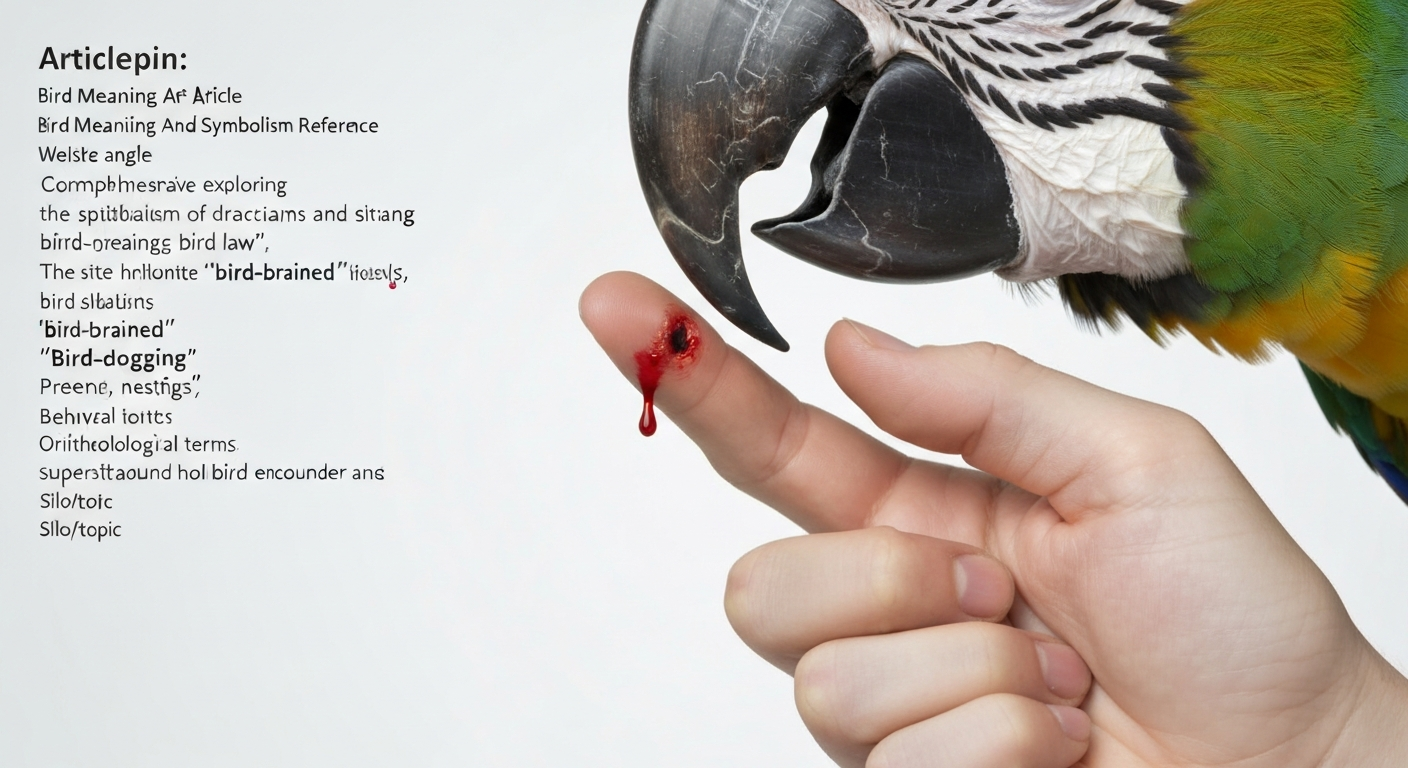
What a Bird Bite Is Called: Terms, Injuries, Care & Meaning
What a bird bite is called, peck, beak injury, severity, first aid, infection risk and symbolic meanings.
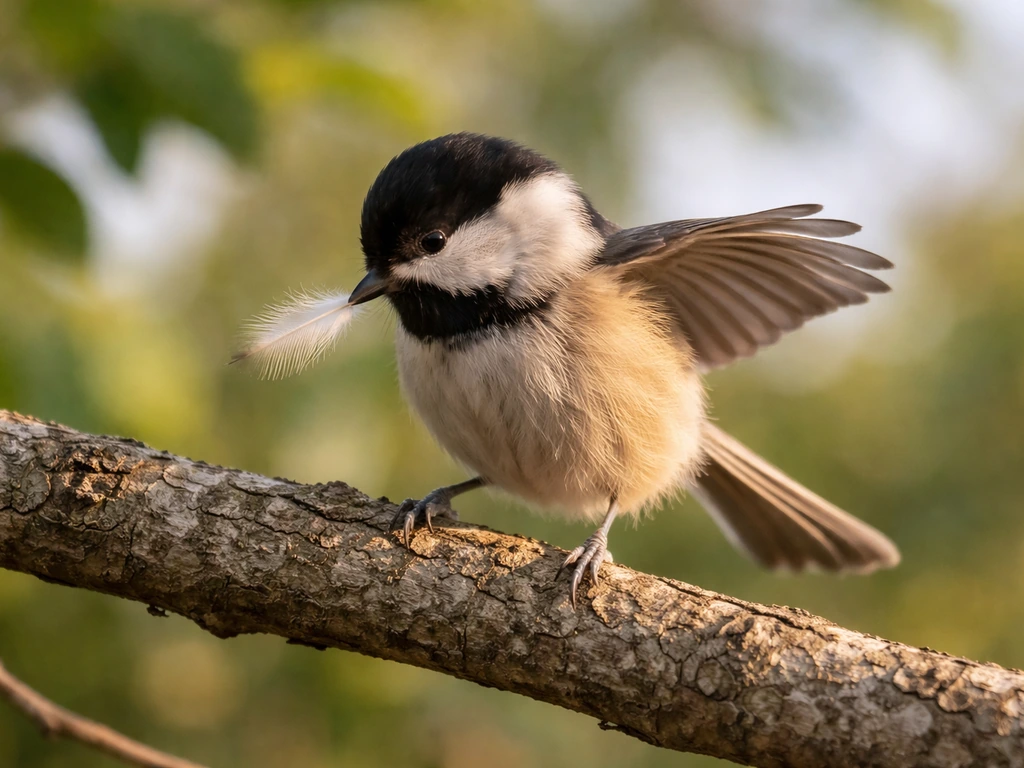
Bird Movement Is Called What Term Fits Your Observation
Learn the term for bird movement and match your observation to specific actions like hopping, nesting, flying, preening.
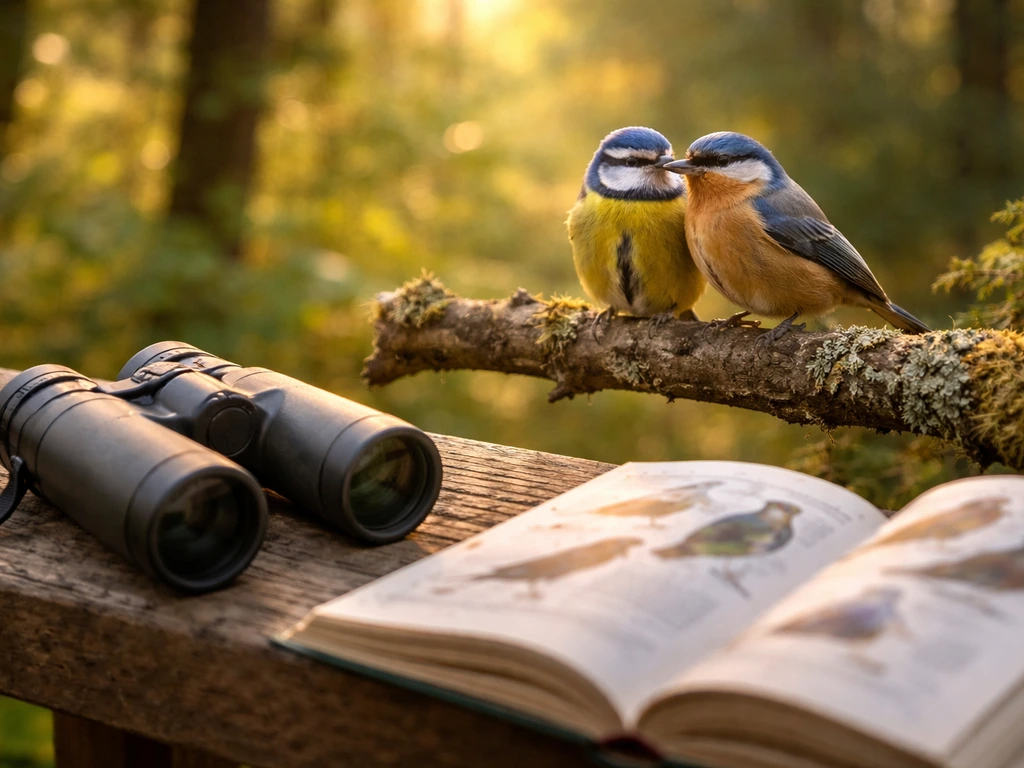
Bird Lover Is Called: Meaning, Labels, and Best Phrases
Find out what a bird lover is called, key labels like birder and ornithophile, and how to choose the right term.