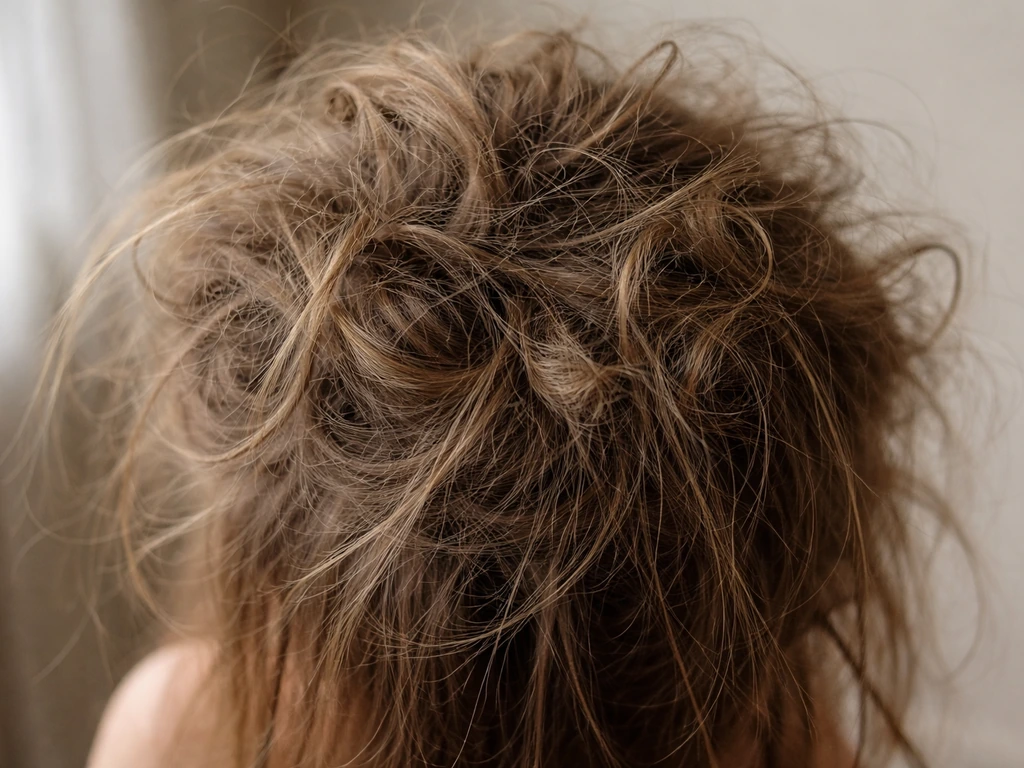
A bird nesting at your home almost always means one simple thing first: a bird found a spot that feels safe, sheltered, and close to food and water. That's the practical reality. The cultural and spiritual layers, which range from good-luck omens to symbols of new beginnings, are real too, but they're interpretive traditions built on top of that biological fact. If you just discovered a nest on your porch, under your eaves, or tucked into your garage, your most urgent question isn't symbolic. It's: what do I do right now? This guide covers both sides, starting with the practical.
Bird Nest at Home Meaning: Practical and Spiritual Facts

Marcus Holloway
13 Jun 2026
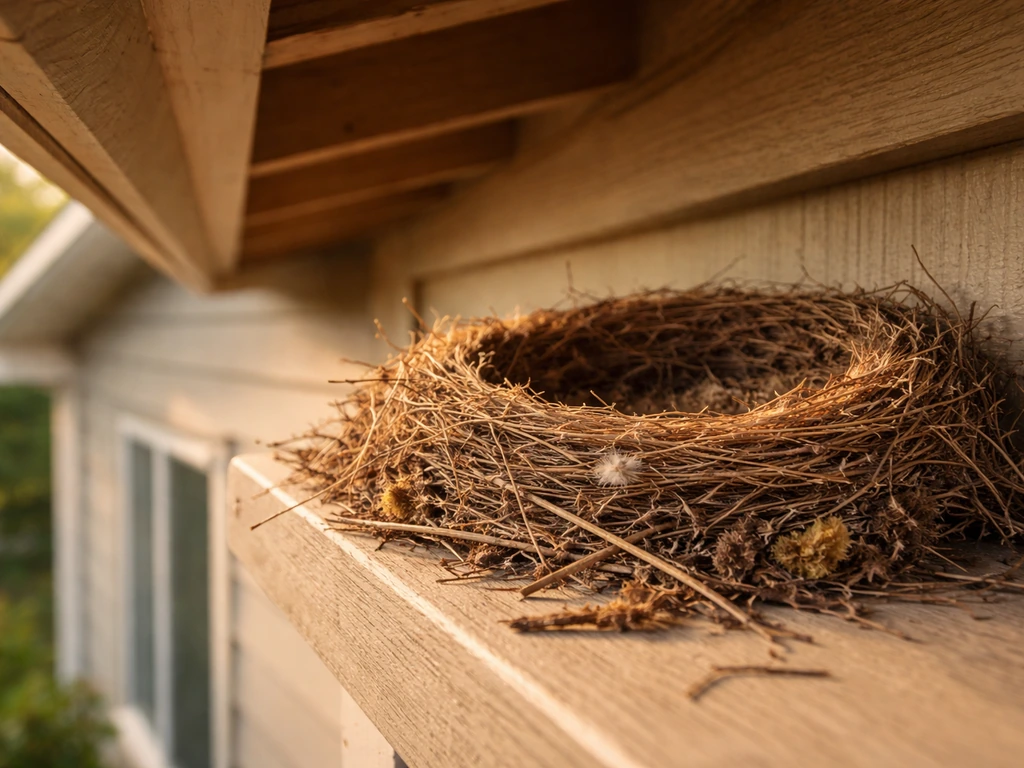
What 'bird nest at home' actually means in plain English
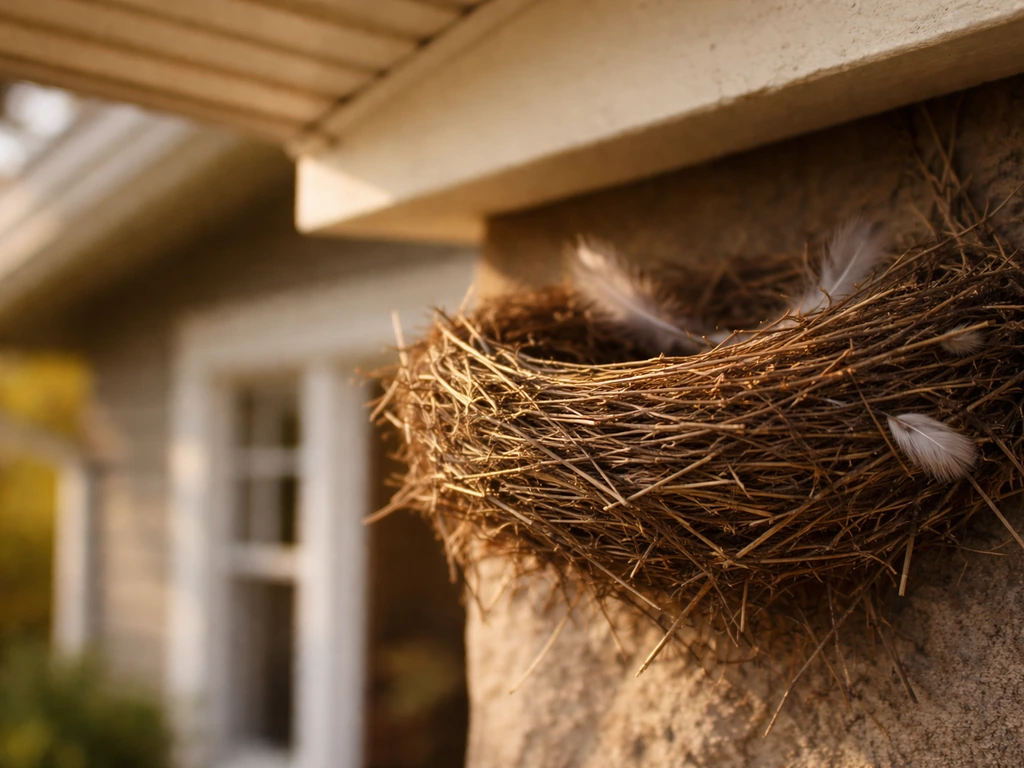
When people search for the meaning of a bird nest at home, they're usually asking one of two things: what this situation means for their house right now, or what it means symbolically. The real-world answer is straightforward. Birds nest near human structures because homes offer exactly what they need: overhangs that block rain, surfaces that anchor a nest securely, warmth from walls and attics, and proximity to insects, seeds, or water. A nest on your property is not a warning sign, a curse, or even especially unusual. It's a bird being a bird.
That said, the location and species matter a lot. A barn swallow cup under your eave is almost entirely harmless. A starling colony pushing into your attic vents is a different situation with real structural implications. The meaning, practically speaking, shifts depending on where the nest is, what species built it, and whether eggs or chicks are already present. Those three details should guide every decision you make.
Why birds choose homes and what you'll notice
Birds don't nest randomly. They're making a calculated choice based on shelter, safety from predators, and access to nesting materials nearby. Your home offers a lot of those advantages, often better than natural sites. Here's what typically draws them and what you'll see.
Common reasons your home gets chosen
- Overhanging eaves and ledges mimic rock faces and tree canopy overhangs, making them ideal for cup-shaped nests built by swallows and robins.
- Vents, gaps in siding, and open attic spaces attract cavity-nesting species like starlings, house sparrows, and wrens that need an enclosed space.
- Dense shrubs, climbing vines, or thick hedges against walls give smaller songbirds cover right next to a solid structure.
- Consistent human activity can actually deter some predators, making a busy porch feel safer than a quiet forest edge.
- Proximity to birdbaths, garden beds, or compost areas puts food and water within easy foraging range.
Signs you have an active nest
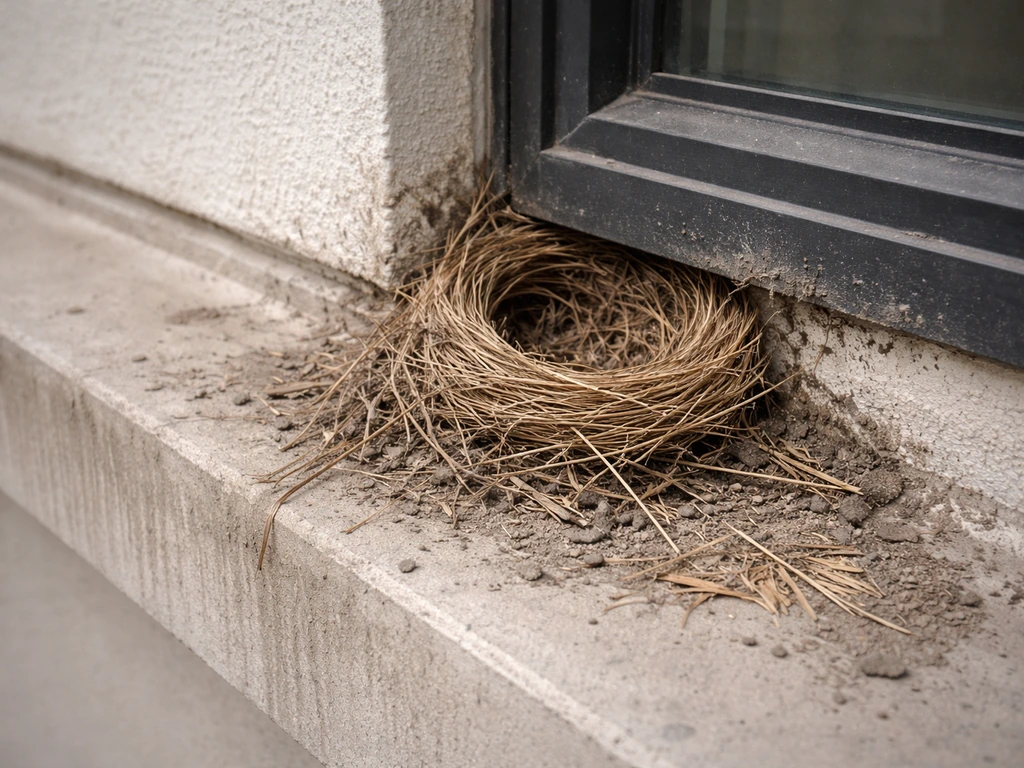
- Repeated, purposeful flights by the same bird (or pair) to one specific spot, often carrying grass, mud, or string.
- Mud smears or grass clumps appearing on a ledge, beam, or vent cover seemingly overnight.
- Soft chirping or scratching sounds from inside a vent, wall cavity, or enclosed porch corner.
- Aggressive dive-bombing or agitated alarm calls when you walk near a particular area.
- Droppings accumulating in one concentrated spot below a ledge or overhang.
What to do right now: safety, watching, and when to call for help
The most important thing to know before you do anything is this: most bird nests in the U.S. are federally protected under the Migratory Bird Treaty Act (MBTA). The MBTA covers roughly 1,100 native bird species and protects their nests, eggs, and young. Disturbing, moving, or destroying an active nest with eggs or chicks is illegal without a federal permit, and those permits are typically issued only when there's a legitimate human health or safety concern. This isn't a technicality. It's a real law with real consequences.
If the nest is empty and still being built
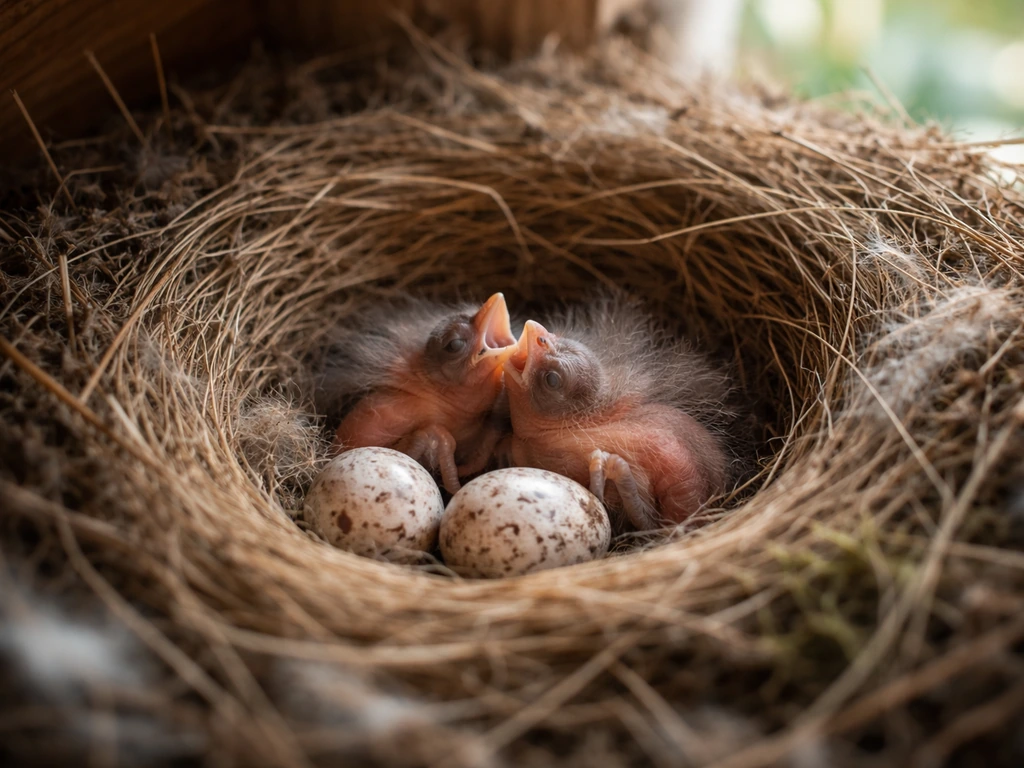
An empty nest that's still under construction is the one window where you have some legal flexibility. If the location is genuinely going to cause a problem, like directly over an HVAC intake or inside an active electrical box, you can remove the partial nest before eggs are laid. Do it once, clean the spot thoroughly, and install a deterrent (hardware cloth, bird-proof netting, or a physical blocker) so the bird rebuilds elsewhere. If you wait until eggs appear, that option closes.
If the nest has eggs or chicks
Leave it alone. Most small songbirds hatch after roughly 10 to 14 days of incubation, and chicks fledge about the same amount of time after hatching. Audubon puts the full cycle at around a month from egg laying to fledging, though it varies by species. That's not very long to tolerate a nest that isn't posing an immediate safety risk. Keep your distance, minimize traffic near the site, and let the cycle finish. Once the chicks have fledged and the nest is clearly abandoned, you can remove it then.
When to actually call for help
- A bird appears sick, injured, or grounded and unresponsive. Contact a licensed wildlife rehabilitator or your state wildlife office. The CDC recommends not handling wild birds yourself and keeping a safe distance.
- The nest is inside an active electrical panel, dryer vent, or HVAC system and poses a fire or carbon monoxide risk. Document the concern and contact your state wildlife agency to understand your permit options before removing anything.
- You're seeing a large colony of birds (starlings, swallows) causing structural damage, contaminating water, or creating a serious health hazard. This is one of the few situations where USFWS may issue a removal permit.
- You're unsure whether the nest is protected or whether eggs are present. Call your local Audubon chapter or state wildlife agency before touching anything.
The spiritual and cultural symbolism: what traditions say (and how to read it sensibly)
Across many cultures, a bird's nest appearing at or inside the home is treated as a meaningful omen, and the symbolism is almost universally positive. Across many cultures, a bird's nest appearing at or inside the home is treated as a meaningful omen, and the symbolism is almost universally positive bird nest hair meaning. If you are wondering what that bird clutch meaning is in practice, it helps to start with where the nest is and which birds built it bird's nest appearing at or inside the home. In European folk traditions, a nest on or near the house was seen as a sign of good fortune, protection, and domestic stability. The logic is intuitive: a bird chooses your home as a safe place to raise its young, which mirrors the idea of a household being secure, nurturing, and welcoming.
In Chinese cultural symbolism, birds nesting near the home are associated with prosperity and incoming good news. In many Native American traditions, birds are seen as messengers, and a nest near the dwelling can signify community, patience, and the rewards of careful preparation. Celtic folklore treated certain nesting birds, particularly swallows, as guardians of the home; it was considered bad luck to disturb their nests, which aligns interestingly with modern conservation law.
Dream interpretations add another layer. Finding a bird nest in a dream often symbolizes the desire for security, the building of something lasting, or a new beginning taking shape. The nest as an object carries universal imagery: it's built piece by piece, it protects something fragile, and it's temporary by nature. Whether you're reading that as symbolic of a life situation or simply as a reflection of what your brain processed that day is entirely up to you.
The honest caveat here is that symbolism is interpretive, not predictive. These traditions reflect how cultures have historically observed nature and assigned meaning to it. They're worth knowing and worth reflecting on if that resonates with you, but they don't override the practical and legal realities. A nest on your property is a symbol of safety and new beginnings in folklore, and it's also a federally protected structure in real life. Both things are true at once. If you are wondering about a bird nest in a Christmas tree, the meaning usually follows the same safety-and-habitat logic, with the added question of how to keep the nest undisturbed bird nest in a Christmas tree meaning.
Which bird and where: how species and location change the picture
Not all nests are the same, and the species and location tell you a lot about what you're dealing with, both practically and symbolically. The nest type itself is a clue. Open cup nests (made of grass, mud, and plant fibers) sitting on a ledge or in a shrub typically belong to robins, barn swallows, or phoebes. Cavity nests inside enclosed spaces belong to wrens, house sparrows, starlings, or woodpeckers. Recognizing the type helps you identify the species, which tells you how long the cycle will last and what kind of disturbance risk is actually involved.
| Species | Typical nest location at home | Nest type | Approximate nest-to-fledge cycle | Key consideration |
|---|---|---|---|---|
| Barn swallow | Under eaves, inside open garages, on beams | Open mud cup | About 4–5 weeks from egg laying | MBTA protected; tolerated well; droppings below nest are the main nuisance |
| American robin | Ledges, window boxes, dense shrubs near walls | Open mud-and-grass cup | About 4 weeks from egg laying | Very common; typically low conflict; may return to same site yearly |
| Eastern phoebe | Porch beams, window ledges, under bridges | Mossy cup with mud base | About 4–5 weeks | Often returns to same site; strongly MBTA protected |
| House sparrow | Vents, gutters, enclosed gaps in siding | Messy loose cavity nest | About 4 weeks | Non-native species; not covered by MBTA, but check state laws |
| European starling | Attic vents, wall cavities, holes in siding | Cavity with grass and debris | About 4–5 weeks | Non-native; not MBTA protected; large colonies can cause real structural issues |
| Carolina wren | Hanging baskets, garages, mailboxes, shelves | Domed or loose cup | About 4–5 weeks | Small, harmless, often endearing; strongly MBTA protected |
Location inside versus outside the home also changes the symbolic reading in folklore. A nest just outside a window or on the porch is broadly read as a blessing on the household. A nest built directly inside (in the attic, for example) is sometimes interpreted as an even stronger sign of protection or of the home being claimed by nature, though in practice it warrants more careful attention to structural impact. A nest found on the ground near your home carries different connotations, as ground-nesting is riskier for the bird and often signals a different species. If you’re wondering what a bird nest on the ground meaning is, start by looking at the species and whether the nest is active. That situation is worth its own deeper look.
Myths, misconceptions, and what not to do
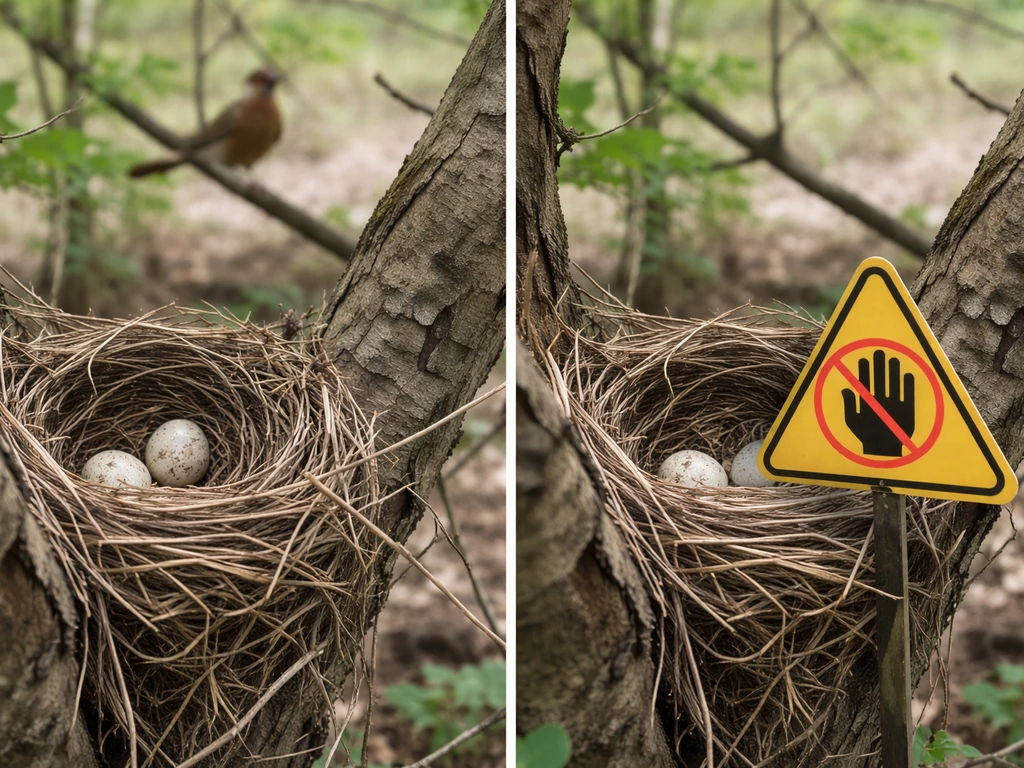
Myth: If you touch the nest or eggs, the mother will abandon them
This is one of the most persistent bird myths, and it's largely false. Birds do not have a strong enough sense of smell to detect human scent on their eggs or chicks. NestWatch, which is run by the Cornell Lab of Ornithology, addresses this directly, noting that abandonment is far more likely to be triggered by predation risk from excessive disturbance than by a single brief touch. That said, unnecessary handling is still a bad idea, not because of scent, but because repeated human presence near the nest increases stress and predation risk for the parents.
Myth: You can move the nest to a better location
Audubon specifically advises against moving an active nest, noting that birds often abandon nests when they are relocated even a few feet. Birds find their nests by memory and spatial landmarks, and a moved nest disrupts that completely. If the location is causing a genuine problem, contact your local Audubon chapter or state wildlife agency for guidance rather than moving it yourself.
Myth: You can legally keep a nest you find or remove
Under the MBTA, it is illegal to keep a bird nest, even an empty one, unless you have a federal permit. This applies to nests you find on the ground, collect from a tree, or remove from your own property. The law is clear on this, even if enforcement of casual collecting is rare.
Myth: If a chick falls out, it's been abandoned and needs rescuing
A fledgling found on the ground near a nest is almost certainly not abandoned. Fledglings leave the nest before they can fully fly and spend a day or two on the ground while their parents continue to feed them. The CDC advises leaving wildlife alone and only contacting a rehabilitator if the bird is clearly injured or visibly sick. Picking up a healthy fledgling and bringing it inside is more harmful than helpful.
Your situation-specific checklist
Run through these steps in order to figure out exactly where you stand and what to do next.
- Identify the nest status first. Is it empty and under construction, or does it contain eggs or chicks? If eggs or chicks are present, your legal options are very limited until the birds fledge.
- Note the location carefully. Outside on a ledge or eave: low urgency, low risk. Inside a vent, wall, or attic: assess for structural or health risk before deciding anything.
- Try to identify the species. Look at nest shape (open cup vs. enclosed cavity), nest materials, and the bird visiting the site. Cross-reference with a field guide or iNaturalist. Species identity tells you whether MBTA protection applies and how long you'll be waiting.
- If the nest is empty and still being built AND the location is genuinely problematic: remove it now, clean the surface, and install a physical deterrent before it's rebuilt.
- If the nest has eggs or chicks: leave it completely alone. Mark your calendar about 30 days from when you first noticed the nest and check again after that.
- If you see a sick, injured, or grounded adult bird: do not handle it. Contact your state wildlife agency or find a licensed wildlife rehabilitator through the National Wildlife Rehabilitators Association or similar directory.
- If the nest is in a safety-critical location (electrical panel, active dryer vent, HVAC system): document the situation with photos, then contact your state wildlife agency to understand your permit options before taking any action.
- Once the nest is confirmed empty and the breeding season is over: remove it cleanly, seal any gaps or entry points that enabled access, and decide whether you want to discourage future nesting in that spot or welcome it with a proper nest box instead.
- Reflect on the symbolic dimension if it matters to you. Across folklore, a nest at home is almost universally a positive sign. Treat it as an invitation to observe something remarkable up close, not as a problem that needs to be solved.
FAQ
What should I do if a bird nest is blocking a doorway or preventing me from using a room?
First, confirm whether it is active (eggs or chicks present). If active, avoid entering frequently and keep foot traffic away, then work with your local wildlife agency for a permitted or approved approach. If it is safe to wait, schedule around the fledging window, after which removal is typically allowed once clearly abandoned.
Is it okay to clean up leaves, branches, or debris around an active nest?
You generally should not disturb the nest area while it is active. Even if you are not touching the nest itself, removing cover or materials near the site can change predator exposure and can stress the adults. If cleanup is essential, wait until after fledging or coordinate guidance with wildlife authorities.
How can I tell if the nest is truly empty or just temporarily unattended?
Empty-looking nests can still be in active use, especially for species that incubate or feed on schedules. Look for eggs, broken shells, fecal material, nestlings begging, or frequent adult visits. If you cannot confirm, treat it as active and keep your distance until you see clear signs it has been abandoned.
What if the nest is in an attic, and I keep hearing birds inside but never see eggs?
Treat any enclosure with repeated adult activity as active, even if eggs are hidden. For practical safety, reduce noise and access, avoid sealing openings yourself, and keep HVAC, vents, or electrical routes unobstructed without interfering with the nesting site. Contact a local wildlife professional to identify species and advise on next steps.
Can I use a fan, water spray, or loud sounds to push the birds away?
Usually no, because many deterrents can increase stress and risk of abandonment when the nest is active. If you have a legitimate health or safety concern, use species-appropriate exclusion methods only with guidance from local authorities, and avoid harassment tactics that could worsen the situation.
Does the Migratory Bird Treaty Act apply even if the birds are non-native or introduced?
The MBTA covers many native migratory bird species and their nests, eggs, and young. For non-native birds, protections can differ by species and local law, but you should not assume they are unprotected. The safest approach is to contact your state wildlife agency or a wildlife professional for the specific species before attempting removal or deterrence.
What should I do if I find an injured chick or an egg that has fallen?
Do not handle healthy, uninjured birds. If you see clear injury, severe weakness, or visible illness, contact a licensed wildlife rehabilitator right away and keep the area quiet. If the chick is simply on the ground while parents are feeding nearby, it is often part of normal fledging behavior.
Is it legal to relocate a nest if I relocate it only a short distance?
Relocation is typically not allowed for active nests, and even short moves often cause abandonment and are treated as disturbance. If the nest location is truly causing a problem, request guidance and, if needed, a permitted plan rather than moving the nest yourself.
Can I keep the nest after the birds leave, for example to use it as decoration?
In many cases it is still illegal to keep or possess a bird nest without the proper federal permit, even if it is empty. Wait until you have confirmed legal status for the specific nest, or avoid keeping it and dispose of it appropriately after permitted guidance.
What’s the fastest way to reduce risk while waiting for fledging?
Minimize repeated checks and pass-by traffic, close nearby doors if possible, and do not block the exit routes the parents use to feed. If the nest is over a high-traffic path, reroute foot traffic for about a month and monitor from a distance, using a zoom camera only when needed.
Next Article
Bird Nest Hair Meaning: Causes, Fixes, and Symbolic Uses
Understand bird nest hair meaning, fix frizz tangles fast, prevent with care tips, plus symbolic dream folklore context.